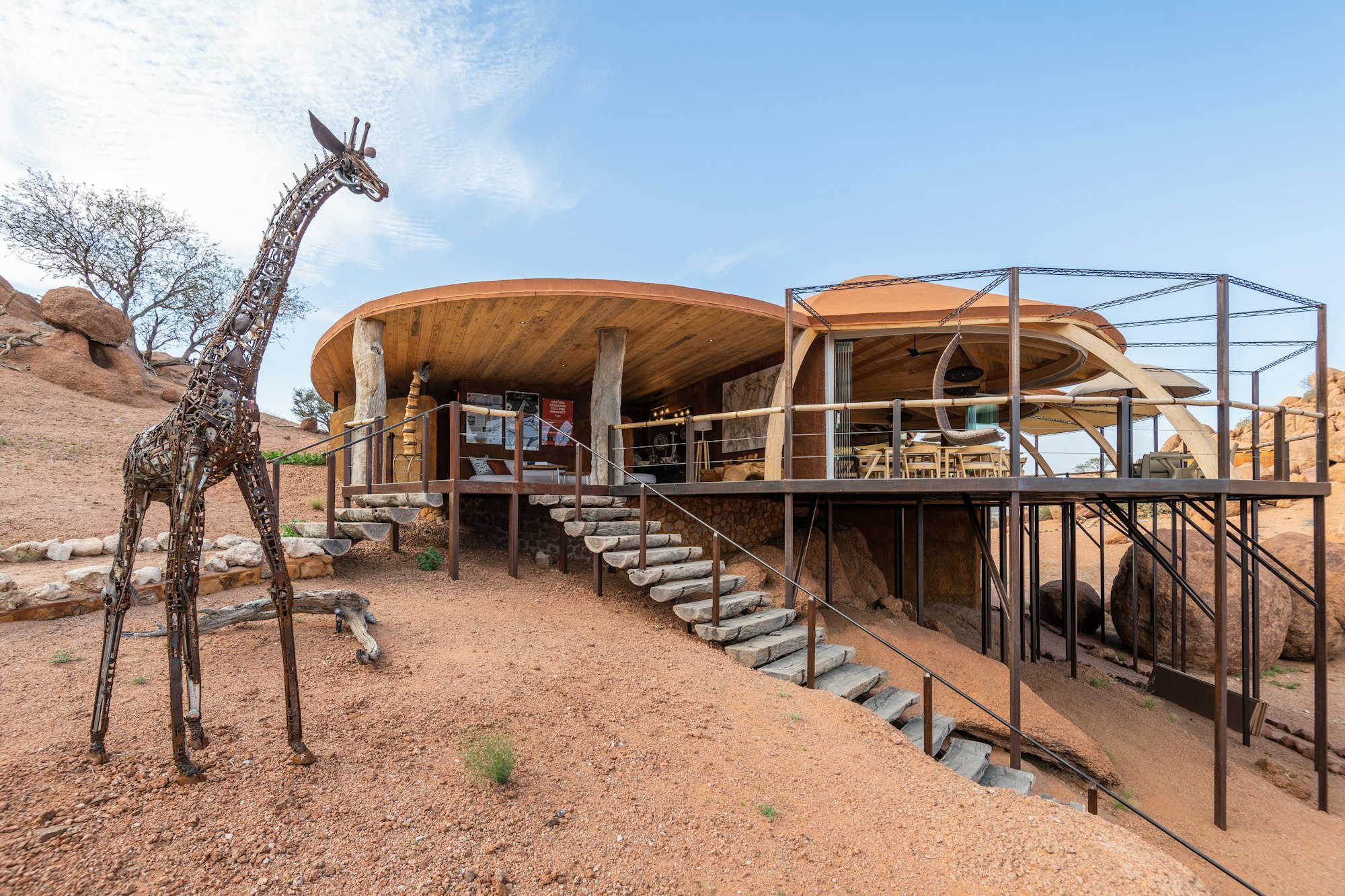
Ninety seconds on Damara Living Museum
Watch Damara men and women light a fire with sand and sticks, forge tools and name the bush plants that feed and heal.
What you walk into is a rebuilt Damara village of traditional huts, where daily life and rituals are acted out by people in traditional dress. Nothing sits behind glass. Each skill is shown as work being done: a blacksmith shaping weapons and tools, and weapons being carved.
The village is an attempt to rebuild a Damara way of life that had largely been lost, one that mixed hunting and gathering with herding cattle, goats and sheep. That is why the stations cover both weapons for the hunt and plants gathered from the bush.
On the bush walk, the women name the plants used to treat particular illnesses, and the ones kept for food or perfume. The museum was the first of its kind in Namibia, and it gives the Damara community that built it a regular income.
A guide from the village walks you through it one station at a time: the blacksmith, the fire-making and the weapon carving. The singing and dancing come as a short performance, and when another group arrives the dancers adjust it so both can watch. The village programme runs about an hour and a half, and you can stay longer.
Ask for the bush walk as well if you have the morning free. The women lead it, collecting plants for food, perfume and medicine. A combined programme puts the village and the bush walk into one visit.
The guides vary: some take their time over the culture and traditions, while others hurry a group past the stations in a quarter of an hour. If yours hurries, ask to stay longer at the stations that interest you. A walk into the wilderness to learn how the Damara hunted adds about an hour.
Ask your guide what each tool or plant is called in the Damara language and how it was used. Your guide will ask for a tip, so carry small notes.
Pair the visit with the Twyfelfontein engravings, south down the same road.
Explore the rest of Twyfelfontein
More than two thousand engravings are cut into the sandstone slabs of a valley here, and the site became Namibia's first World Heritage…
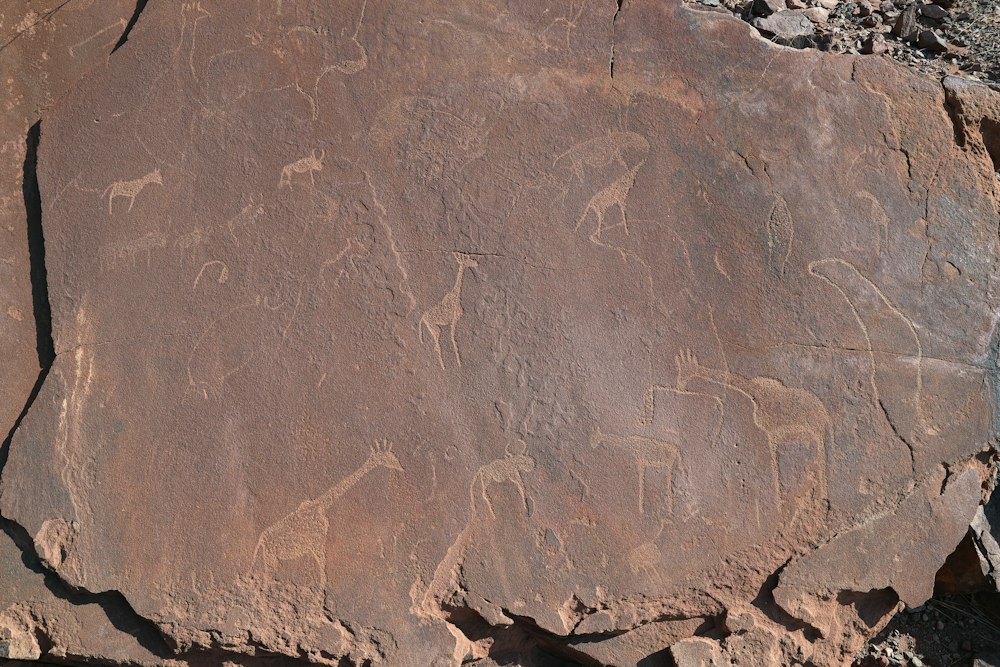
Hunter gatherers cut animals, spoor and geometric figures into the slabs above a spring over a period running to several thousand years,…
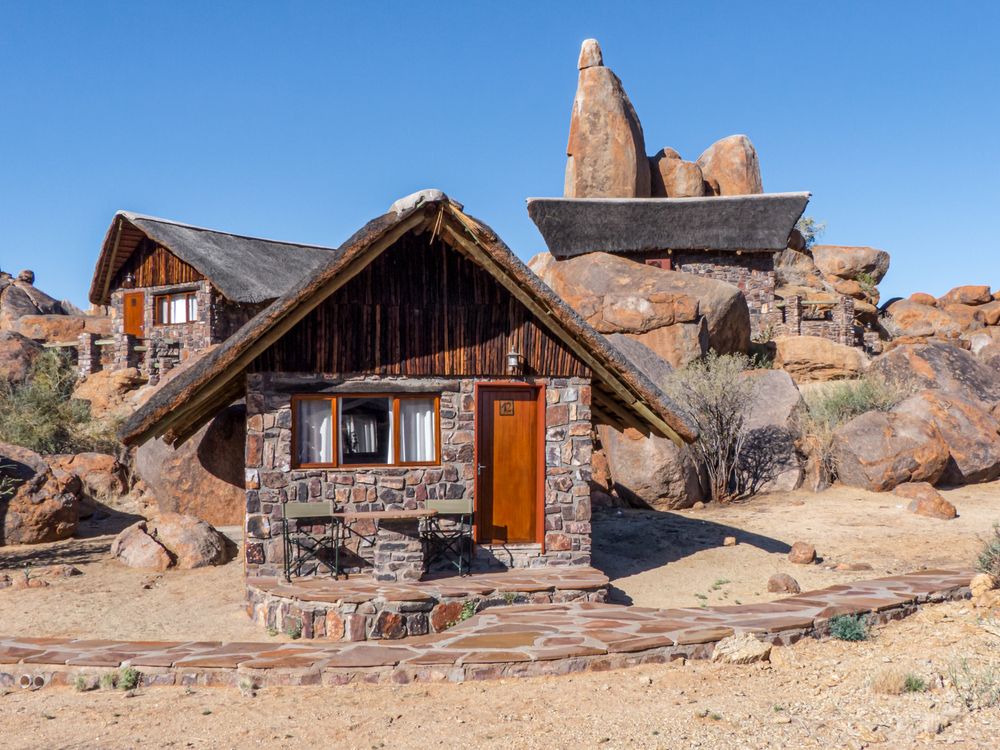
Set against a red sandstone outcrop under three kilometres from the engraving site, this is the closest bed to the rock art. It runs its…