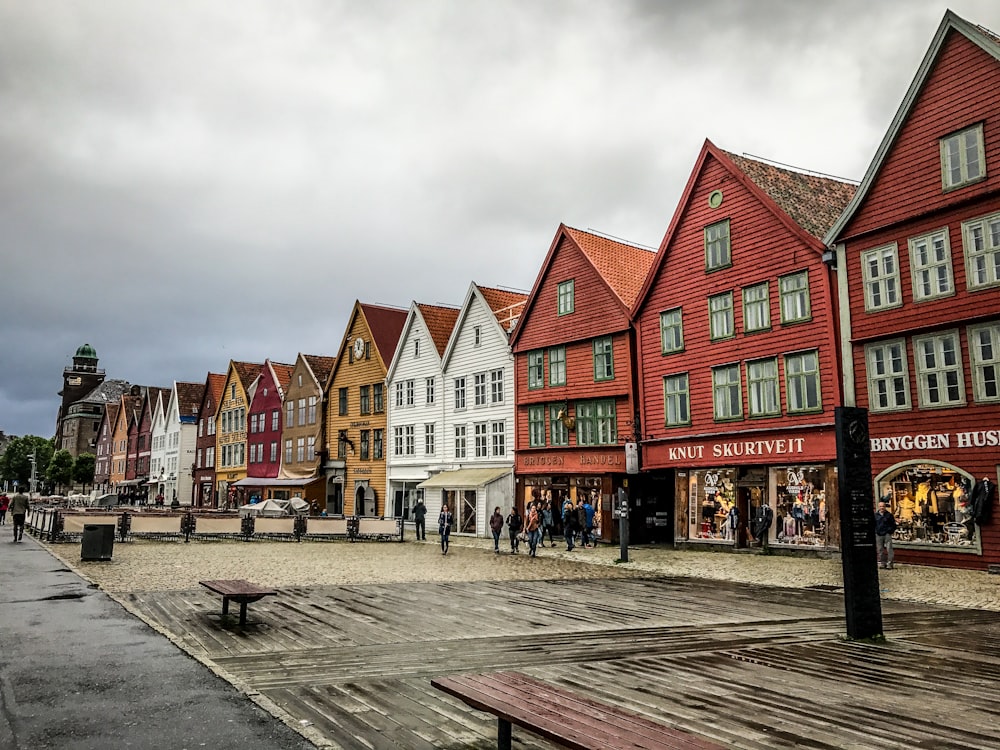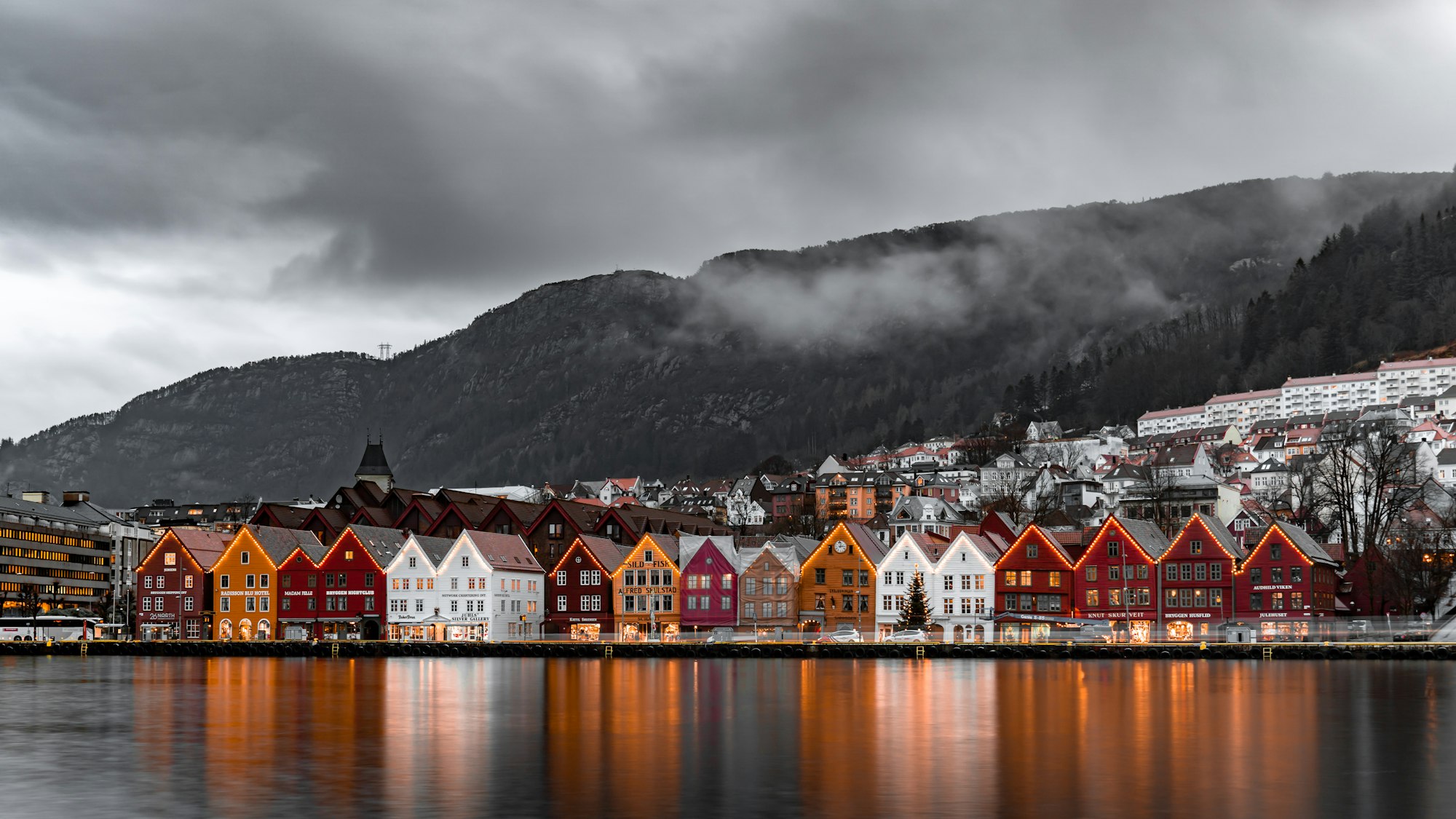
The old Hanseatic wharf on the north side of Vågen, a row of narrow wooden trading houses with pointed gables that has been rebuilt on the same medieval foundations after each of the fires that periodically took it, most recently in 1702. German merchants ran a Kontor here from about 1360, trading Bergen's grain for northern stockfish. It was inscribed on the UNESCO World Heritage list in 1979 and the passages behind the facade, all leaning floors and tarred timber, are open to walk through.
Free to wander and far better in the back passages than along the photographed front row; the wooden galleries lean and the boards are uneven, and early morning is the only time it is empty.
Bergen makes no apology for its rain, and there is no point waiting for one. Seven hills pin the city to the coast; the old Hanseatic warehouses at Bryggen lean together in crooked ranks of ochre and oxblood; the fish market trades on under a steady drizzle as if the sun were a rumour from somewhere else. It is worth a day: the funicular up Fløyen for the long view over the islands, the morning's catch for lunch, and a waterproof no one should be too proud to pack. Then the sensible thing is to leave by sea.
An open-air market at the head of Vågen where fish has been traded since the 1200s, now a mix of seafood counters, berry stalls and hot food
A funicular that has been hauling passengers 844 metres up the side of Mount Fløyen since 1918, climbing to about 320 metres above the harbo
A seventeen kilometre arm of the Sognefjord that narrows to about 250 metres between walls rising well over a thousand, dark enough at the b
Every other travel app asks you to start logging. Meridian Dispatch opens with years of your travel already written, from the photographs you already took.