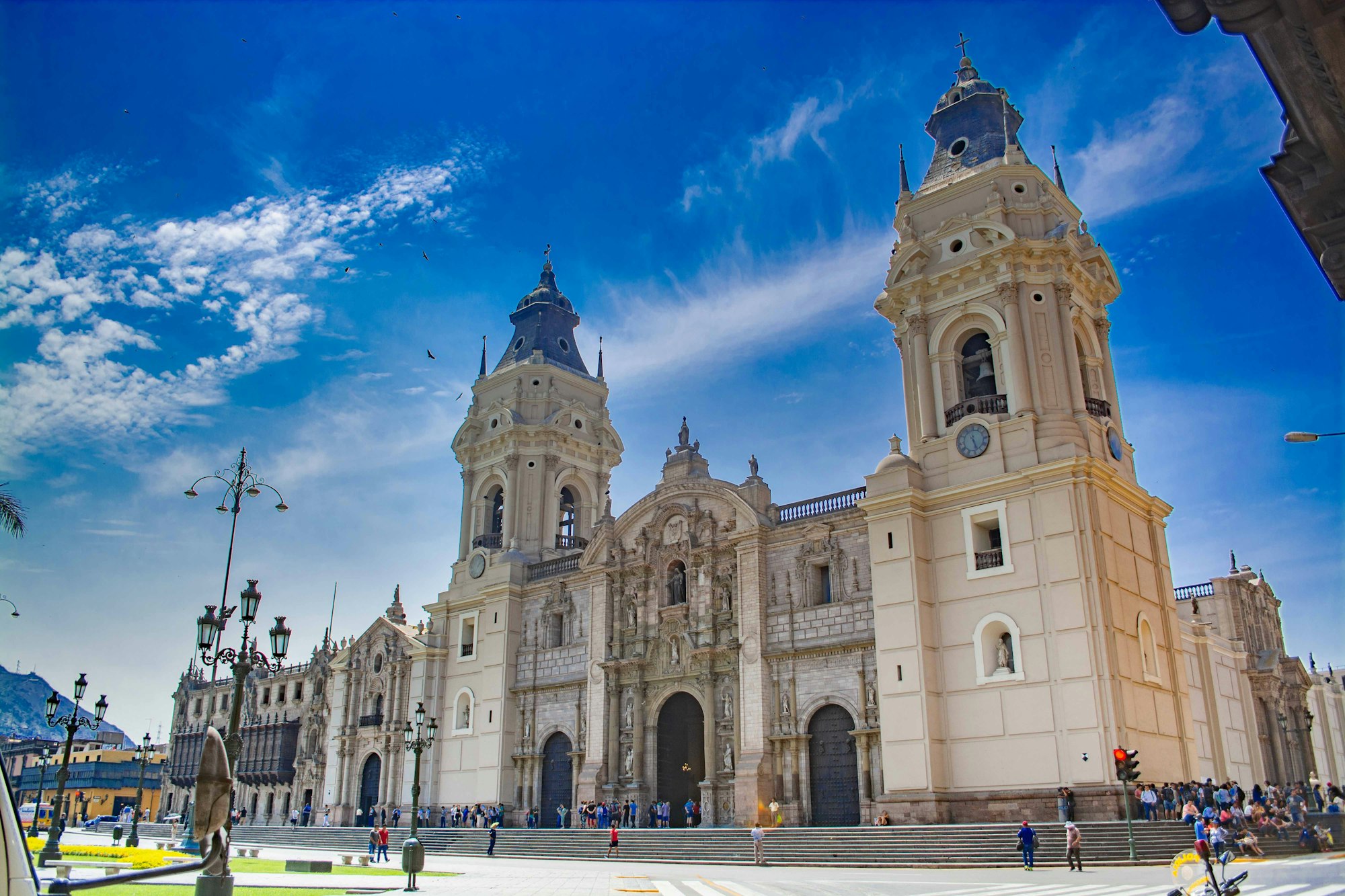
Ninety seconds on Catacumbas de Lima (San Francisco Catacombs)
Worth an hour of your first visit to Lima, the vaults under San Francisco church hold the colonial city's dead. They lie sorted by family and by bone, some of them laid out in patterns.
Below the San Francisco church lie the ossuaries that held Lima's dead until a cemetery opened outside the city in the early 1800s. The bones are those of friars and ordinary citizens alike. Estimates of their number start at some 25,000, and several experts put it closer to 70,000.
The bones are not left as they fell. In some chambers they lie in loose heaps, in others they are grouped by type, with skulls in one cavern and femurs in another. Look for the pits where archaeologists lined up the bones of a single family diagonally.
One pit is laid out as a central circle of skulls, ringed by leg bones, arm bones and more skulls. The passages around it are said to brace the convent above against earthquakes.
Above ground, the convent's library is the other room worth your time. Its shelves of antique books climb to the ceiling, and the tour shows it on the way to the vaults.
Starting in the cloisters, a guide takes your group through the convent and into its library. The catacombs under the basilica are the last stop of the tour.
Underground, you follow the guide past chambers sorted into skulls and femurs, then past the open family pits and the circle of skulls. The route runs a good way from the first chamber to the exit, so take your time with each room rather than hurrying ahead.
Back above ground, you can see the convent museum before you leave.
The convent's guided tours run in Spanish or English, and the catacombs are part of them. Half-day city tours that bundle the historic centre with the catacombs include the entry, but a ticket bought with a city tour works only for that tour's group, not for a later visit.
Ask your guide early how the bones came to be arranged, while there is still time on the tour for a full answer.
Give the cloisters and the library your full attention; they are half of what the convent has to show.
If enclosed spaces bother you, tell the guide before the group goes down. Once you are underground you cannot leave early; you go out with the group at the end.
Explore the rest of Lima
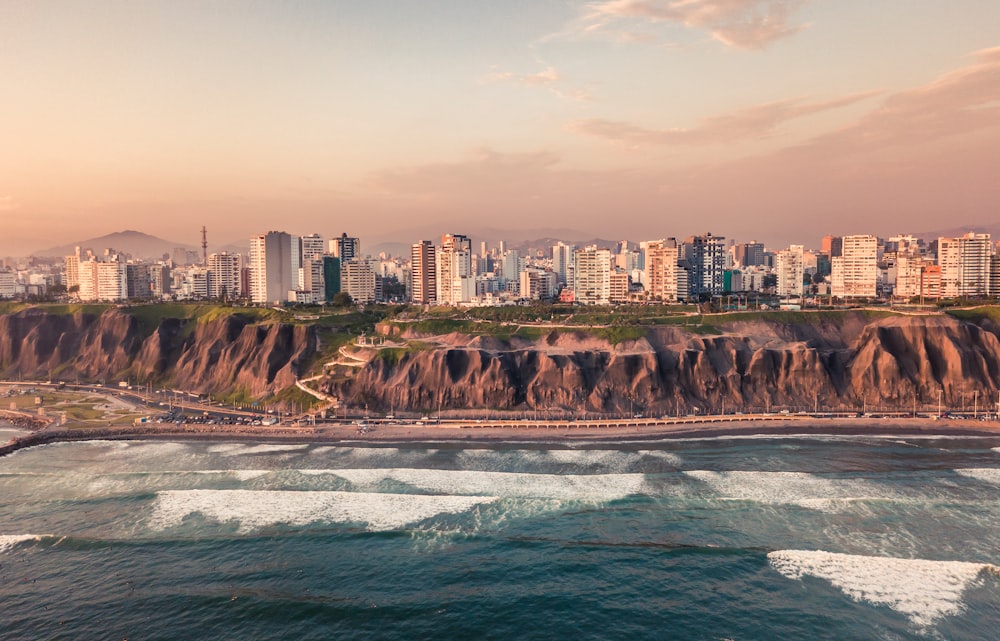
The viceregal capital of Spanish South America, now a city of ten million facing the Pacific from a line of coastal cliffs. The colonial…
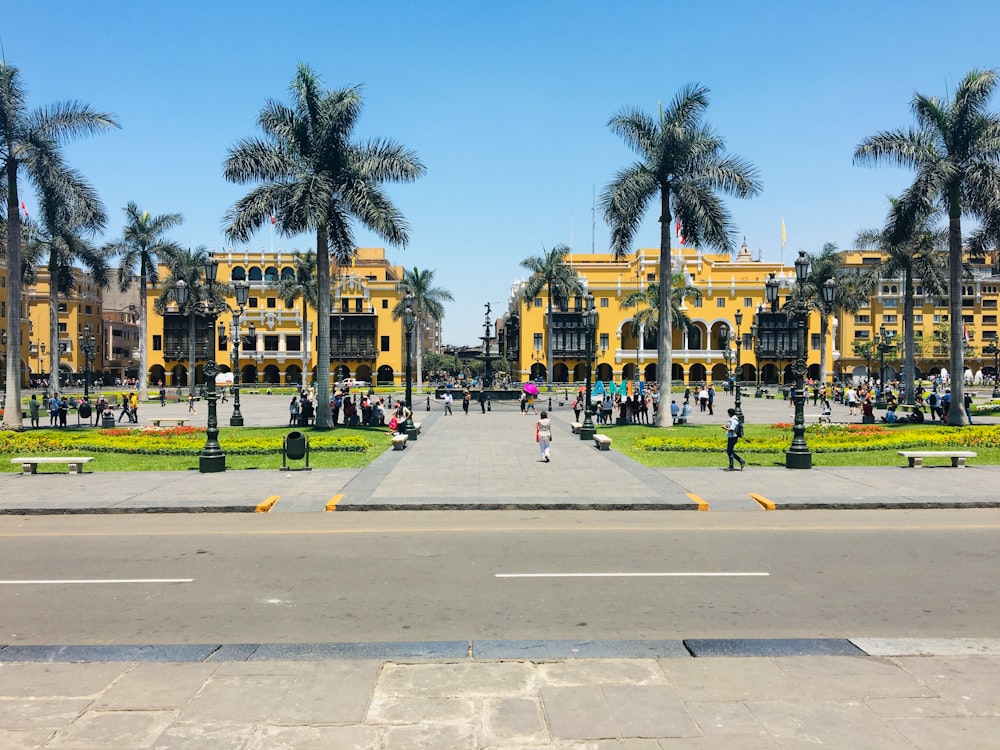
The ceremonial heart of Lima's historic centre, founded in 1535 by Francisco Pizarro. Surrounded by the Cathedral, Government Palace, and…
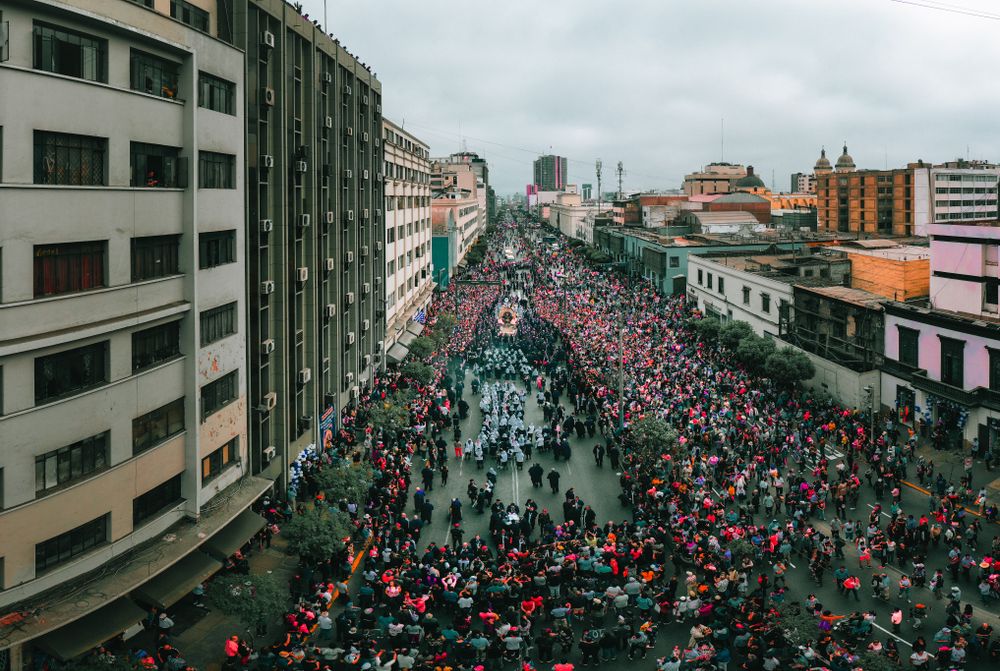
In October the historic centre turns purple. A copy of the colonial mural of Christ kept at Las Nazarenas is carried through the streets on…