-
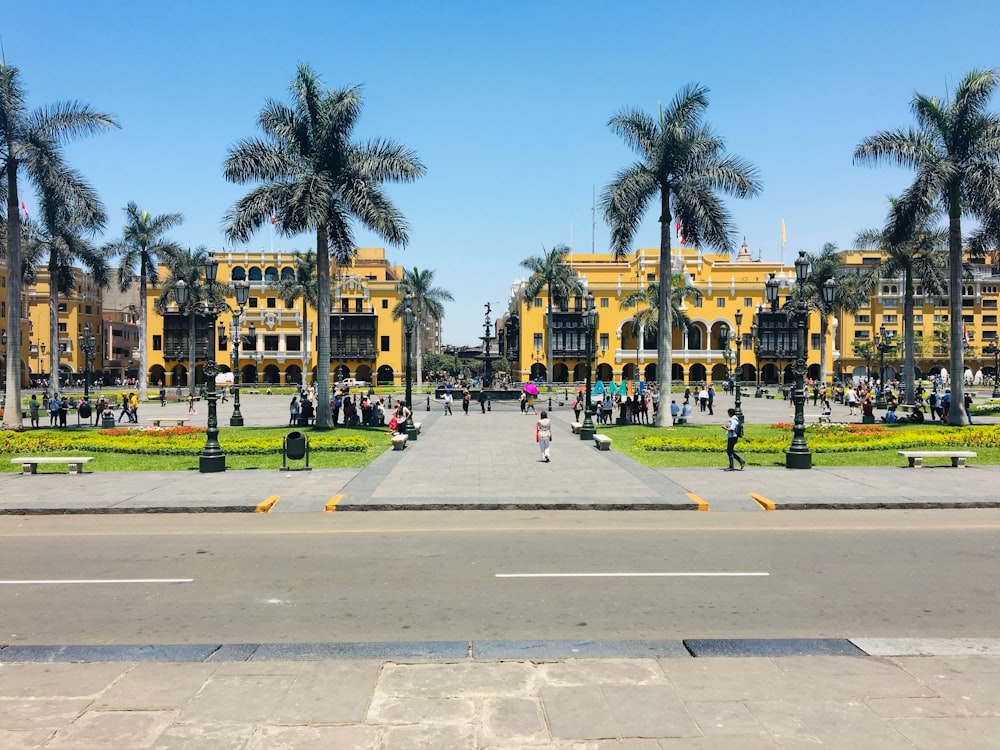
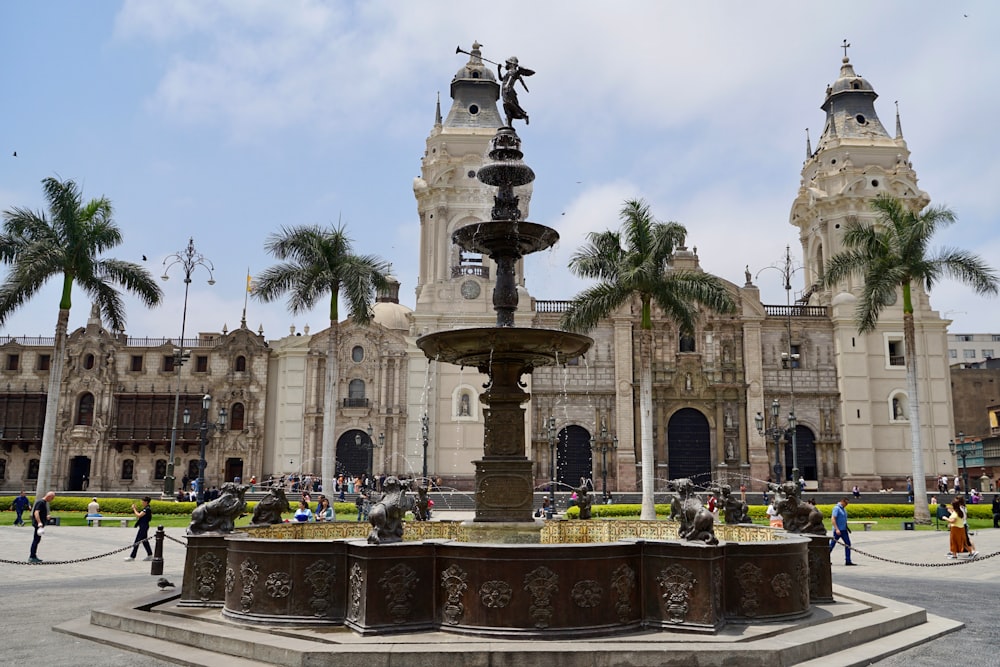
Plaza Mayor
Monument · 30 min
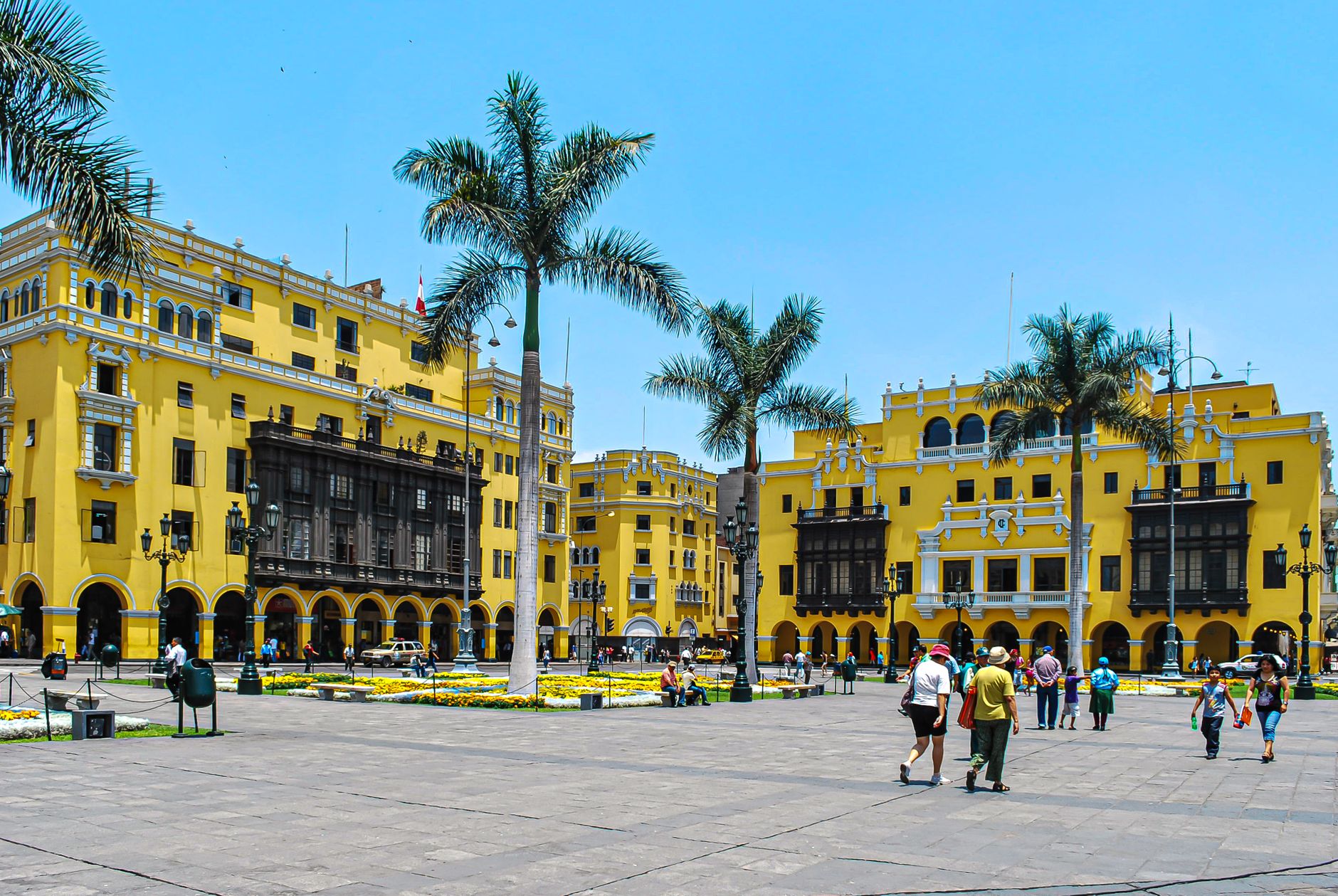
The ceremonial heart of Lima's historic centre, founded in 1535 by Francisco Pizarro. Surrounded by the Cathedral, Government Palace, and Archbishop's Palace, it remains the symbolic nucleus of colonial Peru.
-
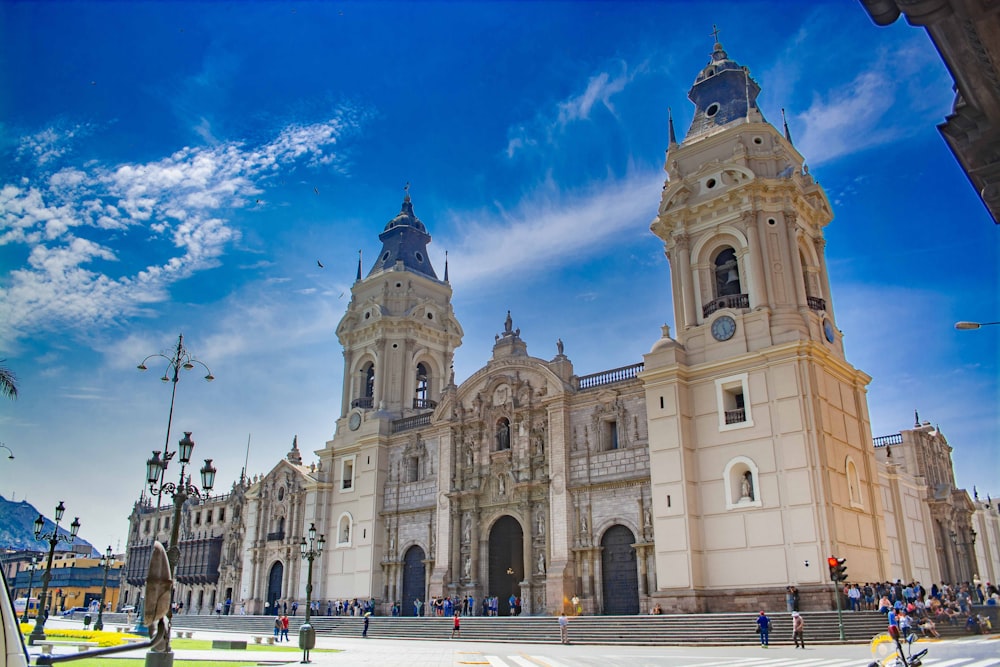
Lima Cathedral
Cathedral · 1 hr
Constructed between 1564 and 1622, this Renaissance structure holds the remains of Francisco Pizarro and contains an extensive collection of religious art and colonial furnishings.
-
Museo Nacional de Arqueología, Antropología e Historia del Perú
Museum · 2.5 hr
Located in the Pueblo Libre district in a former vice-royal mansion, this state museum holds major Andean artifacts including the Raimondi Stone and extensive Nasca and Moche pottery collections. It is the authoritative reference for Peruvian pre-Columbian cultures.
-
Museo Aeronáutico del Perú
Museum · 1.5 hr
Peru's aviation museum displays over 30 restored historic aircraft including Douglas DC-3s and Cessnas used in Andean service, plus flight simulators and aeronautical instruments from 1900 onwards.
-
Museo de Sitio Huaca Pucllana
Museum · 30 min
The site museum at Huaca Pucllana, with the Lima culture's ceramics and textiles found in the pyramid, entered on the same ticket.
-
Plaza San Martín
Landmark · 30 min
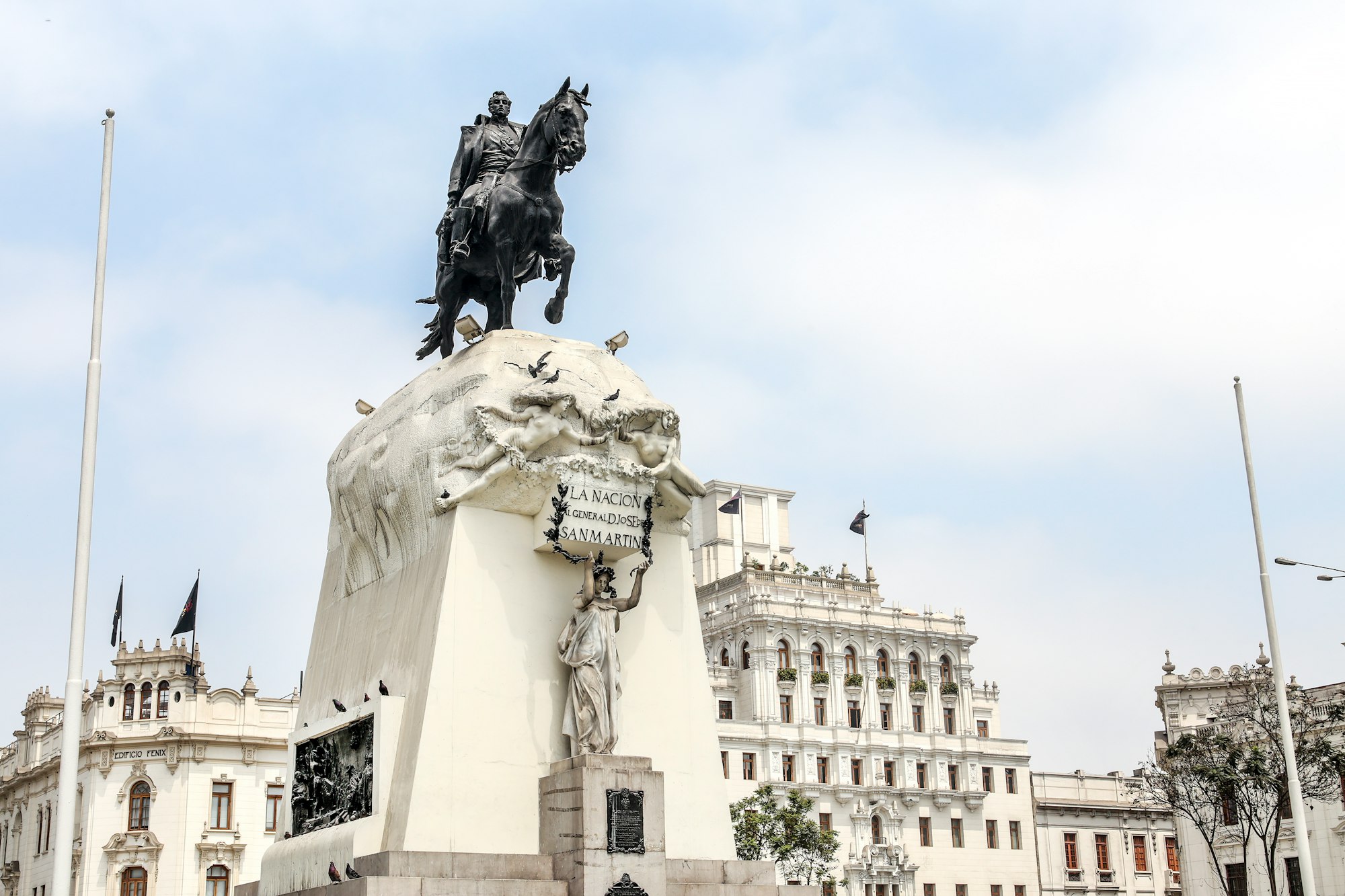
The grand republican square of 1921 at the end of the Jirón de la Unión, ringed by Beaux-Arts hotels and the Gran Hotel Bolívar. The walk to the Plaza Mayor along the Jirón takes ten minutes.
-
Museo Larco
Museum · 2.5 hr
The finest collection of pre-Columbian art in Peru, in an eighteenth-century mansion in Pueblo Libre: Moche portrait vessels, Paracas textiles and the storerooms open to walk through. The erotic gallery and the garden cafe are the two reasons visits run long.
-
Museo de la Nación
Museum · 3 hr
Peru's principal national museum, housing the most comprehensive collection of Peruvian art and archaeology from pre-Columbian through contemporary periods. Located in a purpose-built 1990 structure in San Isidro.
-
Catacumbas de Lima
Monument · 30 min
Underground burial chambers beneath the Convent of San Francisco, used from the 16th through 18th centuries to inter thousands of Lima residents. The passages are organized geometrically and lined with stacked human remains.
-
Convento de Santo Domingo
Cathedral · 30 min
A 16th-century Dominican convent and basilica in the historic centre, built on the site where Saint Martin of Porres lived. Features baroque architecture, ornate cloisters, and notable interior decoration.
-
Museo de Arte
Museum · 1.5 hr
The national fine-arts museum occupying a 1908 Beaux-Arts building in Parque de la Exposición, with collections spanning pre-Columbian through modern Peruvian and international work.
-
Huaca Pucllana
Archaeological Site · 1.5 hr
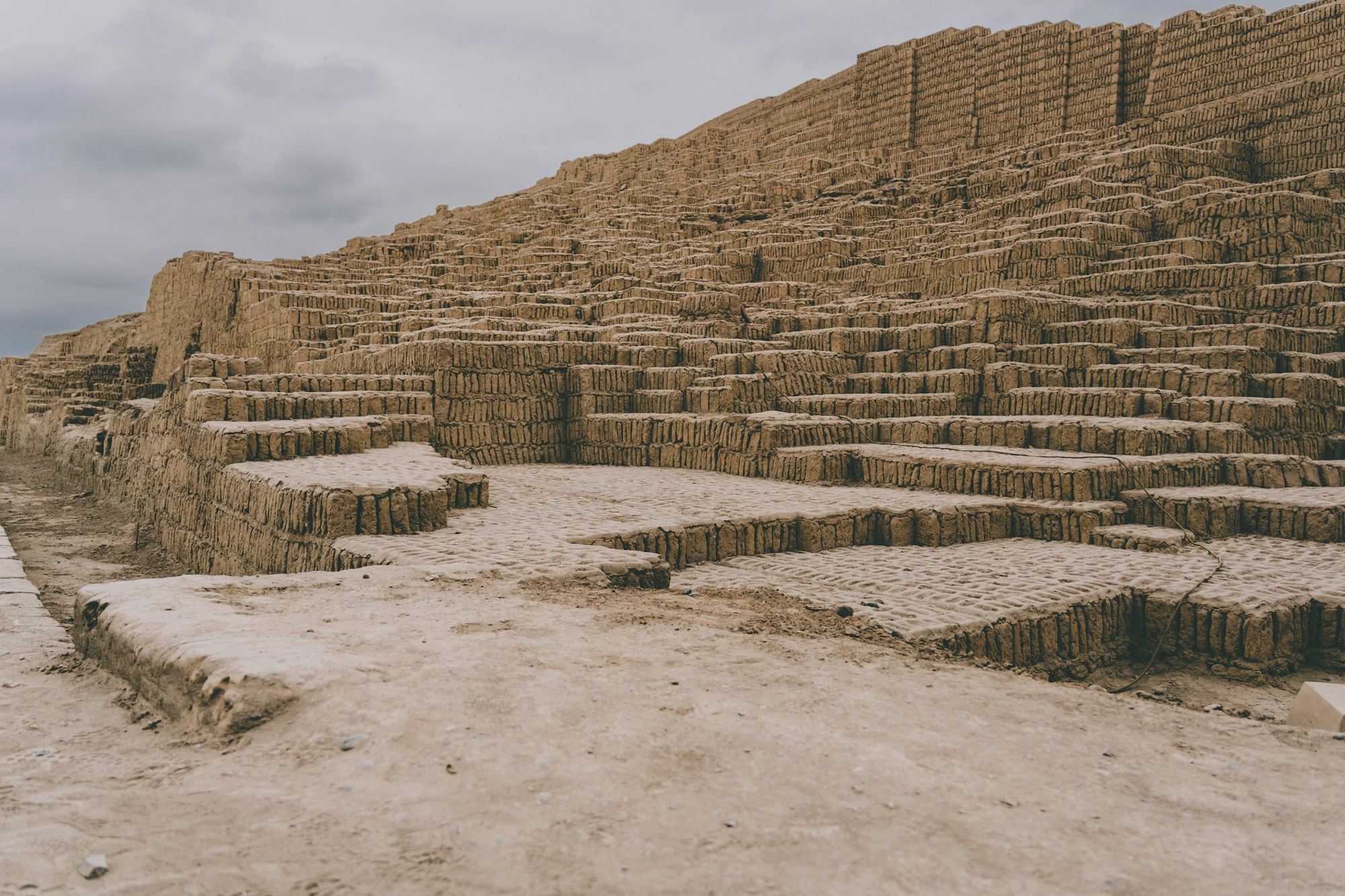
An adobe pyramid of the Lima culture, built around AD 500 and now surrounded by the apartment blocks of Miraflores. Guided tours only, and the night tour under floodlights is the one to book.
-
Parque del Amor
Park · 30 min
Clifftop public park in Miraflores overlooking the Pacific, featuring a large mosaic sculpture by Victor Delfín titled 'The Kiss' and formal gardens with ocean views.
-
Palacio de Torre Tagle
Palace
Constructed in 1735, this Rococo palace exemplifies Lima's colonial aristocratic architecture with ornate wooden balconies and period furnishings. Now the Foreign Ministry headquarters.
-
Parque de la Exposición
Park · 30 min
A 19th-century public park in central Lima hosting multiple museums, manicured gardens, and historic pavilions from the 1872 exposition. Contains the Museo de Arte de Lima and other cultural institutions.
-
Barrio Chino
Neighborhood · 30 min
Lima's Chinese quarter in the historic centre, established in the 19th century and still a functioning commercial and residential neighborhood. Features narrow streets, shops, and restaurants serving Chifa cuisine.
-
Basílica de San Pedro
Church · 30 min
The Jesuit church of 1638 in the historic centre, the richest baroque interior in the city, with gilded altars and Sevillian tiles.
-
Government Palace of Peru
Palace · 1 hr
The changing of the guard runs at noon daily and takes about half an hour, watched from the Plaza Mayor with nothing to arrange. Going inside is Saturday and Sunday mornings only, free, and booked by telephone in advance.
-
Mercado Central
Market · 1 hr
Lima's largest public market, a working-class food and produce market in the historic centre offering fresh fruit, fish, textiles, and local crafts.
-
Museo Oro del Perú
Museum · 1.5 hr
Houses over 50,000 pieces of Peruvian gold, silver, and textiles from 1500 BCE onwards, including ceremonial masks, llama figurines, and metalwork from the Chimú and Incan periods.
-
Casa de Aliaga
Palace · 1 hr
A mansion on the Plaza Mayor lived in by the same family since Pizarro granted the land in 1535, the oldest continuously occupied house in the Americas. Visits are by appointment through a tour operator.
-
Cerro San Cristóbal
Viewpoint · 1.5 hr
The hill above the Rímac with a cross on top and the whole city below it, reached by road from the centre. Go by taxi or tour rather than on foot.
-
Circuito Mágico del Agua
Park · 1.5 hr
Thirteen illuminated fountains in the Parque de la Reserva, with a light and water show after dark. It opens in the afternoon and is at its best from about seven.
-
El Olivar
Park · 1 hr
An olive grove of some 1,500 trees planted in the sixteenth century, now the park at the heart of San Isidro. The oldest trees are marked.
-
Huaca Huallamarca
Archaeological Site · 1 hr
A restored pre-Inca pyramid in the middle of San Isidro, smaller than Pucllana and climbable, with a view over the district's rooftops from the top.
-
Islas Palomino
Island · 4 hr
A rocky islet group off Callao where a colony of some thousands of South American sea lions hauls out, reached by a morning boat past the naval prison island of El Frontón. Operators let swimmers into the water among them.
-
Larcomar
Landmark · 1 hr
A shopping centre cut into the Miraflores cliff so that nothing shows from the street above, with restaurants and terraces facing the ocean. It is worth it for the view rather than the shops.
-
Malecón de Miraflores
Waterfront · 1.5 hr
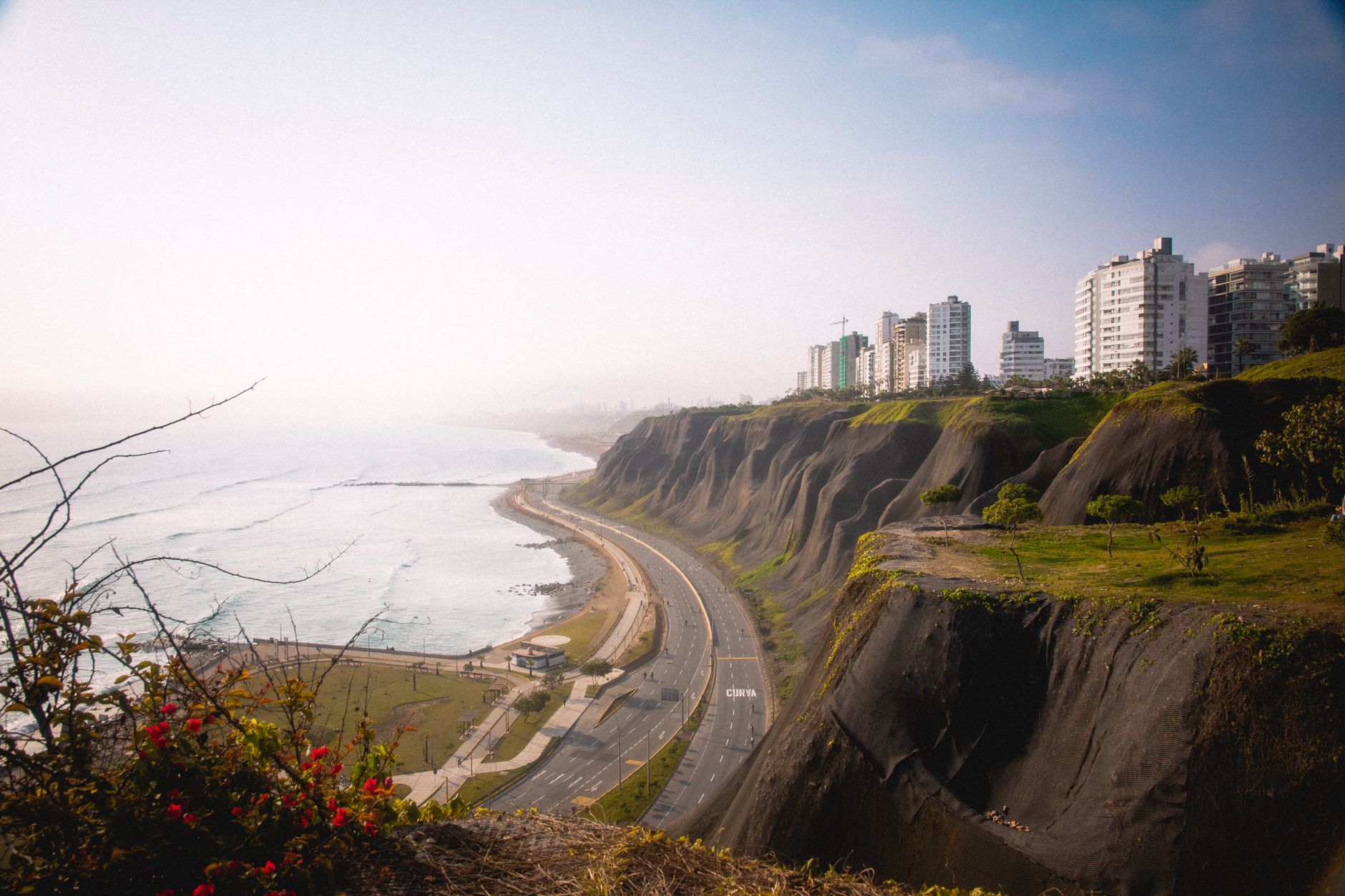
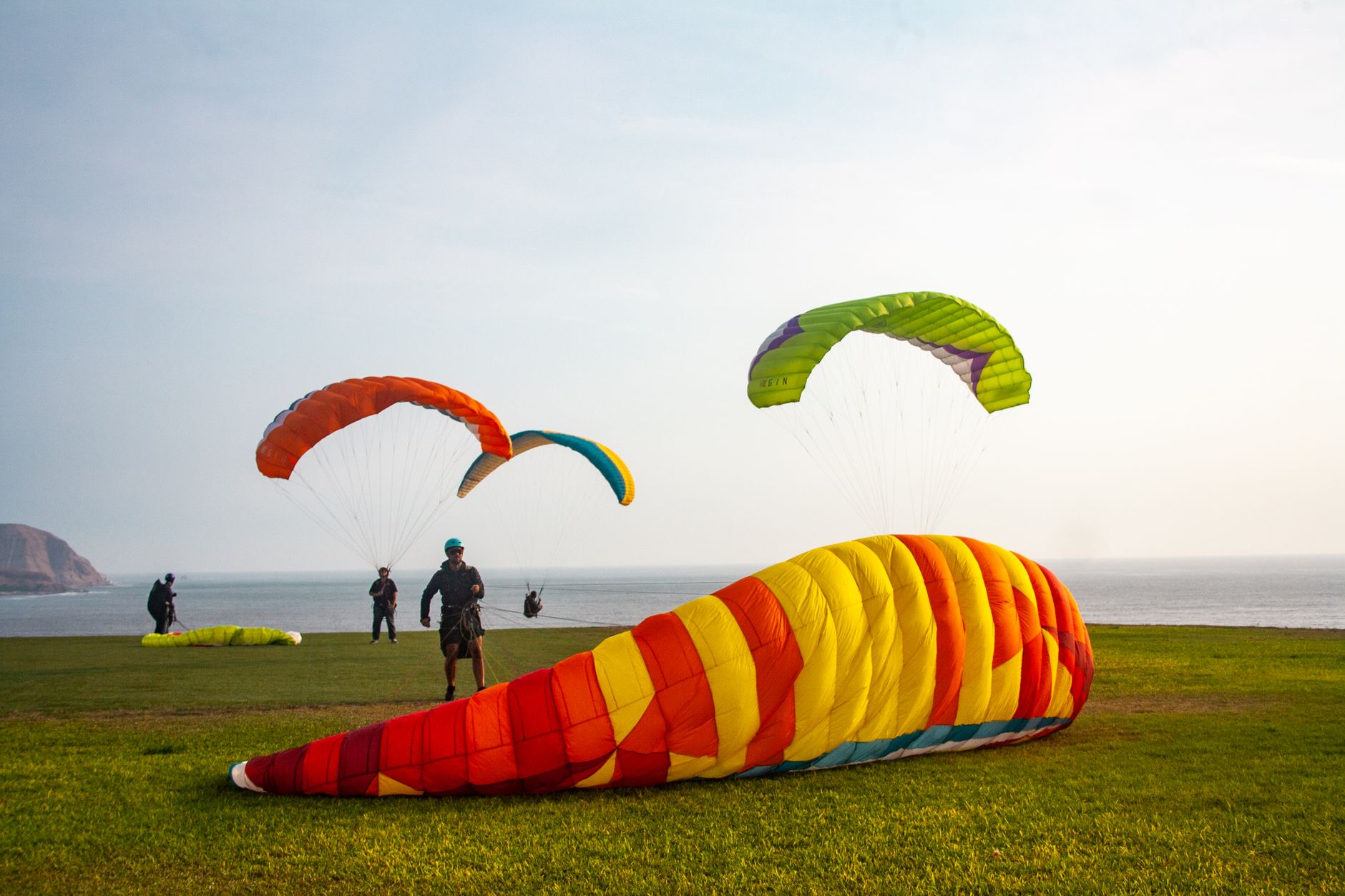
Ten kilometres of clifftop park above the Pacific, from Parque del Amor past the paragliders at Raimondi to Larcomar. It is where Lima walks in the evening, and the one place the city's grey sky earns its keep at sunset.
-
Mercado de Surquillo
Market · 1 hr
The produce market a few blocks east of Miraflores where the city's chefs shop, with fruit from the jungle and the coast, and a row of ceviche counters at the back.
-
Morro Solar
Viewpoint · 1 hr
The headland that closes the Costa Verde to the south, with a cross, a planetarium and the widest view of the bay in Lima. The 1881 battlefield of the War of the Pacific is up here too. A road climbs to the summit, and the haze that sits over the city for much of the winter thins by late morning.
-
Museo de Arte Contemporáneo
Gallery · 1.5 hr
Lima's contemporary art museum in Barranco, in a glass building beside a lagoon, with Peruvian and Latin American work from the 1950s onward.
-
Museo Pedro de Osma
Museum · 1.5 hr
Colonial art of the Cusco school in a Barranco mansion of 1906, with silverwork and painted furniture from the viceroyalty. Small, quiet and a short walk from the bridge.
-
Pachacámac
Archaeological Site · 3 hr
The great pre-Inca pilgrimage centre south of the city, a desert of adobe pyramids and Inca additions covering some 465 hectares, with a modern site museum holding the wooden idol of the oracle. Allow half a day and go early.
-
Parque de la Reserva
Park · 1 hr
The 1929 park in the centre of the city that holds the Circuito Mágico del Agua, with lawns and the Estadio Nacional beside it.
-
Parque Kennedy
Park · 30 min
The central square of Miraflores, known for the cats that live in it, with the artisan market on one side and the district's cafes around it. The Malecón is a ten-minute walk west.
-
Playa Barranquito
Beach · 1 hr
The small beach at the foot of Barranco's ravine, reached by the walk under the Bridge of Sighs. Stony, with surf schools, and busiest on summer weekends.
-
Playa La Herradura
Beach · 2 hr
A horseshoe bay under the Morro Solar in Chorrillos, once the fashionable beach of the 1950s and still the best point break inside the city. The old beachfront has faded, which is part of its appeal. It is reached on the Costa Verde road below the cliffs, and the swell runs biggest in the southern winter.
-
Playa Makaha
Beach · 2 hr
The city's surf beach at the foot of the Miraflores cliffs, a stony strand with a reliable beginner wave and boards for hire on the sand. Locals have surfed here since the 1930s, and it runs all year. Schools along the boardwalk hire out wetsuits, which the cold current makes necessary even in February.
-
Puente de los Suspiros
Bridge · 30 min
The wooden Bridge of Sighs of 1876 across the Bajada de los Baños in Barranco, the path that runs down the ravine to the sea. Local custom holds that a wish made while crossing it in one breath is granted.
-
San Isidro
Neighborhood · 2 hr
The financial district and the city's leafiest one, built around El Olivar, an olive grove planted in the sixteenth century. The grand hotels are here, and it is the quietest base, between Miraflores and the centre.