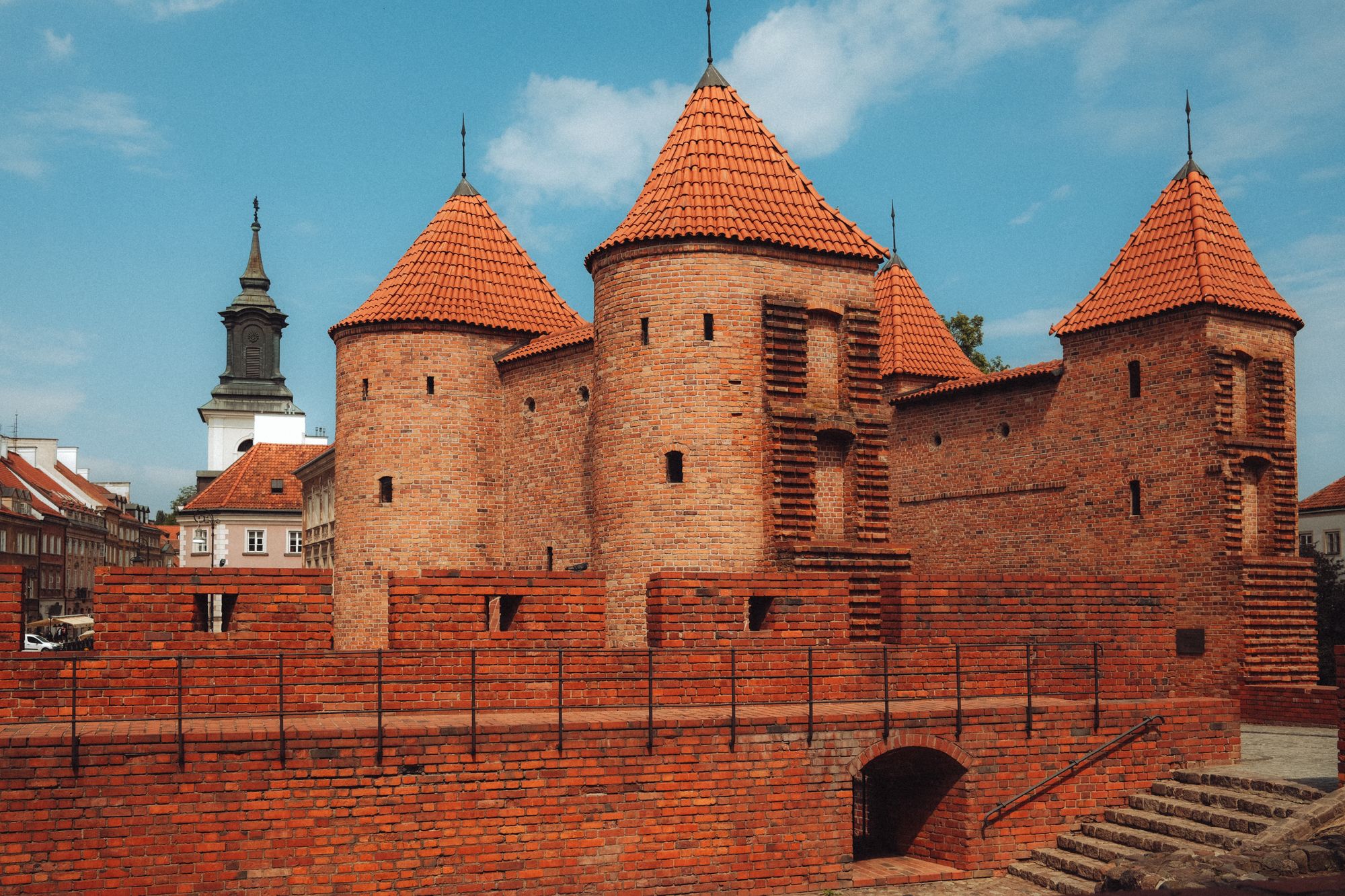
Ninety seconds on Barbican
Before you leave the Old Town by its northern edge, walk through the bastion that guards Warsaw's old gate and along the double ring of walls on either side.
Look at how far the Barbican pushes out in front of the walls on either side. In the mid-sixteenth century the town's northern gate was extended into this long bastion beyond the wall line, so defenders could fire along the walls from the side.
Between the inner and outer walls runs the Zwinger, an open strip of ground between 9 and 14 metres wide. The walls of Warsaw were also protected by a water-filled moat.
The Barbican is the only one of the city gates that was rebuilt after the war, and it now houses a branch of the Museum of Warsaw.
Expect street musicians and actors in the passage through the gate.
Buy your ticket for the summer exhibition first, at the Museum of Warsaw's main ticket office at 42 Old Town Market Square: the Barbican sells none.
Then go through the gate and follow the walls on either side. Walking through and round the whole area takes 15 to 20 minutes.
In summer only, the exhibition inside the gate is open on Wednesday and Saturday afternoons from 1PM to 5PM. Archival photographs show how the walls were hidden and found again, and how the Barbican and the Old Town were rebuilt. Labels are in English.
The museum publishes a self-guided audio walk, The Secrets of the Barbican and the City Walls, which takes about an hour and a half. Match the colour beside each recording's title to a pin on its map. Use it if you want the story of the walls without a group.
Use the thick walls of the gate for shade on a hot summer day.
For a public toilet, stand with the Barbican behind you and the Old Town in front, turn left onto the rampart and follow the road along it. Watch for the sign, which is small.
Explore the rest of Warsaw
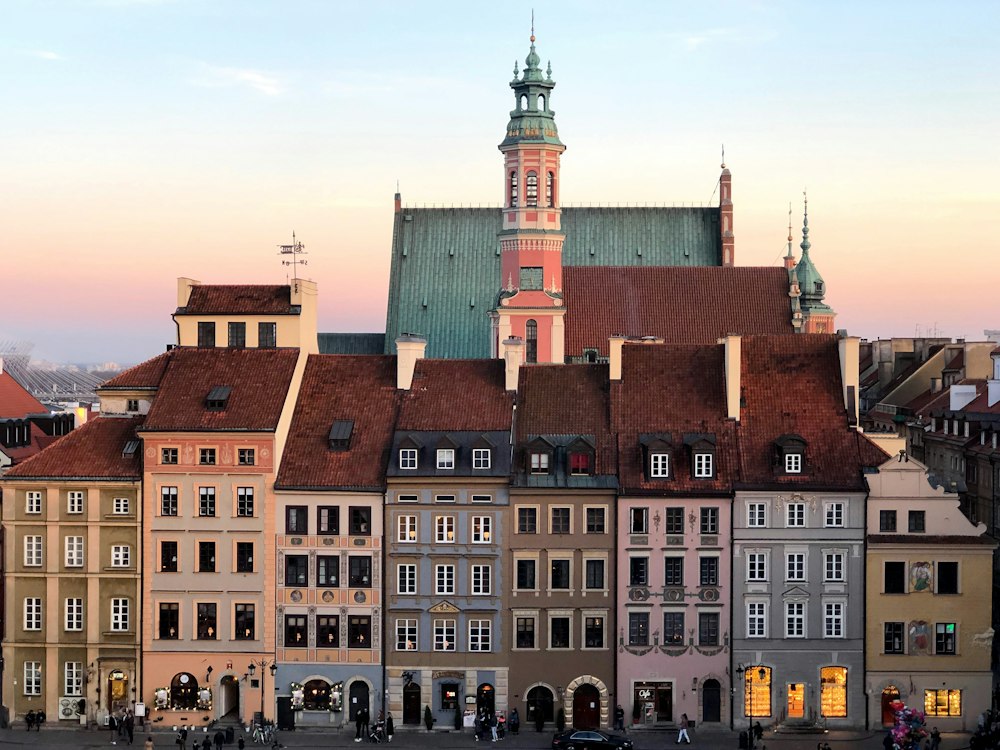
Warsaw's medieval Old Town was reduced to rubble in 1944 and rebuilt from Canaletto's 18th-century paintings, archival photographs and…
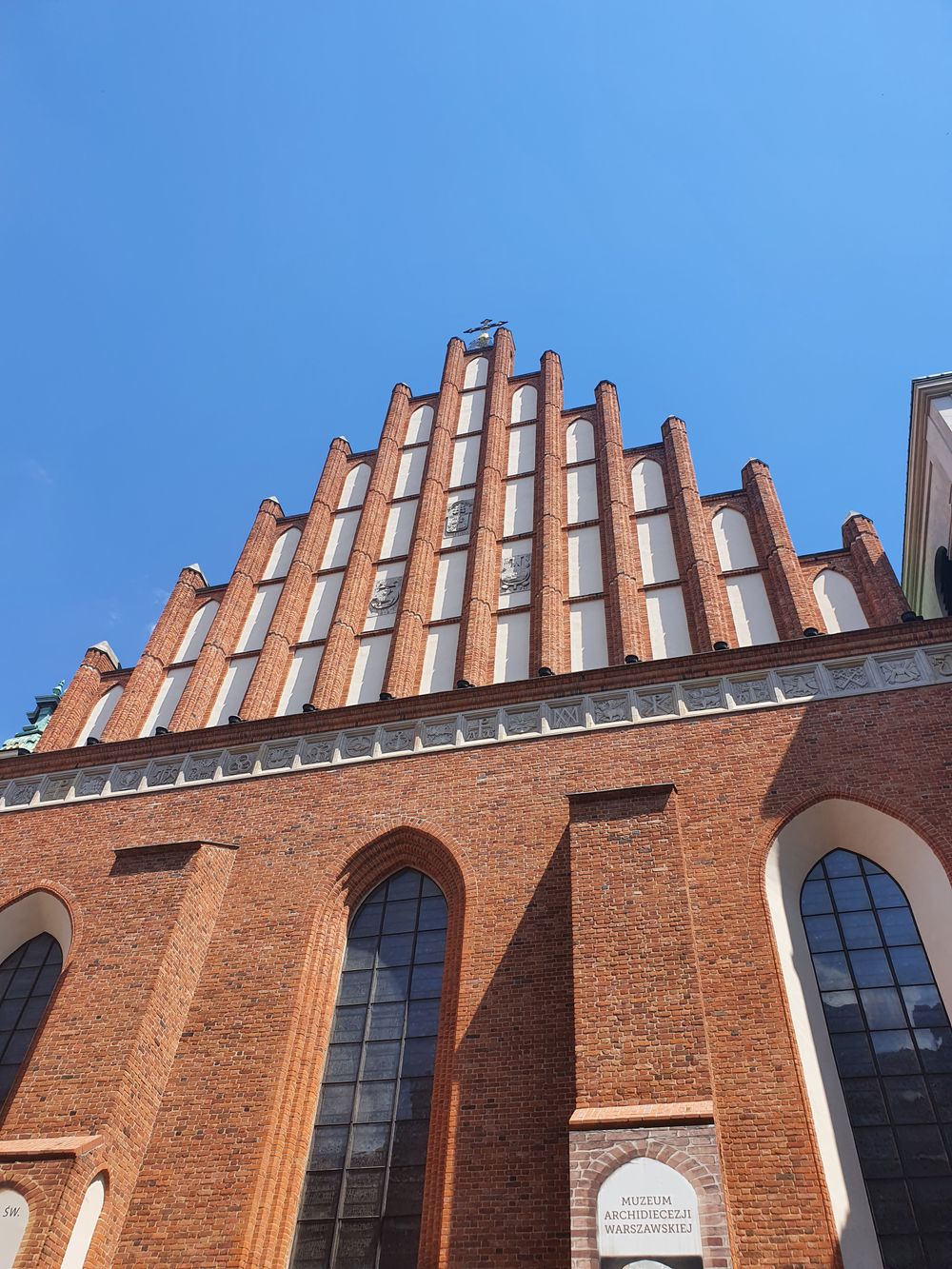
A working cathedral on Świętojańska Street, beside the Jesuit Church and a short walk from Castle Square. The church is free to enter. Its…
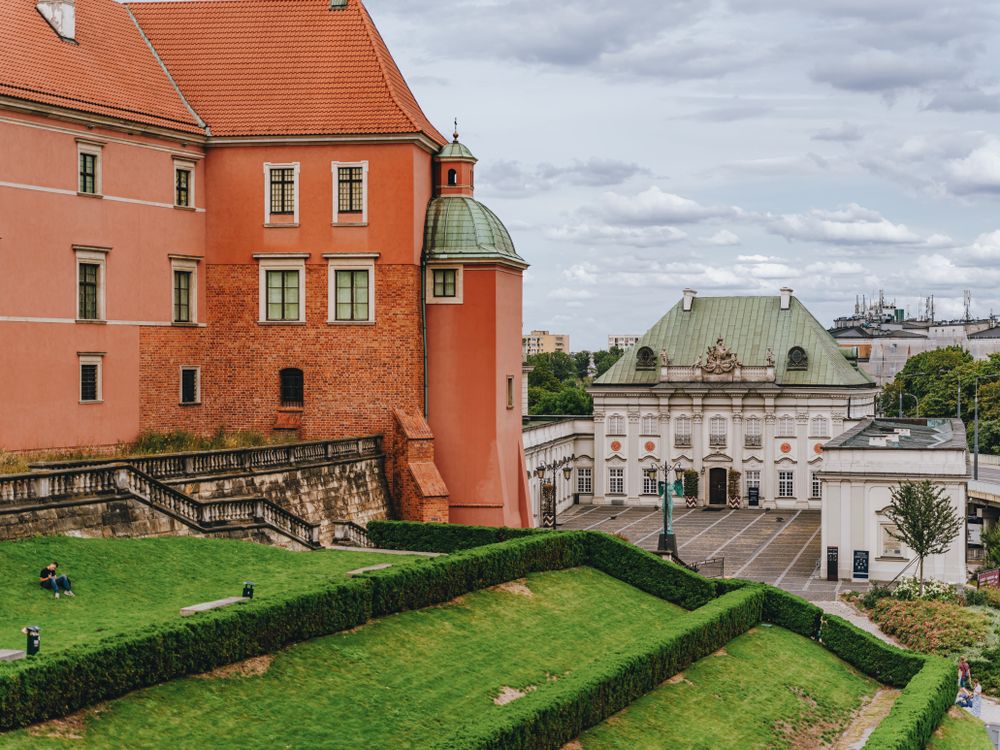
German troops blew the castle up in September 1944. The rebuild began in 1971, paid for until 1980 by public donation alone, and the…