Stand at the north end of Rimetea before dawn on a summer morning, looking east at the limestone, and you get the sunrise twice. The sun clears the low ground to the north-east, climbs, and then goes out behind the rock above the village. An hour or so later it comes up again beyond it. The villagers call the first one első hajnal, the first dawn.
Jókai Mór came to see it in 1876 and put it in a novel the year after, Egy az Isten. That book is where the good hour between the two risings is written down. The village named its July festival Double Rise for the thing and calls the people who turn up sunrise-watchers. There is no bus that gets you there in time, which is the practical point: to see it you sleep in Rimetea.
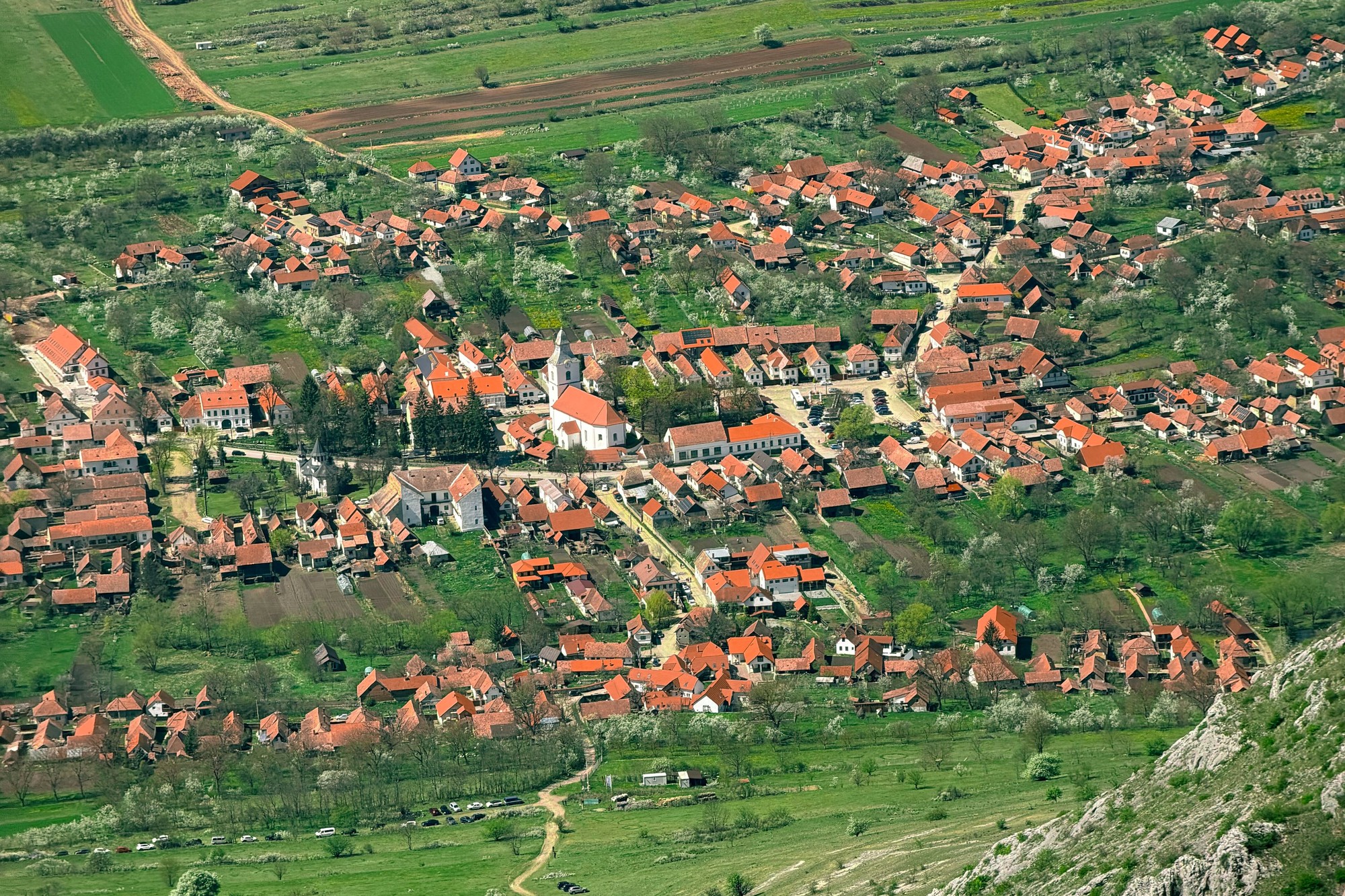
What you come down to afterwards is one street of houses that all match. White walls, green shutters, red clay tile, moulded plaster over the windows, one front after another the length of the village. About five hundred and thirty people live in the village, and at the 2021 census almost 87 per cent of the commune gave their ethnicity as Hungarian.
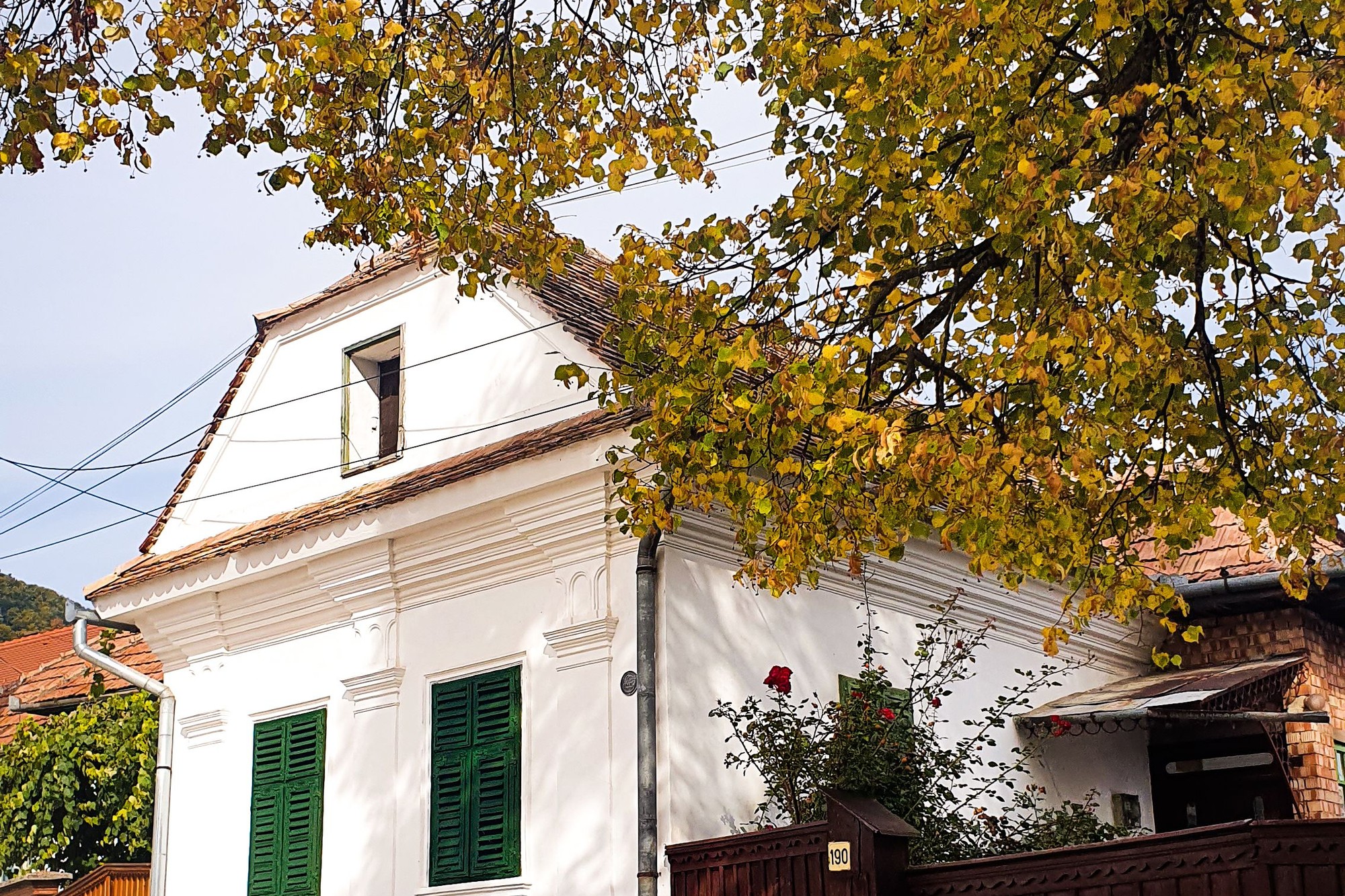
They match because they went up at once. In the spring of 1870 a fire went through Rimetea, ran along both the Upper and Lower Market Rows, and destroyed every building belonging to forty owners. What replaced them is what gets photographed now. The fronts were restored in turn from 1996 with grants from a district council in Budapest, work that took a Europa Nostra medal in 1999.
Before the fire this was an iron town, and a serious one. Torockó, its Hungarian name, comes from an old Slavic word for iron ore; the German name was Eisenmarkt, iron market. By 1716 there were sixteen ore smelters and sixteen water-powered hammers working here, and the tools went to market at Brașov, Bistrița, Arad and Debrecen. Hunedoara and Reșița eventually built bigger works and undercut the price, the ore ran out, and the village was left with its houses.
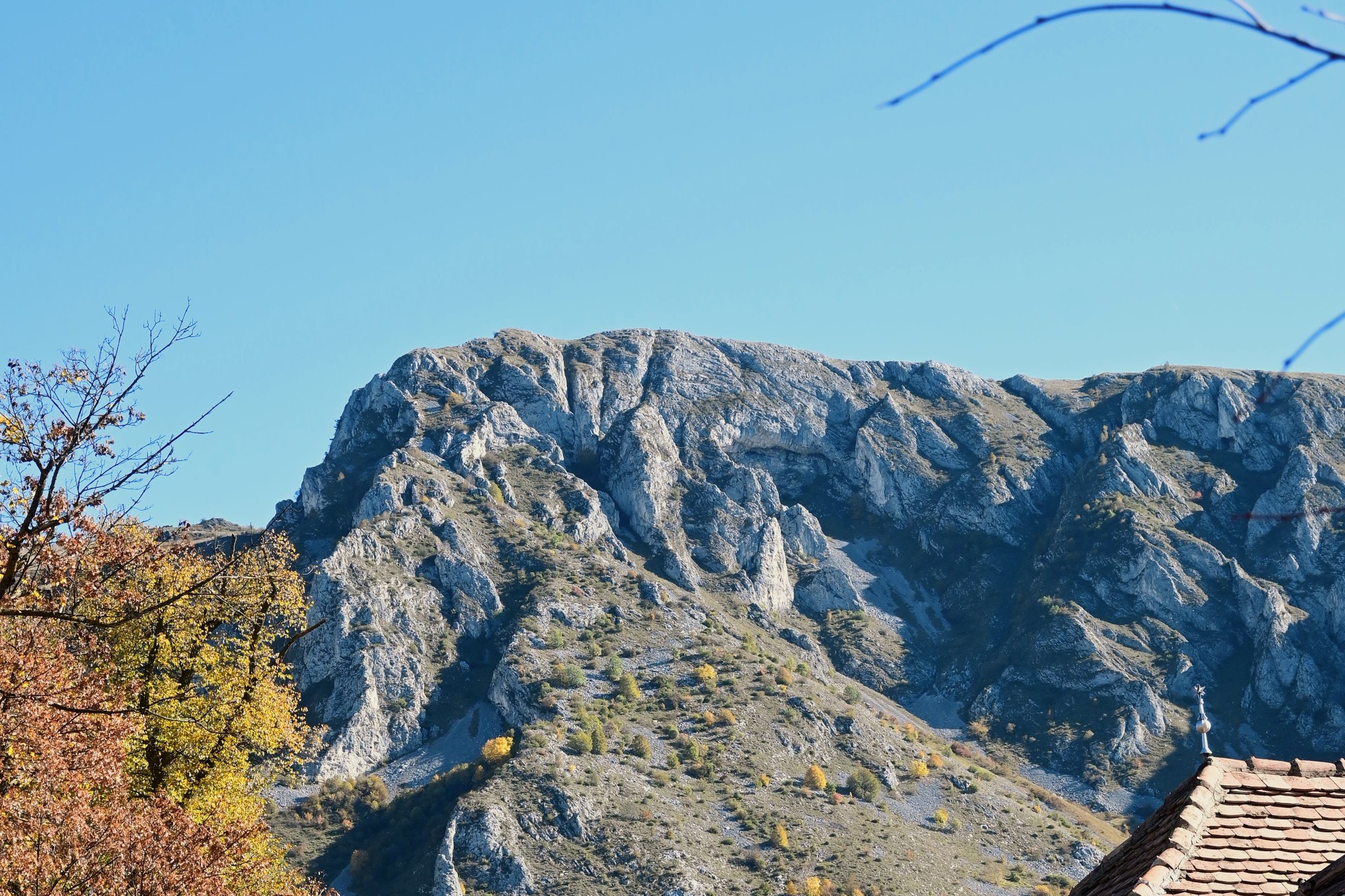
The wall itself is Piatra Secuiului, Székelykő in Hungarian, and it is worth the morning. It is Jurassic limestone with fossil coral and shell in it, 1,128 metres at the top and about six hundred above the street. From up there you look into two counties at once.
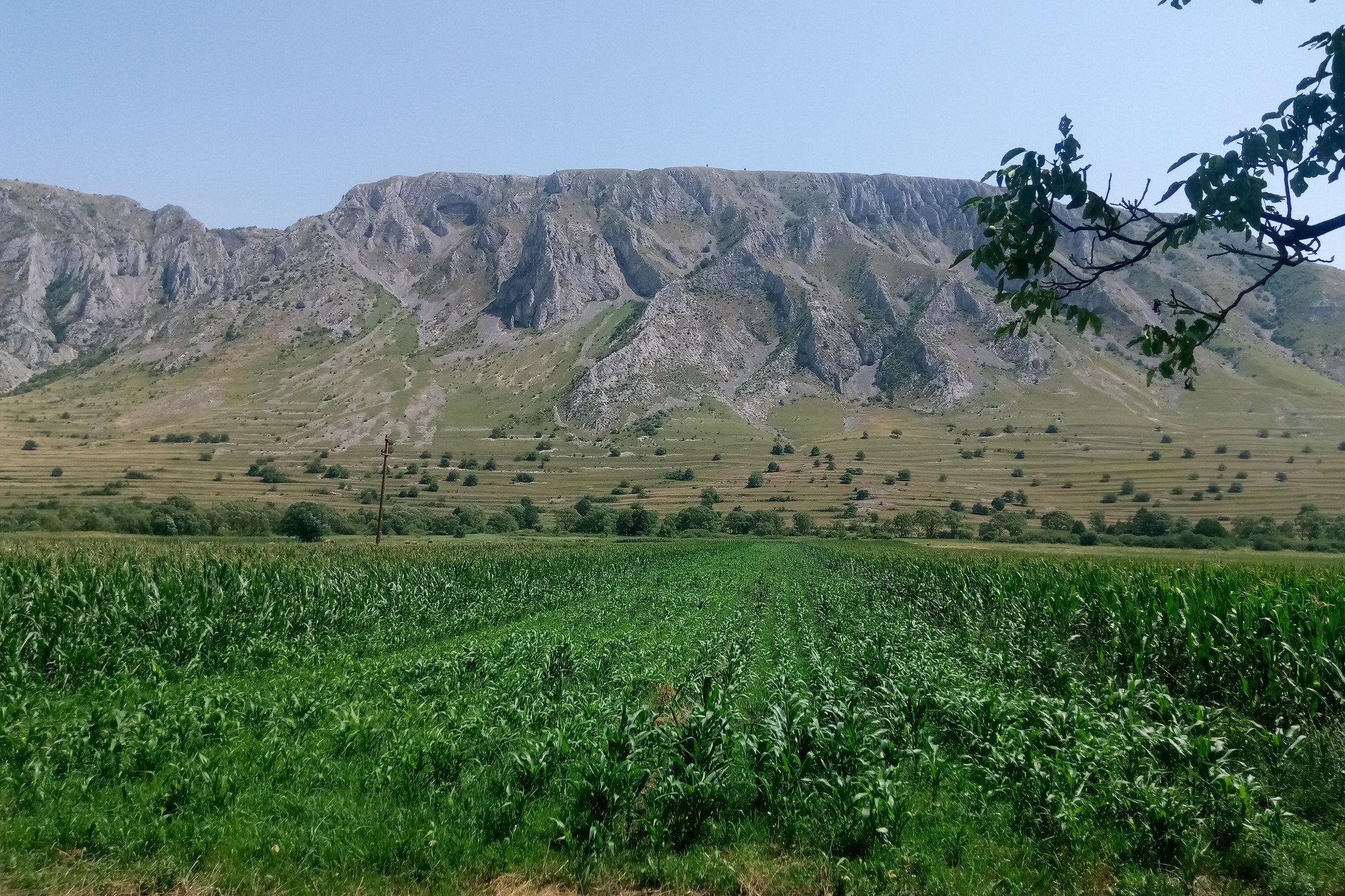
The path starts in the middle of the village and follows a blue cross. It gains those six hundred metres in roughly three kilometres, which is steep. The ground comes in thirds: easy dirt track, then scree and boulders, then soil and stone. The middle third wants attention on every step. Nothing on it needs a chain, a cable or a hand put down, and the steepest of the three routes up still goes on foot.
Reckon on an hour and a half to two hours up, an hour or so down, three to four hours for the circuit. Most people descend a different way, a red band through the forest, and that is the one thing here everybody warns about: after rain it turns to mud. If it has rained, go back down the way you came up.
Boots, not trainers. The scree is the reason, and one hiker's account of the descent ends with a slip and a camera in the face. There is a spring on the forest side that nobody vouches for, so carry a litre and a half to two litres a head. Children do this climb, but nobody local calls it a stroll.
There is no cross or cairn at the top. What marks it is a pair of concrete boundary posts, set where Rimetea in Alba county ends and Moldovenești in Cluj begins. Walkers keep arriving to find them freshly painted, Romanian tricolour one month and Hungarian the next, then Romanian again. It is the quietest argument in Transylvania and it is conducted entirely in gloss paint, at 1,128 metres, by people who never meet.
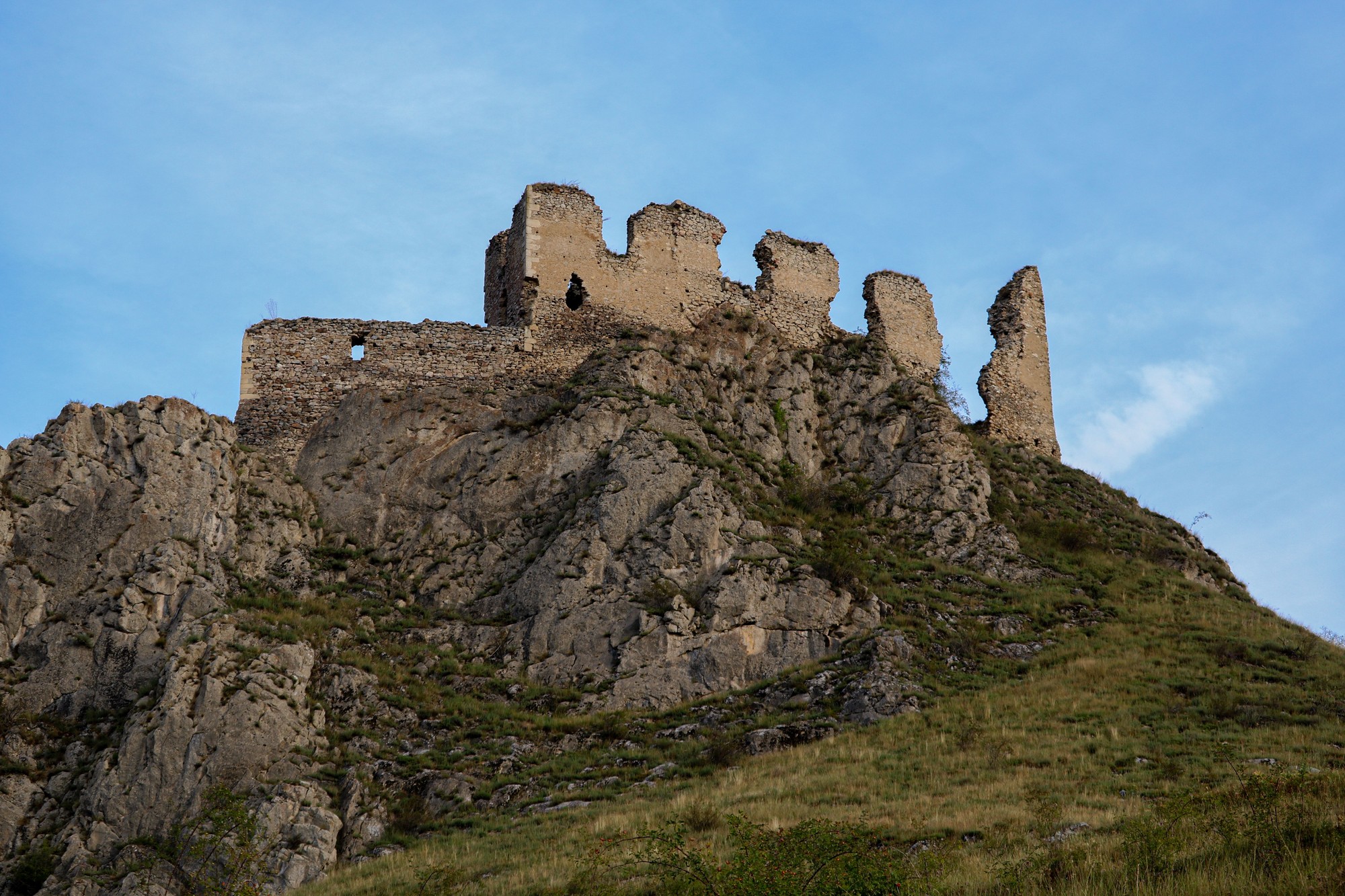
Four kilometres south along the DJ107M, on a rock above the village of Colțești, stand the remains of the Thoroczkay family's castle, slighted by Habsburg troops in 1704. Two towers and stretches of curtain wall are still up, and a blue triangle gets you there from the village centre in about half an hour. A two million euro restoration was received in August 2026, putting routes, stairs, parapets and viewing platforms into the ruin. The same project reopened the Thoroczkay manor below it as an information centre.
If you have a third day, the Vălișoara gorge is ten kilometres down the same road. A county road runs through the bottom of it, so the walking is on the flanks. A red-dot circuit covers both banks in about eleven kilometres, or four and a half for the right bank alone. The limestone walls stand a hundred to a hundred and fifty metres over the road, and climbers work them at both ends of the valley.
In the village itself the village museum is upstairs in the village hall, in the old district headquarters of 1889. It runs to four or five rooms: iron working, painted furniture, local dress, and goods that came in by barter. It is shut on Mondays, unheated, and staffed only when somebody turns up.
Assume you need a car. Public transport in is thin and Turda has no direct service. Aiud is about twenty-four kilometres off, Turda thirty, Cluj-Napoca eighty and an hour and a half away. Neither entrance to the village has a proper car park, and the Transylvanian daily Krónika reported in July 2026 that weekend visitors now stop wherever they fit. The houses are lived in and the yards behind the gates are private.
Midweek is the quieter visit, and the emptier one. Szarvas is the only kitchen that can be counted on every day; a guesthouse may not have a cook until Friday, and out of season most doors stay closed. The village has a few dozen beds in all, and a summer weekend fills them two or three weeks ahead.
As for which morning to set the alarm for, nobody will give you a straight answer. The accounts put the double sunrise in the first three days of July, or late June through July, or May to September, and they contradict each other flatly. The village holds its festival in the second week of July, which is the closest thing to a local verdict on the season. Book the room, get up in the dark, and stand at the north end of the street looking east.