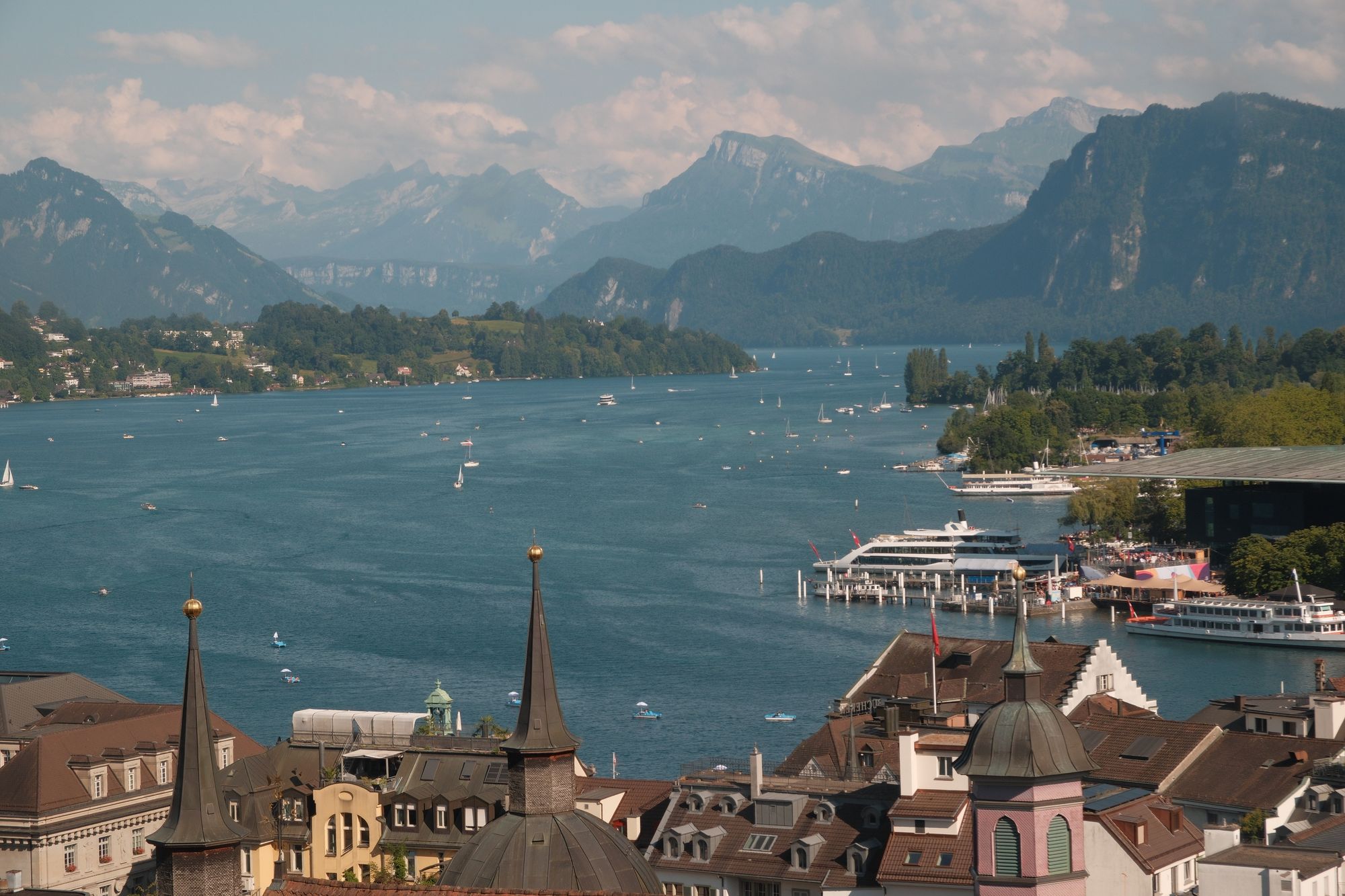
Ninety seconds on Bourbaki Panorama
One painting, 112 metres long, wraps all the way round you in a rotunda near the Lion Monument. From its central platform you look out over a snowy frontier in 1871 as a beaten French army crosses into Switzerland.
A panorama is a painting with no frame: it wraps the room, and you stand in the centre. About 30 survive worldwide, and Lucerne's is among the best preserved.
Look first at the ground below the platform. Real objects, the faux terrain, fill the foreground and run straight into the painted snow, so it is hard to tell where the props end and the canvas begins. Then look up: a fabric canopy hides the top edge of the picture, so the scene seems to go on without end.
Daylight comes in through the glass of the dome, and fabric sails spread it evenly over the canvas. That staged light is what makes the snow and the figures read as real. Close up, the painting works like a hidden-object picture, crowded with small individual stories among the troops.
Edouard Castres, a Geneva painter and Red Cross volunteer, painted it in 1881 with other artists, among them the young Ferdinand Hodler. It shows 87,000 soldiers of the Bourbaki Army, and towns across the country went on to shelter and feed them.
Bourbaki Panorama lends visitors a free tablet at reception, so ask for it before you go up. Its app runs in English, German or French. Leave coats and bags in the cloakroom, then head up to the rotunda; a stair lift run by museum staff serves anyone who cannot manage the stairs.
On the platform, walk one slow lap with nothing in your hands and take in the whole scene. Then go round again with the tablet, which follows individual people in the scene, sets quiz questions and lets you take photos. At the end it puts together a personal Bourbaki Story that you can email to yourself.
The rooms around the rotunda cover the rest, with touchscreens on the war, the Red Cross and Swiss neutrality, and on panoramas as a forerunner of cinema.
Guided tours go in front of the canvas and behind the scenes, in German, French, English or Italian, and other languages can be arranged. The standard tour runs 60 minutes, and a longer version adds the Lion Monument nearby.
Tours run on selected days, not on demand, so arrange one through the museum's contact form or by phone before you come. Use the app instead if no tour fits your day.
The app is not on the public App Store, so you cannot load it before you arrive. Bring an ID card or driving licence to leave at the desk as the deposit.
Show your Swiss Travel Pass or Swiss Museum Pass at the desk, since it covers entry. In peak season or on a rainy day the queue builds, so arrive at opening or buy your ticket online first.
Explore the rest of Lucerne
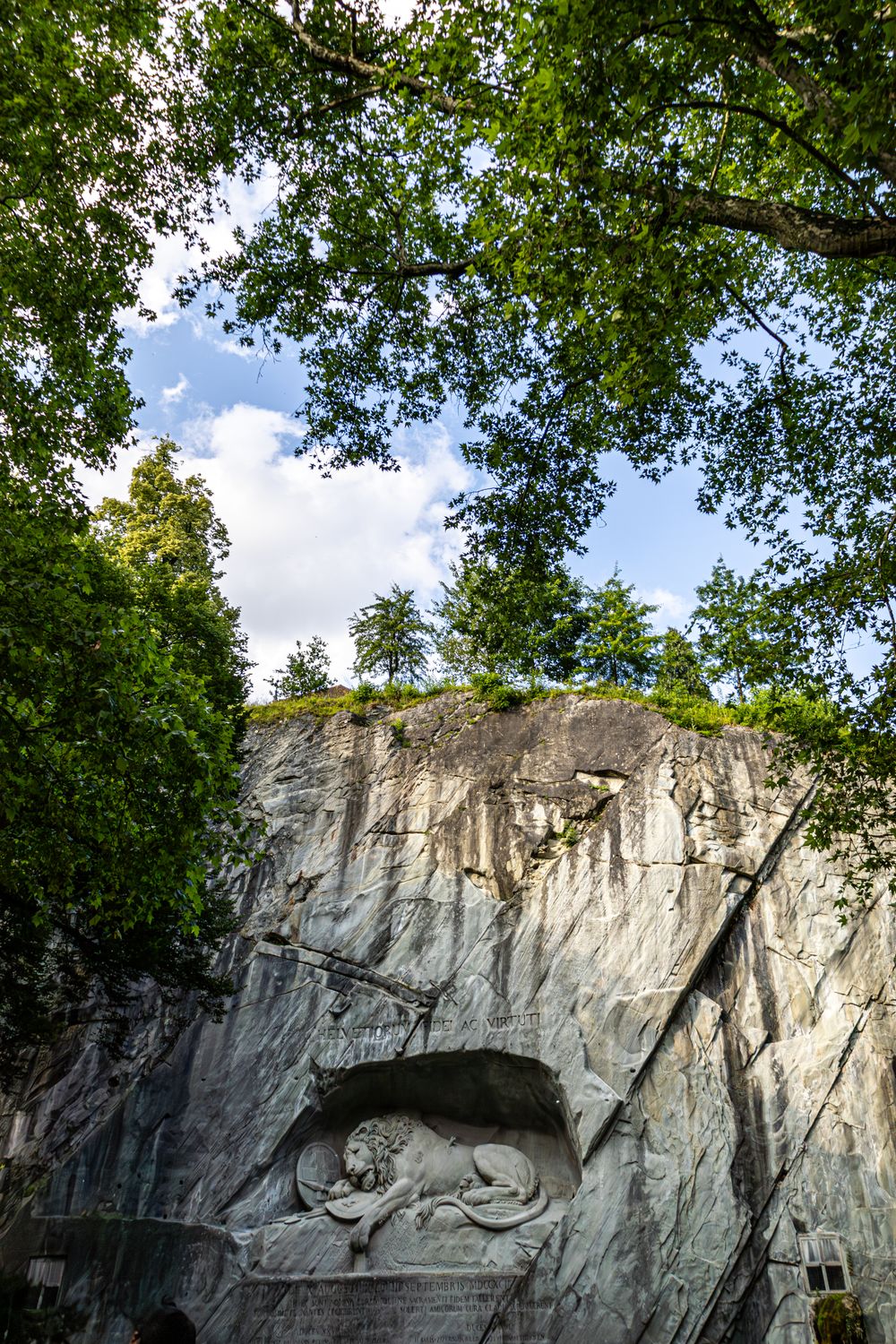
A dying lion carved into a rock face in 1821 for the Swiss Guards killed defending the Tuileries in 1792, ten metres long above a quiet…
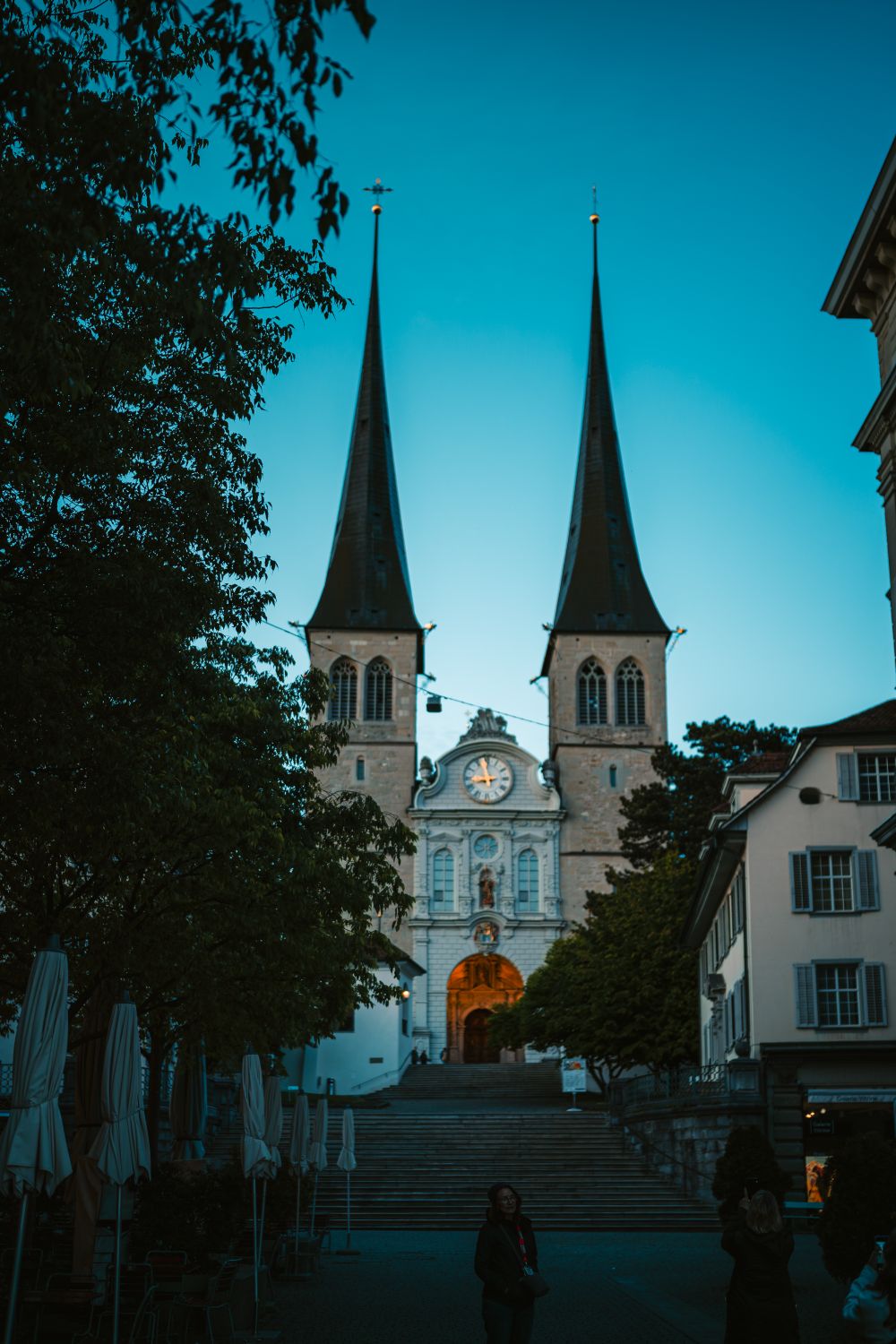
Above a staircase from the lakefront, the twin-towered Hofkirche is Lucerne's mother church. Its great organ plays summer storm concerts,…
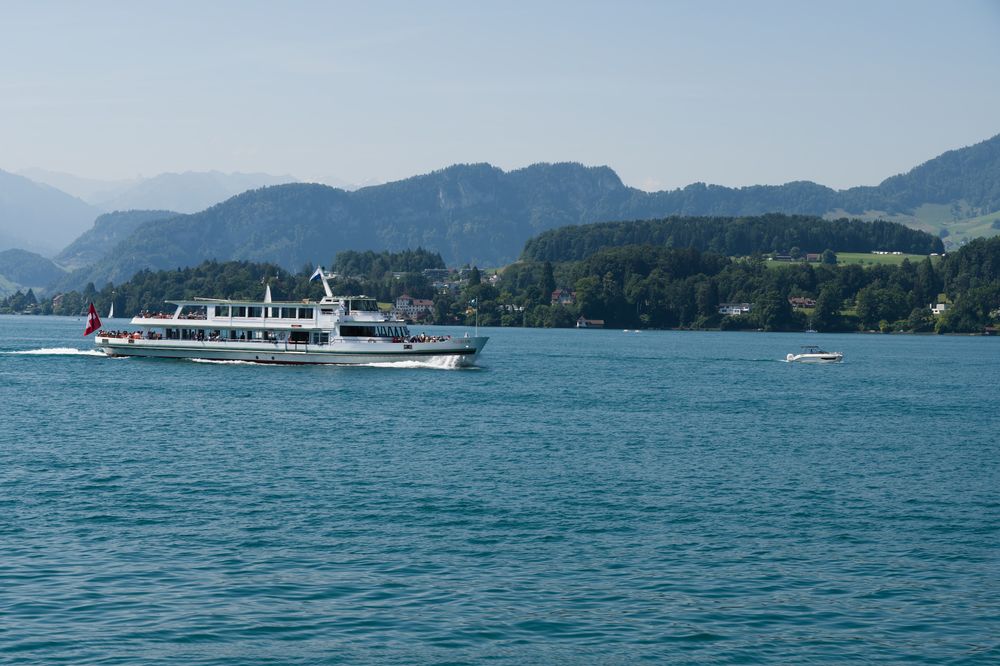
Boats leave from the quay outside the station for every arm of the lake, from short loops past the lakeside villas to the long run to…