 Submit a photo
Ninety seconds on the Lion Monument
Lucerne station and the old town are each about 15 minutes away on foot. By bus, lines 1 and 19 leave the station for Loewenplatz, the nearest stop. The city rates the site as wheelchair accessible.
There is no entry fee and no ticket. The monument can be visited on any day of the year, and ten information boards in German and English stand beside the pool.
The monument itself takes 15 to 30 minutes to see. Stand at the pond in front of the rock face to look at the carving directly. The neighbouring Glacier Garden needs one to two hours on its own.
It is a memorial to the Swiss Guards killed in Paris in 1792, when the Tuileries was stormed. The design is by Bertel Thorvaldsen, and the carving was hewn in 1820 and 1821. The dying lion shelters the royal lilies of France.
Yes. The Glacier Garden is the next-door neighbour and the usual pairing, with its own ticket. Meltwater carved its potholes about 20,000 years ago, in the last ice age, and its walk ends at a viewpoint looking over the city towards the mountains.
Mark Twain called it the most mournful and moving piece of stone in the world, and you will see why. Cut into a Lucerne cliff over a still pool, a lion lies dying with a spear in its back, still guarding the lilies of France.
The grotto is ten metres long and six high, set into the cliff of a small park. Look at the paw: the shield under it carries the fleur-de-lis of the French kings, and the lion's bowed head rests over it.
The carving honours the Swiss Guards who died defending the French king at the Tuileries in 1792, and the shield beside the lion carries the Swiss arms. Thorvaldsen designed it, and it was cut into the rock in 1820 and 1821.
Above the lion the Latin reads Helvetiorum Fidei ac Virtuti, to the loyalty and bravery of the Swiss. An inscription below lists the names of the officers who died at the Tuileries. Read both before you leave, because they are easy to miss from across the water.
From the far side of the pool you take in the whole carving at once, with the lion mirrored in the still water among the water-lilies. Stay there a few minutes before walking round to the information panels.
Ten interpretation panels, in German and English, explain the history and what the monument has meant since; scan the QR code on them for French or Italian. Chapel Bridge or Bourbaki Panorama rounds out a day here.
Then go next door to the Glacier Garden, which has its own ticket and needs one to two hours. Its potholes were worn into the rock by meltwater about 20,000 years ago, and the route leads through dark passages, past an underground lake and a maze of 90 mirrors to a view over Lucerne and the Alps.
If a tour group is at the pool when you arrive, read the panels first and come back to the water once it moves on. Keep your Lucerne Guest Card on you for the Glacier Garden, where it earns a discount on admission. The lion is a memorial to the dead, so keep your voice down by the water.
Explore the rest of Lucerne
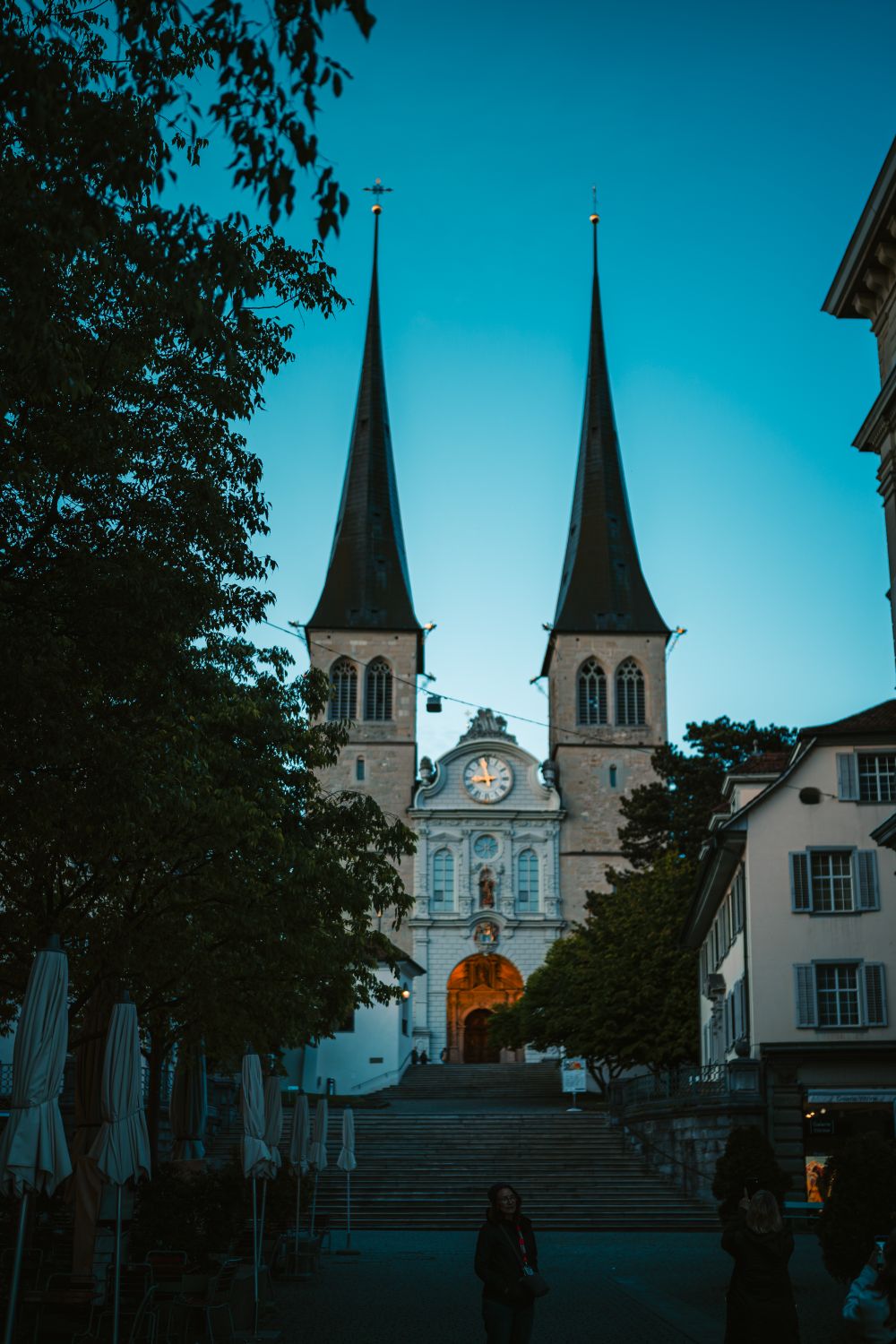
Above a staircase from the lakefront, the twin-towered Hofkirche is Lucerne's mother church. Its great organ plays summer storm concerts,…
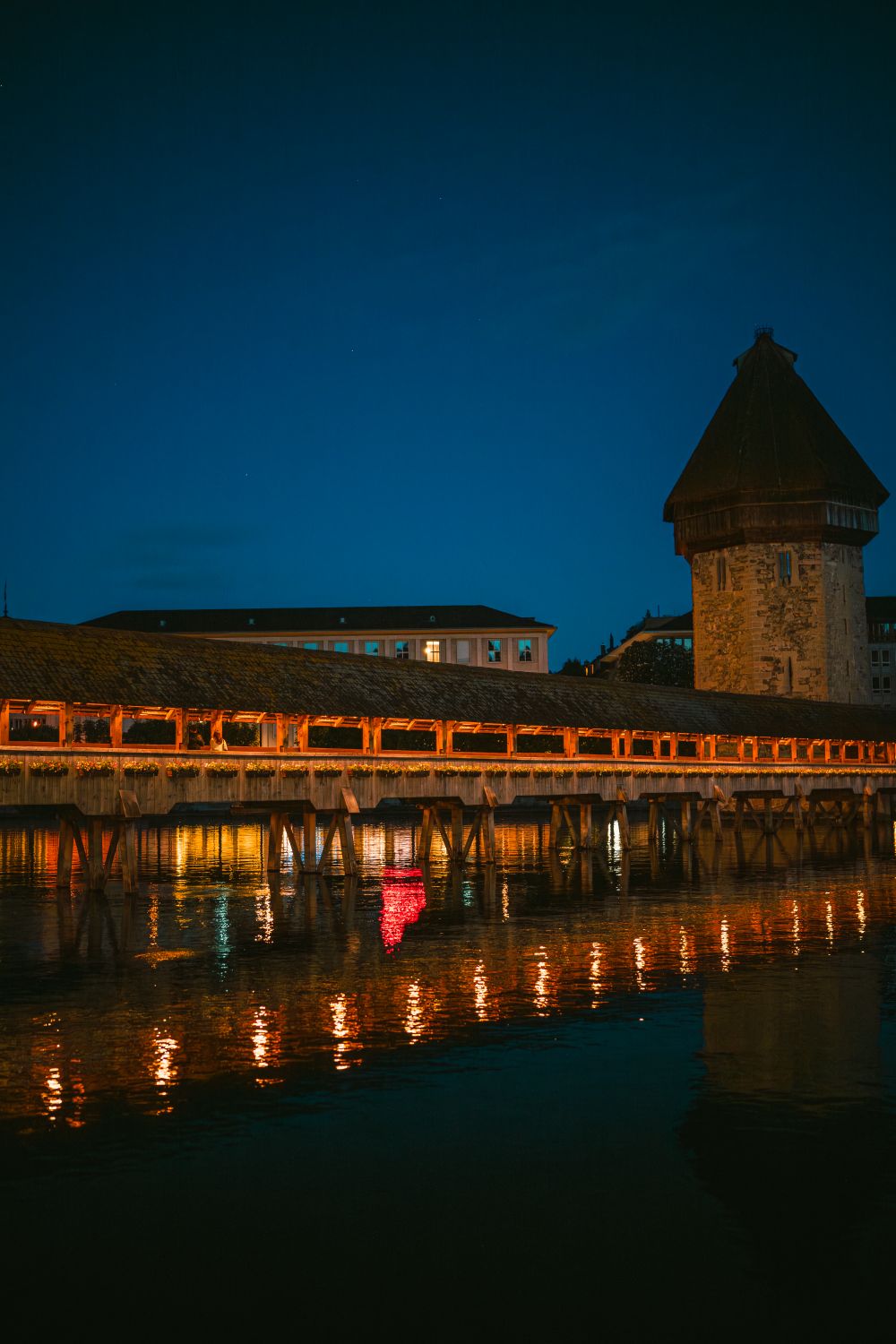
A covered wooden footbridge of about 1365 crossing the Reuss at an angle, with a water tower beside it and painted panels in the roof…
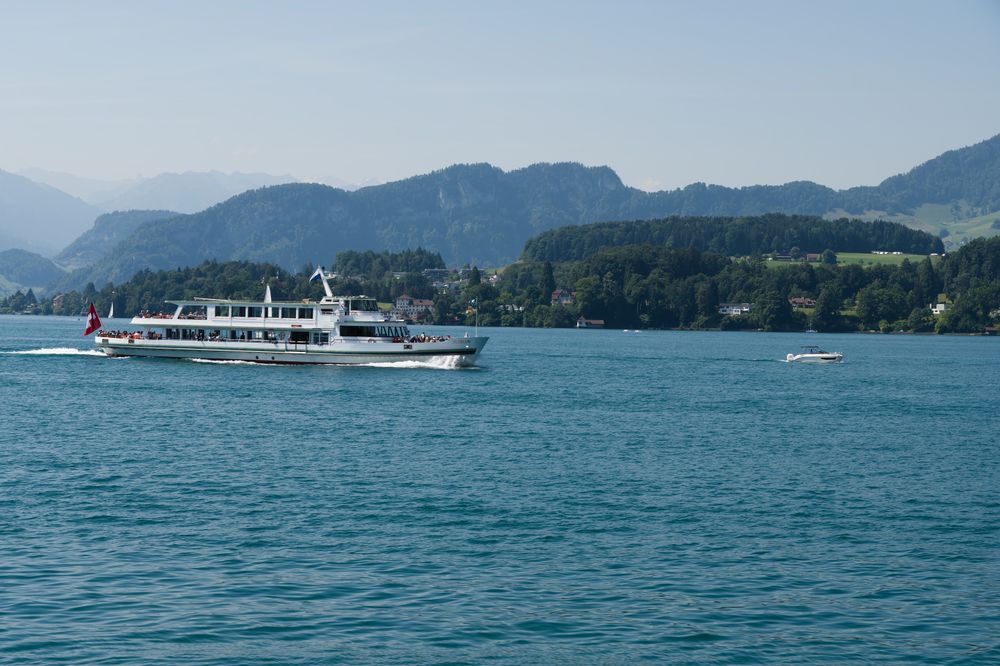
Boats leave from the quay outside the station for every arm of the lake, from short loops past the lakeside villas to the long run to…
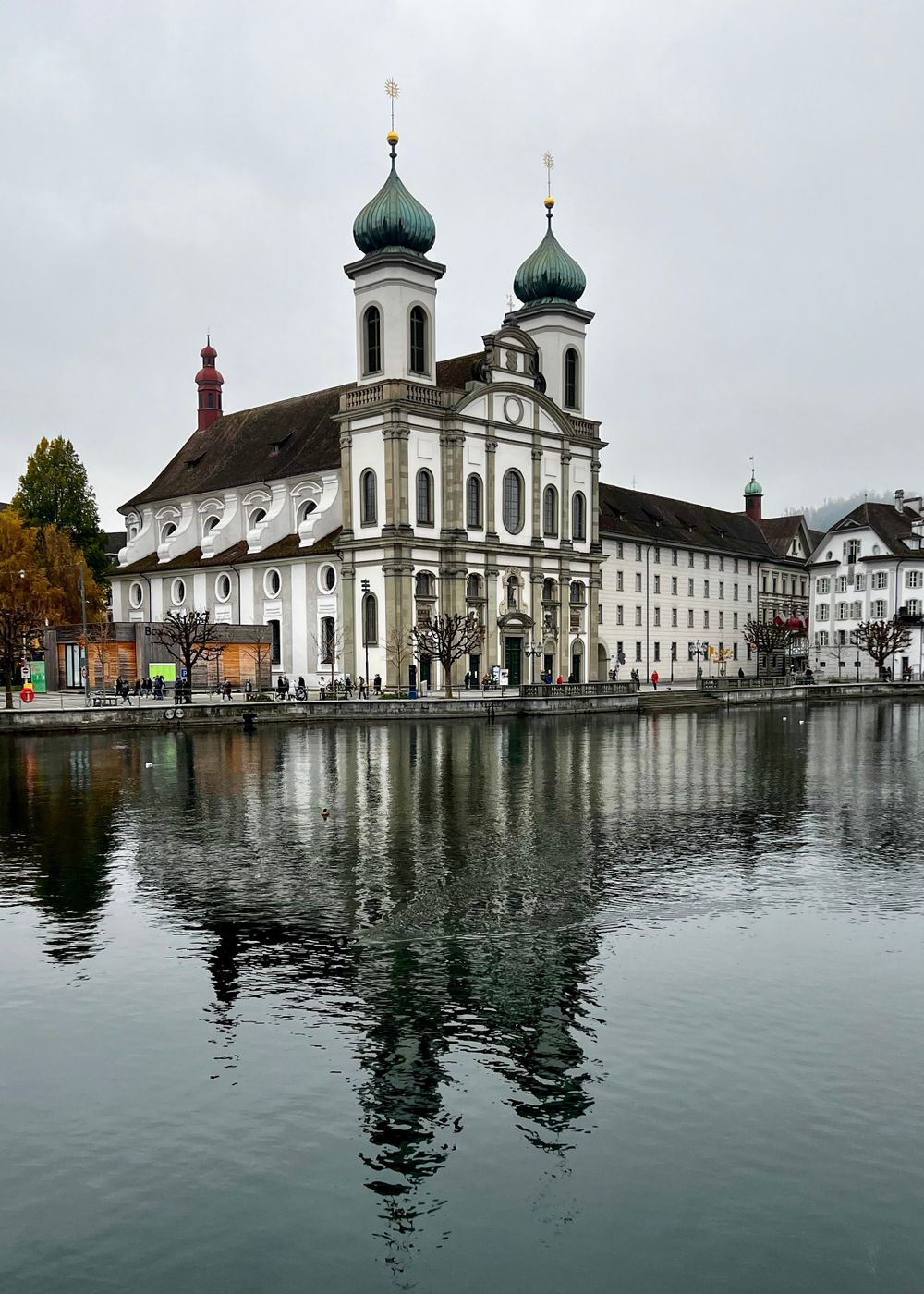
On the left bank of the Reuss, a twin-towered church opens into a bright baroque hall of white and gold stucco under a painted ceiling. It…
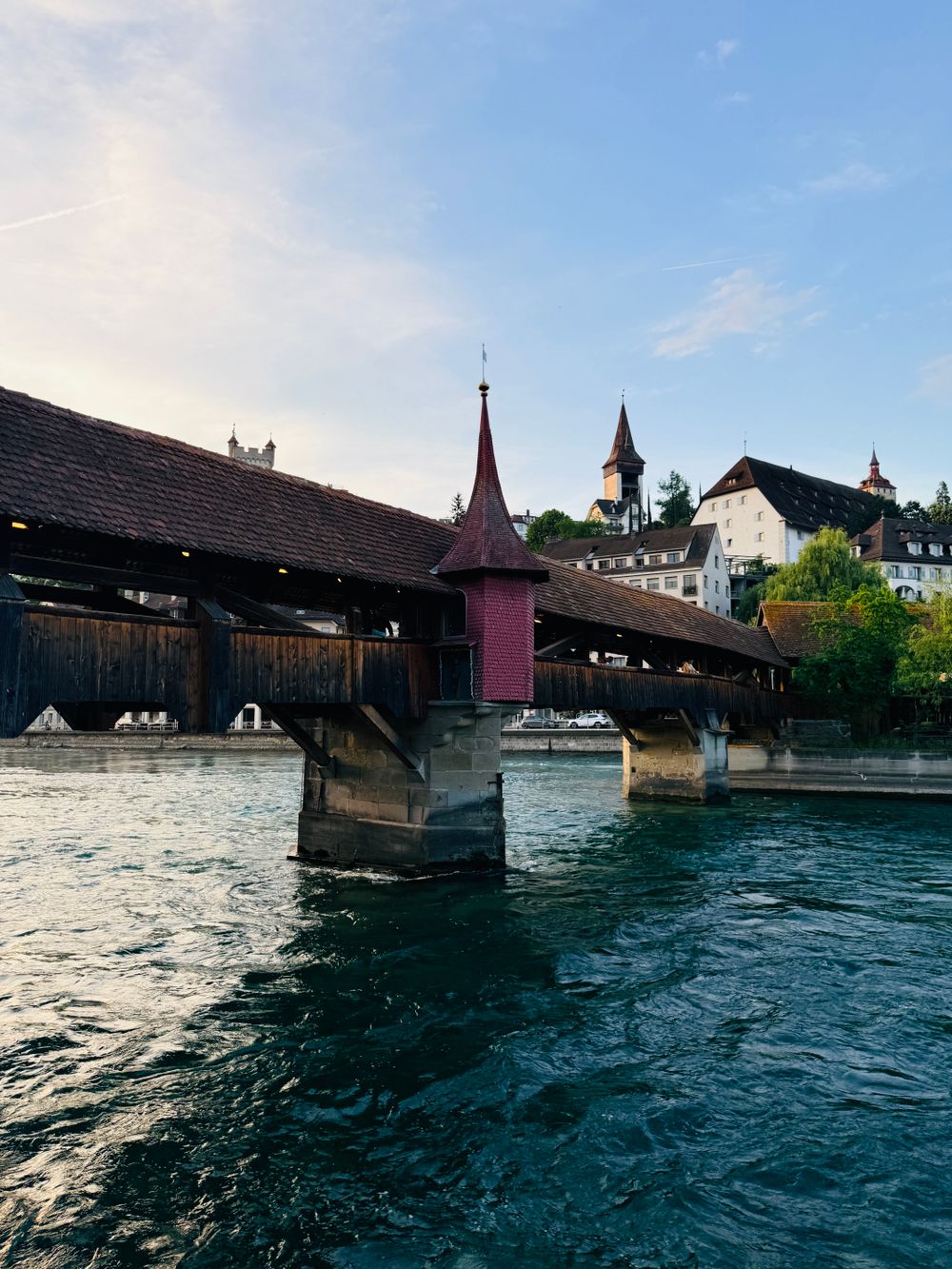
Downstream from the Chapel Bridge, Lucerne's second covered wooden bridge crosses the Reuss within sight of the old needle weir, with…
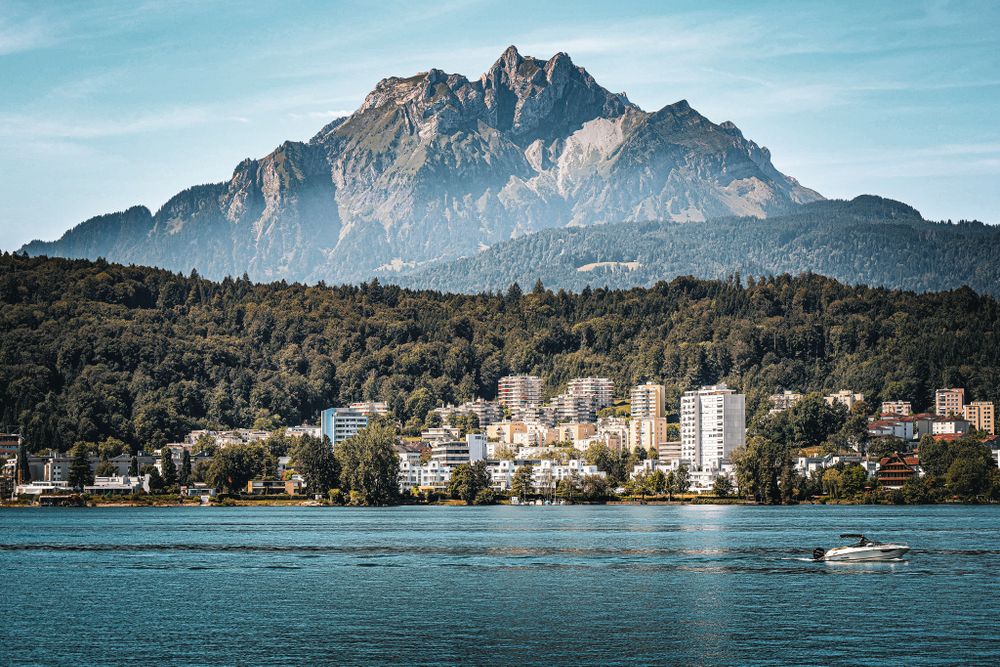
The mountain closing the lake's western end at 2,128 metres, climbed by the steepest cogwheel railway in the world at a gradient of…
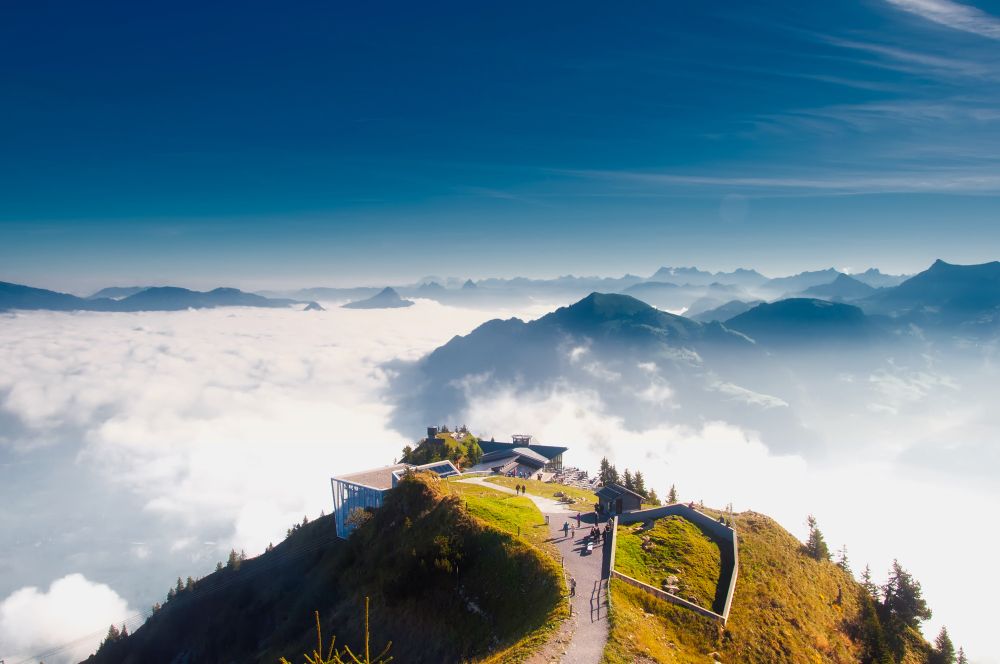
From Stans, a short train ride from Lucerne, a funicular and then the CabriO cable car climb to a 1,898 metre summit. A short loop path…
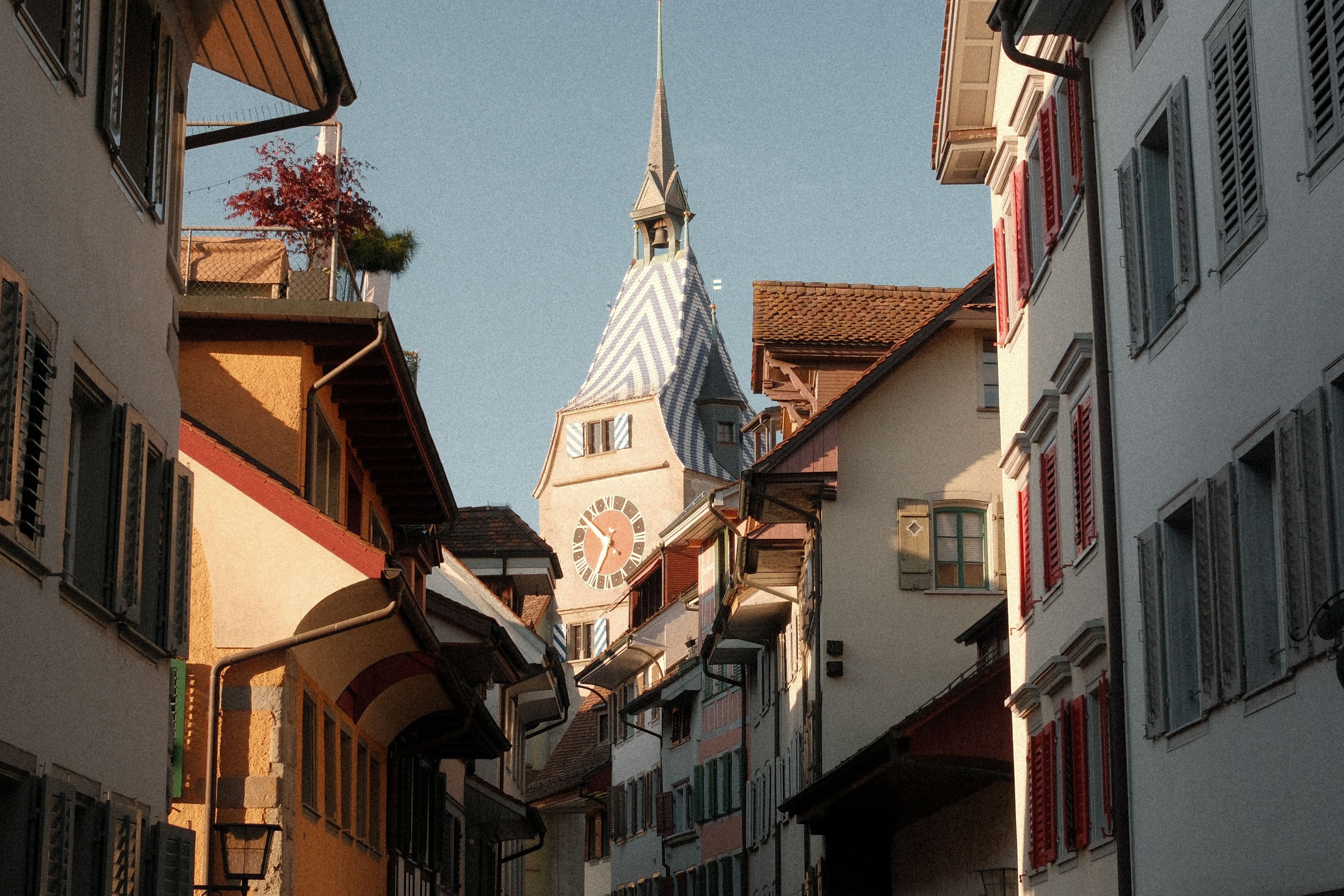
A small lakeside town half an hour from Zurich with an intact medieval core, a clock tower with the cantonal colours on its roof, and a…
Last updated