 Submit a photo
Ninety seconds on John o' Groats
Yes, as long as the coastline is the main event. The cliffs and shore around the village are the strongest reason to stop, and the famous signpost makes a fitting last photograph after a long walk along them.
No. The most northerly point on the British mainland is Dunnet Head, a short drive to the west. John o' Groats is famous instead as one end of the journey from Land's End.
Not any more. The passenger ferry from the village to Orkney ran its final season in 2023. Ferries to Orkney now cross several times a day from Scrabster harbour, taking foot passengers or vehicles.
About 1,400 km, by the signpost's reckoning, which also points to New York, Edinburgh, Orkney and Shetland. The longest journey possible in the UK runs on from Land's End to Duncansby Head, about 3 km east of the village.
An hour covers the signpost and the harbour front. Two to three hours leaves room for the shops, a coffee, the distillery or brewery and part of the coastal path.
Yes. There is a car park at the village, with a couple of disabled bays right across from the signpost. The car park, the signpost area and the harbour all sit on relatively flat ground.
Most of the fame here is a phrase: Land's End to John o' Groats, shorthand for the full length of Britain. Stop for the signpost photograph at the end of that journey.
The village takes its name from Jan de Groot, a 15th-century Dutchman who ran a ferry from the mainland to Orkney, and not from the groat coin of local legend. The John o' Groats House Hotel was built on or near the site of his house.
Legend also gives him an octagonal house with eight doors and an eight-sided table. The craft village nods to it, with an octagonal-roofed shelter at the centre of its courtyard.
Anyone can walk up to the public signpost at its original spot and photograph it, though its lettering cannot be customised. Two Caithness slate standing stones flank it, inscribed "In every end, a new beginning" and "Every mile a memory, every step a story."
Caithness flagstone memorials remember the lives lost in two tragedies, one of them the sinking of the trawler George Robb near the Stacks of Duncansby. A large red foghorn on show here was the original working foghorn of Duncansby Head Lighthouse.
Start at the signpost, where a small queue forms even on a weekday morning. The queue moves quickly, and visitors in line take photos for each other.
Next, walk to the craft village just behind the car park. John o' Groats Bookshop doubles as the tourist information point.
The John o' Groats Trail leaves the harbour under a wrought iron arch with Celtic knotwork and follows the coast east. The full circular trail takes around 2.5 to 3 hours.
For the stacks themselves, take the single-track road signposted off the A99 to Duncansby Head. The walk to Duncansby Stacks starts from the lighthouse car park.
Even if you skip the full trail, a short stroll along the shore takes you away from the bustle of the car park. Dogs are welcome in the outdoor areas and on the coastal walks.
Bring a good windproof layer, because the village is windswept all year.
Bus 80 runs from Thurso via Dunnet and Mey, Monday to Friday, in about 55 minutes. Public transport here is slow going, though, so a car makes the day much easier.
Drive west to Dunnet Head for its lighthouse and its seabird cliffs, where puffins, razorbills and guillemots nest.
Explore the rest of Thurso
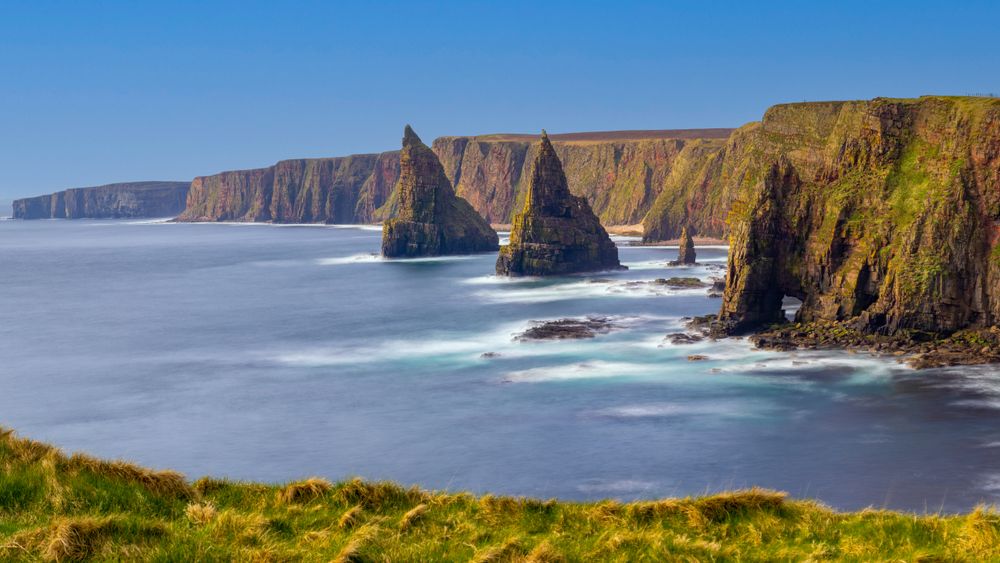
Pointed sea stacks rise off the cliffs south of the Duncansby Head lighthouse, reached by a grassy clifftop walk of 15 to 20 minutes from…
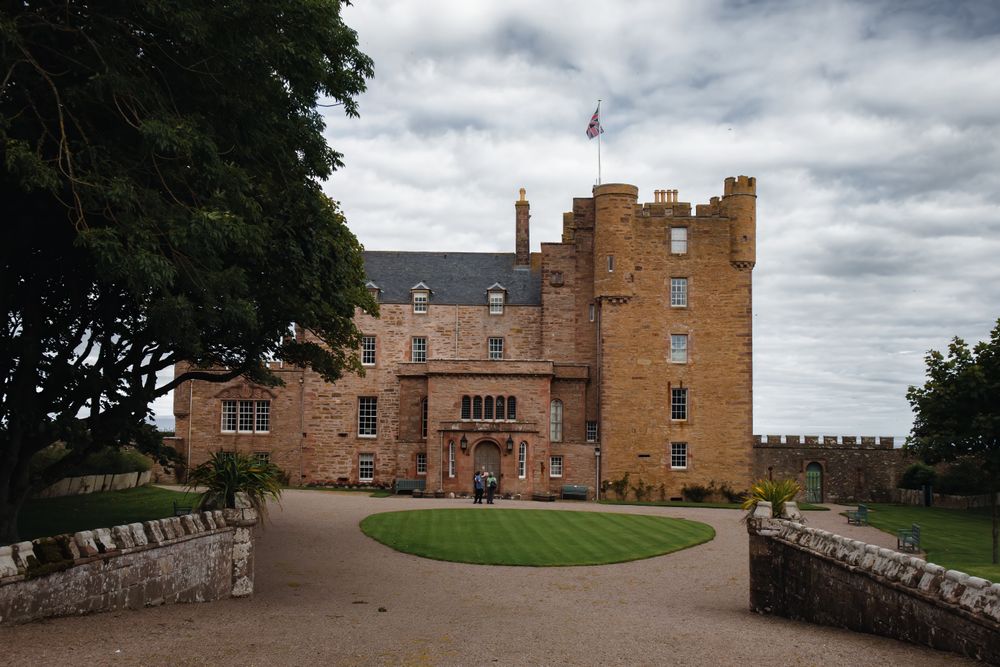
Restored by the late Queen Mother, who spent her summers here, this turreted castle above the Pentland Firth keeps her furniture, paintings…
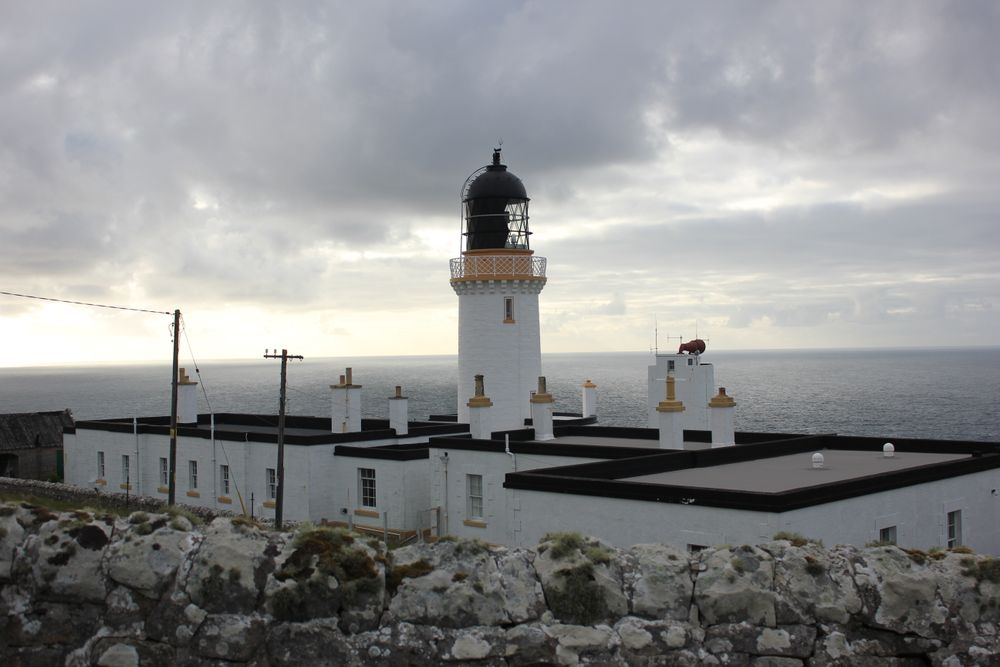
Sandstone cliffs at the mainland's northern tip carry a lighthouse and a car park, with views across the Pentland Firth to Hoy in Orkney.…
Last updated