About 1.5 metres across, the arch in this roadside ridge is lined with crystals that grew inside a cave. Much of the cave's roof has since gone, and you walk up to the arch from the road.
Natural Wonder, Bahariya Oasis. Meridian Dispatch.
Yes. As of November 2026 there are no set hours and no gate, because the outcrop stands beside a public road. The guide and the tour programme set the time of arrival.
No. Crystal Mountain is free, with no ticket booth at the roadside. The desert permit is a separate matter and has to be arranged in advance.
No. Crystals stay in place, and so do loose stones and fossils. Decades of souvenir hunting have left damage that is still visible on the rock.
Walking round it is fine, but climbing on the formation is discouraged because it is risky and breaks fragile crystal. The base and the area around the arch can be seen without any climbing.
For the wider desert circuit, yes. The ridge itself sits directly off a paved road, but many connected sections are remote and off-road. Following a map pin in an ordinary rental car is a bad idea.
October to April, when temperatures are comfortable for a stop in the open. From June to August the dark crystals soak up intense heat and the plain around them offers no shade.
Expect a low ridge beside the Bahariya to Farafra road, not a mountain, and small enough to walk round. Thousands of small crystal faces cover it and sparkle in direct sun.
The crystals are mostly calcite, the mineral that water leaves behind in caves. In the old cave system around here they range from microscopic grains to pieces about 20 centimetres long. Darker patches of barite tint parts of the rock yellow or brown.
All of this was once underground. Water opened up the rock and lined the hollows with crystal before the cave collapsed.
From the base, look for blocks of fallen cave ceiling cemented together and rock pitted like honeycomb. One umbrella-shaped mass is made of neatly arranged crystals.
The arch is near the crest, with crystal on both of its inner sides. Sunlight coming through it throws bright patterns onto the sand.
Your trip starts in Bahariya Oasis, where you meet the desert team and move into a 4x4. Southbound programmes often cross the Black Desert, and some stop at El Heiz for a meal or a spring, depending on the operator.
The driver pulls off the tarmac into a lay-by on the east side. There is no gate, and Bedouin operators may be serving hot tea and snacks here.
Walk round the base first with your guide and look closely at the rock face. Then stand below the arch, where you can photograph the desert through the opening.
Guides usually allow 20 to 30 minutes. Back in the vehicle, the next stop is Agabat Valley, and the route goes on into White Desert National Park, where you camp or turn back, depending on the itinerary.
Choose between two trip lengths. Two days with one night in the desert is the most compact practical circuit. Three days with two nights leaves more time for the oasis and for stops like this one.
Before you pay, ask the operator whether Crystal Mountain is on the programme and how that day is paced.
Photograph the rock with the sun to one side, which picks out the hollows and crystal faces. With the sun behind you the ridge looks flat, and shooting straight into it can leave the arch in silhouette.
Pale stone overexposes easily, so take the exposure down a little. If you use a polarising filter, turn it slowly as you watch the screen, because at full strength it can remove the sparkle you came for.
Wear closed shoes with grip instead of sandals, since broken fragments are sharp.
Pack for the full desert day: a refillable bottle, sun hat, sunscreen, a scarf against dust and your passport or other required identification. Confirm with the operator that drinking water is supplied.
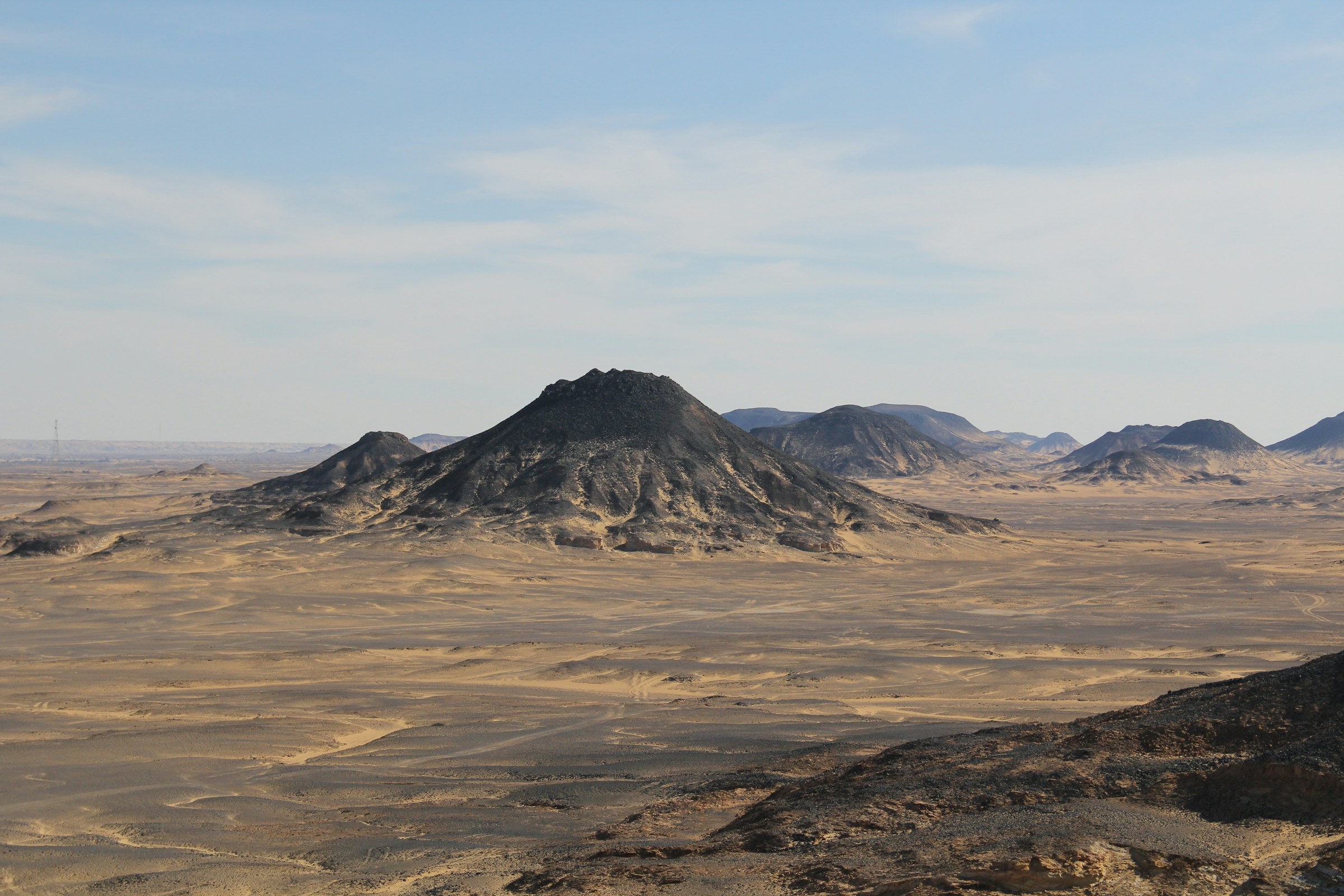
After a night in Bawiti and a morning in its painted tombs, you ride south by 4x4 past black-capped hills and camp among the chalk towers of the White Desert.
Read the Bahariya Oasis guideExplore the rest of Bahariya Oasis
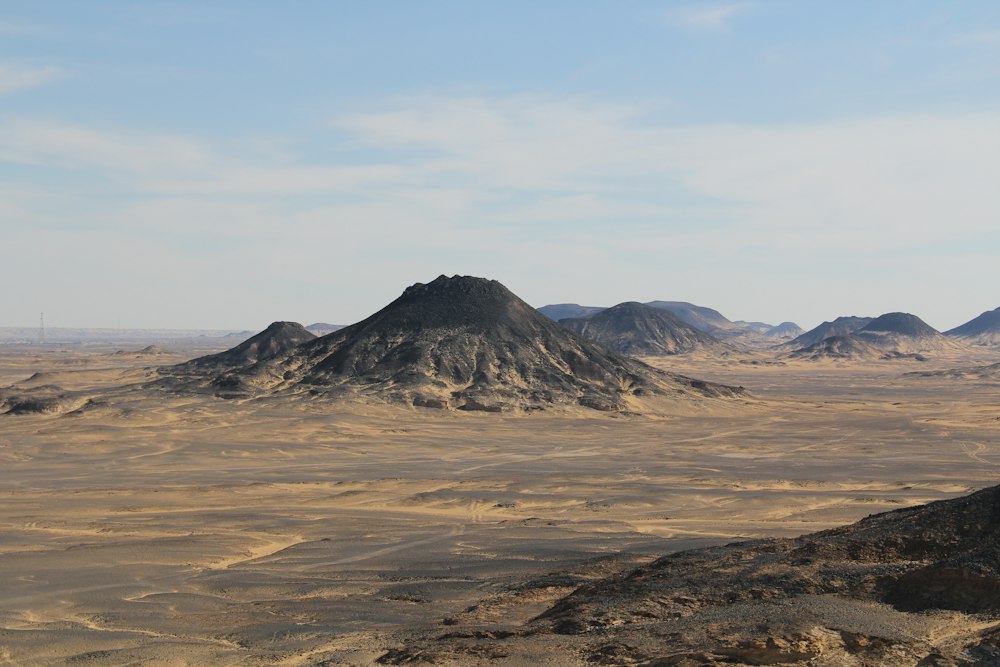
A belt of palm groves, hot springs and villages sunk in a desert depression about 370 km south-west of Cairo, the closest of the Western…
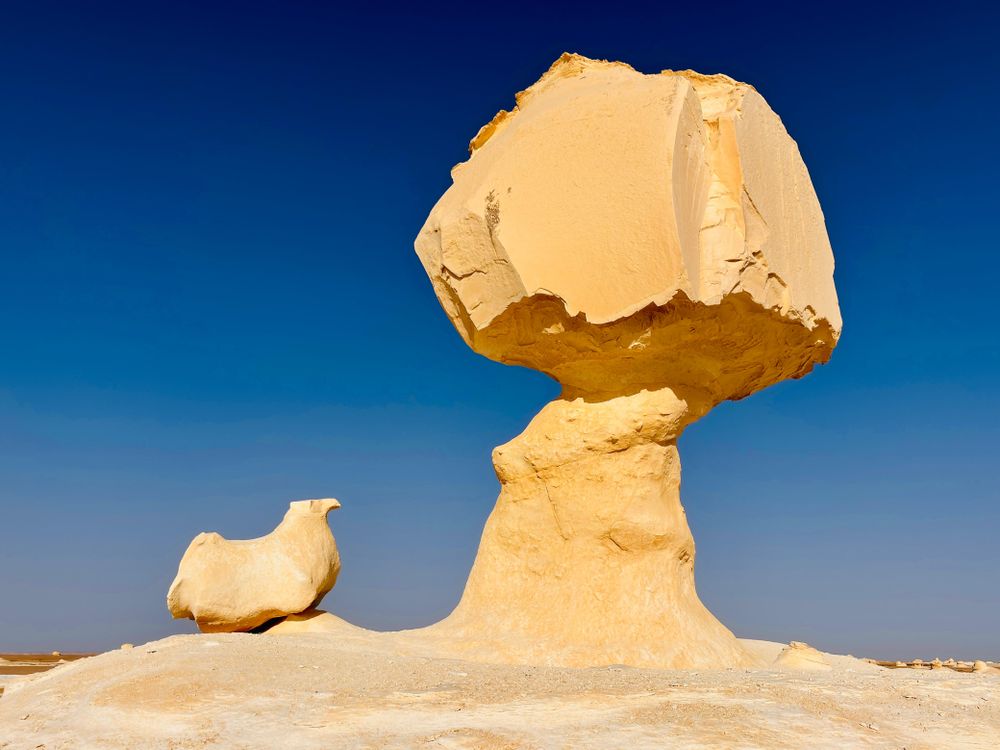

Wind has carved the chalk here into white towers and mushroom shapes that stand out of the Sahara sand for kilometres north of Farafra. The…
Remote even by Western Desert standards, this oasis village of mud-brick lanes and walled palm gardens sits about 180 km south of Bahariya.…
Where the Bahariya road drops off the plateau, limestone cliffs and sand dunes fold into a valley that marks the start of the White Desert…
Dark-capped hills stand apart on orange sand here, and broken black stone spills down their sides. Most 4x4 trips from Bahariya stop for…
Two sandstone chambers dedicated to Amun stand in low ruin at Ain el-Tibniya, also called Qasr el-Miqisba, about five kilometres west of…
On the eastern edge of Bawiti, a short walk north of the museum, a mound holds two painted tombs from the reign of Ahmose II. One belonged…




Save Crystal Mountain to your Egypt trip in the Meridian Dispatch app and build the day around it, with the best of Bahariya Oasis pinned on one map.
Download on the App StoreLast updated