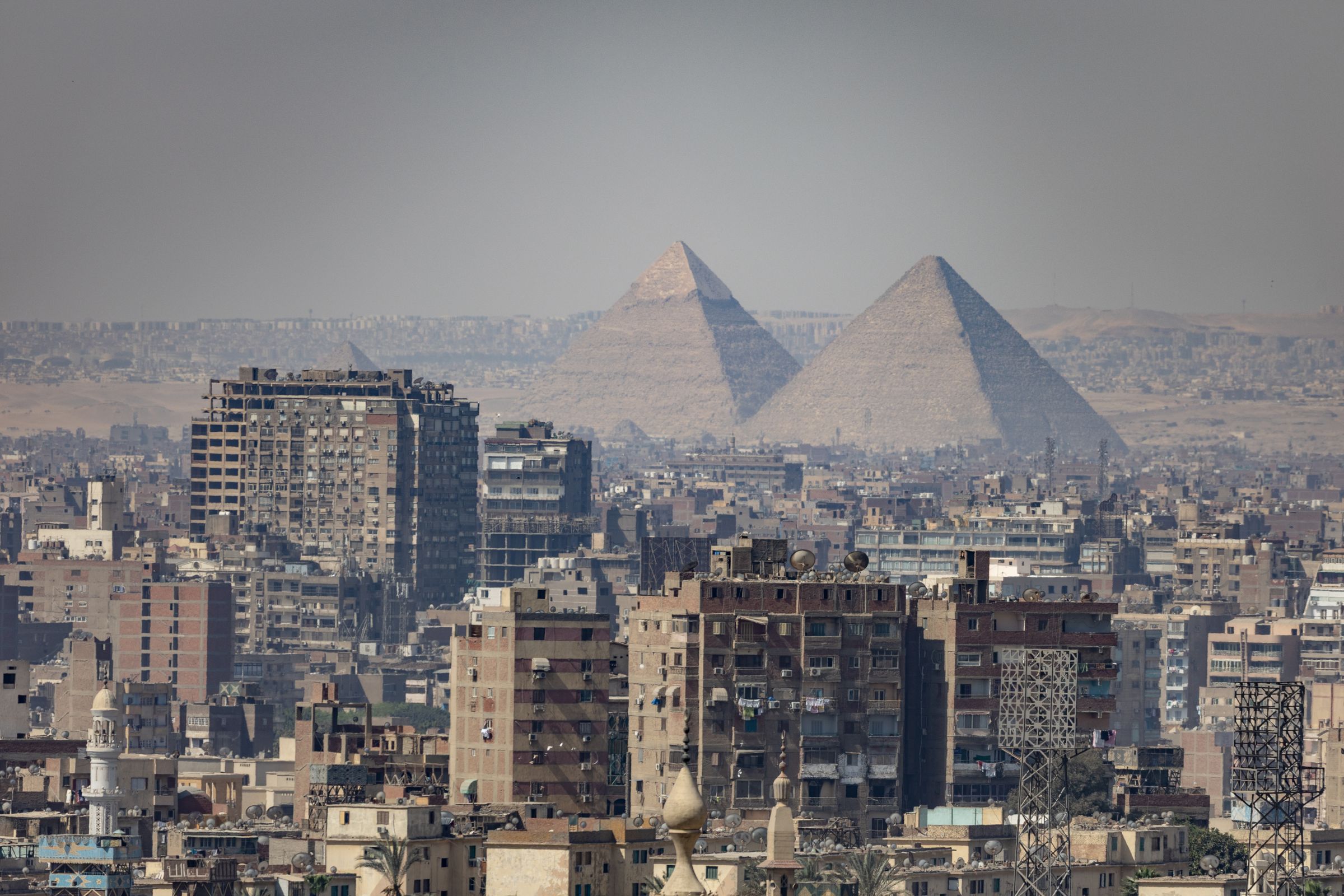
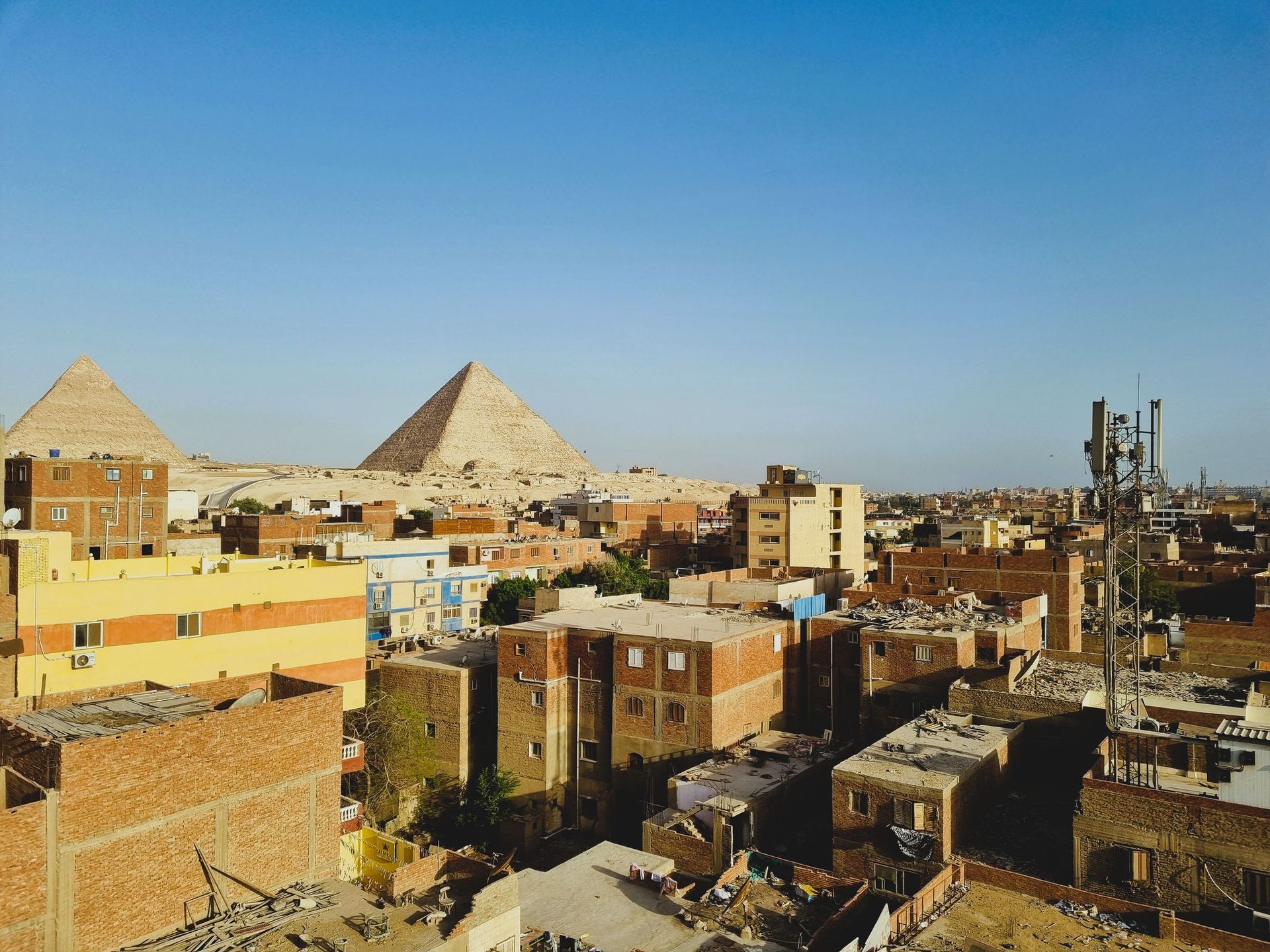
Give the pyramids and old Cairo your first nights, then go south to Luxor for the painted tombs and Aswan for the river. Finish on the Red Sea if you want reefs. The bases lie hours apart, so choose two or three and stay a few nights in each.
Country guide. Meridian Dispatch.
Egypt at a glance
What to know before you book
How long
Ten daysCairo, the Nile and the sea
Getting around
Fly or take the trainthen taxis inside each town
When
October to Aprilthe cooler half of the year
Money
The Egyptian poundcarry small notes for tips and taxis
Airports
Cairo, CAI, for most tripsHurghada and Sharm for the sea
Emergency
123 for an ambulance126 for the tourist police
Where to stay
Where should a first-time visitor stay in Egypt?
Start in Cairo or Giza and add Luxor. With longer, Aswan is the base for Philae and Abu Simbel, and the Red Sea choices are Hurghada, Sharm, Dahab and Marsa Alam. Alexandria makes a one-night stop on the Mediterranean.
How long
How many days do you need in Egypt?
Ten days fits three bases: four nights in Cairo or Giza, three in Luxor and three by the sea or in Aswan. A week fits two, Cairo and Luxor. With five days, one base on the Cairo side leaves time for the pyramids, the old city and Saqqara.
Cairo or Giza
Is it better to stay in Cairo or Giza?
Giza is better if the pyramids and the Grand Egyptian Museum are the reason for the trip, since the guesthouses of Nazlet el-Samman stand at the edge of the plateau. Cairo is better for the medieval streets, the Citadel and an evening in Zamalek. The two join as one city, so either can be a day out from the other.
Luxor or Aswan
Is Luxor or Aswan better to visit?
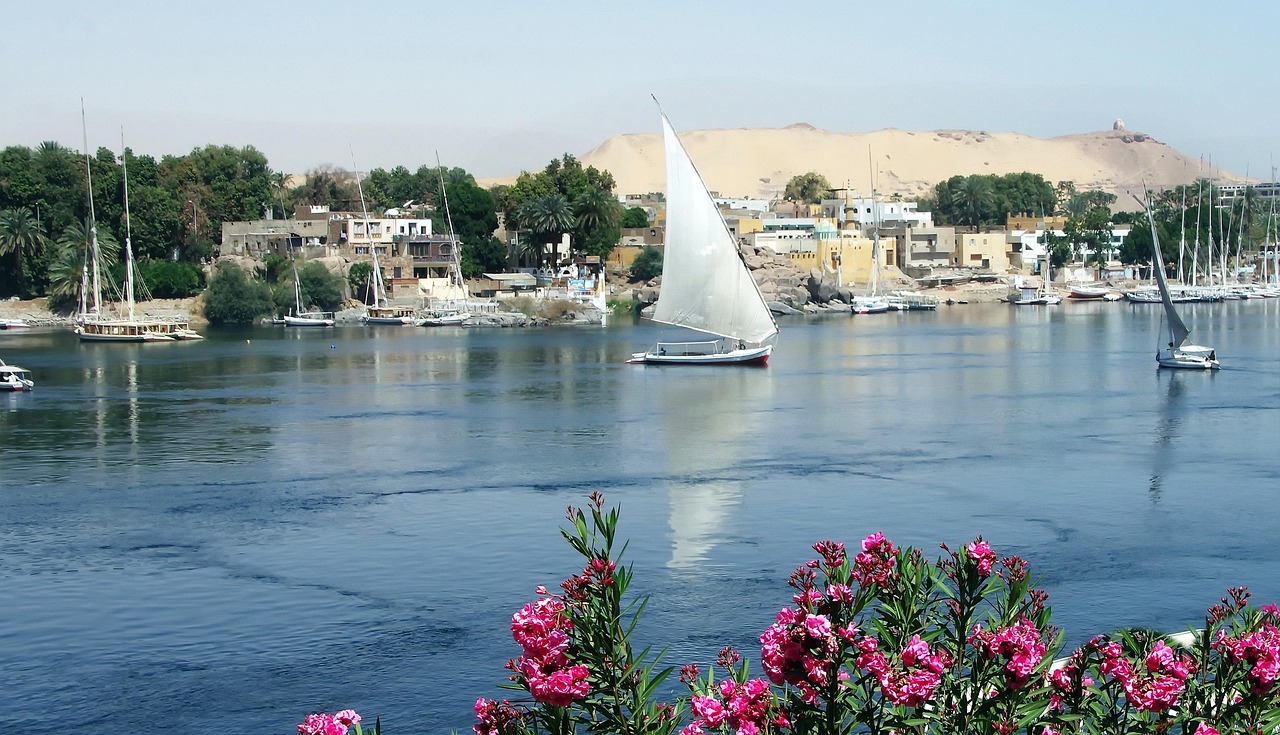
Luxor has the larger group of sites: Karnak beside the town, with painted royal tombs and Hatshepsut's temple across the river. Aswan is the smaller place, with river islands, Nubian villages and the temple of Philae. A Nile cruise links the two and stops at temples on the way.
Red Sea
Which Red Sea base is best in Egypt: Hurghada, Sharm, Dahab or Marsa Alam?
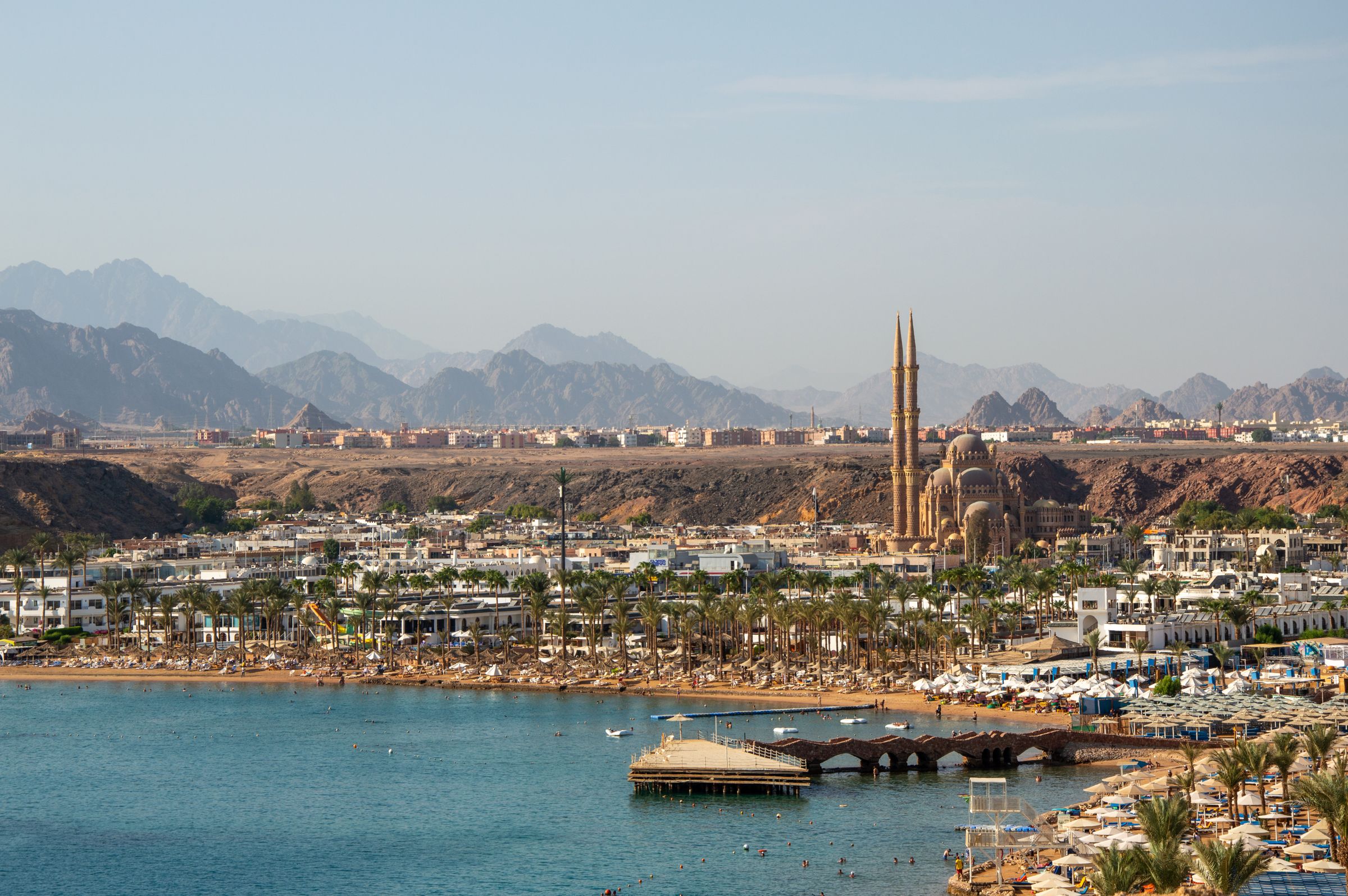
Dahab suits divers and snorkellers who want to go in from the shore. Hurghada and Sharm have the big resorts, with boats out to island and offshore reefs. Marsa Alam is the quietest, with hotels spread along bays where the reef starts at the beach. Dahab is the one without flights of its own.
Getting around
Is it easy to travel around Egypt without a car?
Yes. Trains and flights cover the long distances, coaches reach the Red Sea, and taxis or hired drivers cover the rest. Outside Cairo, a taxi booked for a morning is the usual way to see several sites.
What to wear
What should visitors wear in Egypt?
Long trousers or a long skirt and covered shoulders suit mosques, markets and villages. Swimwear is for the beach and the hotel. Shoes with grip help in the pyramid passages and on temple paving.
Money
Can visitors use cards in Egypt?
In some places. The ticket machines on the Giza plateau take cards and no cash, while taxis, tips and market stalls work in Egyptian pounds. Small notes are the useful ones, since drivers and kiosks rarely have change.
Visas
Do you need a visa for Egypt?
Most visitors do, and many nationalities can apply at visa2egypt.gov.eg or buy one for cash at airport kiosks. Eligible passports, British ones included, get a free stamp at Sharm airport for less than 15 days in Sharm, Dahab, Nuweiba or Taba. A trip beyond those resorts needs the full visa.
Weather
What is the best month to visit Egypt?
November, for a trip that mixes the Nile with the Red Sea. Days are warm and dry from Cairo to Aswan, and the sea at Hurghada averages 26°C. From October to April the temples are at their most comfortable. July and August are for the coasts.
Desert
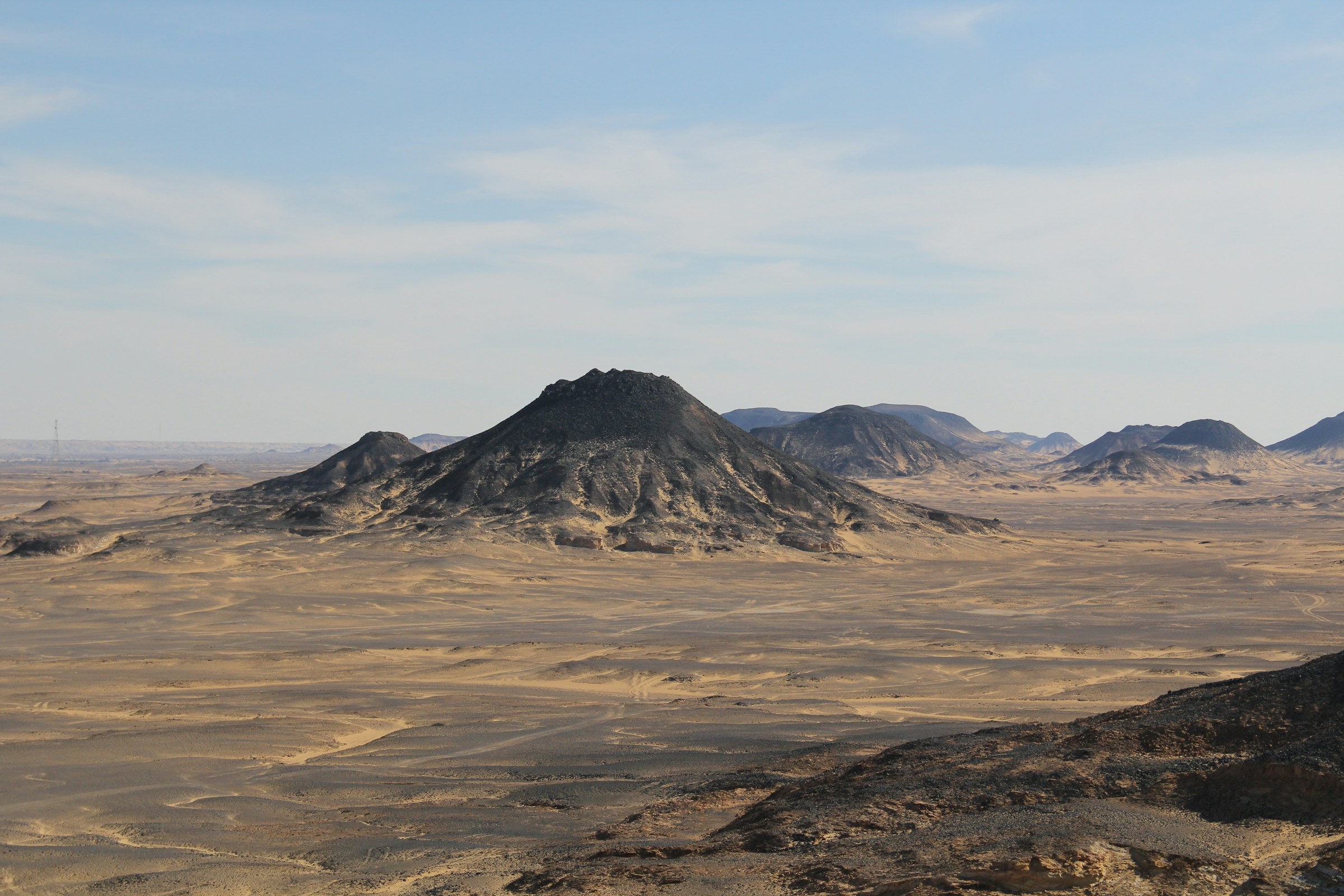
Can tourists visit the White Desert in Egypt?
Yes, on a guided trip. UK government advice says tourists must apply for a permit before they travel, and operators in Bahariya and Farafra usually do that for their guests. The UK warns against all but essential travel to much of the Western Desert but leaves out Bahariya and the Black and White Deserts, as of November 2026.
Siwa
Is Siwa worth the journey from Cairo?
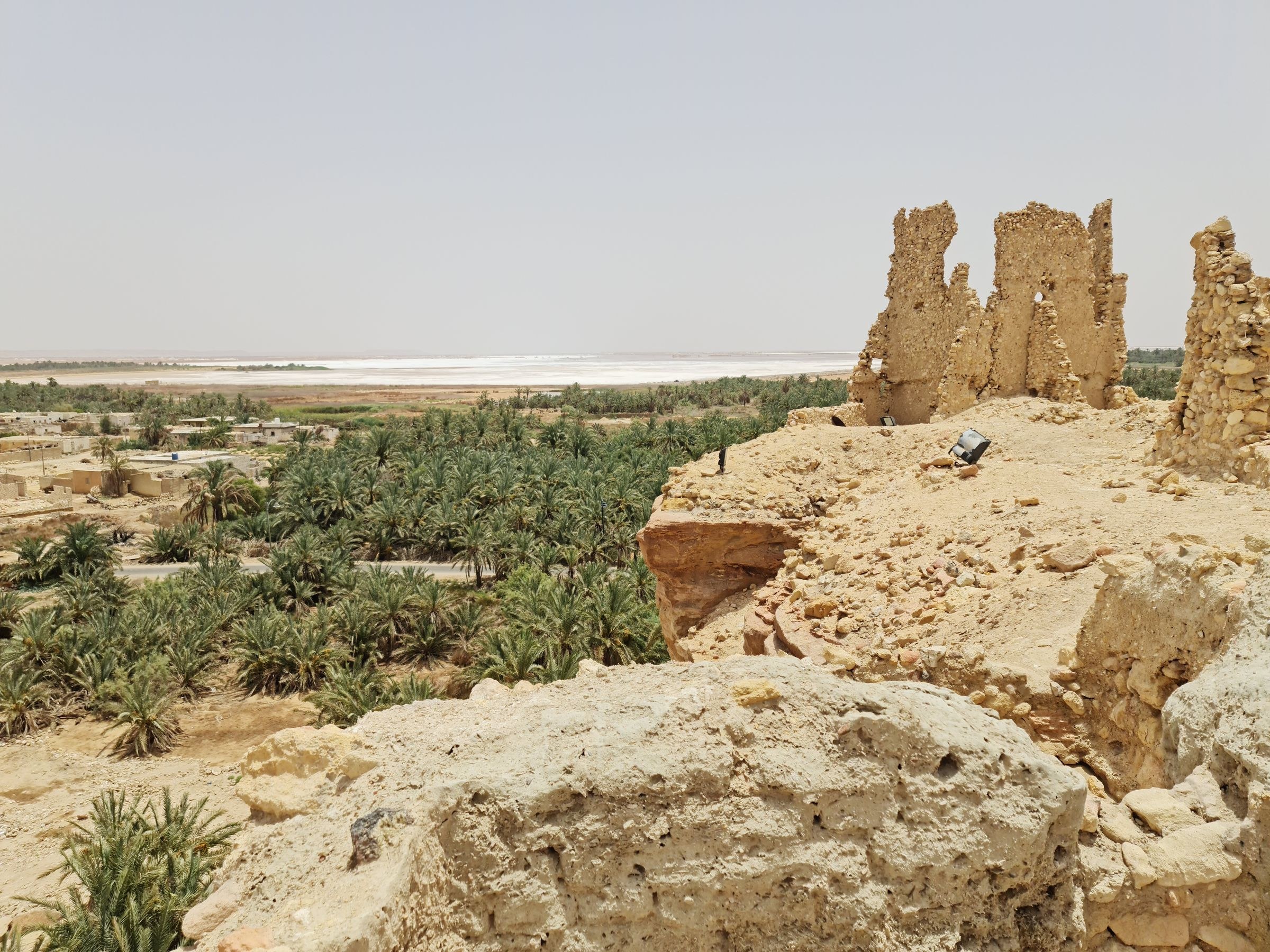
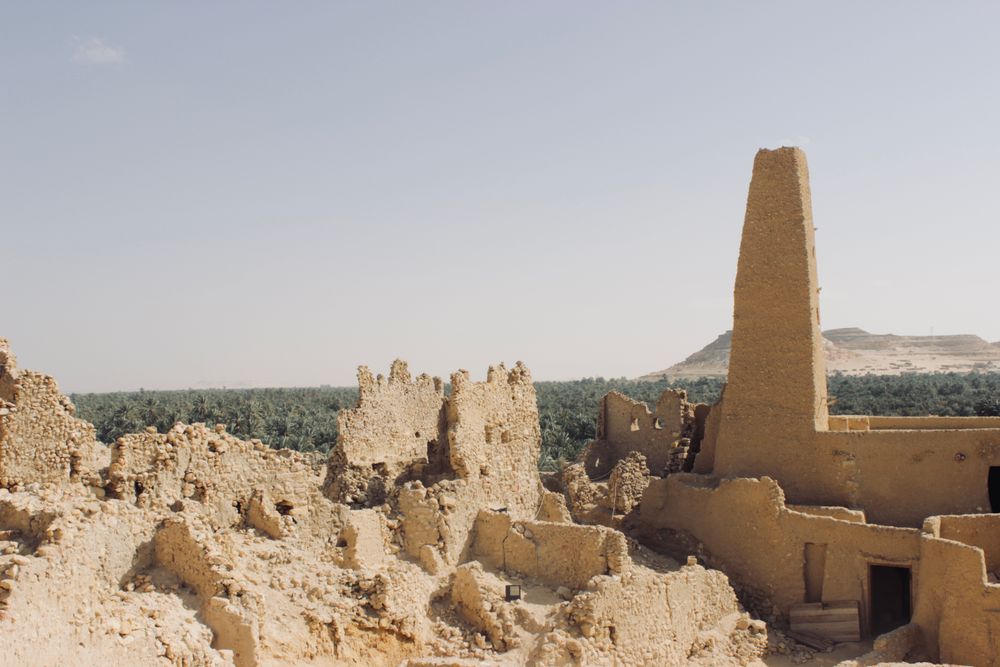
Yes, with three nights to spend there. The oasis has salt lakes, springs, the mud-brick fortress of Shali and the oracle's hilltop temple. It is about 750 km from Cairo by road, so a shorter trip is better spent in Fayoum, about two hours by car.
What sets Egypt apart
Walk into a pyramid, sail past Aswan's islands, dive a reef from the beach and camp in the desert on one trip.
Giza
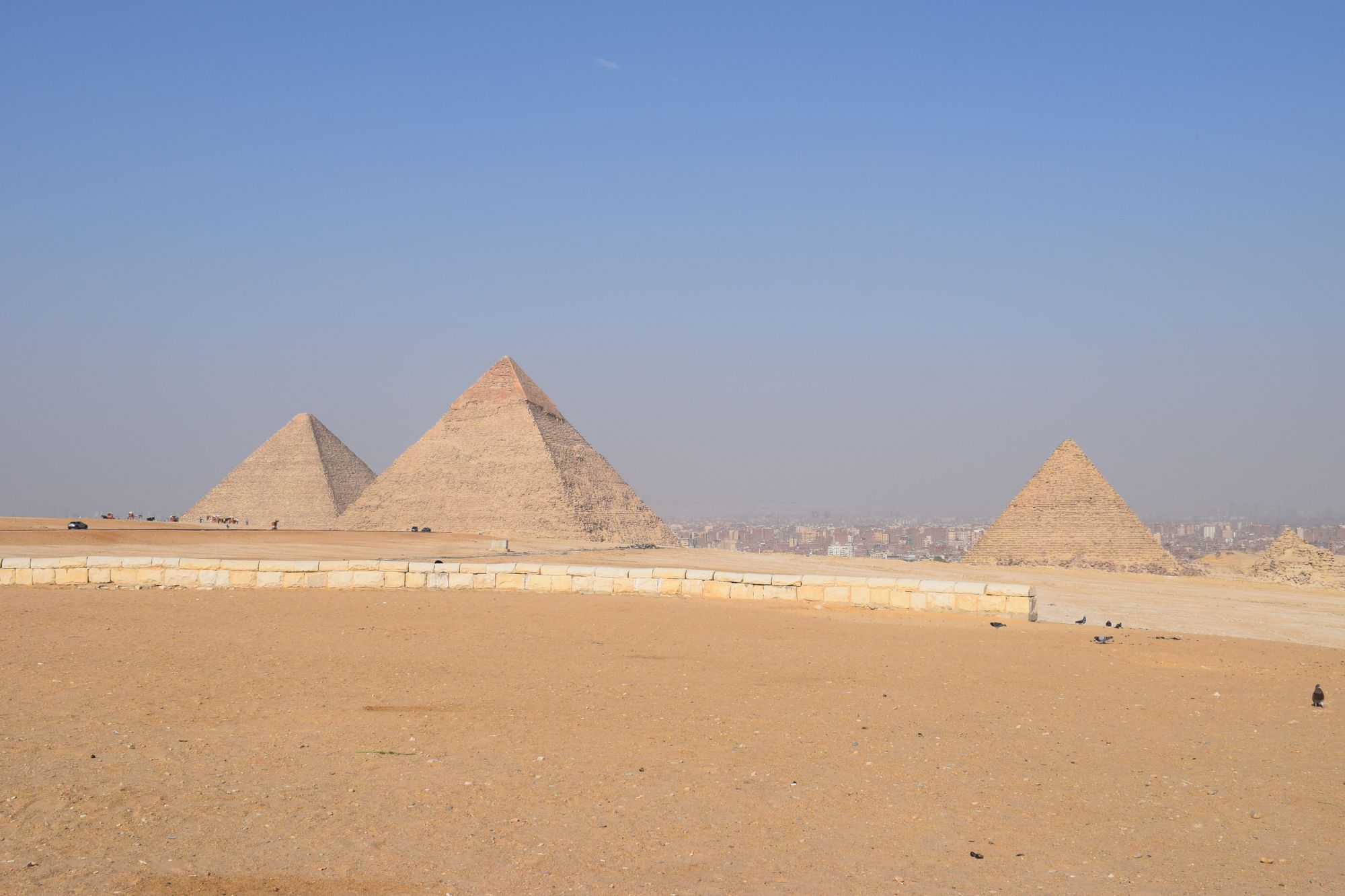
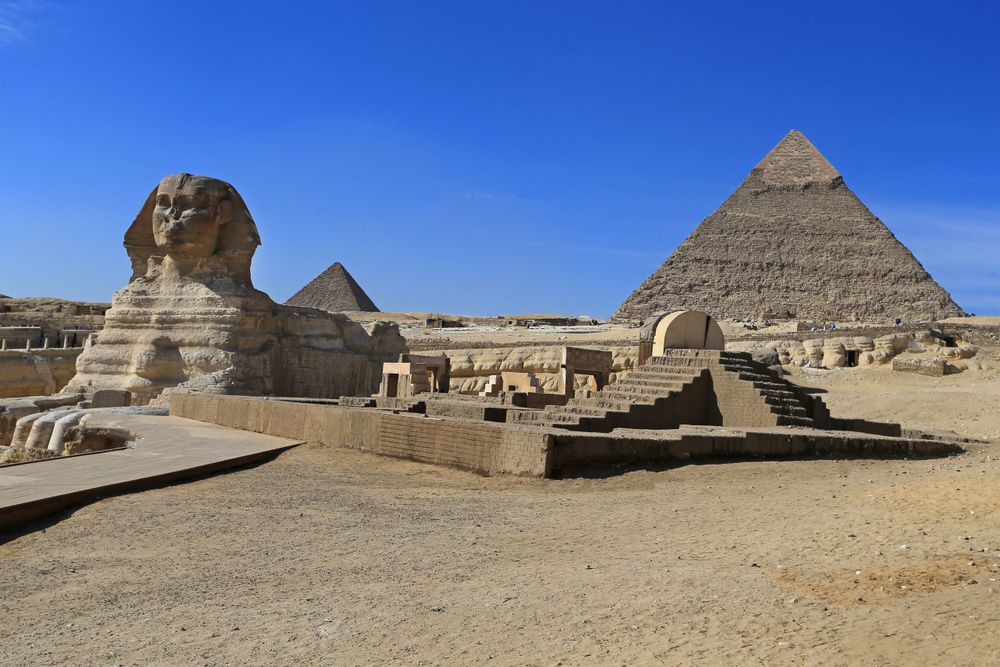
The pyramids at the city's edge
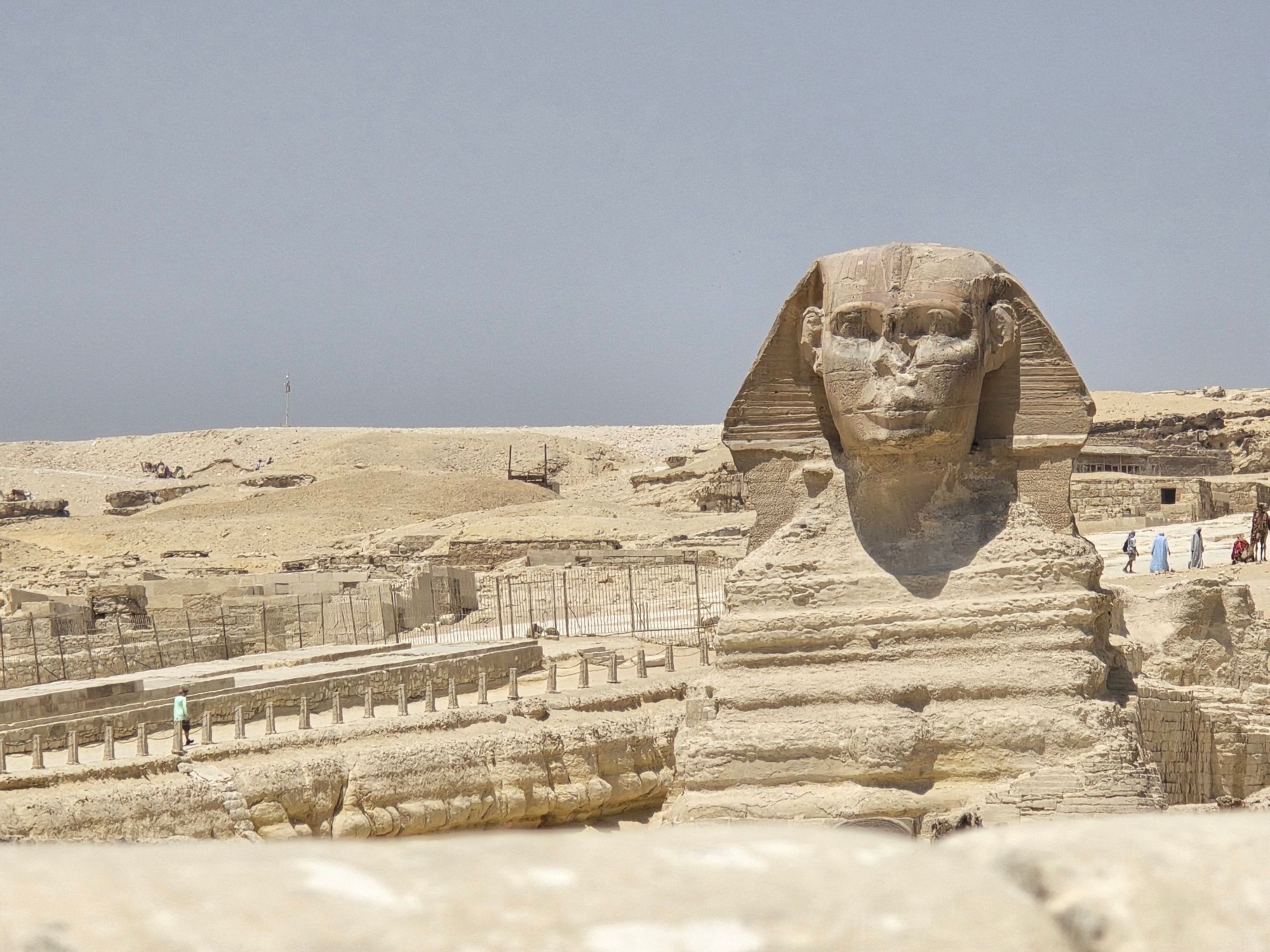
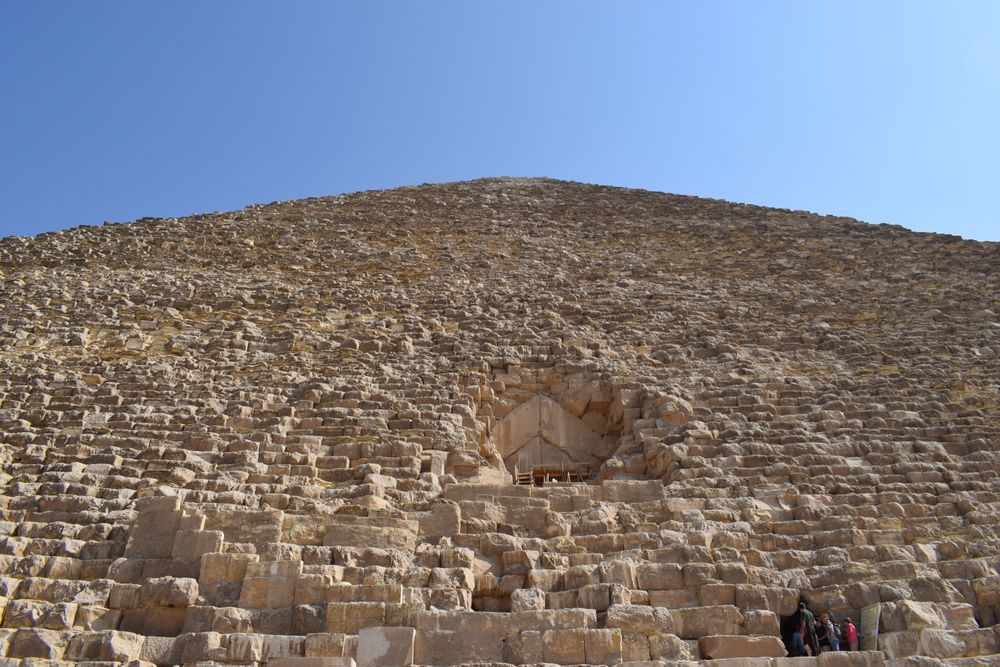
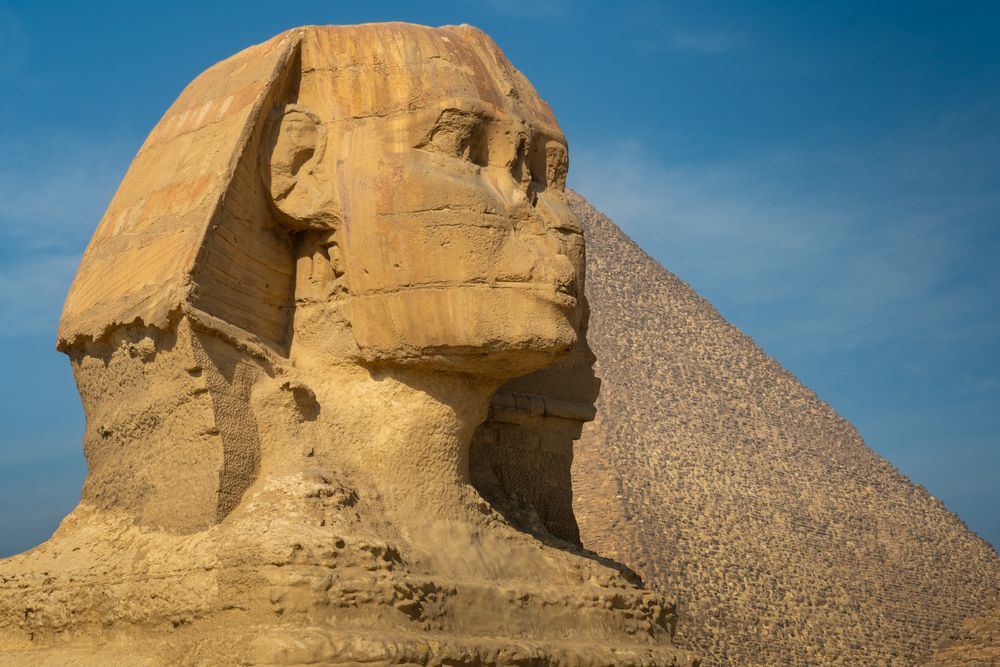
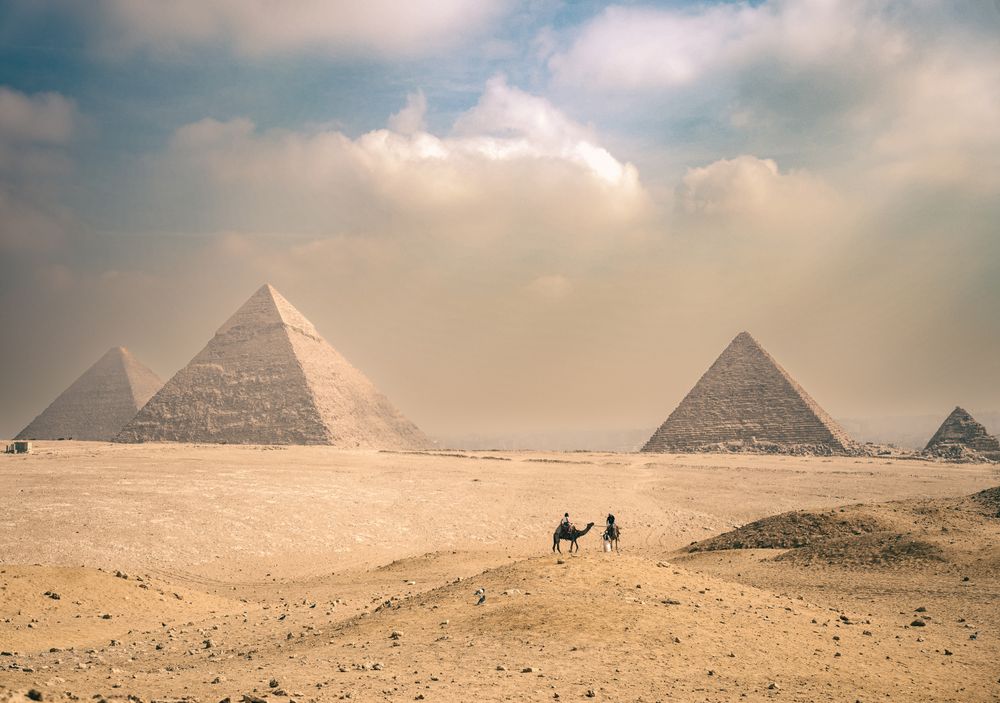
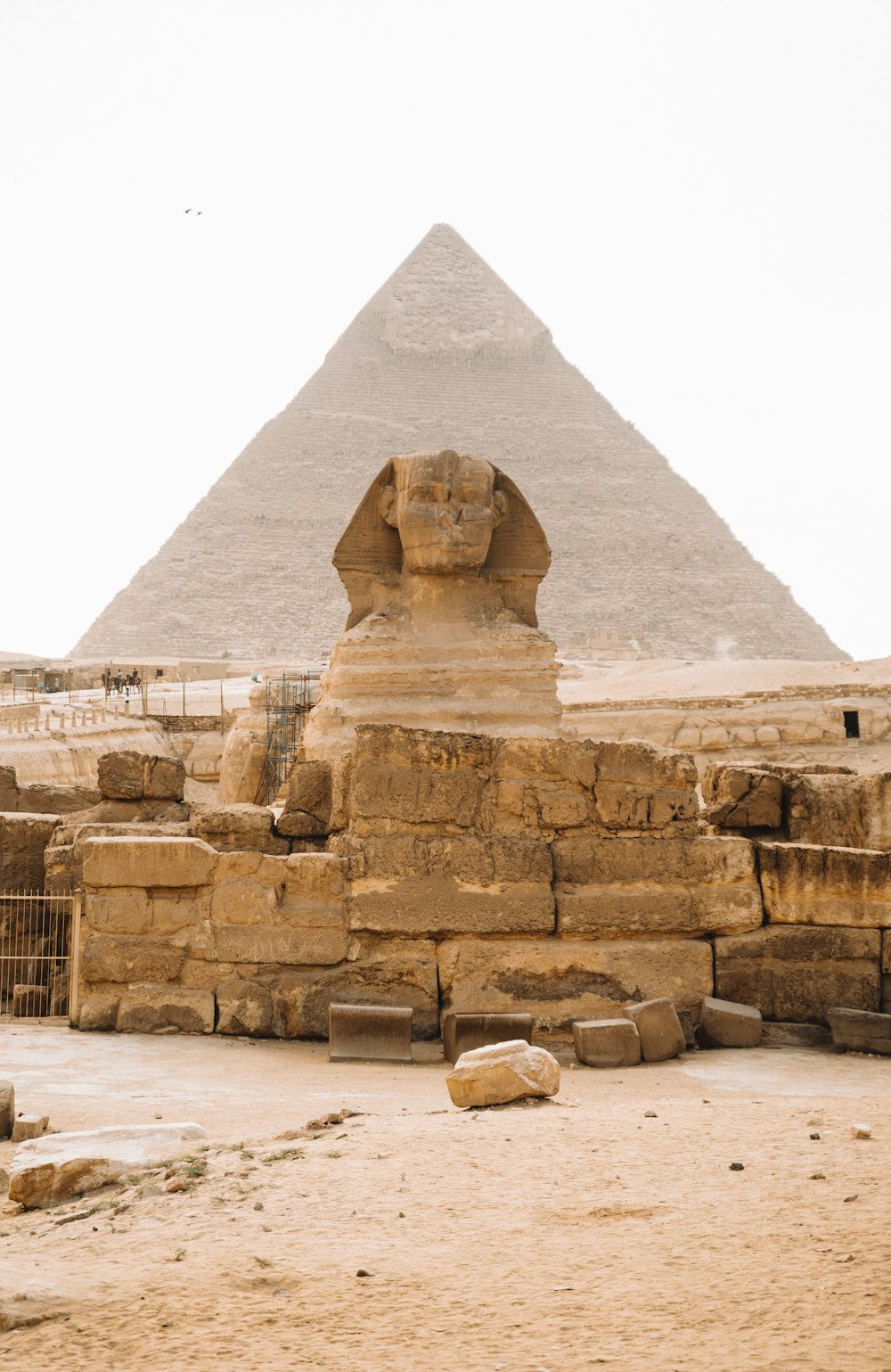
You can walk between three pyramids and the Sphinx, then climb inside the largest.
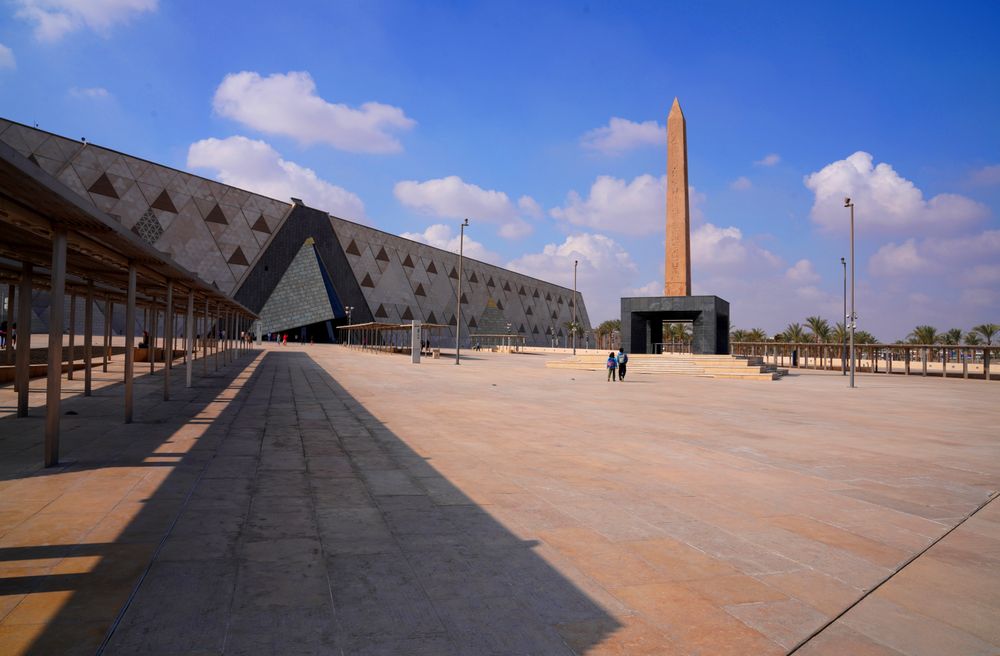
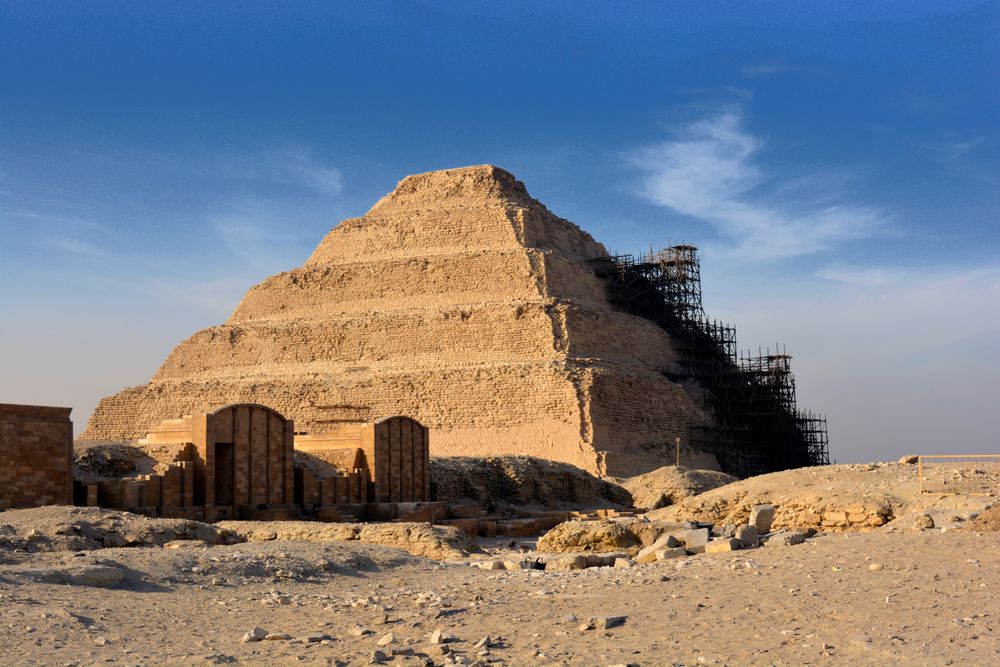
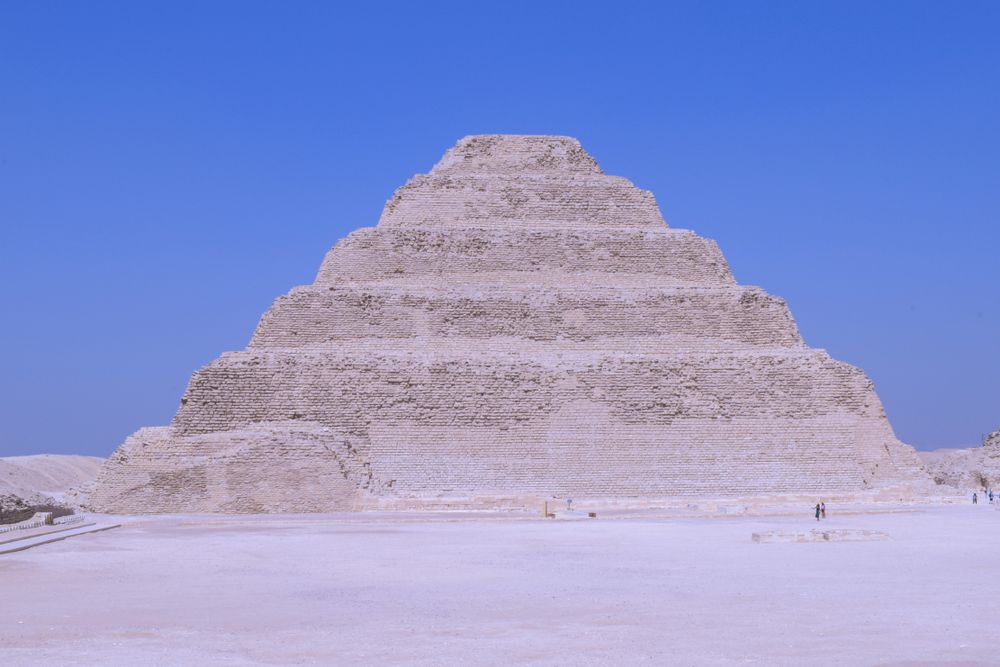
The Grand Egyptian Museum, a short drive away, shows Tutankhamun's treasures. Leave another half day for the Step Pyramid at Saqqara.
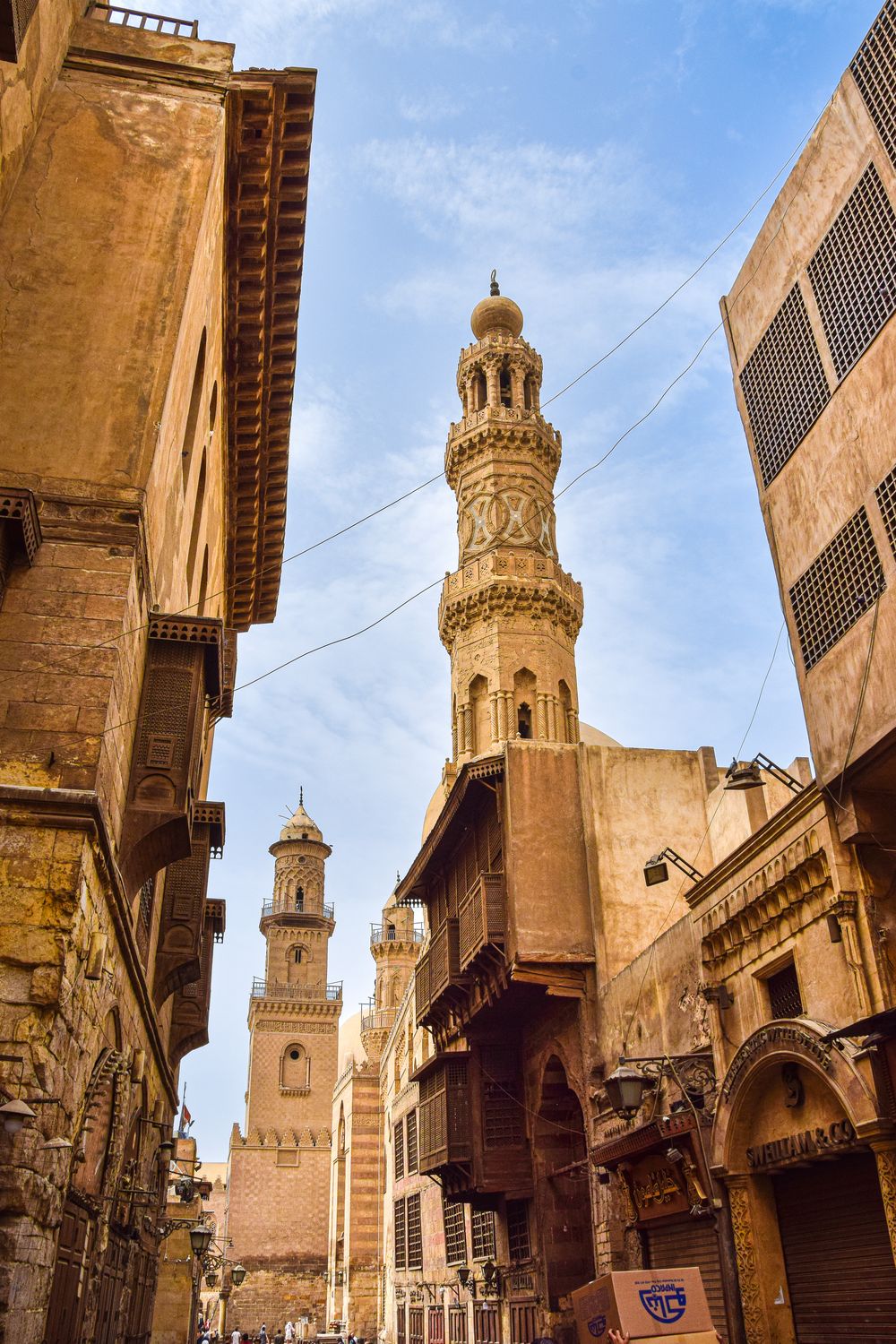
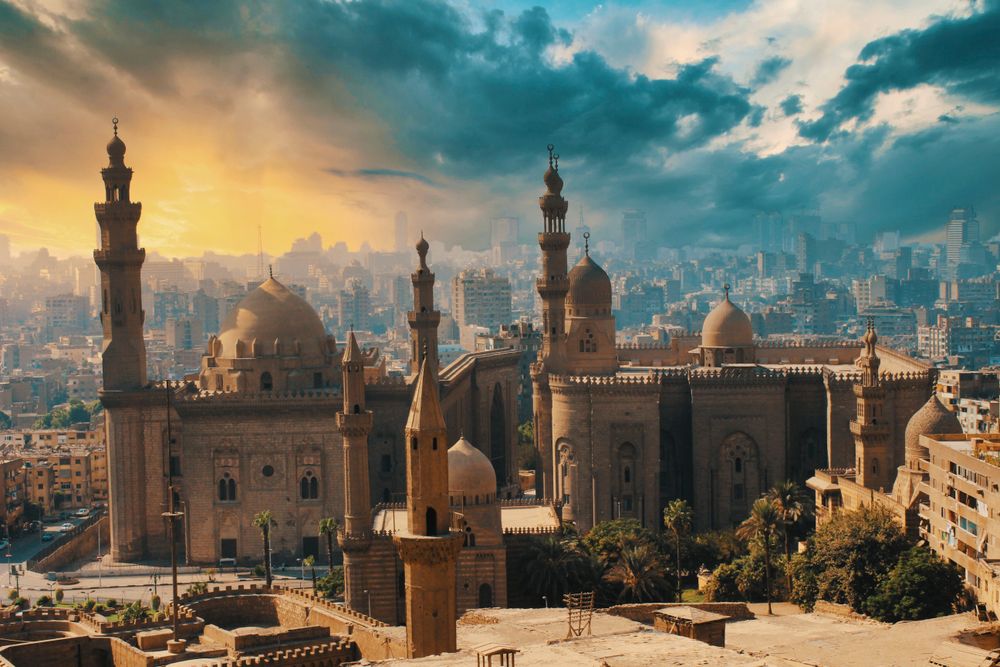
Al-Muizz Street runs between two city gates, past mosques, fountains and merchants' houses you can enter.
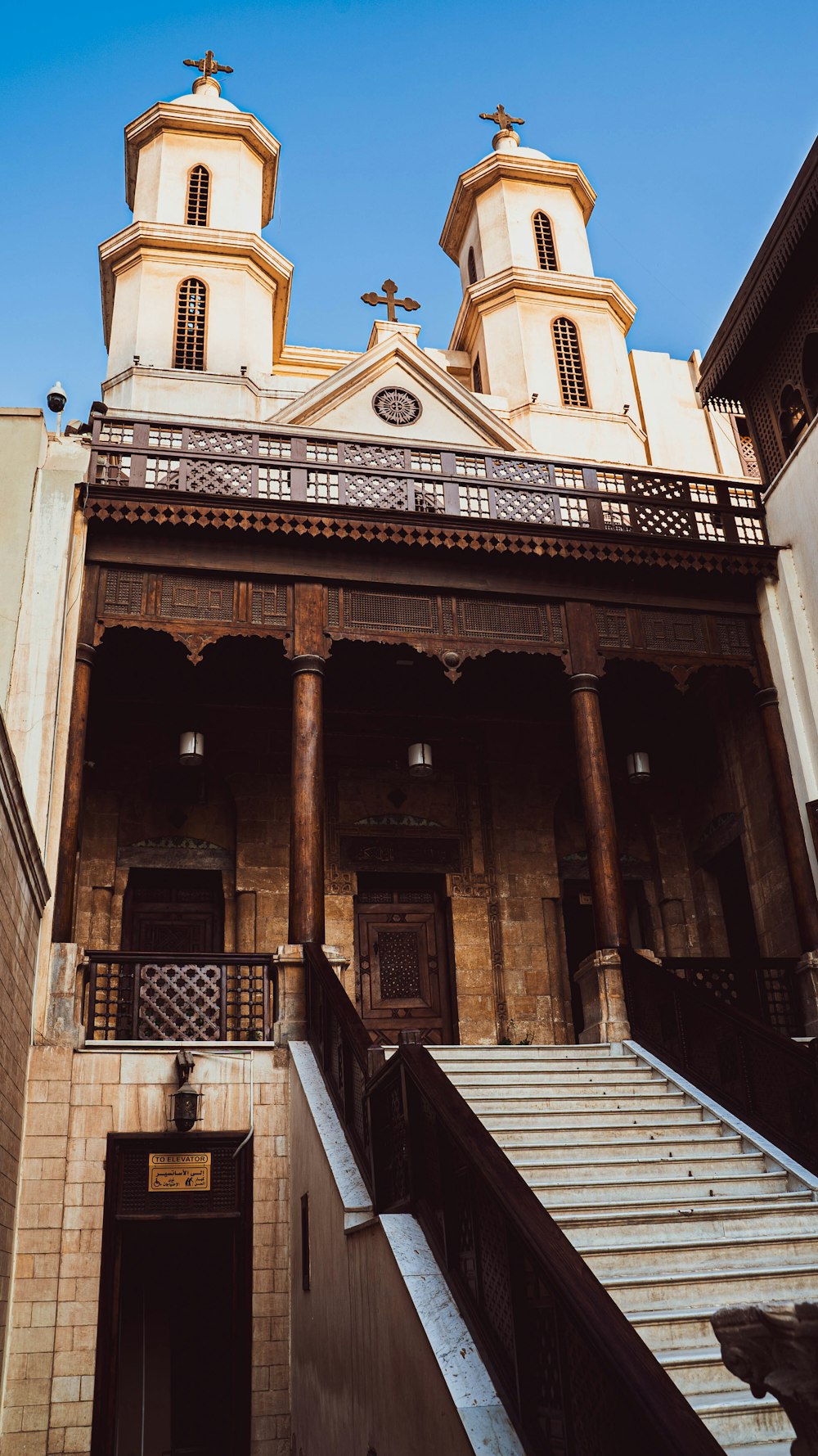
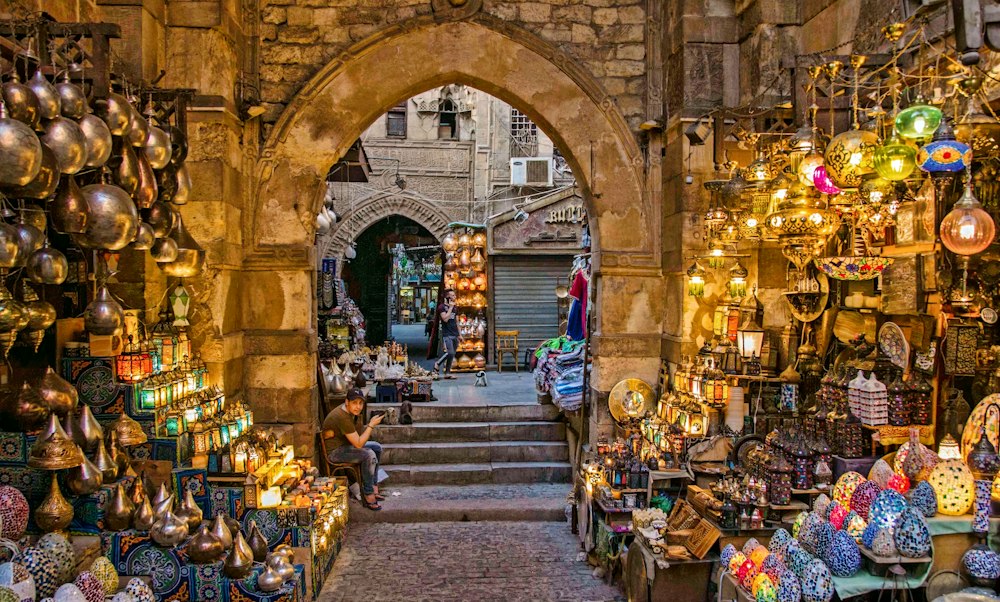
Khan el-Khalili's copper and spice lanes open off it, and the Citadel stands on the hill to the south. In Coptic Cairo, the Hanging Church is built over a Roman gatehouse.
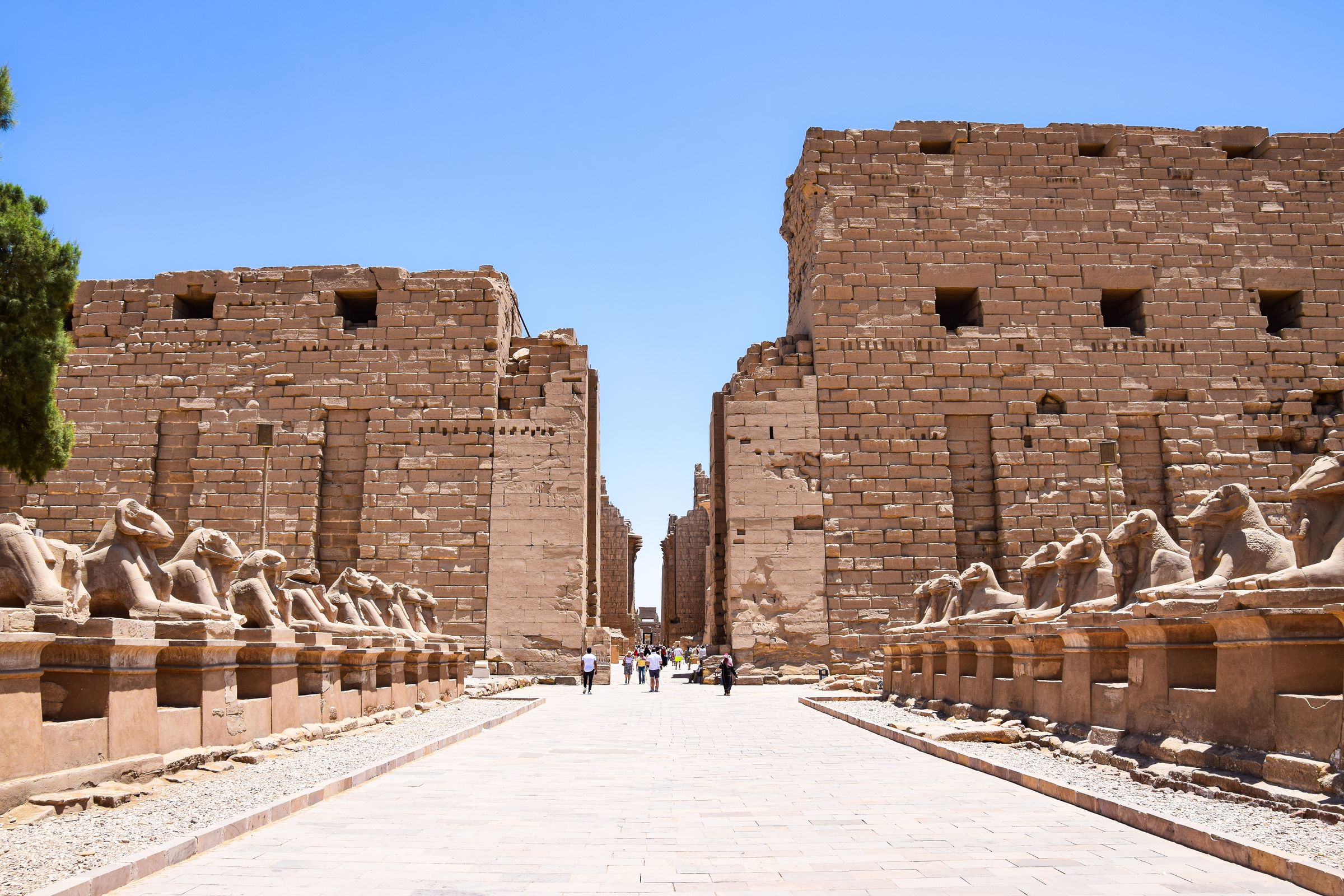
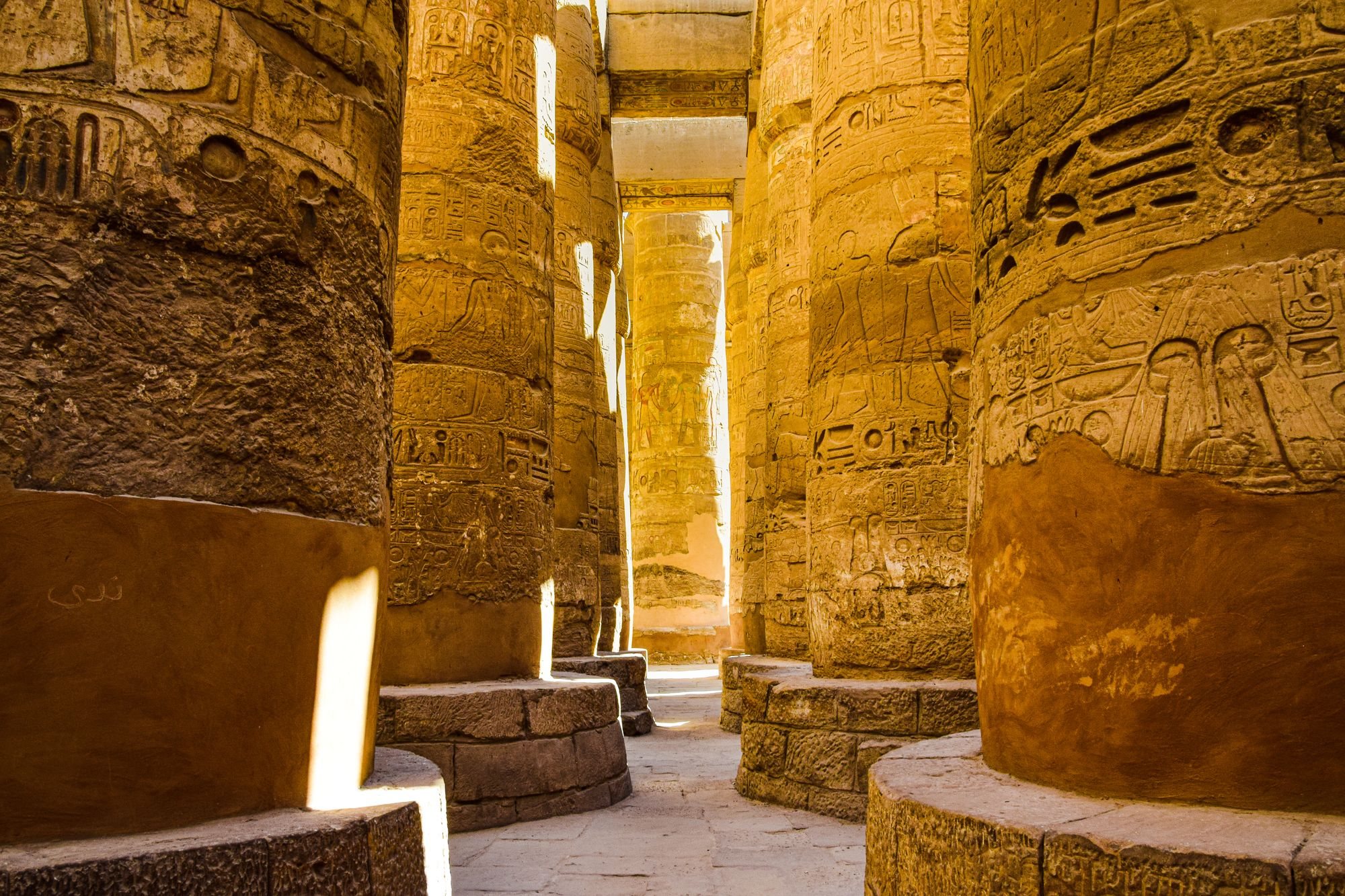
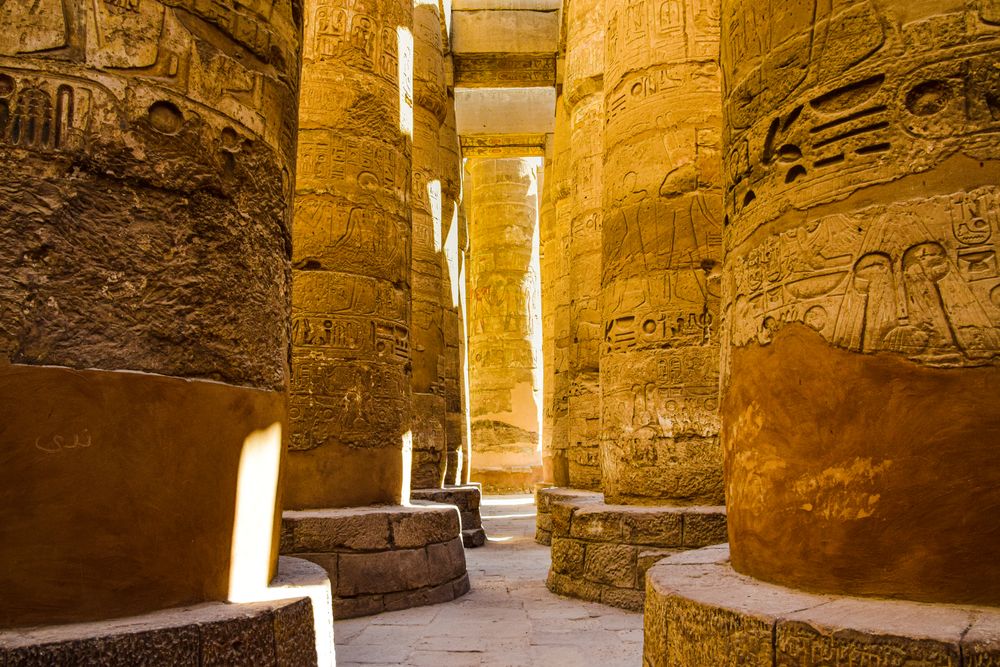
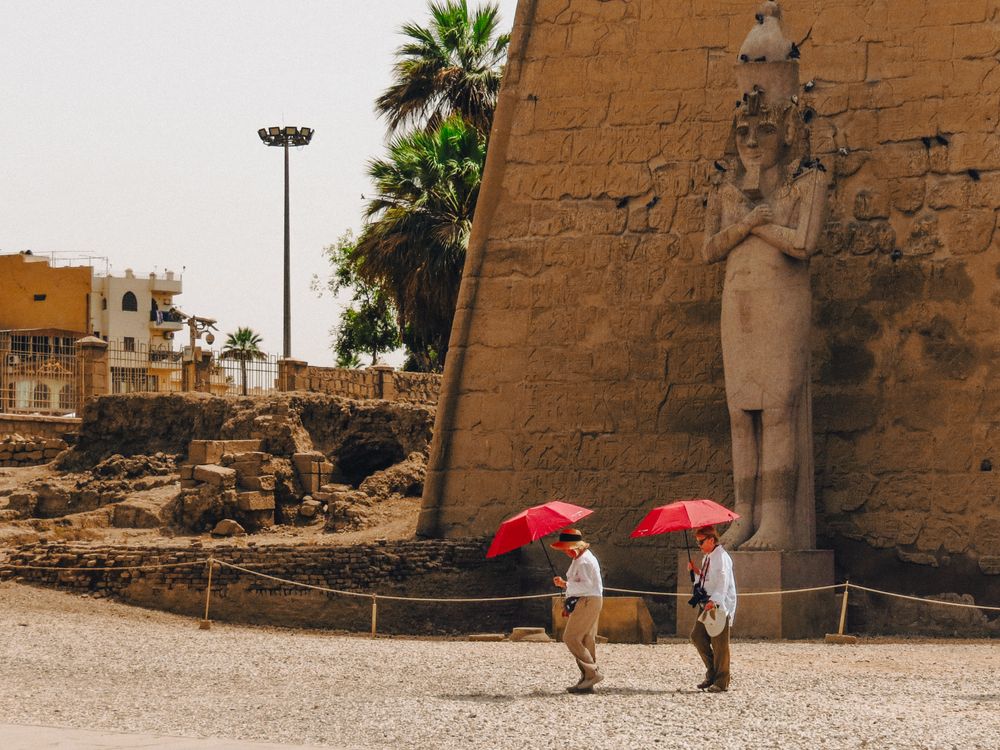
On Luxor's east bank you walk among the columns of Karnak, and at the other end of a sphinx-lined avenue stands Luxor Temple.
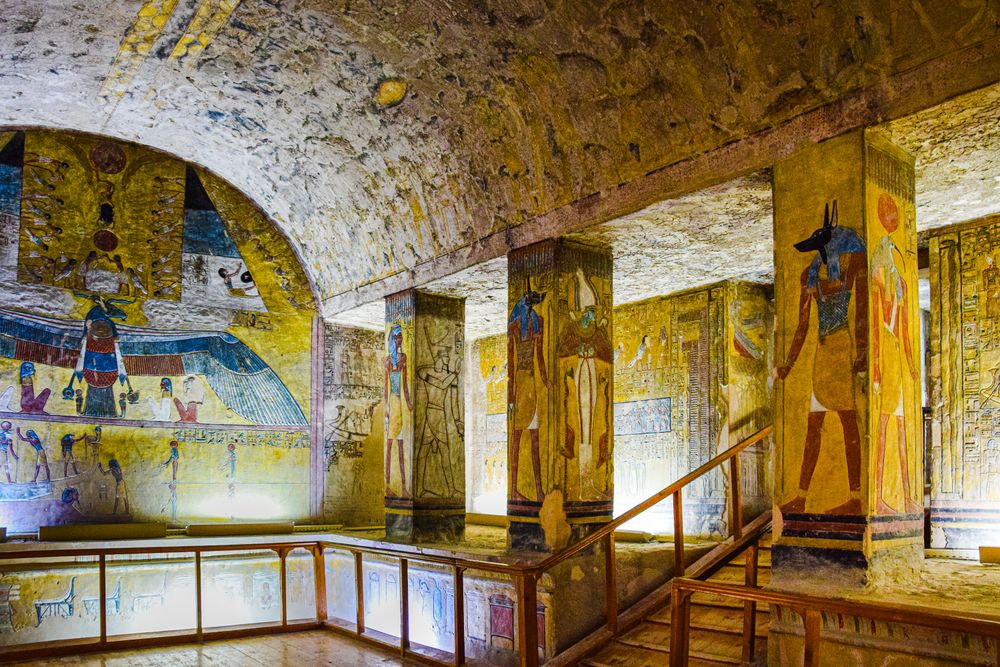
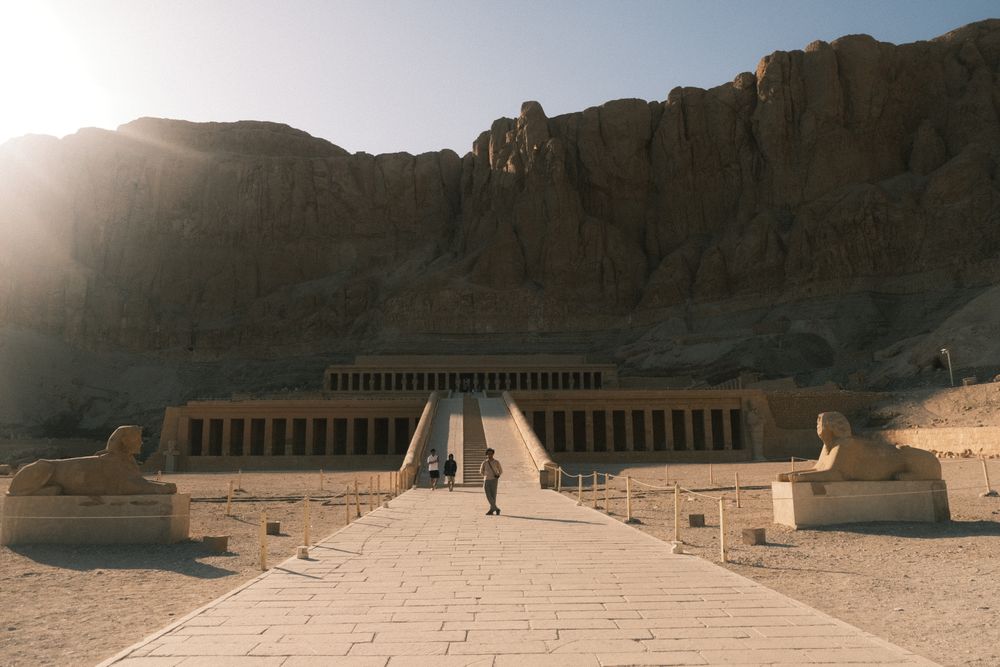
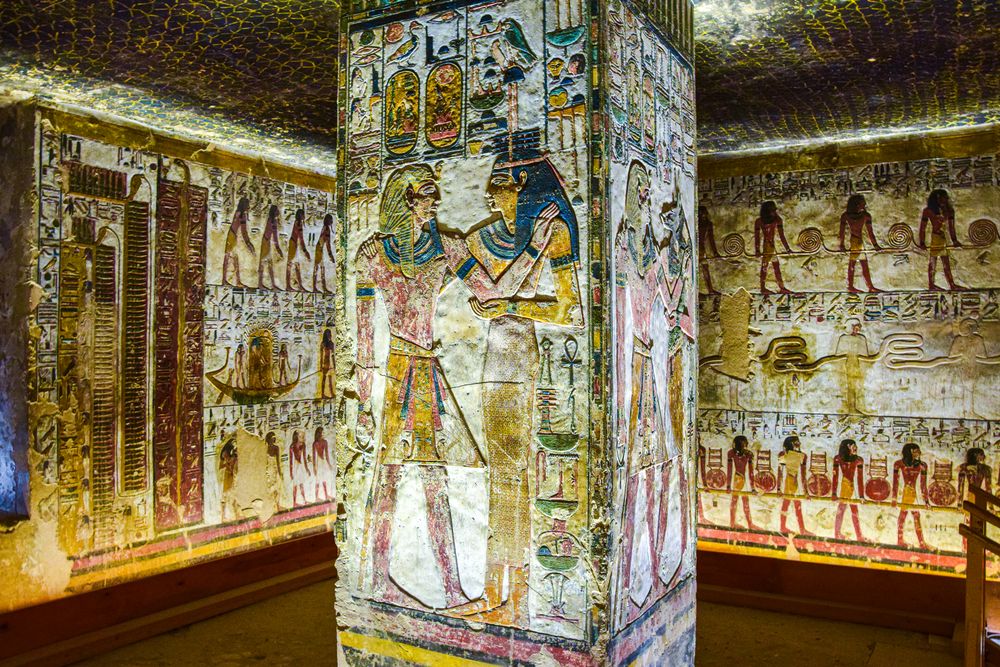
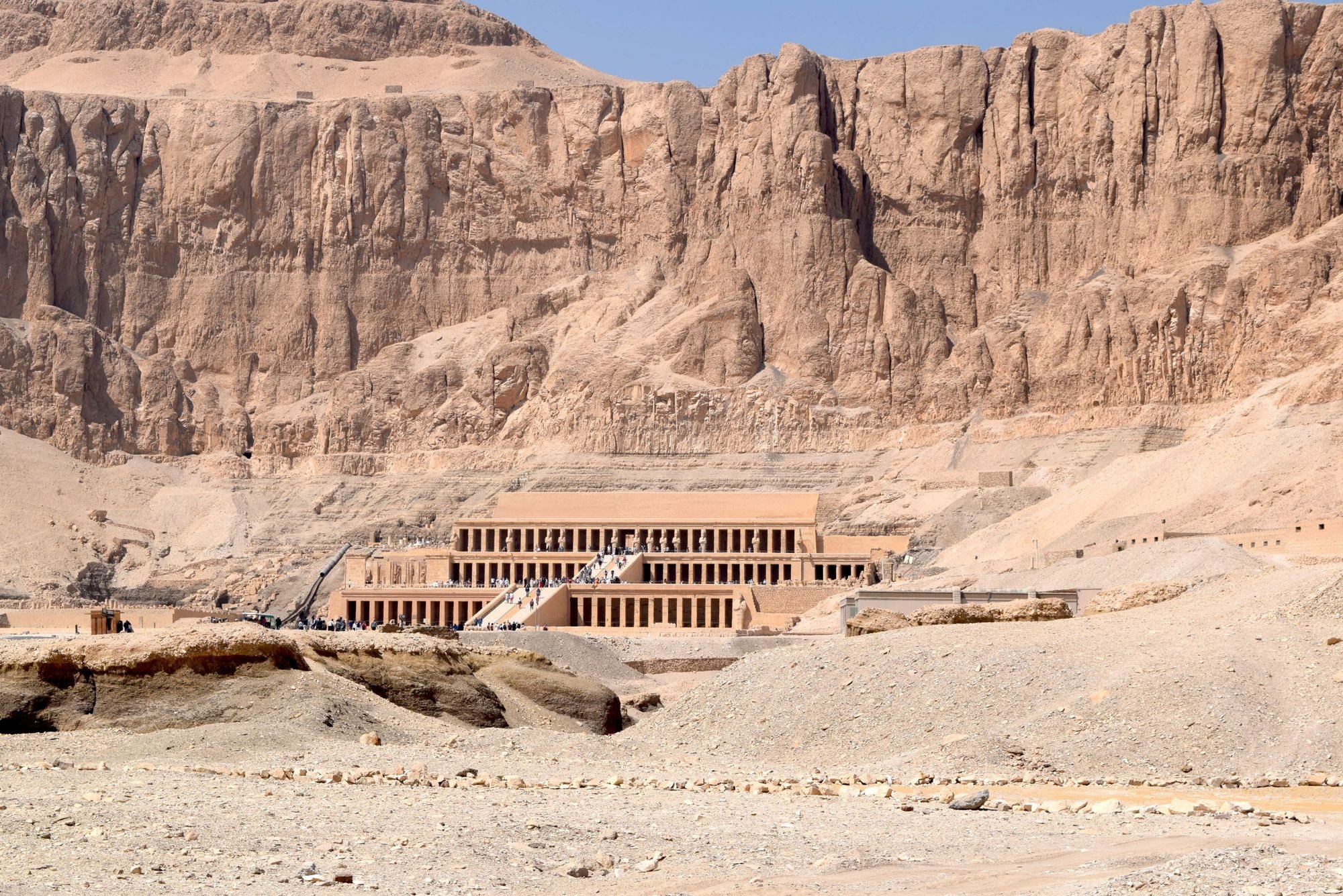
Painted corridors run deep into the rock in the Valley of the Kings, over the river. Hatshepsut's temple rises in terraces against the cliffs on the other side of the hill.
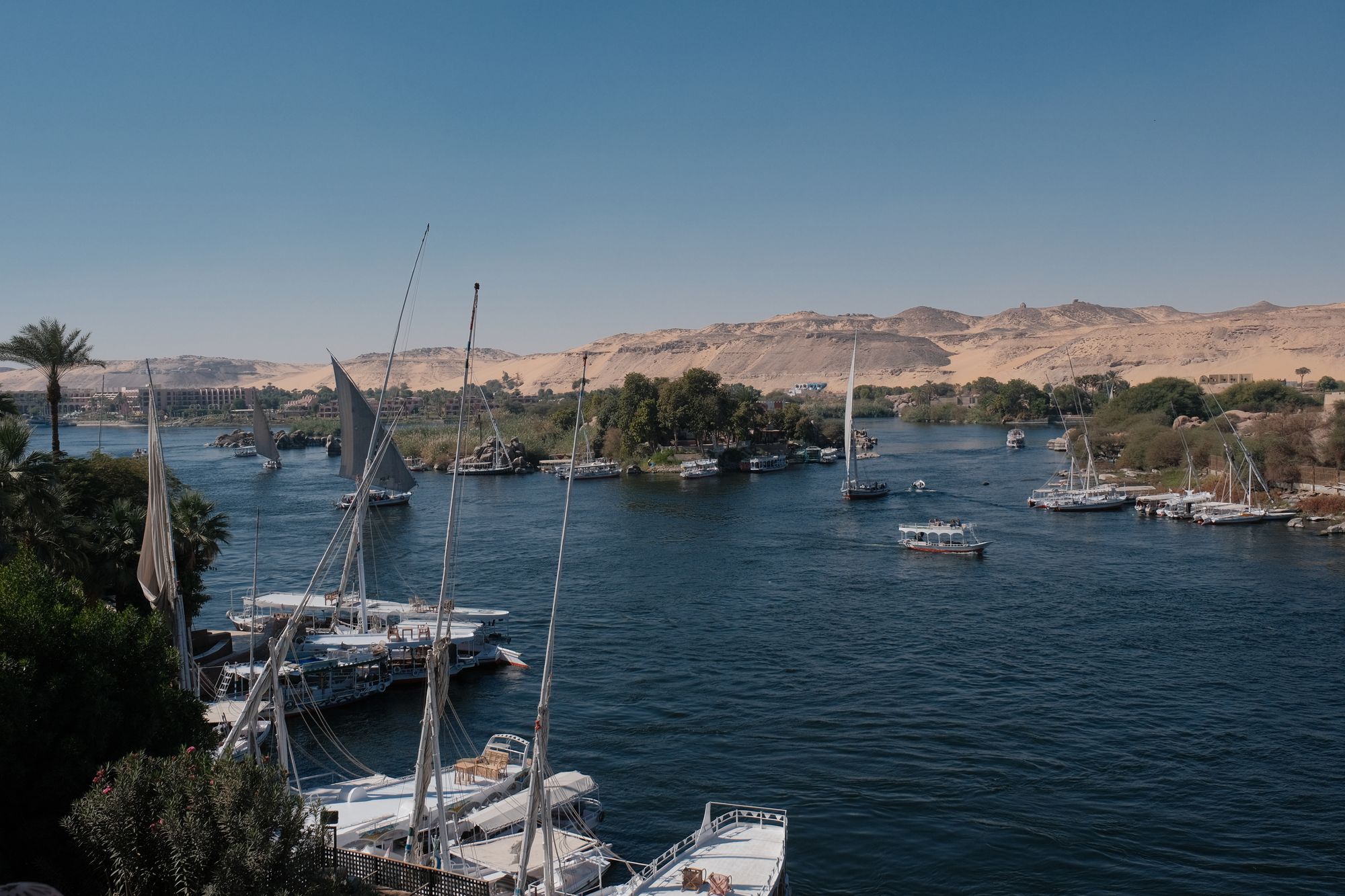
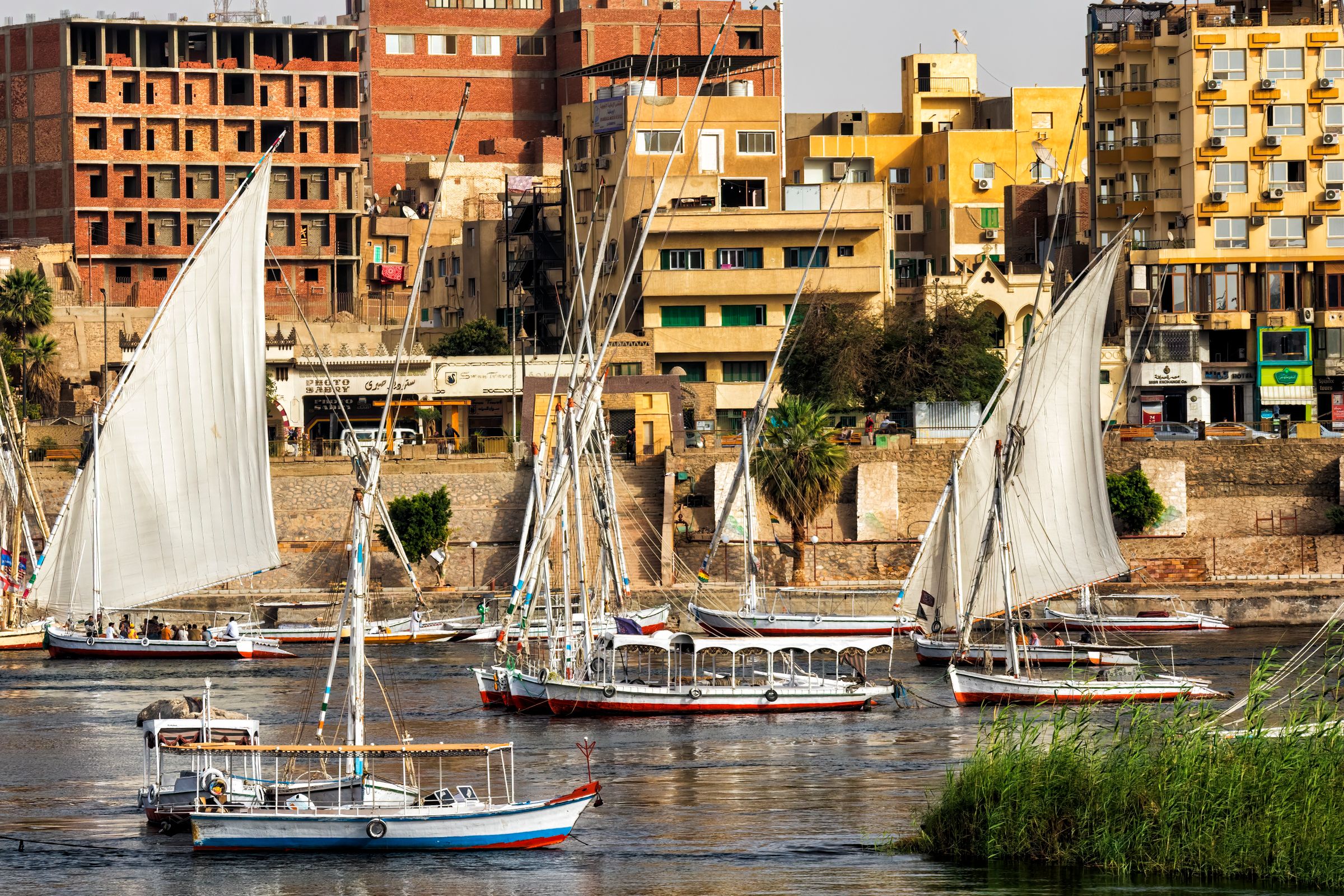
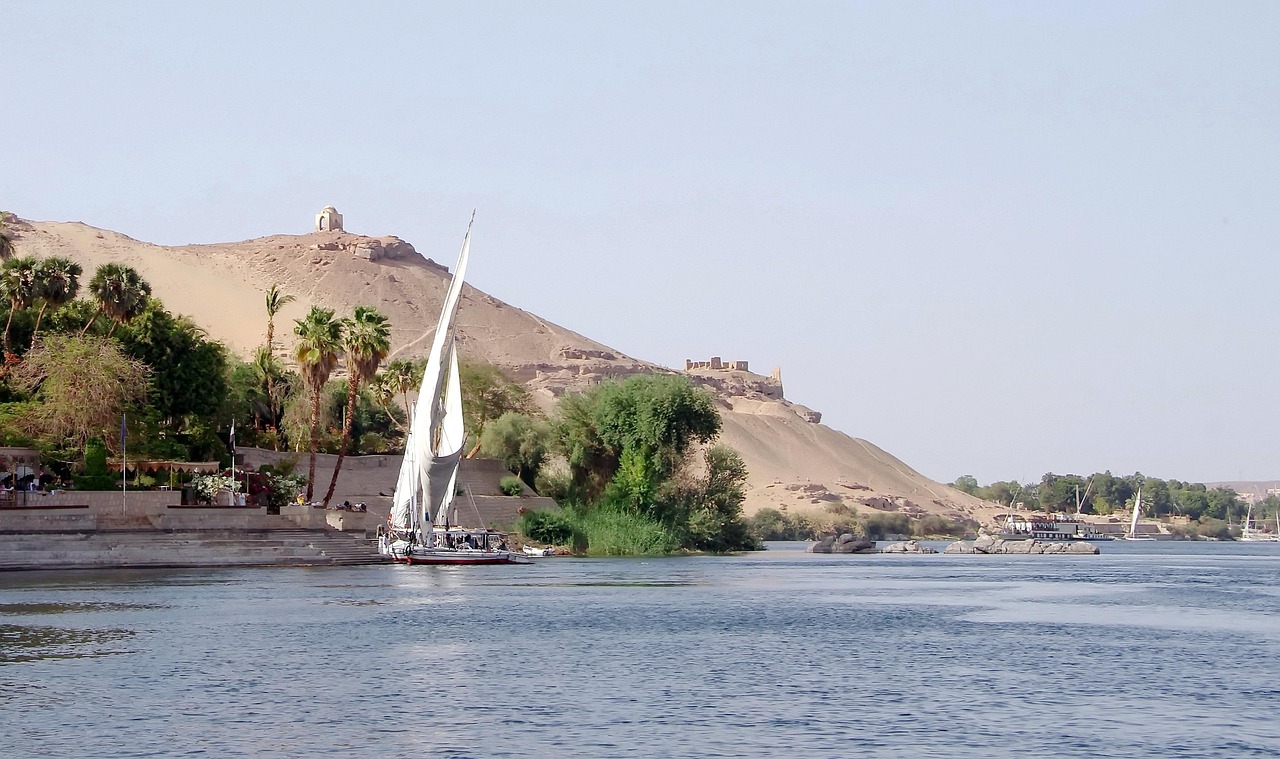
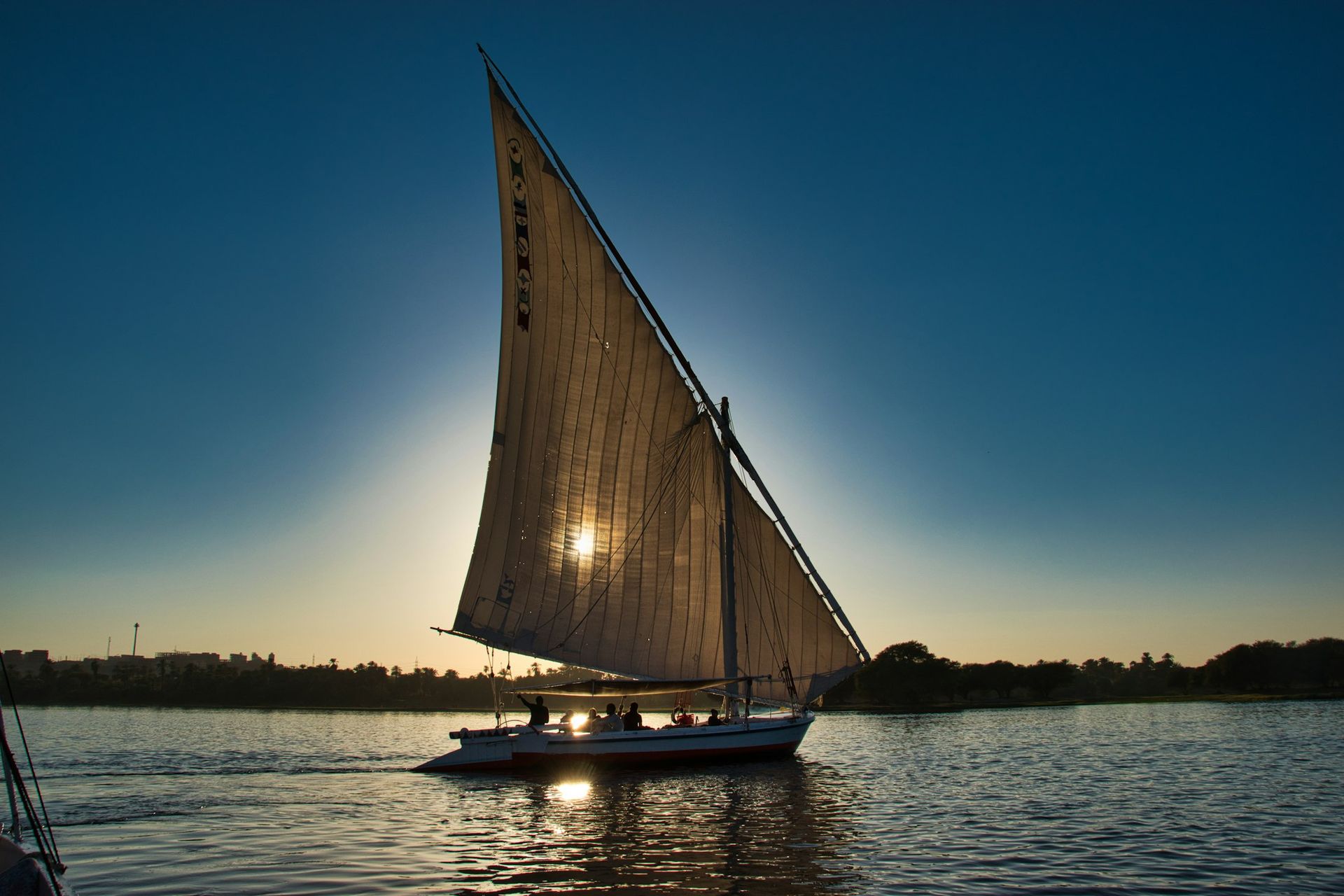
Sail a felucca round the islands, or take the public ferry to Elephantine, which has Nubian villages with painted houses and a ruined temple at its tip.
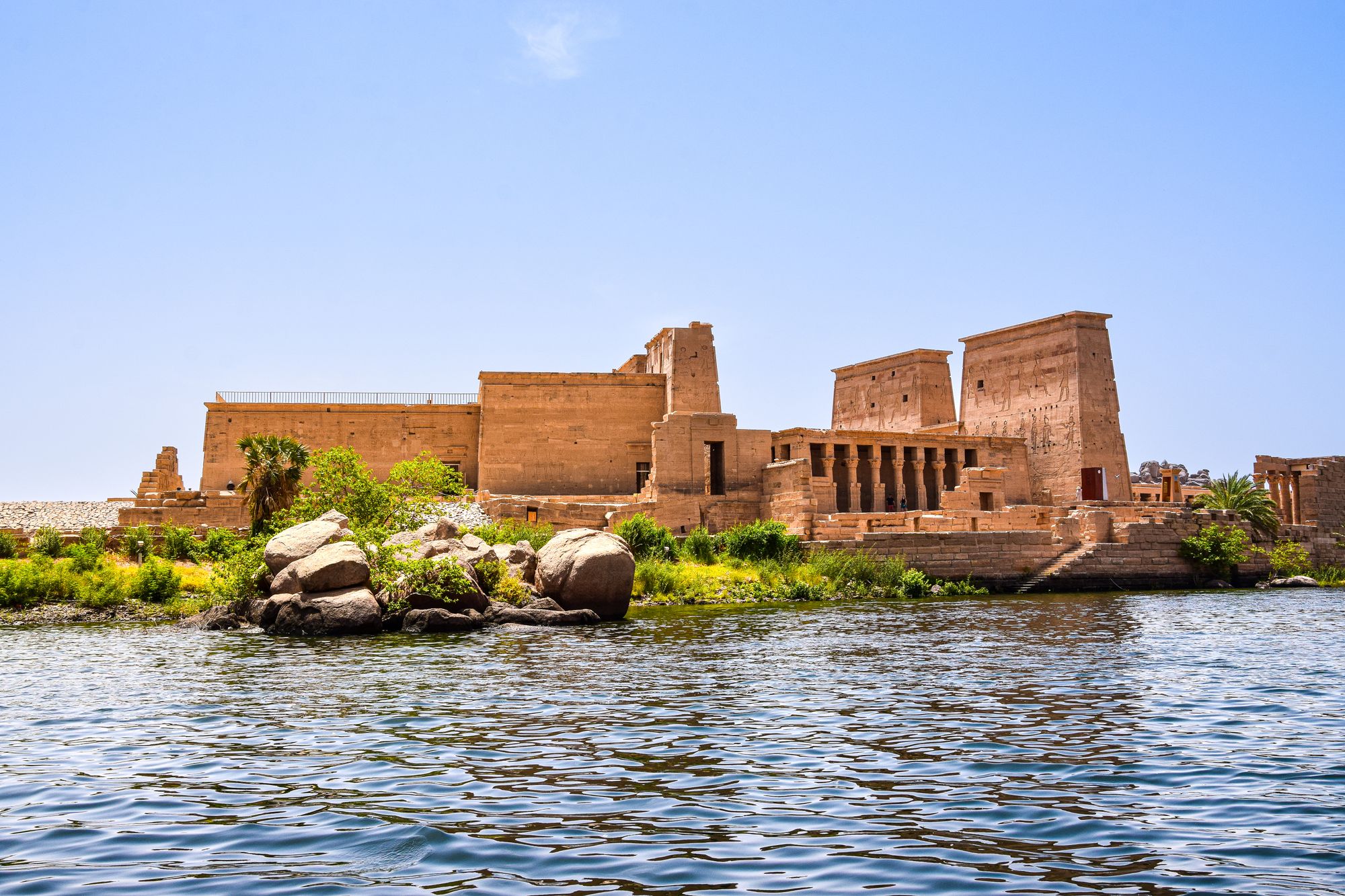
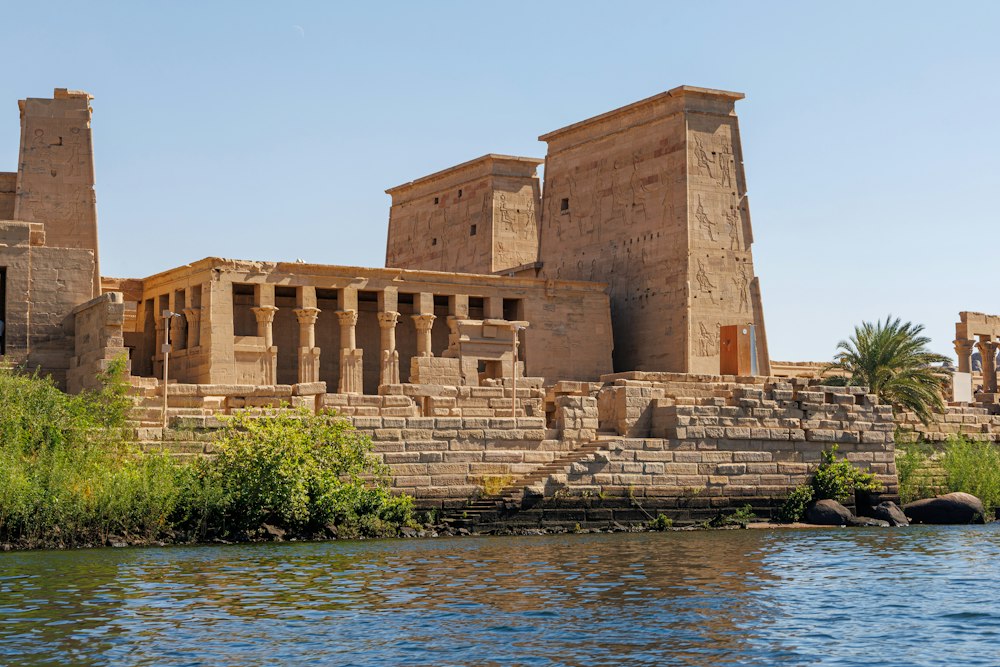
The temple of Isis at Philae has an island of its own, reached by motorboat. Abu Simbel is a day trip south by road, or a short flight.
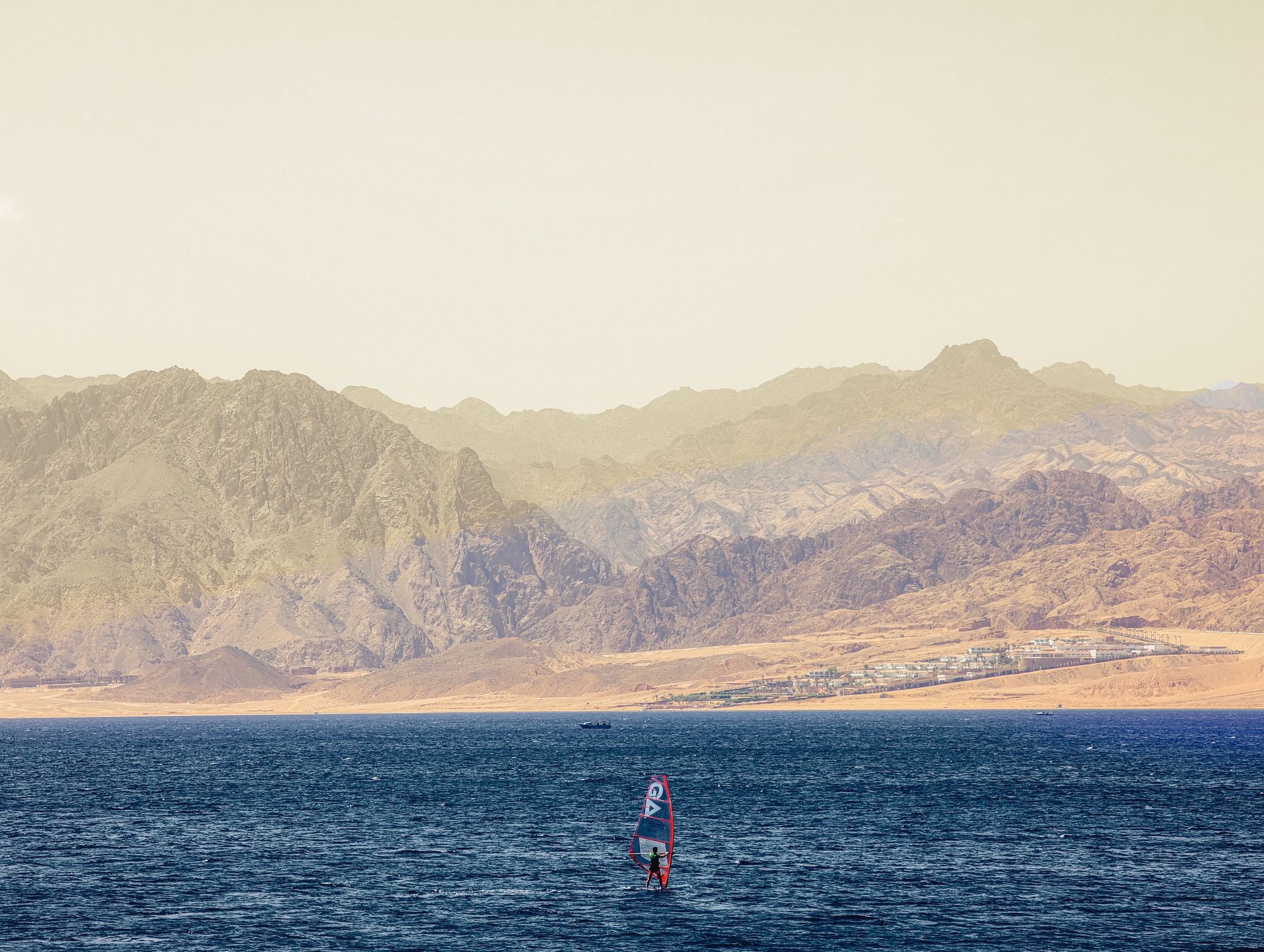
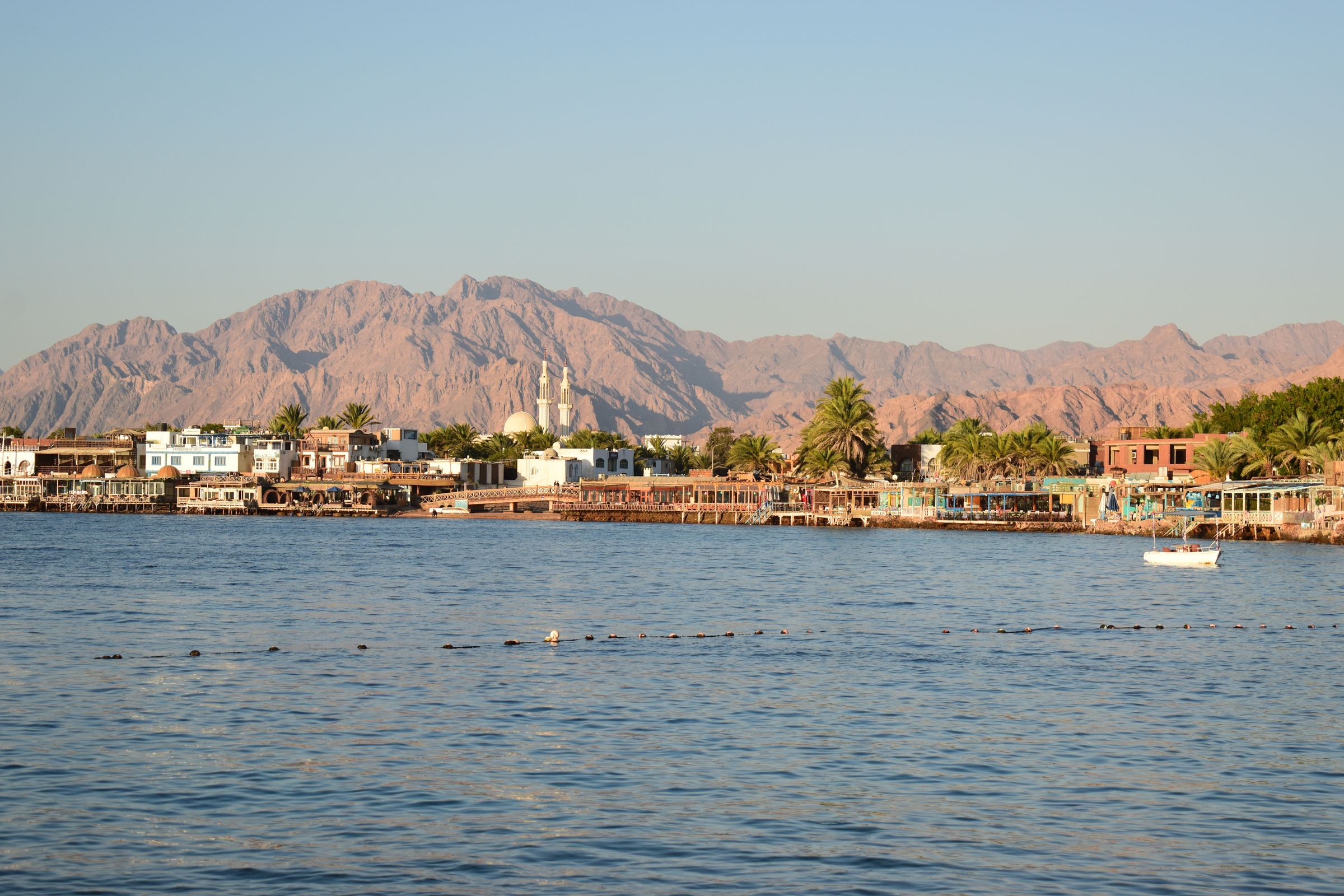
You can snorkel straight from the beach at Dahab, and the Blue Hole is dived from the shore too.
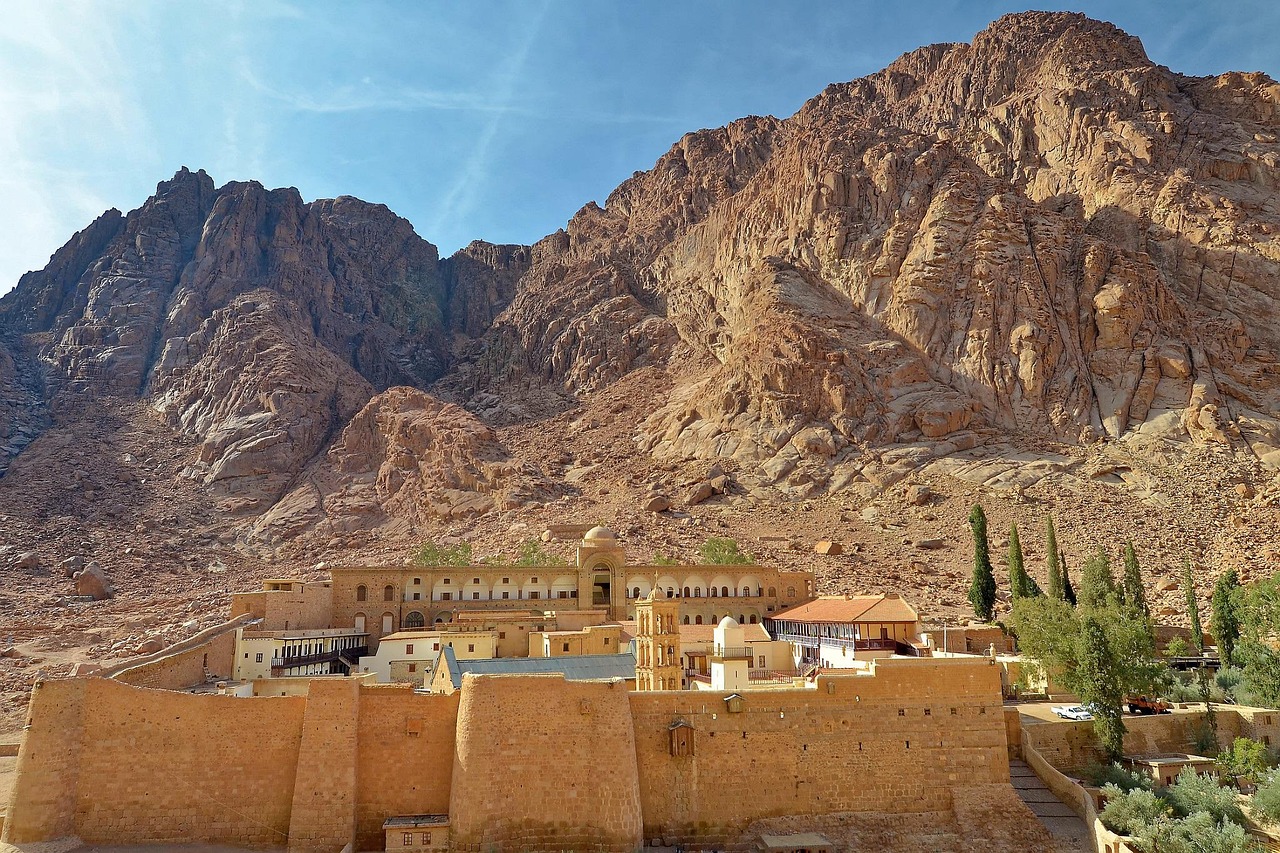
Saint Catherine's Monastery stands under Mount Sinai, two hours by car from Dahab. Hurghada is on the mainland coast, with boats to the sandy Giftun Islands.
Should you stay? For a hotel on the sea and a different boat trip every other day, Sharm is the Sinai base to book. Dahab fits you better if you would rather walk into the reef from a small seafront town.
Diving You dive, and want Tiran, Ras Mohammed and the wrecks all in day-boat range.
Should you stay? One night gives you two days in Alexandria, enough for the catacombs and the museums as well as the seafront. For Qaitbay and the Bibliotheca alone, a day trip by train from Cairo is enough.
History You want a morning for the Graeco-Roman Museum or the gardens at Montaza.
Should you stay? Marsa Alam is right for a week in the water and dinner at your hotel. Go to Hurghada if you want a city to walk around, with a bazaar and more places to eat than one marina promenade.
Diving You dive, and want to sleep at a dive village with a reef off its beach.
Should you stay? The pyramids and the pyramid fields to the south are reason enough to sleep in Giza. You will be happier in Cairo if the old city and its bazaars matter more.
History You want the plateau and the Grand Egyptian Museum in the same day, without crossing Cairo between them.
Should you stay? Sleep in Aswan for Philae and slow evenings beside the Nile islands. Luxor is the better base if Karnak and the royal tombs come first for you.
History You want a day trip to Abu Simbel and Ramesses II's rock temples.
Should you stay? Stay in Bawiti if you are coming from Cairo and want painted tombs and the desert in one short trip. Farafra is the better base if you are carrying on along the oasis road.
History You want a half day of ancient sites first. Two painted tombs are within walking distance of the town museum.
Should you stay? Go to Siwa when you can give it three nights as well as a day on the road each way. With less time, keep to Alexandria for a city by the sea, or break at Marsa Matruh on the coast for a beach.
Desert You want dunes at sunset, and your own government's advice allows the trip.
Should you stay? Stay in Tunis Village if you want a day in the desert and another at the ruins without driving back to Cairo each night. If you only want the desert lakes, come on a day tour and sleep in Cairo or Giza.
Desert You want one long desert day by 4x4 from Tunis Village that takes in the fossil whales as well as the lakes.
Should you stay? Give Luxor three nights, so that the temples and the West Bank tombs each get a day. If you would rather spend the time on the river, pick Aswan.
History You want Karnak and Luxor Temple on the same side of the river as your hotel.
You want to see the light reach the statues at Abu Simbel.
You want clear, mild days in Luxor and Aswan.
Think twice if
You plan long evenings outdoors in Cairo, where the nights are still cold.
March
Warm days in the south before the strong heat arrives.
By day
23°C
At night
12°C
The sea
22°C
Rain
3 days
Swimming
Warm enoughComfortable swims
Beaches
CoolCool months
By day the south reaches 29 to 30°C, still comfortable for the west bank. The khamsin, a desert wind full of sand and dust, can blow at intervals from now to May.
Ramadan's dates move each year, so check them before you book.
The railway runs from Alexandria through Cairo to Luxor and Aswan. Coaches cover the Red Sea and Sinai.
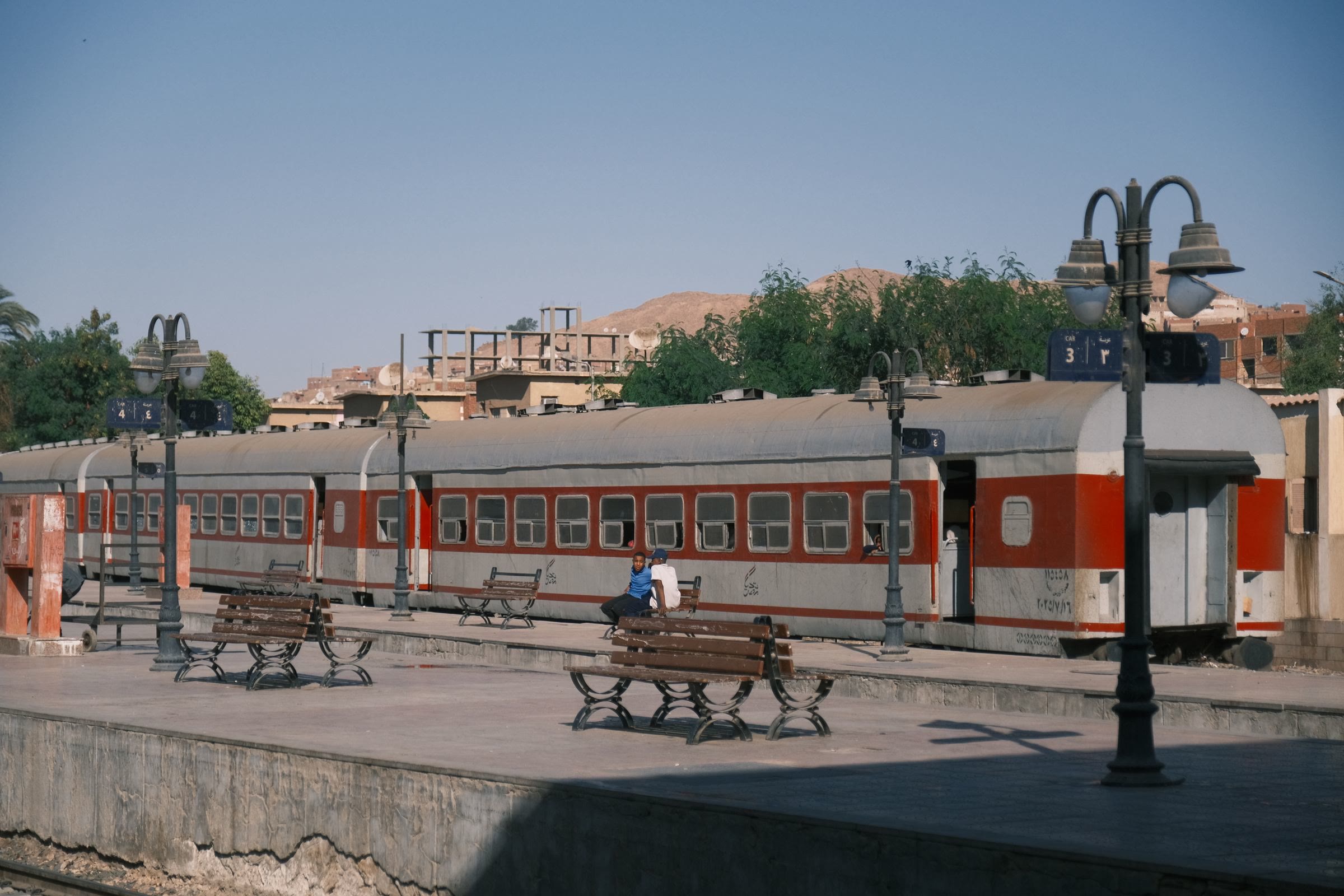
The sleeper south leaves from the Upper Egypt station in Giza, not from the central station. Its berths are sold apart from ordinary seats, so check that the ticket you buy says sleeper.
Hurghada's coaches use the Go Bus and Upper Egypt Bus stations in El Dahar.
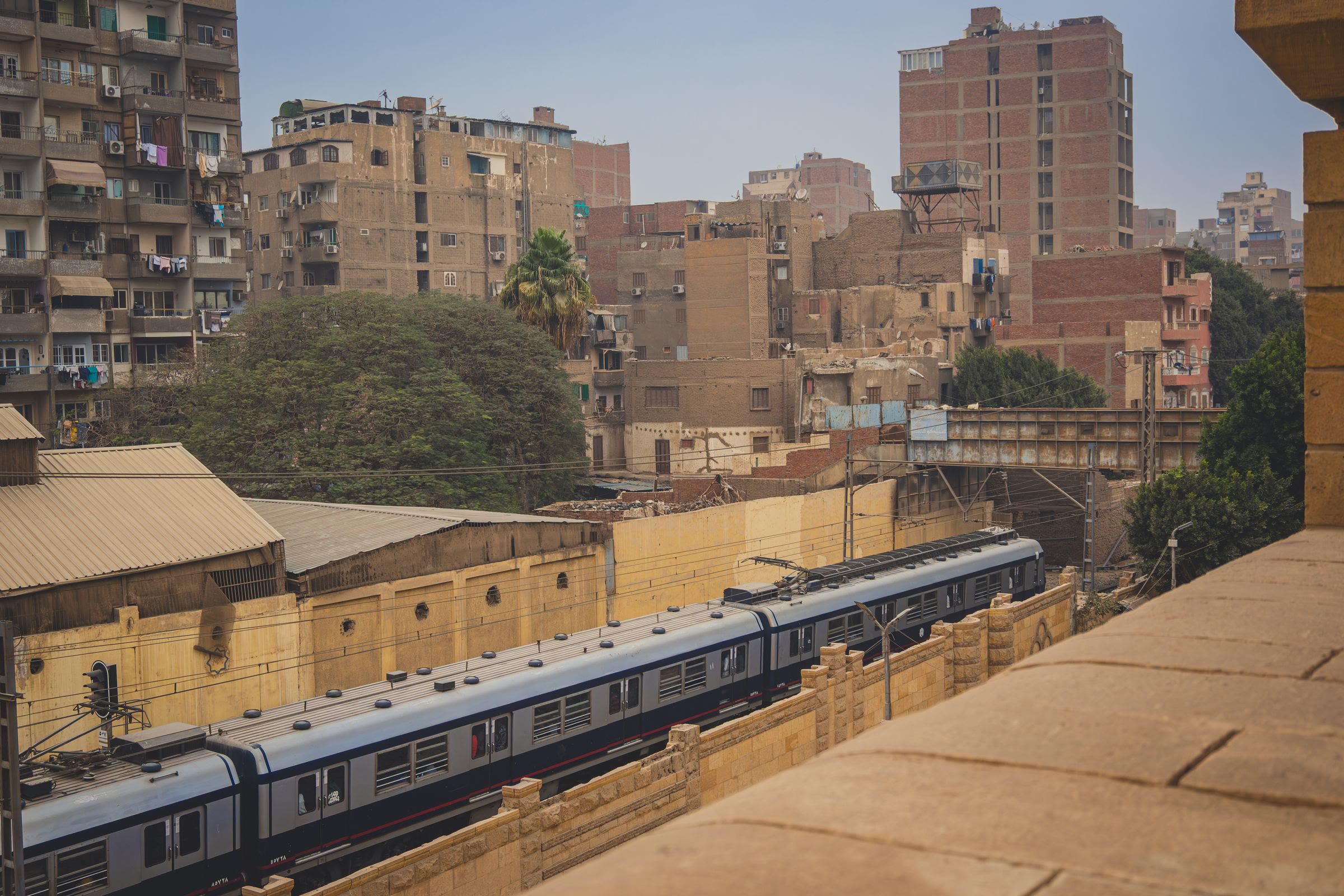
A passenger train at a platform in EgyptA train running through Cairo
How long the long journeys take
By sleeper train
Cairo to Luxor10 hOvernight, and late arrivals are common
By coach
Hurghada to Cairo5 h 30Up to seven hours, with one rest stop
Cairo to Bahariya5 hUpper Egypt buses, nearer six hours with a rest stop
Bahariya to Farafra3 hNot every bus from Cairo continues, so ask at the station
Cairo to Siwa11 hNight bus, 10 to 12 hours
Marsa Matruh to Siwa4 hAt least daily
By car
Aswan to Abu Simbel3 h 30About 280 km of desert road
Cairo airport to Alexandria3 hLonger when you leave Cairo at rush hour
Luxor to Abydos3 hOften paired with Dendera
Dahab to Saint Catherine2 hFor the monastery and Mount Sinai
Aswan to Edfu2 hAbout 110 km north
Cairo to Fayoum2 hTo Tunis Village, beside Lake Qarun
Sharm El Sheikh to Dahab1 h 15Along the Sinai coast road
Typical times each way. Traffic, checkpoints and delays can add to any of them.
Nile cruises, ferries and boats in Egypt
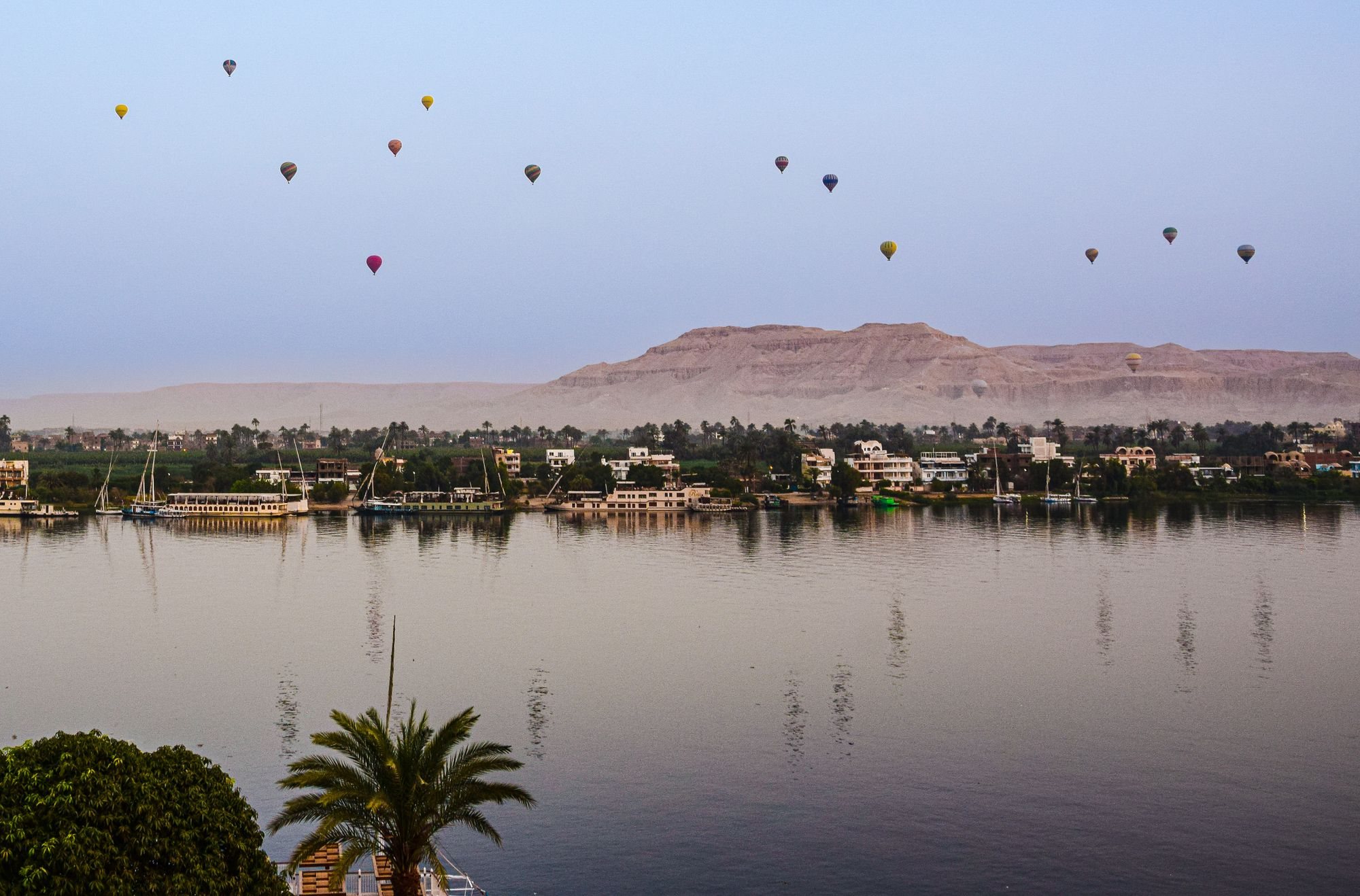
You can cross the Nile by ferry at Luxor and Aswan, and cruise between the two.
At Luxor a public ferry links the two banks every 10 to 15 minutes, landing about 3 km short of the Valley of the Kings. By road you go round by a bridge south of town.
At Aswan a public ferry crosses from the corniche to Elephantine. For Philae, buy the temple ticket at Shellal marina, then agree the return fare and the wait with a motorboat for the 15 minutes across.
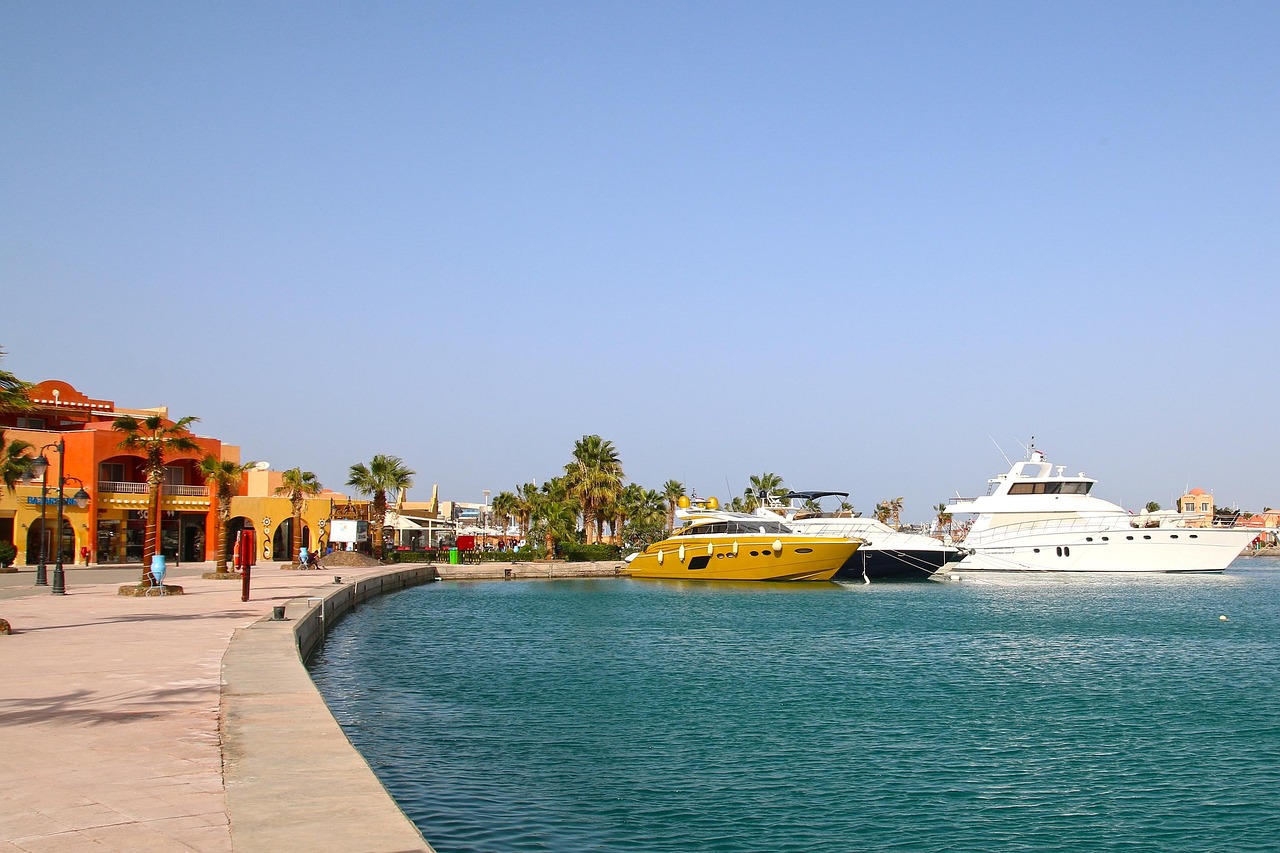
Boats to the Giftun Islands take about 45 minutes from Hurghada's marina. Each trip lands at one named beach, so check which before you book.
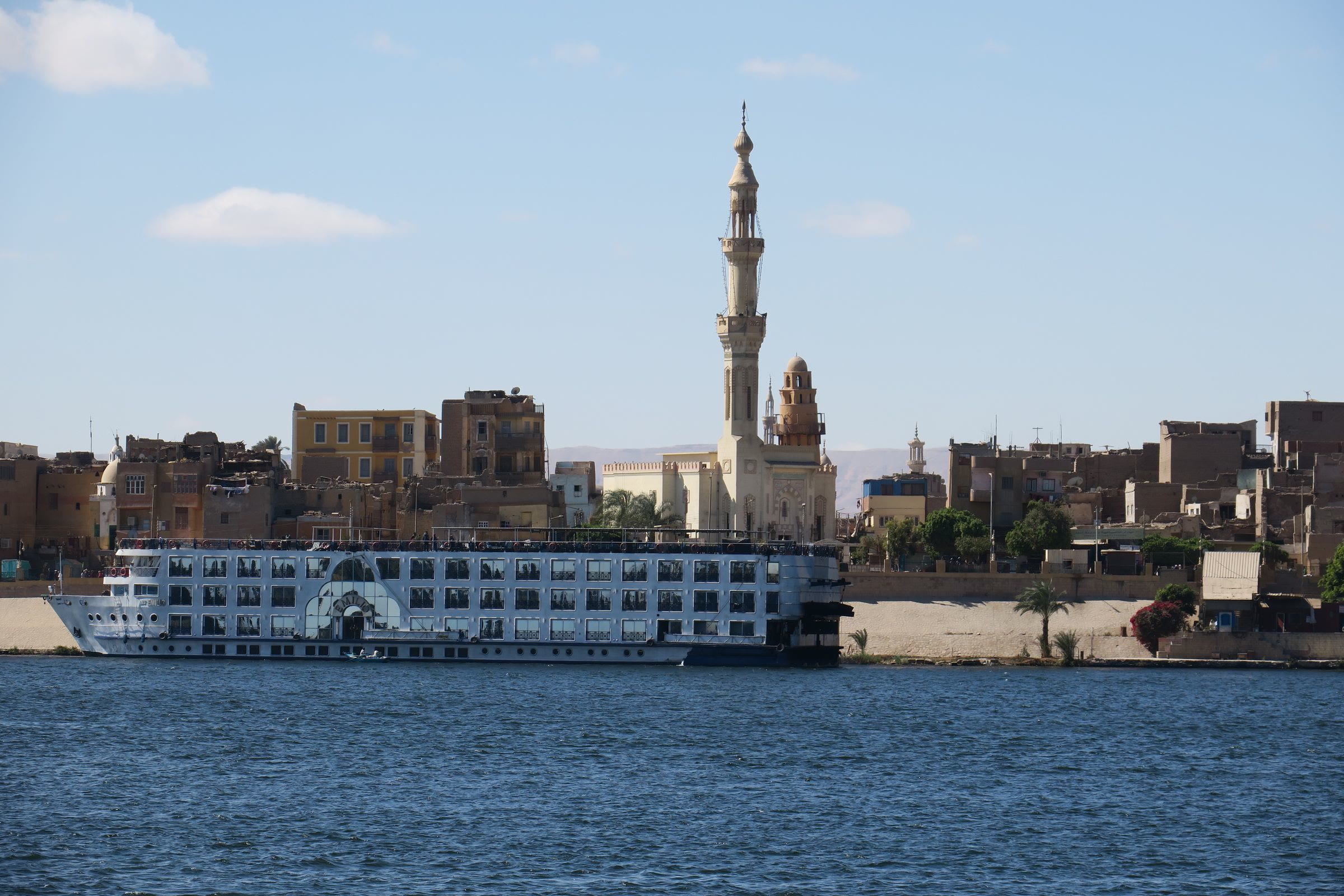
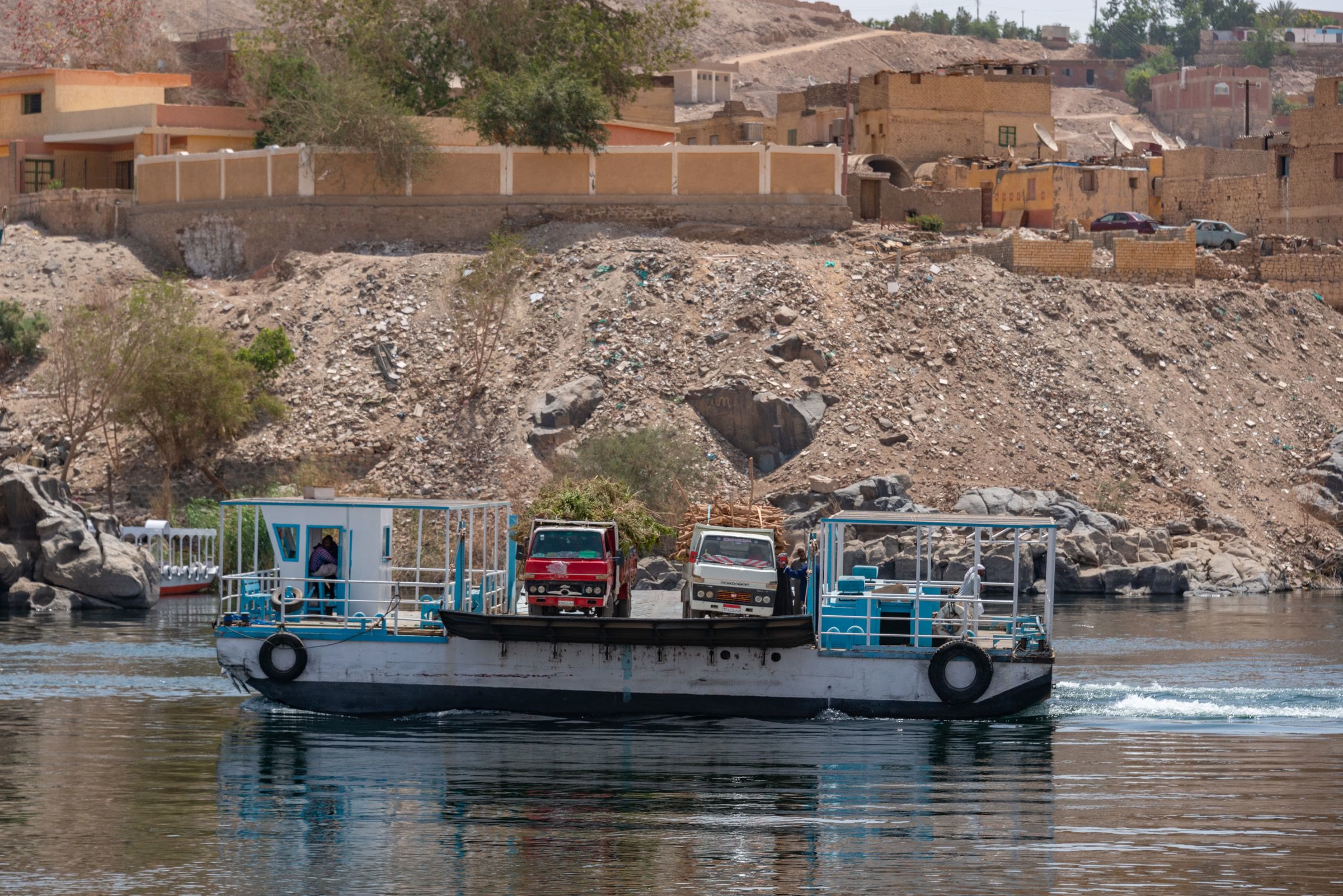
A cruise boat moored at AswanA vehicle ferry on the Nile
The cruise route
Nile cruiseLuxor to Aswan, or the reverse
The boats call at the temples of Edfu and Kom Ombo on the way. At Kom Ombo they moor a few minutes' walk from the entrance.
Driving in Egypt: licences, checkpoints and permits
You rarely need to drive in Egypt, and a car with a driver is the simpler way to reach desert sites.
For Bahariya, Farafra and the White and Black Deserts you apply for a permit in advance and travel with an official guide. Book through an operator who handles both.
Read your government's Western Desert advice under Safety before you fix a route.
On the road
Licence
Carry an International Driving Permit with your own licence. UK drivers need the 1949 version and can drive on it for up to six months.
Seat belts
Compulsory for the driver and the front passenger.
After dark
Avoid the roads outside main cities and resorts at night.
Checkpoints
Police stop cars along the highways of South Sinai.
Into Sinai by 4x4
You need a permit from the Ministry of the Interior to bring a 4x4 from the mainland through the Suez crossing.
Off road
Hire a qualified guide and get a Ministry of Interior permit before you leave the asphalt.
Taxis, ride-hailing apps and the Cairo metro
Ride-hailing apps cover the biggest cities, and Cairo also has a metro.
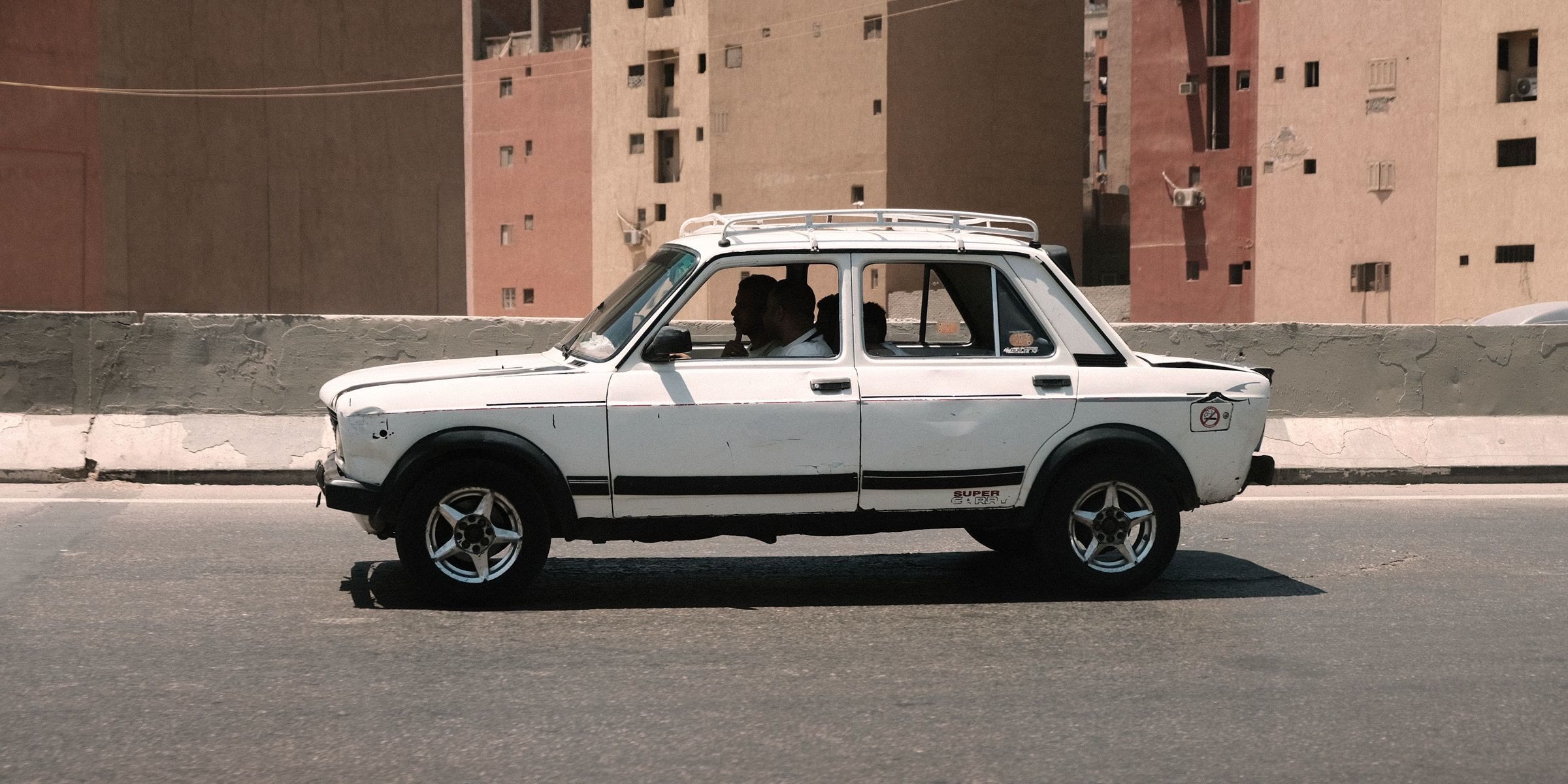
In Luxor, Aswan and Dahab, take a taxi or your hotel's car and agree the fare before you get in. Cairo's white taxis carry a meter, and the older black and white ones have none.
Cairo's metro runs from 05:00 to midnight, and to 02:00 in Ramadan. The middle cars are for women, and men must not board them. Sadat station is for Tahrir Square, and Mar Girgis for Coptic Cairo.
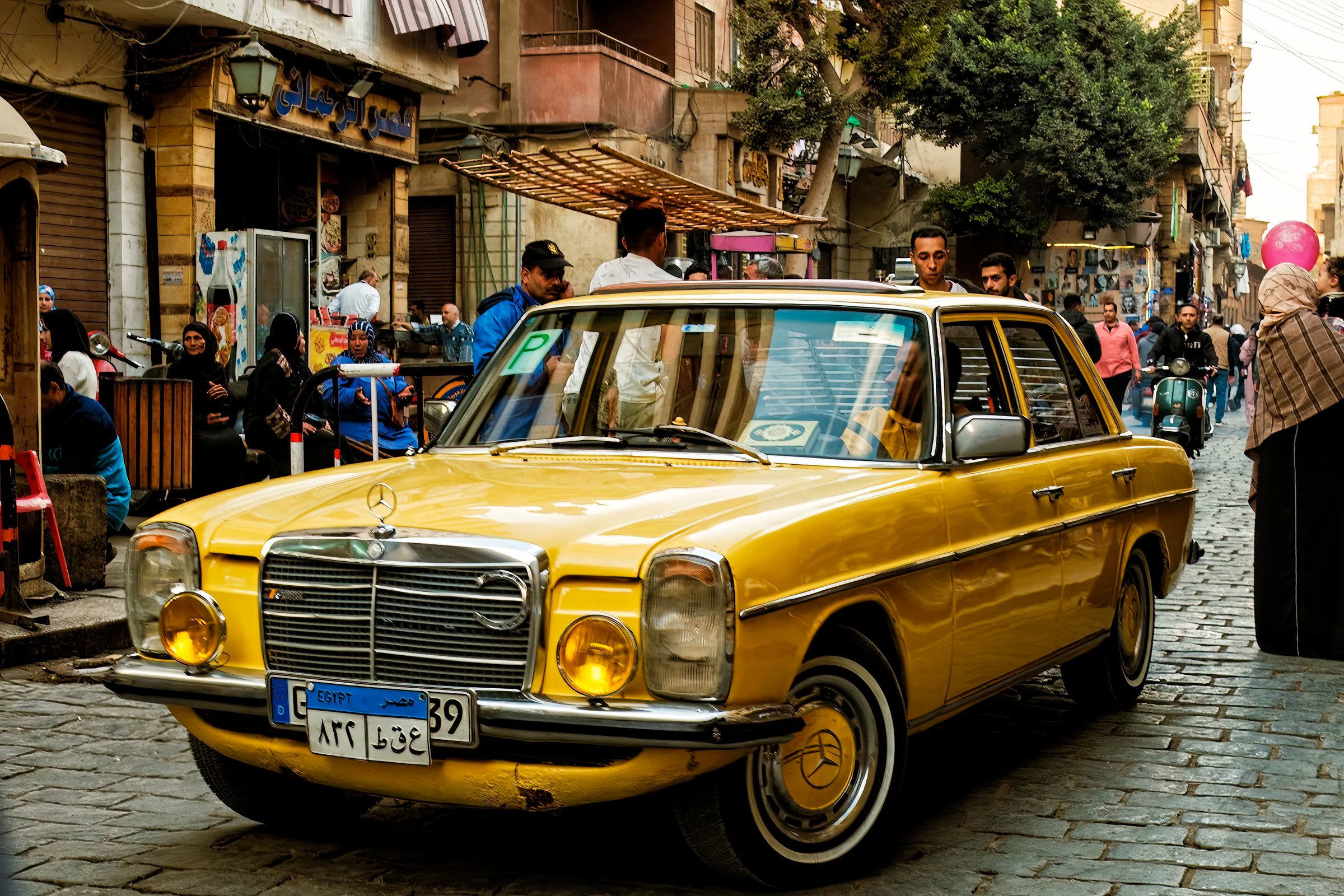
A yellow car on a Cairo streetAn old white car in Cairo
Temple · Abu Simbel, Nile valley · near Aswan · 2 hr
Four seated colossi of Ramesses II, each twenty metres tall, cut into a cliff near the Sudanese border, with a smaller temple for Nefertari beside them.
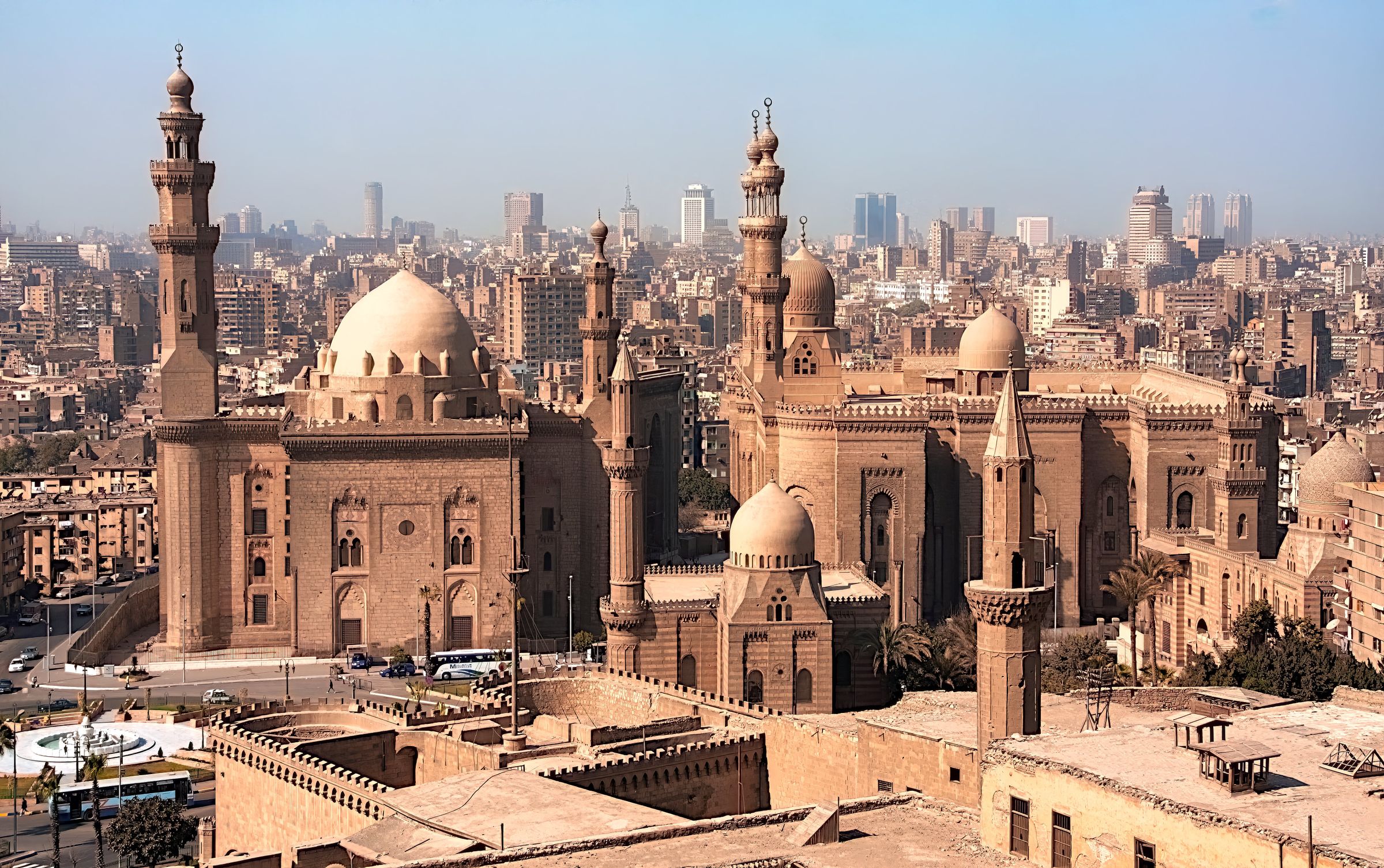
The spine of the Fatimid city, running a kilometre from the northern gate of Bab al-Futuh to Bab Zuweila in the south, with the densest run of medieval Islamic buildings anywhere.
Beach · Abu Dabbab, Red Sea and Sinai · near Marsa Alam
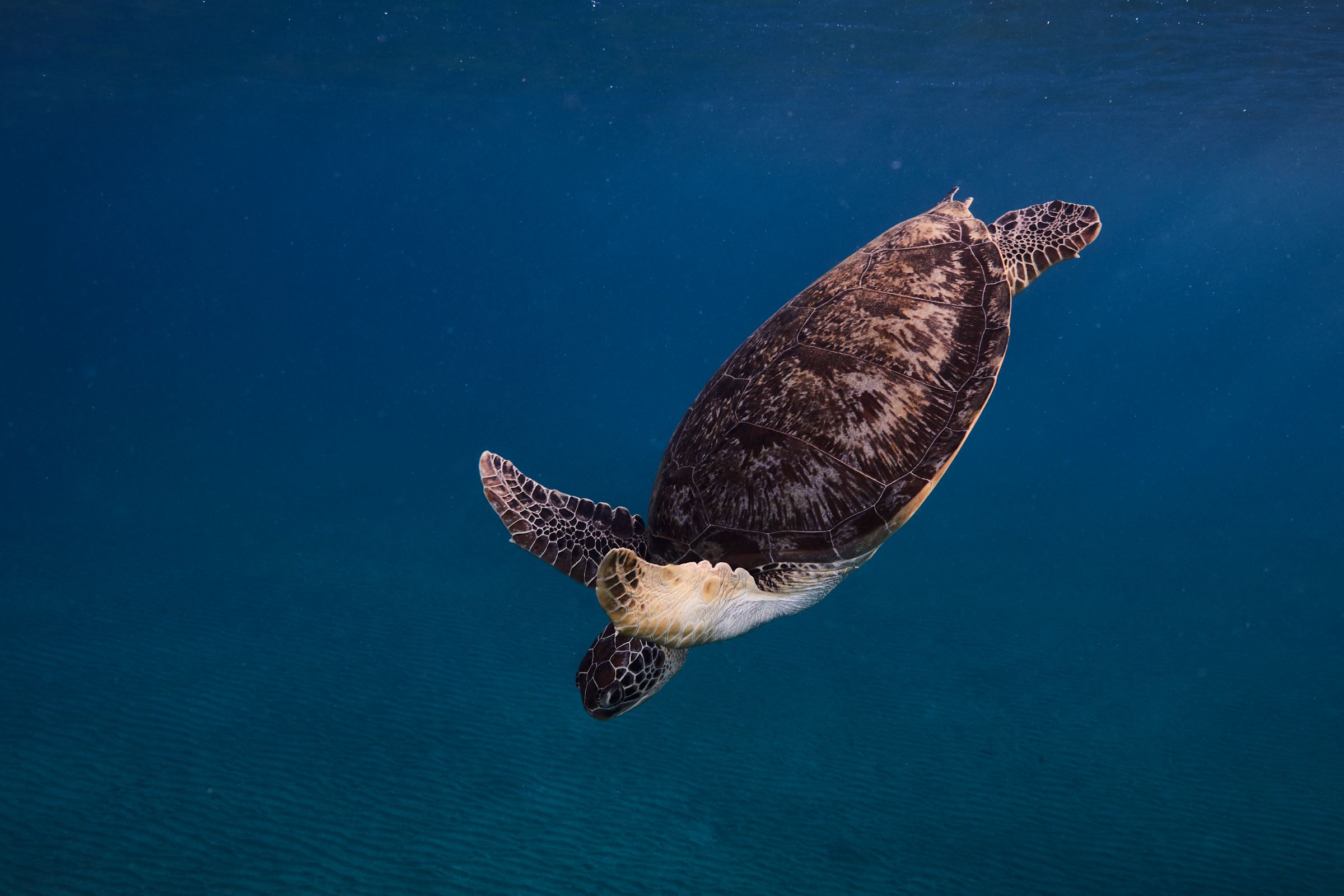
About 38 km by road north of Marsa Alam town, this U-shaped bay at the mouth of Wadi Abu Dabbab has a seagrass meadow in the middle where green turtles graze and a dugong is sometimes seen.
Twenty-two royal mummies were driven here from Tahrir in a televised parade in 2021, and now lie in a dim, hushed gallery below the main hall: Ramesses II, Hatshepsut and Thutmose III among them, their faces uncovered.
Park · Wadi El Gemal, Red Sea and Sinai · near Marsa Alam
Declared in 2003, the park runs from the coast south of Marsa Alam into the Eastern Desert, covering about 7,450 square kilometres of mountains, wadis, reefs and islands.
Canyon · Nuweiba, Red Sea and Sinai · near Dahab · 1.5 hr
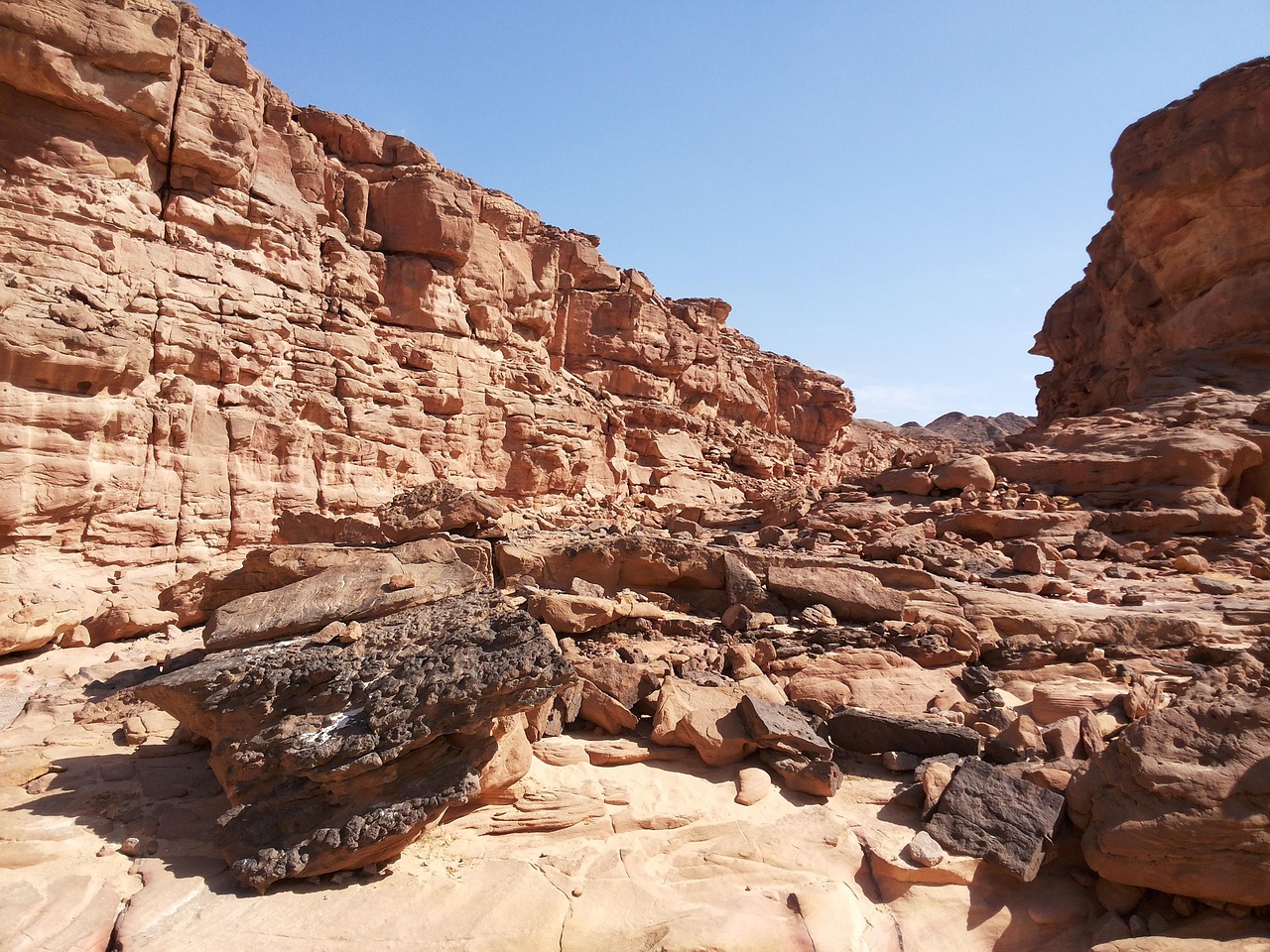
Close to Nuweiba and about 90 kilometres north of Dahab, this narrow slot canyon winds for about 800 metres between banded sandstone walls up to 40 metres high.
A small, modern museum on the corniche that shows a few hundred pieces, well lit and properly labelled: a relief to anyone worn down by the scale of the temples.
Park · Wadi El Rayan, Western Desert · near Fayoum
A protected desert valley about 65 kilometres southwest of Fayoum city holds two lakes joined by a short run of waterfalls, a rare sight in Egyptian desert.
Opened in 1997 as a record of the land and culture lost under Lake Nasser, when tens of thousands of Nubians were resettled and their villages drowned.
Island · Giftun Islands, Red Sea and Sinai · near Hurghada
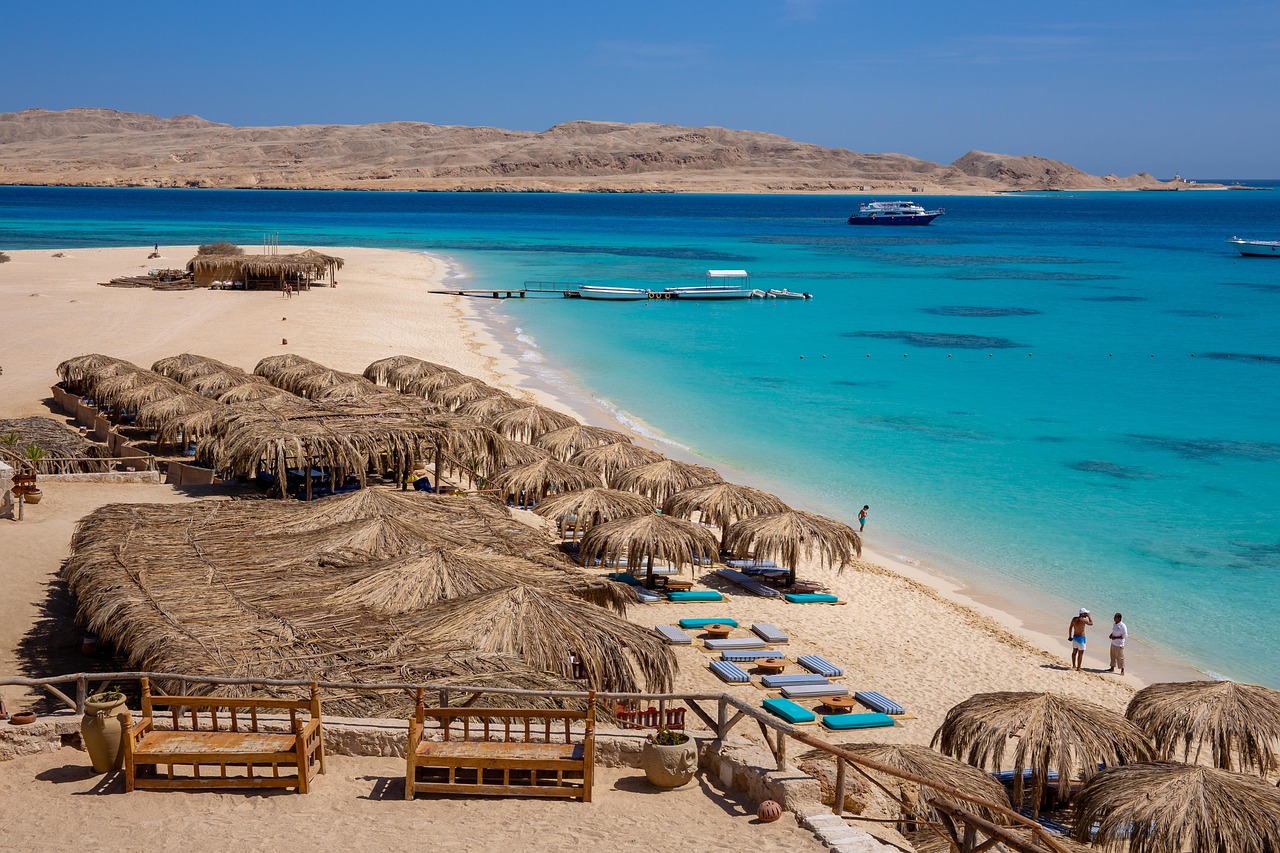
Two low desert islands lie off Hurghada inside a protected marine park: Giftun Kebir, the larger, nearer the coast, and little Giftun Soraya further east.
Beach · Giftun Islands, Red Sea and Sinai · near Hurghada · 7.5 hr
Built of natural materials under the supervision of Egypt's Environmental Affairs Agency, Mahmya is an eco beach camp on Giftun Kebir with nothing constructed on the reef.
Museum · Alexandria, Mediterranean and Siwa · 2 hr
An Italianate mansion of 1926 on Tariq al-Horreya holds about 1,800 objects arranged by period, one floor each: pharaonic pieces with mummies in a recreated burial chamber, then Greek and Roman sculpture, then Coptic and Islamic work and material on the modern city.
Wreck site · Strait of Gubal, Red Sea and Sinai · near Hurghada
Projecting into the shipping channel at the mouth of the Gulf of Suez, north-west of Shadwan Island, this triangular reef has sunk at least seven ships.
Monastery · Saint Catherine, Red Sea and Sinai · near Dahab
About two hours inland from Dahab, this walled Greek Orthodox monastery was built for the emperor Justinian in the sixth century around the bramble venerated as the Burning Bush.
Archaeological Site · Abydos, Nile valley · near Luxor · 2 hr
Look for the names of 76 kings of ancient Egypt on one wall of the Temple of Seti the First at Abydos. The raised reliefs you see inside are some of the finest in the country.
Archaeological Site · Dahshur · near Giza · 45 min
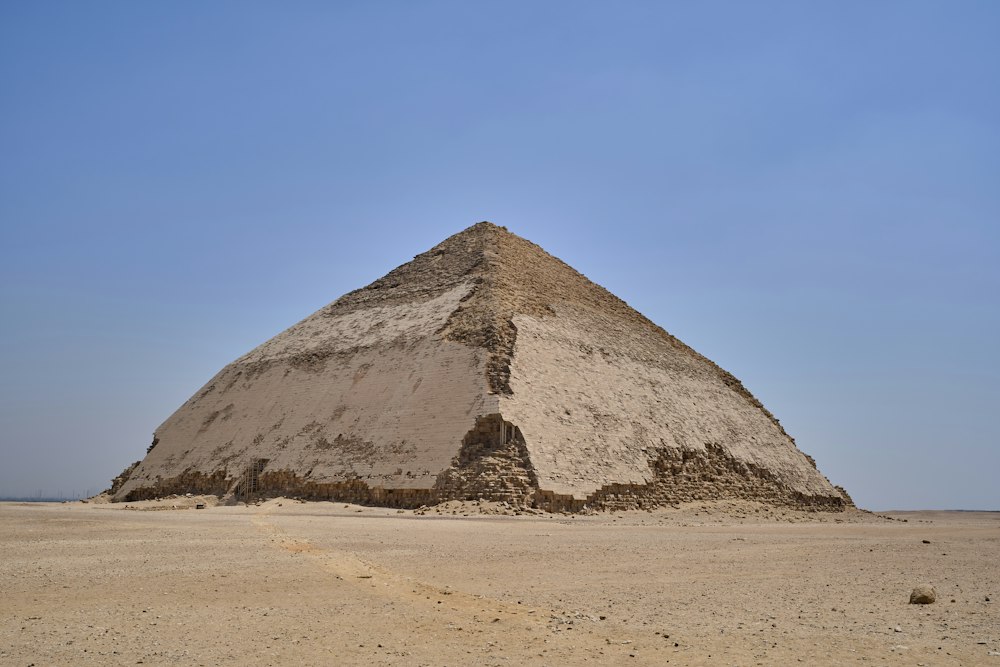
Its polished limestone skin survives better than on any other pyramid in Egypt. Inside, you crouch down a long passage and climb wooden stairs into chambers roofed in stone that steps inward as it rises.
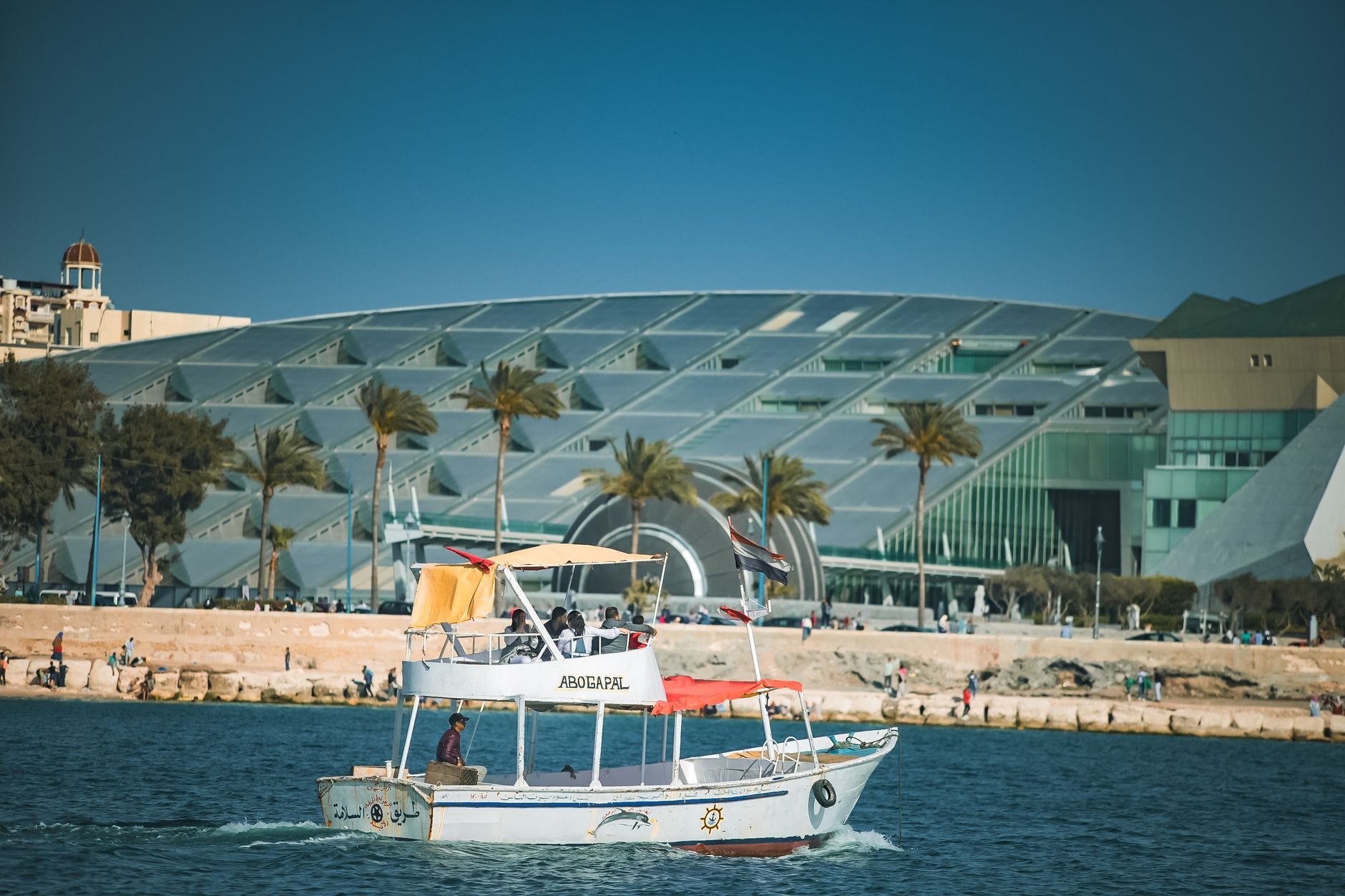
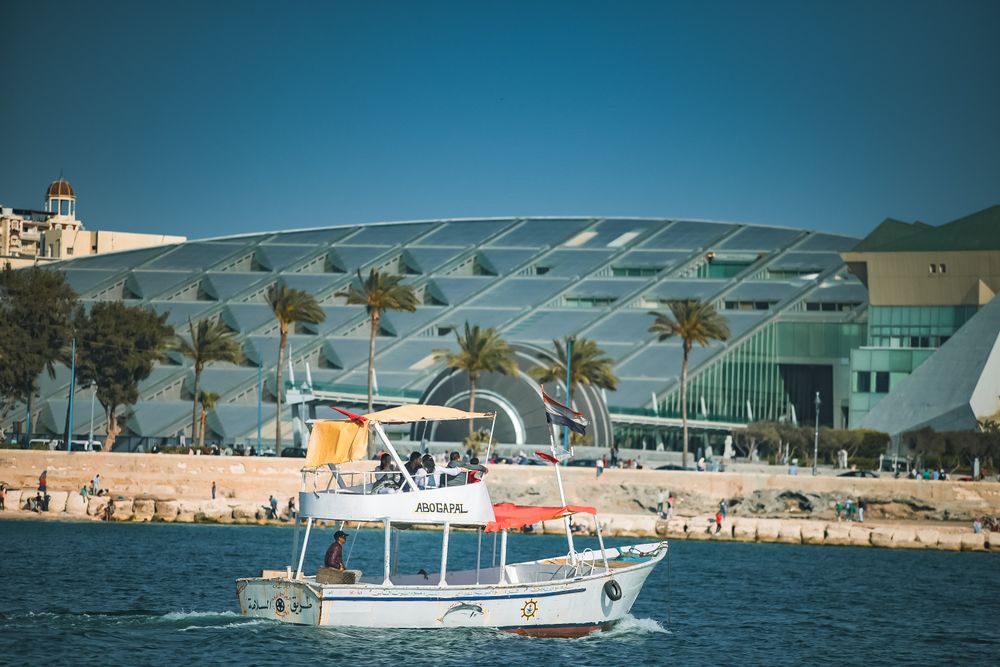
Come for a huge granite disc on Alexandria's seafront that holds a library, three open museums and a planetarium. Start in the reading room and its exhibitions on the Main Library ticket, then add a museum or a sky show.
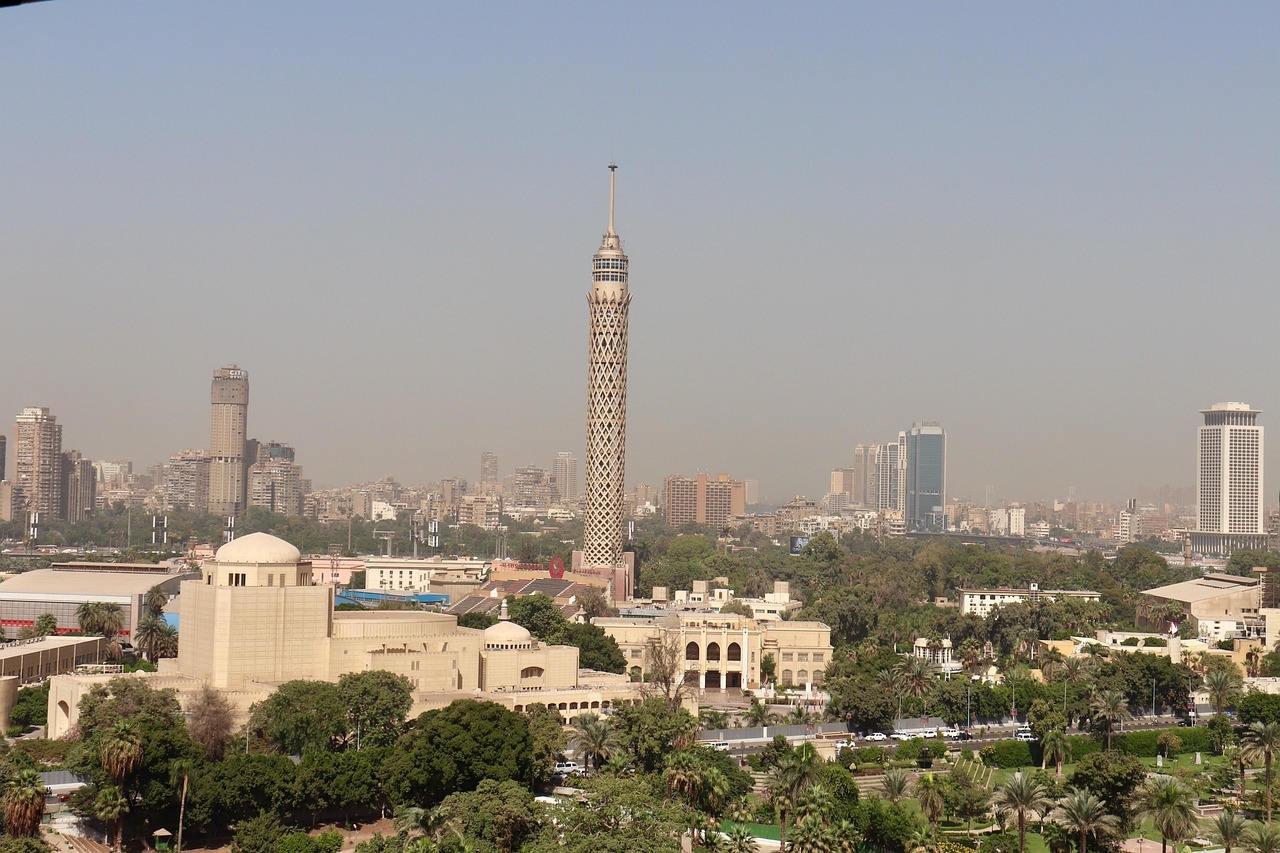
If Cairo feels too big to grasp, ride the lift to the top of this lattice tower and see how it fits together, with downtown east across the Nile and Giza to the west.
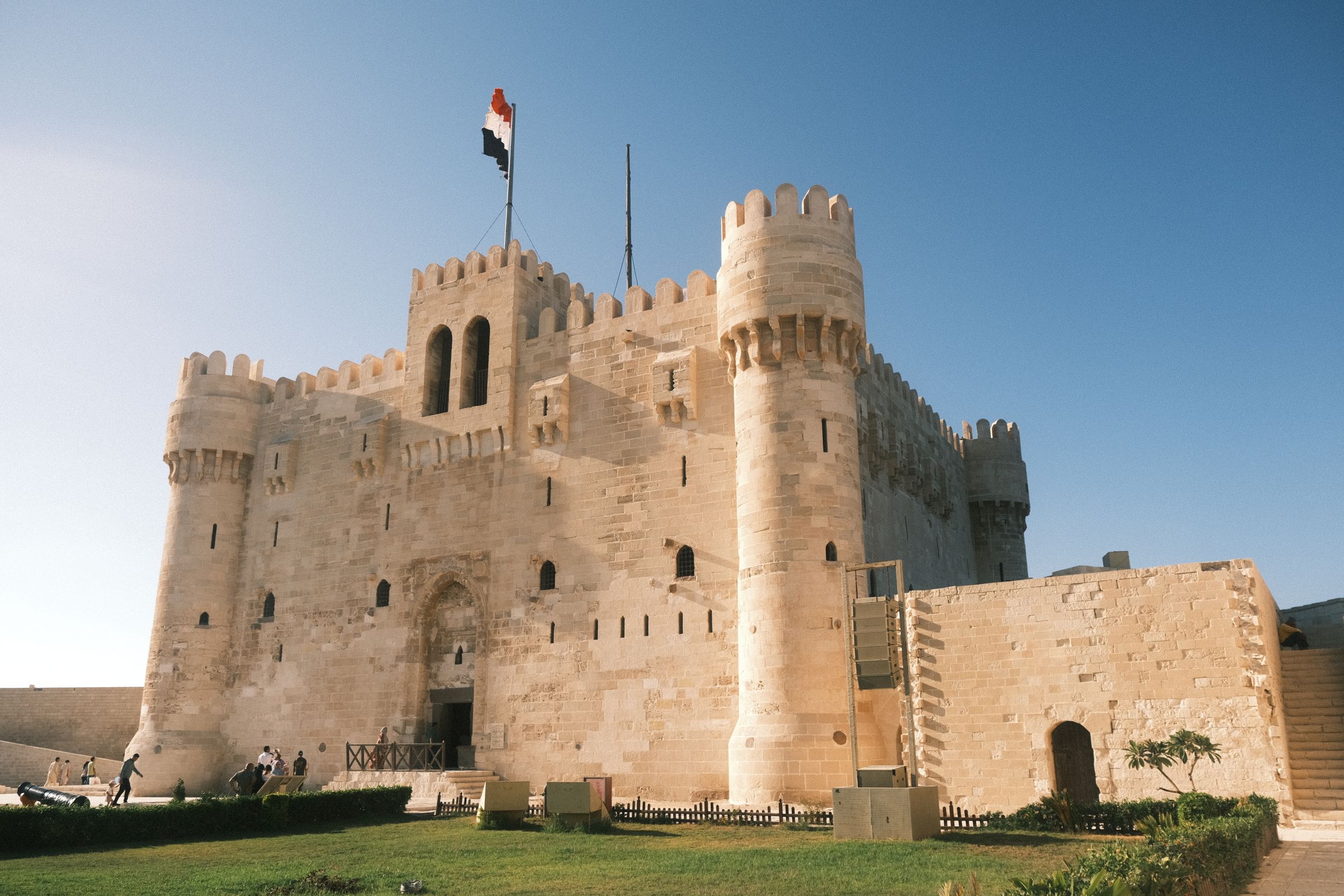
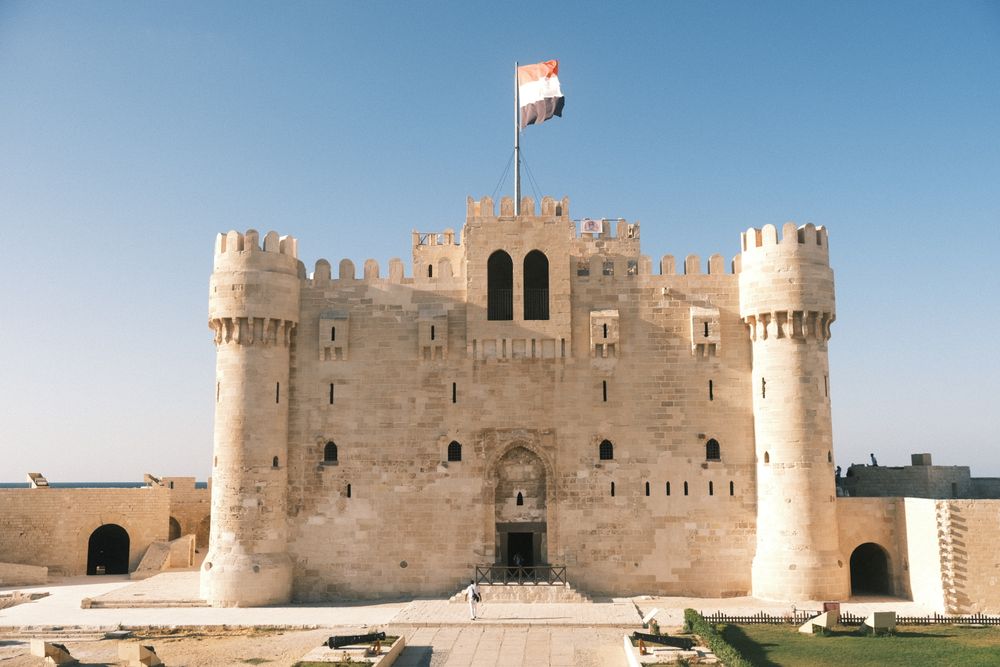
Sea walls on the site of the ancient Lighthouse of Alexandria, one of the Seven Wonders of the Ancient World. You walk inside the fort to the square keep that once guarded the city from the water.
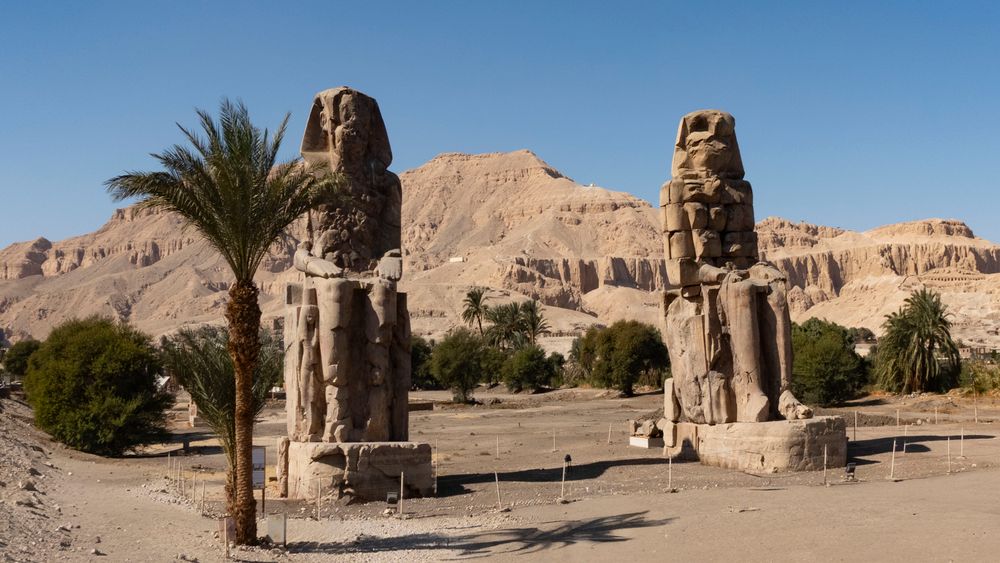
Two seated stone kings rise about 18 metres each beside the road on Luxor's West Bank. They once flanked the way into a vast temple, and fields now lie where it stood.
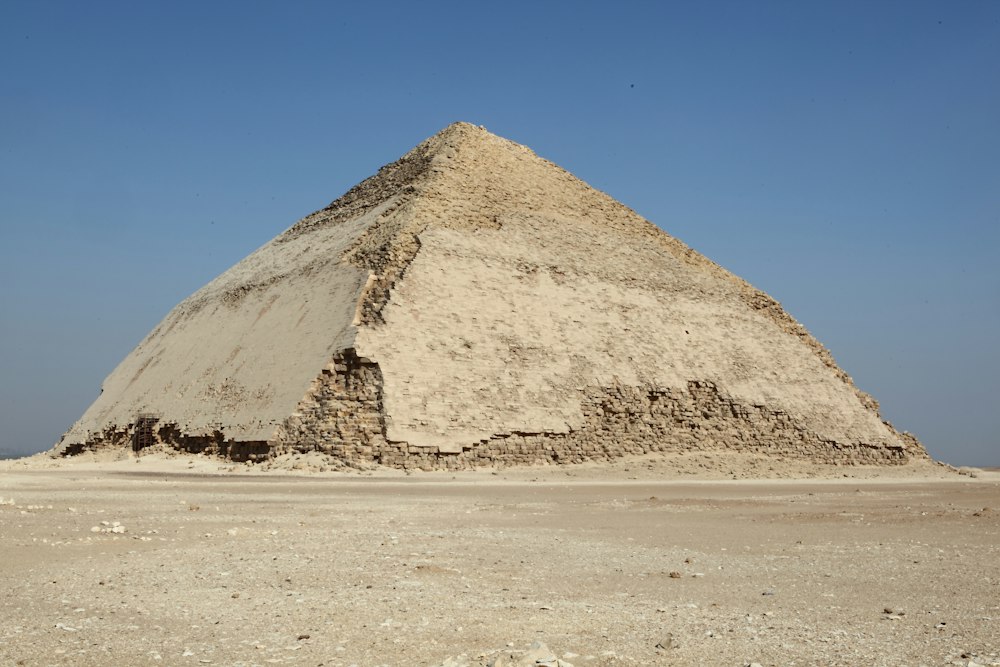
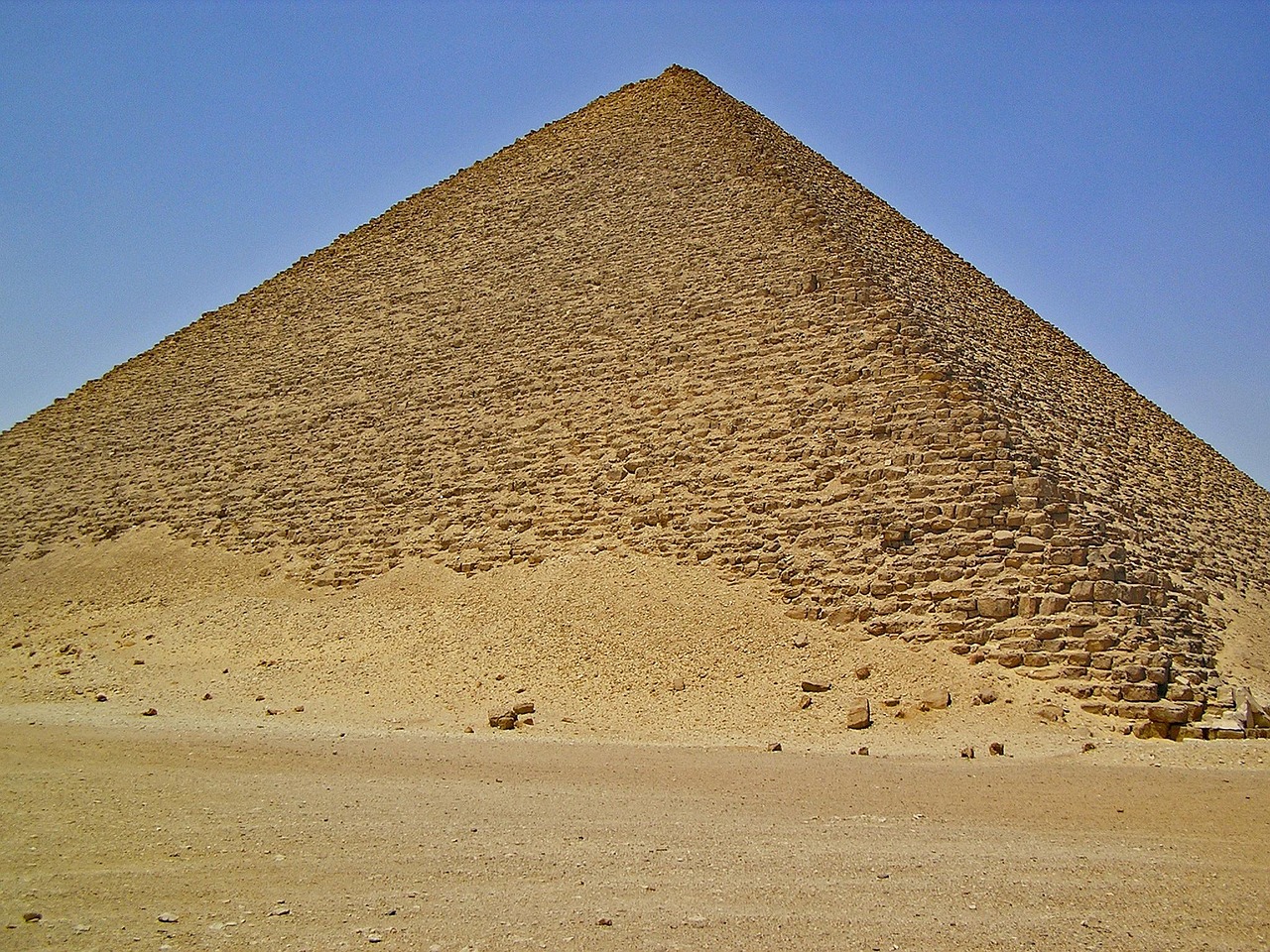
Look at the Bent Pyramid from any side and its slope breaks sharply partway up, the angle eased in the middle of the build. Beside it the Red Pyramid stands finished, and you can climb down inside.
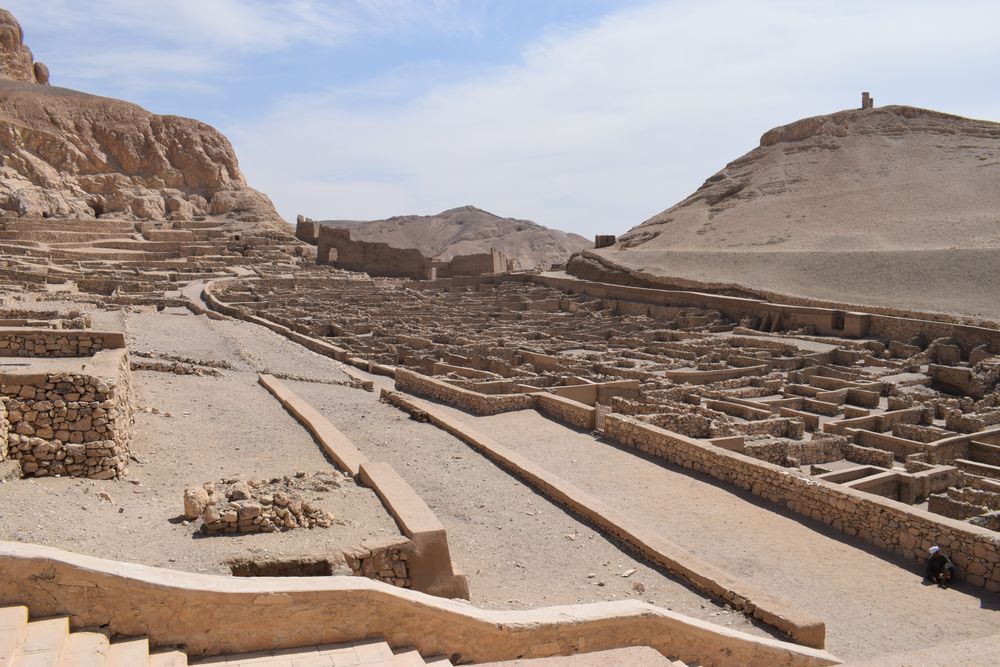
Around 68 houses, home to the craftsmen who made the royal tombs, stood in Deir el-Medina at its peak. Walk between their walls, then go underground into the small painted chambers they made for themselves and their families.
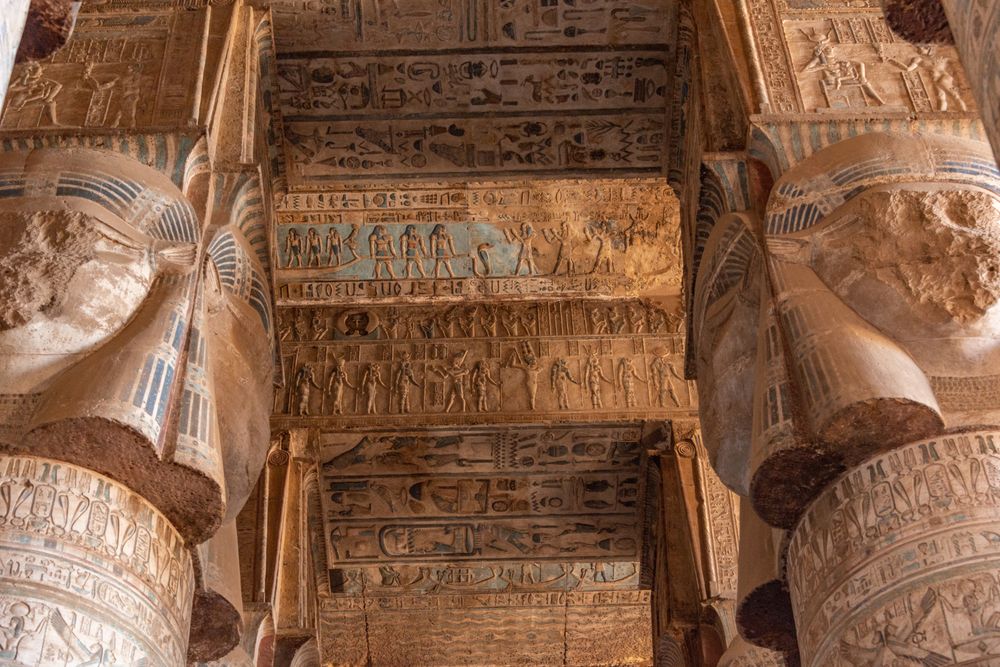
Twenty-four columns, each carved with the face of the goddess Hathor, stand around you under a stone ceiling that keeps some of its ancient paint. Dendera, near Qena north of Luxor, is one of Egypt's best-preserved temples.
Until the nineteenth century, a stairway on this island was still in use for measuring the height of the Nile. You see it on a walk through ruined temples and Nubian lanes, a short boat ride from Aswan.
Above the gatehouse of a Roman fortress, you stand in a church whose nave hangs over the old passage. Look through the floor panels to the stones beneath, then up at a ceiling made to look like Noah's Ark.
The boat trips to Hurghada's reefs and islands leave in large part from these docks, and cafés and fish restaurants line the waterfront facing the yachts.
You get one of the oldest commercial districts in the Islamic world: a tangle of lanes where you bargain for copper, silver and perfume, then sit down to tea.
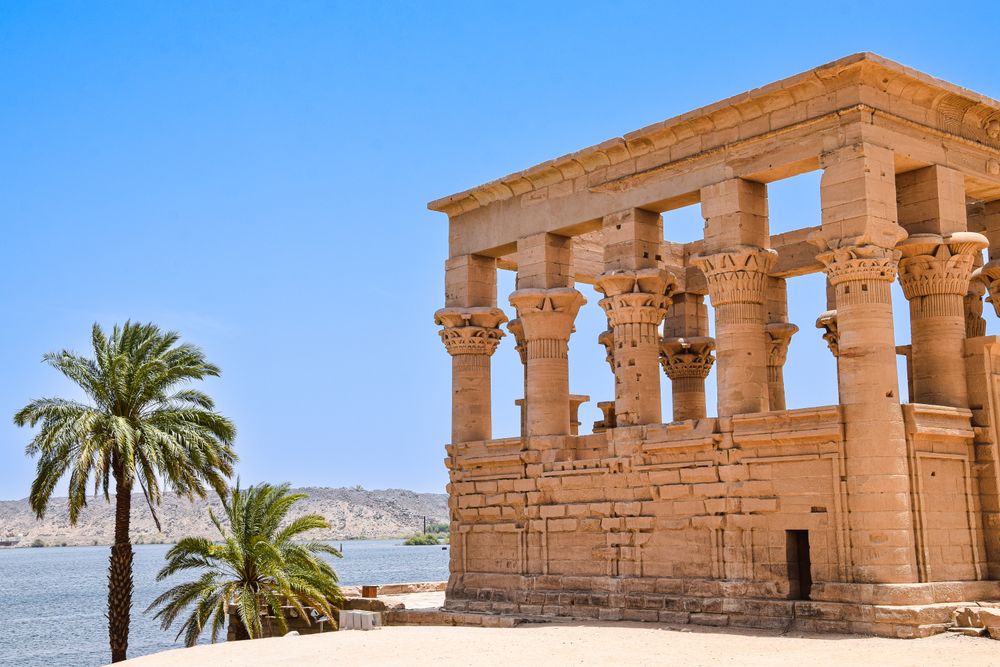
With a boat trip to Philae planned, leave time after the Temple of Isis for this open pavilion on the eastern shore. Its tall columns frame the water, and it is probably the most photographed building on the island.
Forty metres and more below sea level, this salt lake is used by nearly 88 species of water bird. You can watch them from the southern shore or from a felucca, a traditional wooden sailboat.
Come to see one of the grandest and most beautifully decorated tombs of the Old Kingdom, where the carved walls still carry their original paint, much of it red and blue.
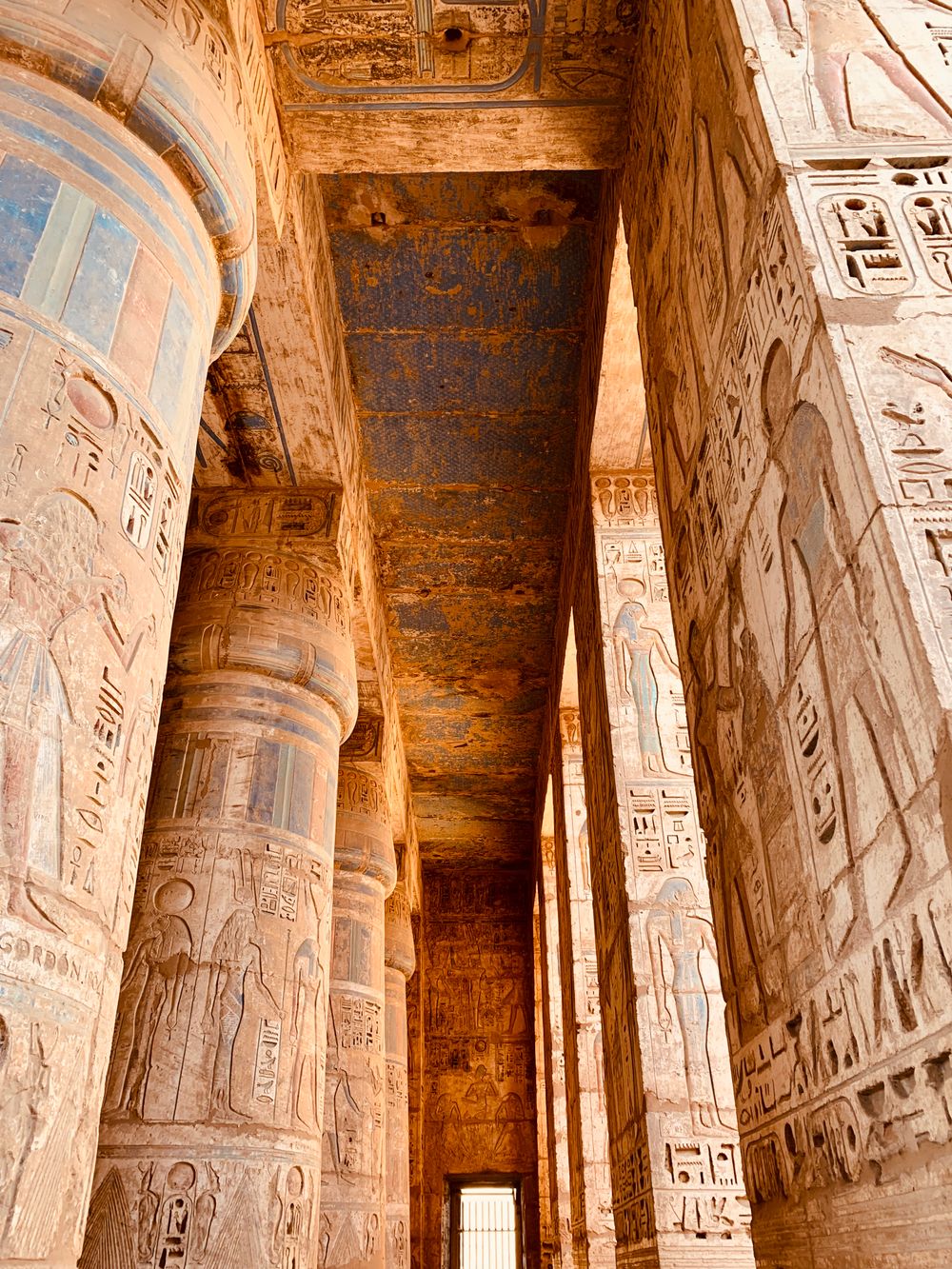
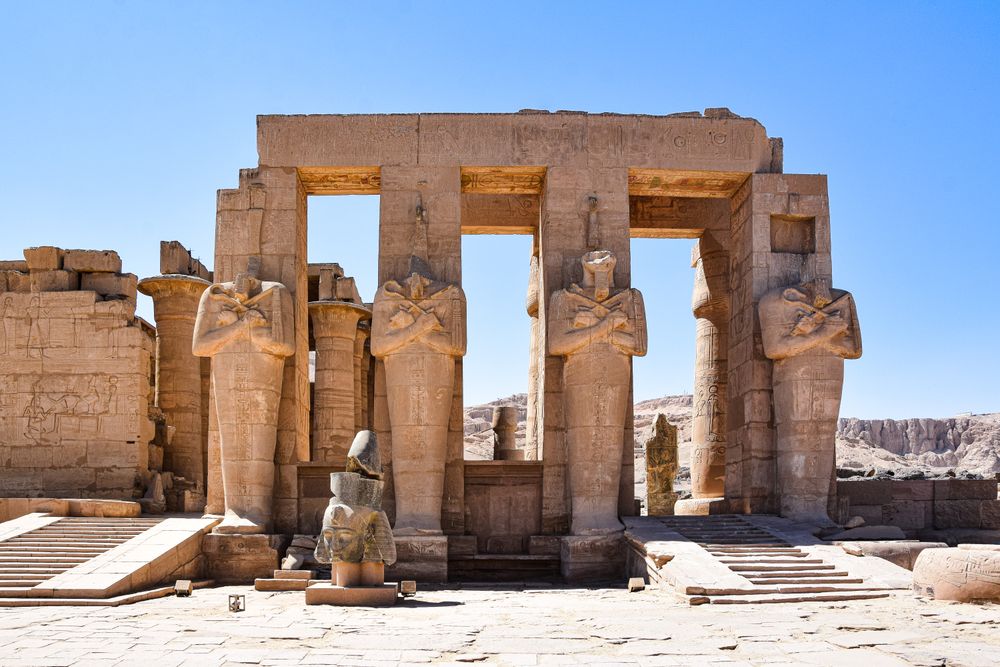
Under the two towers of a fortified gate, you step into the precinct of Ramesses III's mortuary temple, one of the best preserved of the New Kingdom. Its carvings are cut deep, and paint still clings to the stone.
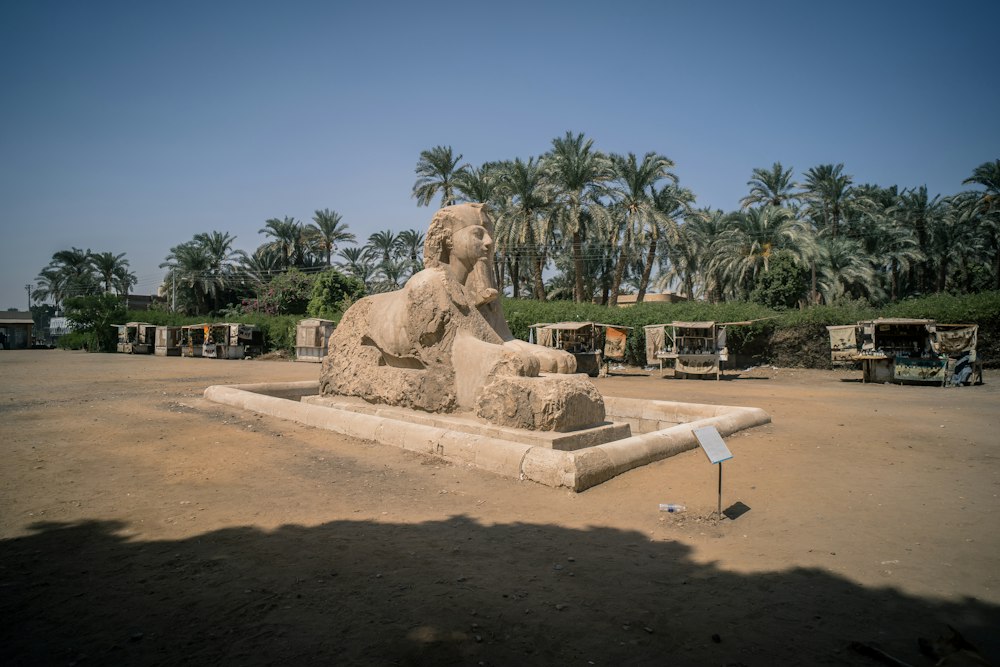
Ramesses II's colossus lies on its back under skylights at Mit Rahina, and you walk its full length at floor level. Outside, an alabaster sphinx stands among what is left of ancient Memphis.
Palace · Alexandria, Mediterranean and Siwa · 2 hr
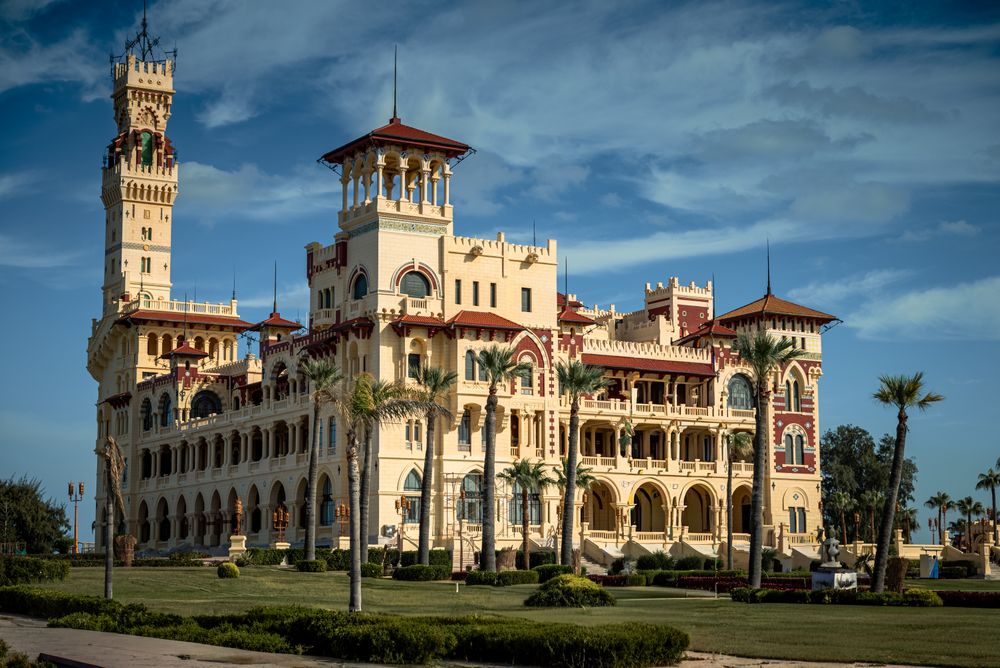
Walk the royal gardens of Montaza if you want green space and sea views at the end of the Corniche. Its two-towered summer palace stands beside the water, seen from outside.
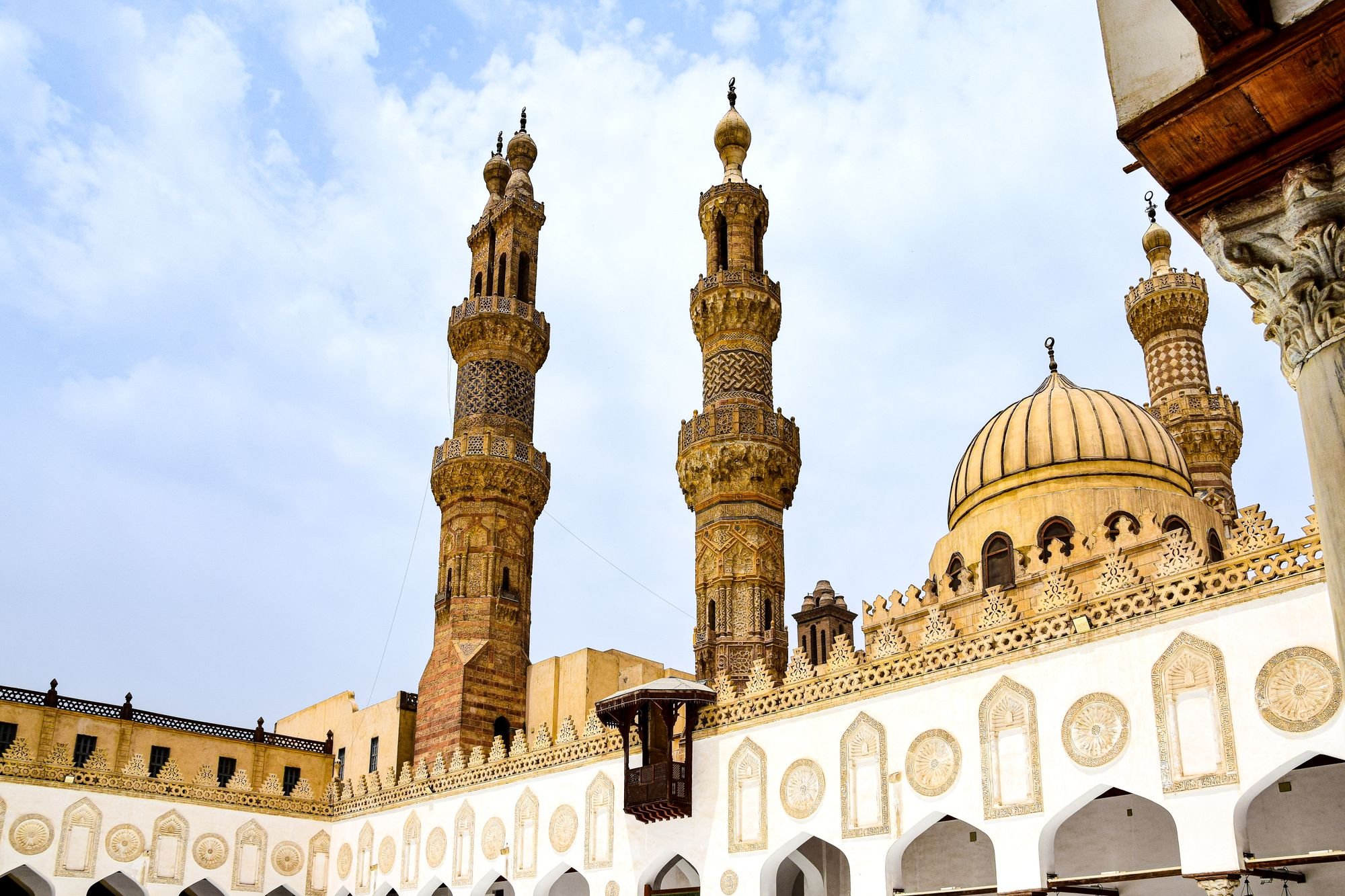
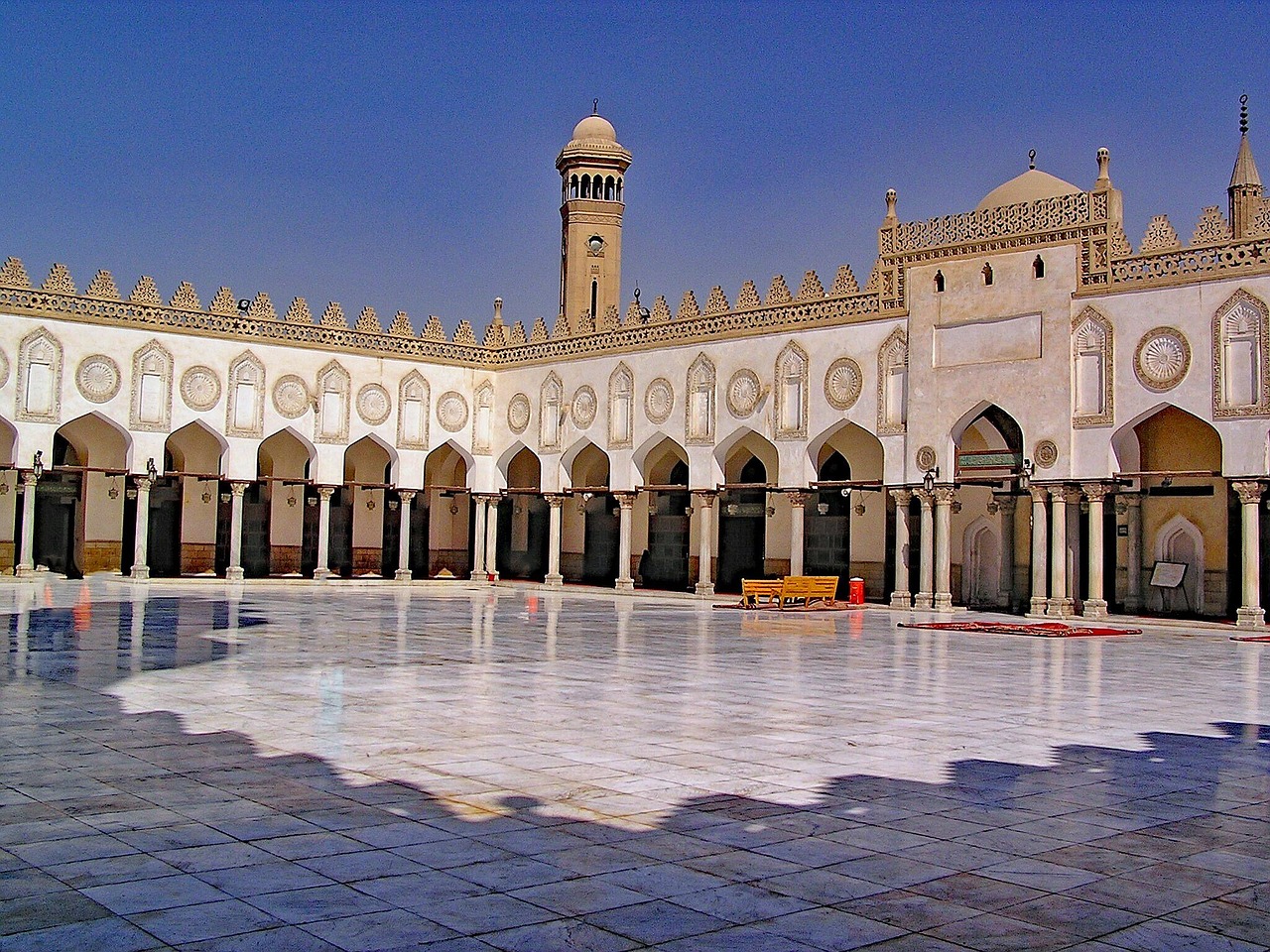
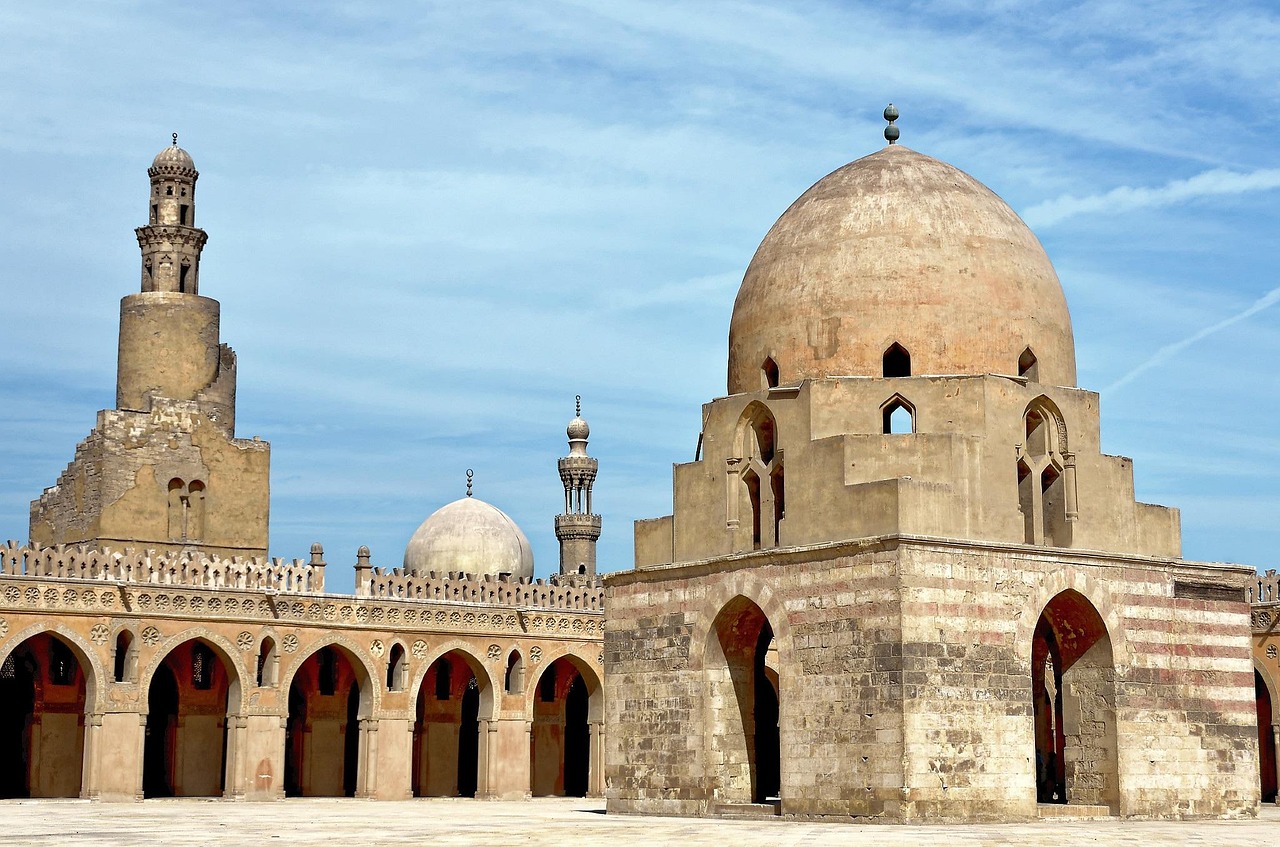
Climb the staircase that winds around the outside of the minaret, if its door is open, for a view over Cairo. Below, pointed brick arches surround a wide courtyard. This is the oldest mosque in Egypt to keep most of its original form.
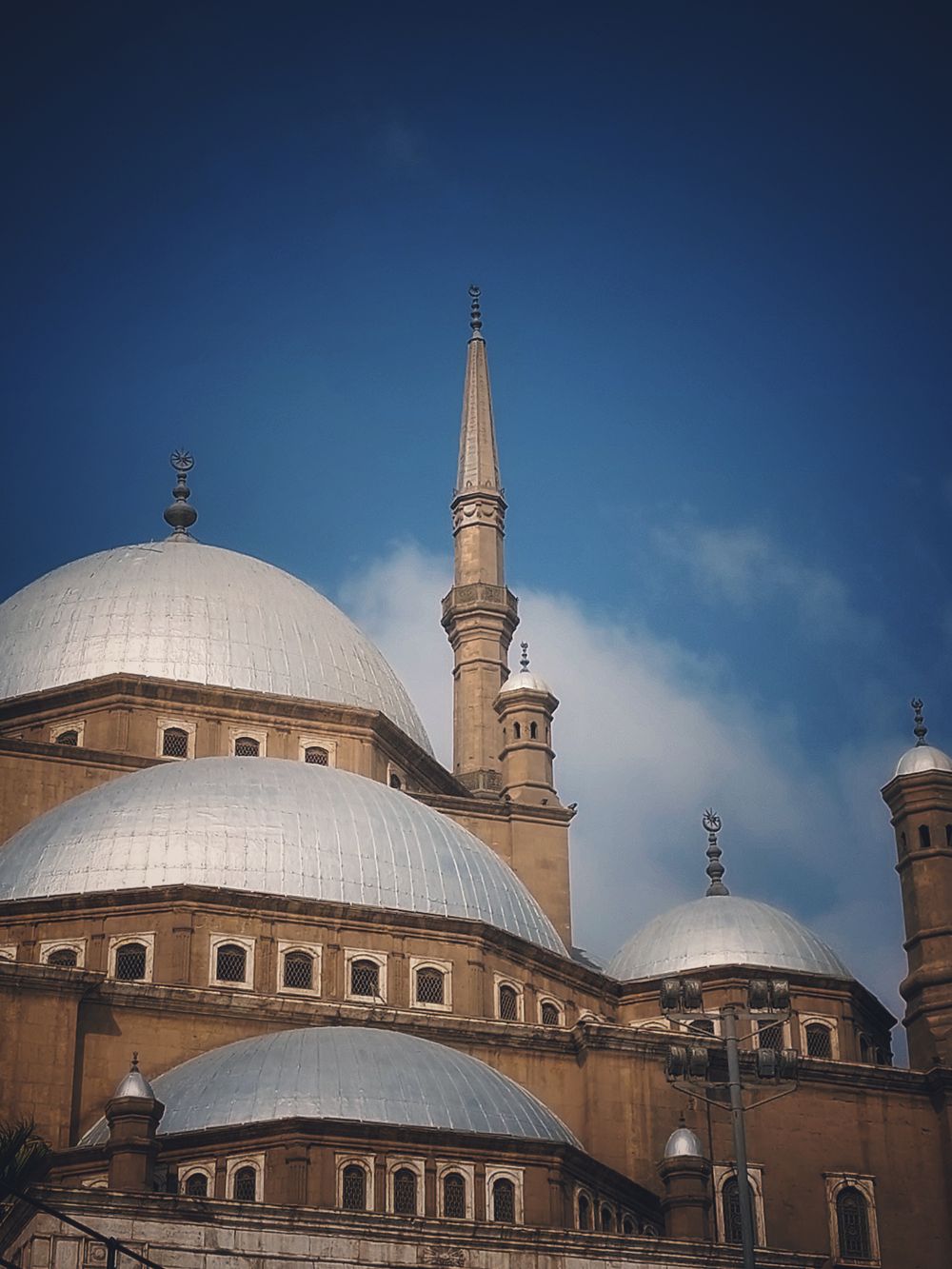
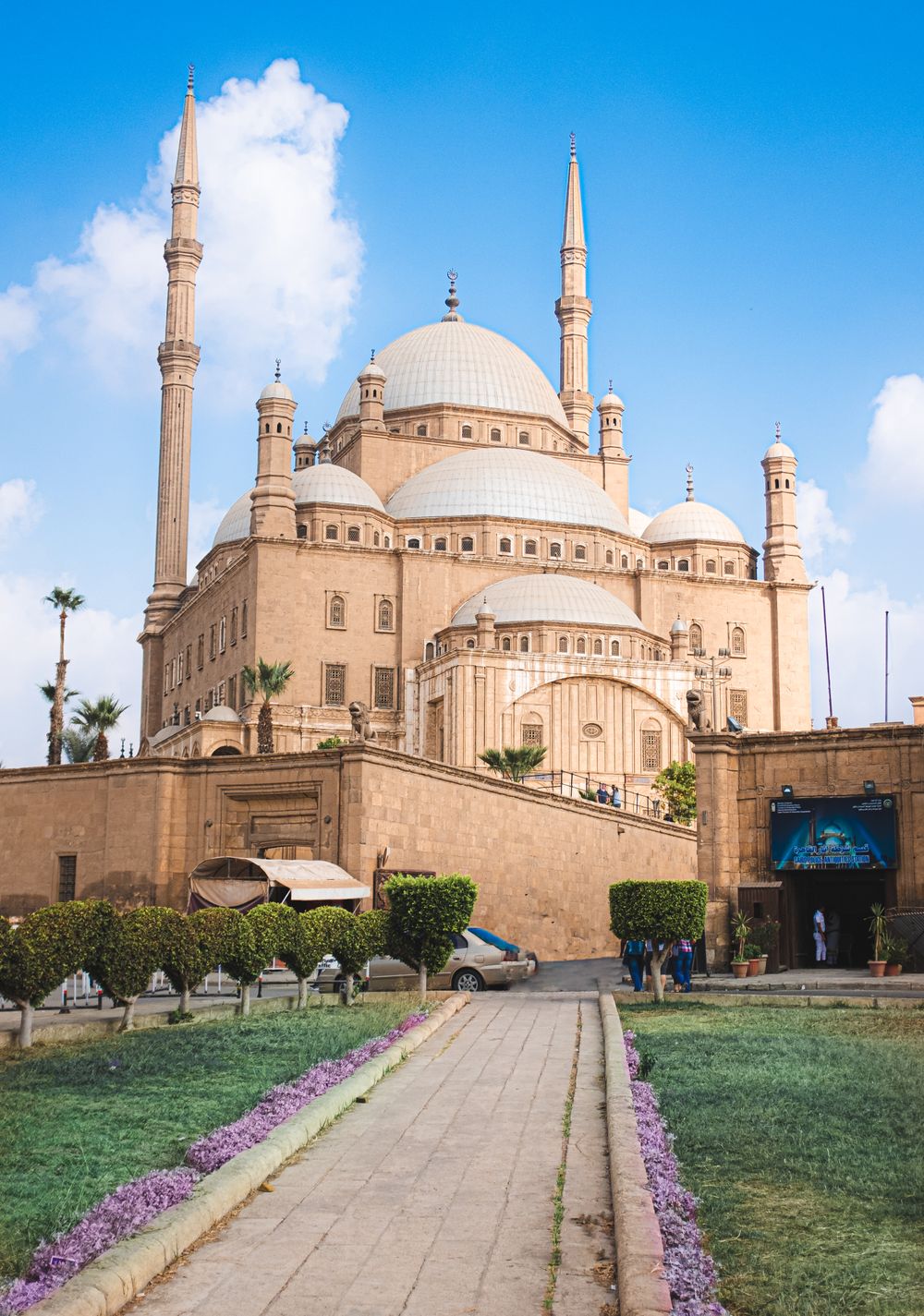
You stand under a painted dome 52 metres high, with rings of glass lamps hung low over the prayer hall, then walk out to a terrace with Cairo laid out below. This is the Alabaster Mosque, the most visible building on the city's skyline.
Inside one of the largest mosques in Egypt, four great halls open onto a court paved in marble mosaic. You walk through the hall facing Mecca into a tomb chamber under a dome 12 metres across.
Viewpoint · Saint Catherine, Red Sea and Sinai · near Dahab · 6 hr
Climbing through the night puts you on a granite summit of 2,285 metres as the sun comes up over the Sinai ranges. This is the mountain where Moses is said to have received the Ten Commandments.
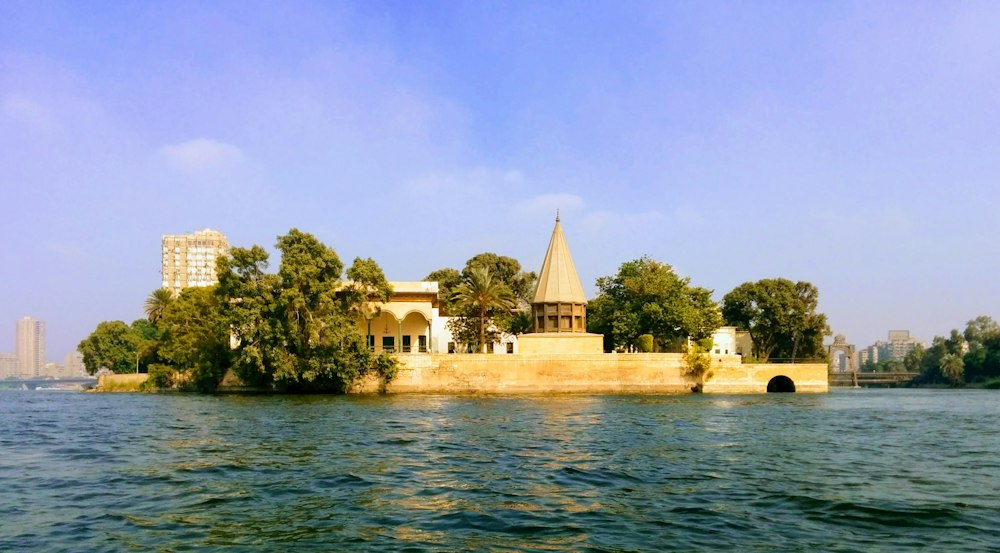
Looking down past carved arches to a marble column, you see how Cairo measured the yearly flood of the Nile. The stone well is on Roda Island, under a painted conical roof.
From this rise of open desert south-west of the pyramids, you see all three in one frame with nothing but sand in front of them. It is the one place on the plateau where they line up like this.
Khafre's pyramid is one of the few you enter at ground level, and its sloping passage down is roomier than the Great Pyramid's, with fresh air you can feel moving through it.
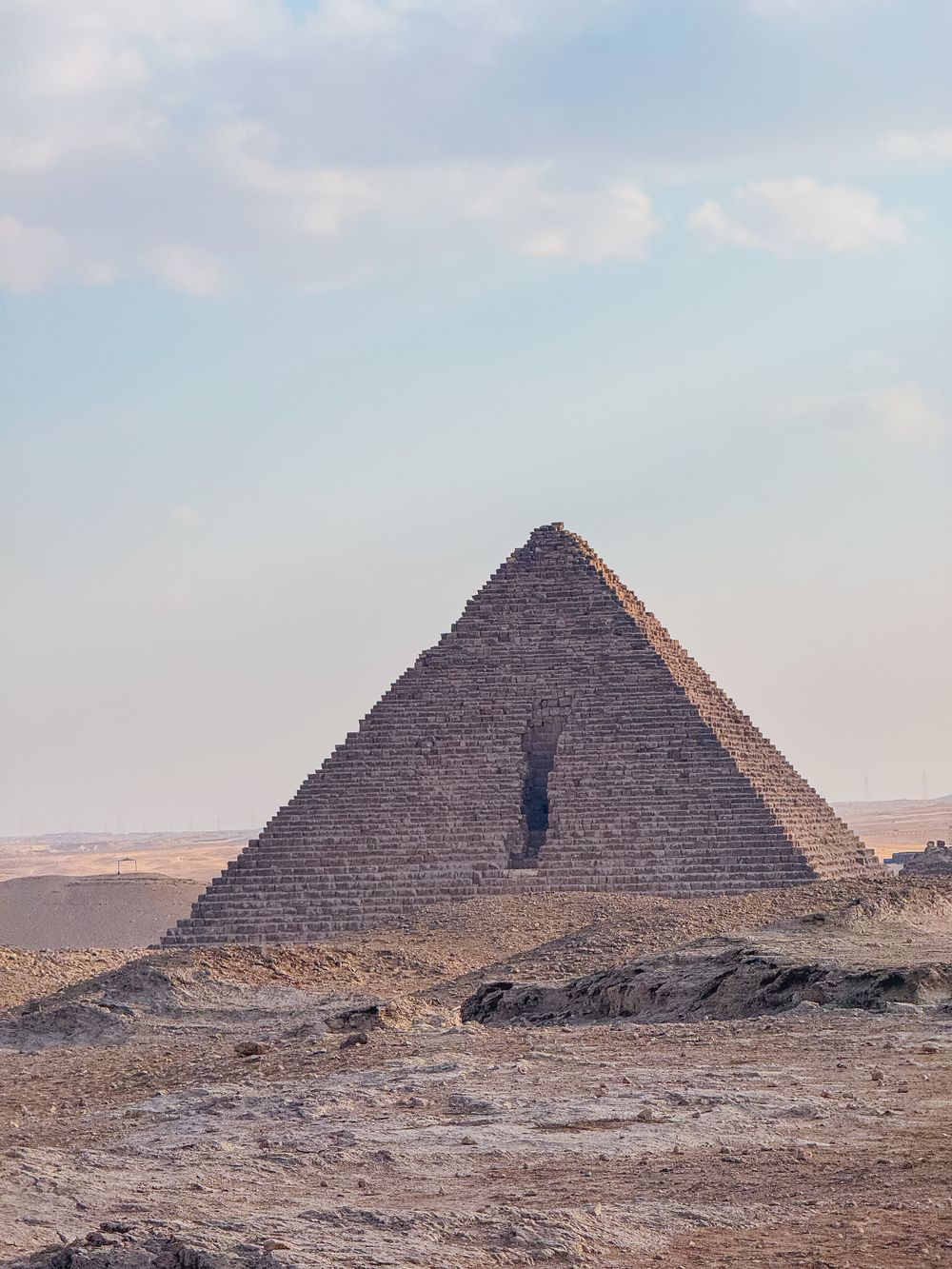
At the foot of the smallest Giza pyramid, the lowest courses are granite brought from Aswan, and much of it was never smoothed because Menkaure died before his complex was finished. You see a king's tomb stopped partway through its building.
After three thousand years, a giant statue of Ramesses II lies broken on the floor of the temple he built for his own worship. Shelley wrote Ozymandias about this statue, and you can stand beside what is left of it.
There are three chambers inside the pyramid Sneferu finished after the Bent, and a low tunnel from the north side takes you down to all of them, under stepped stone ceilings.
Archaeological Site · Saqqara · near Giza · 45 min
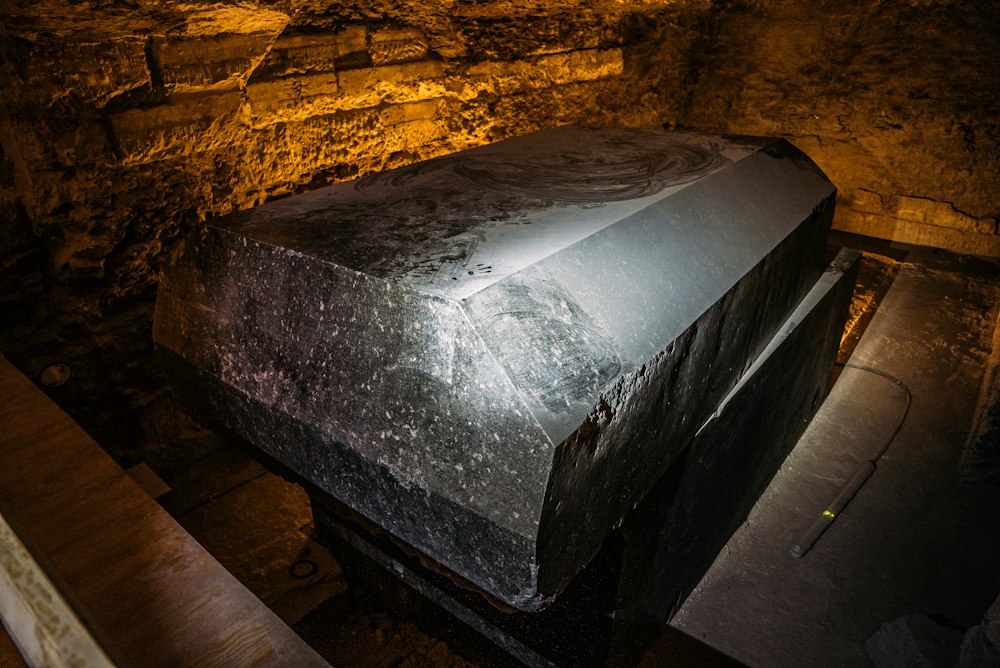
The dark galleries under the Saqqara desert hold enormous stone sarcophagi, made for the sacred Apis bulls. The tunnels are cut barely wider than the boxes.
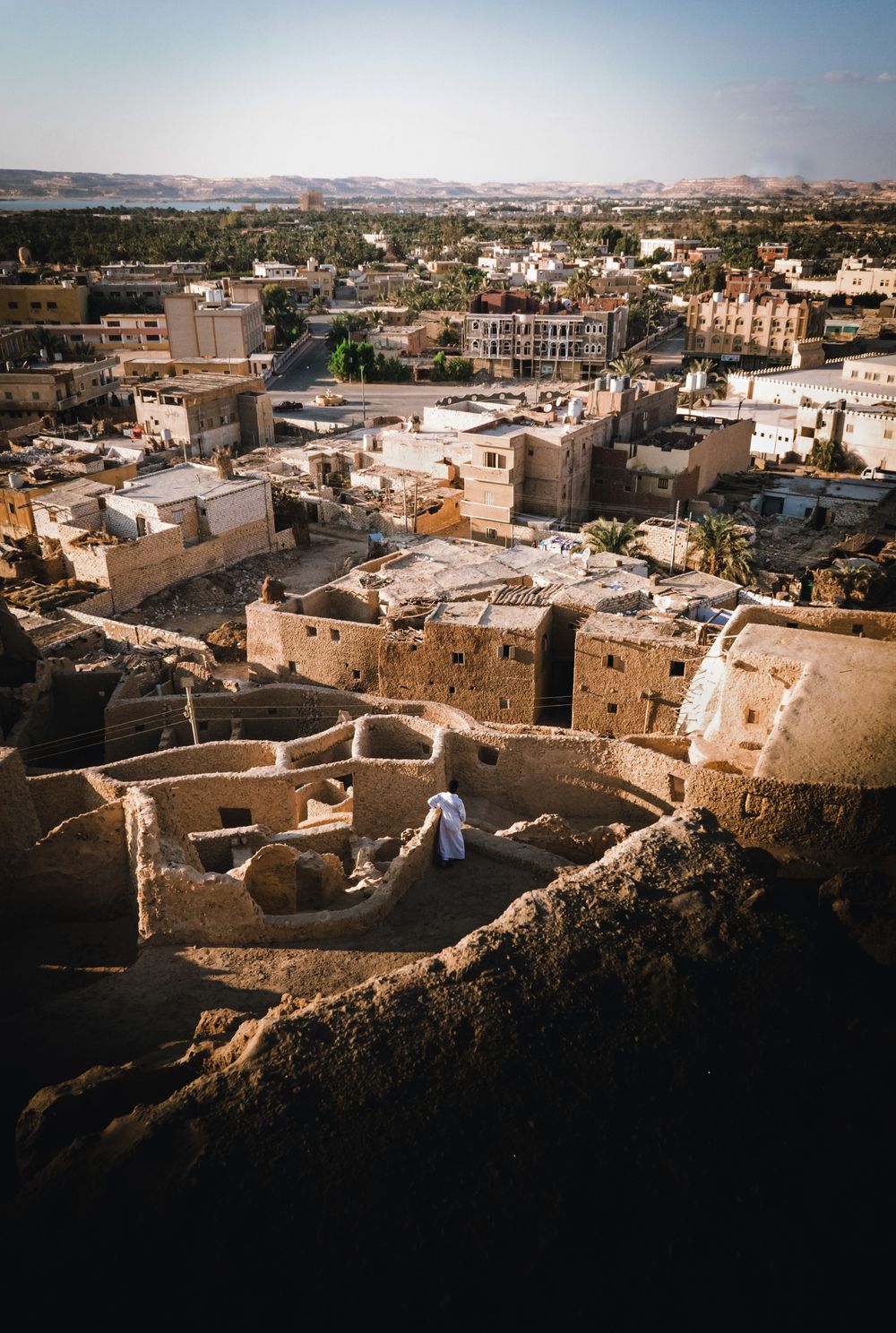
Shali's salt and mud walls stand over Siwa's market square, the remains of a hill town that rain melted out of shape. You climb through its lanes to a view over palm groves and lakes.
Wreck · Strait of Gubal, Red Sea and Sinai · near Sharm El Sheikh · 12 hr
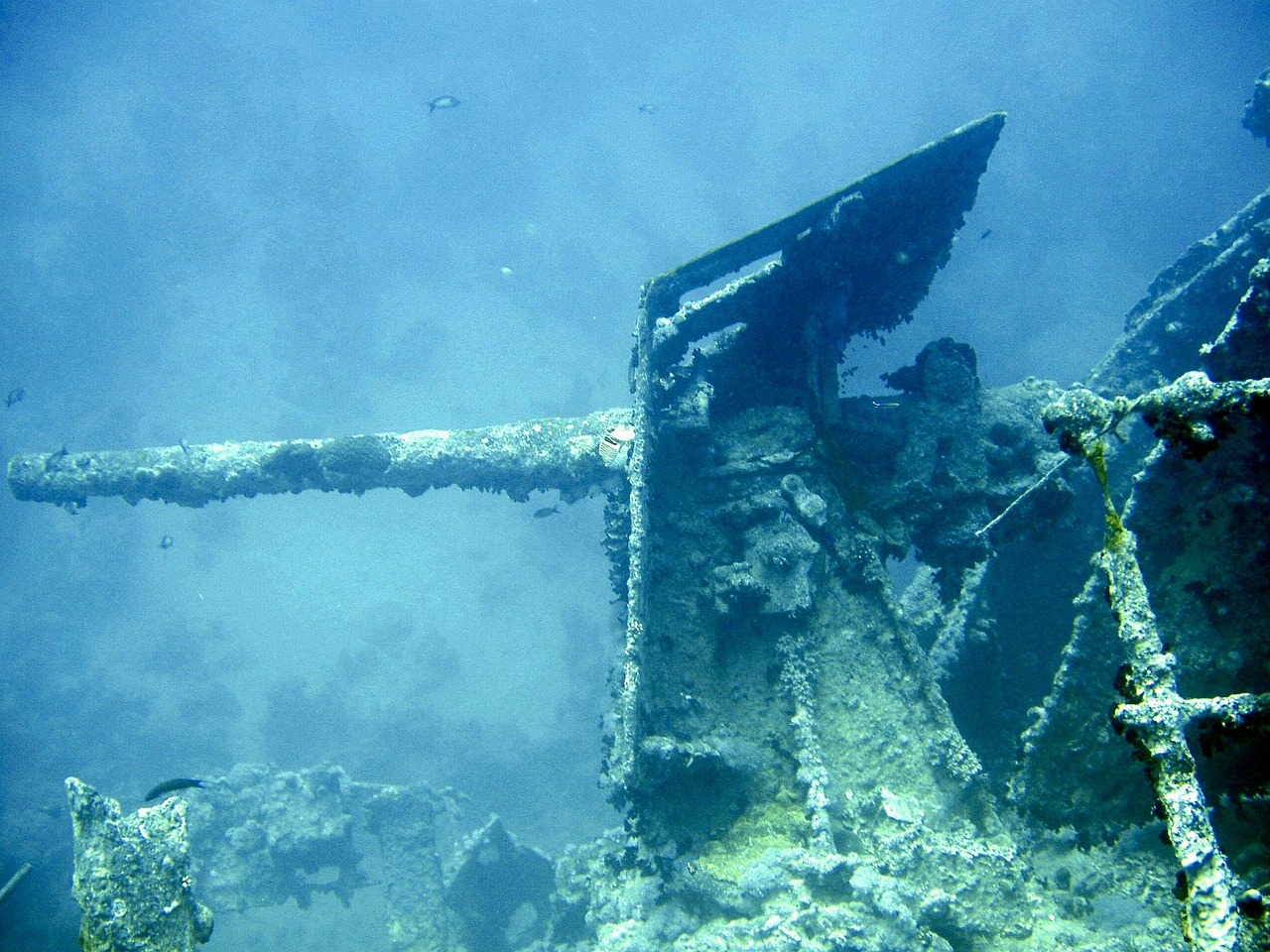
On one long dive day from Sharm El Sheikh, you can see army trucks and motorcycles still parked in the holds of a wartime cargo ship, with steam locomotives on the sand outside.
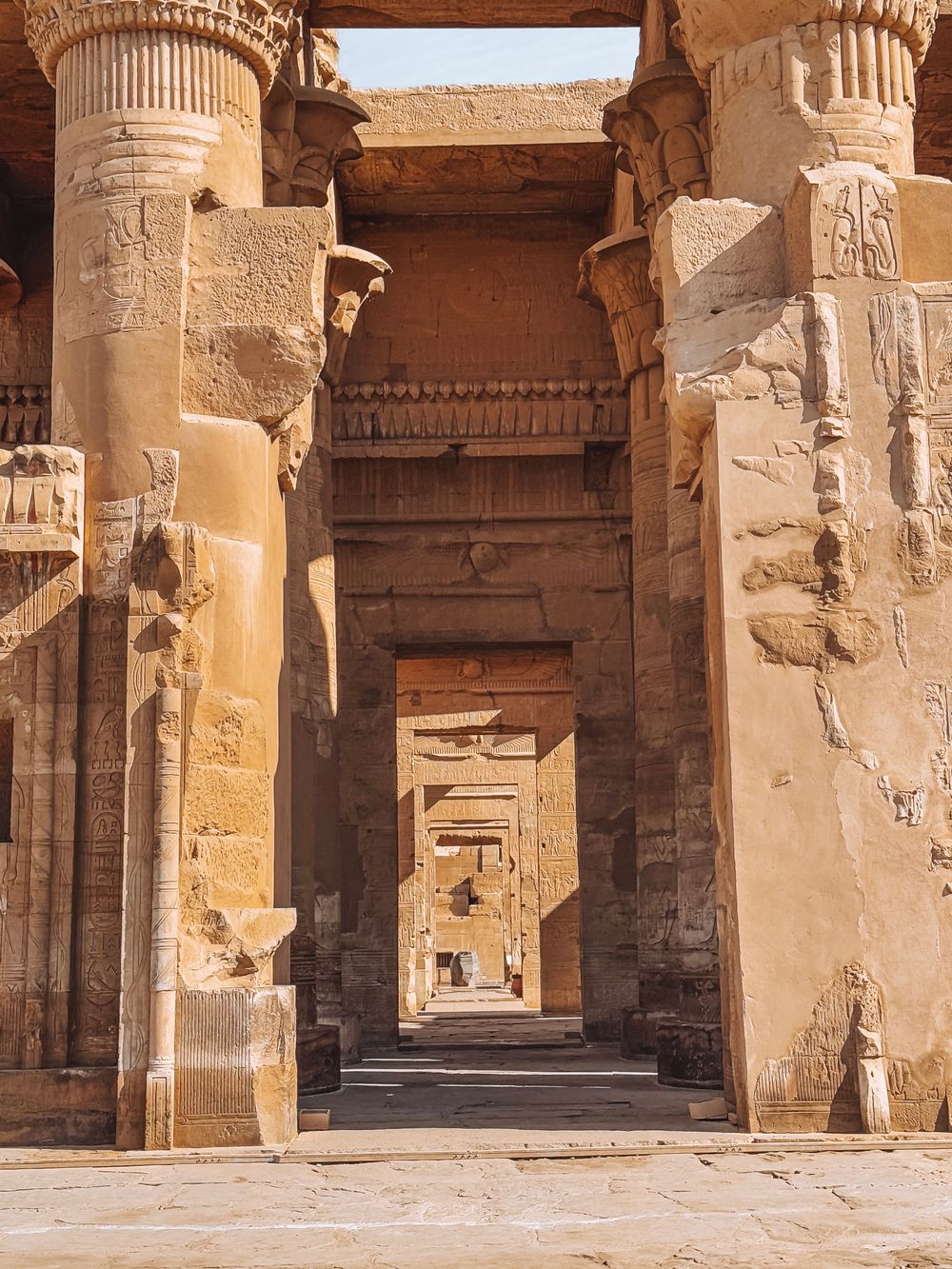
Walk from bright court to dark inner shrine through one of Egypt's most complete temples. Both columned halls still carry their stone roofs, so the light fades as you go in.
Temple · Kom Ombo, Nile valley · near Aswan · 1.5 hr
Two gods share this temple: the crocodile Sobek and the falcon Horus the Elder, each on his own side. At the centre of the back wall they stand together in one carved scene.
Temple · Aghurmi, Mediterranean and Siwa · near Siwa Oasis · 1 hr
You climb past empty houses on the rock of Aghurmi to the temple where Alexander the Great consulted the oracle of Amun in 331 BC. From the top you look over palm groves, a lake and the desert.
Down carved and painted walls, the longest tomb in the Valley of the Kings leads you to a vaulted burial chamber with the night sky painted across its ceiling.
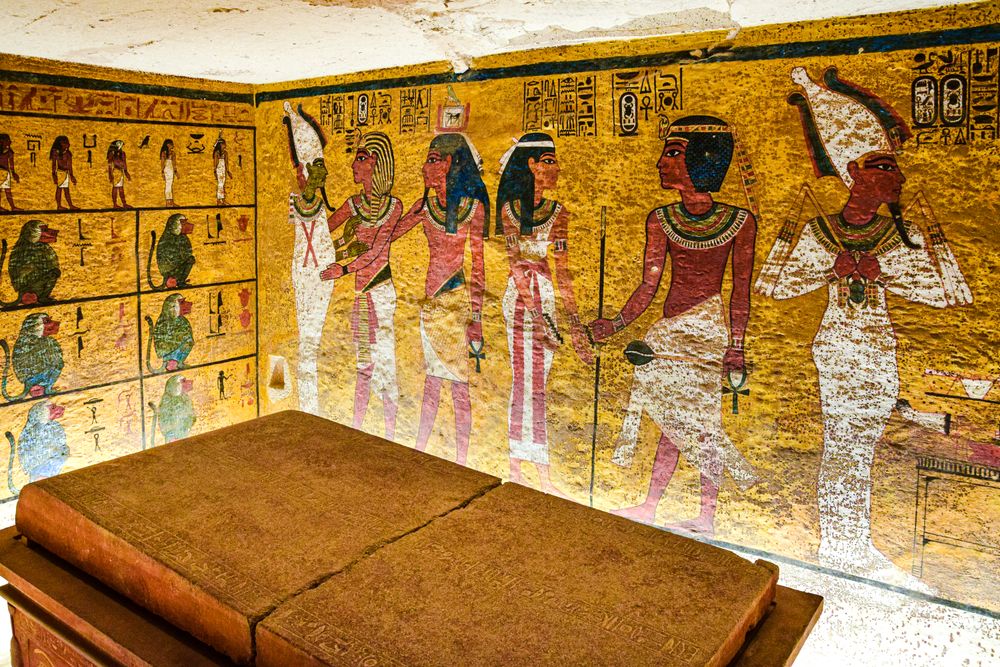
Tutankhamun's mummy is the only one still inside a tomb you can visit in the valley, and you see his face through the glass. His sarcophagus stands in a small burial chamber with golden-yellow painted walls.
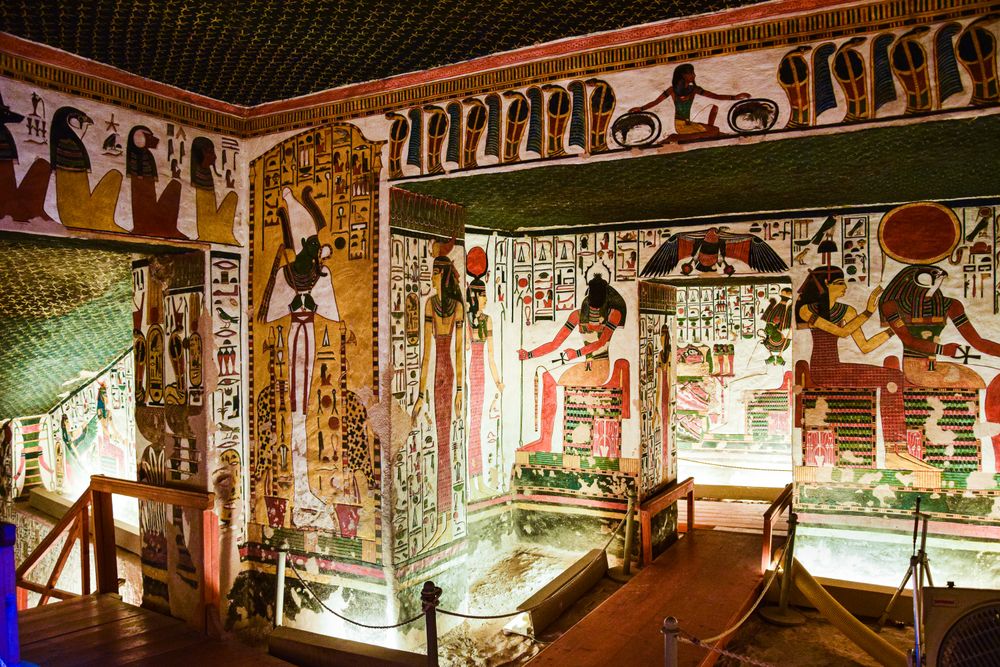
Stepping out of white desert glare, you enter small painted chambers at the Valley of the Queens. In the tombs made for his sons, Ramesses III introduces a young prince to the gods on the walls.
Archaeological Site · Wadi El Rayan, Western Desert · near Fayoum · 3 hr
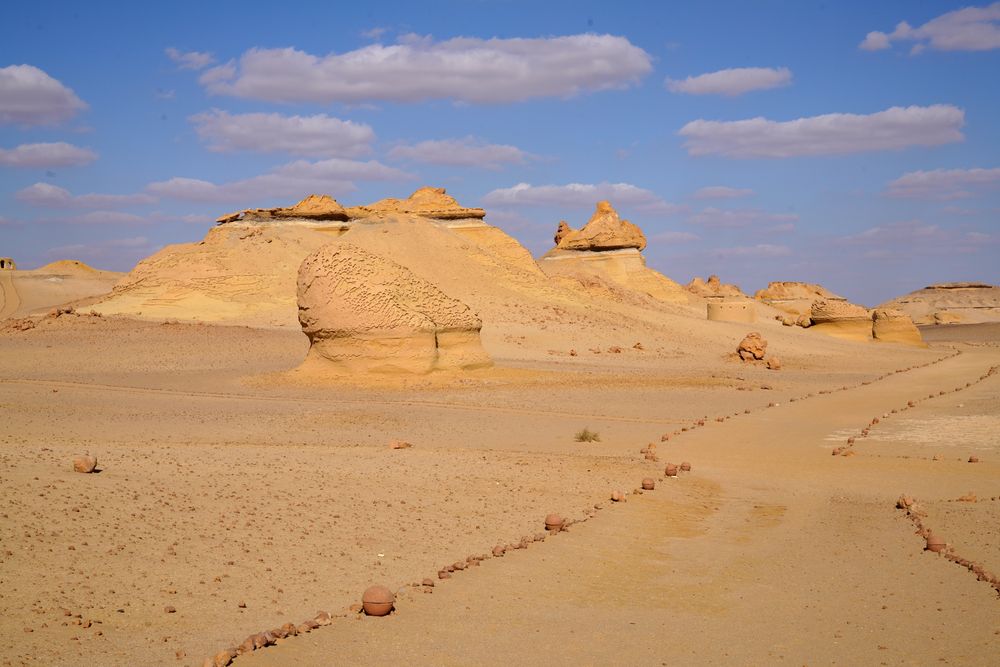
You follow a trail through open desert past the skeletons of early whales, some lying half-uncovered where they were found. It is the most important site in the world for seeing whales in the last stages of losing their hind legs.
Along the nearest road, with the desert field in front of you, you see three ruined royal pyramids of the Fifth Dynasty. The gate is shut to casual visitors, but an arranged entry takes you to the largest private tomb of the Old Kingdom.
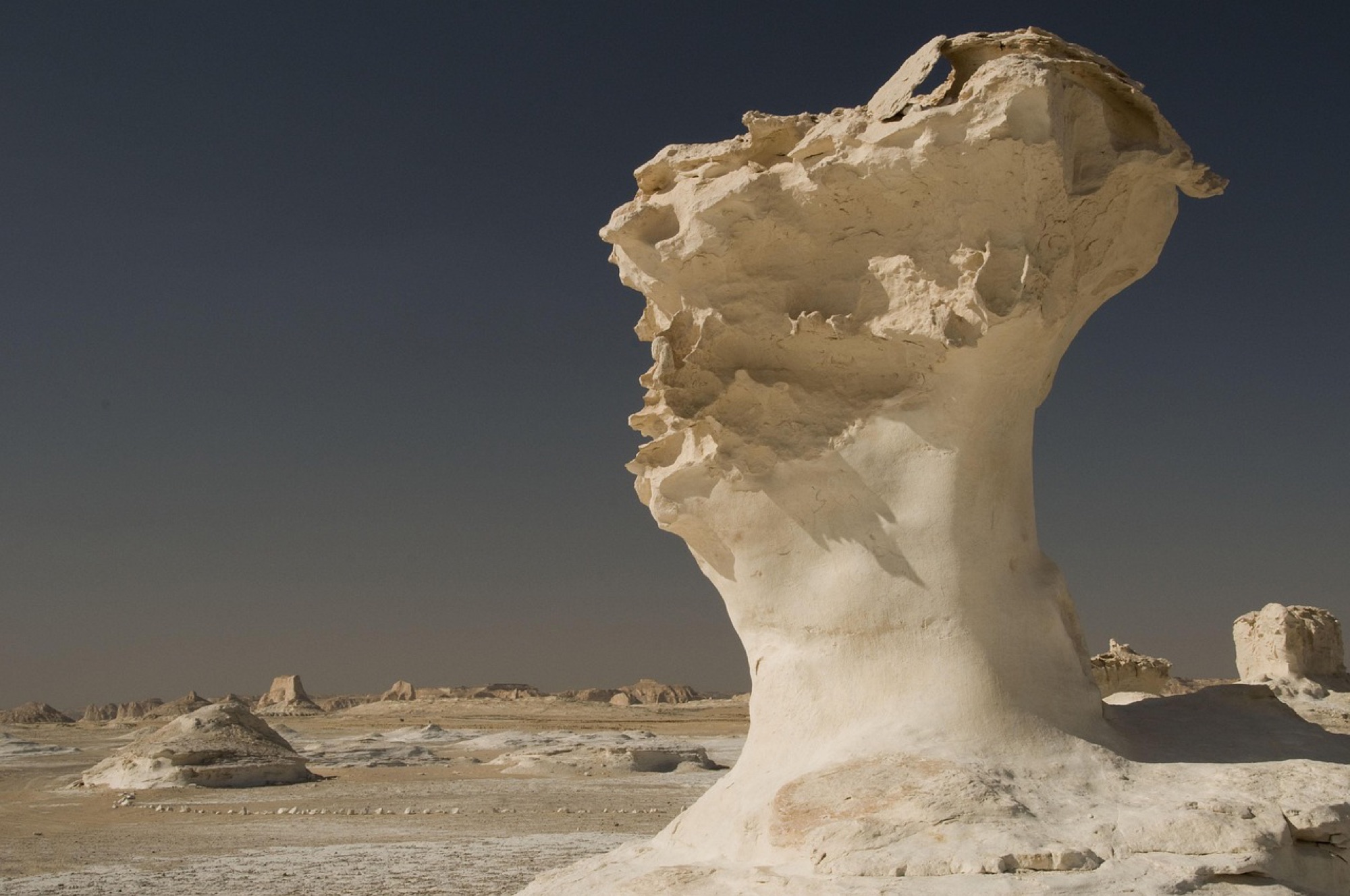
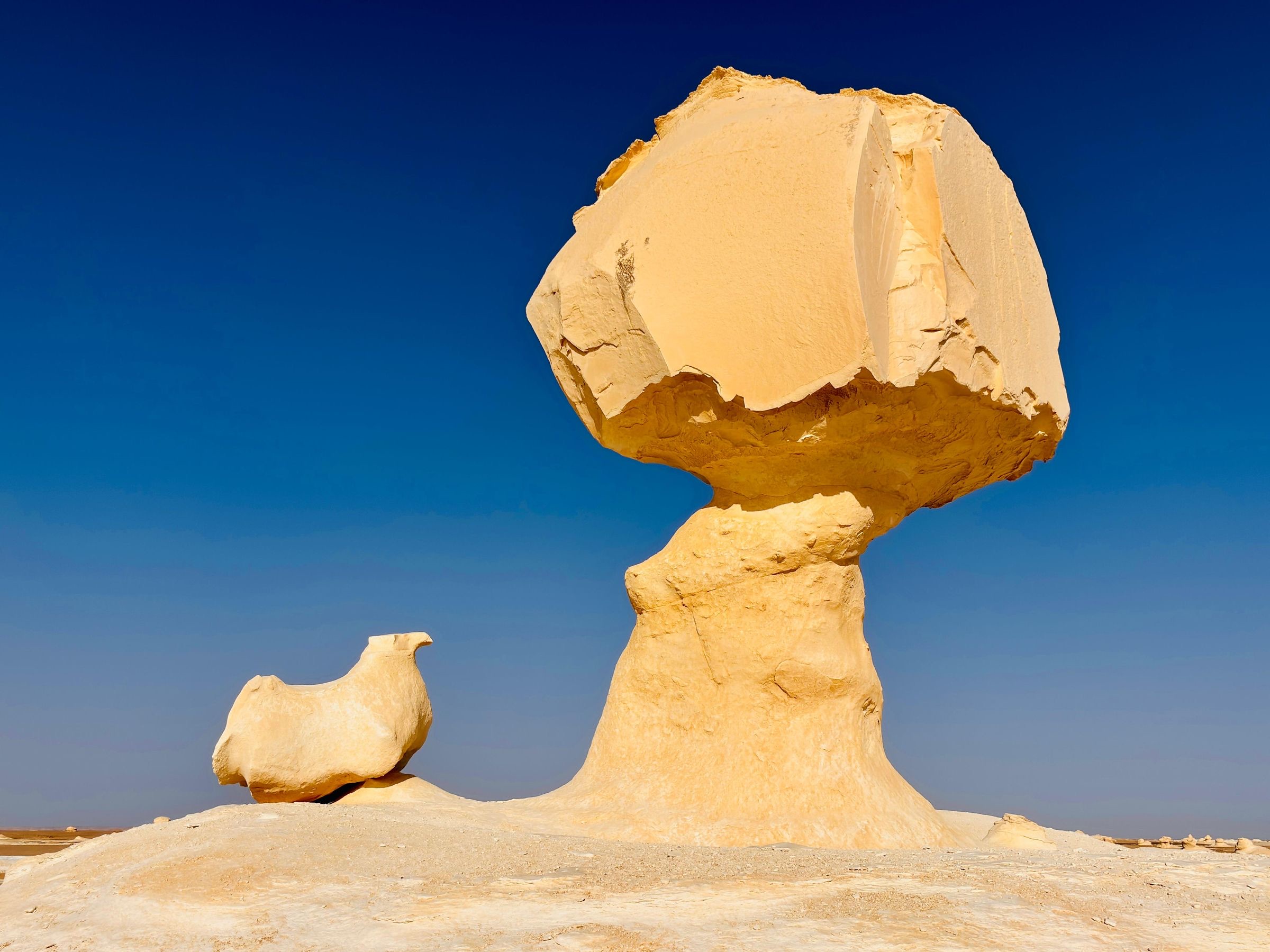
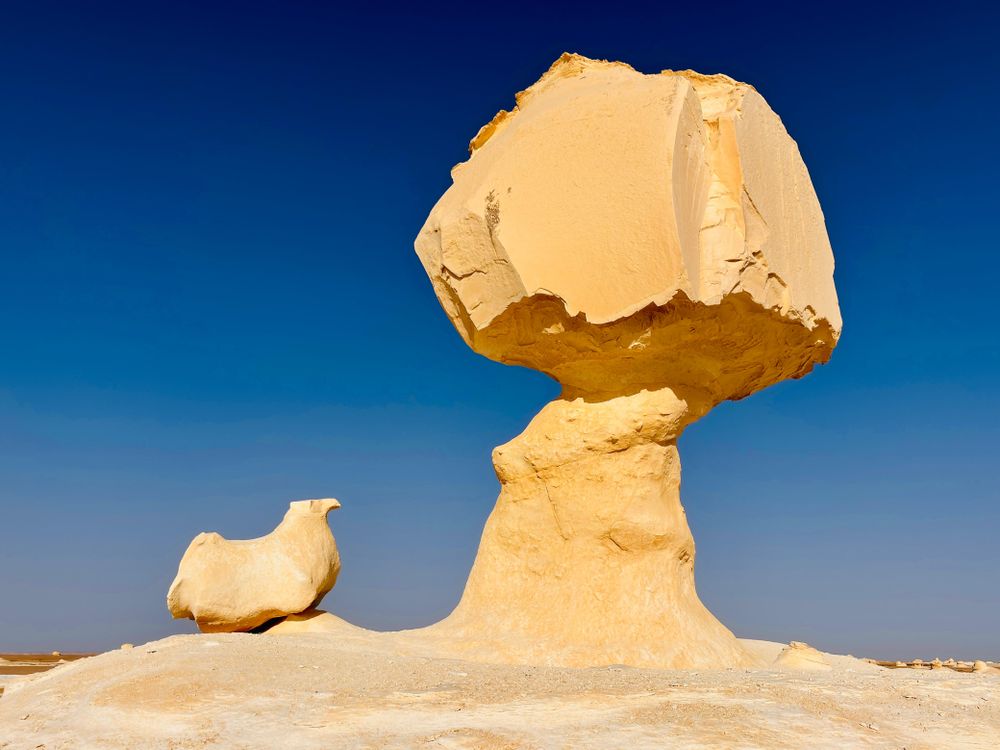
Two colours fill this valley, the white of its cliffs and the gold of the dunes banked against them. You drive between rock walls on sand, a more enclosed landscape than the open plain of mushroom rocks farther on.
This is a pyramid you see only from a distance, across the Dahshur desert. Its limestone skin is gone, and its dark core of mudbrick stands bare and slumped, so you see what a pyramid was built from.
Spring · Siwa Oasis, Mediterranean and Siwa · 45 min
Six metres across and about 29°C all year, this round stone pool fills from a natural spring among the palms outside Siwa town. You can cycle out, swim, and dry off over a glass of mango juice.
Natural Wonder · Bahariya Oasis, Western Desert · 30 min
About 1.5 metres across, the arch in this roadside ridge is lined with crystals that grew inside a cave. Much of the cave's roof has since gone, and you walk up to the arch from the road.
Village · El Gouna, Red Sea and Sinai · near Hurghada
A Red Sea town laid out around lagoons, El Gouna gives you a day of moving between islands by bridge and boat. Swim, try kitesurfing in shallow water, and stay for dinner at Abu Tig Marina.
If you want to watch the sun set over Siwa's salt water, this palm-covered spit on Birket Siwa puts you at the shore with a drink in hand, and you can cycle out from town.
Archaeological Site · Siwa Oasis, Mediterranean and Siwa
From the highest point of this limestone hill you look out over all of Siwa. Cut into its slopes are four decorated tombs you can enter, and one mixes Egyptian gods with a figure in Greek dress.
Walking into the main hall brings you face to face with a long wall of blue-green tiles from Djoser's burial chamber and the South Tomb of his Step Pyramid complex. The rebuilt wall has doorways showing the king running in a royal ritual.
If you want to see how a farming town lived in Roman Egypt, walk between mud-brick houses with their millstones and olive presses still on the ground. Two stone temples stand above them.
Archaeological Site · Alexandria, Mediterranean and Siwa · 1 hr
Nine birds, each in its own square, decorate a Roman villa floor still lying where it was made. You see it on the same walk as a marble theatre, the only well-preserved Roman one in Egypt.
Lake · Wadi El Rayan, Western Desert · near Fayoum
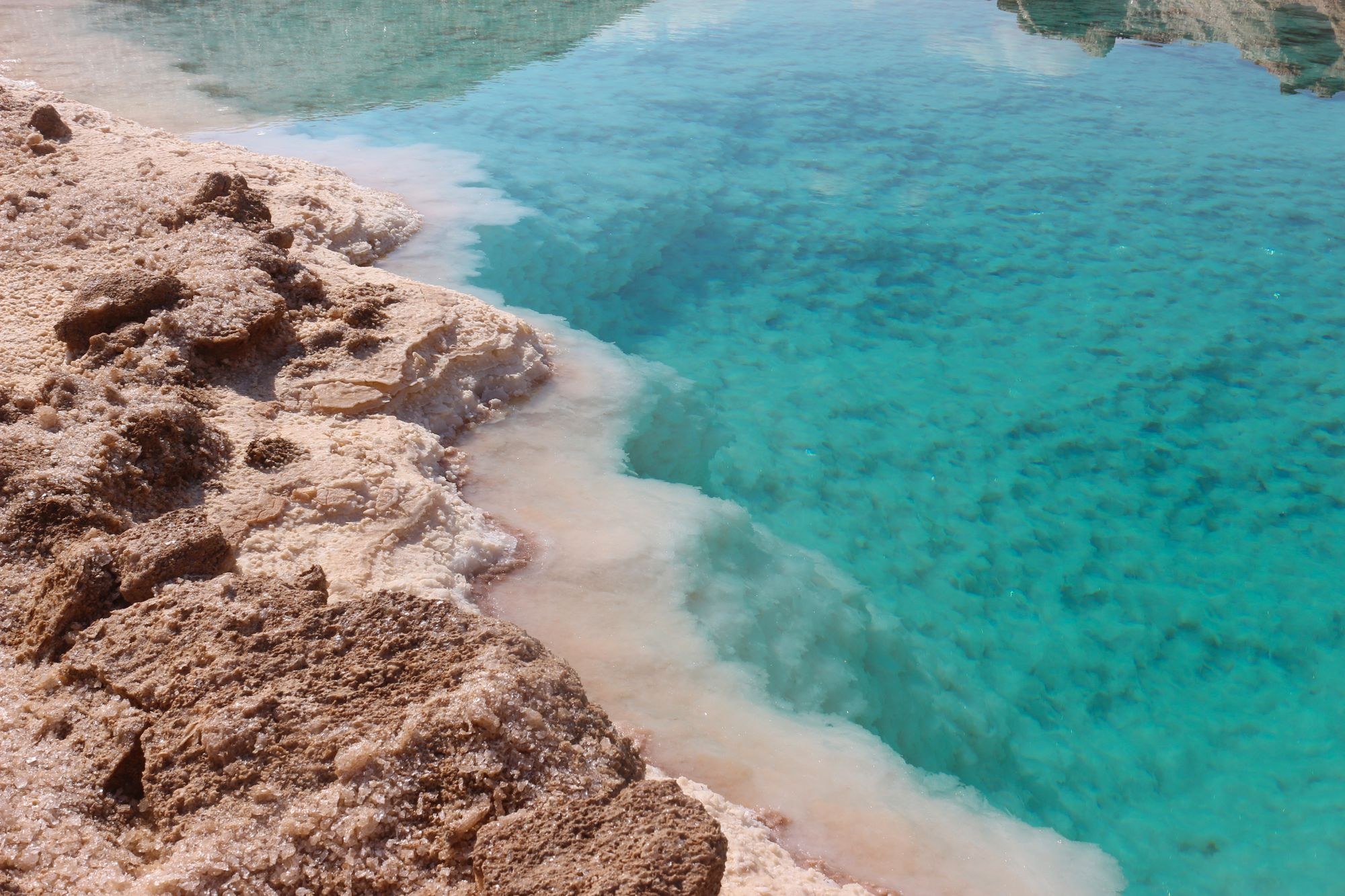
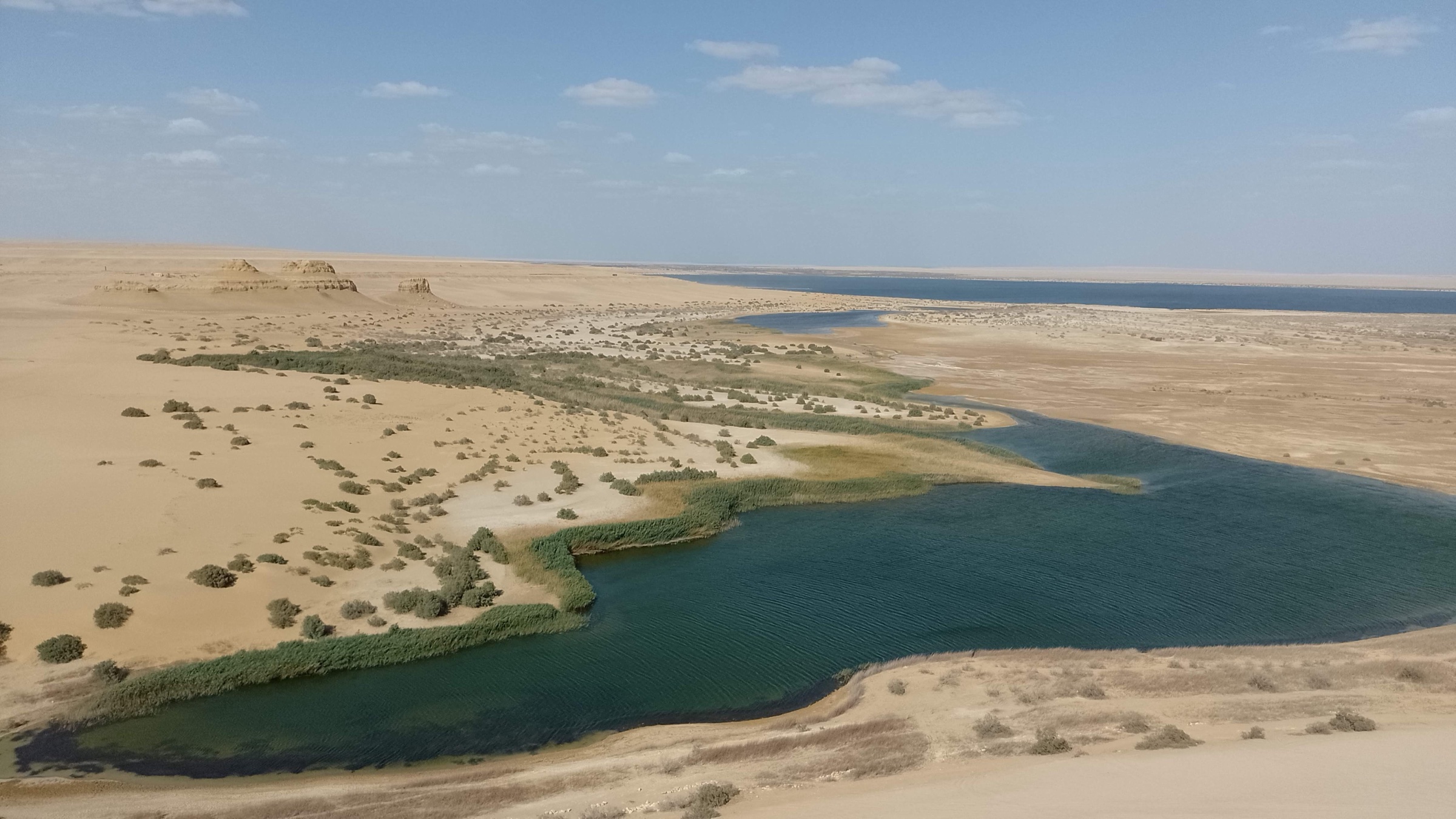
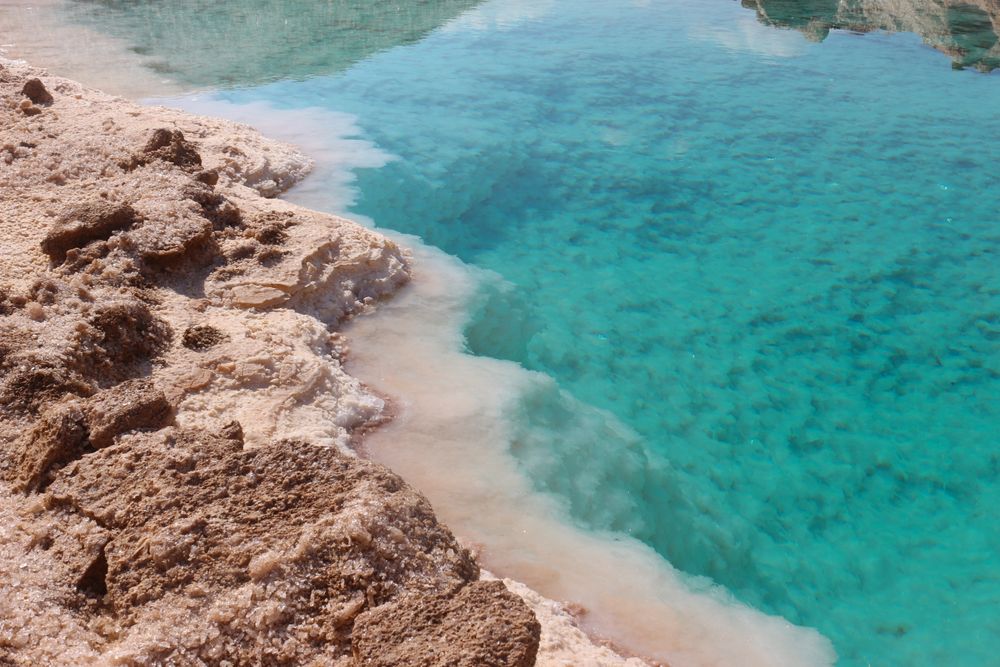
Go to see the water of this small desert lake shift from turquoise to deep blue, and at times pinkish gold, as the sun crosses the sky. Golden dunes run right around it, and you can sandboard on them.
A wall on Roda Island encloses the tiled and gilded estate of a prince who stood next in line three times and never reigned. You see the rooms he lived in, and the gold throne hall he built.
Archaeological Site · Saqqara · near Giza · 45 min
Best if you care more for carved scenes than pyramid passages: there are hunts, goldsmiths and tax collectors cut into the walls of a thirty-room tomb. At the end, a life-size statue of the owner steps out of the wall.
Archaeological Site · Meidum, Western Desert · near Fayoum · 2.5 hr
Before the Great Pyramid was built, its stepped stone ceiling was first tried here. You climb the mound round a three-step tower, then go inside and see it overhead.
Monastery · Eastern Desert, Red Sea and Sinai · near Hurghada
You enter an ancient church whose walls hold the most complete set of Christian paintings from medieval Egypt. Above the monastery, a mountain trail climbs to the cave where Saint Anthony lived.
Archaeological Site · Eastern Desert, Red Sea and Sinai · near Hurghada
Walk through the largest and best-preserved Roman site in Egypt's Eastern Desert, a walled quarry camp in the Red Sea Mountains whose rooms still stand to roof height.
Monument · Alexandria, Mediterranean and Siwa · 45 min
By AD 300 this column to the emperor Diocletian, its shaft a single block of stone, stood beside Alexandria's main temple of Serapis. You can walk up to its base and find the worn Greek dedication to him.
Archaeological Site · Saqqara · near Giza · 45 min
After more than 4,000 years, gold stars still cover the dark blue ceiling above King Teti's stone coffin. You can go down into his tomb, where carved spells fill the walls around it.
Some 283 spells for a king's afterlife cover the walls under this worn-down pyramid at Saqqara, the first pyramid to be inscribed with them. Crouch down the passage and you can stand among the carvings.
Archaeological Site · Bahariya Oasis, Western Desert
After the museum in Bawiti, walk north to a low ridge and climb down into two underground tombs, painted around 600 BC for a wealthy man and his son. Colour still covers the walls, pillars and ceilings.
Exploring Qasr Qarun means climbing through dark stone chambers to a rooftop carving of a crocodile god. Inside, corridors and staircases link rooms on many levels.
Go to this mud-brick centre in Harrania to meet weavers who make up each tapestry scene on the loom, with no drawing to copy, and see finished pieces in its museum.
Walking through a princess's palace, you see the jewels of Egypt's last royal family. Cases hold diamonds, emeralds and gold in rooms with gilded ceilings.
If Alexander's road across Egypt interests you, stand inside the only temple in the Western Desert known to have been built in his name. It marks the start of the old caravan route to Siwa.
Nine metres below the streets of Esna, you stand among carved columns and look up at stars, planets and the zodiac in their ancient paint. Cleaning uncovered reds, blues and golds that centuries of soot had hidden.
Temple · New Kalabsha, Nile valley · near Aswan · 2.5 hr
On a promontory in Lake Nasser, you walk through the largest free-standing temple of Lower Nubia, then on to two smaller monuments. Roman emperors are carved here as pharaohs.
You look down from a walkway on a granite shaft still fixed to the rock it was cut from. Finished, it would have stood taller than any other ancient Egyptian obelisk.
Saint Macarius is one of four desert monasteries here where monks still pray, and you cross a narrow drawbridge to reach the painted churches inside its keep.
Everyday costs, each government's travel advice, and the entry rules and customs to read before booking.
What things cost in Egypt: a meal, water and the metro
Show prices in
A simple mealThe cheapest pizza or pasta on an ordinary sit-down menu.
EGP 170typical of 3 menus
EGP 60EGP 360
WaterA 1.5 litre bottle of still water from a supermarket shelf.
EGP 10typical of 7 shop prices
EGP 9.85EGP 12
The metroOne Cairo Metro ride for up to nine stops; longer rides cost more, by the number of stations.
EGP 10official fare
One fare, set by the operator
The typical price is the middle one of the prices read on the menus of ordinary cafés, bars and restaurants across Egypt, and on supermarkets' own shops for water. Each dot is one price read. Checked November 2026.
Is Egypt safe? What five governments' travel advisories say
Each government rates Egypt on its own scale, from normal precautions up to do not travel. These are each government's own assessments, not Meridian Dispatch's.
Khat is illegal, and even small amounts of any drug can bring life imprisonment or the death penalty.
Egypt travel facts: currency and local rules
Capital
Cairo
Population
118,365,995 (2025)
Size
1,001,450 km²
Government
Democratic republic
Languages
Arabic
Religion
Islam
Currency
Egyptian pound
Customs and rules
Carry your ID
Police check ID regularly, and you can be detained without it. Carry your passport and visa, or a copy of each on paper or your phone.
Ask before you photograph
Photographing military property, the Suez Canal, bridges, and government, police and embassy buildings is prohibited. Get a person's permission before photographing them, and do not photograph children.
Antiquities and electronics
Antiquities and items more than 100 years old cannot be exported without a licence. List personal electronics by model and serial number so customs can check them when you arrive and when you leave.
Eat and drink quietly in Ramadan
During Ramadan, do not eat, drink or smoke in public in daylight. Avoid loud music, dancing and swearing in public. The dates move each year, so check them before you book.
Alcohol
Drinking is allowed only in licensed restaurants and bars, private homes and certain tourist resorts. Drinking in public elsewhere is illegal and can lead to arrest.
Drones
Importing, using or producing a drone needs prior permission from the Ministry of Defence. Unauthorised use can lead to prison, fines and deportation.
What to wear
Dress modestly, especially in rural areas, mosques and souqs. Men should avoid shorts outside tourist areas.