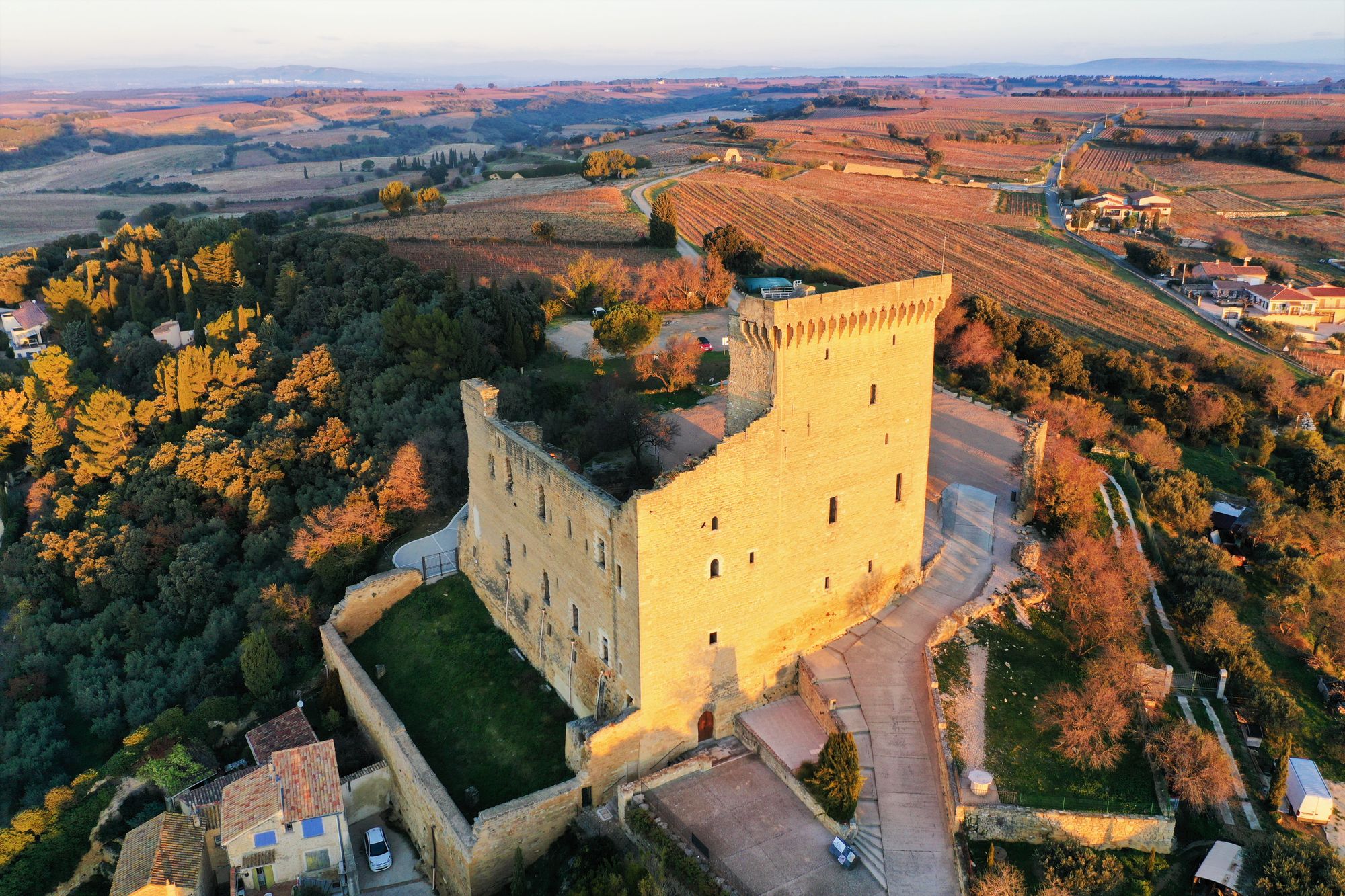
Ninety seconds on Château de Châteauneuf-du-Pape
Climbing from the village to the broken keep of the popes' summer castle puts you above the Châteauneuf-du-Pape vineyards, on a walk with no real difficulty.
What stands on the hilltop is the keep, the southern wall and, beneath them, the lower cellar of a castle built for Pope John XXII between 1317 and 1333 as the summer residence of the Avignon popes. Seen from the village, the two surviving walls are still high and imposing, and they make an easy landmark to steer by.
Walk round to the north side of the keep and you will see that it is only half a tower. The northern part of the castle was blown up in August 1944 as the Allies approached, and the blast took that half of the keep with it.
The view is the other reason to come. An orientation table at the top looks over the vineyards and across the whole Rhône valley, often as far as Avignon.
From the fountain in the village centre, the way up is a single climb and you cannot lose it. A wide stone step-street leads up towards the castle; keep going uphill until you reach the esplanade below the ruins.
At the top, walk round the keep and the southern wall, then finish at the orientation table. A walking loop can bring you down by a slightly rough gravel stretch, so wear shoes with grip if you take it. If the steps are too much, you can drive up instead.
Bring a picnic for the hilltop. There is a wine tasting at the top if you want a quick glass of red with it.
In the busy season the car park by the castle fills quickly. Leave the car in the free town-centre car park on Avenue Louis Pasteur and walk up from the fountain.
Explore the rest of Avignon
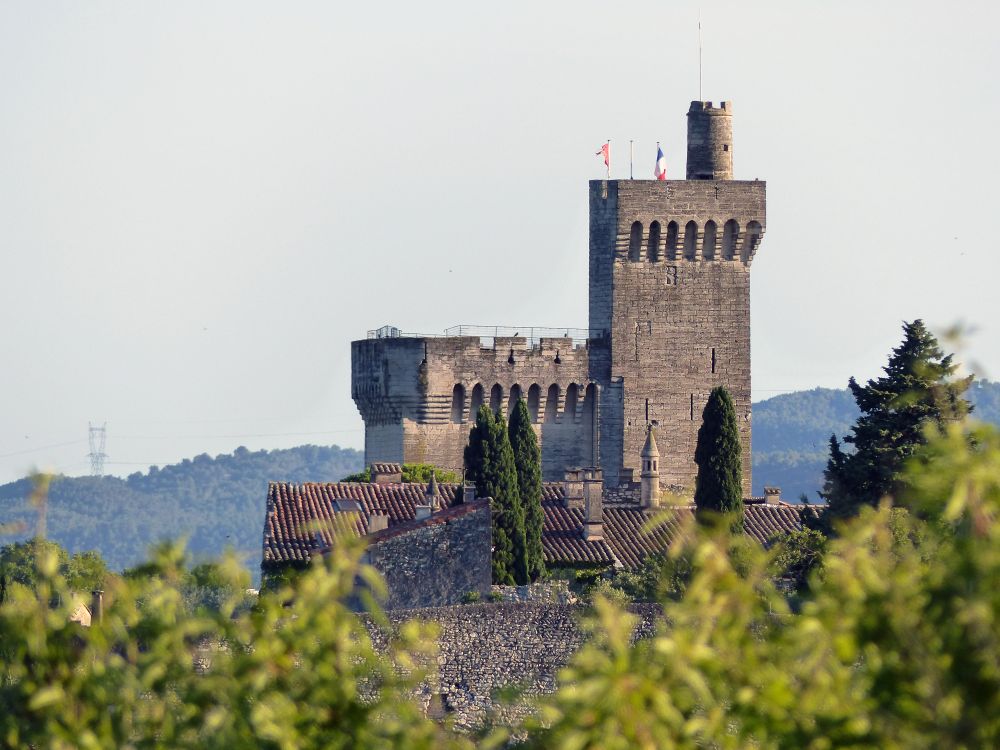
A square tower on the Villeneuve bank, built to guard the far end of the Pont Saint-Bénézet when the bridge still crossed the whole river.…
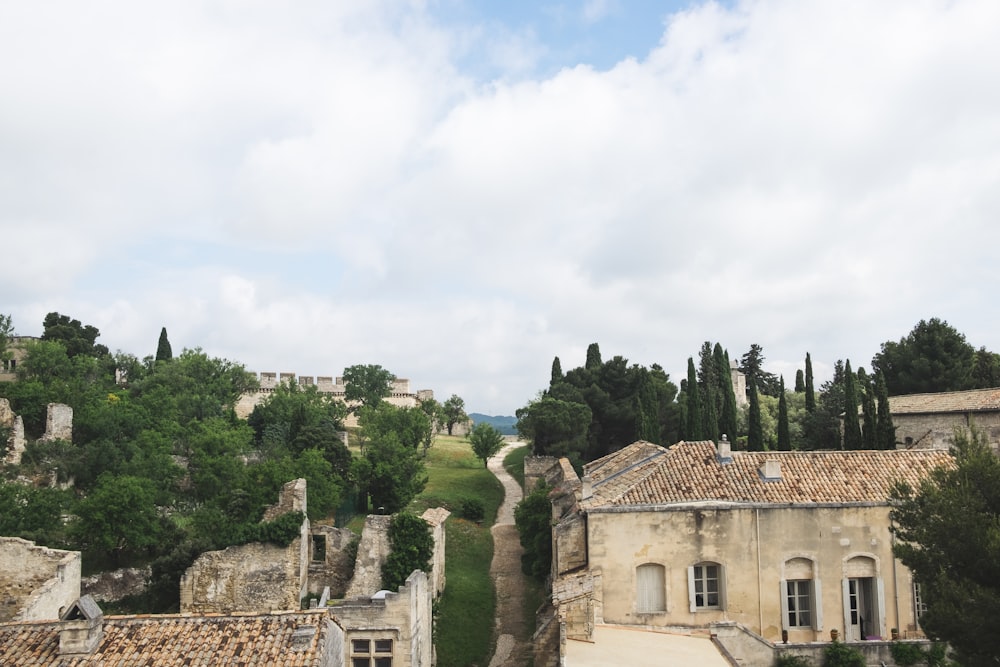
The papal walls of Avignon still ring the whole old town, finished in 1370 and restored on their south front by Viollet-le-Duc. You can…
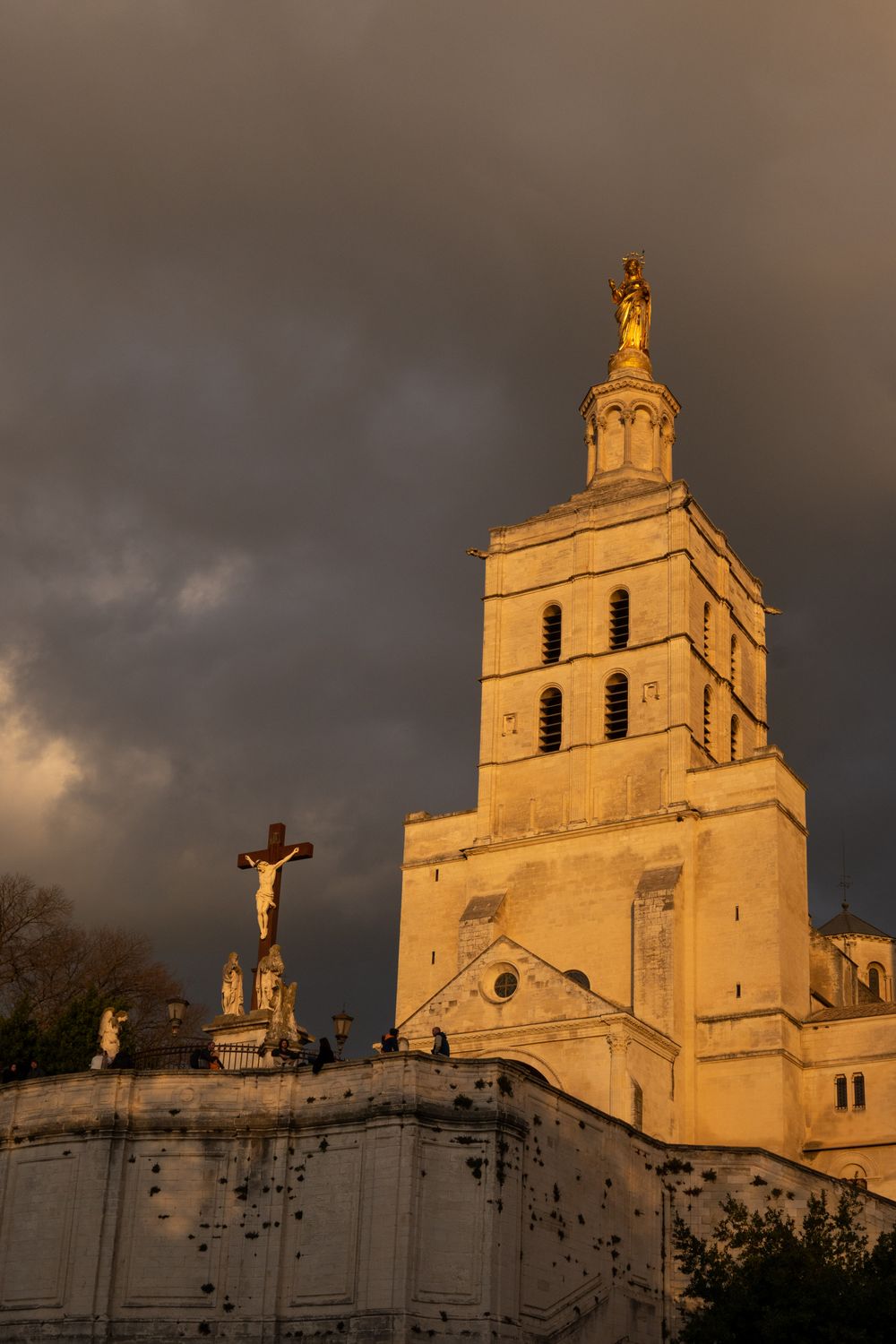
A Romanesque cathedral beside the Palais des Papes, built mostly in the second half of the 12th century, with a gilded Virgin six metres…