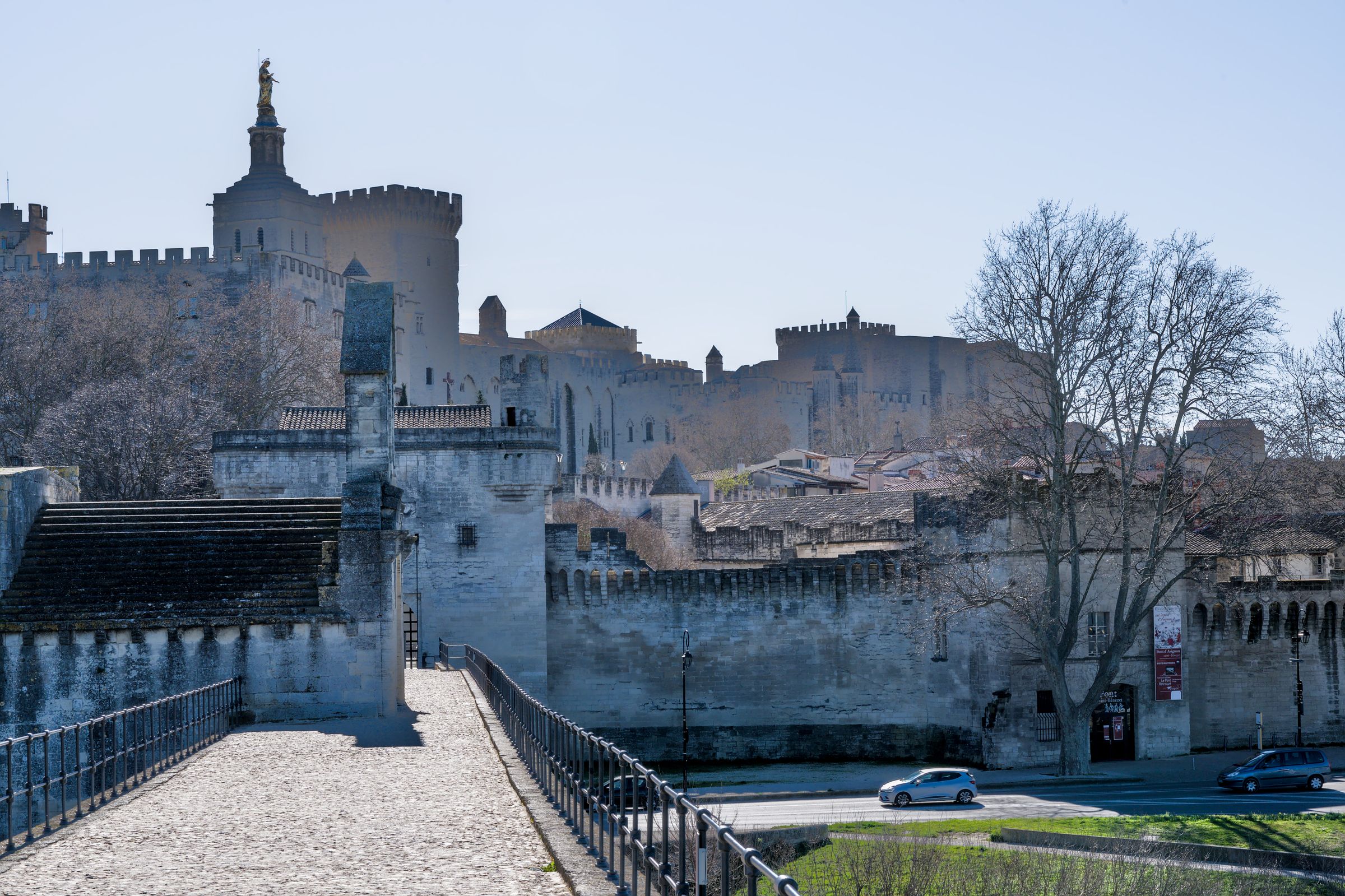
Things to do
20-
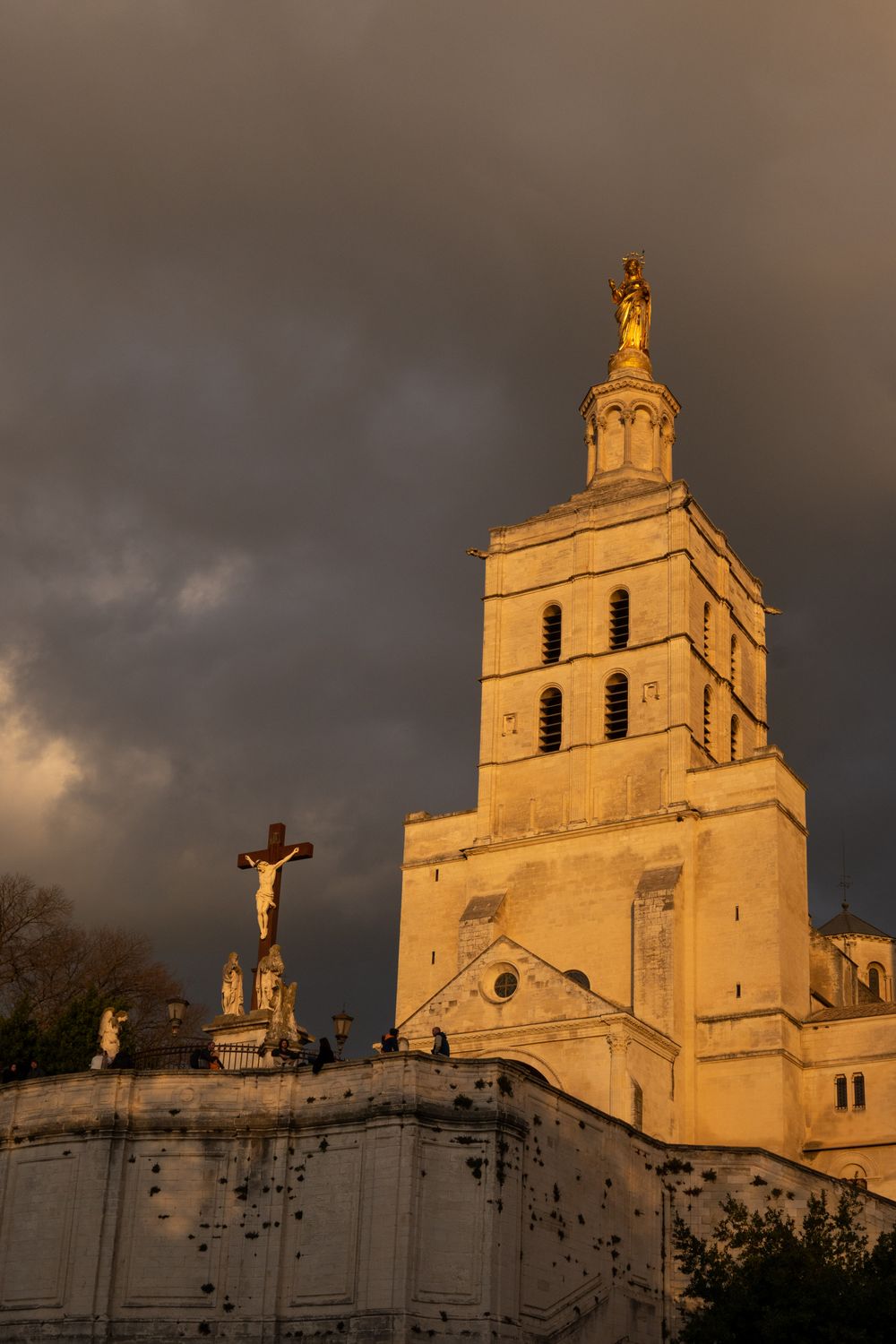
Cathédrale Notre-Dame-des-Doms d'Avignon
Notre-Dame-des-Doms is where you meet the Avignon popes up close, in a Romanesque nave under a gold Virgin with the Gothic tomb of a pope inside.
View more → -
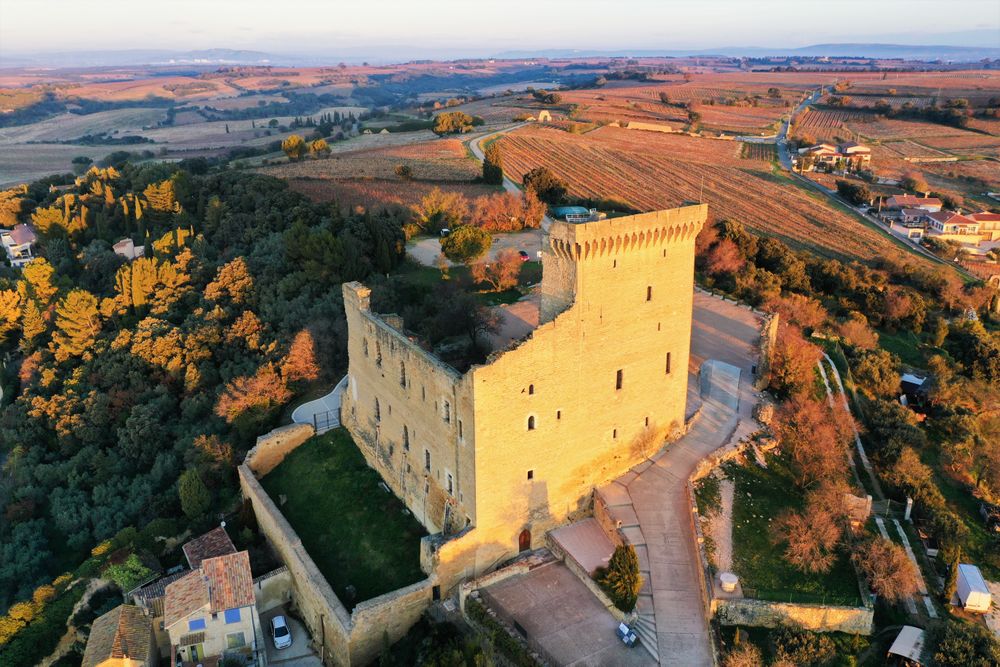
Château de Châteauneuf-du-Pape
Climbing from the village to the broken keep of the popes' summer castle puts you above the Châteauneuf-du-Pape vineyards, on a walk with no real difficulty.
View more → -
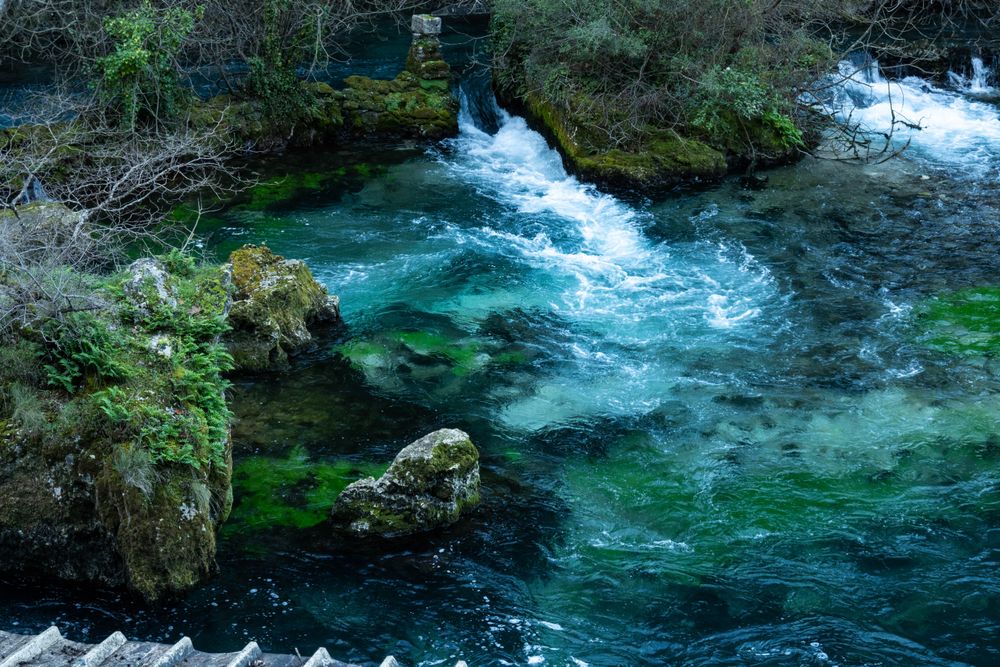
Fontaine de Vaucluse
The biggest spring in France rises below a cliff over 200 metres high, and you can follow its green river from the village up to a viewing point. The cave itself is now closed, so you watch from behind a barrier.
View more → -
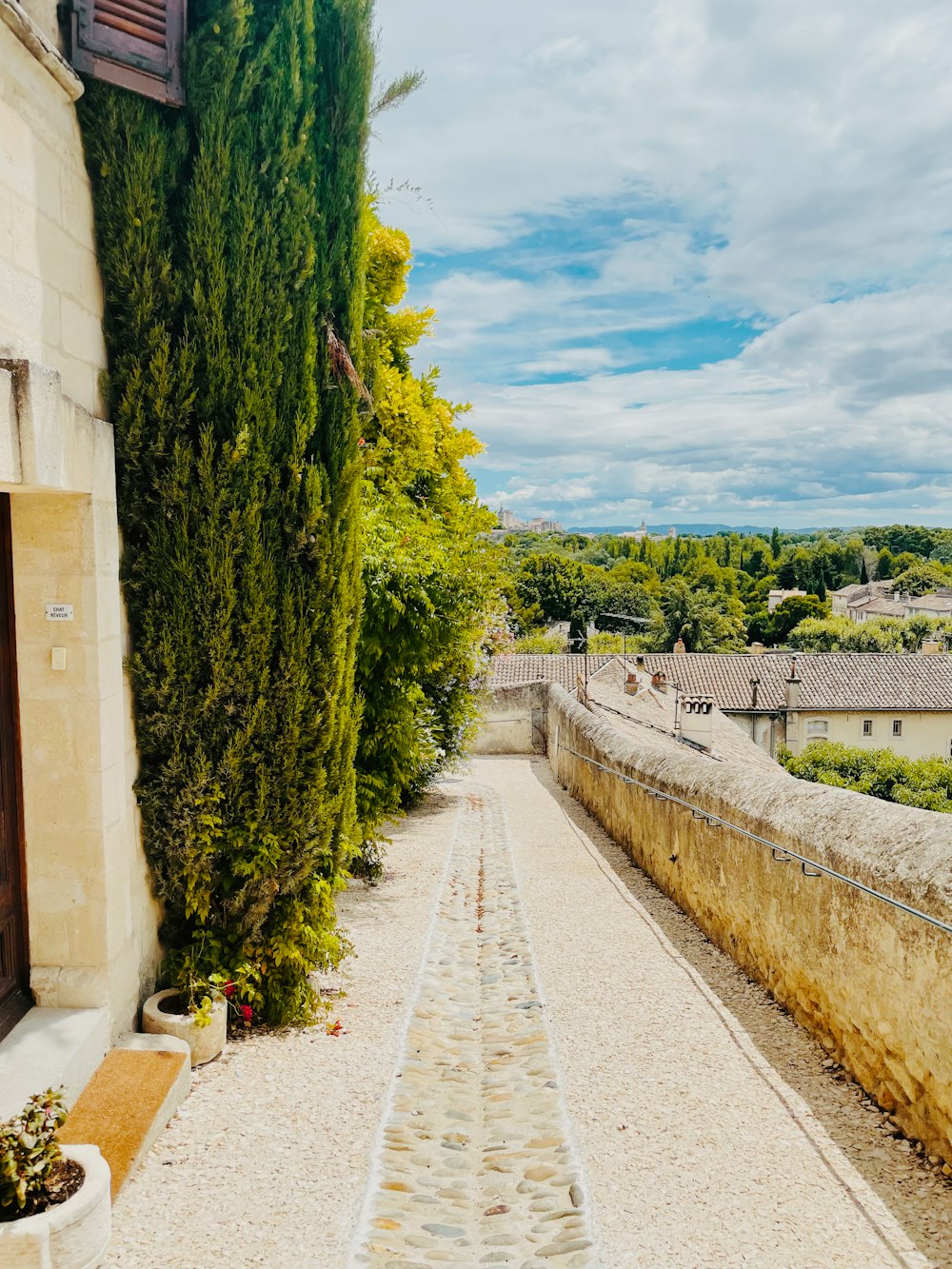
Halles d'Avignon
Before noon, make the Halles on Place Pie your breakfast: Provençal food stall after stall under one roof, behind a facade planted top to bottom as a living garden.
View more → -
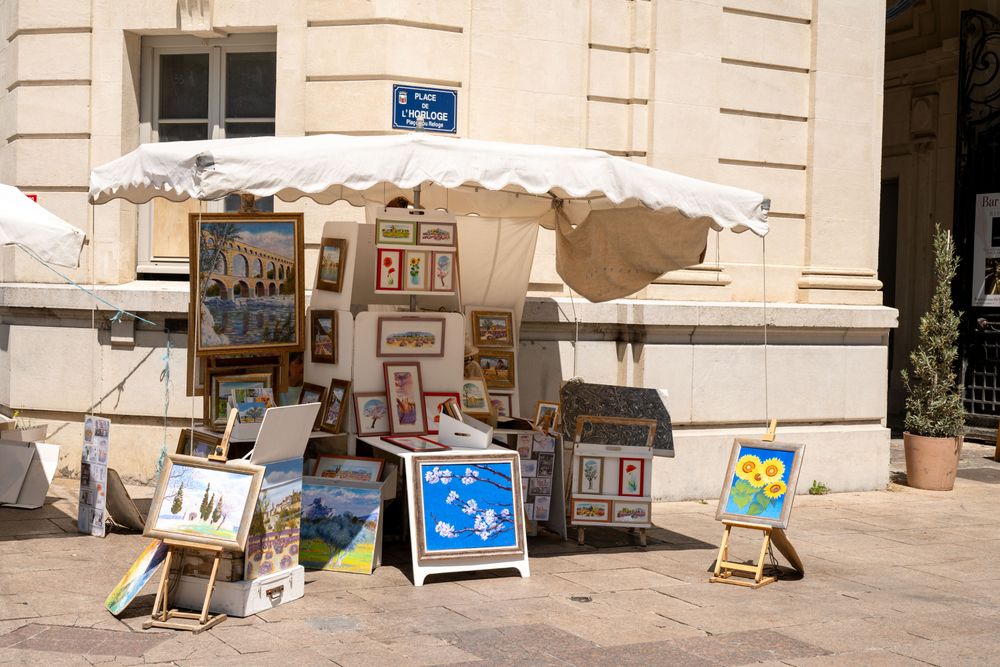
Place de l'Horloge
Half an hour on a terrace here shows you the centre of Avignon in one view: a medieval clock tower where wooden figures strike the bell, a columned town hall, the theatre and a carousel.
View more → -
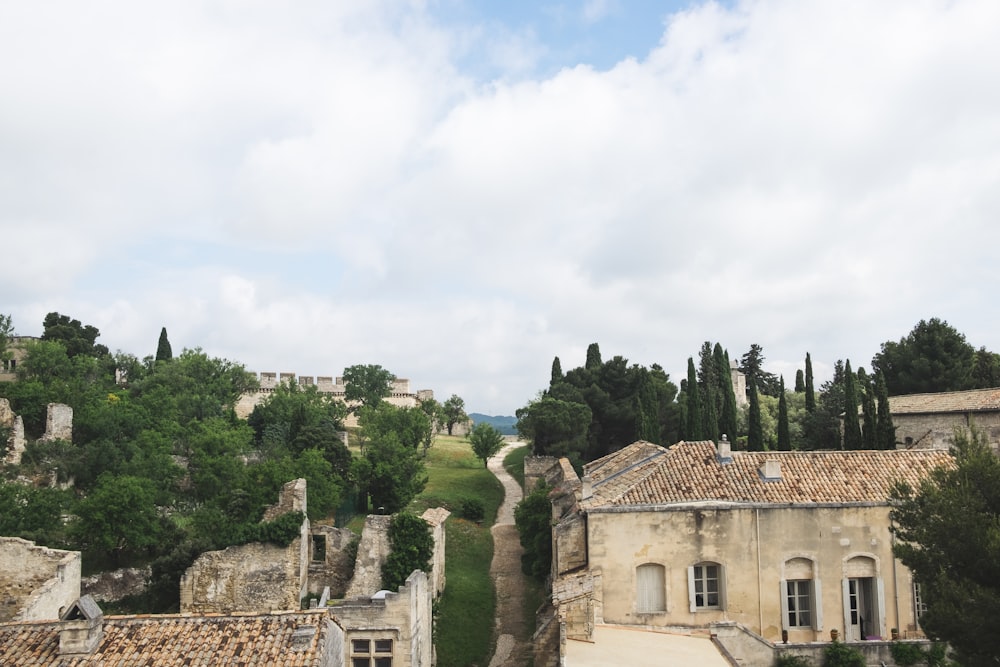
Remparts d'Avignon
Walk the papal walls of Avignon, which still ring the whole old town, starting with the stretch on top beside the Pont Saint-Bénézet.
View more → -
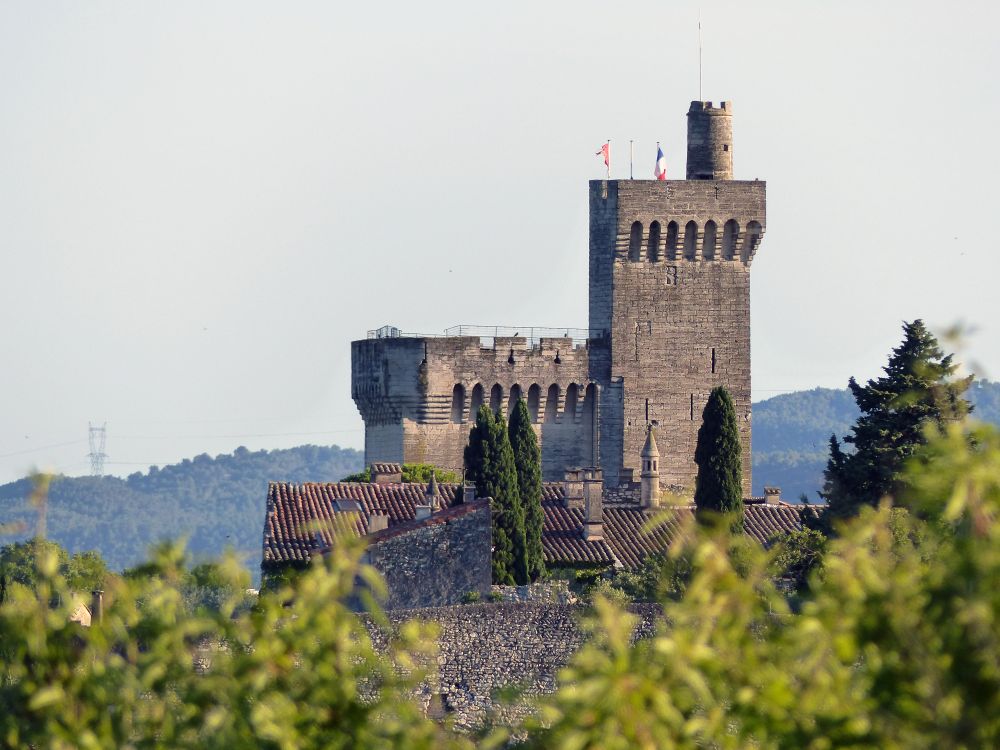
Tour Philippe-le-Bel
Worth the climb for the view back across the Rhône: from the roof of this royal gatehouse you look out over Avignon and the Rhône valley from the far bank.
View more → -
Chartreuse du Val de Bénédiction
Take bus 5 across the river and give it two hours; the cloisters stay quiet even in summer.
-
Collection Lambert
After a morning of medieval stone, spend the afternoon with contemporary art in two old town houses south of the centre.
-
Fort Saint-André
Cross the river for the view back: from the fort's walls the palace and the bridge sit in one frame.
-
Île de la Barthelasse
Hire a bike for a slow afternoon on its flat lanes, a cool change from the stone of the old town.
-
Musée Angladon
Plan around its short opening hours: its Van Gogh is the only one on permanent display in Provence.
-
Musée Calvet
Save it for the hottest hour of the afternoon, when the streets empty and the galleries are cool and quiet.
-
Musée du Petit Palais
If gold-ground Italian painting means anything to you, give it an hour after the palace, just across the square.
-
Palais des Papes
Be at the door when it opens, before the tour groups, and take the tablet guide, because the rooms are bare and it shows how they looked. Leave time for the roof terrace at the end.
-
Palais du Roure
Come for the courtyard and the painted ceilings, a quiet hour five minutes from the main square.
-
Pont du Gard
Hire a car for the day or join a tour, and arrive at opening to have the arches almost to yourself.
-
Pont Saint-Bénézet
Late in the day, when the light is low over the Rhône, walk out to the last arch. The combined ticket with the palace covers it.
-
Rocher des Doms
Climb up at the end of the afternoon for the widest view in town, with a picnic bought that morning at Les Halles.
-
Rue des Teinturiers
Walk it in the evening for a drink beside the water, away from the crowds on the main square.