Ninety seconds on Théâtre antique de Lyon
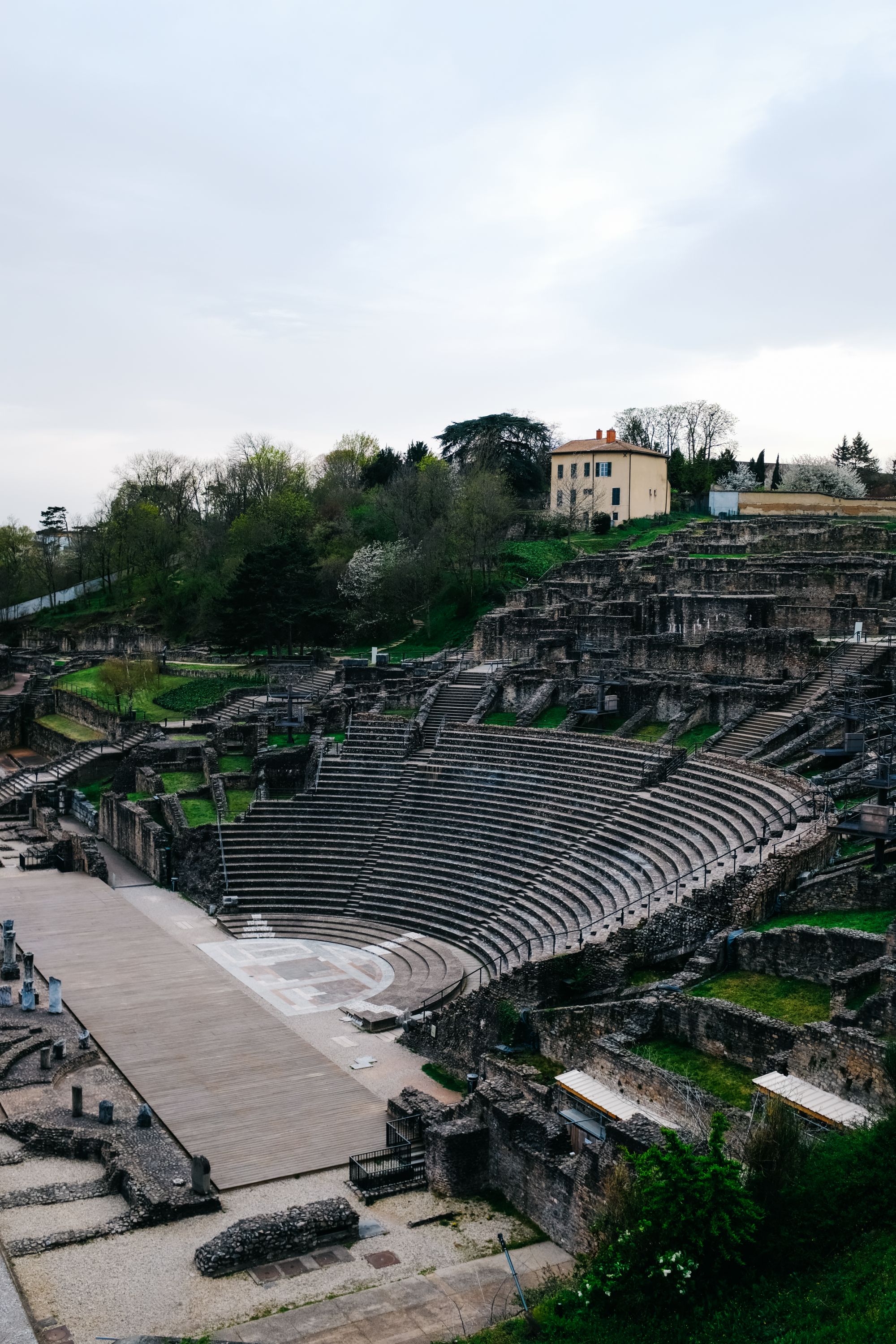
Sitting on the stone tiers that Roman Lugdunum filled for its plays, you look down on a stage that still holds performances and out over the roofs of Lyon.
The great theatre is built against the hillside, 108 metres across, and it is the oldest theatre of Roman Gaul. A later third tier of seats and a rebuilt stage raised it to 10,000 spectators.
Behind the stage, look for the columns that framed the royal door, where the leading actors made their entrance. The structure is granite, schist and limestone, while the marble and porphyry trim came from Italy, Greece and Egypt.
Next door, walk over to the odeon, the smaller hall for music and recitation. The odeon's façade wall has gone, but part of its original columns remains.
The odeon's orchestra floor is paved in coloured stone gathered from across the Roman world: green porphyry from Greece, red porphyry and granite from Egypt, yellow marble from Africa, and much of that paving is still visible.
From the Saône embankment in Vieux Lyon you cannot tell the two theatres are up there on the slope.
Best begun on the upper paths, the visit opens on the full view of the half circle of seating, the orchestra and the rebuilt stage.
Then walk down through the tiers. Sit where the Roman audience sat, and look at the stairways, drainage channels and stonework on the way. Speak in a normal voice from the stage to hear how the acoustics carry.
Information panels around the site show where the orchestra was, how the stage backdrop looked and how the audience came in and out. Finish in the odeon beside the great theatre.
On your own, the panels explain the theatres well enough for a first visit. Book a guide only if you want the theatres and the museum explained together as one story of Roman Lugdunum.
Guided visits and workshops run at the theatres through the year; register ahead for any marked as needing it. With a private company, ask for a guide conférencier, the French licensed-guide diploma. Expect a guided walk of the site to take about an hour and a half on paved paths and steps.
Wear shoes with good grip, because the stone steps are uneven and turn slippery after rain. If you are pairing the theatres with the museum, leave large bags and cases at your hotel: the museum refuses them, and its security checks slow the entrance.
On a summer festival night, bring a light layer, since the tiers turn cool once the sun goes down. For the emptiest tiers, come early on a weekday outside summer. Stay on the upper tiers at the end of the day to watch the sun set over Lyon.
Explore the rest of Lyon
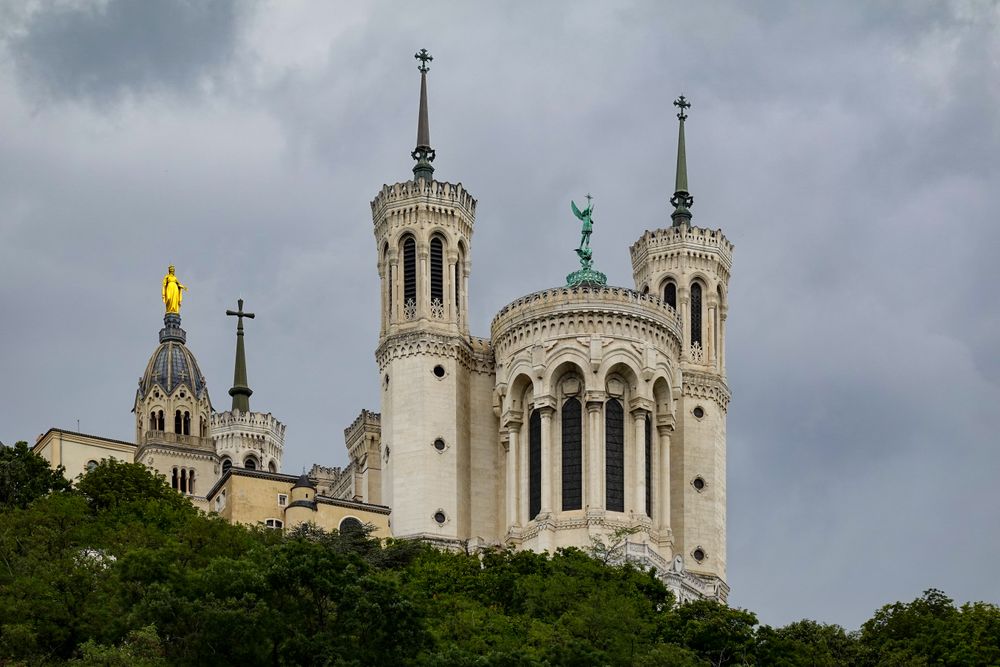
White stone on the hill above Vieux Lyon, built as two churches stacked one on the other. The upper church carries six large mosaics along…
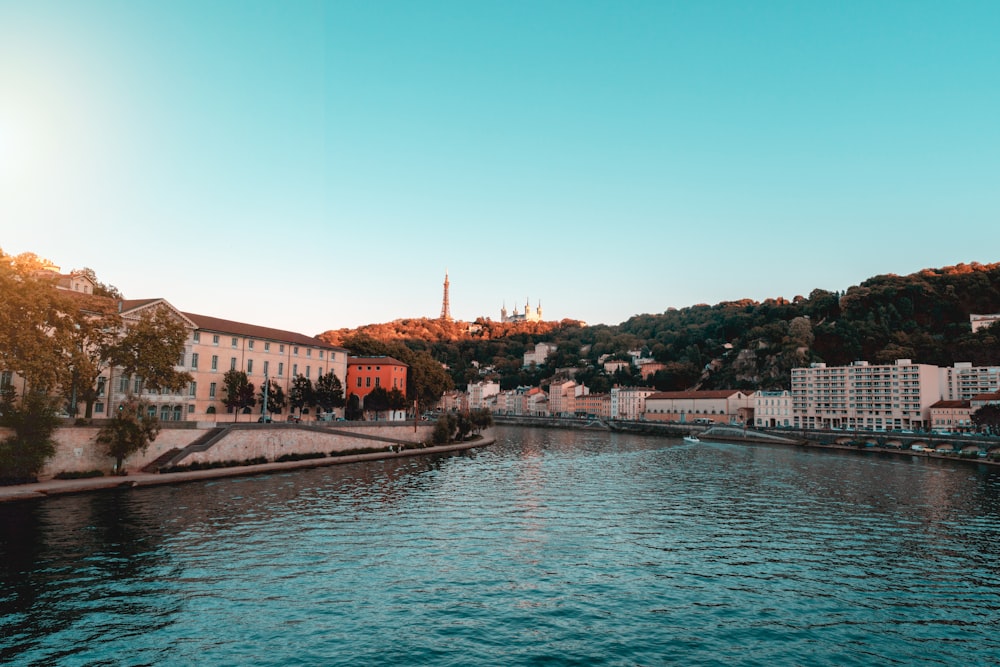
Renaissance houses along the Saône, at the foot of Fourvière. The interest is behind the facades: courtyards with spiral stairs and…
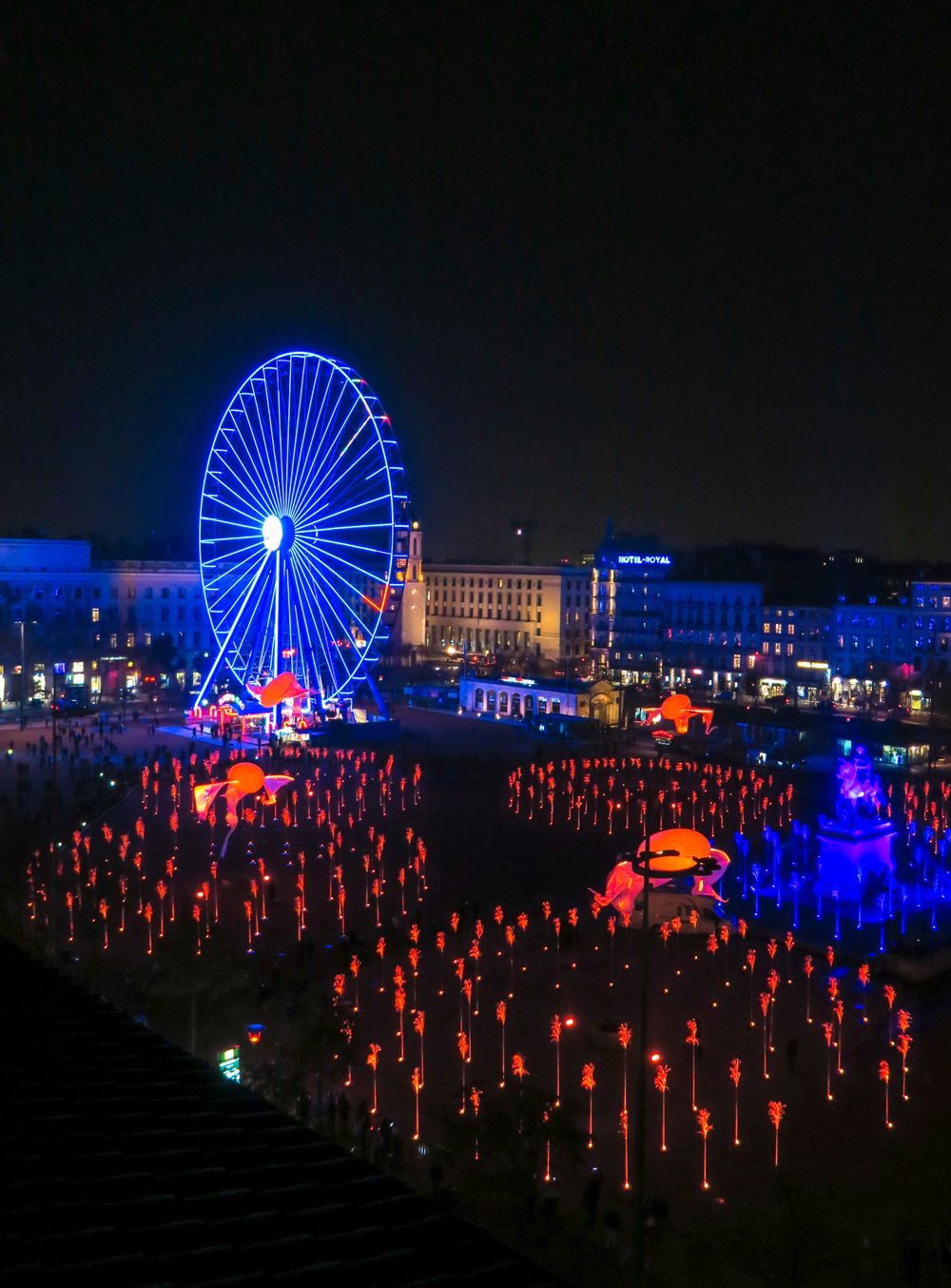
For four nights around 8 December, artists turn Lyon's facades, squares and parks into light installations, most of them on the peninsula…