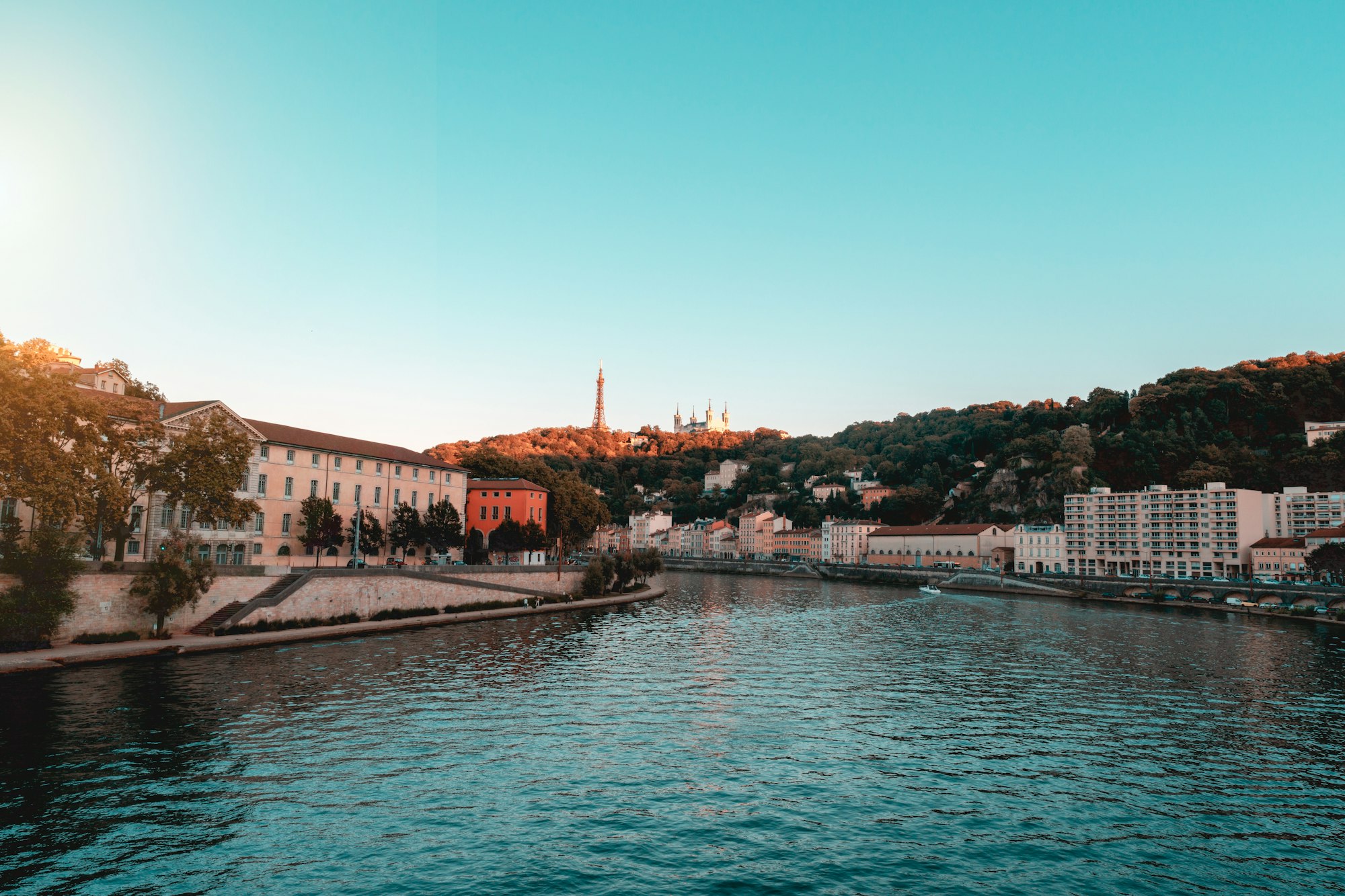
Ninety seconds on Vieux Lyon
Most of what Lyon's old town has to show sits behind plain doors. Covered passages called traboules cut through the houses into Renaissance courtyards, and some of them are open to the public by day.
Vieux Lyon is the largest Renaissance district in the city and part of Lyon's UNESCO World Heritage listing. From the street it is a run of tall, close-packed houses along the Saône.
A traboule is a covered passage through a building and its courtyard, linking one street directly with the next. Inside are spiral staircases, covered galleries and light wells, many of them still in place.
The Saint-Paul end was home to Italian banker-merchants, and its courtyards are the ones to look for. On Rue du Bœuf, the Tour Rose is named for its pink spiral stair, but the stair may not be open to visitors, so look for it from the courtyard.
On its own square, Saint-Jean Cathedral holds an astronomical clock that is one of the oldest in Europe. It has been fully restored, and its perpetual calendar, astrolabe and automatons all work. From the forecourt you look straight up at Fourvière hill.
Rue Juiverie is the place to start. Step into the courtyard at number 8 for the Galerie Philibert de l'Orme, then work your way through Rue du Bœuf and Rue Saint-Jean, where many of the public traboules are.
Only the passages with a public-access agreement with the city are open, and the rest are private homes. Each public entrance is marked with a sign, so look for it before you push a door. If a door is locked, move on to the next one.
The longest traboule runs from 54 Rue Saint-Jean through to Rue du Bœuf. Time your stop at the cathedral for the clock: its automatons move to the chimes every day at noon and again at 2, 3 and 4 in the afternoon. Afterwards, ride the funicular from Saint-Jean up to Fourvière, a two-minute trip that saves you a steep climb.
The traboules need no guide: the open ones are free, and you can walk them on your own with a map. The guided visit to book here is the cathedral's tour of the astronomical clock, which lasts 30 to 45 minutes.
It runs on Wednesday, Saturday and Sunday afternoons, except during services. Tickets are sold at the cathedral shop on the day or online.
Keep your voice down in the passages. Most traboules are the entrances to residents' flats, and residents complain about noise every day, so treat the courtyards as homes, not an open-air attraction.
The cobbles are uneven in the darker passages, so watch your step on the stairs. At the Hôtel de Gadagne, a Renaissance townhouse, one ticket covers both its museums, Lyon's history museum and the puppetry museum. Leave food and drink in the checkroom.
Explore the rest of Lyon
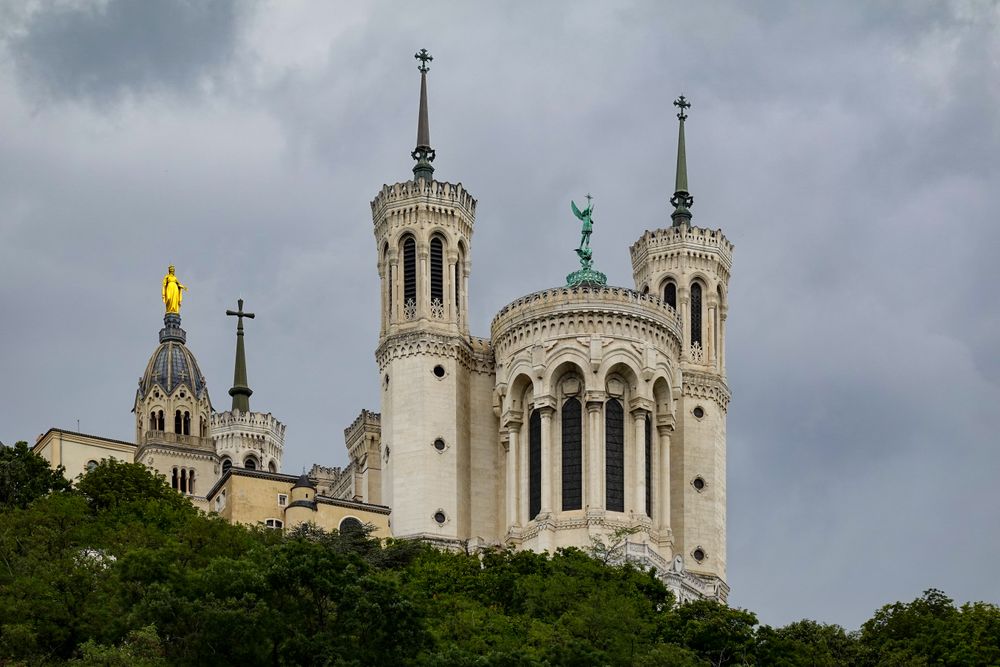
White stone on the hill above Vieux Lyon, built as two churches stacked one on the other. The upper church carries six large mosaics along…
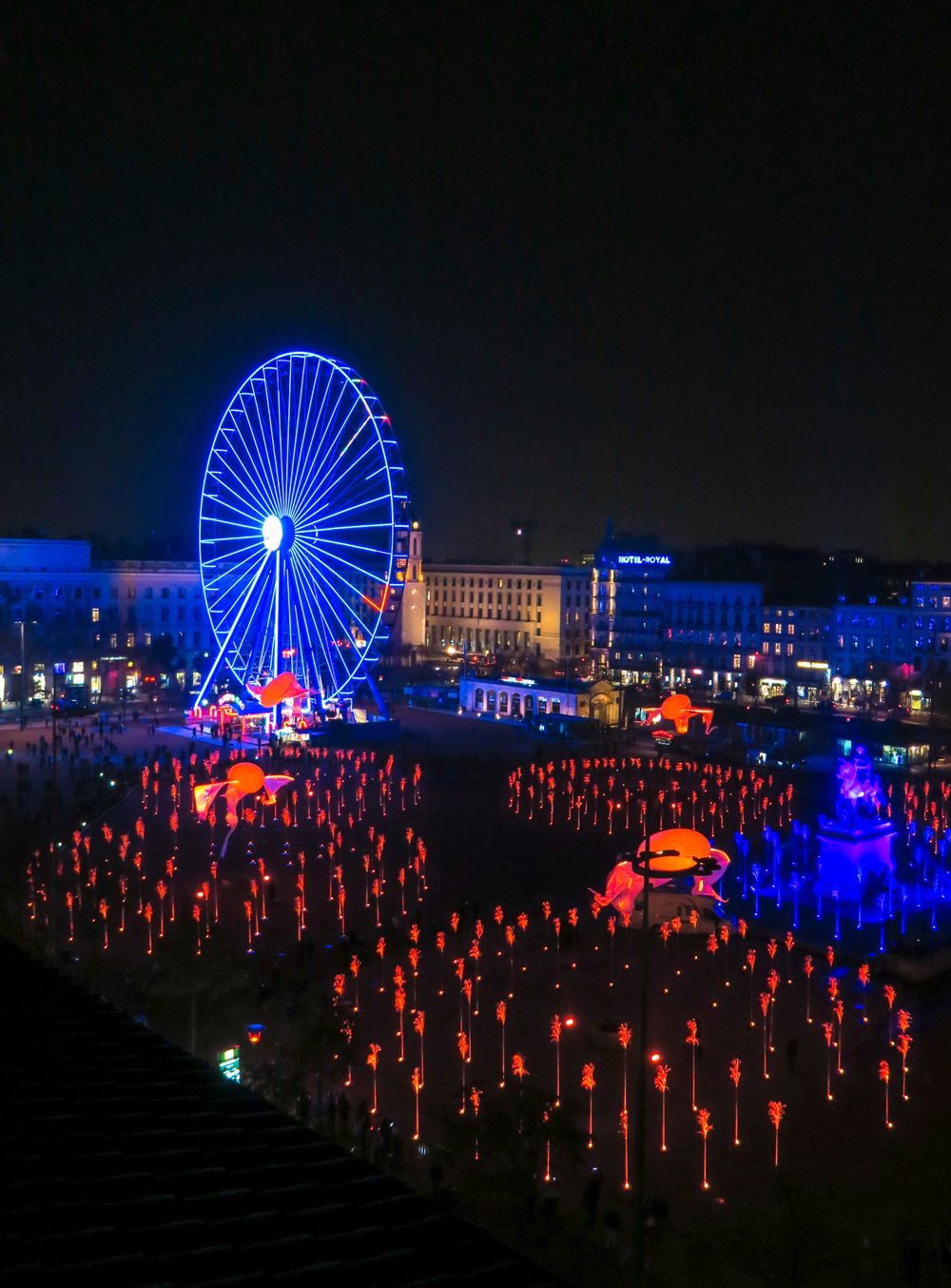
For four nights around 8 December, artists turn Lyon's facades, squares and parks into light installations, most of them on the peninsula…
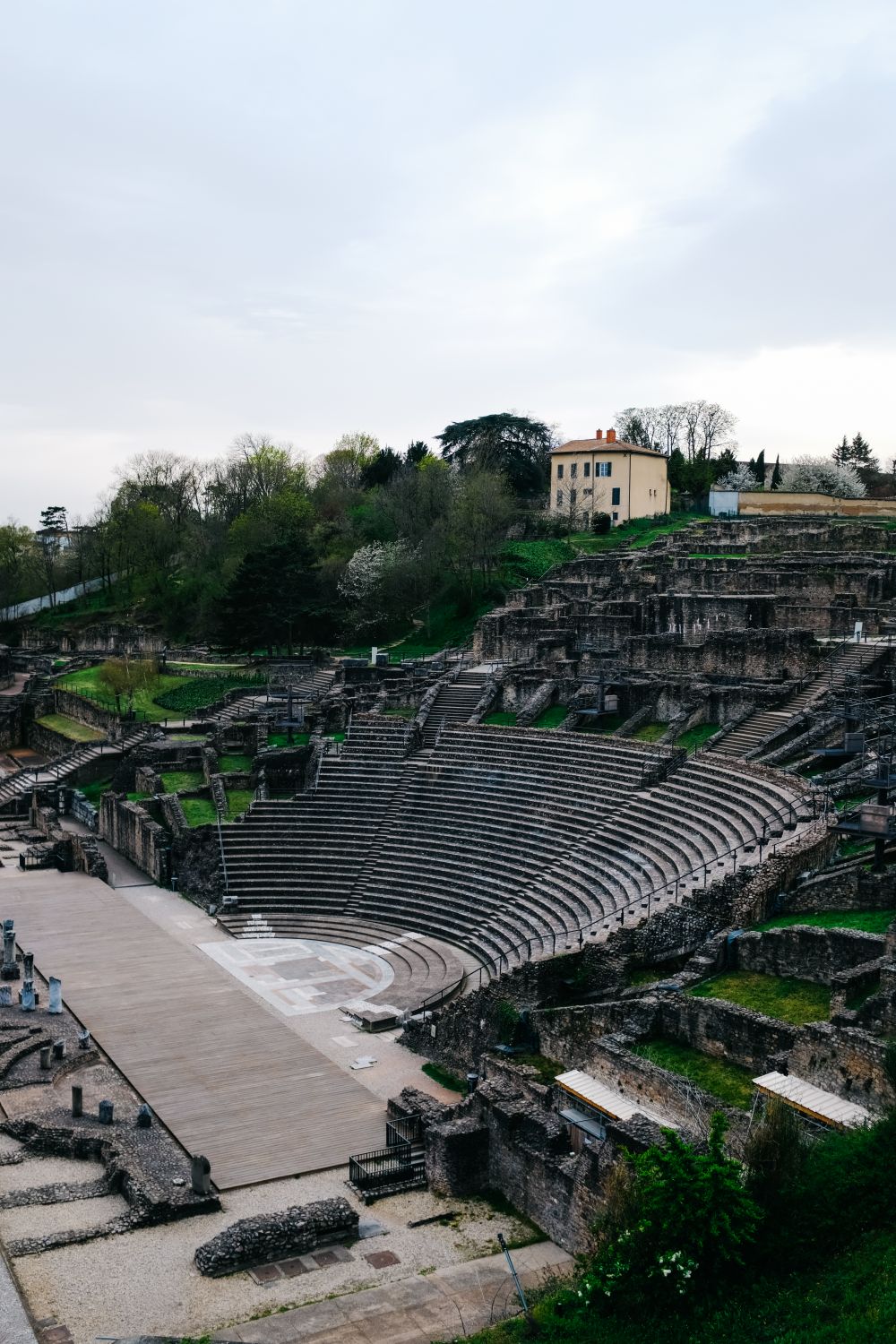
Built against the Fourvière hillside around 15 BC and later enlarged to hold 10,000, this is the oldest theatre of Roman Gaul, and every…