Things to do
19-
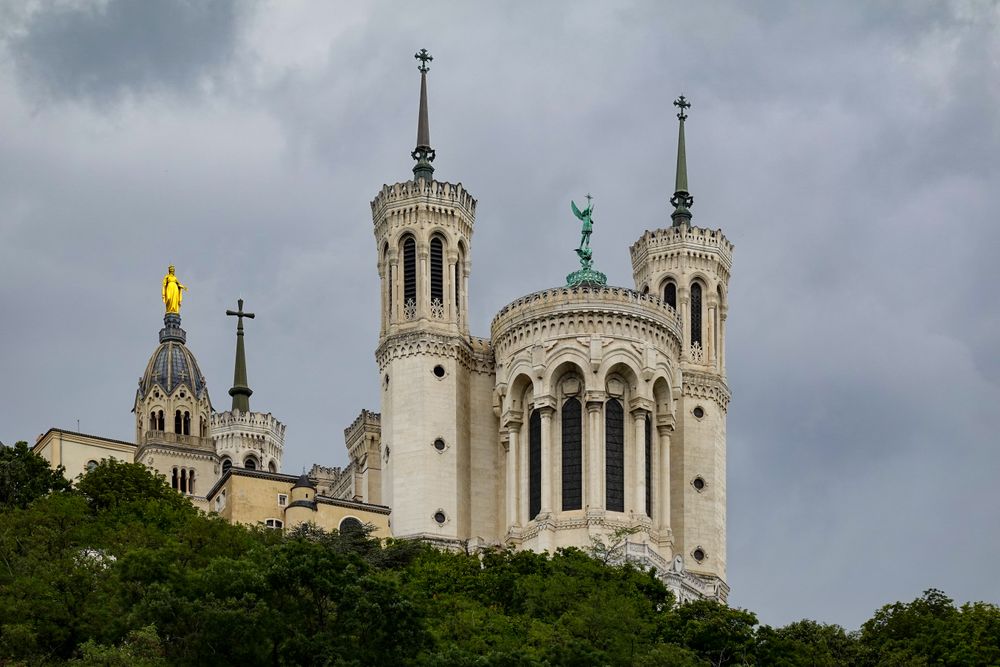
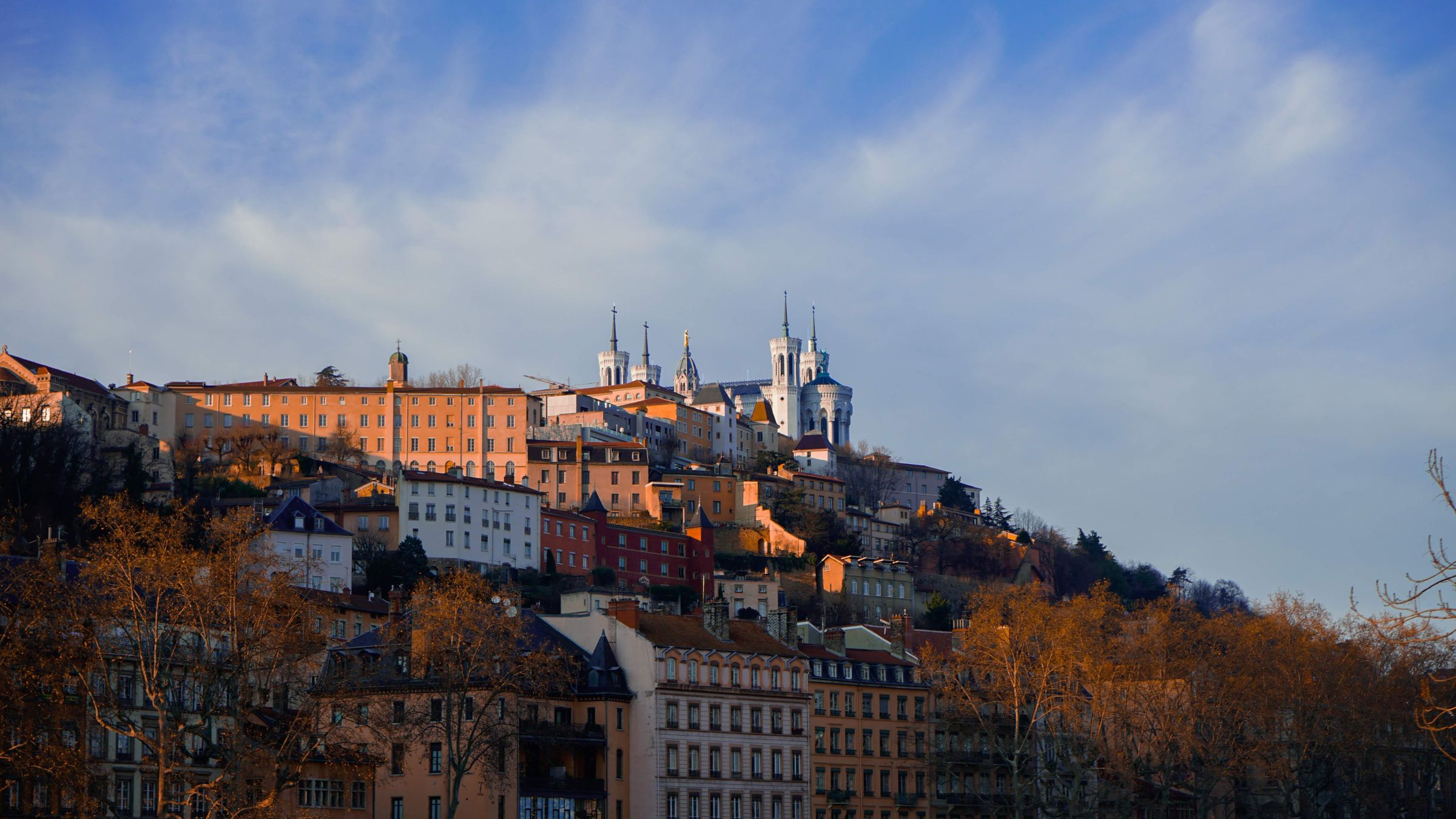
Basilique Notre-Dame de Fourvière
Between the dark, quiet crypt and the blue and gold church stacked on top of it, you walk through two churches in one building, each with its own mood.
View more → -
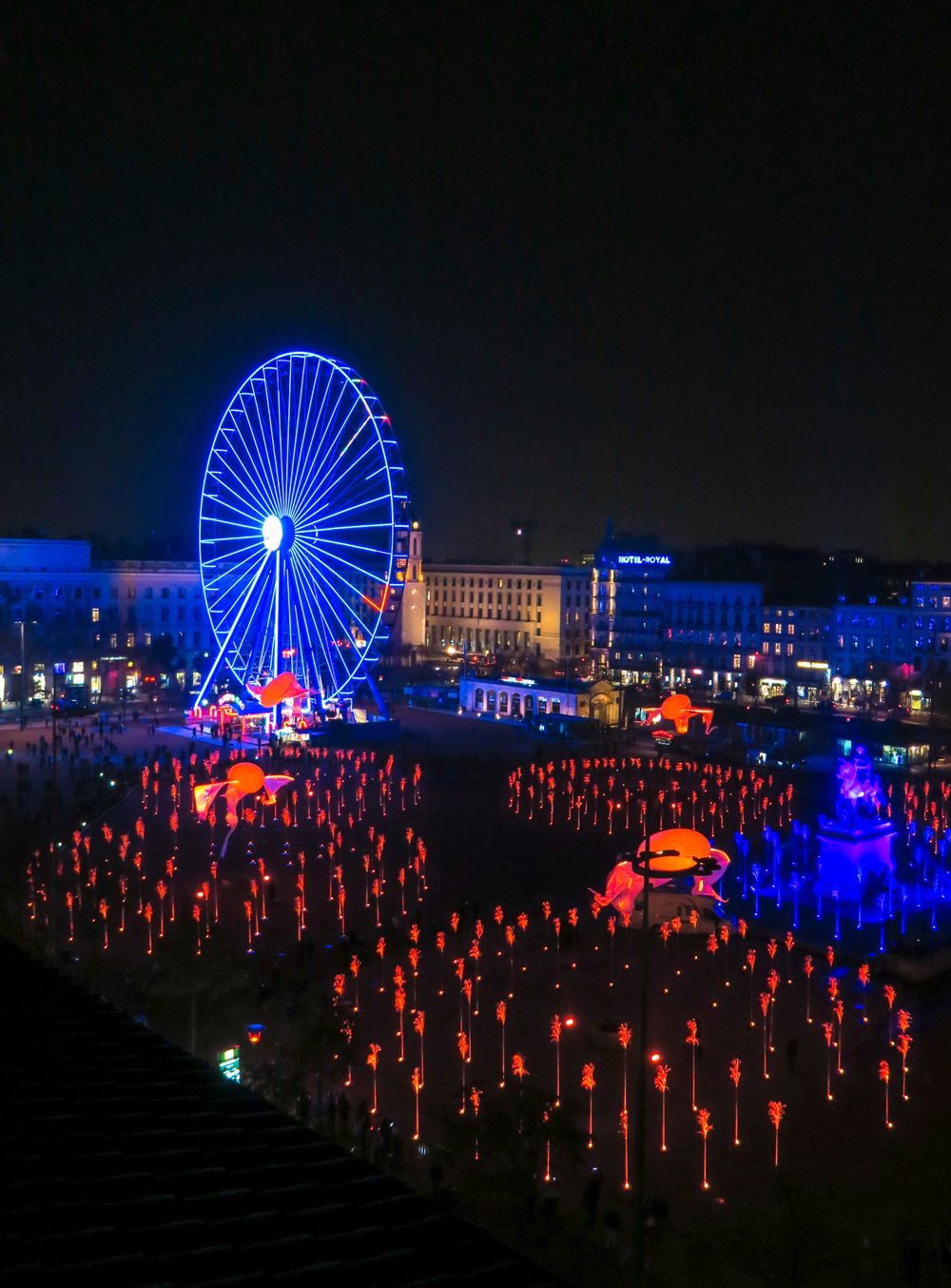
Fête des Lumières
Two of the four nights give you room in front of the big shows: Sunday 6 and Monday 7 December. Saturday is by far the busiest, and Tuesday the eighth is the traditional night, with a procession from Saint-Jean up to Fourvière.
View more → -
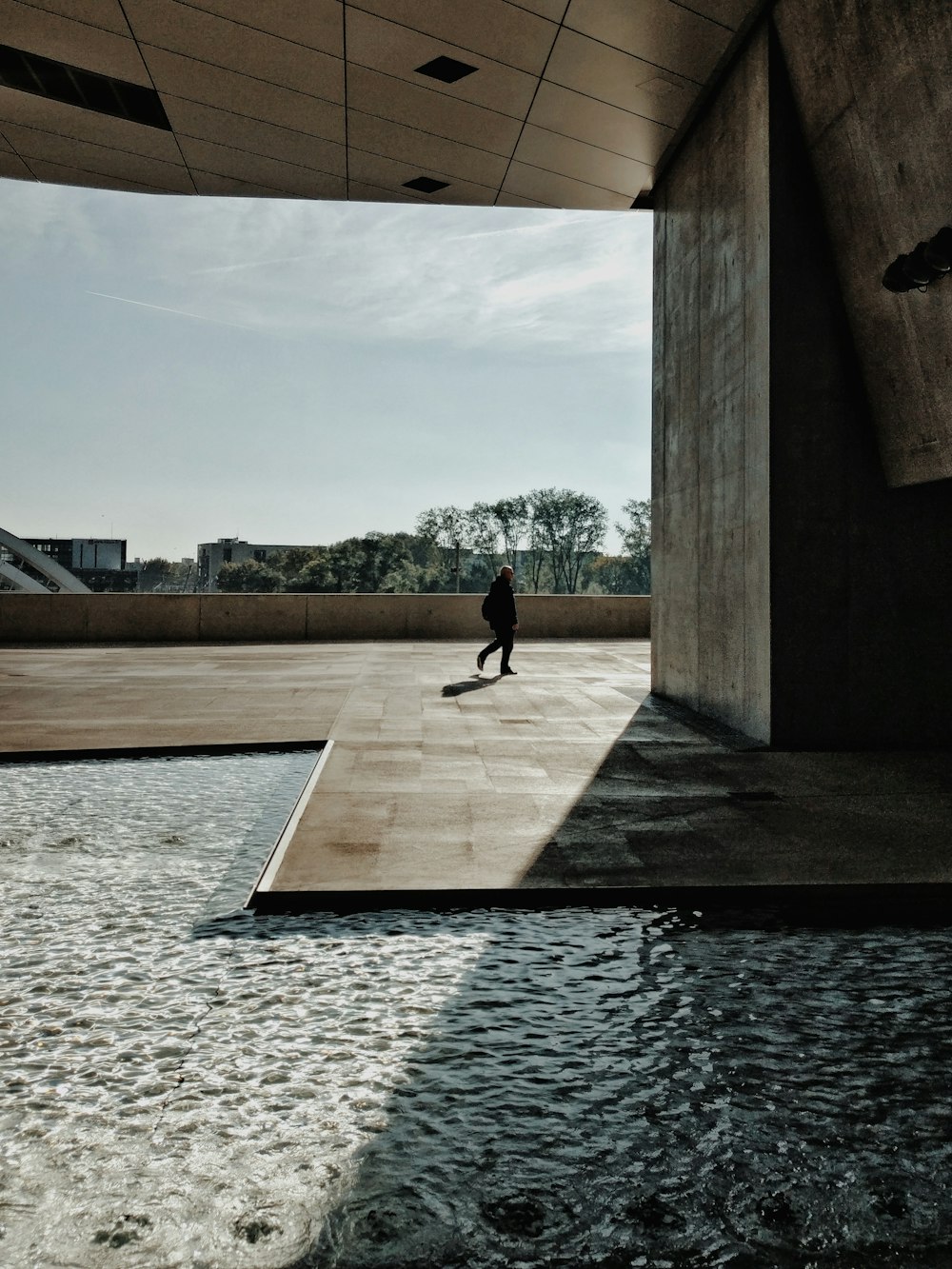
Musée des Confluences
On the point where the Rhône meets the Saône stands Lyon's most striking modern building, and its four galleries take you from the first humans to the ways cultures have buried their dead.
View more → -
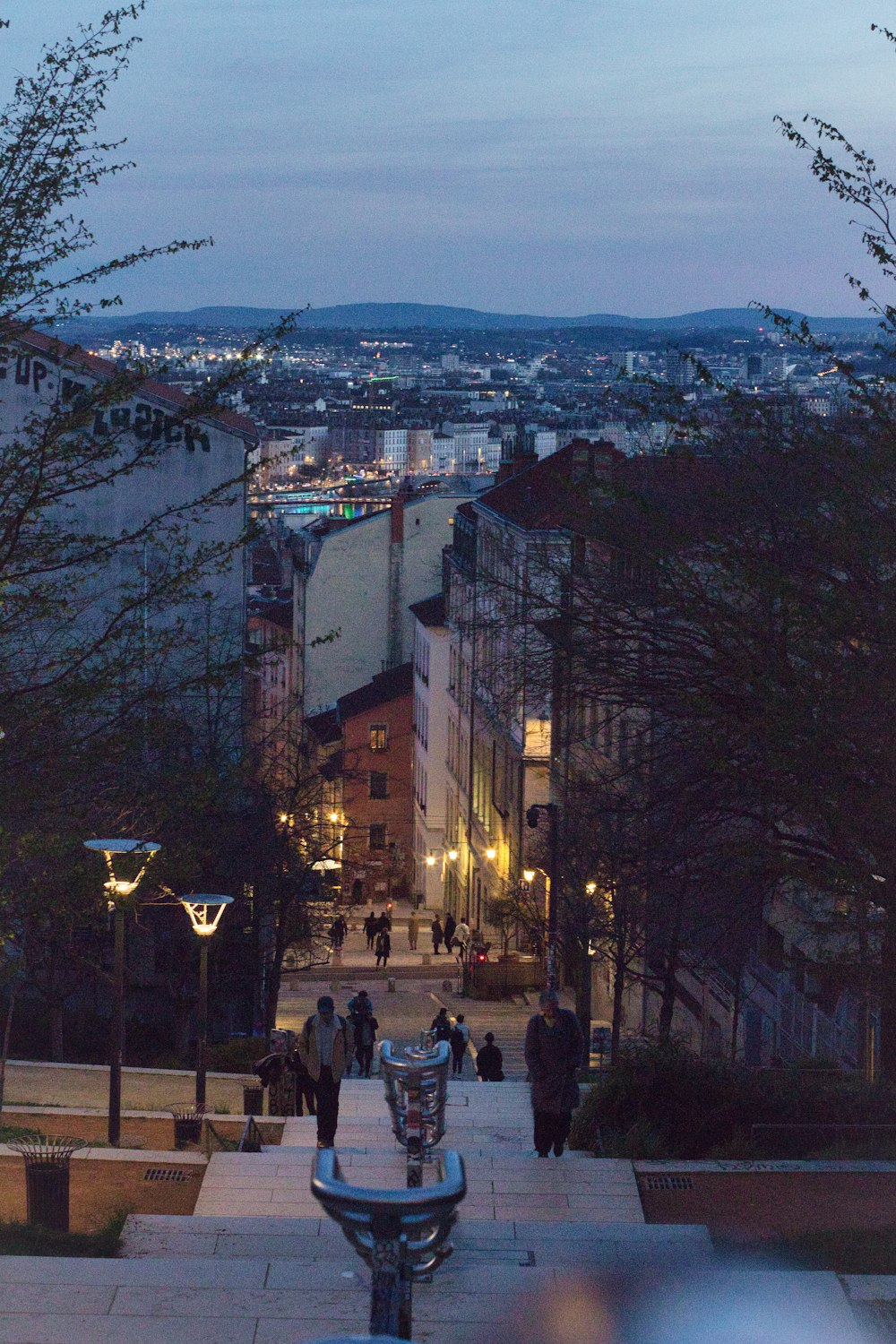
Pentes de la Croix-Rousse
Walk Lyon's silk-weaving quarter downhill through its covered passages and steep stairs, past tall workshop rooms built for the looms, to the Cour des Voraces courtyard.
View more → -
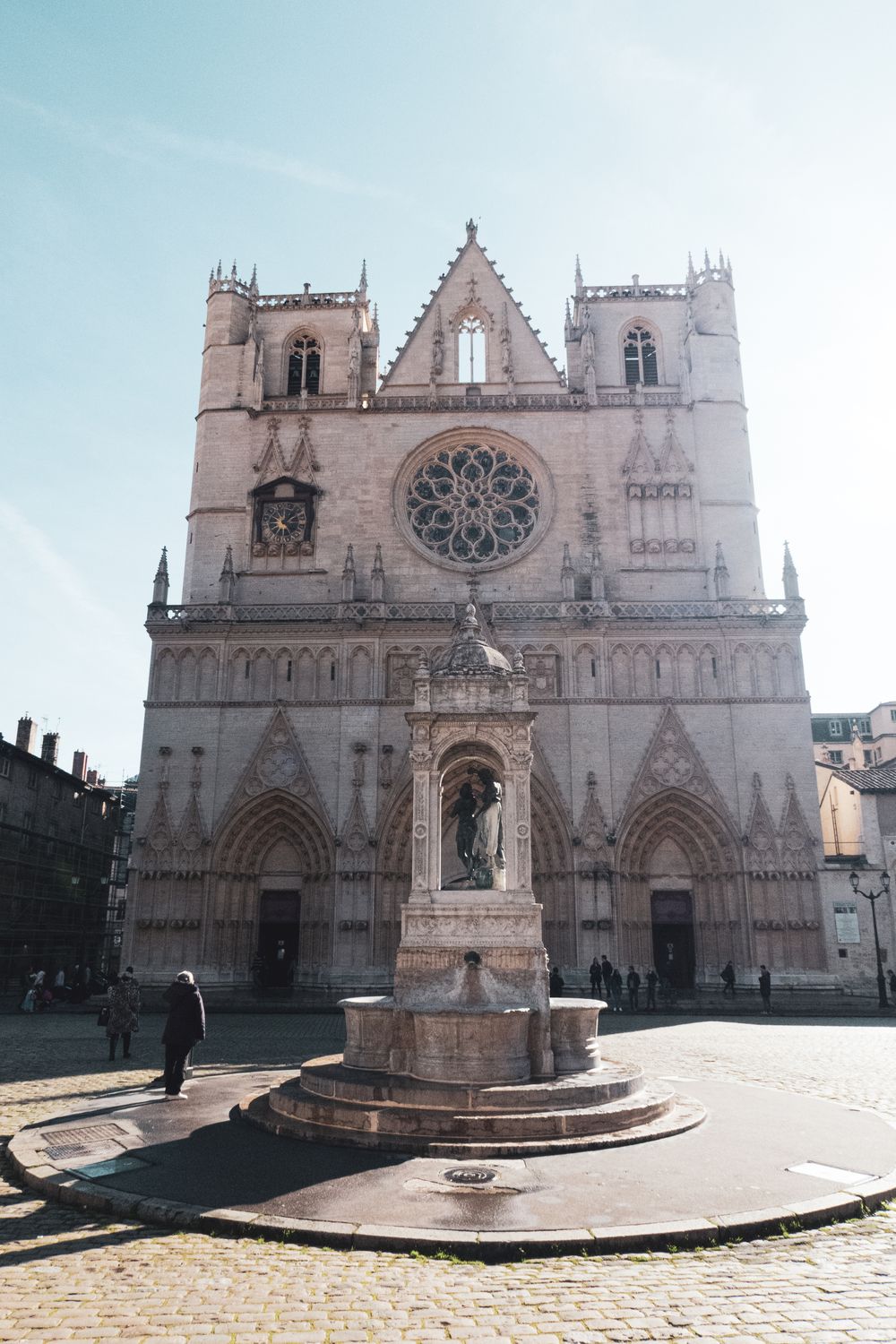
Primatiale Saint-Jean
Saint-Jean's astronomical clock still sets its rooster crowing and its angels moving to a carillon, inside a cathedral that took three centuries to build.
View more → -
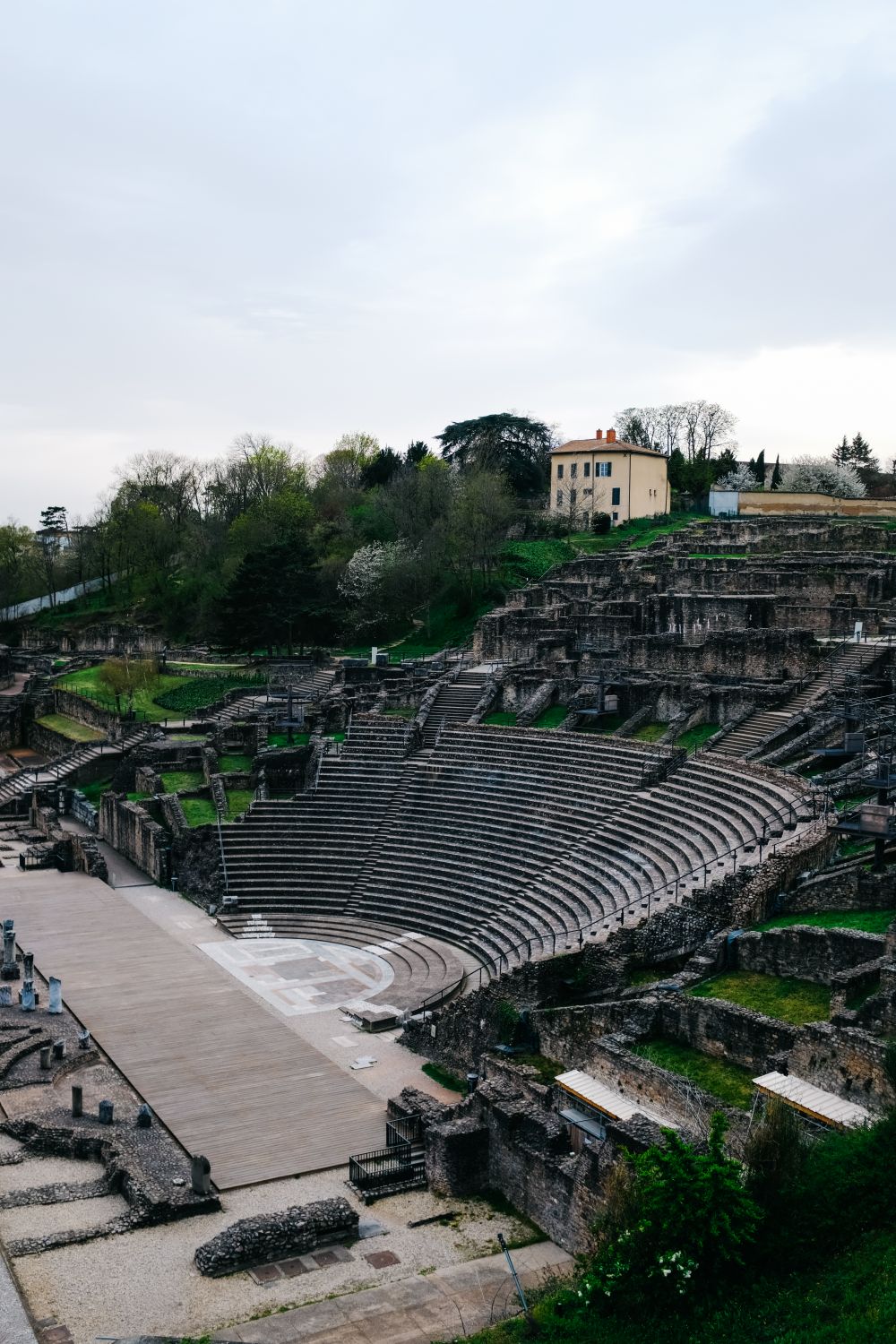
Théâtre antique
Sitting on the stone tiers that Roman Lugdunum filled for its plays, you look down on a stage that still holds performances and out over the roofs of Lyon.
View more → -
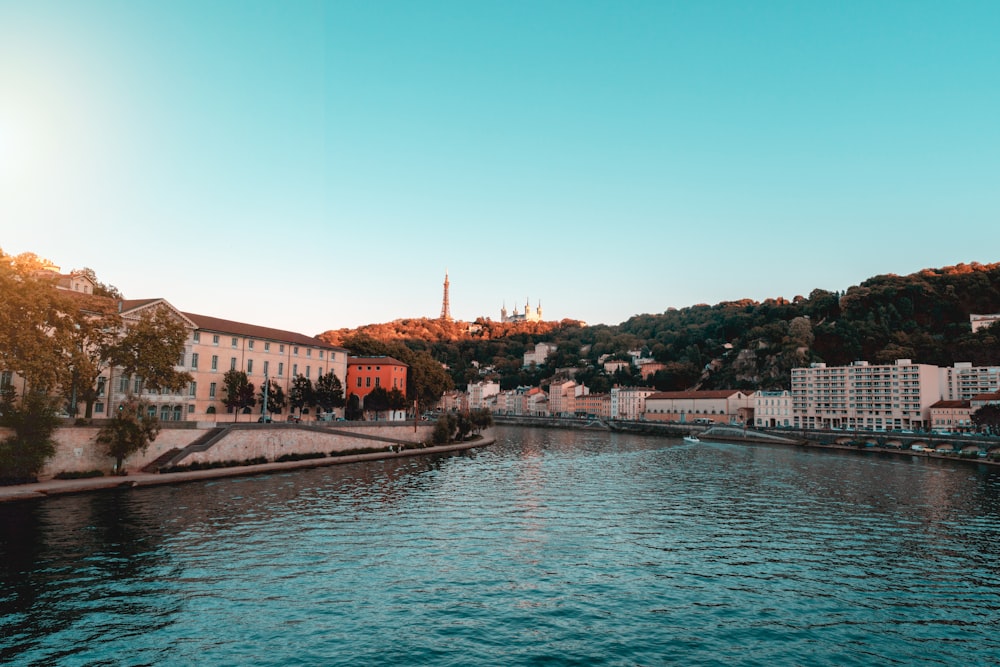
Vieux Lyon
Most of what Lyon's old town has to show sits behind plain doors. Covered passages called traboules cut through the houses into Renaissance courtyards, and some of them are open to the public by day.
View more → -
Cour des Voraces
A tall stair rising through a courtyard on the Croix-Rousse slope, the best known of the traboules, the covered passages cut through buildings so that silk could be carried down the hill dry. It is a residential block, so keep quiet and be gone by evening.
-
Halles de Lyon-Paul Bocuse
The indoor food market named for the chef Paul Bocuse, with about fifty stalls under one roof selling cheese, sausage, wine and pastry. Mère Richard sells the aged Saint-Marcellin and Sibilia the sausages, and at the oyster counters lunch is eaten standing.
-
Institut Lumière
The Lumière family villa in Monplaisir, on the ground where the brothers filmed workers leaving their factory in 1895 in what is generally counted the first motion picture. Cameras, hand-coloured prints and the original hangar wall are here, and the institute runs a cinema in the grounds. Metro to Monplaisir-Lumière, then two minutes on foot.
-
Jardin du Rosaire
Terraced gardens on the Fourvière hill, a short walk from the basilica. Lookouts face out over the city and across to the Croix-Rousse hill, and one looks back up at the east end of the basilica. Its trees give shade, which makes it the cooler way to spend a summer hour on the hill.
-
Lugdunum
Buried in the hillside beside the Roman theatres so that nothing interrupts the site above, its galleries spiral down past the bronze tablet carrying the speech Claudius gave to the Senate arguing that Gauls should sit in it. Mosaics, a chariot and inscriptions fill the rest. The architecture is as good a reason to come as the collection.
-
Maison des Canuts
A working weaving workshop on the Croix-Rousse where the guided visit puts a Jacquard loom in motion and explains the punched cards that ran it, which is the ancestor of programmed machinery. Silk is still woven here for restoration work on historic interiors. Small, hands-on, and the only place in the city where the trade is demonstrated.
-
Montée de la Grande Côte
A sloping pedestrian street and stairway that climbs from the Presqu'île to the top of the Croix-Rousse, about 90 metres higher. Walked without stopping it takes 12 to 15 minutes up, on irregular steps. The metro is the easier way up, so walk down this way, through the old silk quarter.
-
Musée des Beaux-Arts
A Benedictine abbey on the Place des Terreaux holding the largest art collection in France outside Paris: Egyptian rooms, a medallion cabinet, Perugino and Veronese, then Géricault, Manet and a strong impressionist floor. The cloister garden is open without a ticket and is one of the few quiet places in the centre.
-
Parc de la Tête d'Or
A large park on the east bank of the Rhône, with a boating lake, three rose gardens, a botanical garden and a zoo. Entry to the park, the zoo and the botanical garden is free. The park opens every day of the year but closes when the wind passes 70 km/h, and the zoo shuts on Tuesdays.
-
Place Bellecour
A red gravel square between the two rivers, among the largest open squares in Europe and kept empty apart from a bronze Louis XIV and a small statue of the Little Prince, whose author was born a few streets away. The tourist office is under the north side.
-
Place des Terreaux
The square in front of the Hôtel de Ville, at the north end of the Presqu'île where the Croix-Rousse slope begins. The Musée des Beaux-Arts stands on the square, and a block to the north the Montée de la Grande Côte starts its climb up the silk weavers' hill.
-
Presqu'île
A long, narrow peninsula between the Saône and the Rhône, running from the foot of the Croix-Rousse slope down to the point where the two rivers meet. It has shops throughout and two big squares, Terreaux at the north end and Bellecour in the middle. Its neighbourhood wine bars are where to stop in the evening.