Most people who visit the Great Wall of China visit the same short stretch of it. Badaling sits an hour northwest of central Beijing, has been rebuilt to a smooth grey uniformity, and absorbs the tour buses so efficiently that it takes in around three quarters of all Great Wall visitors on its own. The trade on offer is a simple one. Another ninety minutes in a car, this time heading northeast, buys a version of the wall that is longer, steeper, half fallen down and, most days outside the holidays, nearly deserted.
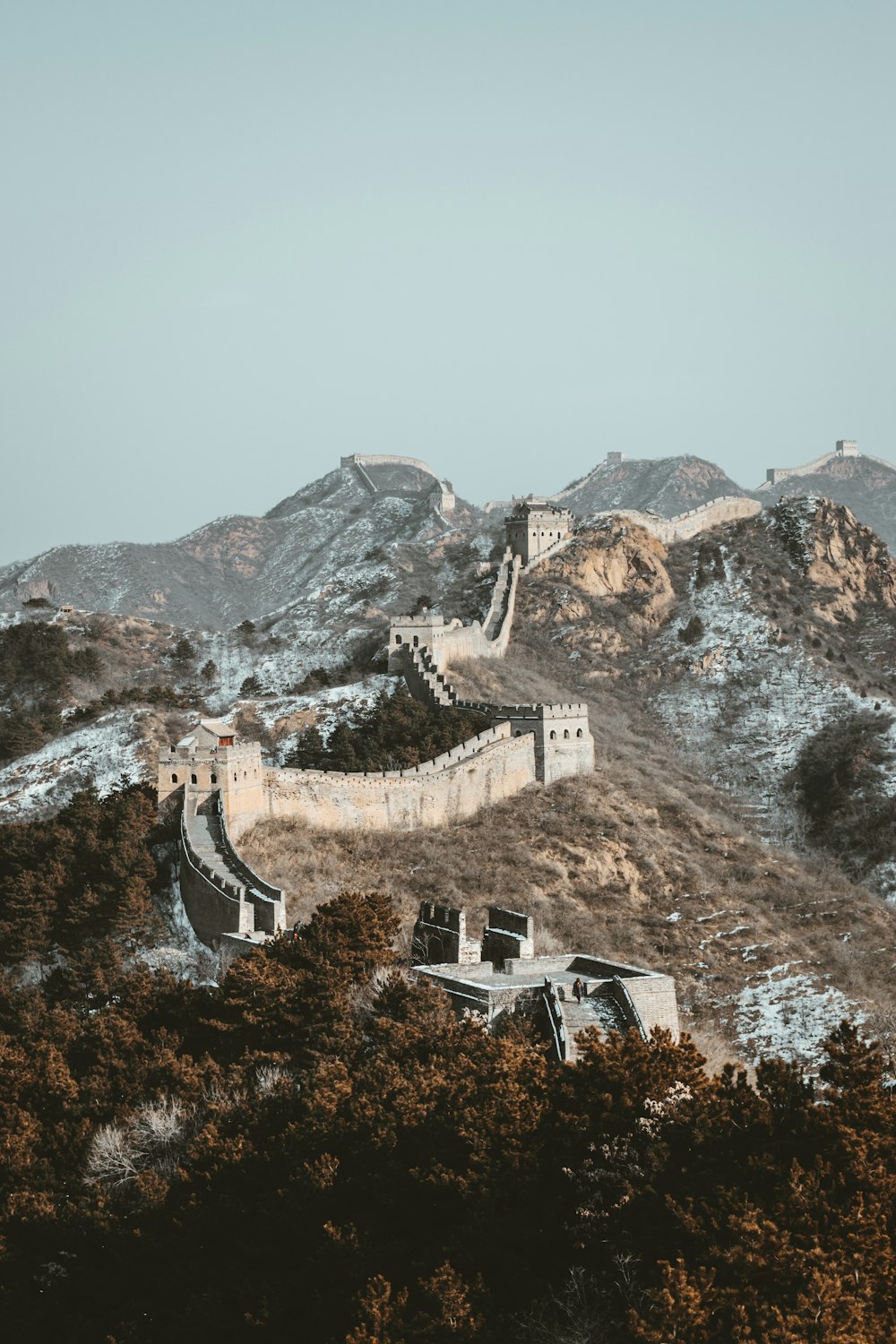
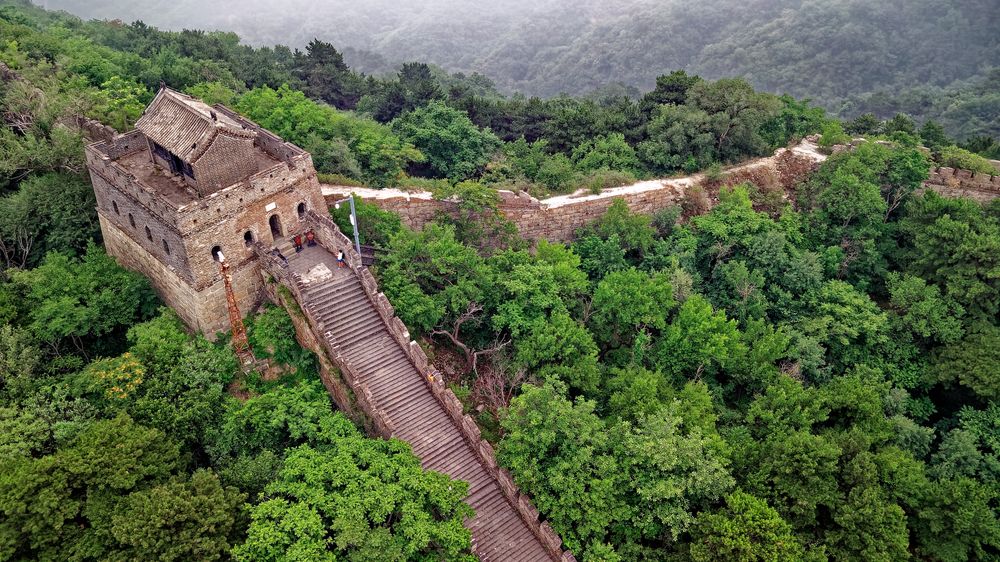
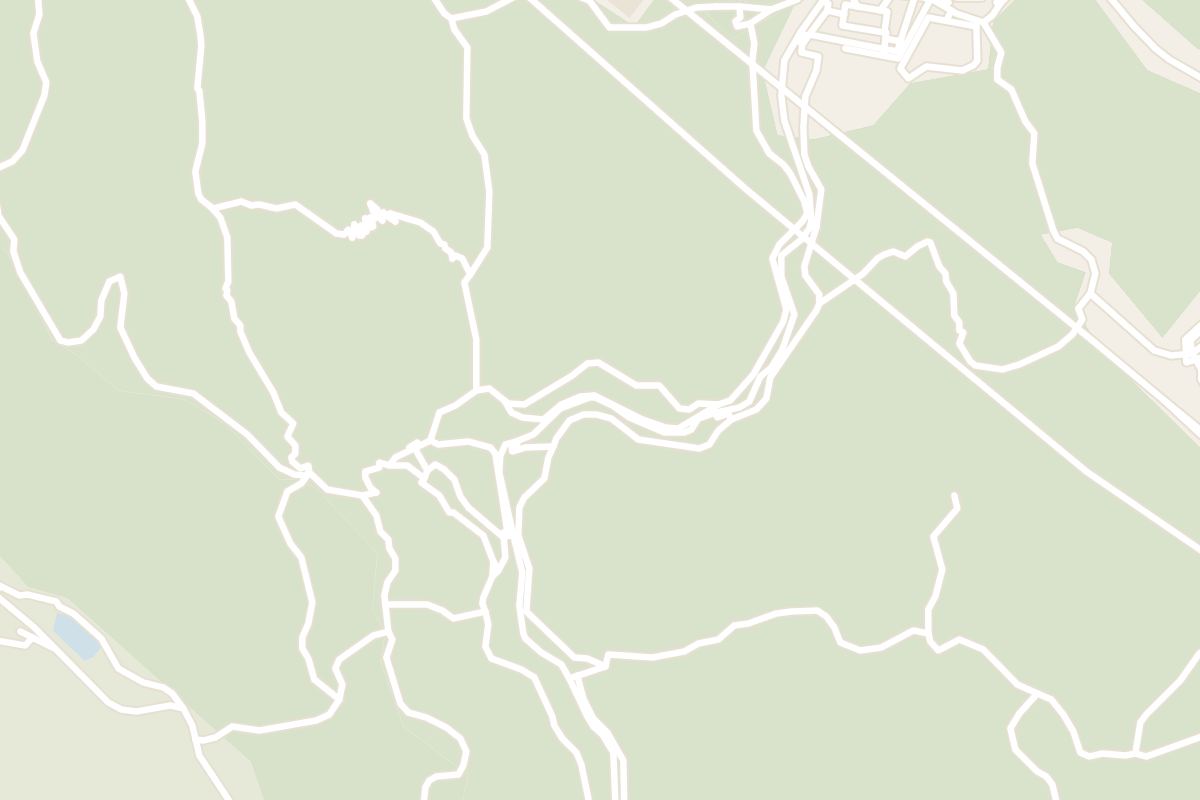
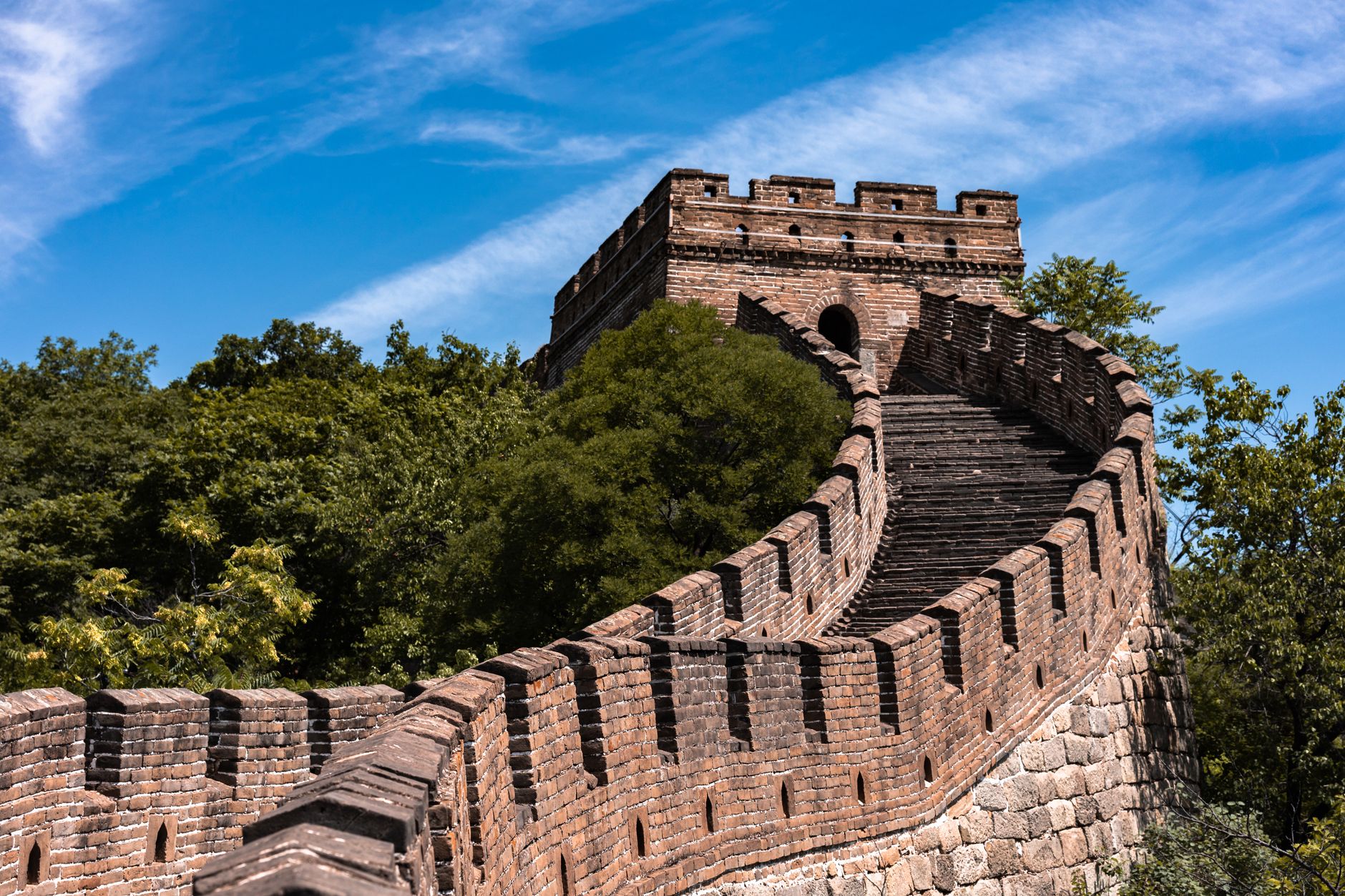
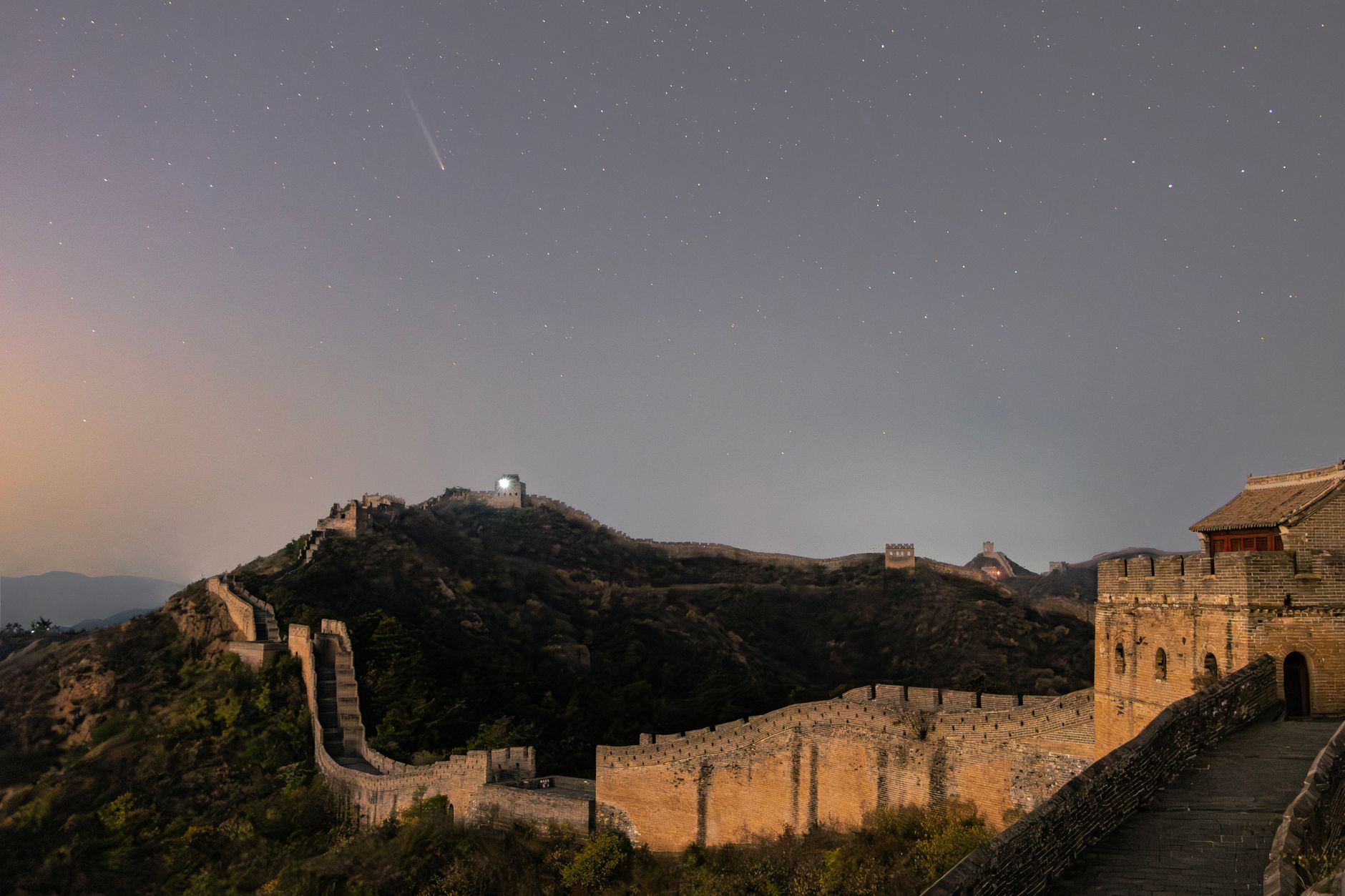
That version is Jinshanling. It runs about 10.5 kilometres along a ridge roughly 140 kilometres northeast of the city, in the Yanshan mountains near the Hebei border, and it carries 67 watchtowers, five passes and three beacon towers. The tower count is the number to hold on to. At about one every 150 metres, the density is far higher than anything on the tourist circuit, and it gives the section its profile: from a distance the ridgeline reads as a row of teeth. Roughly the middle of it has been restored. The rest has been left alone, and crossing from one into the other in a single morning is the entire argument for coming.
The wall here is Ming, and it was built twice. The first line went up between about 1368 and 1389, in the opening decades of the dynasty, under the general Xu Da. What visitors actually walk was raised on top of that in 1567 and 1570 by Qi Jiguang, the commander who spent the 1560s reorganising the northern defences after a career fighting pirates on the southeast coast. Qi's wall is the ambitious one: thicker, taller, more heavily towered, and designed by a man who had thought carefully about what a garrison does when the enemy is already up on the parapet.
His answer is still standing, and it is the strangest thing at Jinshanling. Set across the walkway at right angles to the direction of travel are what the Chinese sources call obstacle walls, or barrier walls: partitions two to three metres high and a metre and a half to two metres thick, pierced with observation slots and shooting holes. More than ten of them are packed into a single 500 metre stretch. They were built on the assumption that the outer parapet would eventually be breached, and that when it was, the defenders would need somewhere to fight from while giving ground tower by tower. Nowhere else on the accessible wall are they concentrated like this.
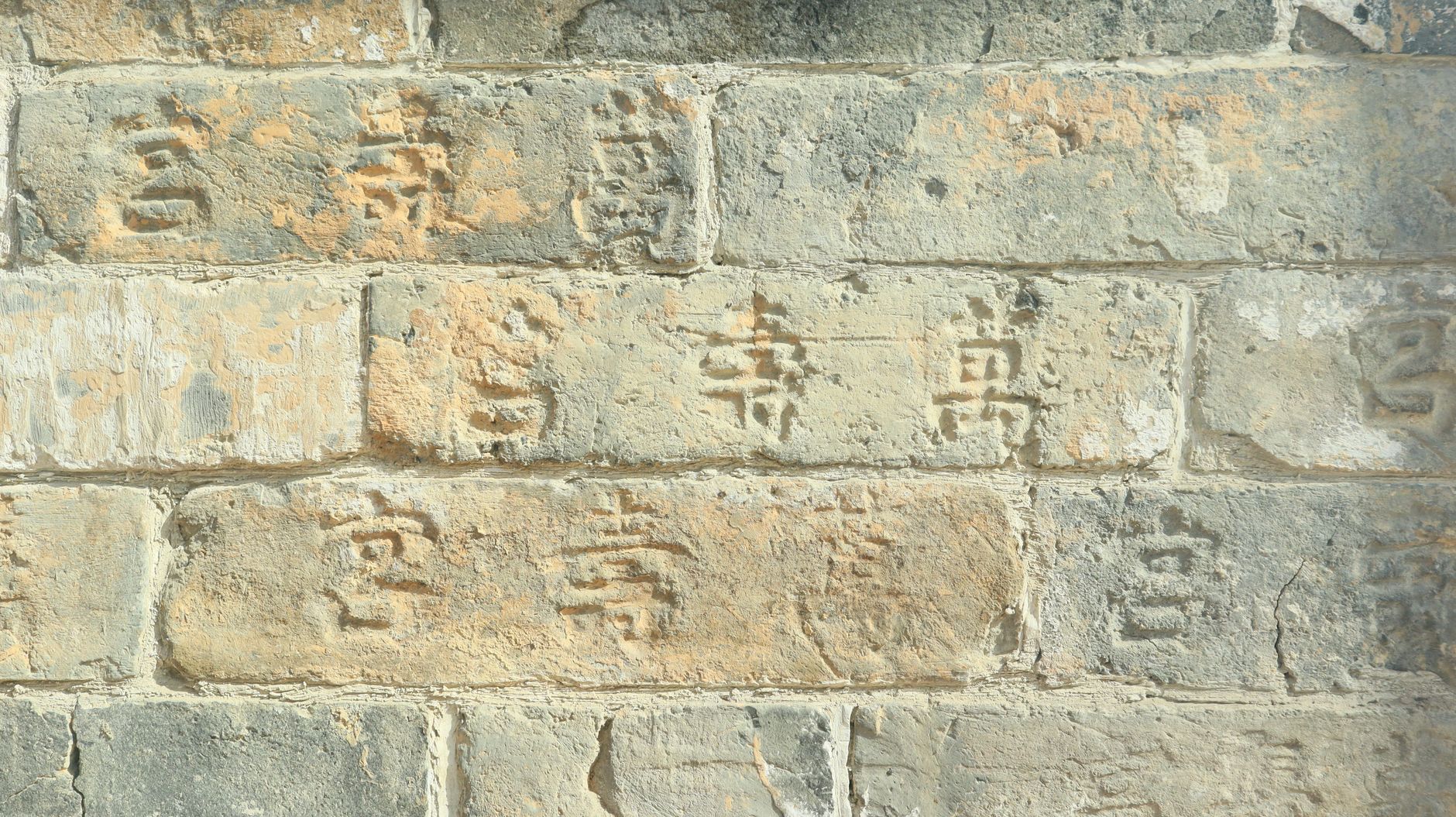
The second peculiarity is easier to walk past and harder to forget. A great many of the bricks are stamped. The inscriptions record the military unit that made them and the year, in the manner of "Built by the Left Camp of Shandong in the fifth year of Wanli", which turns a fortification into an accounting record and, in passing, into a signature. Six centuries of weather have worn most of them shallow, but they are there in the parapet and inside the towers, and once a visitor knows to look for them the wall stops being anonymous.
The wall is signed. Each brick records the camp that fired it and the year it was made.
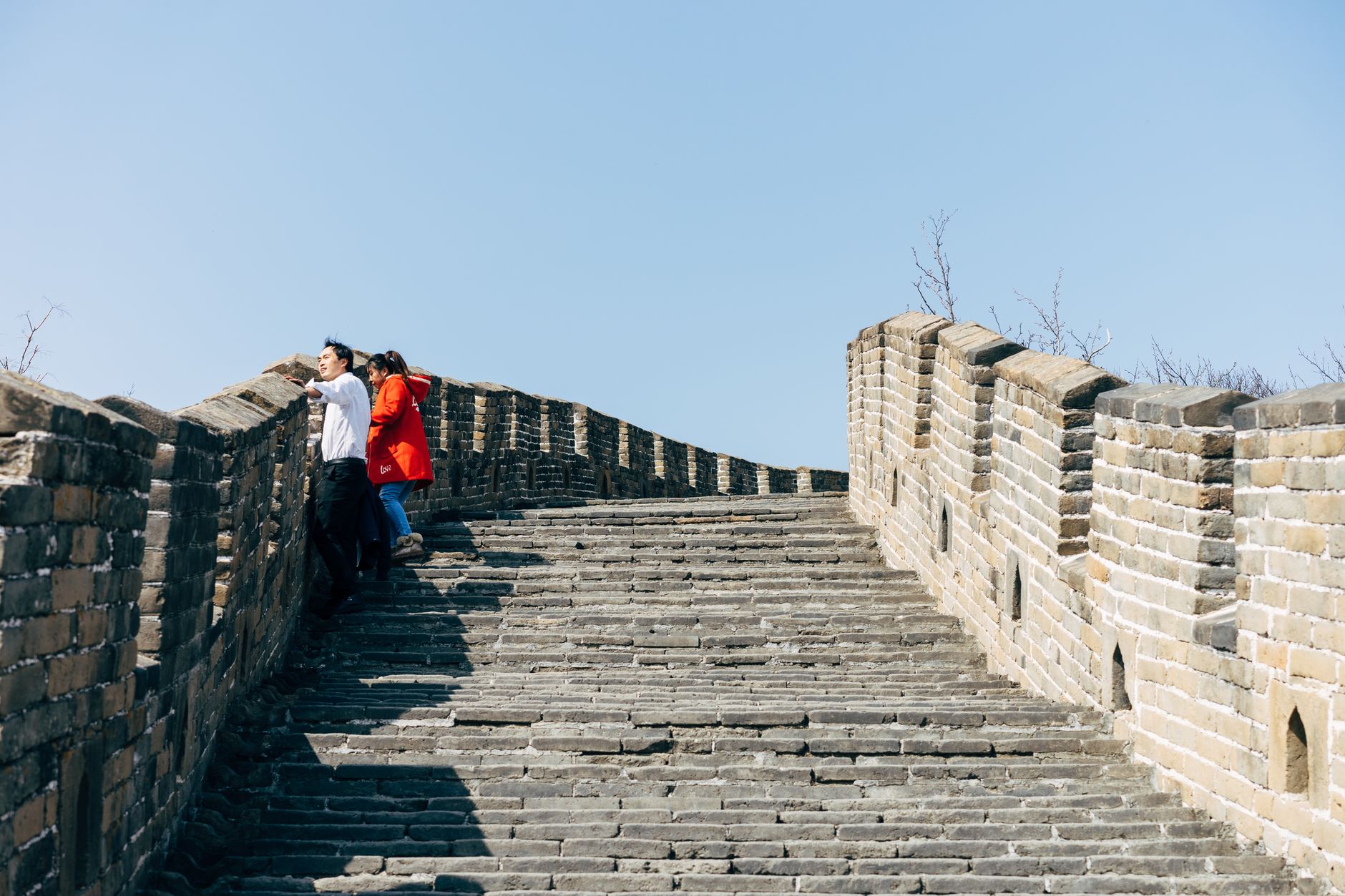
The standard traverse runs west to east, about seven kilometres and three and a half to four hours for a reasonably fit walker, though the distance understates the work. Great Wall mileage is vertical. The steps were cut for defence rather than for legs, and they come in irregular runs of a few centimetres or half a metre with no rhythm to settle into. The central restored section is manageable in trainers, and the loose ground begins east of it. Proper boots and dry weather are the minimum on the run down toward Simatai West and the East Five-Window Tower, where the surface turns to brick and rubble along a ridge with drops on both sides and nothing to hold.
The other thing to carry is water. There is effectively no shop on the wall, which is part of the appeal and a problem in August, when the Hebei hills run to forty degrees with the humidity to match. Three or four bottles a person is the usual advice, plus food, and there is no shame in taking the cable car: it lifts walkers up to the Zhuanduokou area and removes about forty five minutes of uphill approach that adds nothing to the day.
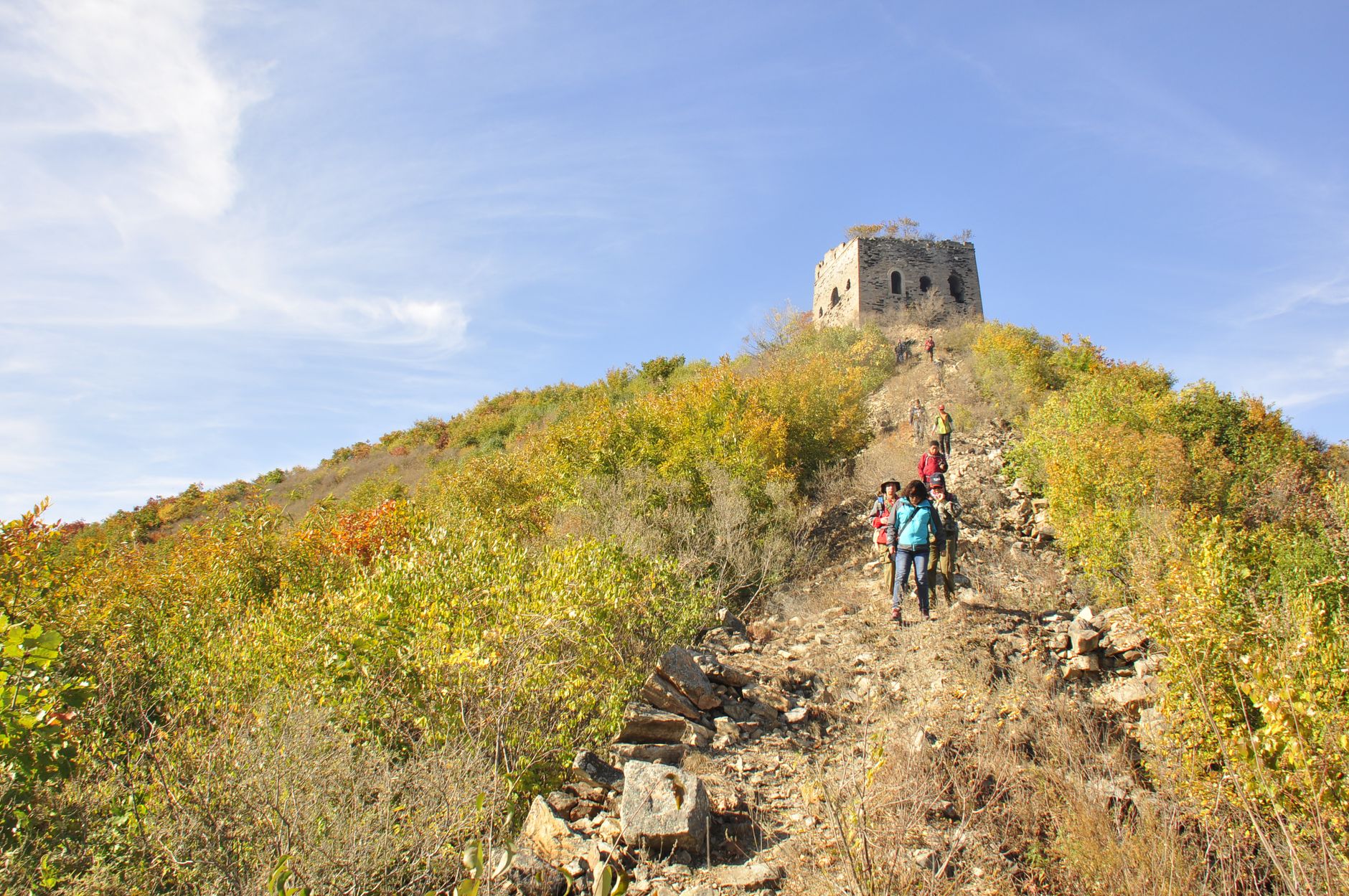
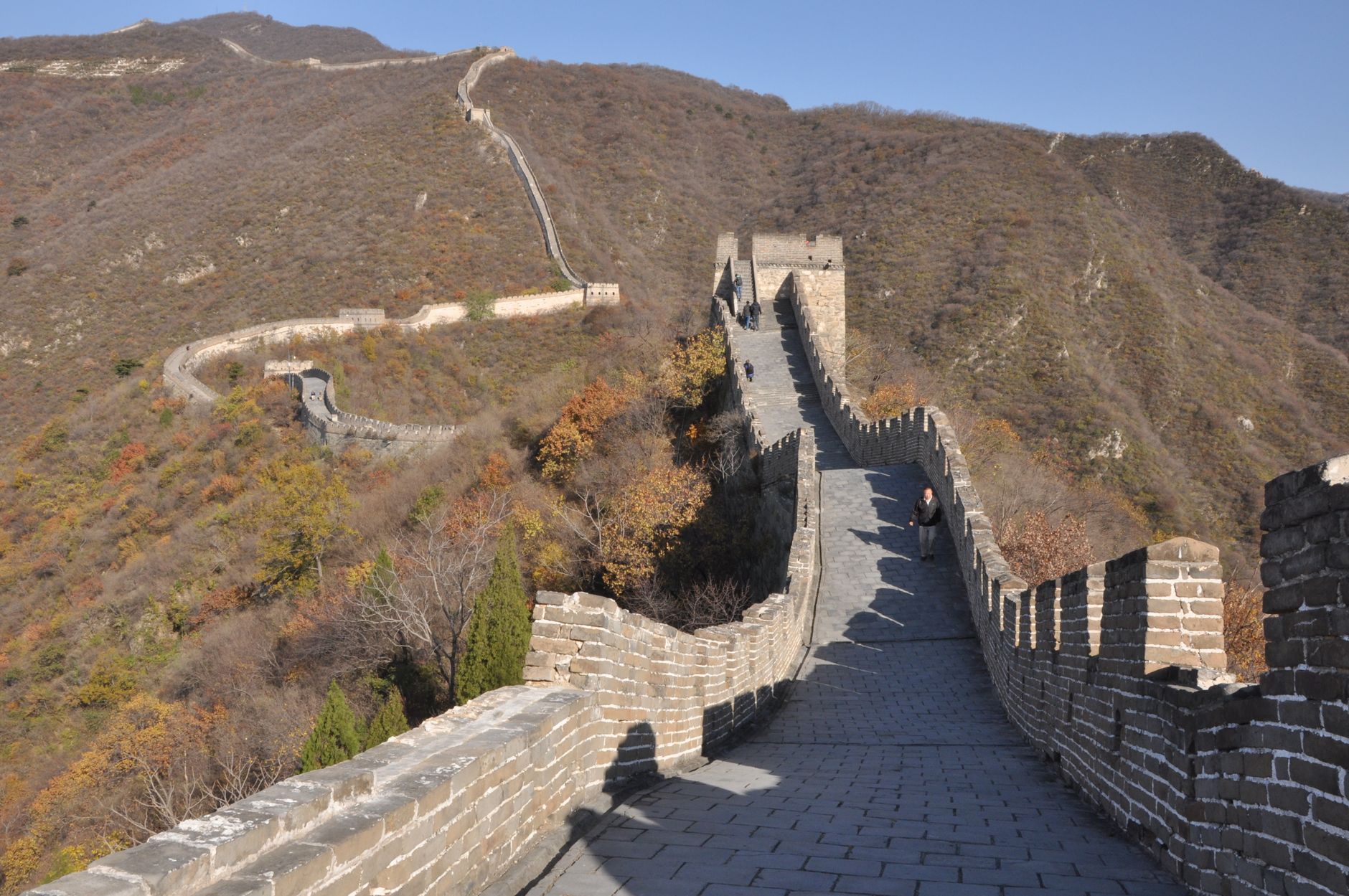
Season decides most of the rest. Late April and May bring blossom below the ramparts and comfortable walking temperatures. September to early November brings the foliage, with October the peak. A rare winter snowfall produces the effect Chinese photographers call the silver dragon, along with conditions that are genuinely punishing on an exposed ridge. Two windows are worth avoiding outright: the first week of October, when Golden Week jams every road, gate and train in the country, and the middle of a summer day.
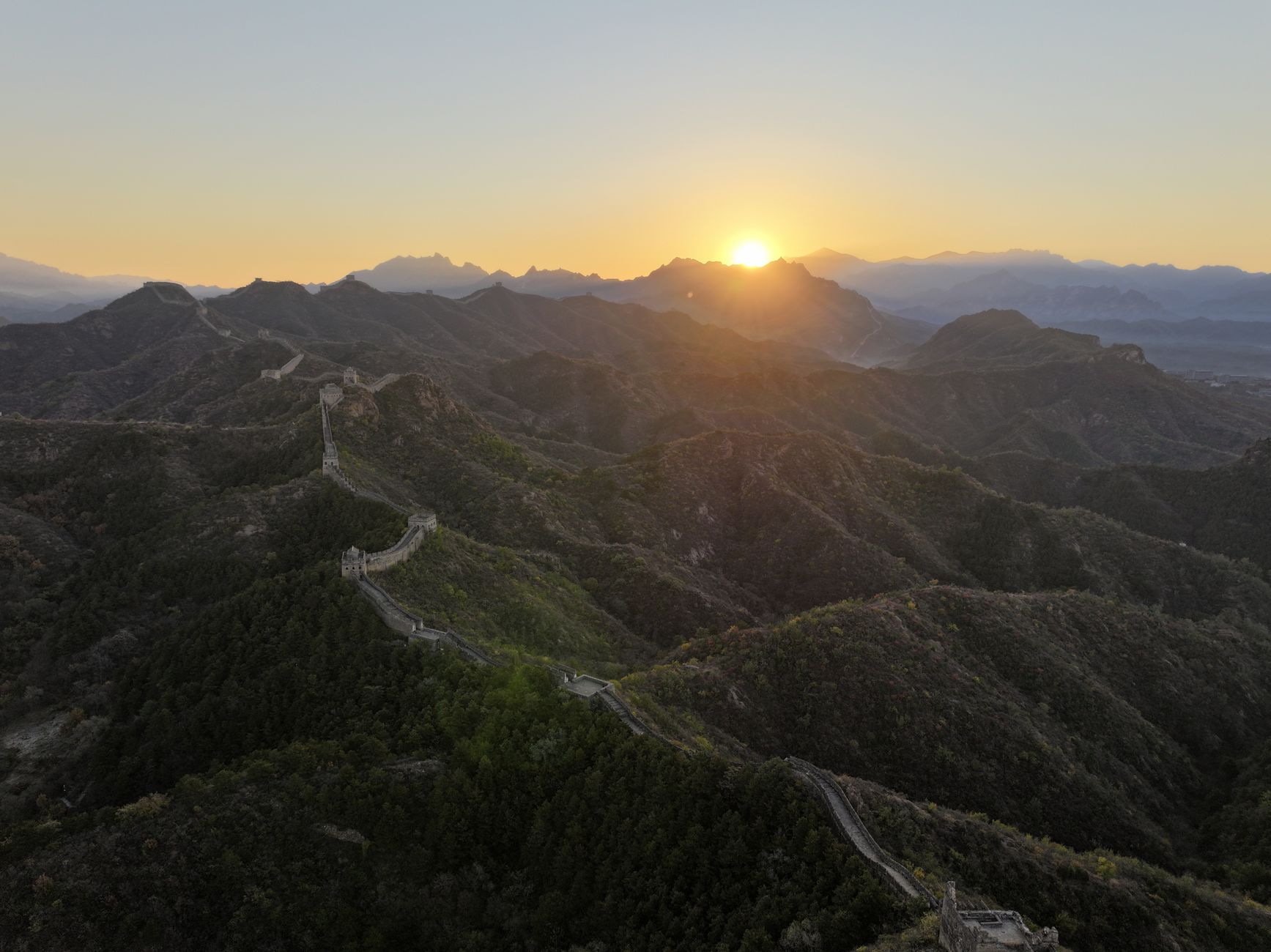
As for the hour, this is a sunrise section. The General Tower is the classic vantage, and the light that photographers want arrives about twenty minutes before the sun does. Peak-season gates open around 06:30 and off-season around 08:30, but a middle gate can open as early as 04:00 specifically for sunrise. That is worth confirming when buying the ticket, since the alternative is a locked barrier in the dark.
There is no subway to Jinshanling and no straightforward bus. Four approaches work. A train toward Gubeikou followed by a taxi or Didi to the gate is the cheapest and the least dependable at dawn. A chartered car from Beijing takes two to two and a half hours and is the only option that reliably delivers a visitor to the wall before the sun. A seasonal tourist bus runs from the Dongzhimen area on a schedule that suits neither sunrise nor a long traverse. An organised small-group hike is the simplest way to walk the full west-to-east line including the Simatai West extension, because it solves the transfer at both ends.
Anyone doing this properly sleeps at the foot of it. Jinshanling adjoins Simatai to the east, and Simatai is the one section of the Great Wall lit after dark. Below it sits Gubei Water Town, a canal resort built from scratch over the past fifteen years at the base of the wall. It is manufactured and makes no secret of it, all reconstructed grey-tile lanes and hotels, from the large Water Town Hotel at the entrance to smaller courtyard places such as the Wuzhenhui boutique. It is also warm, comfortable and two hours closer to a pre-dawn start than Beijing. Travellers who want the unpolished version stay a few kilometres west in Gubeikou village instead, where the wall runs ungated behind the houses and families let rooms.
One thing to know before setting out. The full through-hike from Jinshanling into the main Simatai zone has been restricted for conservation, and the walk now finishes at Simatai West. That restriction is a reminder of what the unrestored wall actually is. Every winter takes a little more of the eastern towers, and the rubble underfoot is the wall itself, coming apart at the rate it has been coming apart for four hundred years. Badaling will look much the same in 2050. Jinshanling will not, which is the honest reason to make the drive this year and not put it off.