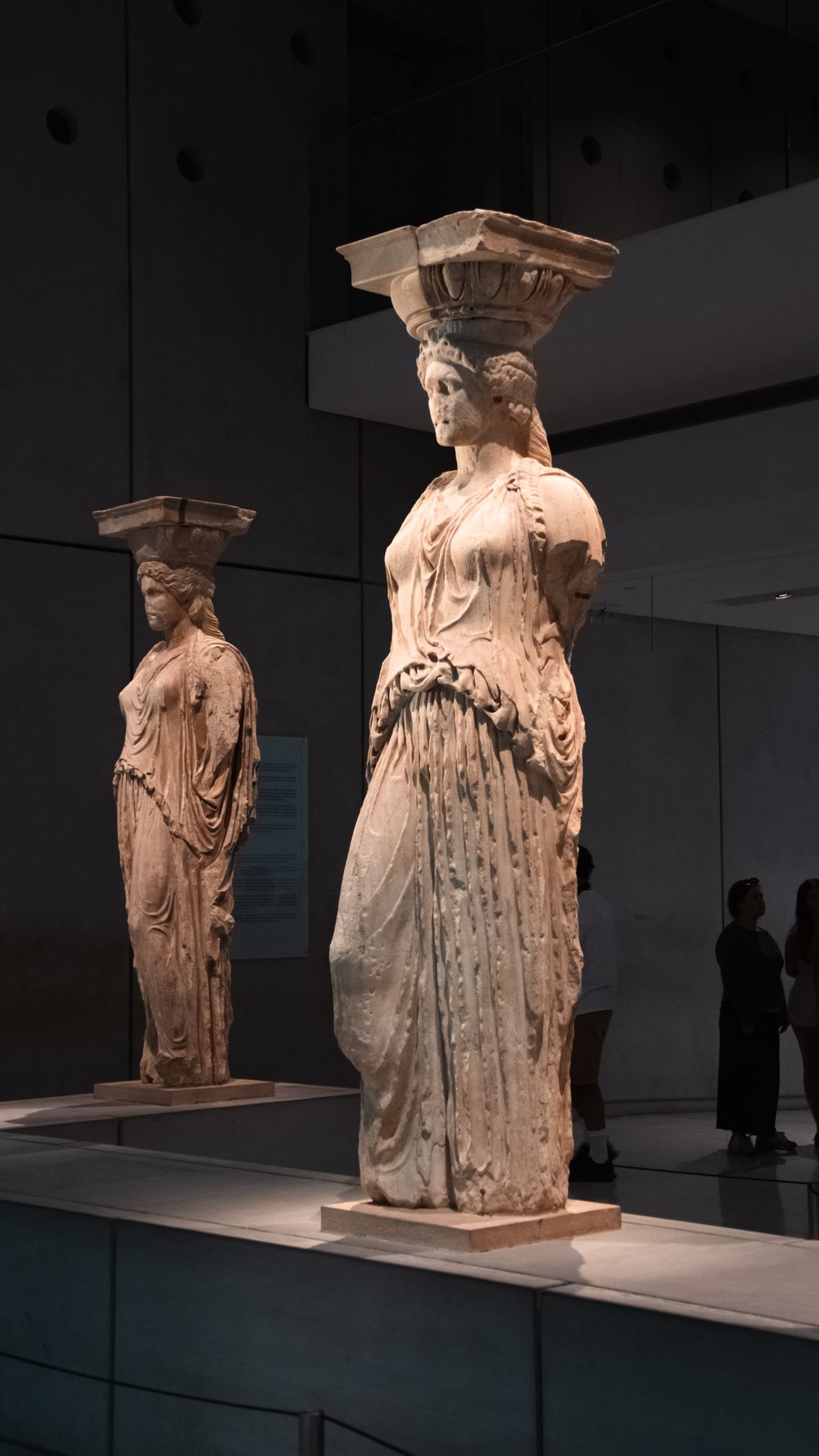
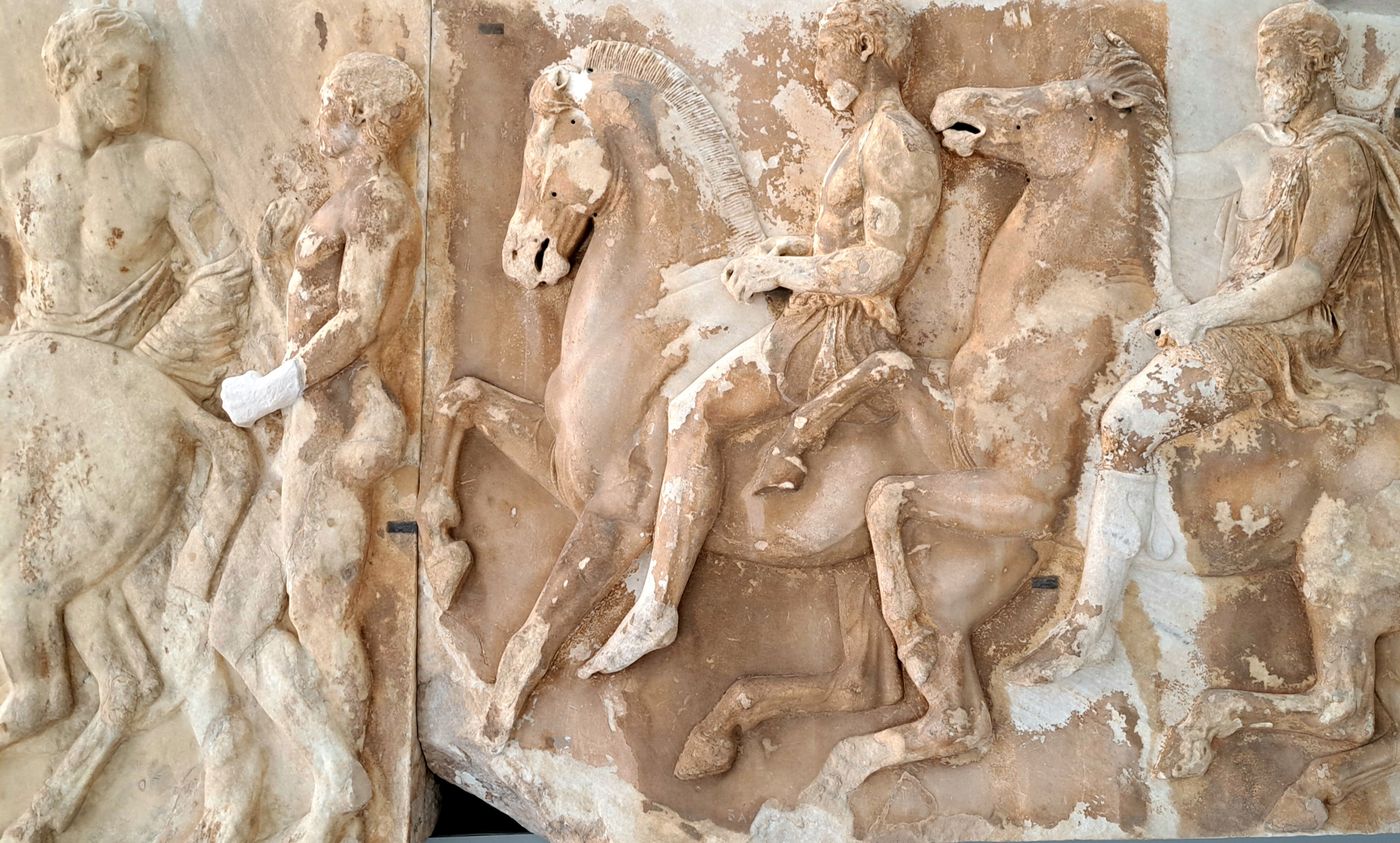
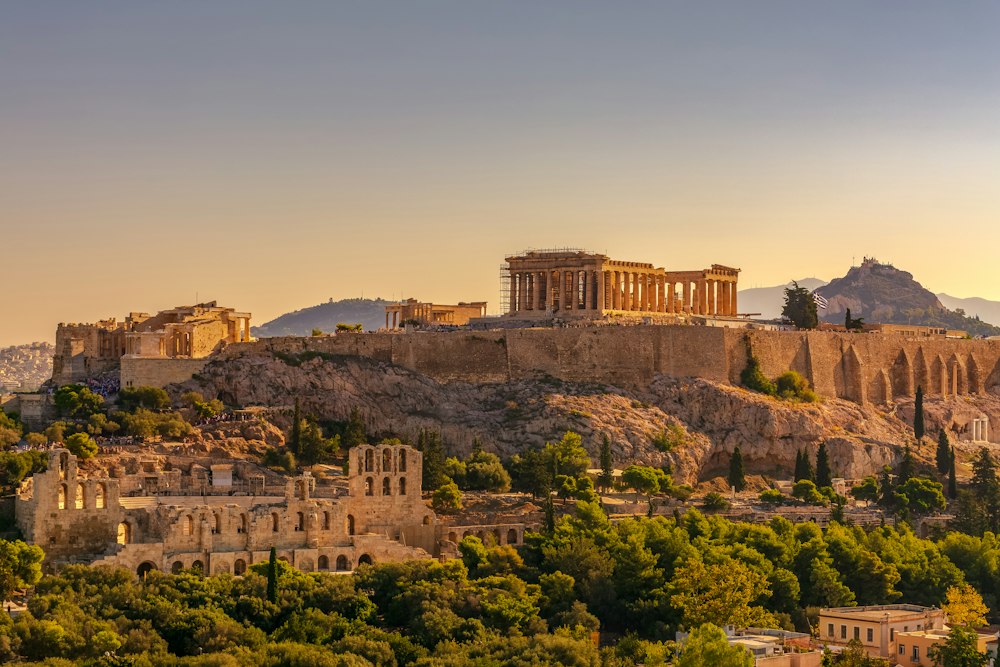
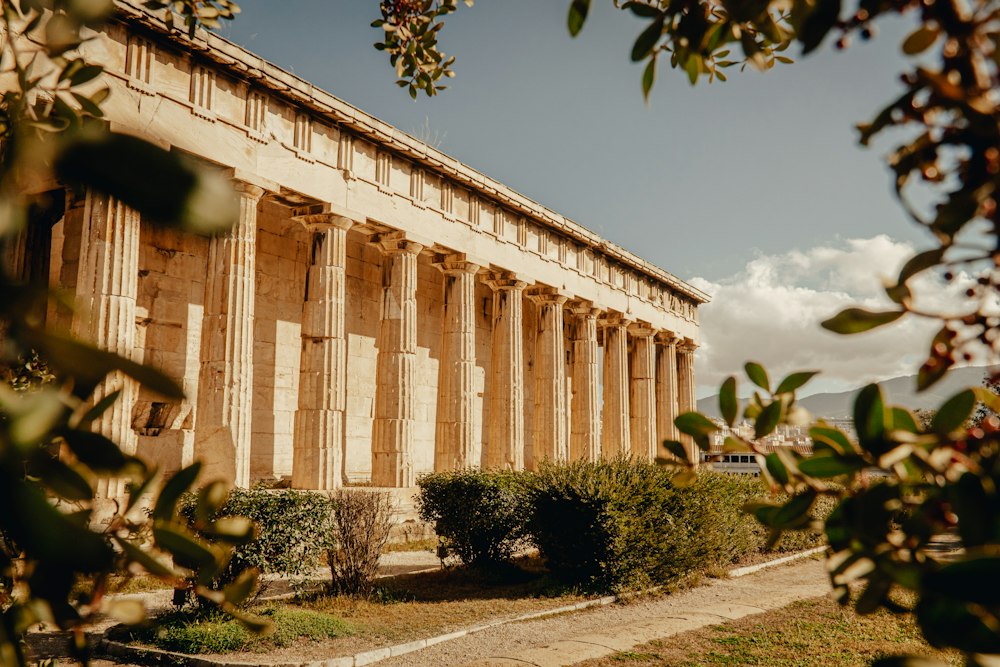
Sculptures from the hill above, brought indoors: the Parthenon frieze in its own order on a glass top floor facing the temple, and the original Erechtheion maidens whose copies stand on the rock.
What is here, and what isn't
Everything in the Acropolis Museum came from one hill and its slopes: the temple sculptures, the painted statues of young women offered to Athena, and the pots and small offerings left in the sanctuaries below. Expect marble more than anything else, some of it still carrying traces of its original paint.
From the slopes to the Parthenon
- 560 BCMoschophoros
- 530 BCPeplos Kore
- 480 BCKritios Boy
- 440s BCParthenon frieze
- 420s BCCaryatids
- LaterRoman and early Christian Acropolis
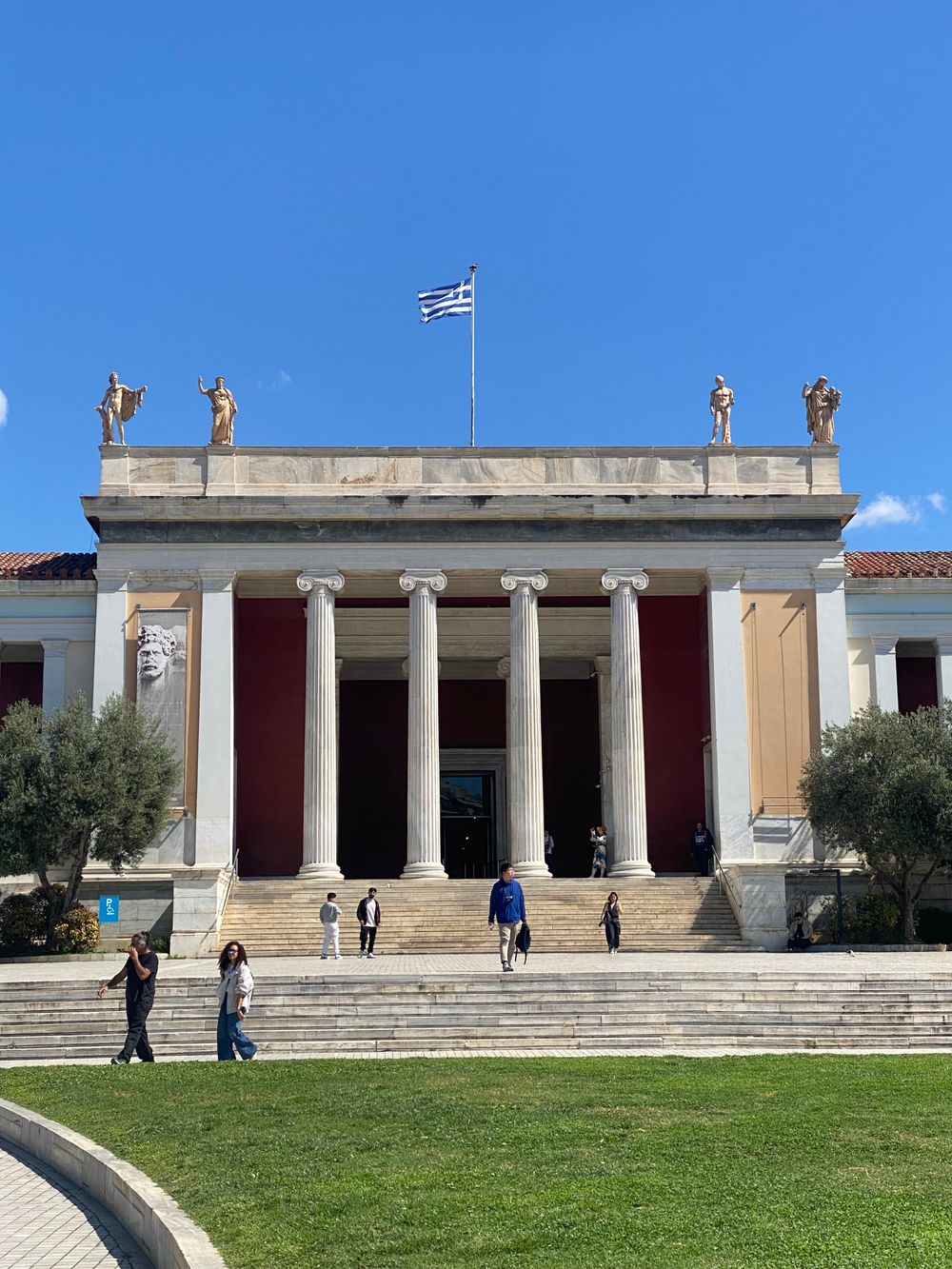
For the rest of ancient Greece, cross the centre to the National Archaeological Museum.
How the museum is organised
The building is a climb. You come in from the Dionysiou Areopagitou pedestrian street over glass panels that show the excavation below, and the Gallery of the Slopes rises from the ticket gates as a gentle glass-floored ramp.
The first floor is the Archaic Gallery, one big hall where the korai and kouroi stand loose like a crowd. Photographs and video are banned in it, to protect the paint. The Caryatids stand on a balcony on the same floor, on the west side.
The second floor holds the restaurant. The third floor is the Parthenon Gallery, turned on the building so the frieze faces the same way it did on the temple, about 300 metres away through the glass.
When to come
Friday evening is the time to come: the galleries stay open late and the Parthenon is lit across the way. In summer, see the hill before the midday heat and come down here afterwards; the south gate of the Acropolis is a few minutes up the same street.
The excavation under the building shuts at 5pm every day in winter, earlier than the galleries on Fridays and weekends, so on a late visit see it first. Then follow the ramp up and finish at the top floor.
What you came for
The sculptures the museum is known for, each with its floor, why it matters, and how to see it well.
The Caryatids
The Erechtheion porch, Athens, about 420 to 406 BC
Caryatid balconyFirst floor
Five of the six marble maidens who held up the porch of the Erechtheion, brought indoors and replaced on the hill by copies; the sixth was taken to London by Lord Elgin, and her place here is left empty. They stand on a balcony you can walk all the way round. Do it, because their braided hair shows only from behind.
The Parthenon frieze
Athens, the workshop of Phidias, about 443 to 437 BC
Parthenon GalleryThird floor
The carved procession that ran round the top of the Parthenon's walls, hung here in its original order round a core the size of the temple's inner room, with the temple itself in the window. The originals are the colour of old marble; the pieces held in London are white plaster casts. Start at the south-west corner, where the procession sets off, and walk it all the way round.
Know before you goBuy online only on the museum's own site, theacropolismuseum.gr, because a fraudulent lookalike ending in .org also sells tickets. Reduced and free tickets are issued only at the ticket desk, so bring proof of eligibility.