 Submit a photo
Ninety seconds on Meteora
Each of the six keeps its own hours. On the municipal timetable, summer opening runs from 9am or 9.30am until between 3pm and 5.30pm. In winter Great Meteoron and Rousanou close at 2pm. St Stephen closes for a midday break all year, and Rousanou opens at 10.30am on Sundays.
Great Meteoron closes on Tuesdays, Rousanou on Wednesdays, Holy Trinity on Thursdays, Varlaam on Fridays and St Stephen on Mondays. In winter Great Meteoron also closes on Wednesdays and Thursdays. St Nicholas Anapafsas usually closes on Fridays.
Visitors must be modestly dressed. Sleeveless tops and shorts are not allowed, for men or for women, and women must also wear a skirt. A skirt can be borrowed at the monastery entrance for the length of the visit.
Six monasteries on top of Meteora's sandstone pillars still let you in, each on its own rock. Plan the day around which ones are open, then link them by road or on the old paths.
Each monastery open to visitors stands on a pillar of its own. From the lay-bys along the road you see two or three at once, their walls built out to the very edge of the rock.
Great Meteoron is the oldest and the largest, founded in the 14th century by a monk named Athanasios. On the carved stairway, just before the gate and on your left, is the cave where he lived alone before he built on the summit. Inside, the sacristy holds the skulls of the monks who lived there over the centuries.
Varlaam, its near neighbour, has a courtyard that looks across the valley to Rousanou. St Nicholas Anapafsas keeps 16th-century frescoes of Bible scenes in its chapel and has a rooftop terrace. Holy Trinity, near the southern end, is reached by a long rock-cut stair, with a view down the valley from the top.
Two signposted roads rise to the monasteries, one from Kastraki and one from the Trikala side of Kalabaka. The loop along the cliff tops is about a 15-minute drive end to end, slower behind coaches on the hairpins.
Start at the northern end with Great Meteoron and Varlaam, the two largest houses, a few minutes apart. Rousanou stands in the middle and St Nicholas Anapafsas just above Kastraki, while Holy Trinity and St Stephen hold the southern end above Kalabaka.
Two to four monasteries and a viewpoint or two fill a day. On foot, a circuit of about 16 kilometres from Kastraki or Kalabaka links them by forest paths and stretches of the road.
There are no cafés or restaurants up on the rocks, so carry water and a snack, and save the big meal for the villages below. Every monastery has public toilets.
Without a car, take the bus. From mid-March to the end of November it runs a route past every monastery, with its timetable and three stops posted by the municipal tourist office. It saves the walk up and leaves your legs for the stairs.
Explore the rest of Kalabaka
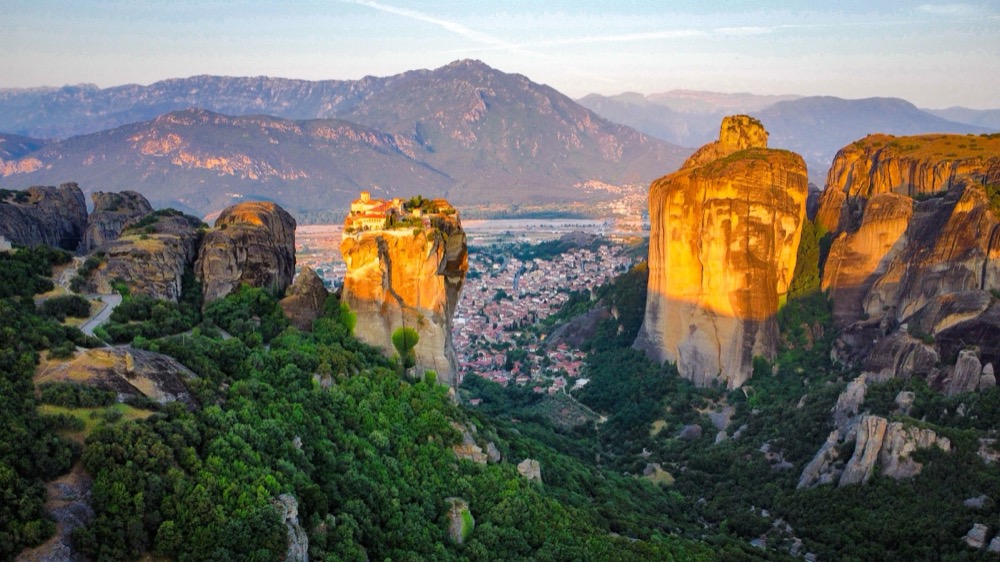
Kalabaka is a plain market town on the edge of the Thessalian plain, and directly behind its last houses a forest of sandstone pillars…
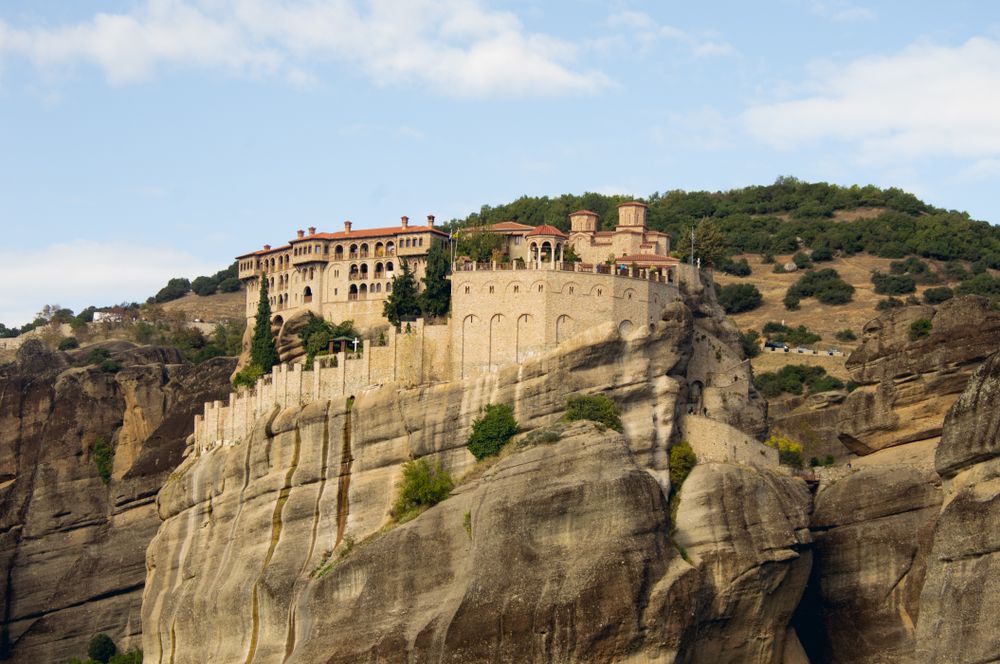
Built in 1517 on the pillar next to Great Meteoron, after twenty-two years spent hauling materials to the top. The rope net and wooden…
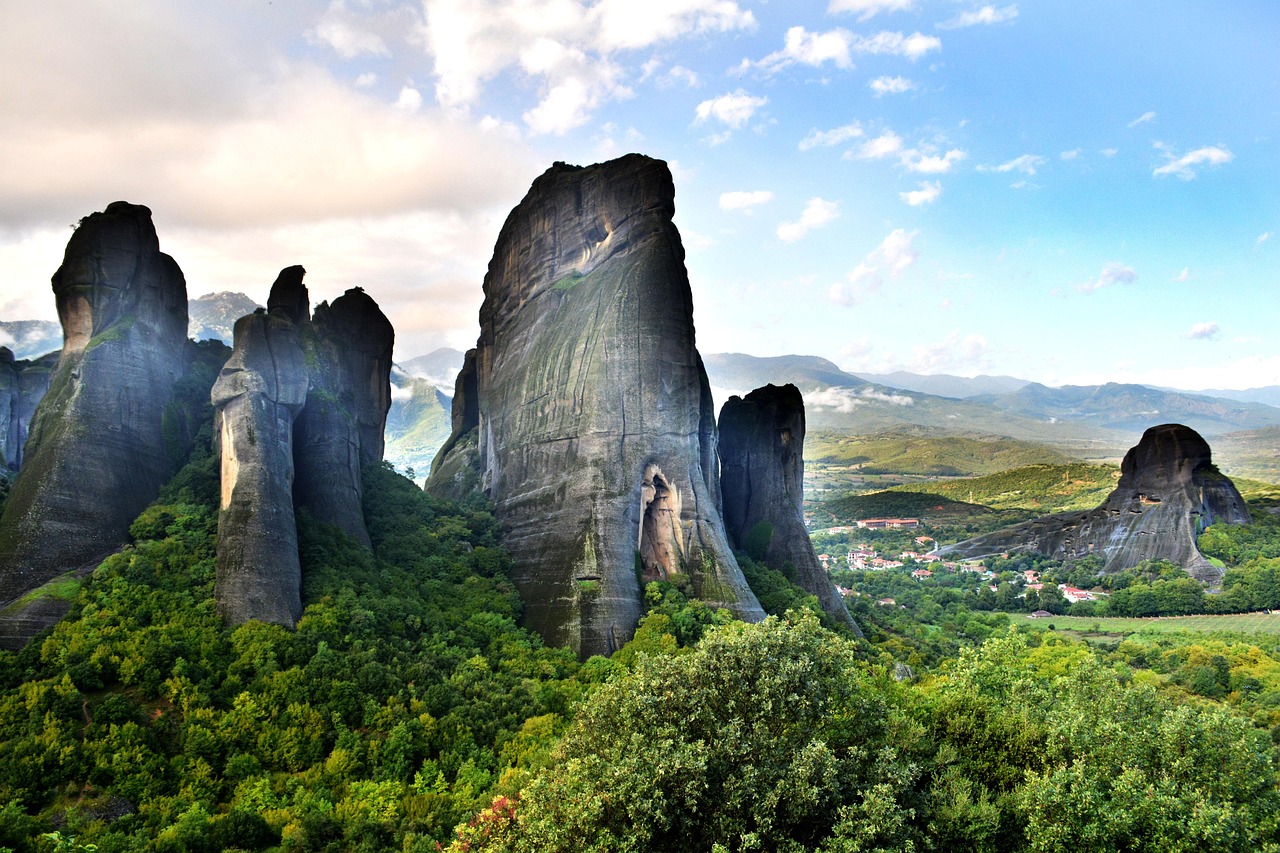
A village tucked against the foot of the rocks a short way north of Kalabaka, closer to the monasteries and quieter at night. The Doupiani…
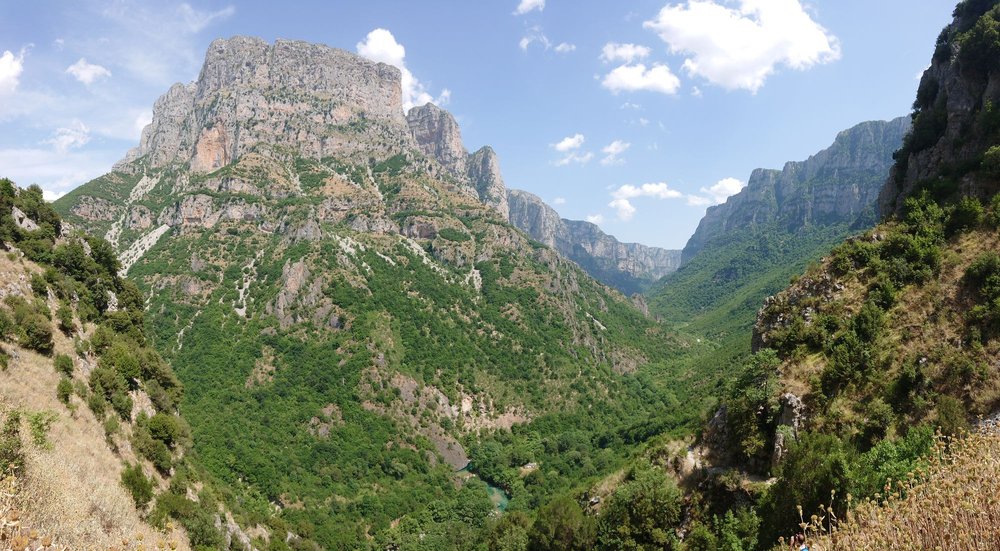
A limestone gorge cut by the Voidomatis river, up to 1,350 metres deep, which Guinness lists as the deepest in the world for its width. The…
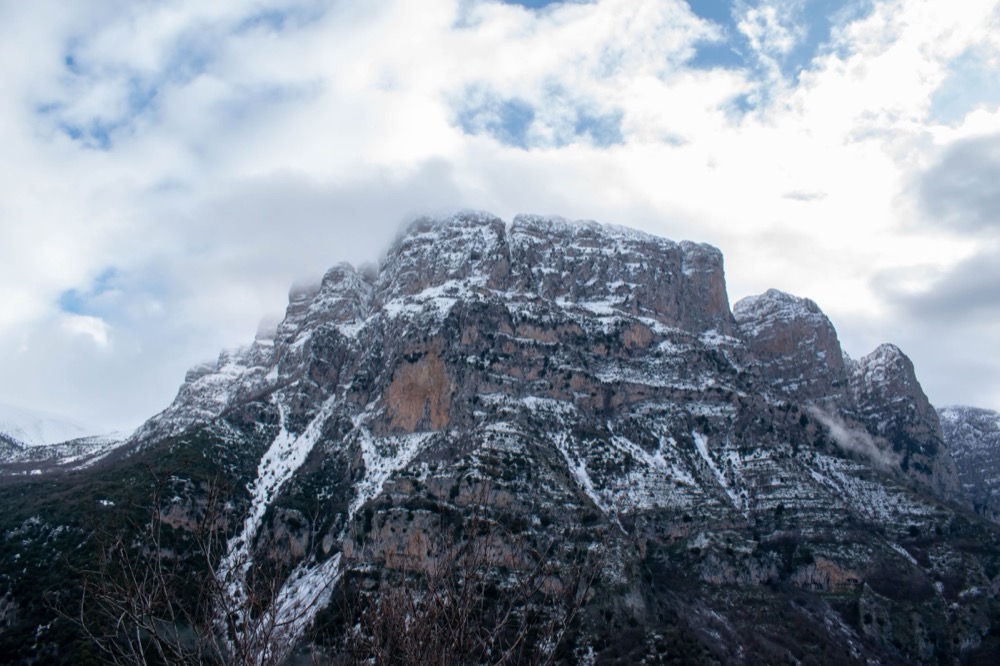
Two stone villages sit under the grey cliffs of the Astraka towers at the northern mouth of the Vikos Gorge, linked by a short road and a…
The official pages this guide was checked against.
Last updated