 Submit a photo
Ninety seconds on Hvalnes and Eystrahorn
Standing on the black pebble spit at Hvalnes, you have an orange lighthouse in front of you and the sheer gabbro wall of Eystrahorn straight behind it.
Two things share the frame at Hvalnes. The lighthouse is a bright orange concrete tower, 11.5 metres tall, on a small rocky promontory over the open ocean. Hvalnes means Whale Point, and the headland is a known spot for watching whales.
The light has warned ships off this rocky stretch since 1954. It runs itself now, flashing two white lights every 20 seconds.
Behind it rises Eystrahorn, about 756 metres of gabbro, a rock that formed when basalt magma cooled underground instead of erupting. Its slopes are very steep, and that sharp profile against the sky is why landscape photographers stop here.
Look down as well as up: the rock along this coast carries intricate patterns, easy to walk straight over on the way to the view. Some photographers leave the tower out of the frame altogether: it is bright rather than handsome, and it pulls the eye away from the mountain.
Open ground runs from the car park to the point, so the visit starts as you step out of the car. Walk to the lighthouse first. You cannot go inside, but you can walk right up to it and round the rocks of the point.
Then drop down to the beach. Smooth dark pebbles crunch under your boots, and the shore runs on for a few kilometres, long enough for a proper walk with gulls overhead.
On the lagoon side, look for whooper swans. Seals sometimes haul out on the offshore rocks; enjoy them if they appear, but do not plan the stop around them.
For another angle on the mountain, drive on a little. Just past Hvalnes, a few pull-offs let you walk out onto Fauskasandur beach.
Seabirds nest along the cliffs from late April to August, and Arctic terns will dive at you if you stray near a nest, so give nesting ground a wide berth. Keep at least 20 metres from the waterline when the waves look rough.
Carry a windproof layer from the car: this point is often windy, rain can arrive all of a sudden, and the wind is worth checking again as you walk out. Stay off the rocks of the point when they are wet or icy, when crossing them turns dangerous. Eystrahorn is not safe to climb, so admire the mountain from below.
Explore the rest of Höfn
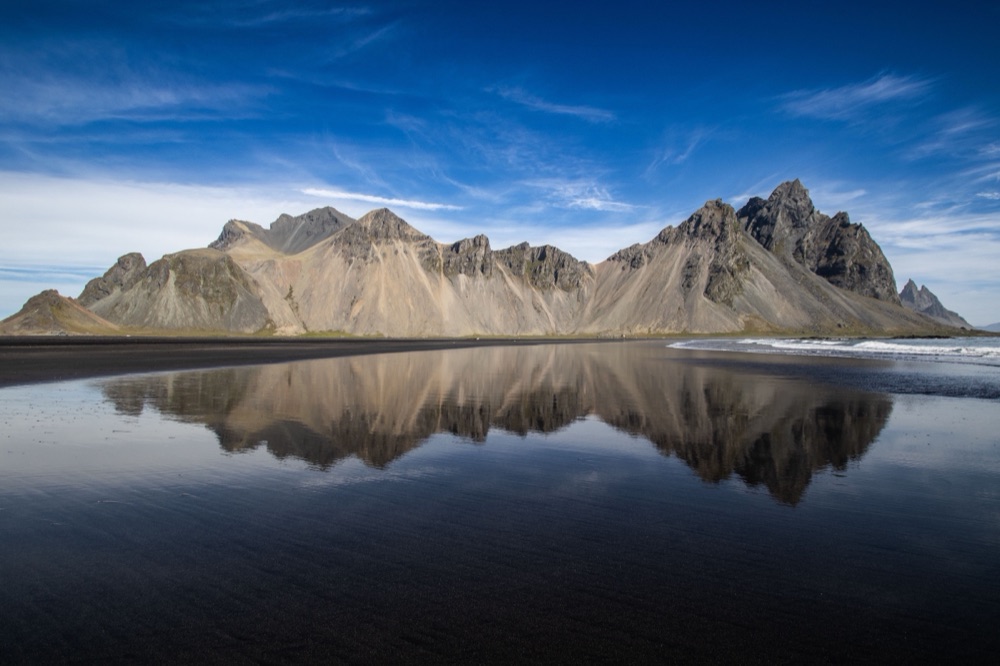
A fishing town of about 1,800 people on a low spit in Hornafjörður, roughly 455 kilometres from Reykjavík on the Ring Road and surrounded…
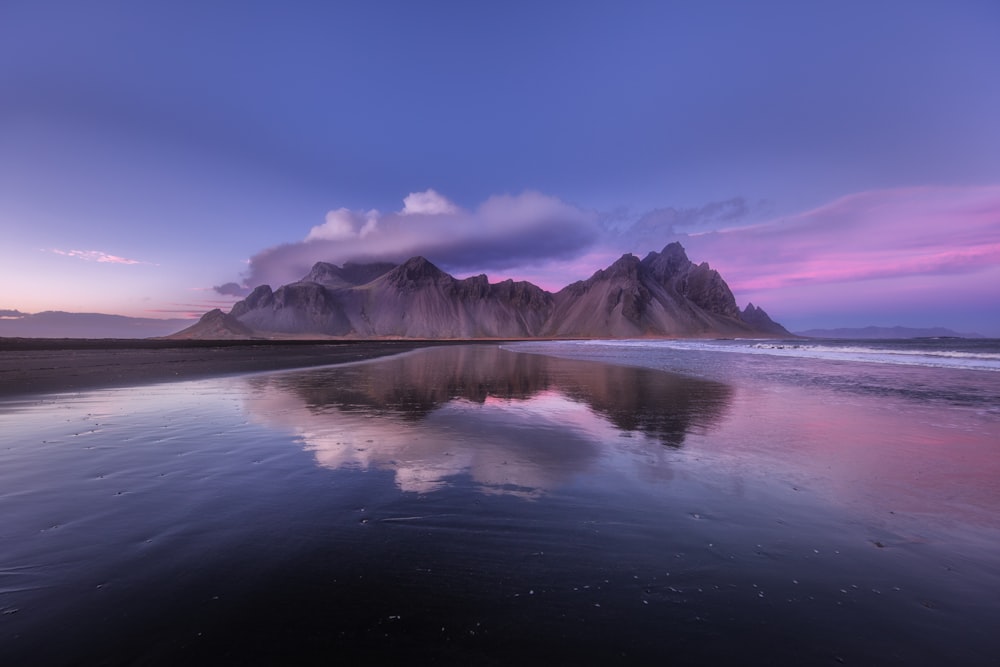
A black sand headland east of Höfn beneath Vestrahorn, a 454-metre gabbro and granophyre mountain rising straight from the shore. The land…
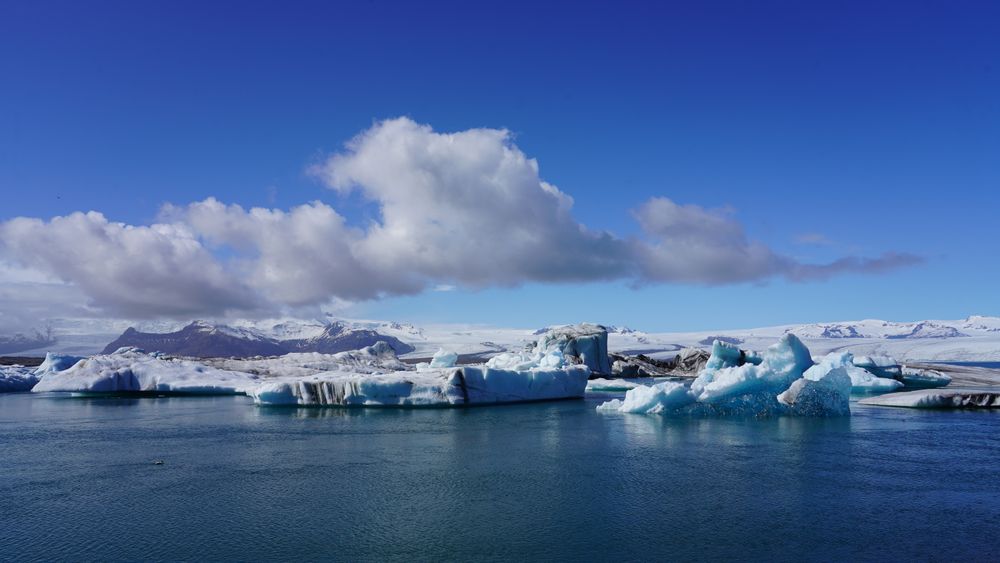
A glacier lagoon beside Route 1 in south-east Iceland, fed by Breiðamerkurjökull, an outlet glacier of Vatnajökull. Icebergs calved from…
Last updated