Ninety seconds on Skaftafell
Half a day is enough for you to walk to the snout of a glacier, a waterfall framed in basalt and a lookout high above the ice, all on trails from one visitor centre.
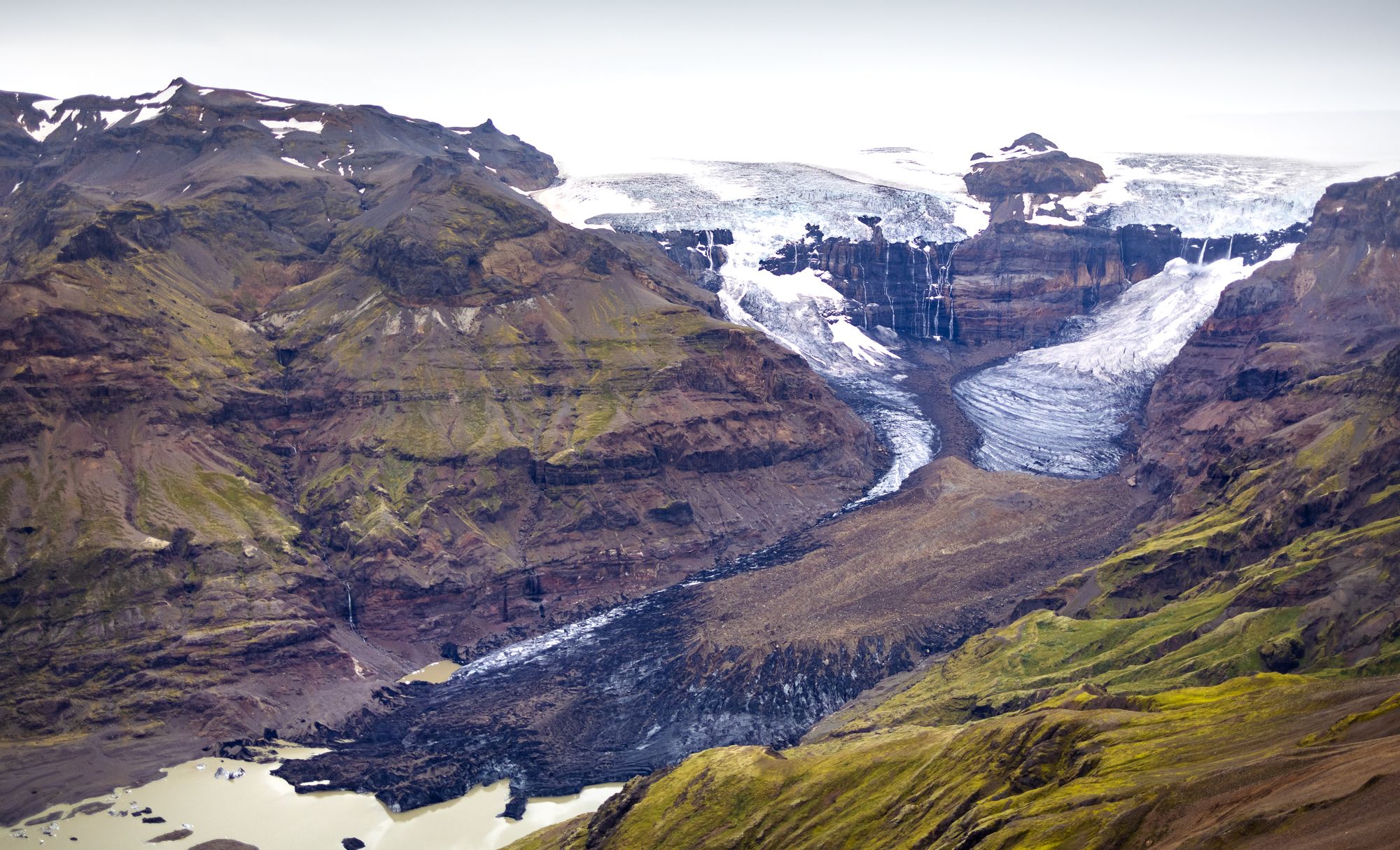
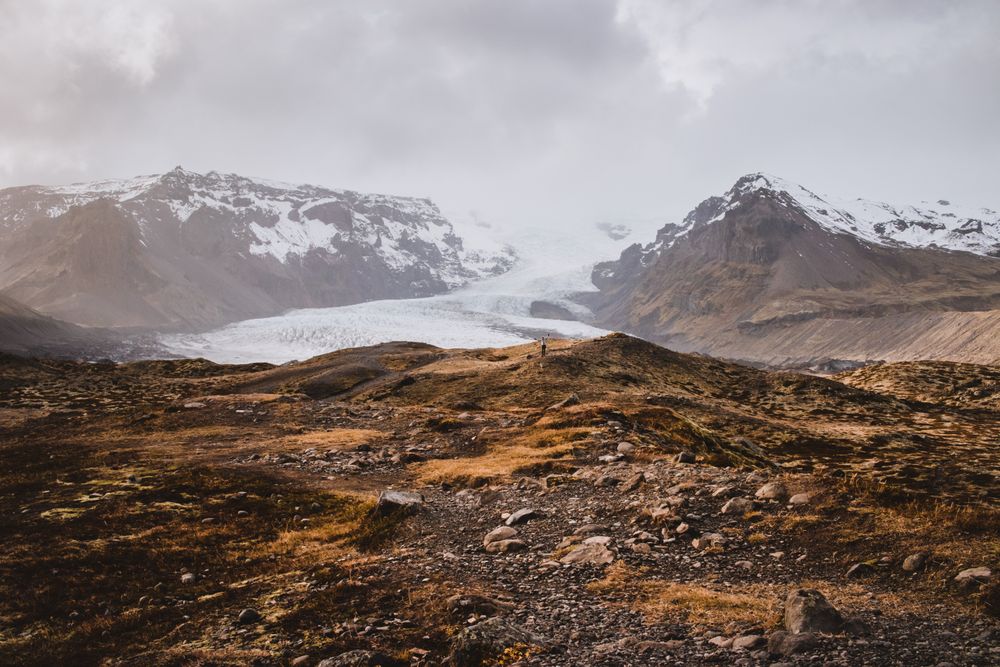
Skaftafell is a green slope of birch and moss under the Vatnajökull ice cap. Skaftafellsjökull, one of its outlet glaciers, comes down a short walk from the visitor centre and ends in a lake, left behind as the glacier shrank, where small icebergs float.
Ice and water shaped the whole landscape, and the Glacier Trail shows you how. Its numbered markers explain the glacier gardens and kettle holes the ice left behind as it pulled back. From the Sjónarnípa lookout, higher up, you look down on the glacier tongue, with Kristínartindar, Hrútfjallstindar and Öræfajökull behind.
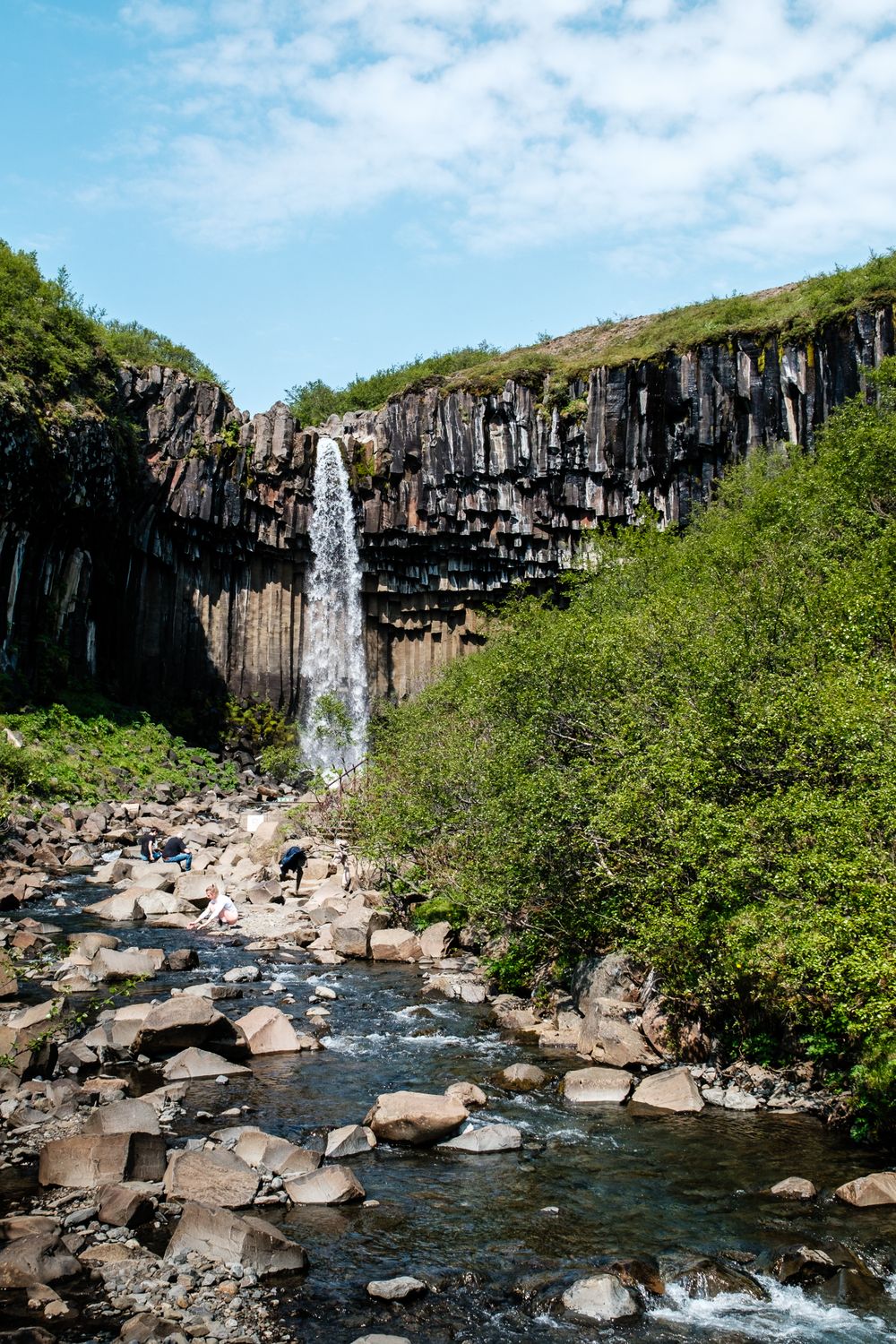
On the slope above the campground, Svartifoss falls as a narrow white stream inside a frame of dark, unusually even basalt columns. The columns formed about 300,000 years ago, when lava filled an old riverbed. More columns, black and brown, line the gorge below, and from a distance the hollow looks like a heart.
The birch wood is the part a short visit misses: up the Morsárdalur valley, Bæjarstaðarskógur is the tallest birch forest in Iceland, though a small one. Öræfajökull shelters Skaftafell, so its weather is often kinder than elsewhere on the south coast.
Start at Skaftafellsstofa, the visitor centre, and ask the rangers which trails are in good shape that day. For a first walk, take the Glacier Trail to the snout of Skaftafellsjökull, an hour to an hour and a half on foot.
At the end of the path, read the warning sign before you go any closer, and do not step onto the ice itself.
With two more hours, walk the Svartifoss loop (5.8 kilometres, easy). Fit walkers can carry on from Svartifoss to Sjónarnípa instead, 7.1 kilometres in two and a half to three hours, rated challenging.
The Morsárdalur valley leads up to the birch wood at Bæjarstaðarskógur; ask the rangers how long to allow before you set off.
Walk the trails on your own; the glacier is the part you should do with a certified guide, because crevasses can open with little warning. Glacier walks from Skaftafell last three to four hours, with one to two of them on the ice, and the operator fits you with spikes, an ice axe and a helmet.
Ask at the visitor centre whether ice cave tours are running before you plan around one. Early in the season the park warns that ice caves and ice arches are dangerous, so check with your operator before you book.
Bring your own boots, waterproofs, warm layers and food for a glacier tour, because the operator lends only the ice kit, and arrive at the meeting point 20 minutes before the start.
At Svartifoss the base of the falls is now fenced off to protect the ground, so plan your photographs from the path. In winter, ice and short daylight decide whether the climb to the falls is sensible, so ask at the visitor centre before you set off.
Explore the rest of Höfn
A fishing town of about 1,800 people on a low spit in Hornafjörður, roughly 455 kilometres from Reykjavík on the Ring Road and surrounded…
A 20 metre fall in Skaftafell dropping over a curtain of hexagonal basalt columns formed roughly 300,000 years ago. The columned…
A guided walk on Falljökull, a steep outlet glacier of Vatnajökull above Skaftafell, among crevasses, ridges and blue ice. Tours leave from…