 Submit a photo
Ninety seconds on Reynisfjara Beach
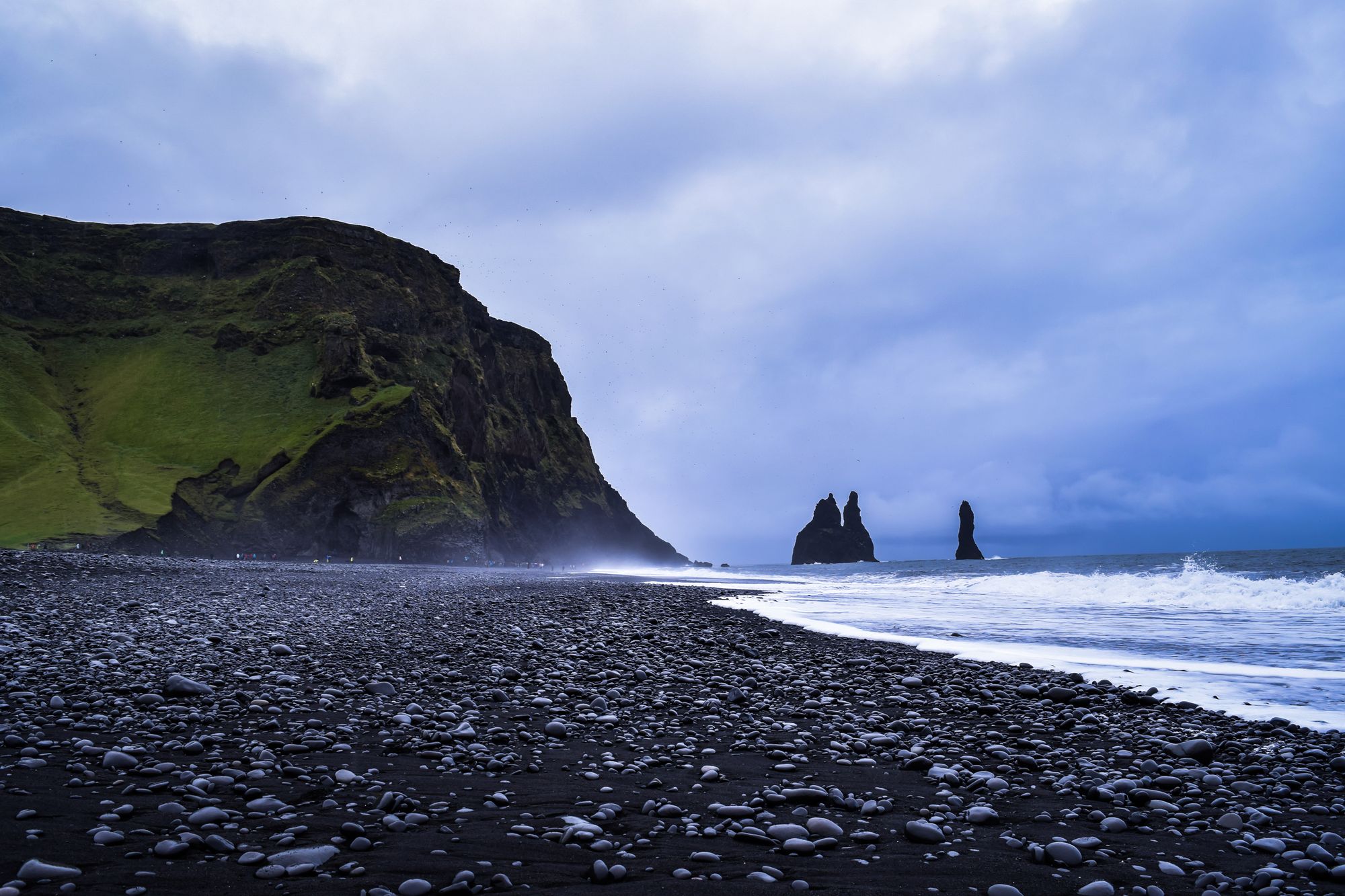
Walk down from the car park onto black sand and you stand under a cliff of basalt, with the Reynisdrangar stacks rising out of the surf just offshore and the sea setting the rules.
Reynisdrangar, basalt pillars 66 metres tall, stand just offshore. Folklore holds that they are trolls turned to stone, and from the sand they read as a line of dark figures wading out to sea.
Behind the beach, a wall of hexagonal columns rises against the cliff of Reynisfjall. They formed when thick lava from the Katla volcano cooled slowly and evenly.
At the eastern end of the beach, the waves have cut Hálsanefshellir into the cliff, a shallow sea cave whose walls of columns are often likened to a pipe organ. On a clear day, glaciers stand on the skyline inland.
Storm erosion keeps reshaping this shore, so the sand you find may not match older photographs. The stacks and the columns still stand.
Before you walk down to the sand, check the warning light at the entrance. The colour on the day decides how far you may go.
On red the beach is closed, the cave and the columns with it, but the designated viewing area above stays open. On yellow you may go down, but read the sign's map on the day and stay out of the marked zone. Whatever the colour, keep to the backshore, the upper sand well away from the surf.
The columns and the cave lie east along the backshore, and you can reach them only at low tide, so check the tide table for Vík before you set out. If the light or the sign closes the way east, they stay out of reach that day.
Allow about an hour, longer if you linger at the columns. Food is at the restaurant and café by the car park. There are no toilets on the beach; the nearest are in Vík.
A guide earns a place here if you would rather not judge the sea yourself, because on a tour the guide reads the warning light and the surf for you. The cost is time: tours usually allow around 40 minutes at the beach. Driving yourself, you set the pace and can wait for the tide to drop.
Sneaker waves surge much farther up the sand than ordinary waves, with no pattern you can predict, and no lifeguard watches the beach. No fixed distance guarantees safety, but keep at least 30 metres from the water even on a calm day, and never turn your back on the sea.
Take particular care in the cave, which offers no retreat inland if a wave comes in behind you, and where rock can fall from the roof. Admire the columns from the sand rather than climbing them, which damages them and is dangerous in any conditions.
The light can change during the day, so look at it again if you come back later. Bring sturdy boots, waterproofs and warm clothes.
Explore the rest of Vík
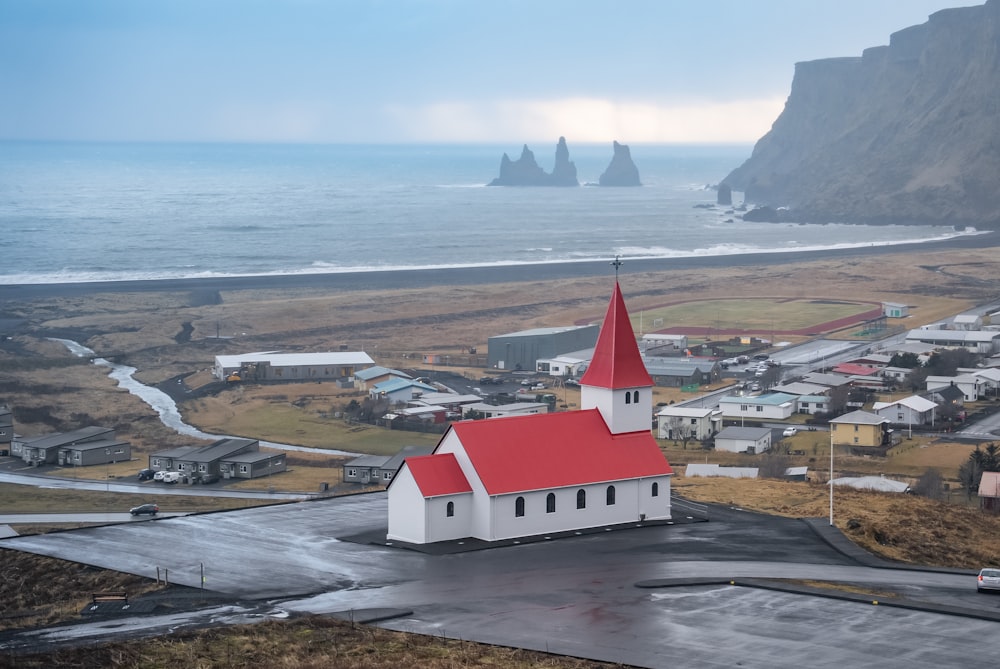
The southernmost village in Iceland, on the Ring Road about 185 kilometres southeast of Reykjavík, between the sea and the slopes under the…
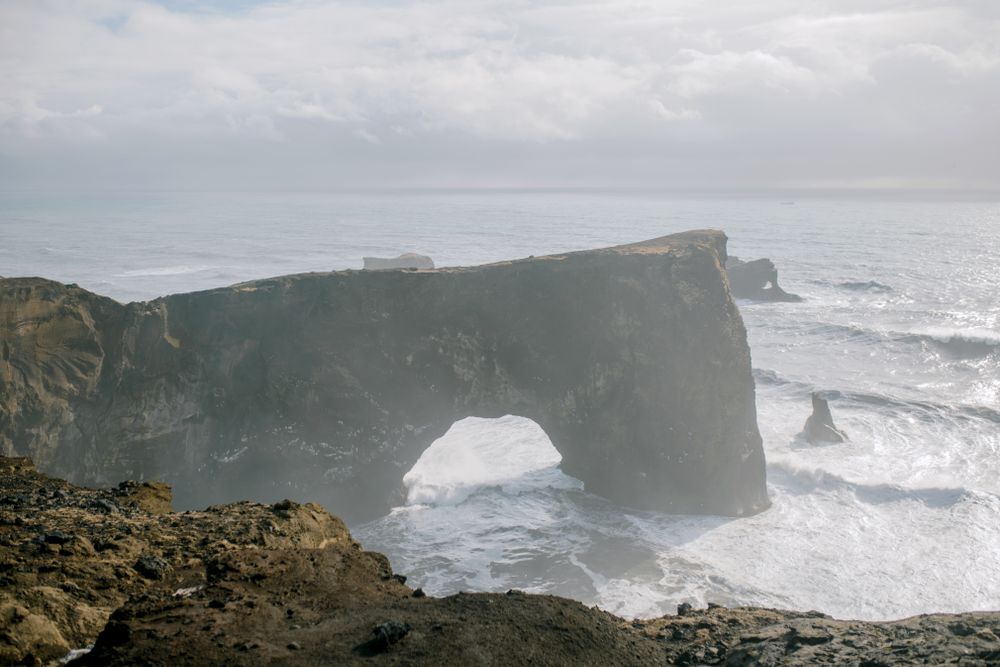
A headland on the coast west of Vík with two hills: low Lágey by the beach, and higher Háey, topped by a small lighthouse beside the sea…
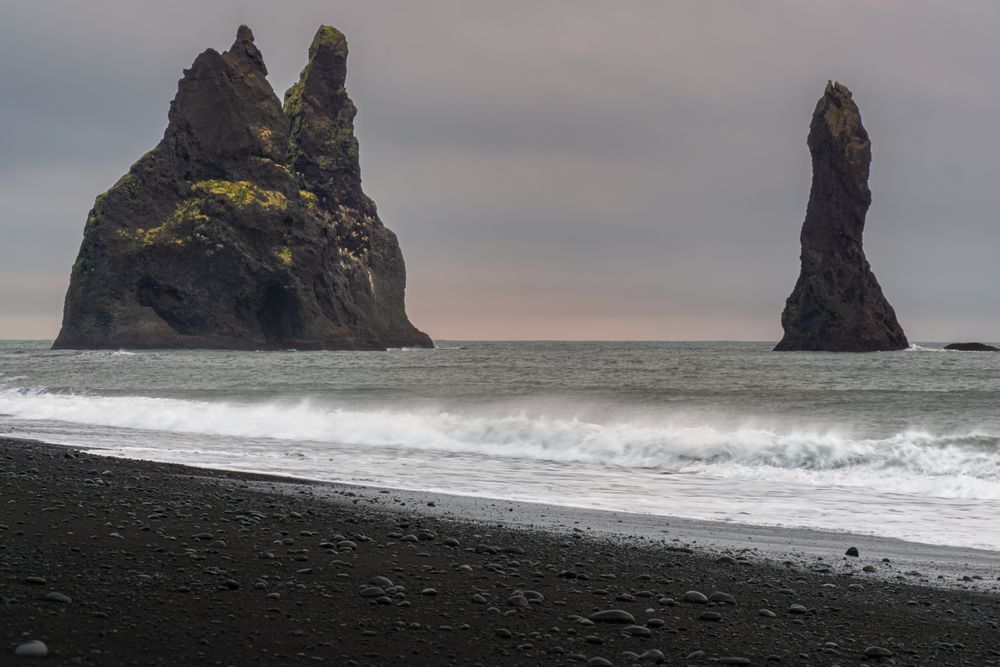
Basalt sea stacks rising to about 66 metres off the foot of Reynisfjall, visible from Vík's own beach. Icelandic folklore holds that they…
Last updated