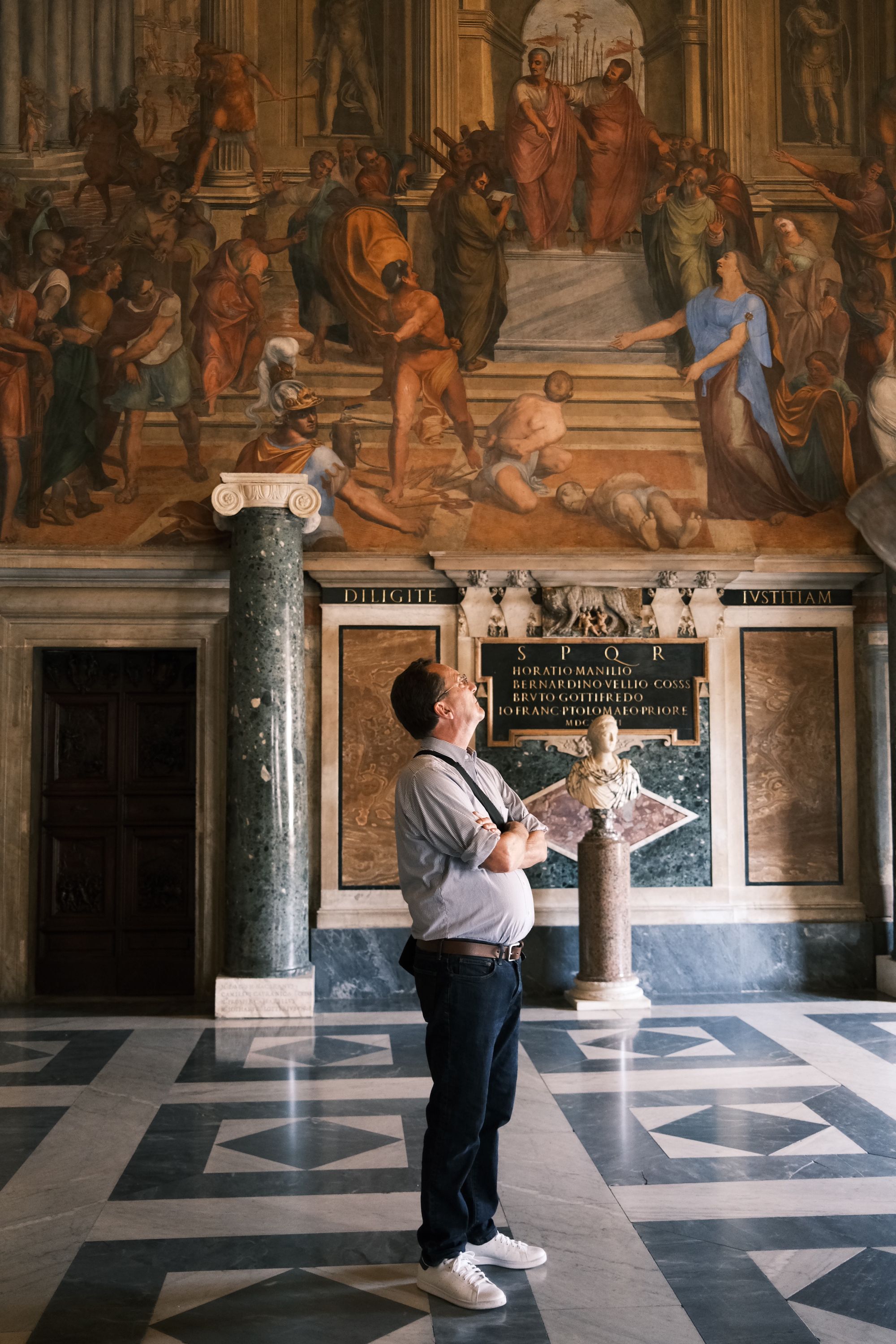
Ninety seconds on Capitoline Museums
Rome's she-wolf and Marcus Aurelius on horseback stand a few rooms apart here, and you see both originals.
The she-wolf has a hall of her own in Palazzo dei Conservatori. The bronze is far older than the legend she stands for, and the twins Romulus and Remus beneath her were added long after, once she reached the Capitol.
Look at the walls of her hall as well: fragments of the Fasti, lists of the Republic's magistrates and triumphal victors, are set into them.
Marcus Aurelius, in gilded bronze, is the only Roman equestrian statue to survive. The horse on Michelangelo's pedestal in the piazza is a replica. The original stands indoors in the Exedra, a hall it shares with the gilded bronze Hercules from the Foro Boario.
In the Horti Lamiani rooms, the bust of Commodus shows the emperor dressed as Hercules, one of the most famous Roman portraits. Across the square in Palazzo Nuovo is the Dying Galatian.
Upstairs, the picture gallery holds Caravaggio's Saint John the Baptist. Stand close and look at how deep the shadows run.
Starting in the courtyard of Palazzo dei Conservatori, the route passes the huge fragments of Constantine's colossal statue. It then runs through the Hall of the She-wolf and on to the Exedra and Marcus Aurelius.
From Hall 27, the Horti Lamiani room, a lift goes straight up to the second floor and the picture gallery. Take it once you have seen the Commodus bust in the same rooms.
Afterwards, head down to the Epigraphy Gallery, a tunnel under the piazza lined with ancient inscriptions. It leads to the Tabularium, whose gallery looks out over the Roman Forum. Save Palazzo Nuovo, across the square, for last.
The museums run their own guided tours in several languages, for a fee and by prior arrangement, on either the collection route or an exhibition route; book them on 060608, answered daily from 9.00 to 19.00. Audio guides are offered for an extra fee. A guide suits you if you want the inscriptions and the palaces explained, while the famous bronzes are easy to find on your own.
Buy only from the museum's own channels. Resale sites can look official, charge far more and send you to collect paper tickets somewhere else.
Pack light: bulky bags, backpacks and umbrellas are not allowed in the galleries, and staff may send even a small daypack to the free self-service cloakroom. Photos are fine for personal use, without tripods, selfie sticks or extra lights, except in temporary exhibitions.
The rooms connect like a maze, and even with maps posted throughout it is easy to lose your way, so note the hall numbers as you go. Food and drink are banned inside; the cafeteria is on the Caffarelli Terrace, with its own entrance from the Campidoglio steps.
Explore the rest of Rome
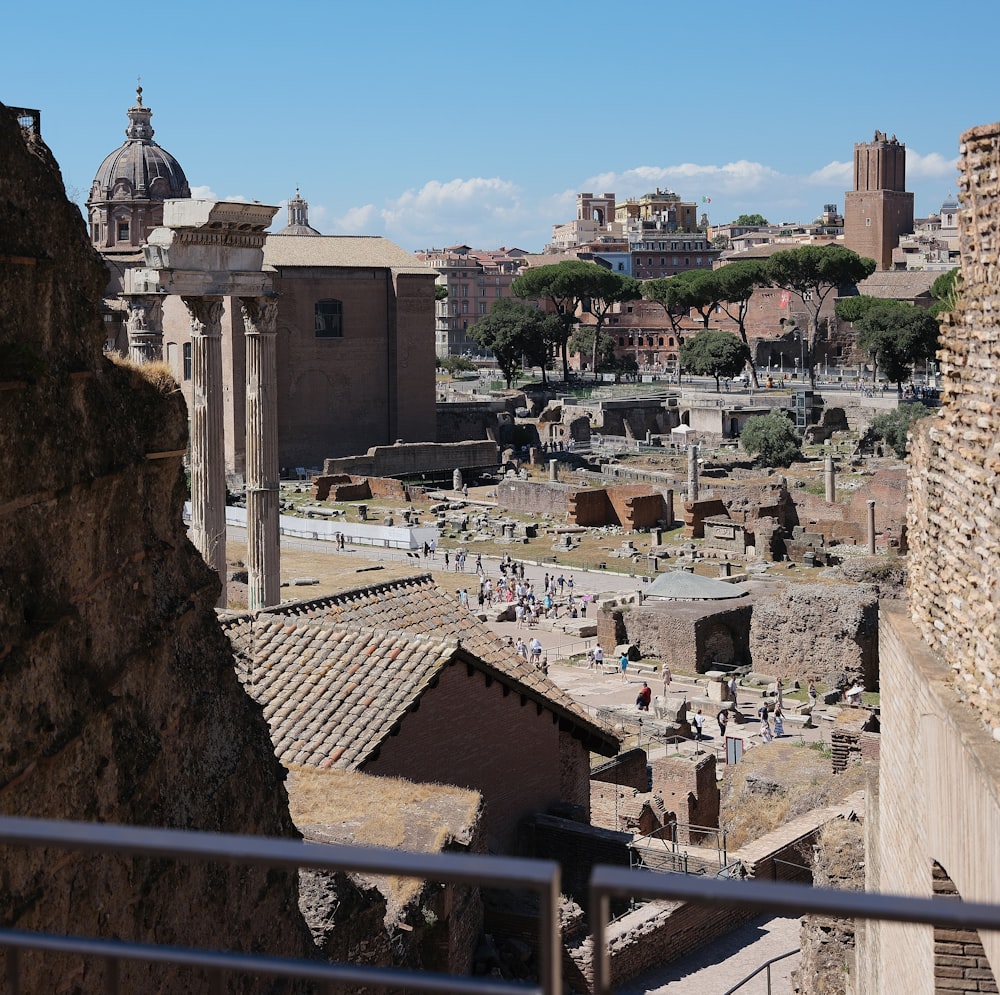
The civic and commercial centre of ancient Rome, stretching across ruins of temples, basilicas, and government buildings spanning roughly…
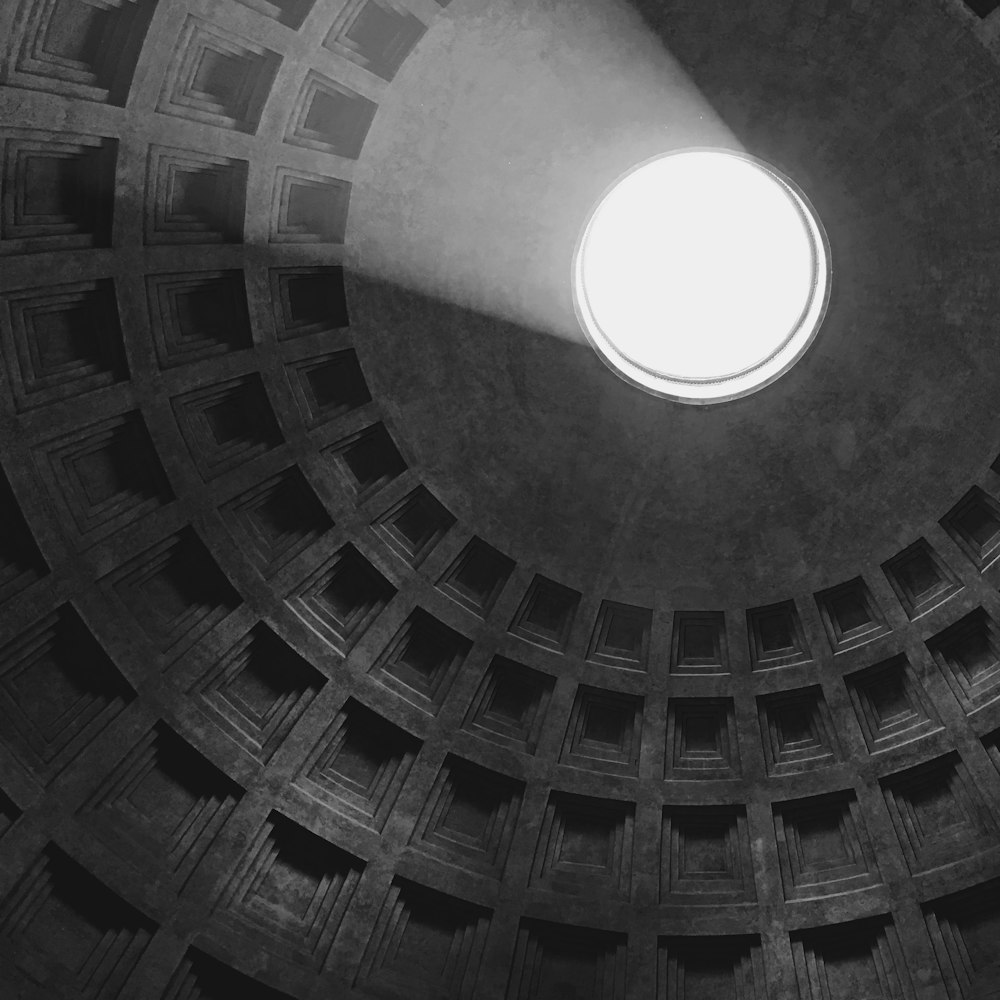
A Roman temple whose dome, completed under Hadrian, is still the largest ever built in unreinforced concrete, open to the sky through the…
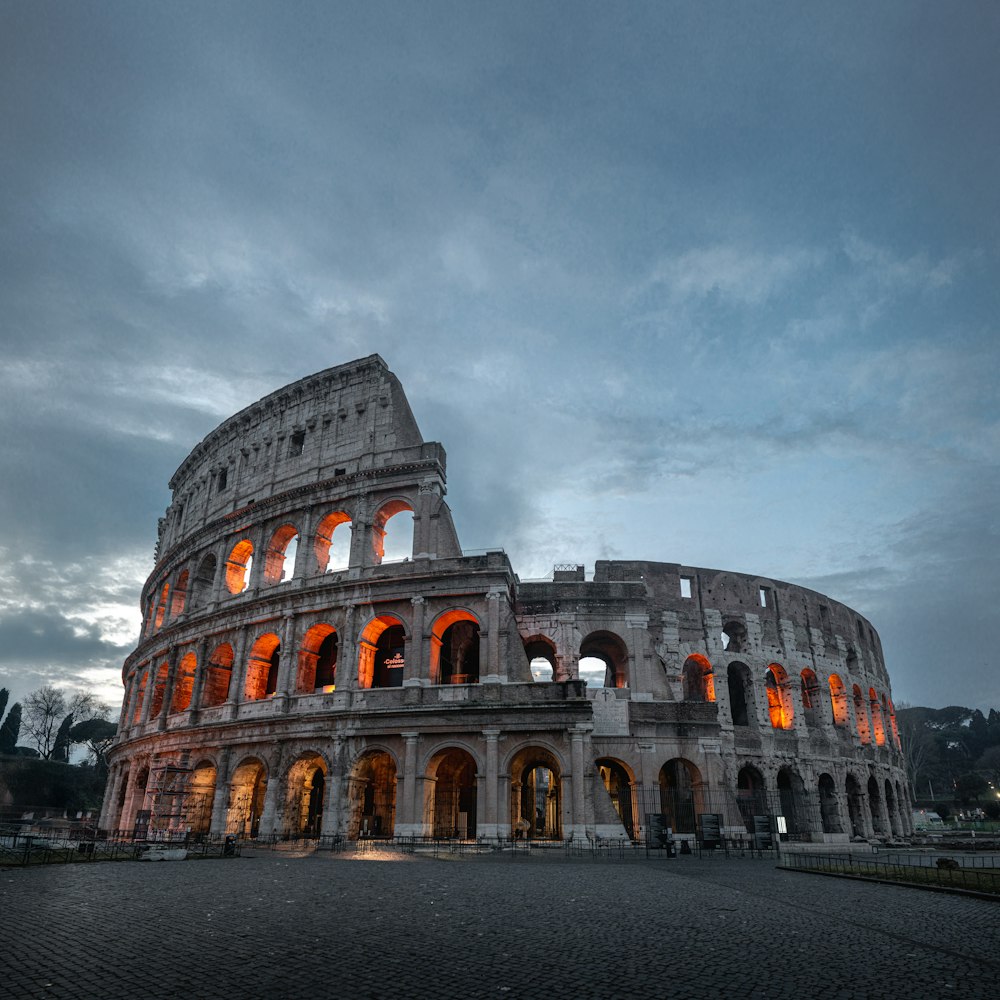
The largest amphitheatre of the Roman world, completed in AD 80 under Titus and seating roughly 50,000 spectators. Its travertine arcades…