Ninety seconds on Trevi Fountain
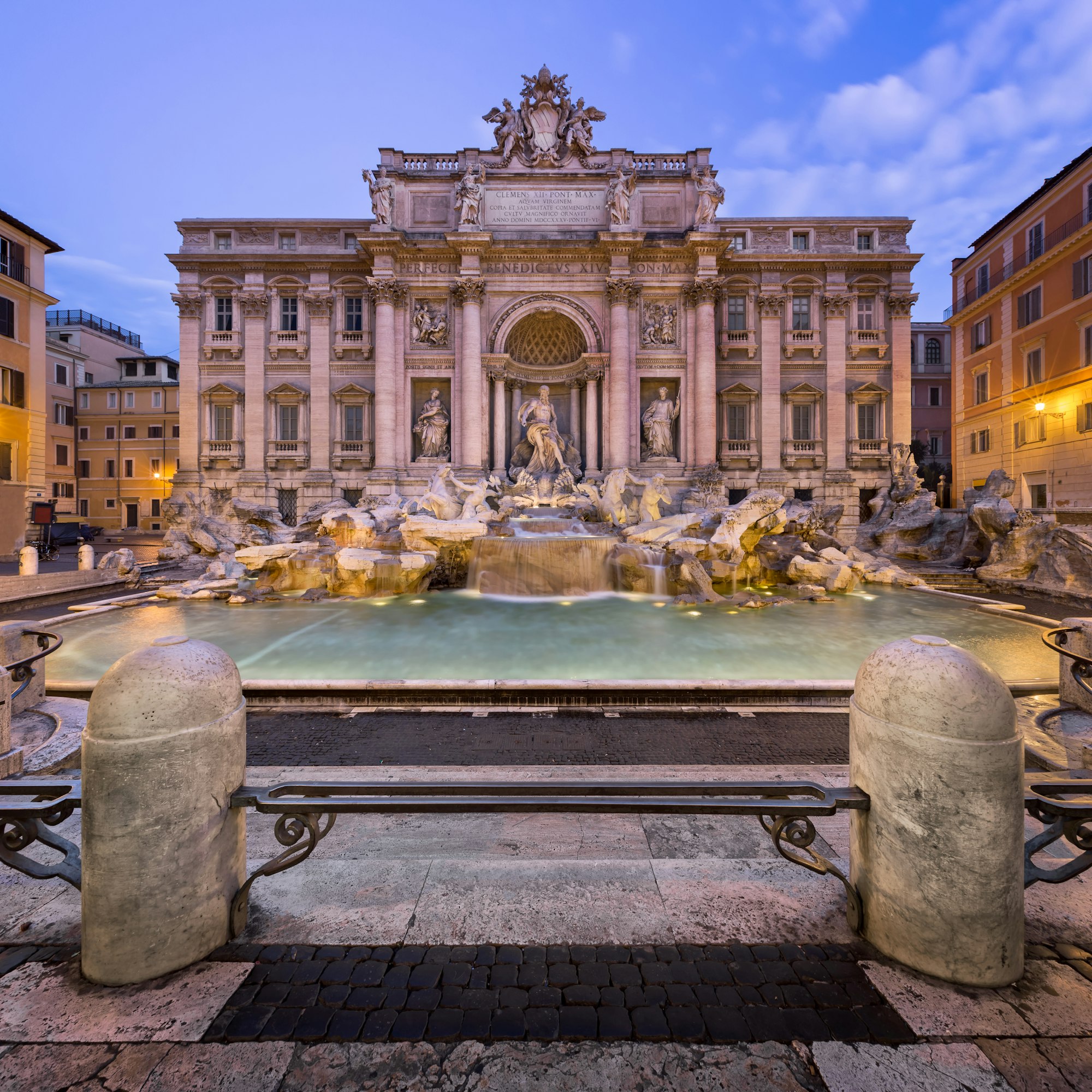
Going down the steps to the rim of the basin lets the fountain fill your whole view, and the water pouring in front of you still arrives by an ancient Roman aqueduct.
The fountain fills one whole side of a small square and sits below the street, because the square was lowered to meet the low level of its aqueduct. Its back wall is the facade of Palazzo Poli, laid out like a triumphal arch. At its centre Oceanus, god of all water, drives a chariot shaped like a shell.
Look closely at the two sea horses, because they are not a matched pair. One rears wild and the other is calm, the two moods of the sea, and a triton reins in each. The reliefs above them tell the legend of the girl who found the spring, and the story of the aqueduct it feeds.
That water is the reason the fountain exists: it is the end of the Acqua Vergine, the only ancient Roman aqueduct still running. Coins thrown into the basin are collected and go to Caritas for its social work.
Before nine in the morning you will be one of only a few people at the rim, and around seven the light is right for photographs. The square itself is free at any hour, and only the steps down to the rim take a ticket, bought online on the official site or by card at the entrance.
At the water, turn your back to the fountain, hold a coin in your right hand and throw it over your left shoulder. One coin brings you back to Rome, by the old custom, and a second and a third are said to bring a wedding.
After about eleven at night the day crowds thin and the fountain is lit, so come back then to see it from the piazza.
Keep your phone and wallet in front of you at the rim: the pickpockets here are skilled, and they work the moment your eyes are on the statues. Carry a small bag only.
Eat a street or two away. The restaurants right by the fountain are tourist traps with mediocre food.
Explore the rest of Rome
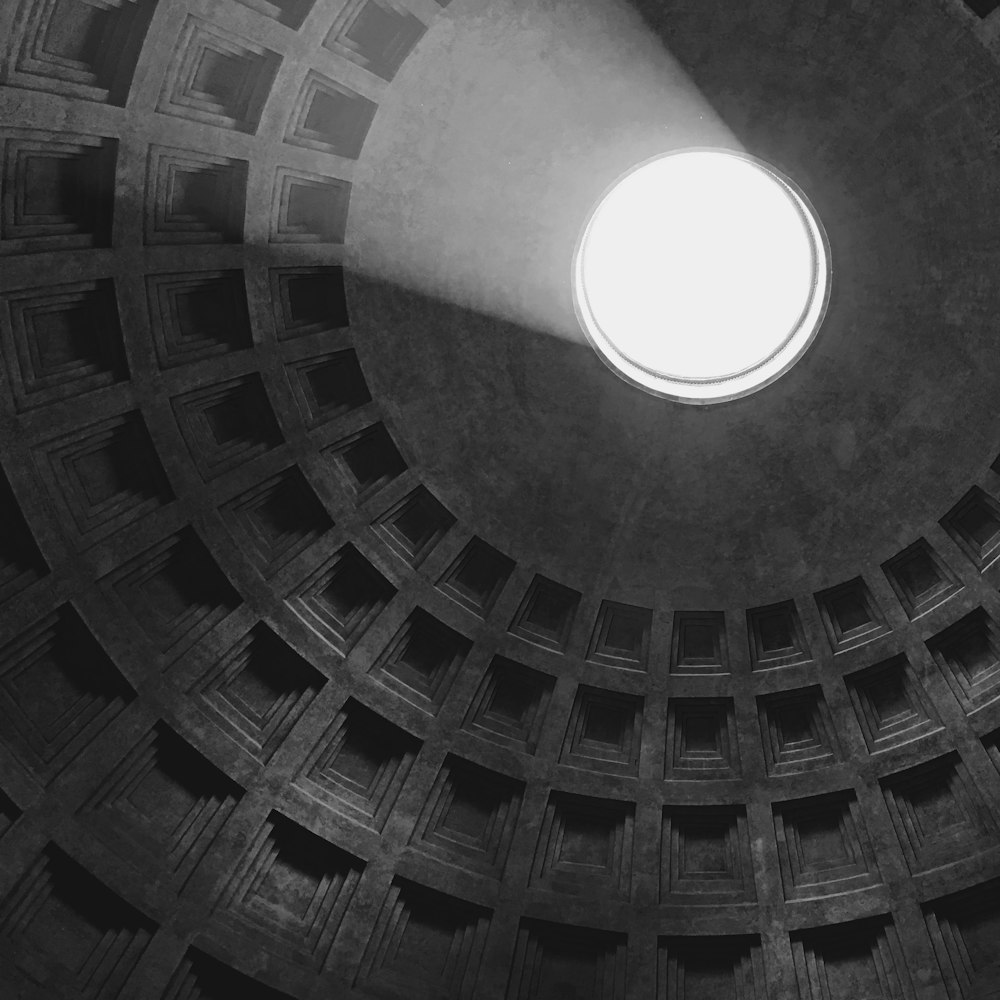
A Roman temple whose dome, completed under Hadrian, is still the largest ever built in unreinforced concrete, open to the sky through the…
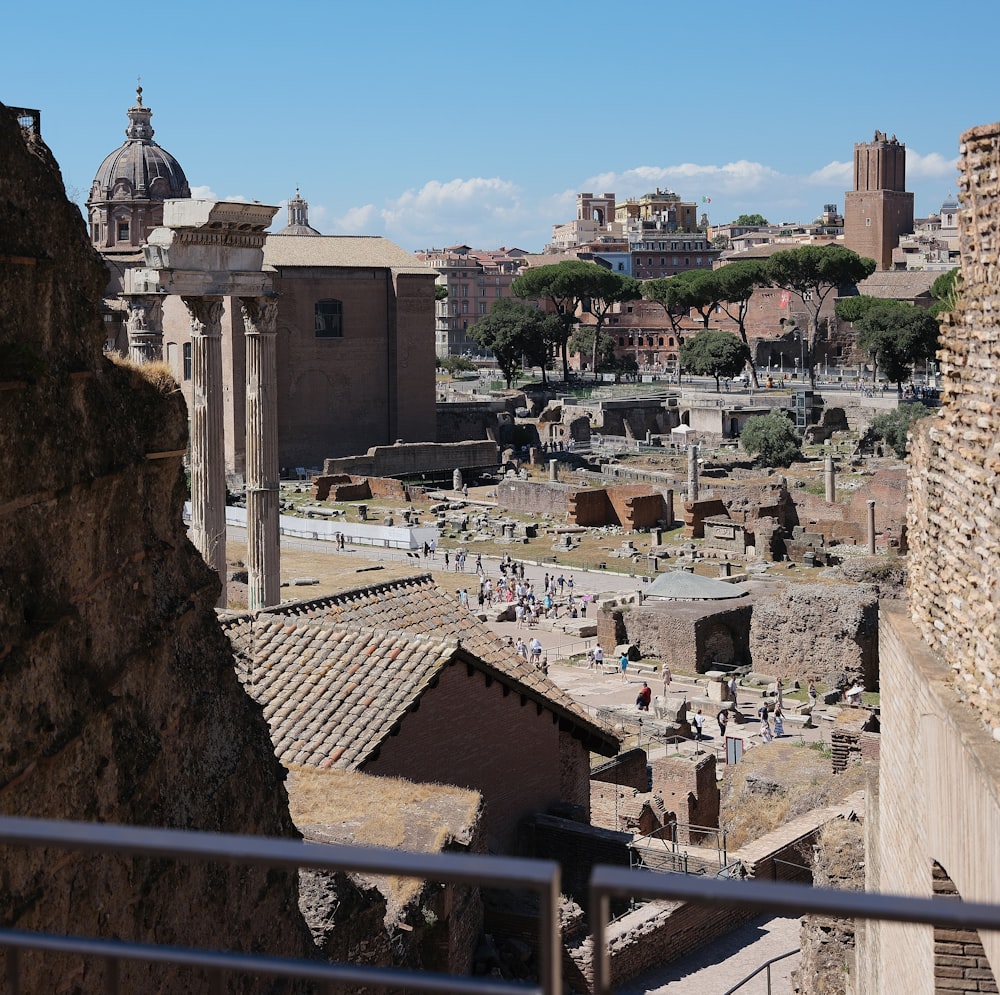
The civic and commercial centre of ancient Rome, stretching across ruins of temples, basilicas, and government buildings spanning roughly…
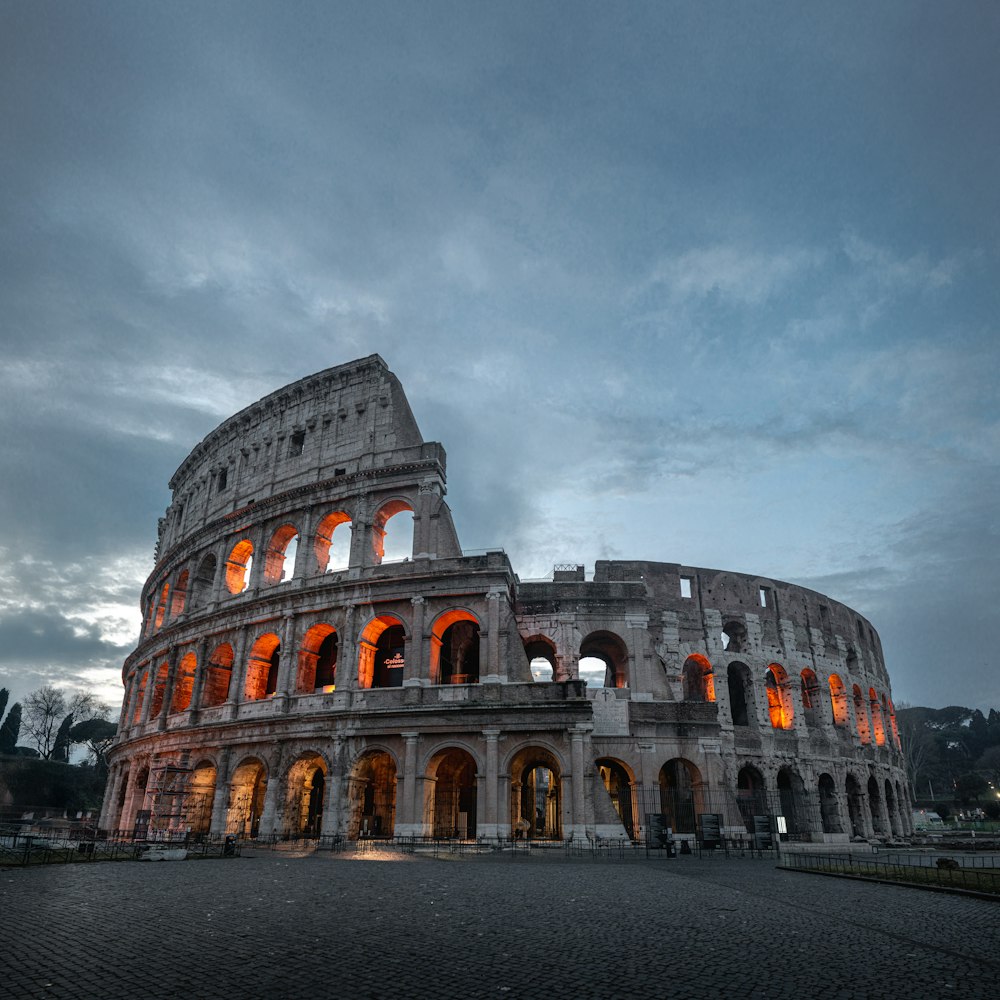
The largest amphitheatre of the Roman world, completed in AD 80 under Titus and seating roughly 50,000 spectators. Its travertine arcades…