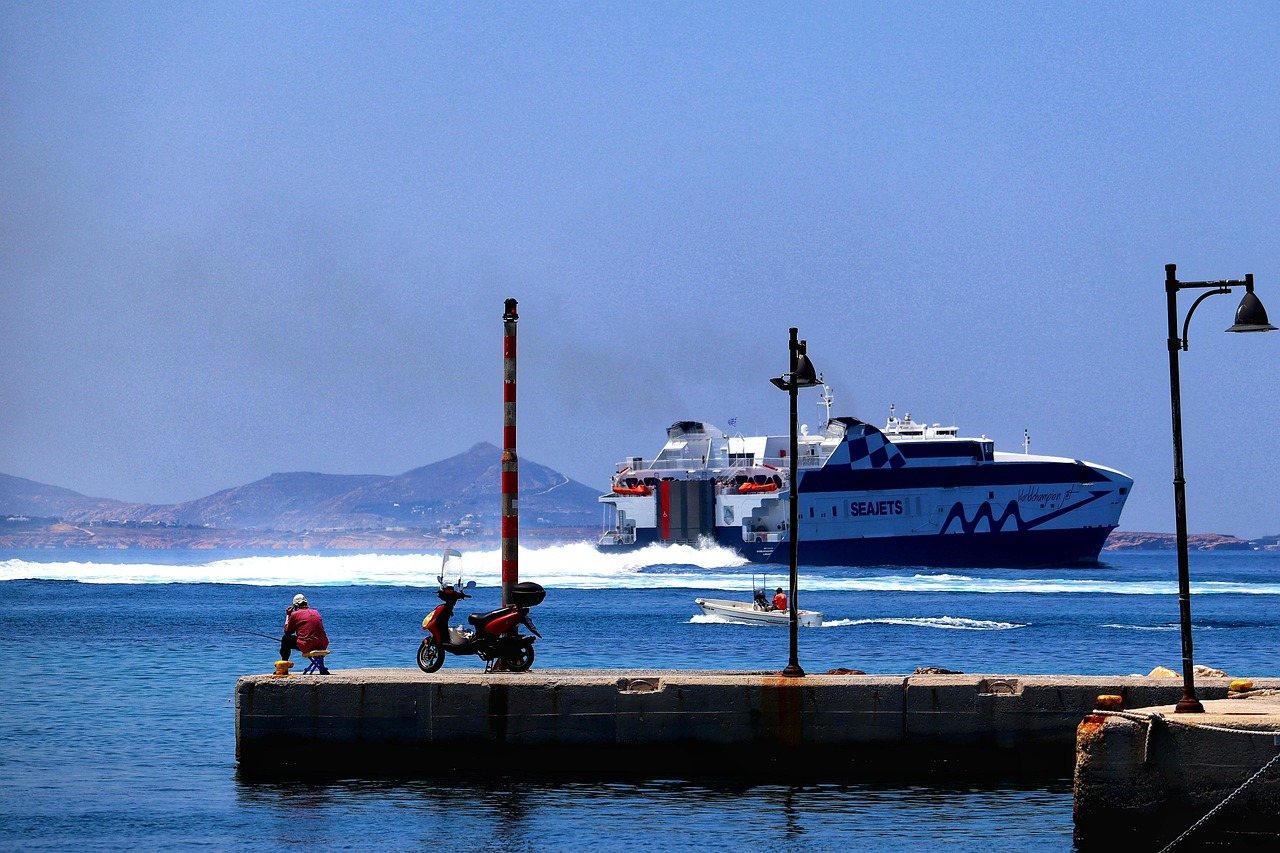
A fast boat passing the harbour pier at Naxos, one of the four crossings on this route
Athens, then four islands in the order the summer boats run, finishing on the caldera path into Oia and a swim below it.
You spend two nights in every bed on this route, so Mykonos, Paros and Naxos each get one whole day with no boat in it. Two of the four crossings take under an hour, and the longest, Piraeus to Mykonos, is under three.
You see Delos from Mykonos, swim at Kolymbithres on Paros and drive the marble villages of Naxos before Santorini. Athens comes first, for the Acropolis and its museum.
641 km in ten days, by transit, taxi, boat, bus and car, and on foot, from Athens International to Oia.
Five hotels for ten nights, in the order you reach them, with the journey into each. Fly into Athens and home from Santorini.

The Agora, the Acropolis and its museum, Philopappos at sunset
The grand hotel on Syntagma Square, a few steps from the metro station the airport line runs into, so the first transfer is one train and a short walk. Plaka and the Acropolis are a walk away, and the rooftop terrace looks across at the Parthenon.
A residential district on flat streets south of the Acropolis Museum, with smaller hotels; the northern end is a short walk from the south gate.

Little Venice, Delos, Ano Mera and the north-west cape
A five-star on the edge of the town near the School of Fine Arts, with a large pool, close to the Fabrika bus station for the beaches. The old town lanes start a few minutes downhill, so the evening walk home is short.
A long, sheltered beach on the south coast with buses to town, calmer than the town at night.

Kolymbithres, Naousa harbour, Lefkes and Antiparos
Forty suites on Agioi Anargyroi beach at the eastern edge of Naousa, with a half-moon pool facing the bay. The fishing harbour is about fifteen minutes on foot, with a fair few steps on the way.
The port town, with the easiest bus connections on the island; you walk off the ferry to the door.

The Kastro, the Portara, the mountain villages
A small beachfront hotel on the sand of Agios Georgios, the town beach, about ten minutes on foot from the centre and walkable from the ferry. The beachfront restaurant means the swim and the dinner are both at the door.
Long sand and shallow water south of town, with frequent buses to town in summer.
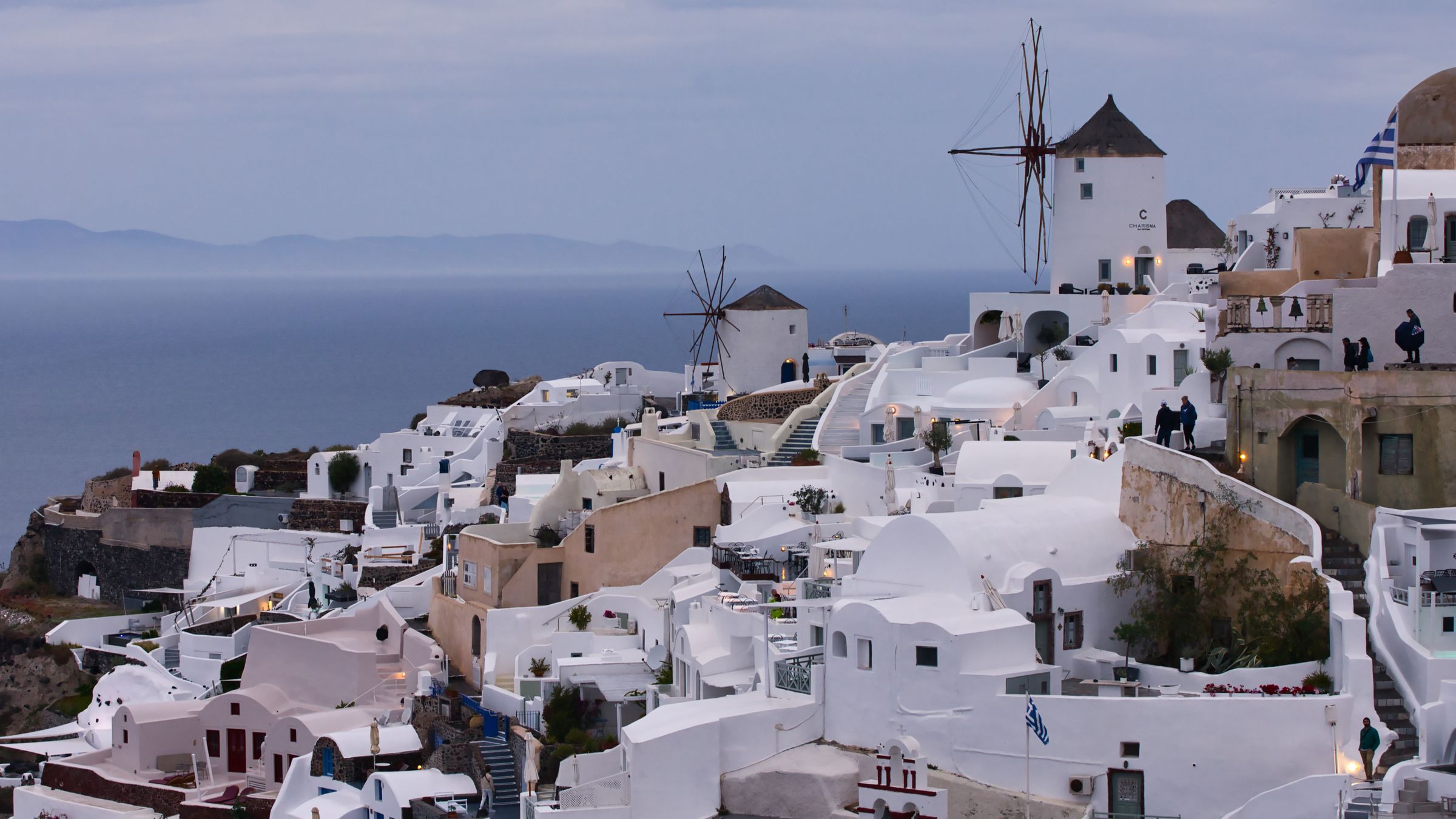
Sunset at the castle, the rim path, Ammoudi Bay
Suites cut into the cliff at Oia, looking over the caldera, with a pool terrace facing the Aegean. The castle and the steps down to Ammoudi Bay are a short walk west along the village's marble lane.
The island's bus hub, with direct buses to the airport and the port; Oia is under half an hour away by bus.
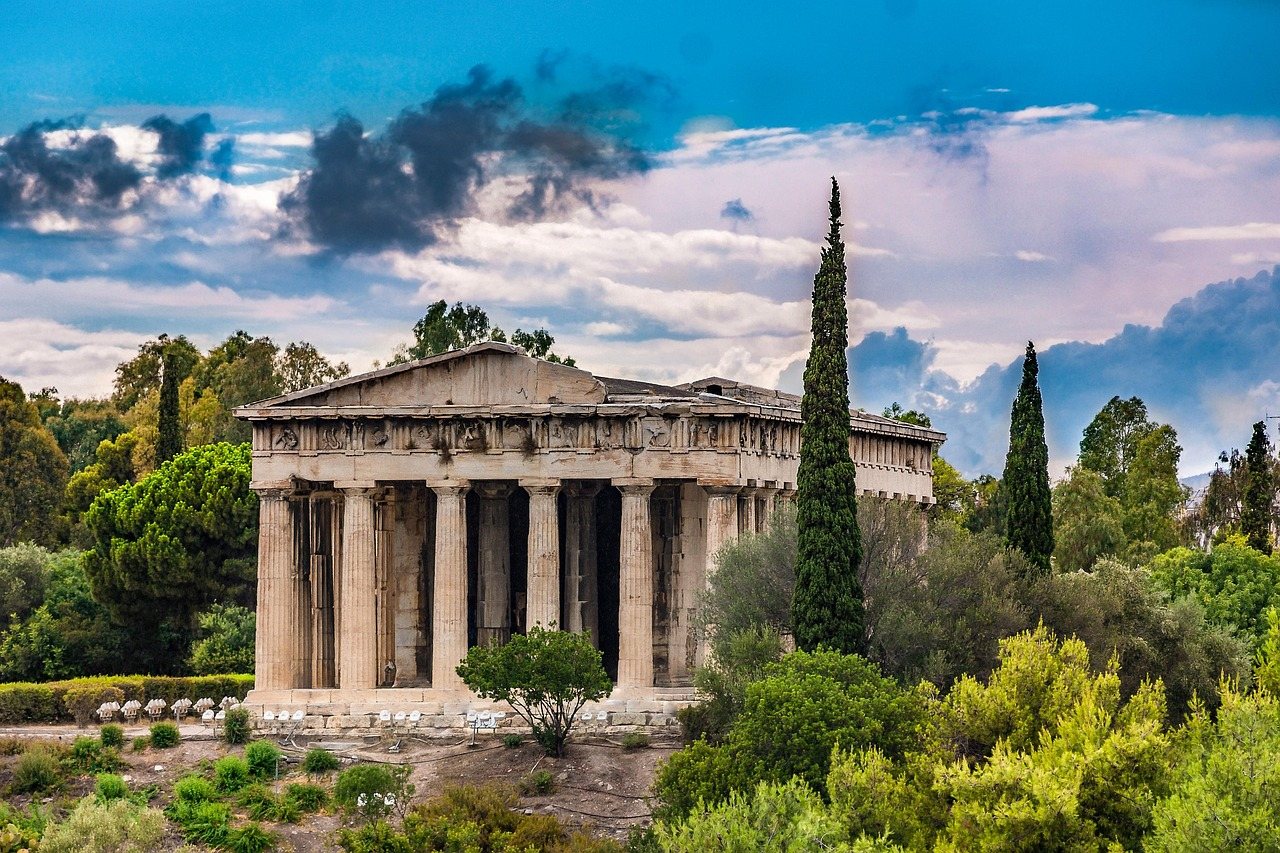
The Temple of Hephaestus above the Ancient Agora
Metro line 3 runs from the airport straight to Syntagma in about forty minutes, and the Grande Bretagne stands on the square beside the station exit. On a later flight, start in Plaka and keep the Agora for the next trip.
Have lunch near Monastiraki, then climb through Plaka to Anafiotika, a cluster of whitewashed cube houses directly under the Acropolis wall. The lanes are narrow and shaded for much of the afternoon.
The Ancient Agora below is easier once the heat drops. Its Temple of Hephaestus still has its roof and every column, and the rebuilt Stoa of Attalos along the east side holds the finds.
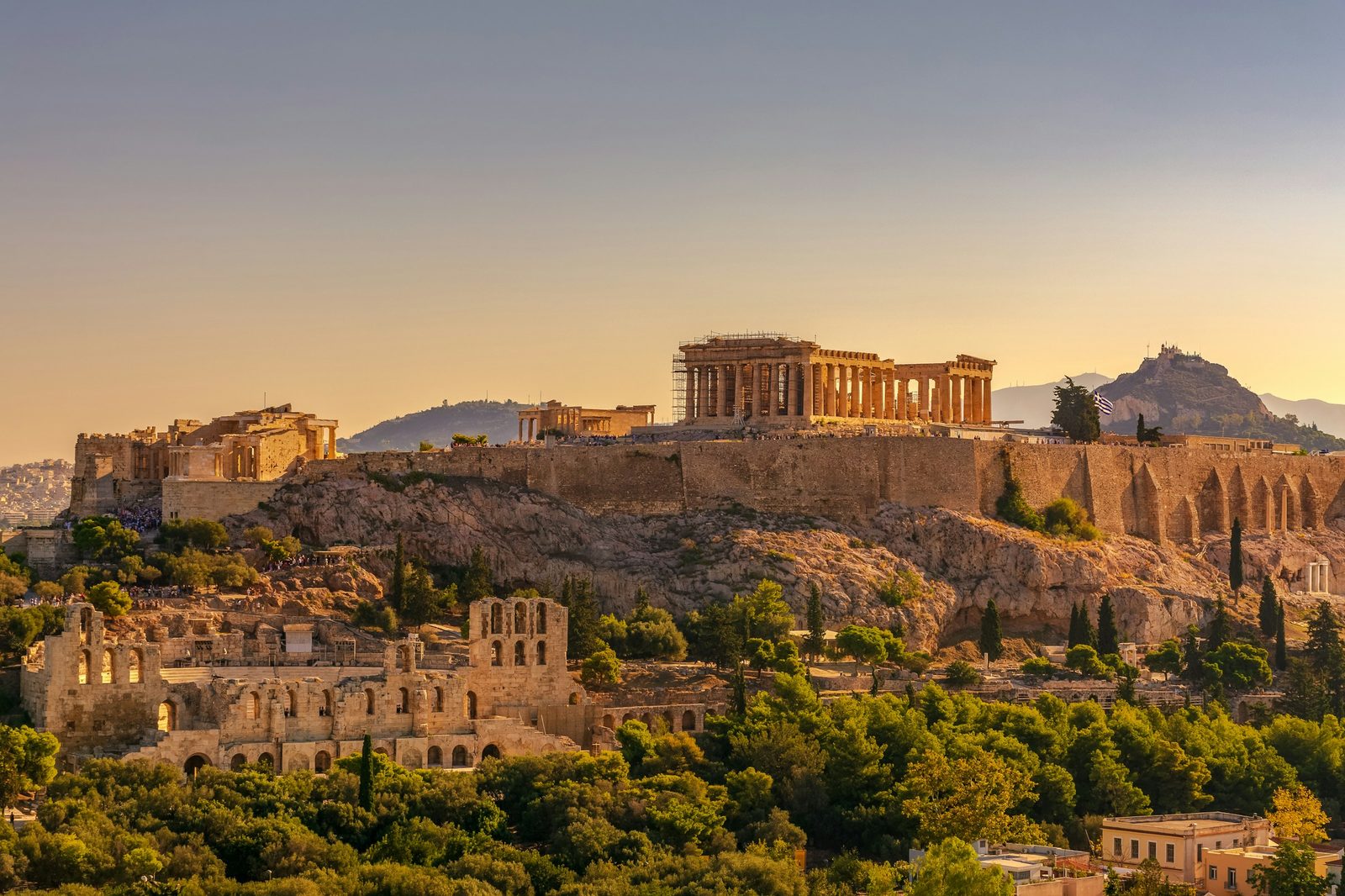
The Acropolis at golden hour, with the Odeon of Herodes Atticus below the Parthenon
Walk to the Acropolis for an eight o'clock slot, the coolest hour on a rock with no shade. The marble paths are worn slick, so wear shoes with grip; no food goes in, but carry water in a refillable bottle.
Leave by the south gate and cross to the Acropolis Museum. Its top-floor gallery faces the Parthenon through the glass, with the frieze laid out to the temple's own dimensions.
Spend the hot middle of the day over lunch in Koukaki, then take the metro north to the National Archaeological Museum for the Mycenaean gold and the Antikythera mechanism. End on Philopappos Hill, west of the Acropolis, as the sun goes down behind you.
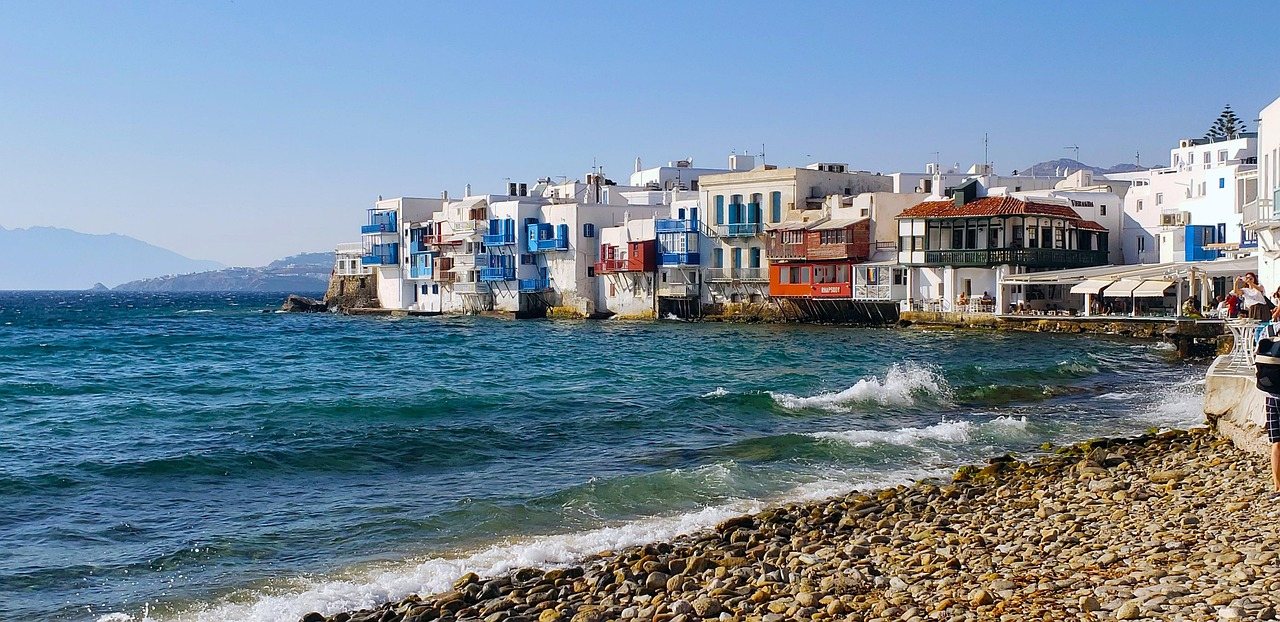
Little Venice, where the houses on Mykonos meet the sea
Take a taxi to Piraeus for the early fast boat; if it is full, Rafina, east of the city, has more summer sailings, about an hour away by taxi. The crossing takes under three hours and lands at the new port, a short ride north of the town.
Paraportiani, a whitewashed church built from several chapels pressed together, stands at the edge of the old harbour. The lanes behind it run south towards Little Venice.
After lunch, take the bus from Fabrika to Psarou, a beach sheltered from the north wind. Come back for the evening to Little Venice, where balconied houses hang over the water under the windmill ridge.
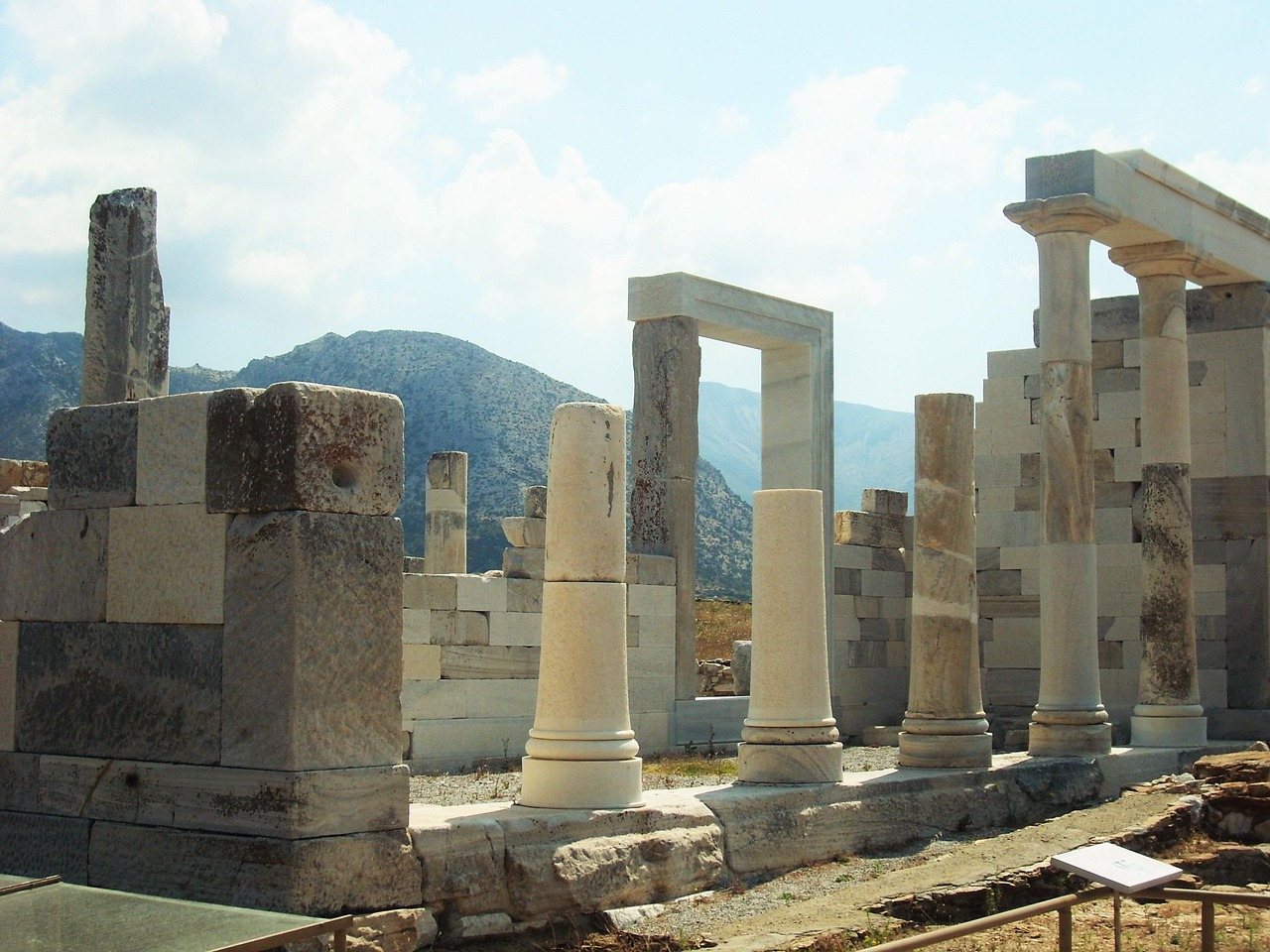
Columns and walls of the ancient town on Delos
Take the first boat of the day from the old port to Delos, about half an hour across. The site is open ground with little shade, and the return sailings set how long you get, so check them as you buy the ticket.
Delos was a sacred island and a busy free port, and the ruins of a whole town cover it. Find the Terrace of the Lions above the dried-up sacred lake; the lions outside are copies, and the originals stand in the site museum.
Late in the afternoon take a taxi inland to Ano Mera, where the Panagia Tourliani monastery on the village square keeps a carved and gilded wooden iconostasis; eat early at a taverna on the square. Finish at the Armenistis lighthouse on the north-west cape, with Tinos across the strait, and ask the taxi to wait, since there is no rank on the cape.
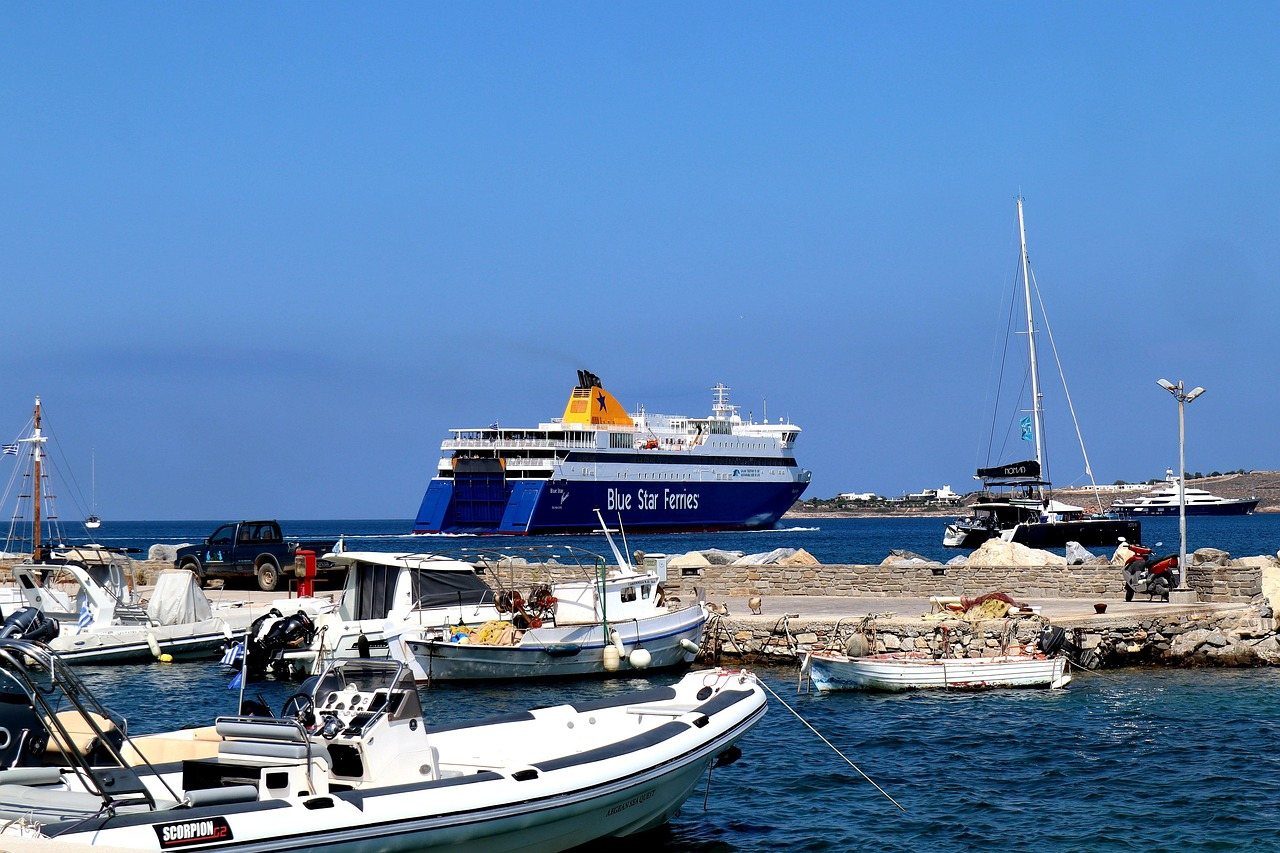
A conventional ferry in Paros harbour, behind the small boats
The fast boat from Mykonos to Parikia, the port of Paros, takes about forty minutes, and a taxi has you in Naousa about fifteen minutes later. Taxis are limited at the quay when a boat lands, so ask the hotel to send one.
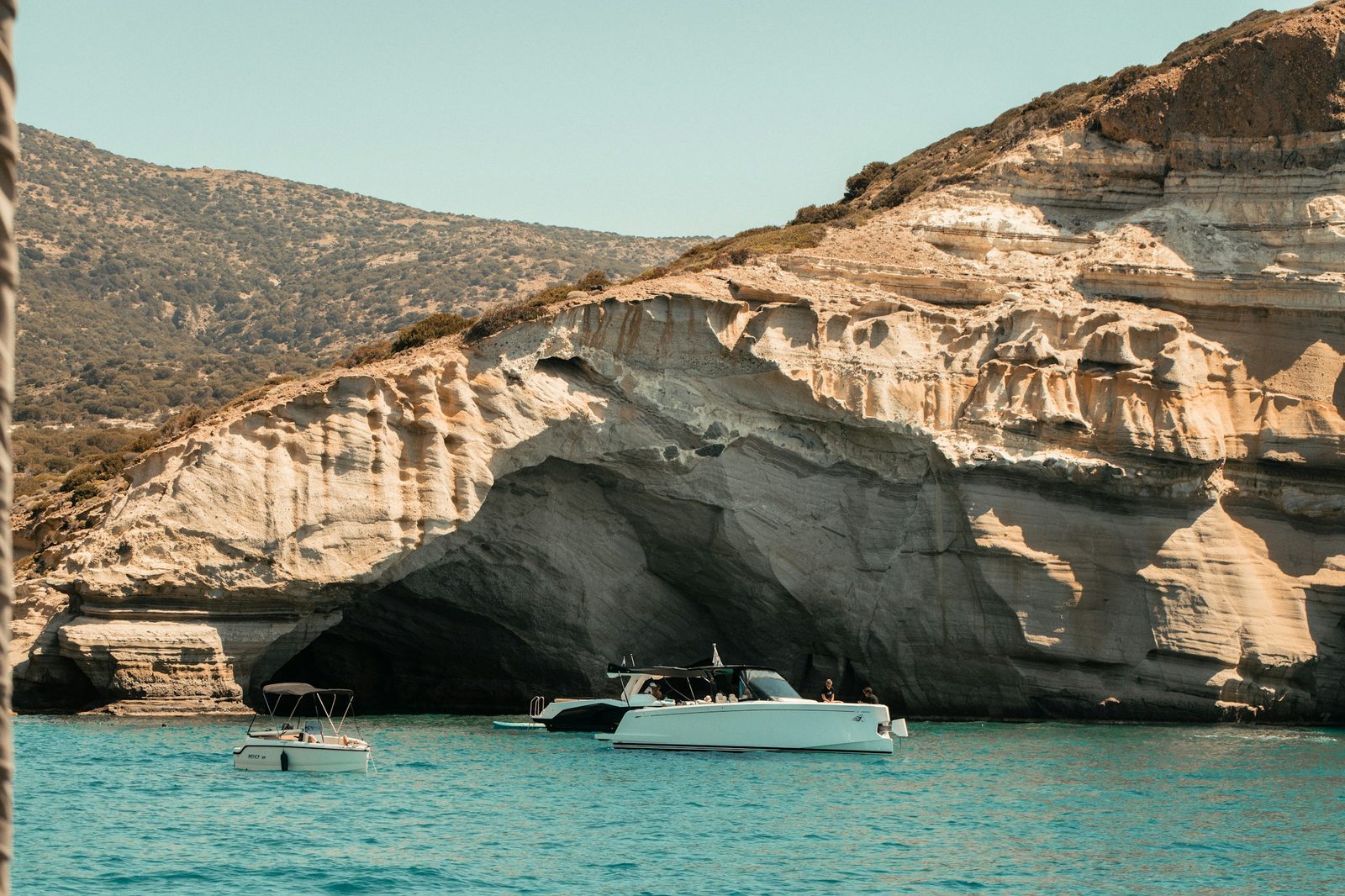
From Naousa harbour, small boats cross in summer to Kolymbithres, where wind and sea have worn the granite into smooth basins and hollows. The patches of sand between the boulders are small, so swim off the rocks.
Take the boat back before five and rest at the hotel, then walk into Naousa for the evening, a fishing harbour of moored caiques and tavernas beside a ruined Venetian fort. It stays busy late in summer, so book a table on the quay.
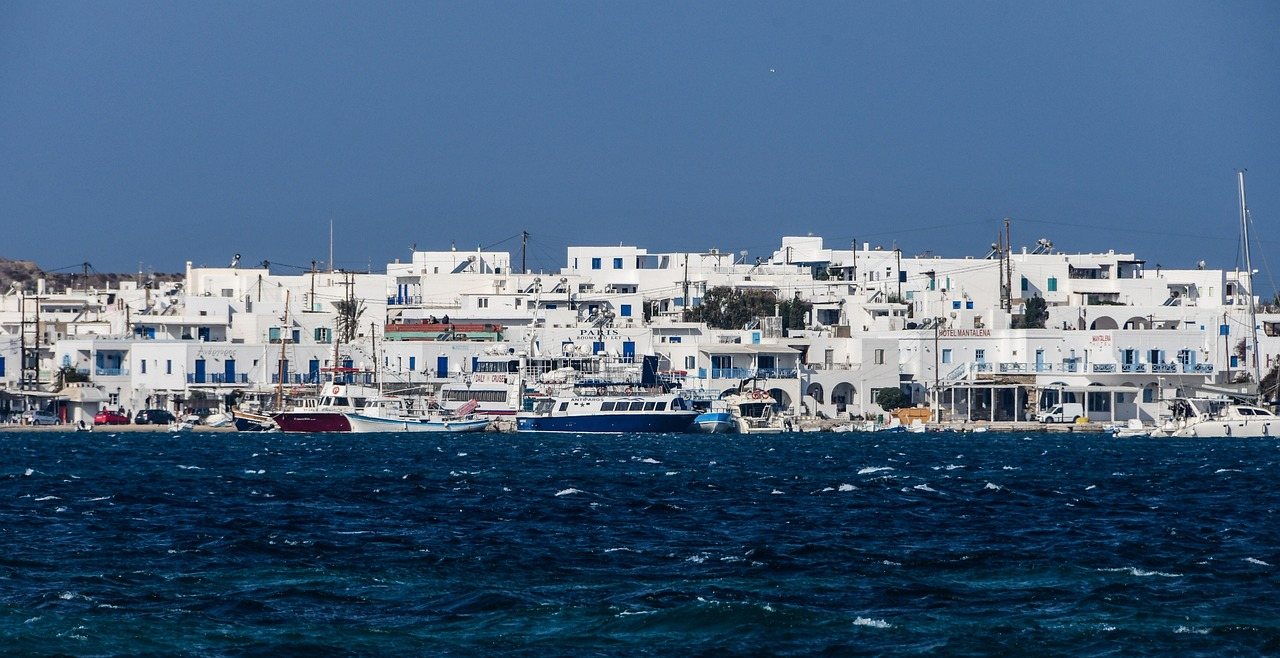
Antiparos town from the strait
Take a taxi up to Lefkes, a village of marble lanes in the hills, shaded and quiet even in August. An old paved path runs downhill from the village between stone walls and terraces; walk the first stretch, then climb back.
From Pounta on the west coast, the car ferry crosses to Antiparos in about seven minutes, with sailings through the day. Have lunch in the village, then take a taxi south to the cave, where a long stairway drops into the hill and the climb out is steep and humid.
A direct boat runs from Antiparos back to Parikia for the evening. Panagia Ekatontapiliani, by the Parikia waterfront, expects covered shoulders and knees; find the cross-shaped font in its baptistery, then eat on the waterfront.
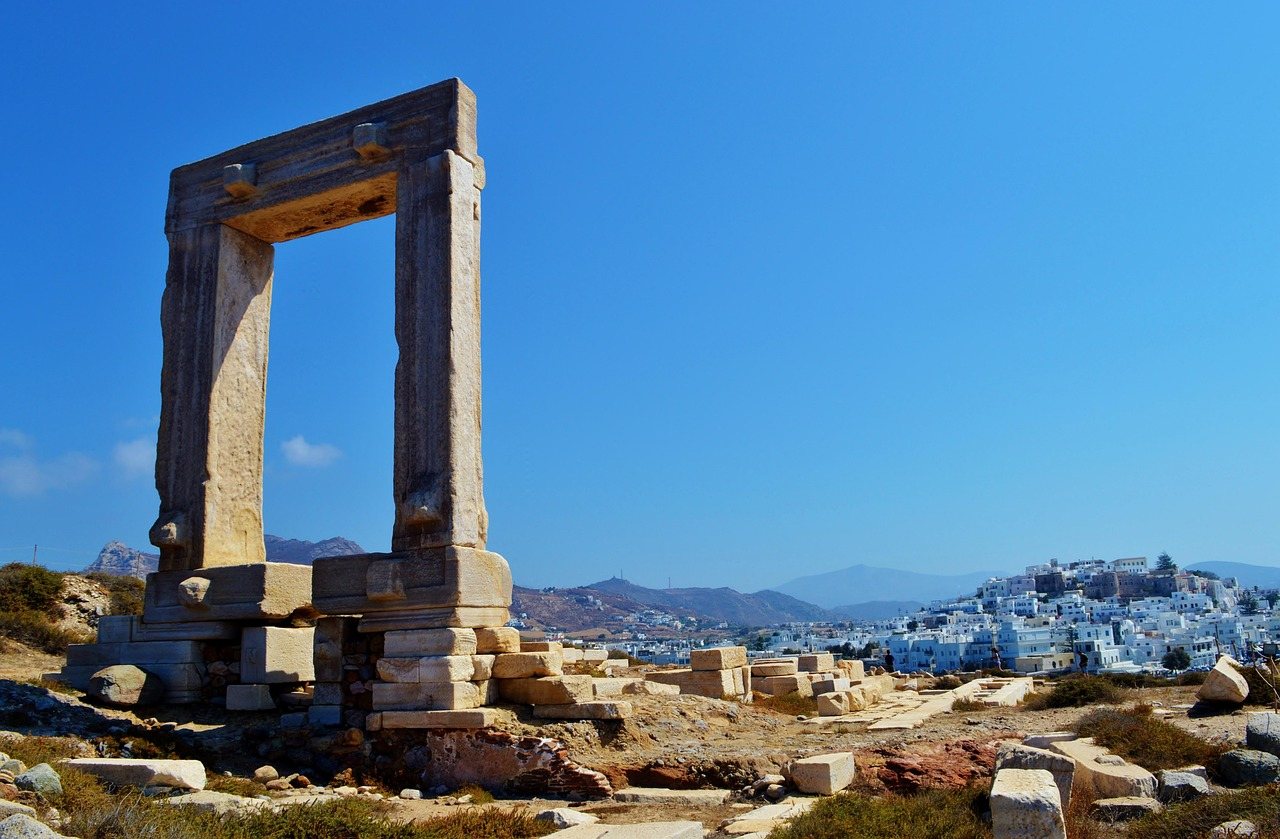
The Portara on Palatia, with Naxos Town behind
The ferry from Parikia to Naxos takes about forty-five minutes, thirty on a fast boat, and docks below the town. Nissaki Beach is a short walk south along the front, or a taxi with the bags.
After lunch, climb from the market lanes into the Kastro, the Venetian quarter on top of the hill, whose vaulted passages stay cool in the heat. The Archaeological Museum inside it holds Early Cycladic marble figurines and closes on Tuesdays; if you land on one, see it on the morning of day 9, before the midday boat.
Spend the late afternoon on the sand below the hotel. At sunset walk the causeway to the islet of Palatia, where the Portara, the marble doorway of a temple that was never finished, frames the sun going into the sea.
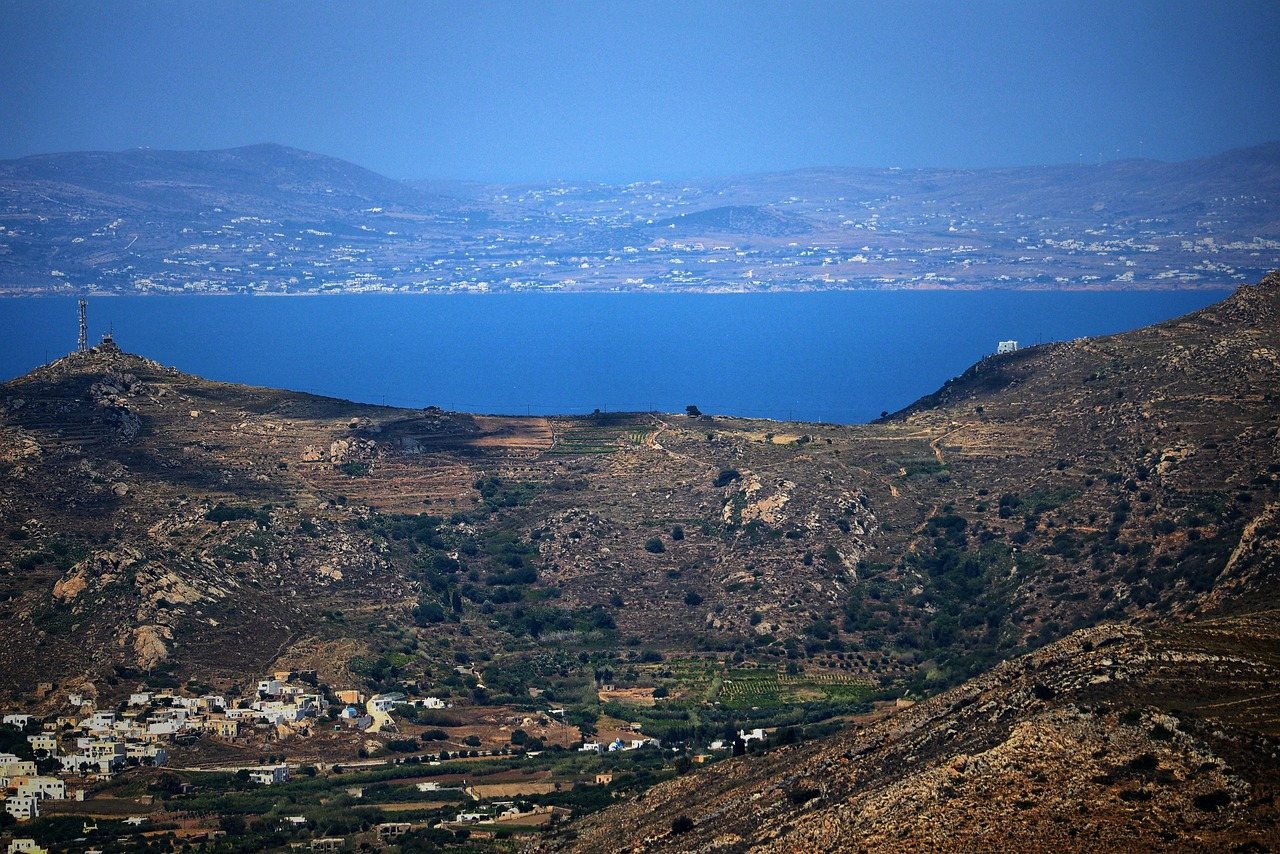
The Naxos hills, looking west across the strait to Paros
Collect a hire car in Naxos Town that morning, for the one day this trip needs one, since the mountain villages lie along winding roads. Start at the Temple of Demeter, rebuilt in the island's own marble on a low rise among fields.
Chalki, a short drive away, is a village of Venetian towers and old mansions, with a citron liqueur distillery on its main lane. Drive on to Apeiranthos, park at the edge and walk its marble-paved lanes, then eat there.
Come down to Agios Prokopios for the afternoon, long sand and clear, shallow water south of the town. Hand the car back in town that evening.
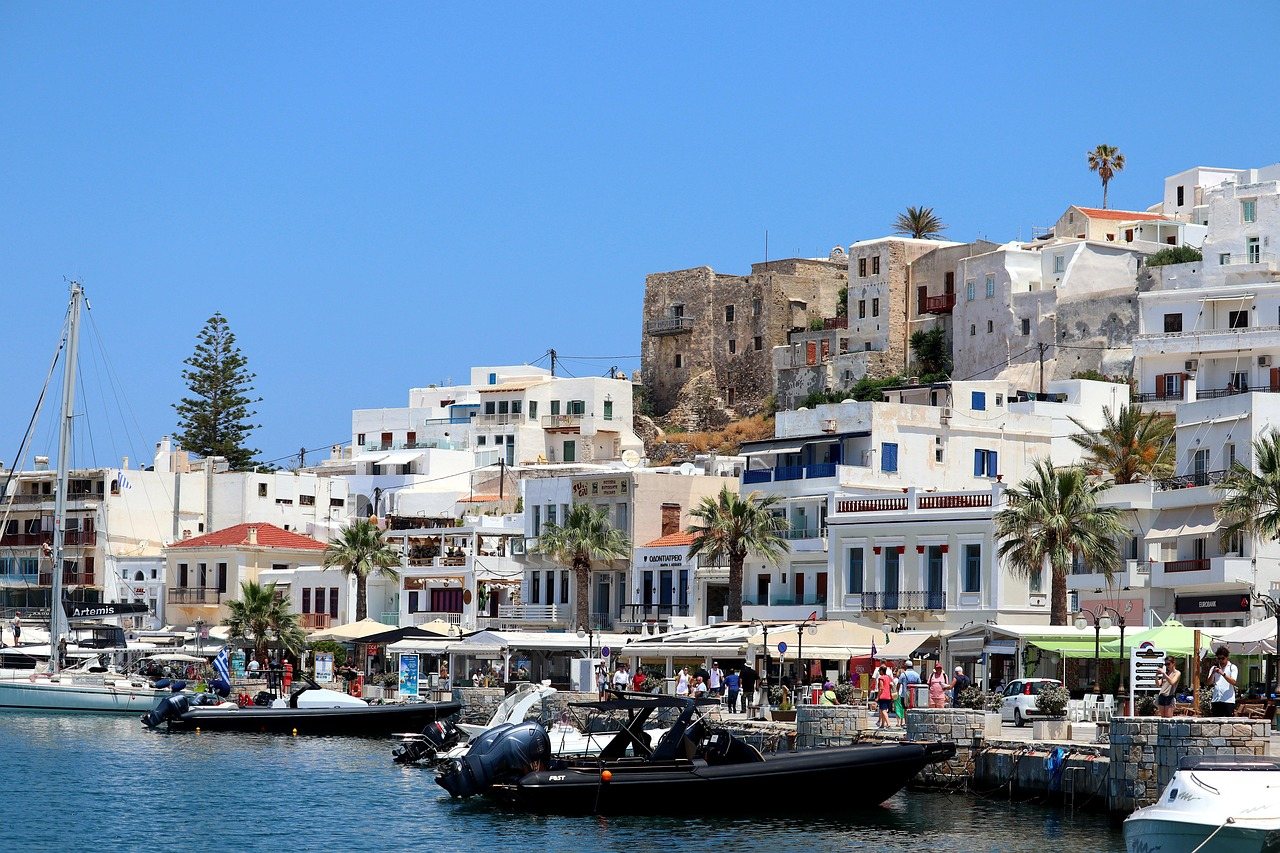
Naxos harbour under the Kastro, where the Santorini boat leaves
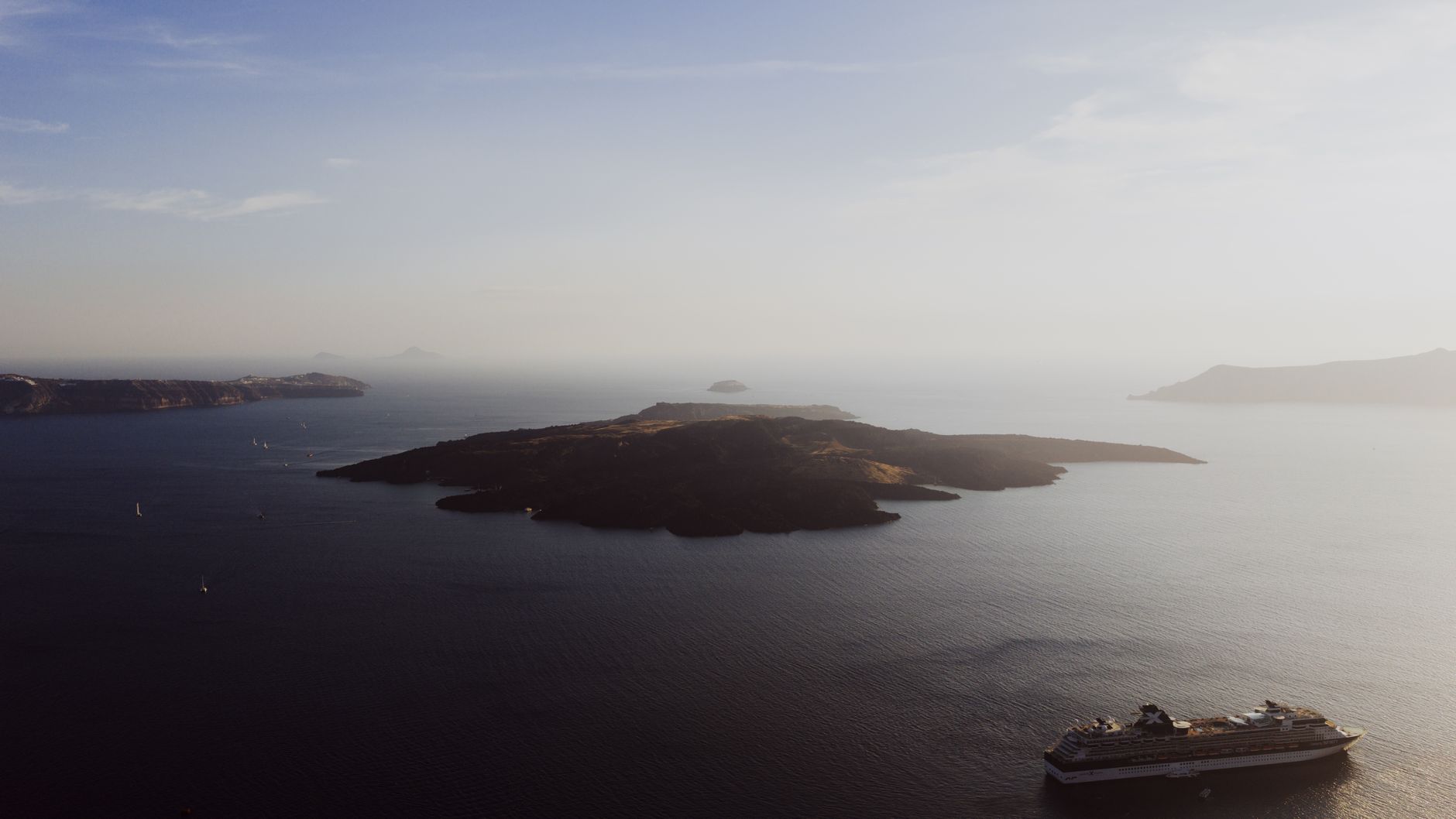
Swim off the town beach in the morning, then take the midday ferry to Athinios, the Santorini port, two to two and a half hours away; buy lunch at the port or eat on board. No bus runs from Athinios straight to Oia, so book a taxi for the climb up the cliff road.
Canaves Oia Suites is cut into the cliff, with a pool terrace looking out over the caldera. Spend the end of the afternoon by it.
Walk to the ruined castle at the village's western tip for the sunset. In July and August its walls fill well before the sun goes, and the lane on the way there has the same view; book dinner on the caldera side of the main lane.
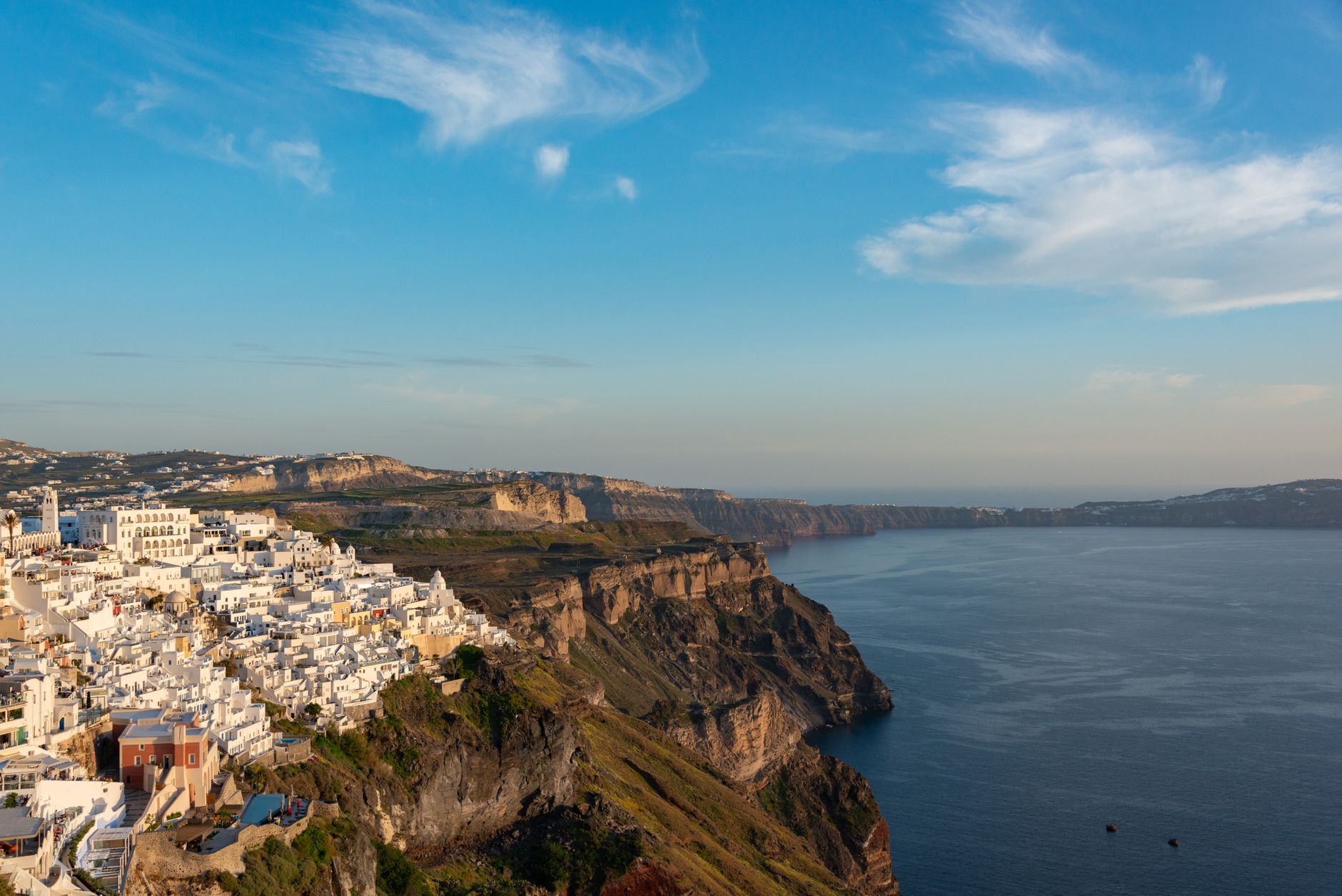
White houses on the caldera rim, the path's view most of the way
Take a taxi to Fira at first light and walk the rim footpath back to Oia, about ten kilometres on loose volcanic rock. It takes three to four hours with no shade for most of it, so in summer walk it in the cool of the morning and carry at least two litres of water each.
Near Imerovigli, a short side path drops to Skaros Rock, the stump of a medieval castle on a headland over the water. Rest by the pool once you are back in Oia.
In the late afternoon take the stepped path down from the castle to Ammoudi Bay, twenty to thirty minutes. Swim off the rocks at Armeni and eat at a taverna on the quay. The flight home leaves on the morning of day 11 from Santorini's airport, about half an hour from Oia, so book the taxi the evening before.
Yes. It is ten nights, flying home the morning after the second Oia night, and no island gets less than one full day without a crossing. To slow it down, add a third night on Naxos, where the mountains and the beaches compete for the same afternoon.
No. Santorini's airport has flights to Athens all year and direct flights to much of Europe in summer. Book an open-jaw ticket, into Athens and home from Santorini.
In summer, fast catamarans run by SeaJets and Golden Star cover the hops between the islands, and Blue Star's larger conventional ferries run Piraeus, Paros, Naxos and Santorini all year. When the meltemi cancels a fast boat, the Blue Star sailing on the same line often still runs. The second Oia day is your buffer before the flight.
June or September. The island-to-island fast boats run full timetables from about June to September, and the north wind blows hardest in July and August. The evening stops are timed for a September sunset; in June the sun sets near nine, so move them about an hour later.
Only for the mountain day on Naxos; pick the car up in town on the day, and if your licence is from outside the EU, ask the hire firm whether you need an International Driving Permit. Everywhere else, island buses, taxis and small boats cover the plan, though taxis are few at the ports when a ferry lands, so arrange each transfer with the hotel.
Your Acropolis time slot, since the morning slots sell out days ahead in summer, and the four ferries, since the fast boats can fill in high summer. The Delos boat is bought at the quay on the day.
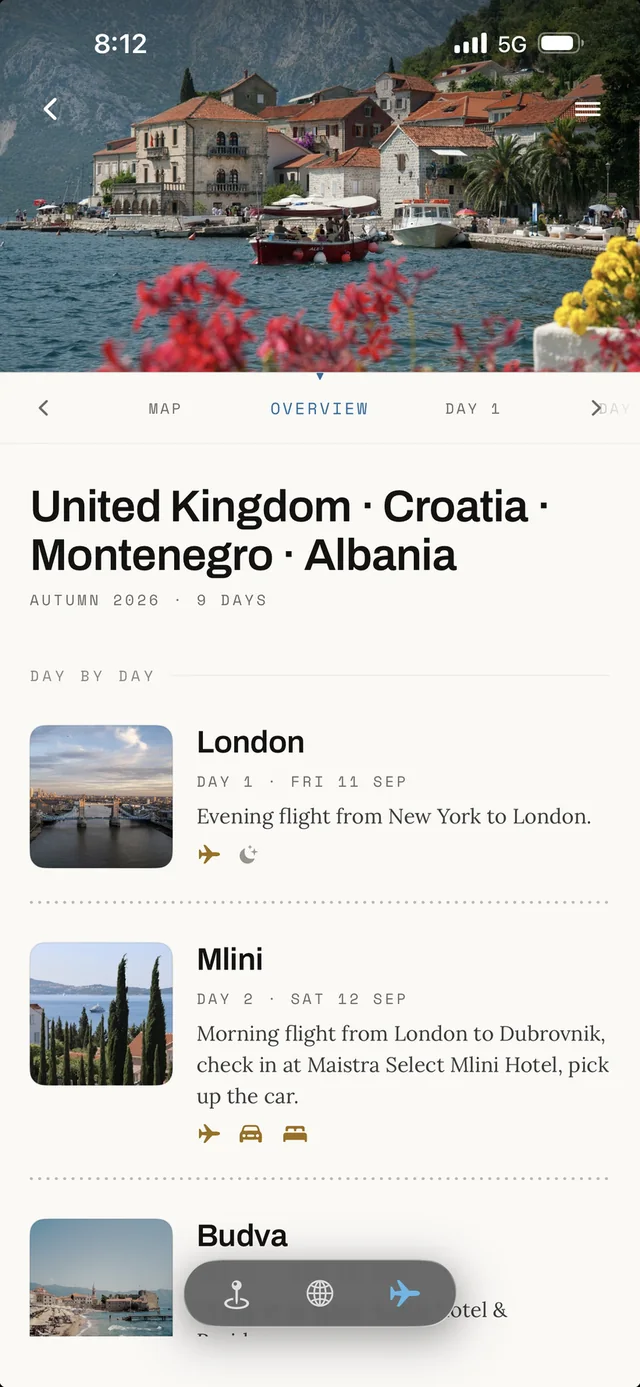
All ten days land in the app's Plan as your own copy, with the bases, the nights and every stop in place, ready to move around.
Last updated