Things to do
22-
Antiparos
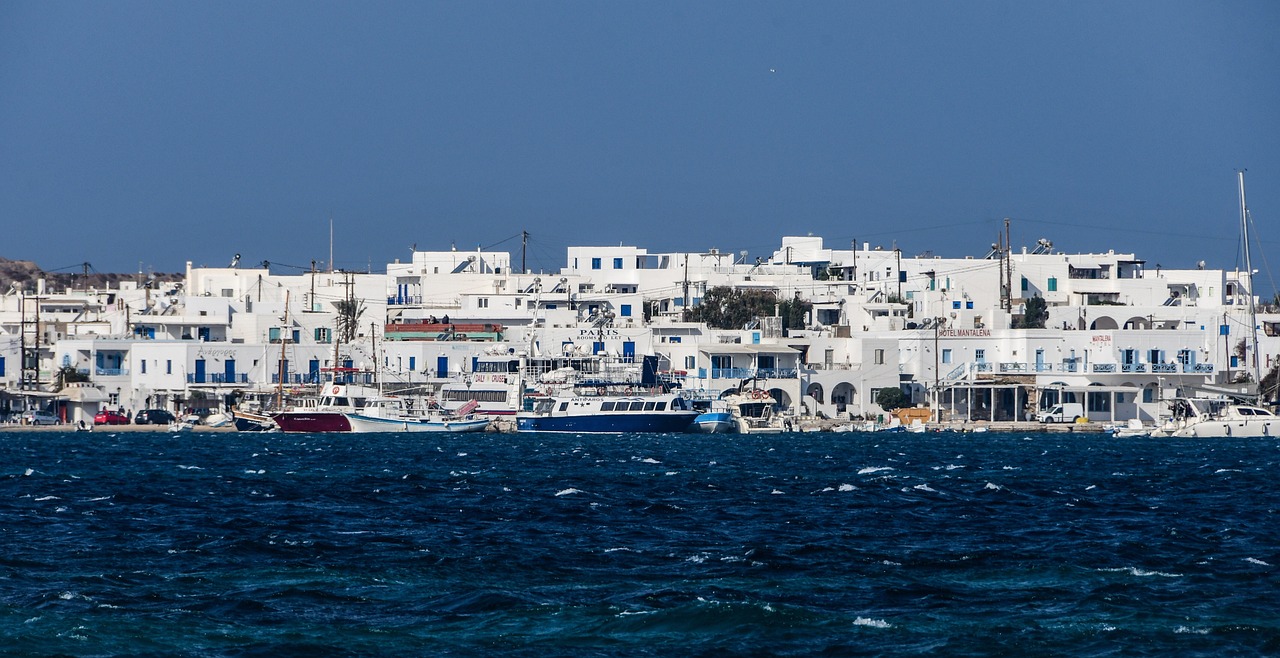
A low, quiet island just off the west coast of Paros. Its single village grew up inside the walls of a Venetian castle, whose houses still form the outer ring. Sandy coves ring the south of the island. Ferries cross from Paros, and timetables vary by season, so the last boat back should be checked locally.
-
Lefkes
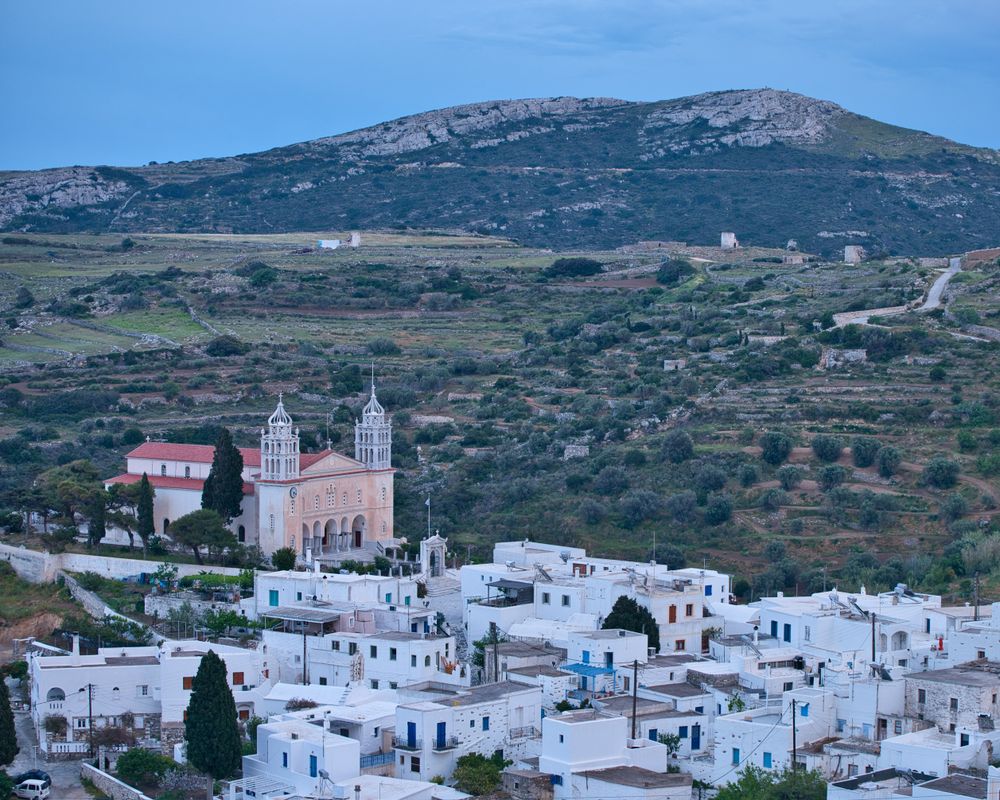
The former inland capital, built in a fold of the central hills among olive groves and windmills. Its marble lanes lead up to the church of Agia Triada, and the main square stays shaded and quiet even in August. An old paved path runs downhill from the village. Buses from Parikia stop at the edge.
-
Beach
Agioi Anargyroi and Piperi
Two sandy, shallow beaches lie about a ten-minute walk east of Naousa, close enough for a swim between lunch and dinner without a car or a boat. Piperi is the quieter of the pair. Naousa harbour is a level six-minute walk from the bus terminal.
-
Archaeological Museum
Behind the Ekatontapiliani church, two rooms and an atrium hold finds carved from the island's famous white marble. A winged Victory and a running Gorgon stand among the sculptures, and a fragment of the Parian Chronicle, an ancient timeline cut in stone, is displayed in its own case. It is ticketed, and an hour covers it comfortably.
-
Cave of Antiparos
A deep cave on the slopes of Antiparos, its chambers filled with stalactites and stalagmites and its walls scratched with the names of centuries of visitors. A long stairway descends into the dark, and the climb back up is steep and humid. A car or island bus reaches the entrance.
-
Cosme, a Luxury Collection Resort
A hotel of white suites stepped down a hillside to the beach of Agii Anargyri, a ten-minute walk from Naousa harbour. Many suites carry plunge pools, and a half-moon pool mirrors the curve of the bay. Furniture is by the Spanish designer Jaime Hayon, and the spa uses Greek Korres products. It is part of Marriott's Luxury Collection.
-
Beach
Faragas Beach
When the north wind is up, Faragas is the place to swim: the beach is sheltered from it, and that wind is common on Paros, strongest in July and August. There is a beach restaurant, so a whole windy afternoon can be spent here without going back to town for lunch.
-
Golden Beach
Known in Greek as Chrysi Akti, a long sweep of fine sand on the south-east coast that catches the summer north wind side-on. It is a recognised windsurfing and kitesurfing spot. Calm mornings suit swimmers before the breeze builds. Tavernas and rooms line the road behind, and island buses run from Parikia.
-
Kolymbithres
Smooth granite boulders, worn by wind and sea into rounded shapes, break the shore here into a string of small coves and rock pools across the bay from Naousa. Swimmers slip between the rocks into calm, clear water. Some coves have sunbeds and others stay bare. Small boats run over from Naousa harbour in summer, and the road around the bay is short.
-
Beach
Laggeri Beach
Fine sand, dunes and cedar trees back Laggeri, a quiet beach near Naousa on the north coast. It makes an easy half day from a base in Naousa, with shade under the cedars at the back of the beach. Come here in July and August, when Naousa is at its busiest.
-
Archaeological Site
Marathi Quarries
Tunnels cut into the hillside at Marathi show how the white marble of Paros was extracted, deep in the ground. Pair the visit with the Archaeological Museum in Parikia, which shuts in mid-afternoon, so see the museum first and drive out to the quarries after.
-
Village
Marpissa
Marpissa spreads up a hillside on the east coast, above the small harbour of Piso Livadi, and it is one of the quiet villages of Paros. A rental car is the practical way to reach it. Drive down afterwards to Piso Livadi for a swim.
-
Beach
Monastiri Beach
Sheltered and shallow, this cove sits on the edge of Paros Park, a protected area of walking trails, rock formations and caves. A rocky path leads down to the water, and tamarisk trees give some shade. The park's trails include a route out to a lighthouse, best walked in the hour before sunset.
-
Naousa
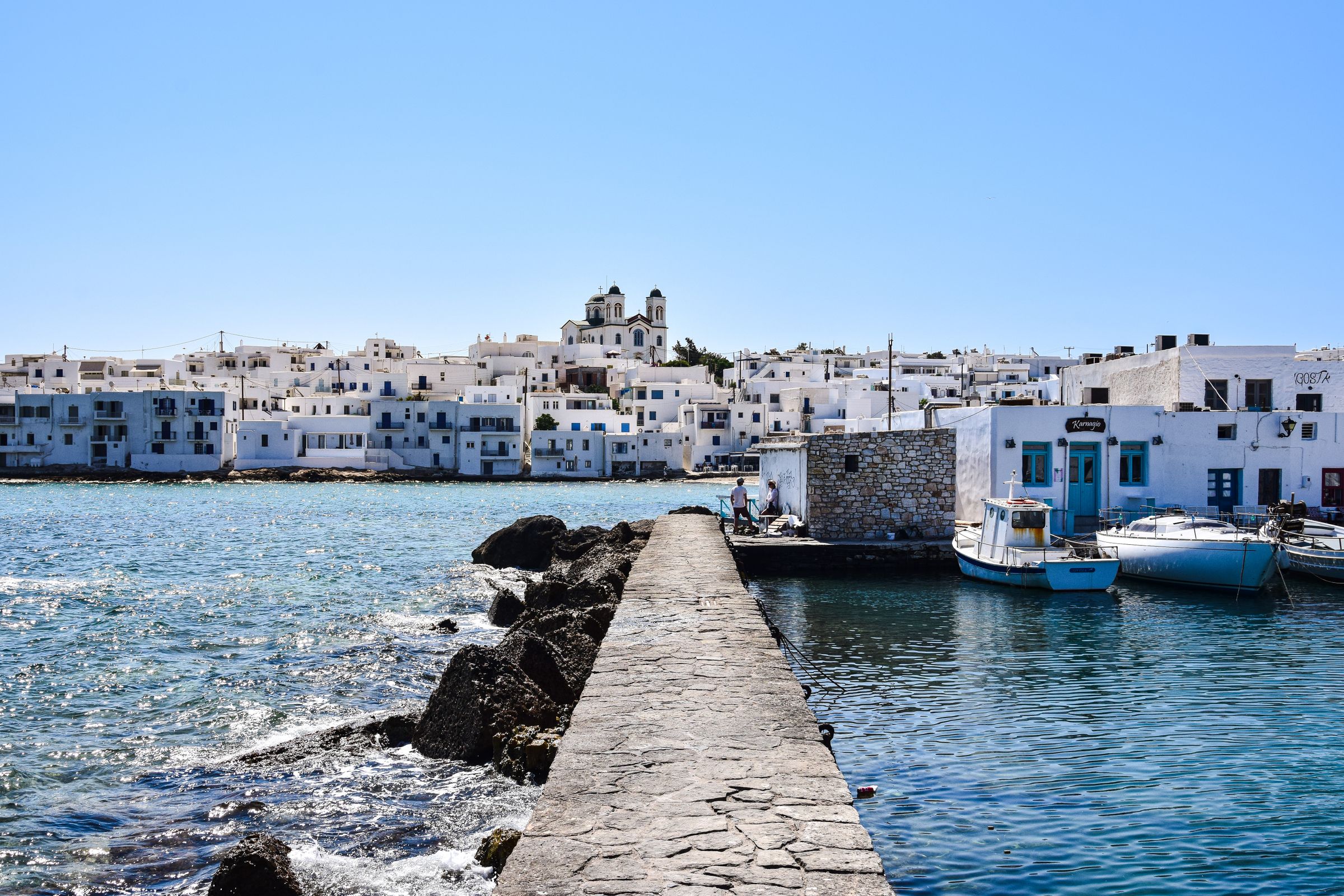
A fishing harbour on the island's north coast, where painted caïques tie up below a ruined Venetian fortress at the harbour mouth. Behind the quay, white lanes hold tavernas, wine bars and small boutiques, busy late into the night in summer. Boats leave the harbour for the beaches across the bay. Parking at the edge of the village fills fast in August.
-
Panagia Ekatontapiliani
An early Christian church a few steps from the Parikia waterfront, its name meaning the church of a hundred doors. Inside the walled courtyard, the main basilica, two side chapels and a baptistery with a cruciform font sunk into the floor have stood in use since Byzantine times. Covered shoulders and knees are expected.
-
Viewpoint
Parikia Kastro
The Kastro is the hilltop above Parikia's port, and the sunsets the town is known for are watched from here and from the waterfront below. The view takes in the roofs of the old town and the harbour. Pair it with an evening walk through the whitewashed lanes around the hill.
-
Old Town
Parikia Old Town
Behind the ferry quay, Parikia's old town is a maze of whitewashed lanes, small chapels and courtyards under bougainvillea. It is the island's capital and its transport hub, with the bus station beside the port. On 24 July the old town holds the festival of Agia Anna.
-
Village
Piso Livadi
On the east coast below Marpissa, this quiet harbour suits a calm beach stay away from Parikia and Naousa, both of which fill up in July and August. Marpissa sits on the hillside just above, a short drive up for an evening in a quiet village.
-
Beach
Pounda
Pounda is the bay on the west coast where the Antiparos ferry leaves, about twenty minutes from Parikia by island bus. It is also a kitesurfing and windsurfing bay, with beginner lessons on offer, and in July and August the steady north wind gives the sails plenty to work with.
-
Village
Prodromos
A small inland village at the bottom of the Byzantine Path, the marble-paved track that runs down through olive groves from Lefkes. The walk is about 3.5 km and takes roughly an hour and a half, mostly downhill. Bougainvillea covers the walls, and the oldest windmill on the island opens to visitors by day.
-
Beach
Santa Maria Beach
Santa Maria has sand and shallow water, with windsurfing and snorkelling from the shore. A day here can mix a swim with time on a board or a look underwater with a mask. When the north wind is up, Faragas is the sheltered alternative for a swim.
-
Monastery
St John of Deti
The monastery of St John of Deti is one of the most peaceful sunset spots on Paros. It works best as the last stop of a day's drive, timed for the hour before the sun goes down. Its feast day is 29 August.