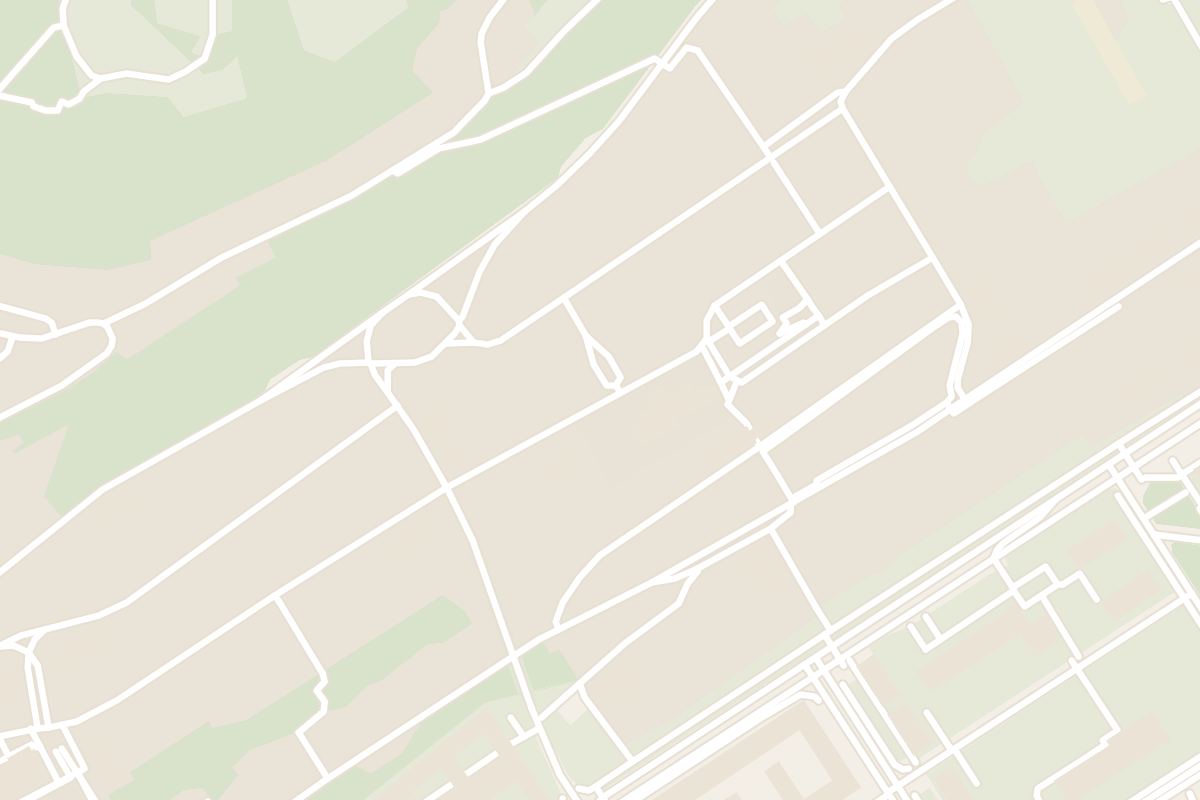
The Kirchberg plateau holds Luxembourg City's showcase of contemporary architecture, and you reach its two cultural landmarks, Mudam and the Philharmonie, at a tram stop named for both.
District, Luxembourg City. Meridian Dispatch.
The main cultural sites are the Mudam art museum and the Philharmonie concert hall, side by side at the bridge end of the plateau. The Musée Dräi Eechelen also stands on the plateau, and the National Library is on the main avenue.
Trams call at the Philharmonie / Mudam stop, and buses at Rout Bréck / Pafendall. From Pfaffenthal-Kirchberg station, the funicular climbs 40 metres in 63 seconds to that interchange. Buses, trams, trains and the funicular are free to ride throughout Luxembourg.
The core walk is short: Mudam is within a few minutes of the tram and bus stop at the bridge, with the concert hall next door. Walking the whole of Avenue John F. Kennedy is a longer outing, as the district's central axis runs about 3.5 km to the edge of the Grünewald forest.
Mudam stands inside Park Dräi Eechelen, beside the Grande-Duchesse Charlotte Bridge. The funicular ride up from Pfaffenthal has views of the valley and of the bridge itself.
Mudam opens on Saturdays, Sundays and bank holidays. The museum closes on 30 June and 25 December, and shuts early on 24 and 31 December.
Largely, on the main route. Trams board with no step between platform and car, and the pedestrian bridge to Park Dräi Eechelen suits wheelchair users, with no stairs from the park entrance to Mudam. A lift at the end of the Philharmonie's square goes down to the park, and manual wheelchairs can be borrowed at the museum desk.
Kirchberg is the business district of Luxembourg's banking and financial centre. The European Court of Justice, the European Investment Bank and the European Court of Auditors are all based here.
Cross the Grande-Duchesse Charlotte Bridge, known as the red bridge, and the first building on the plateau is Mudam, the modern art museum. Its architect, Ieoh Ming Pei, also designed the glass pyramid at the Louvre.
The museum stands on the site of Fort Thüngen, and its galleries are spread over three levels.
A few metres further on, the Philharmonie by Christian de Portzamparc stands behind a screen of more than 800 vertical columns. They enclose three concert halls, and the building is home to the Luxembourg Philharmonic.
The concert hall's square, the triangular Place de l'Europe, was laid out by the Catalan architect Ricardo Bofill. Also on the plateau, the Coque sports and cultural centre sits under a roof shaped like a seashell, made from spans of pre-stressed concrete.
Pfaffenthal-Kirchberg station sits in the valley below the plateau. From the platforms, the funicular climbs to the tram and bus interchange at the bridge, where signs point to the Passerelle des Arts, a pedestrian bridge into Park Dräi Eechelen.
Mudam stands along the park path. It opens Tuesday to Sunday, with a late evening on Wednesdays.
After the galleries, the path behind the Philharmonie links the museum with Place de l'Europe, framed by the concert hall, the Alcide De Gasperi building and the New Conference Center. Stately steps at the square's edge lead down to Avenue John F. Kennedy.
If you would rather ride than walk the long avenue, there is a Vel'OH! bike-share station at the Philharmonie.
For the architecture in depth, the city tourist office runs a guided tour of the plateau for groups of up to 20, starting from the Philharmonie. Book it at least ten working days ahead.
Drivers can use the public underground car park near the entrance to Park Dräi Eechelen. Its height clearance is 2 metres, and private coaches cannot enter, so groups are dropped at the park gate instead.
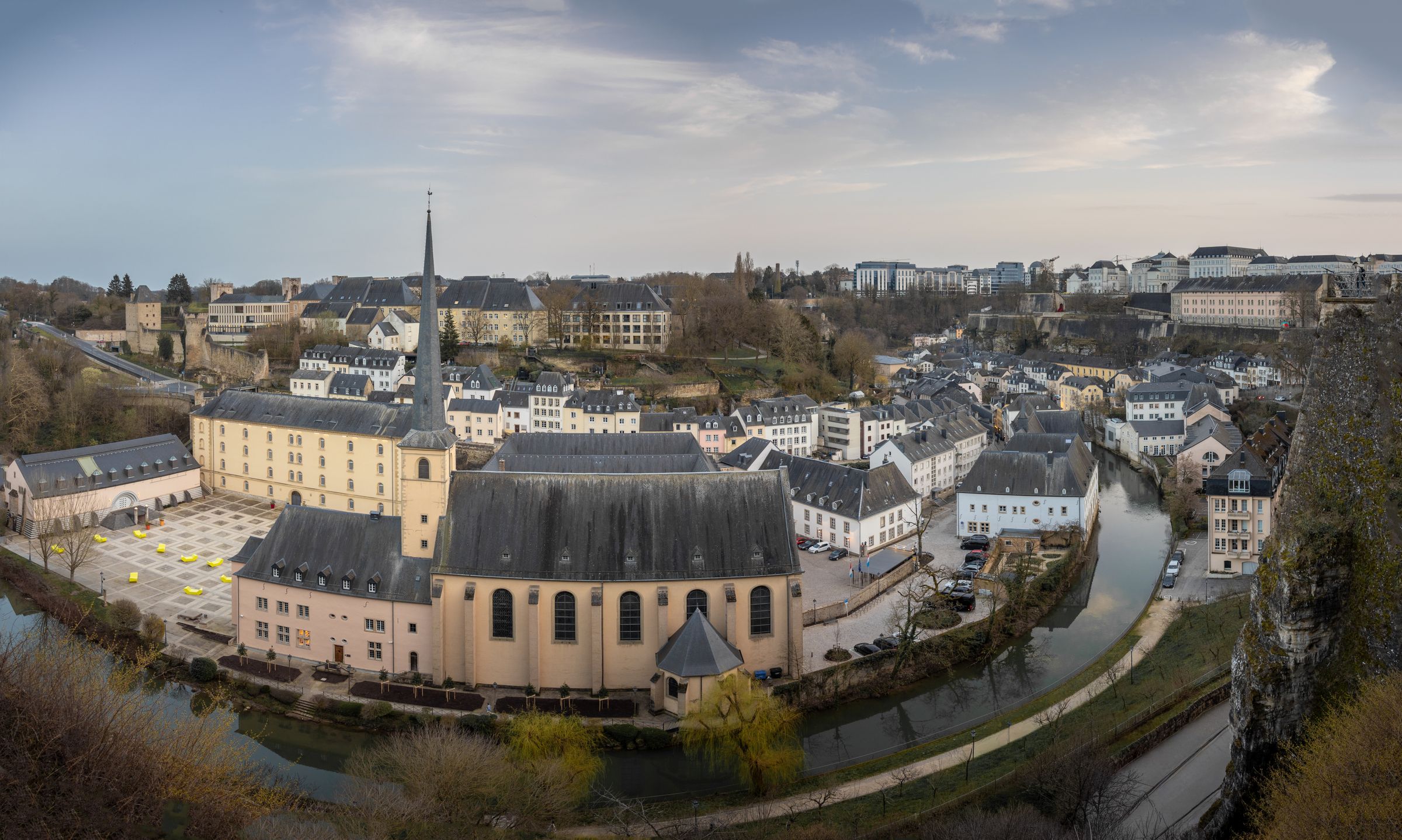
In the Ville Haute the main sights are a walk apart, and a free public lift drops you to the Pfaffenthal in the valley below, running until 1 am for the ride back up.
Read the Luxembourg City guideExplore the rest of Luxembourg City
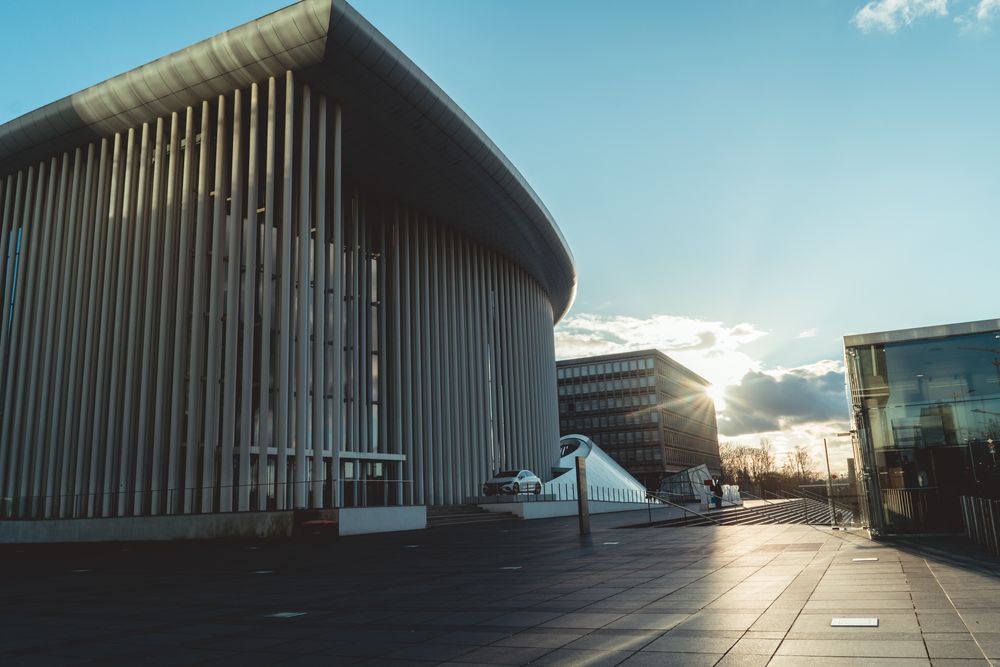
Behind a screen of 823 white steel columns on Place de l'Europe in Kirchberg, Christian de Portzamparc's concert hall is home to the…
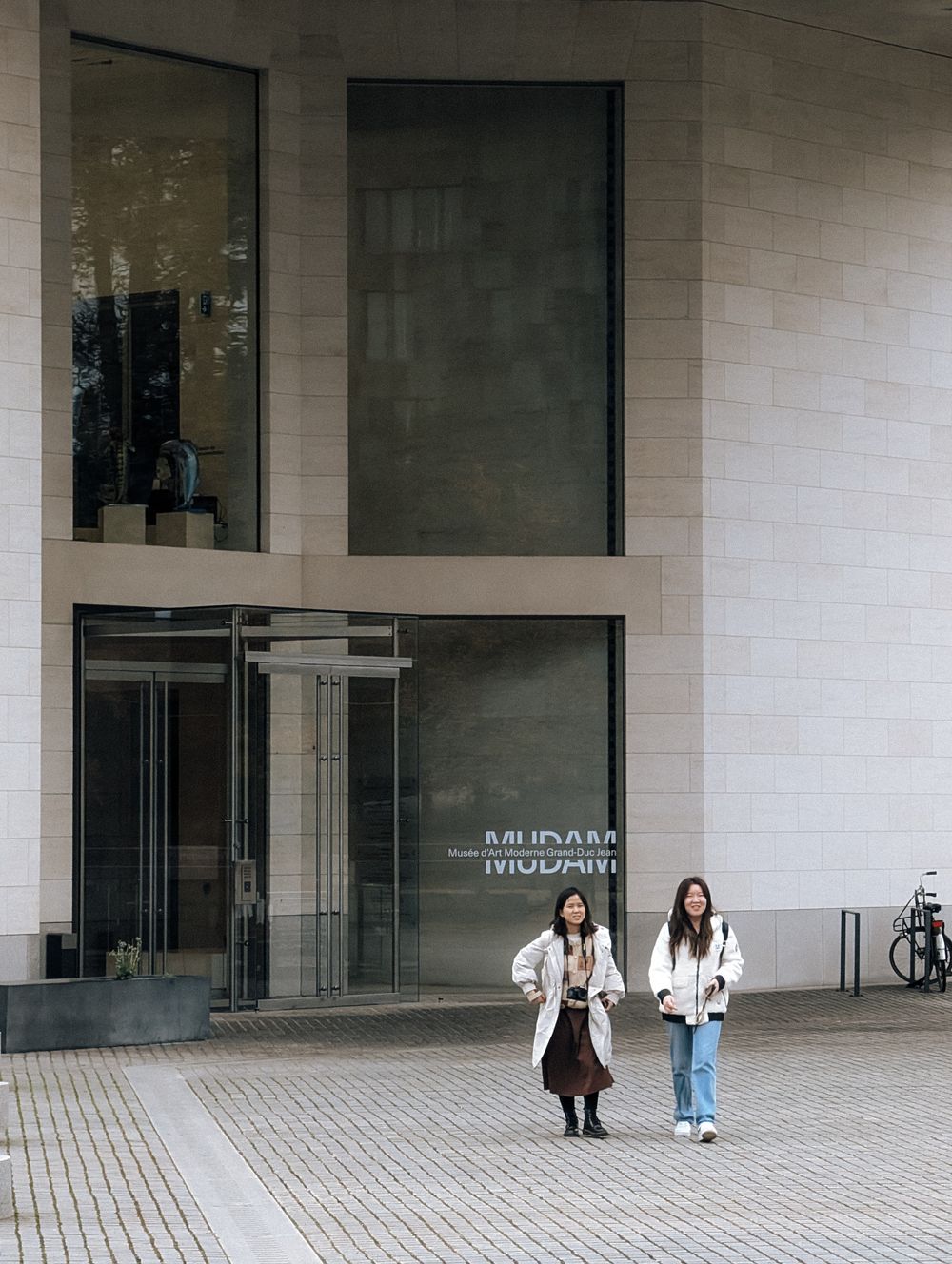
Up on the Kirchberg plateau, the building by Ieoh Ming Pei for the national museum of modern art rises on the site of the old Fort Thüngen…
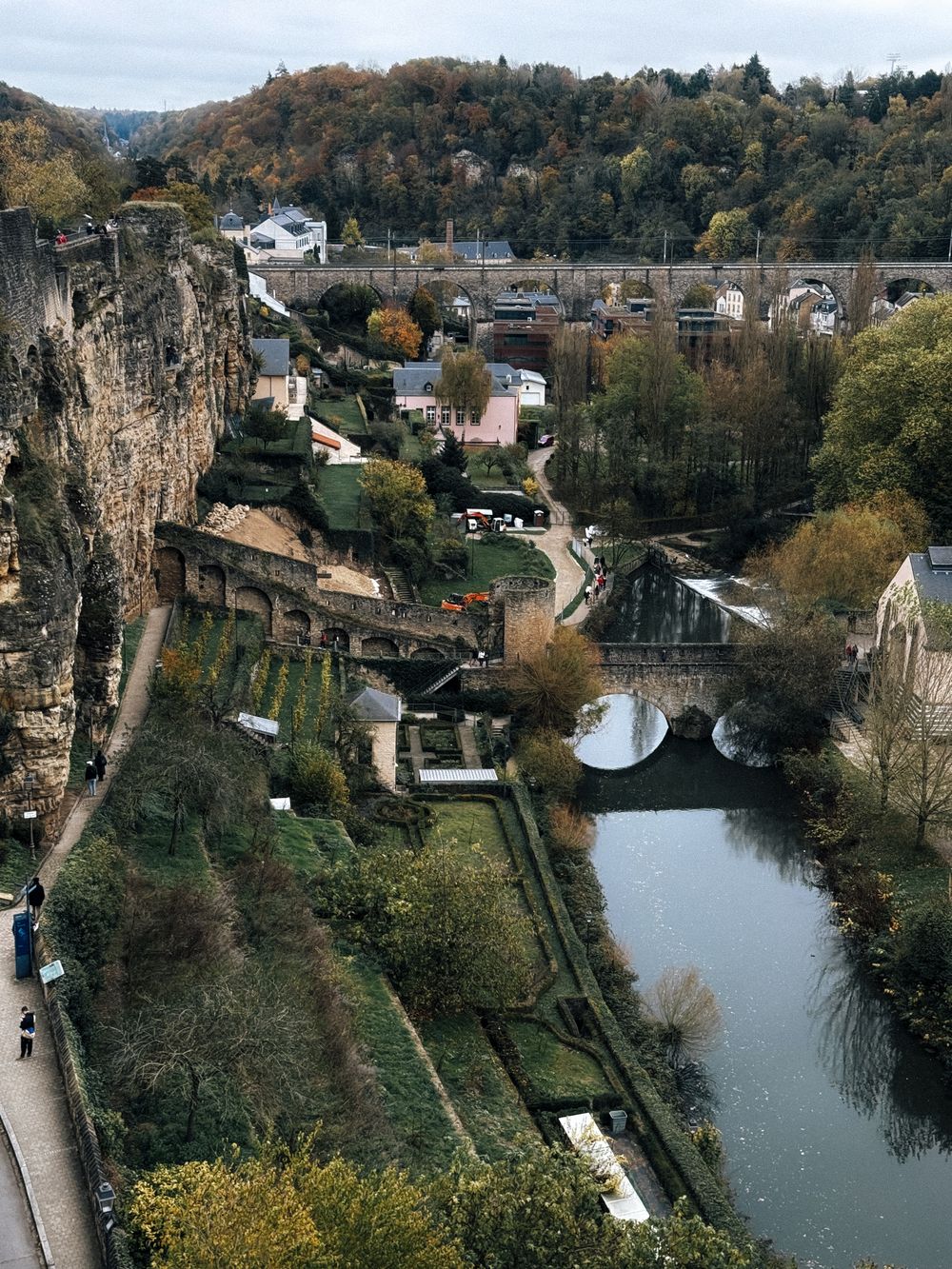

A main gallery 110 metres long runs through the rock of the Bock promontory, with side passages where cannon once covered the Alzette…
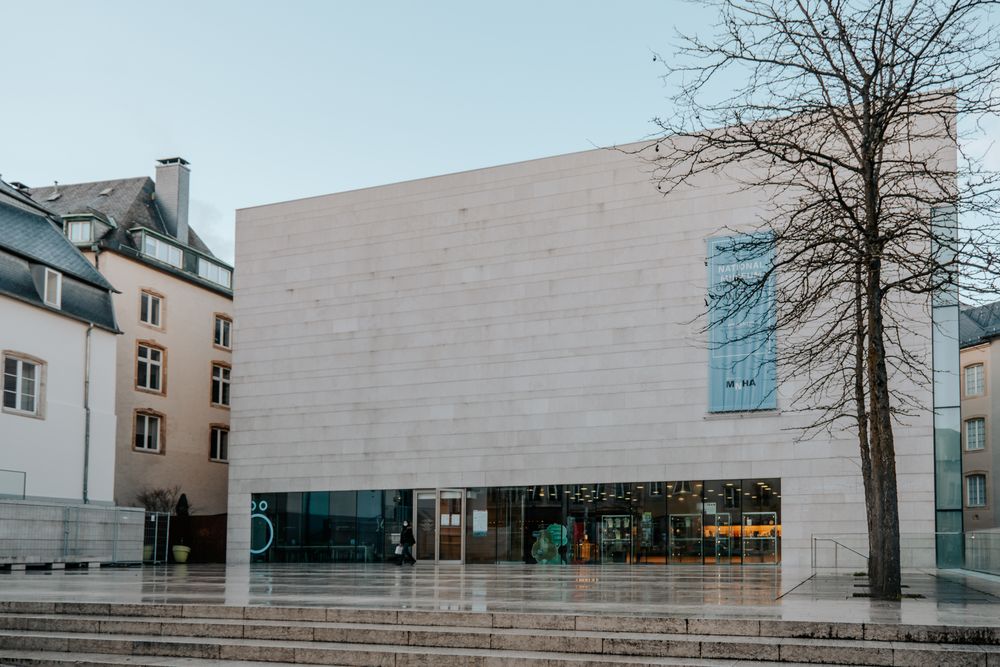
On the old Fish Market square in the upper town, the national museum gathers archaeology, history, coins and medals, decorative arts and…
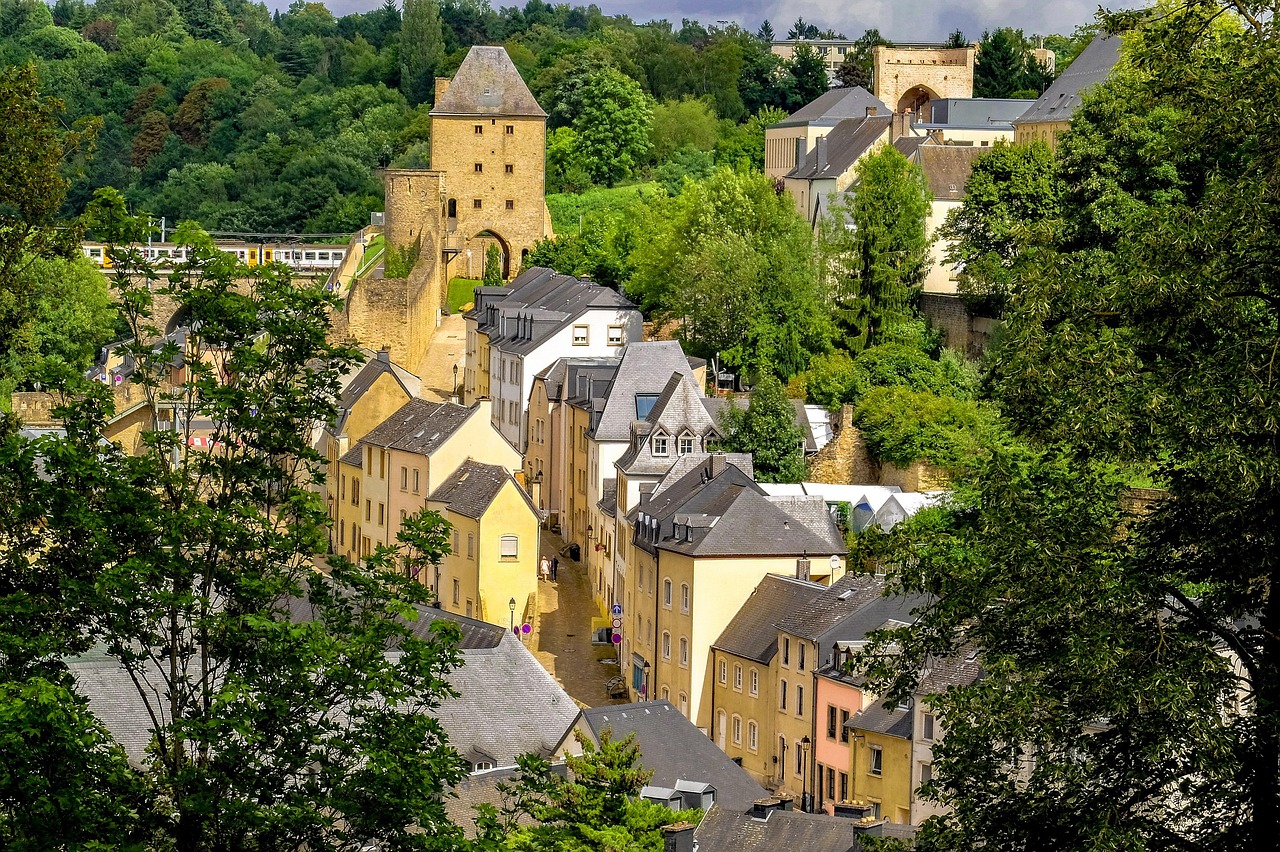
Down in the Alzette valley below the city centre, old houses crowd the riverbanks around Neimënster Abbey, with views up to the fortress…
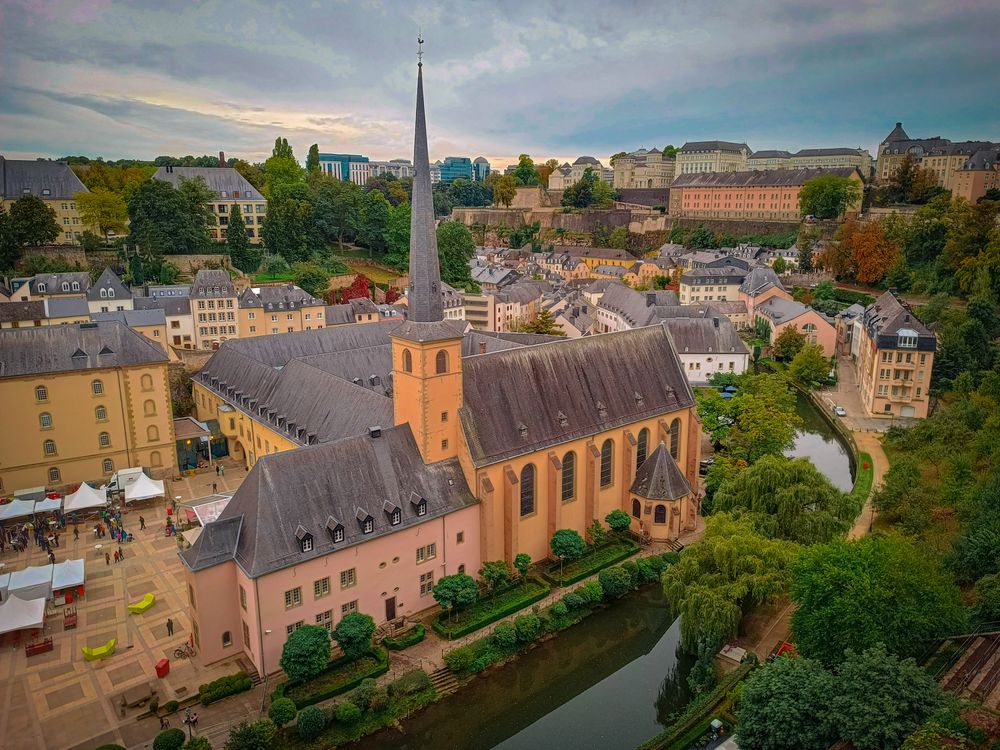
Begun by Benedictine monks in 1606, the abbey complex on the Alzette in the Grund now runs as the Neimënster cultural centre, with…
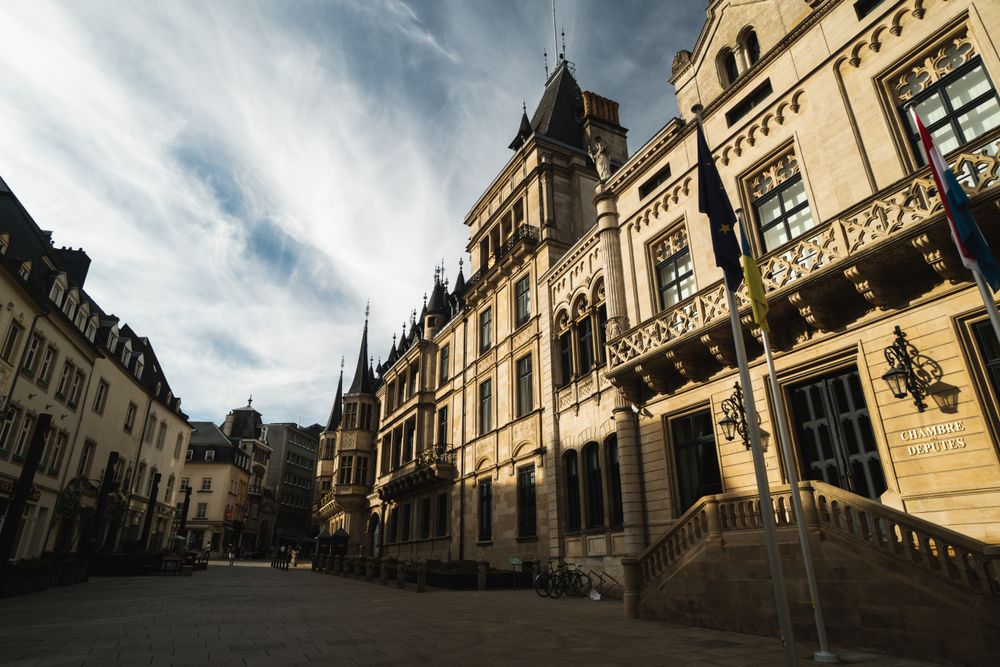
Rue du Marché-aux-Herbes runs past the palace where the Grand Duke keeps his office, a building that served as the city's town hall for…
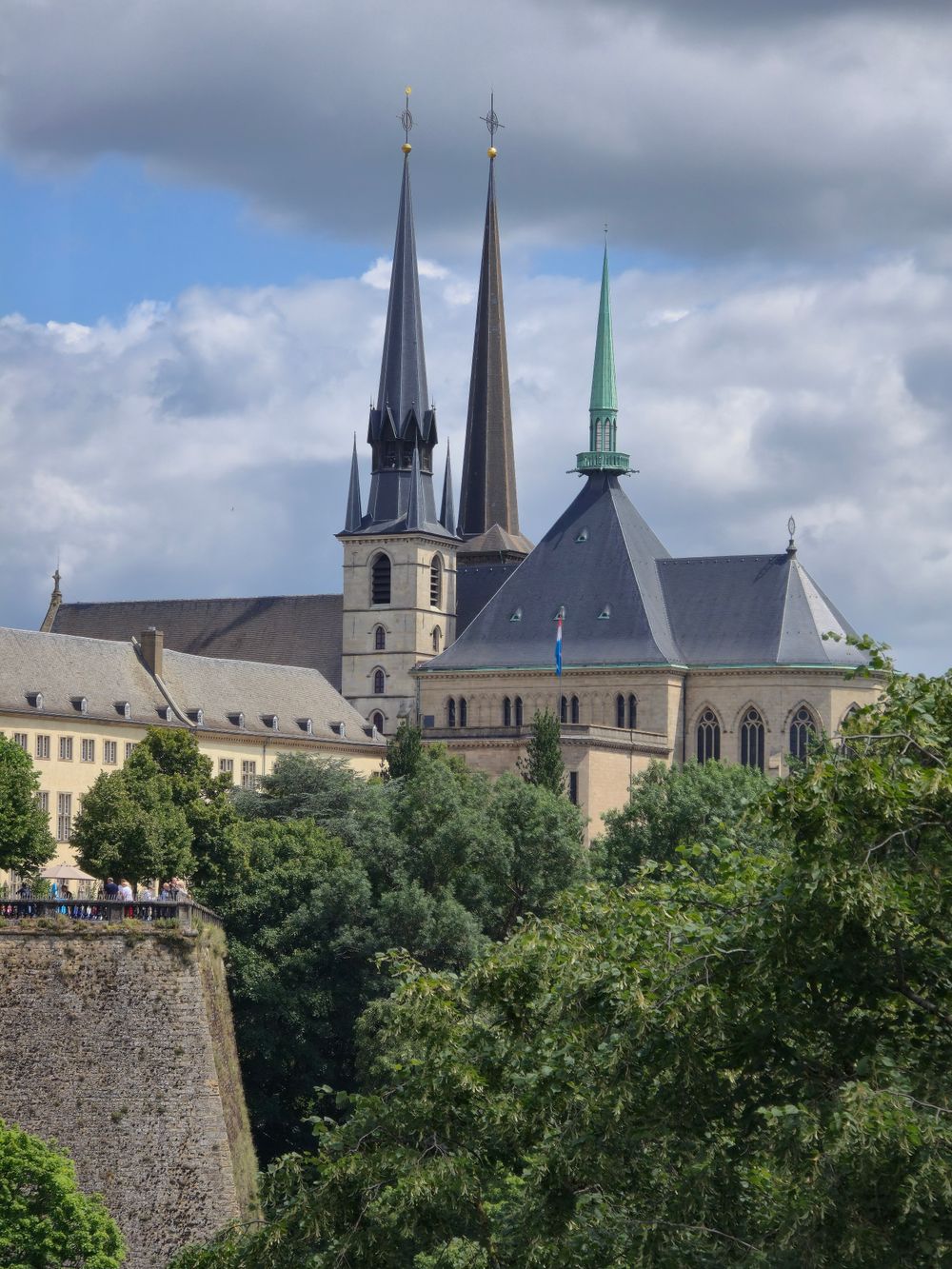
Late Gothic pillars and Renaissance carving share the city's Catholic cathedral, whose cornerstone was laid in 1613. Steps lead down to the…
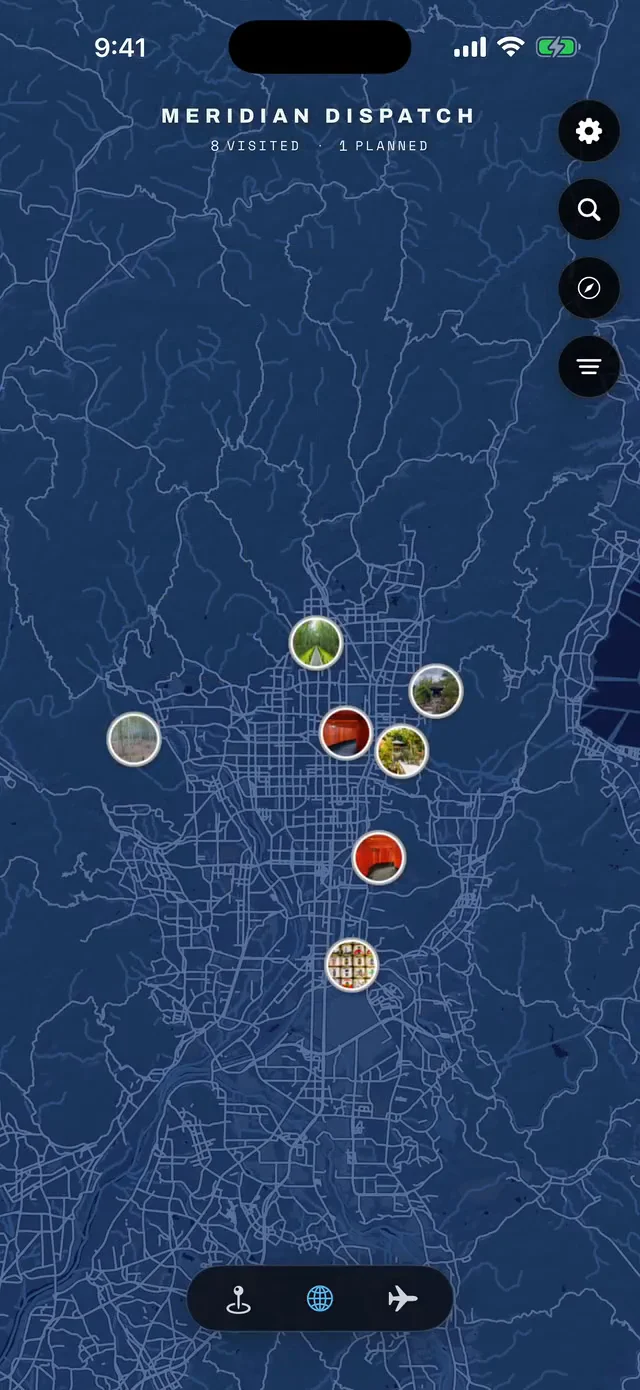
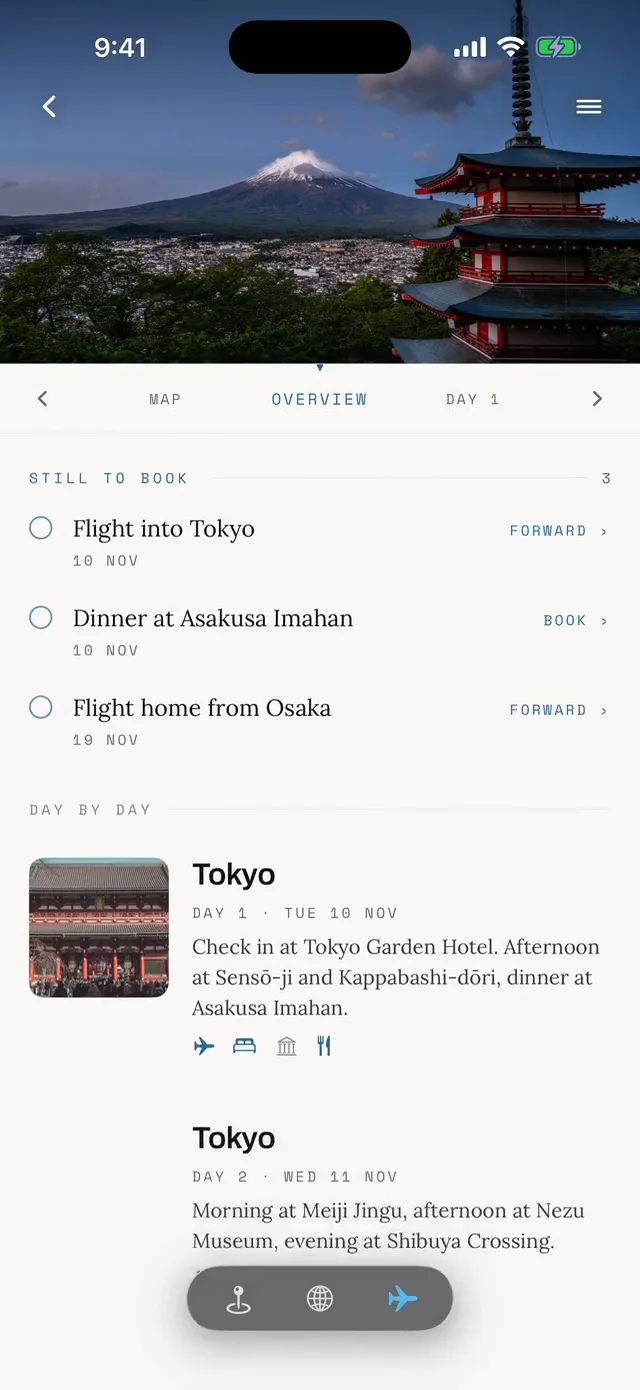

Save Kirchberg to your Luxembourg trip in the Meridian Dispatch app and build the day around it, with the best of Luxembourg City pinned on one map.
Download on the App StoreThe official pages this guide was checked against.
Last updated