Things to do
5-
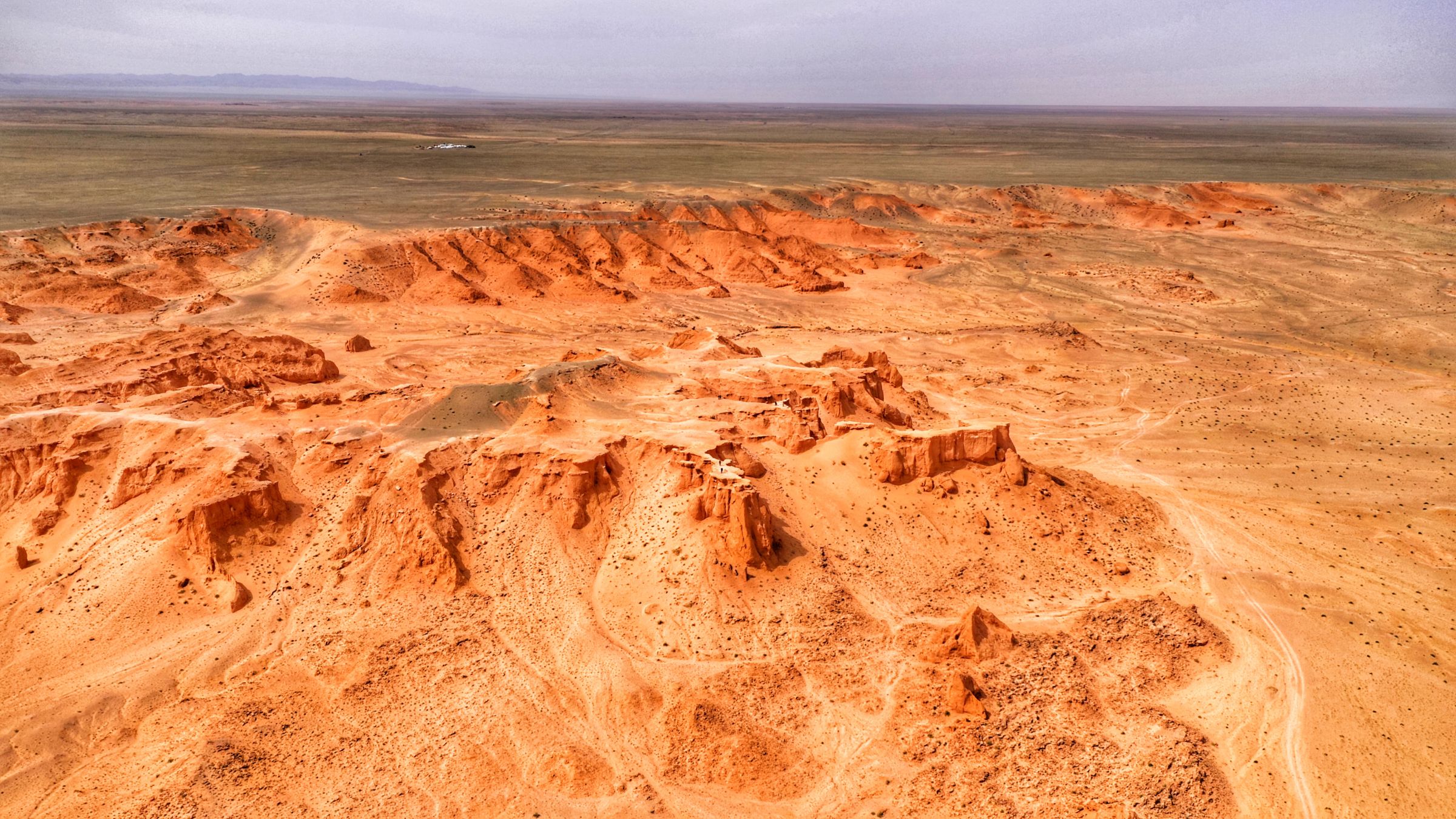
Flaming Cliffs
Red sandstone escarpments at Bayanzag gave up the dinosaur eggs that Roy Chapman Andrews identified in the 1920s, the first recognised as such anywhere. The cliffs are modest in scale and the draw is the colour, which deepens in the hour before sunset. Removing fossils is illegal, and the site lies a couple of hours by track from the main road.
-
Gobi Gurvansaikhan National Park
Three ranges of bare mountain, gravel plain, saxaul scrub and the Khongoryn dunes fall inside a park covering a large part of the South Gobi. Wildlife includes ibex, argali and the black-tailed gazelle herds that cross the flats. There is no public transport and no marked road network, so trips run with a driver and a permit taken at the gate.
-
Gobi Museum of Nature and History
Dinosaur fossils found in the Gobi, some real and some replicas, fill the main displays of this museum in the provincial centre. Other rooms cover relics from the area and work by local craftsmen. It opens all year except on public holidays, and an hour covers it on the afternoon before the drive out to the fossil beds at Bayanzag.
-
Khongoryn Els
Sand here makes a low roar as it slides, which gives these dunes their other name, the Singing Sands. The range runs for about 100 km, with ger camps along its base. The climb to a crest takes from half an hour to over an hour in loose sand, and the ridges make an easier line up than the steep faces.
-
Yolyn Am
Stream ice lies on the floor of this narrow gorge in the Zuun Saikhan range into early summer, 46 to 56 km west of town. It has usually melted by mid-July, and some years the last of it goes in June. The walk in and back is about 10 km. Horse rides into the valley start from the entrance, beside a small natural history museum.


