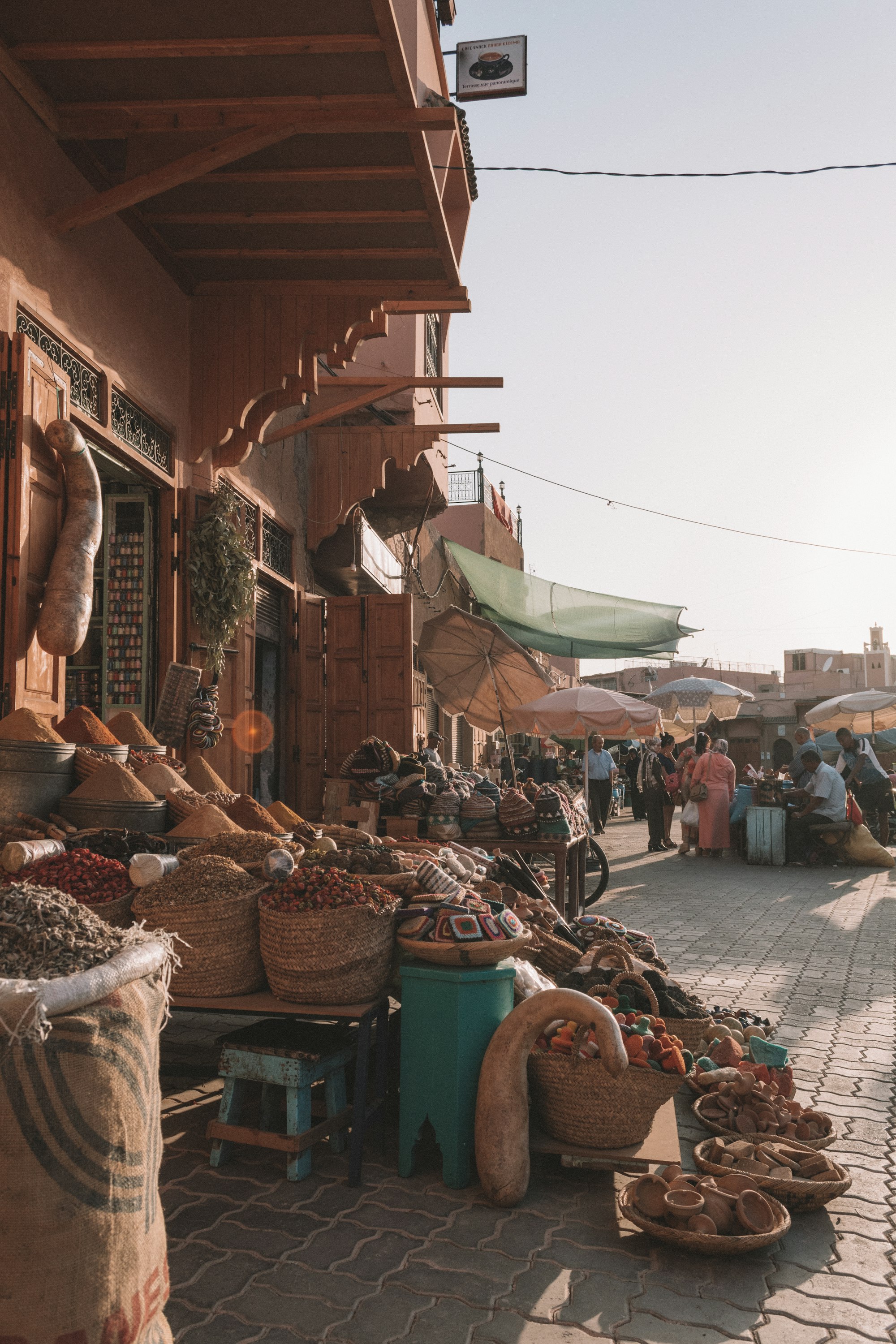
Open every day, the Marrakesh medina gives you a working market city inside one wall: covered lanes sorted by trade, a carved college courtyard and a vizier's painted palace, all on foot.
Old Town, Marrakesh. Meridian Dispatch.
Taxis usually cannot reach the medina doors, because the lanes are too narrow for a car. The driver stops at the nearest point and the last stretch is on foot. A riad can arrange the drop-off point and whether a member of staff will meet the arrival.
The medina has no fixed opening hours, because it is a district of public lanes rather than a building. Most souks typically trade from about nine in the morning until eight in the evening, and shops near Jemaa el-Fnaa often stay open later.
Yes. Walking in needs no ticket or booking, because the lanes are public streets. The palaces and colleges inside the walls charge their own entry. Cash is worth carrying for shopping in the souks.
One full day is the usual allowance for the medina. That covers the souks, the Ben Youssef Madrasa and the Bahia Palace, with a break indoors during the midday heat in the warmer months.
No. The lanes are safe to explore without a guide. Strangers who offer to lead the way unasked often take a long route and then expect payment.
Yes. UNESCO declared the old town of Marrakesh a World Heritage Site in 1985. The listed medina takes in the main square, a large number of souks and the Koutoubia Mosque, among many other historic sites.
Not the Koutoubia, the city's best-known mosque: it is still active, and non-Muslims are not allowed inside. The Tinmal Mosque south of Marrakesh, built along the same lines, is inactive and preserved as a historic site that visitors can enter.
Yes, on shifted hours. Morning hours are quiet during Ramadan and many stalls open late. Trade picks up in the late afternoon before iftar, the meal that breaks the fast at sunset, and the souks fill again with shoppers after it.
The main souk streets still follow the axis the Almoravids laid out after founding the city in 1070, between their fortress beside today's Koutoubia and the first Friday mosque. Souk Semmarine is the wide covered artery of that axis, leading north from the main square.
The medina's wall is the first thing you see on the way in. It stands six to eight metres high, with a square tower or bastion every 25 to 30 metres.
Inside, Souk Semmarine splits into smaller souks given over to single trades. Slow down for the work itself: crafts are made in open workshops along the lanes.
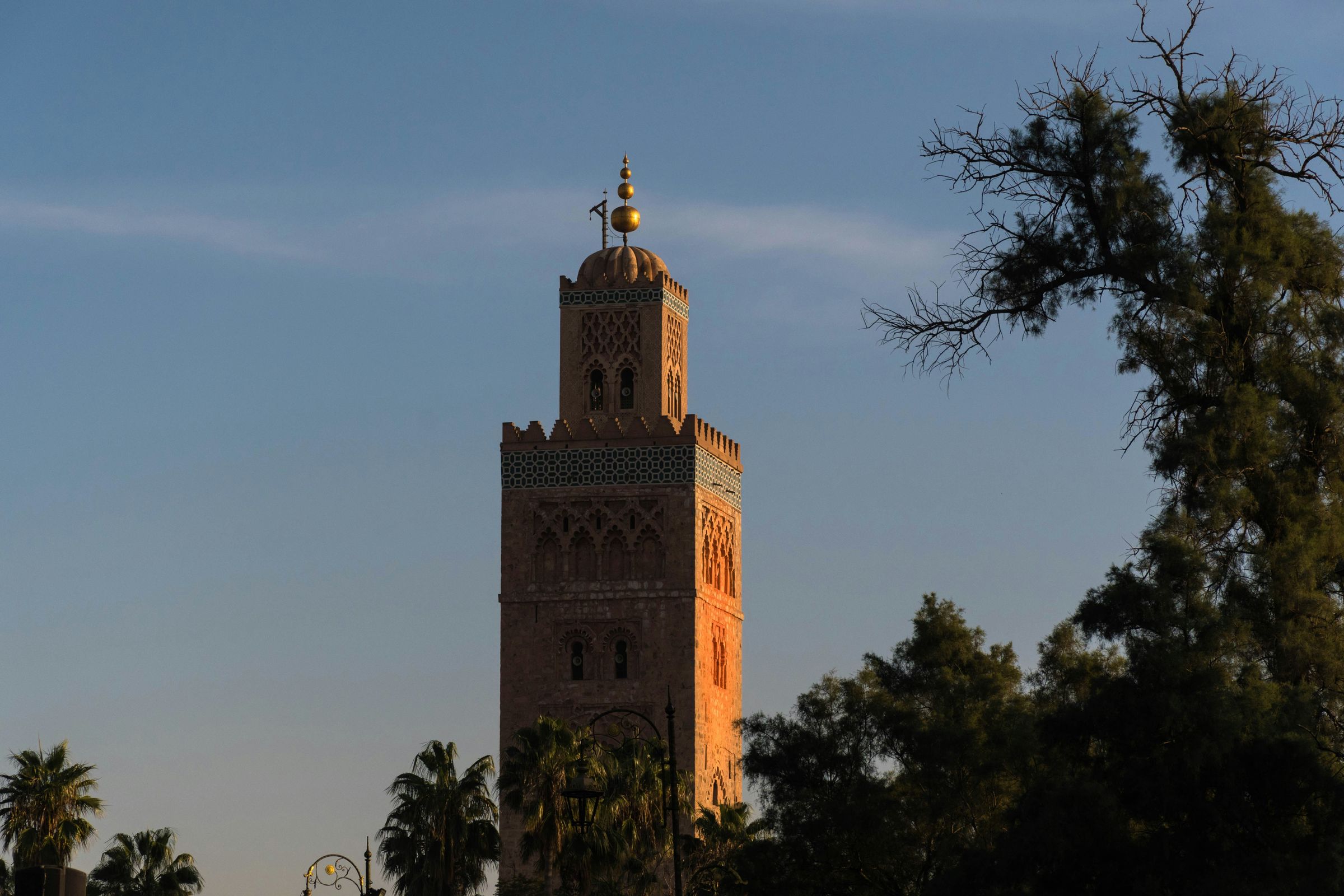
Above the rooftops, the Koutoubia minaret is the landmark to steer by. It rises 77 metres, and its design inspired both the Hassan Tower in Rabat and the Giralda in Seville.
Among the ticketed sights inside the walls, the Ben Youssef Madrasa, a college completed in 1564 and 1565 for the Saadian sultan Abdallah al-Ghalib, was once the largest in the Maghreb. The Bahia Palace, begun for one grand vizier and enlarged by his son, is best known for its painted wood ceilings.
Start the day at the Ben Youssef Madrasa, then give the rest of the morning to the souks, before the heat and the crowds build.
See the deeper souks off Souk Semmarine, the dyers' souk among them, in daylight, because they shut by nightfall, earlier than the shops near the square. If you lose your way, follow Souk Semmarine south.
Rest through the hottest hours, then see the Bahia Palace in the afternoon. Walk back to the square around dusk, when the stalls go up.
Download an offline map before you arrive, because mobile data drops inside the thick walls. Use it for the general direction rather than the exact turn.
A lane lined with open shops usually leads to a gate or a square, while blank walls and heavy closed doors mean a residential lane. A low archway or a sudden narrowing usually means a dead end, so turn back to the last lane with shops in it.
When you are truly lost, head for the main square and start again from there, or step into a larger shop and ask at the counter.
Bargaining is expected in the traditional shops, so keep it calm and only start if you mean to buy.
Marrakesh, Morocco: Set on a plain below the Atlas, this imperial city holds a walled medina of souks, palaces and courtyard riads. Bahia Palace.
Read the Marrakesh guideExplore the rest of Marrakesh
Set on a plain below the Atlas, this imperial city holds a walled medina of souks, palaces and courtyard riads, and serves as the base for…
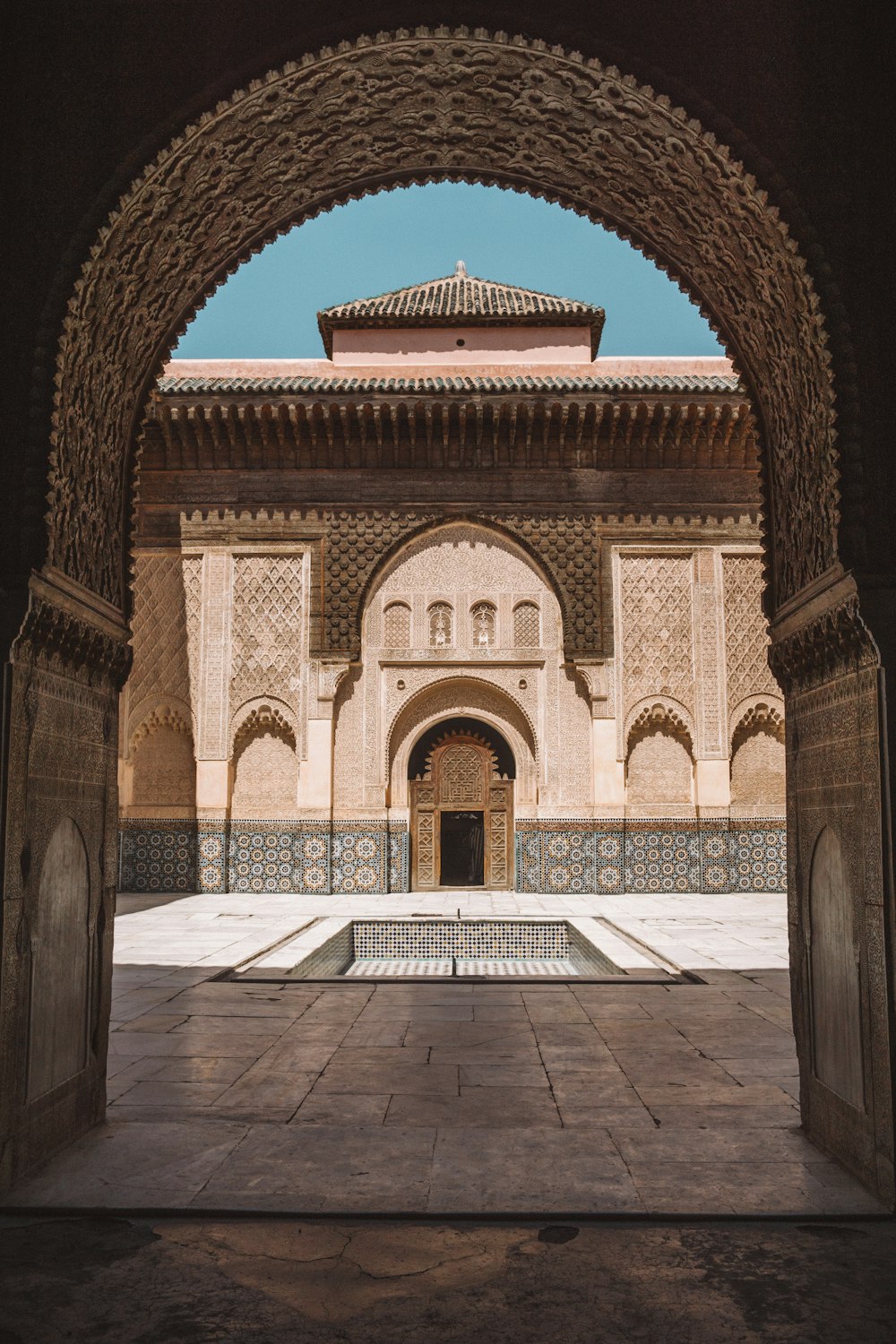
A sixteenth-century teaching college in the heart of the medina, restored by the Ministry of Habous and Islamic Affairs, with both its…
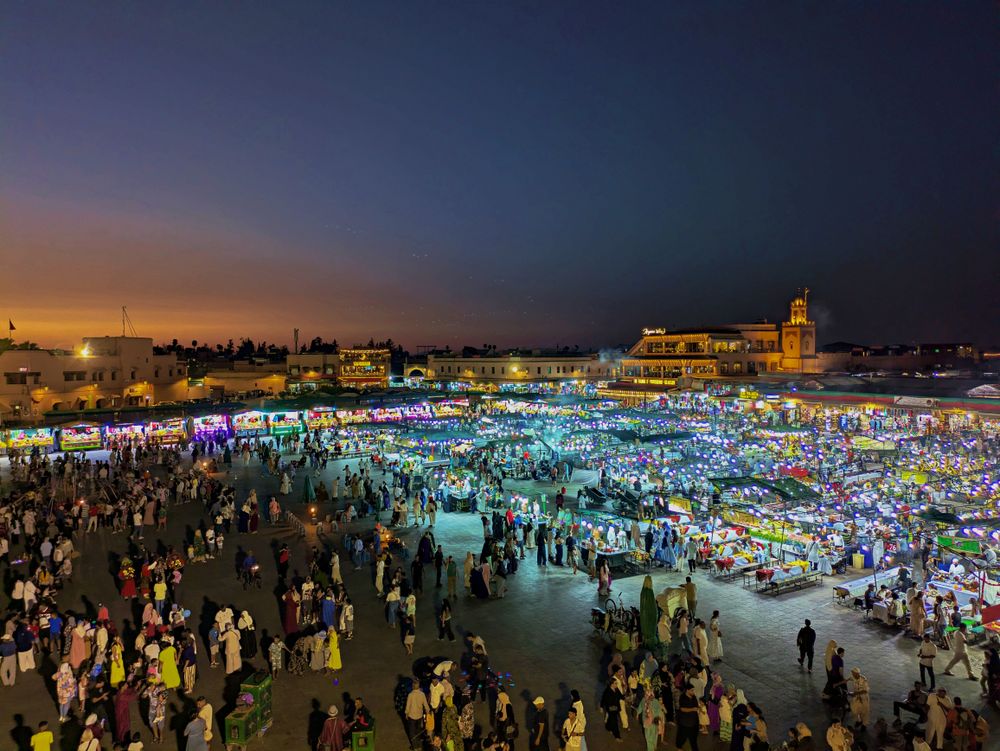

The main square of Marrakesh's medina, open ground by day that fills after dusk with music, street performers and rows of food stalls.
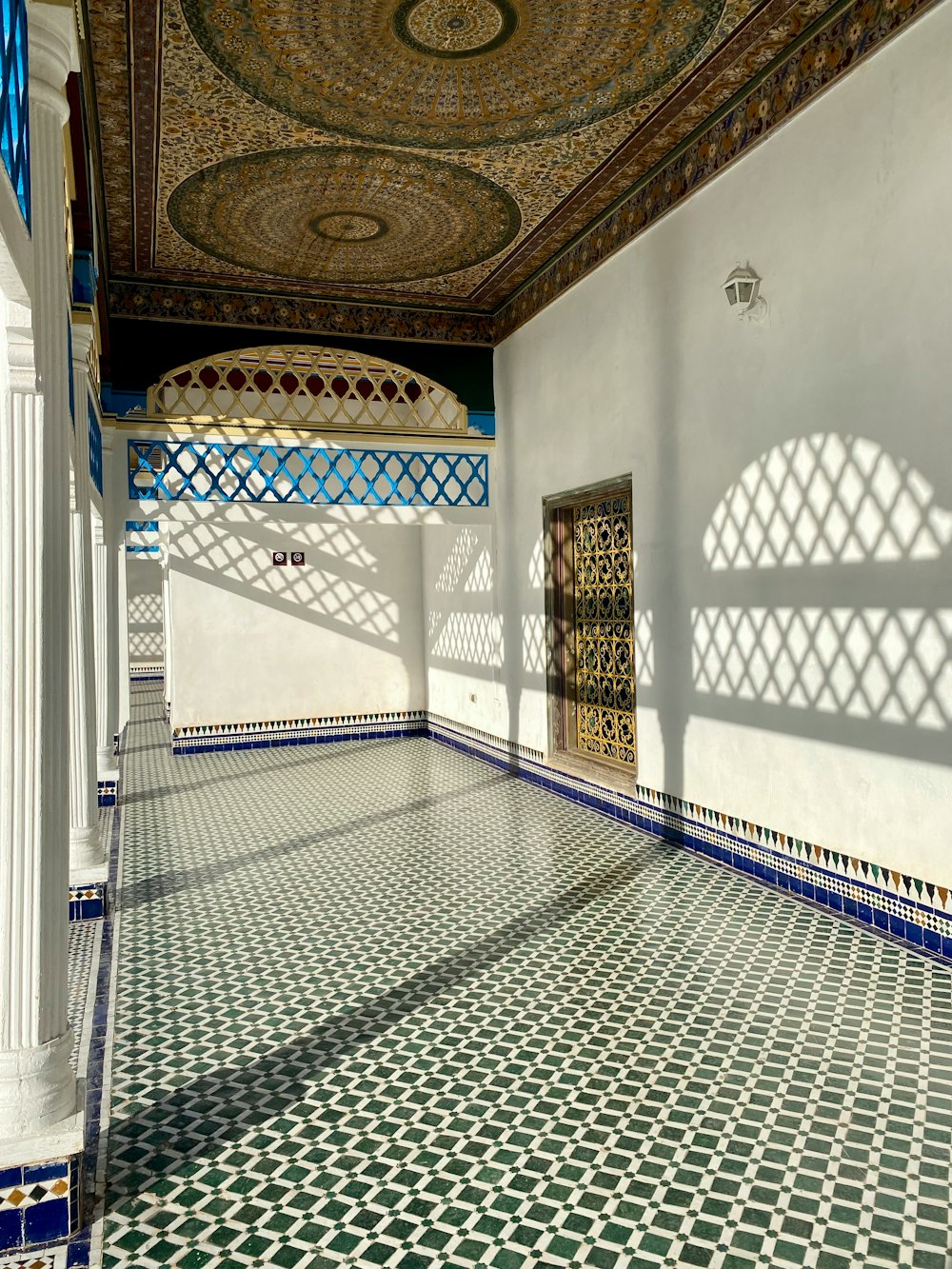
Late 19th-century palace built for Si Moussa and expanded by his son Ba Ahmed, grand vizier to the sultan, with roughly 150 rooms around…
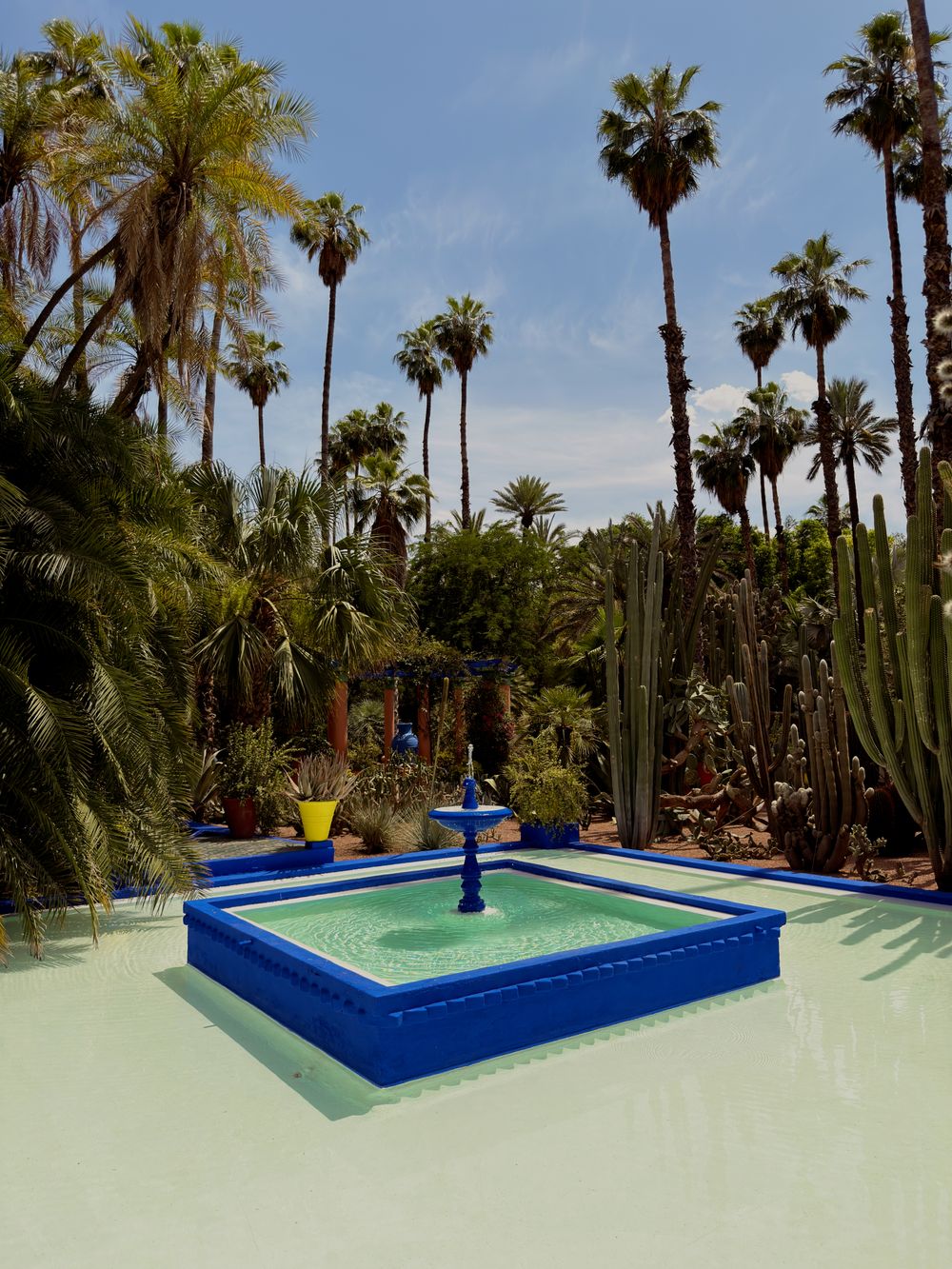
Cobalt blue walls and stands of bamboo mark out a small garden planted by a French painter in the 1920s and later rescued by Yves Saint…
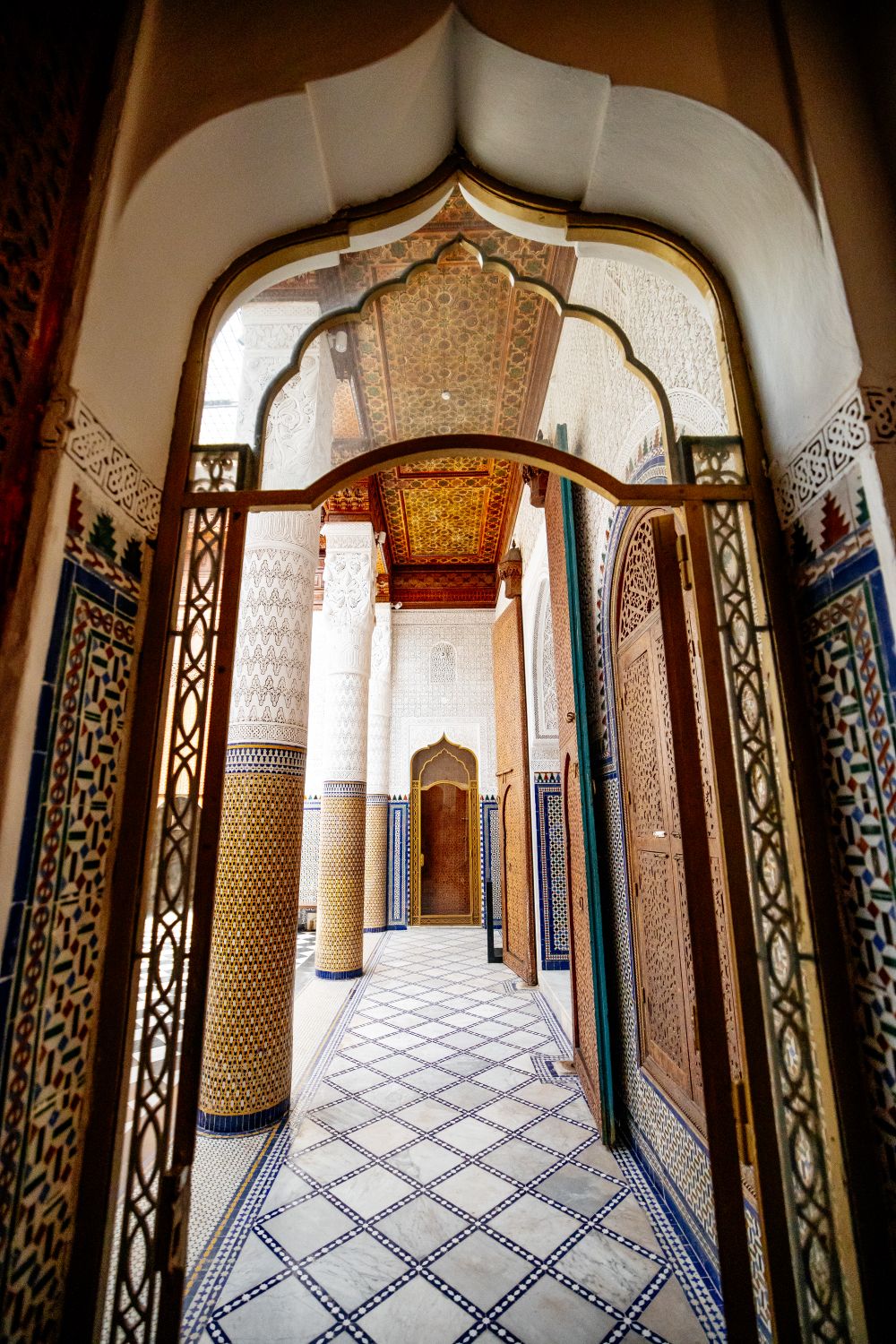
Tiled courtyards, carved cedar and fountains fill the former residence of the pasha of Marrakesh, open to the public since 2017 as the…
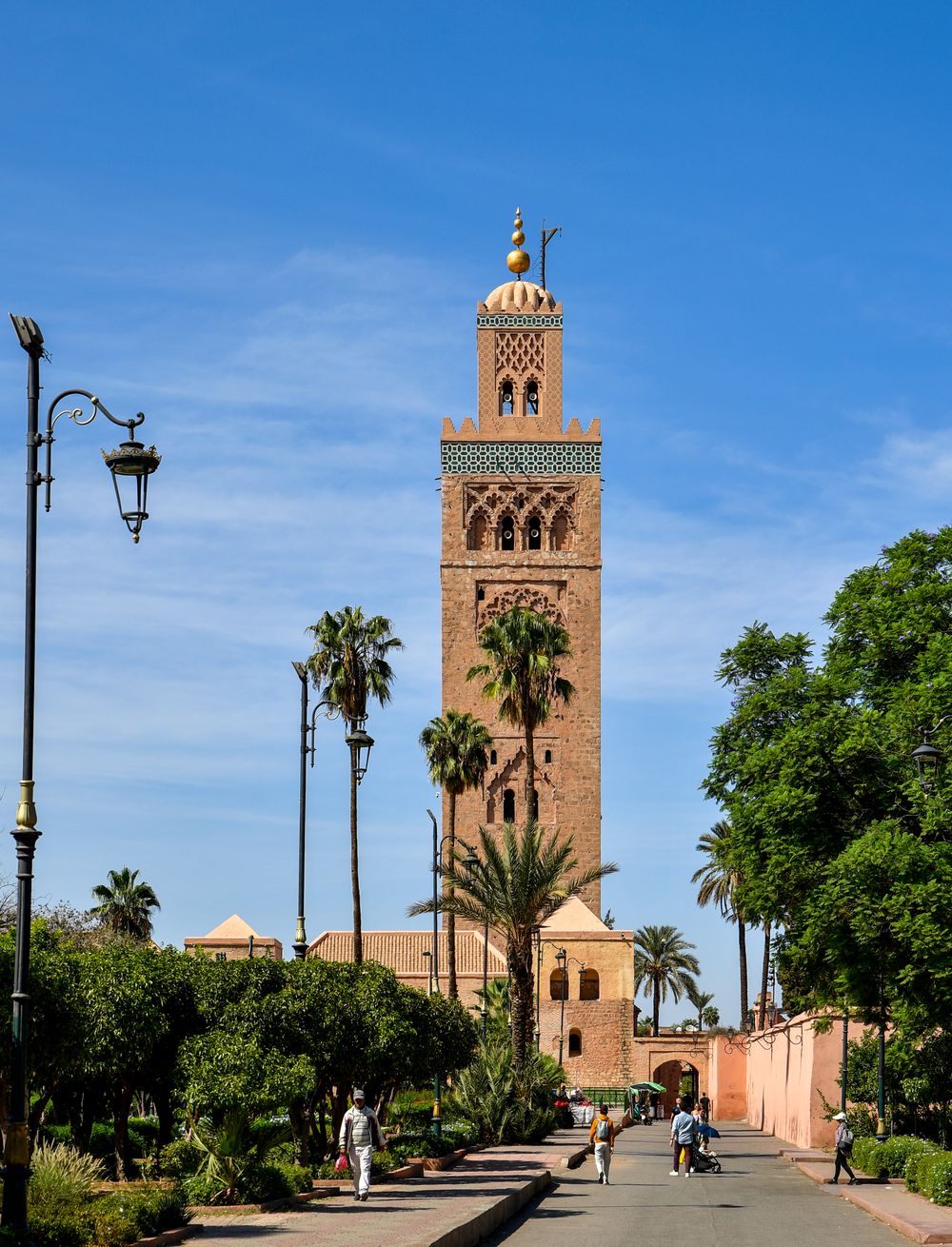
Almohad mosque completed around 1195, its 253-foot minaret the model for the Giralda in Seville and the Hassan Tower in Rabat. Non-Muslims…
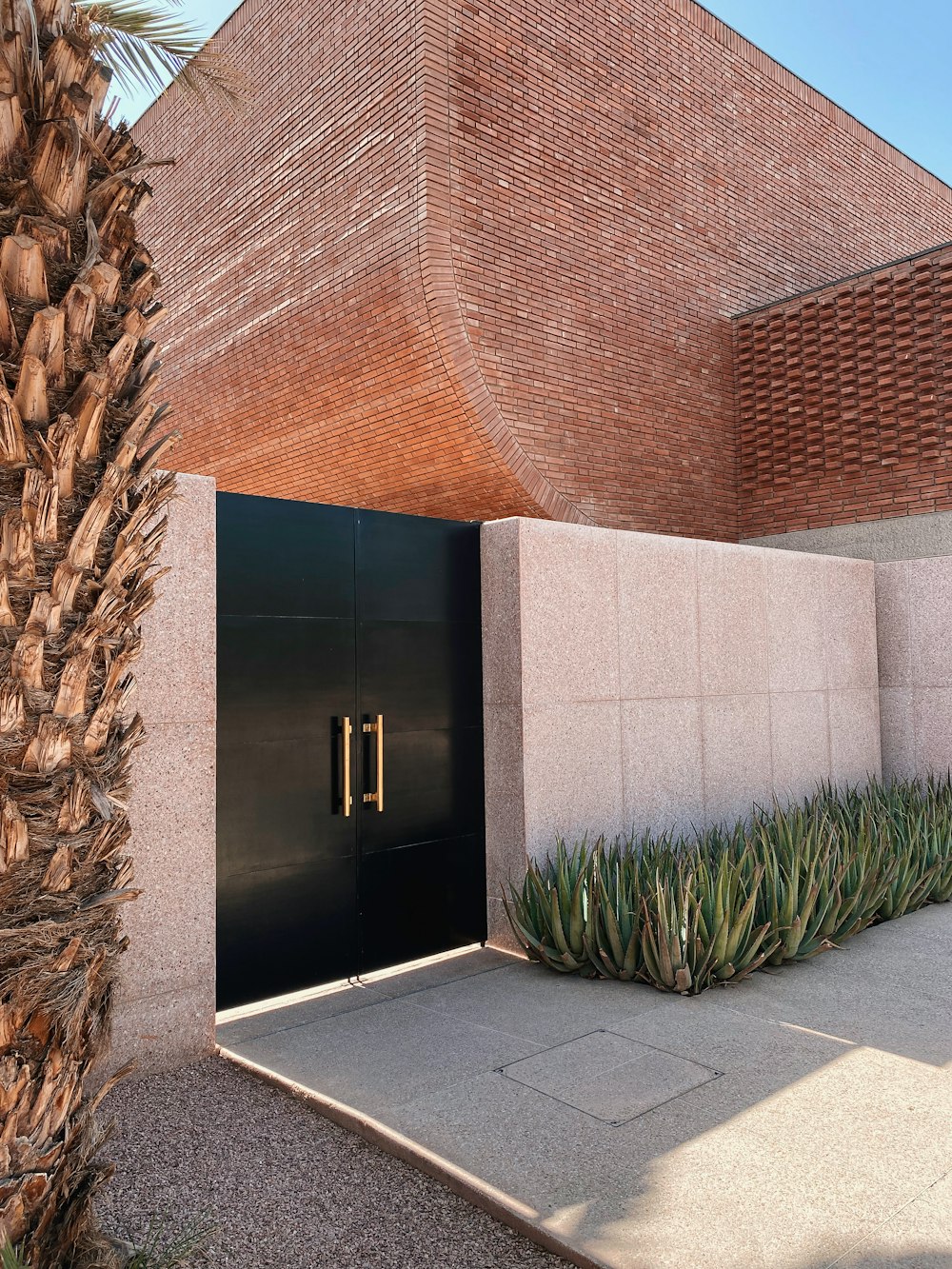
Opened in 2017 next door to the Majorelle Garden, this museum sets a permanent display of the designer's couture in a brick building whose…
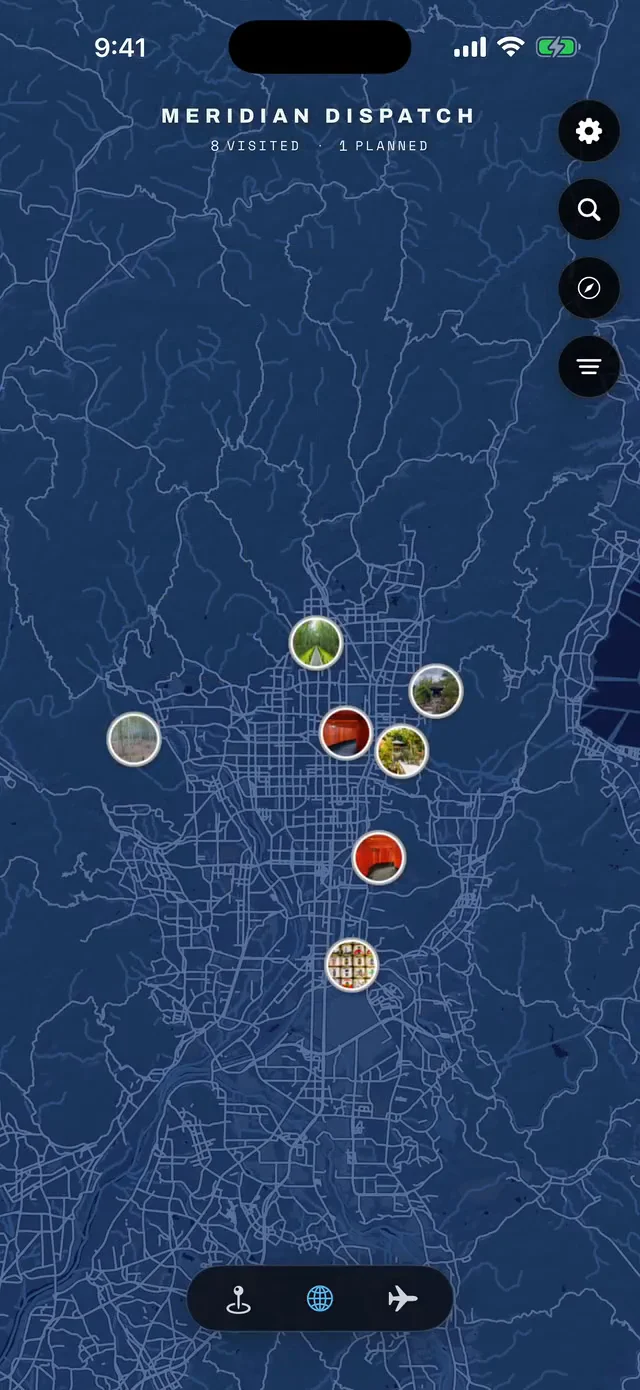
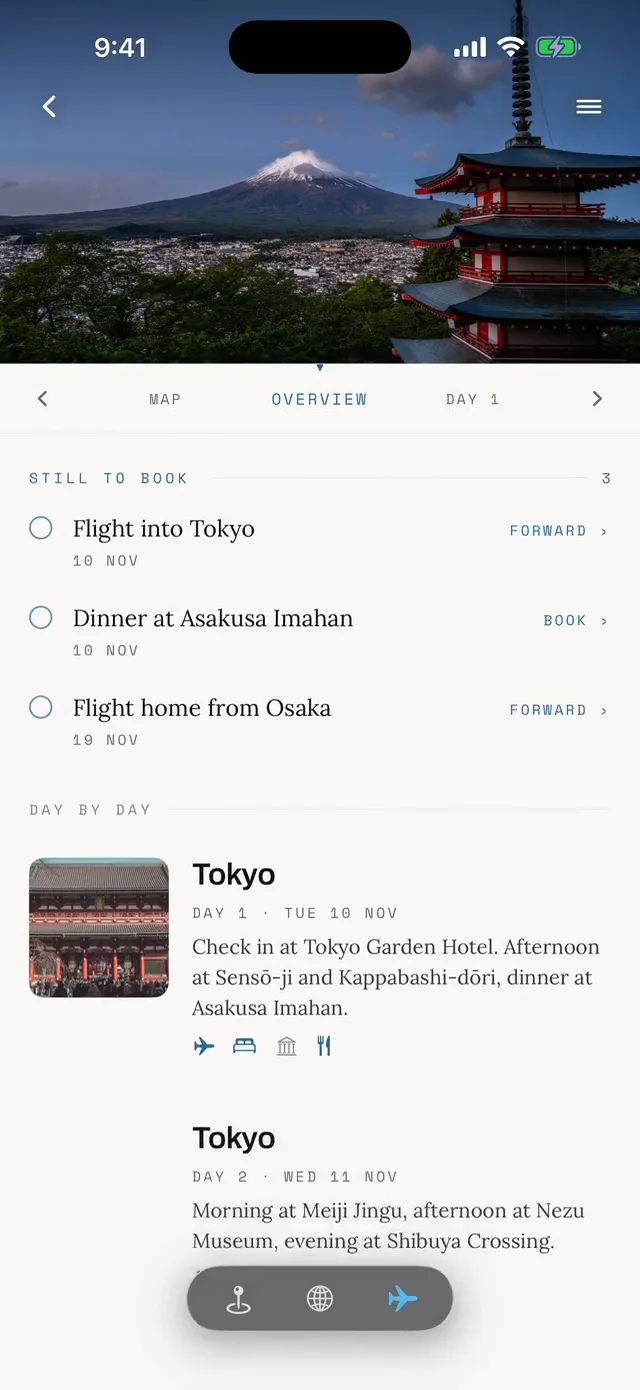

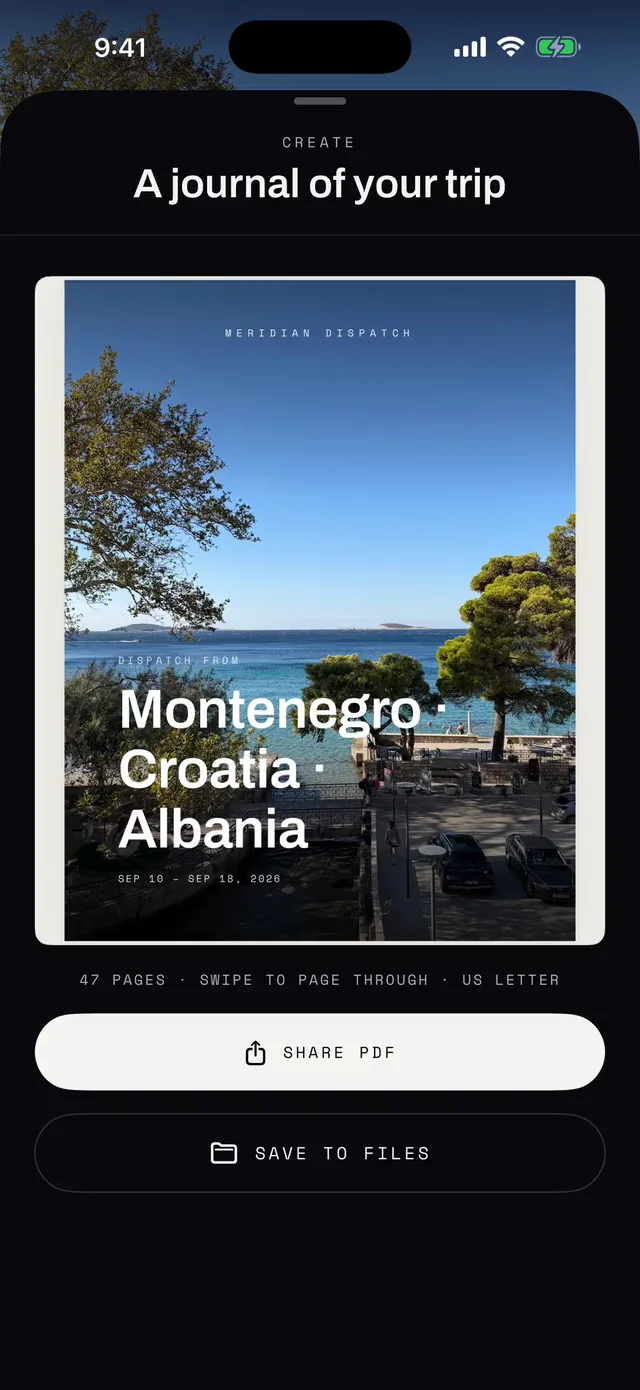
Save Marrakesh Medina to your Morocco trip in the Meridian Dispatch app and build the day around it, with the best of Marrakesh pinned on one map.
Download on the App StoreLast updated