Ninety seconds on Quiver Tree Forest
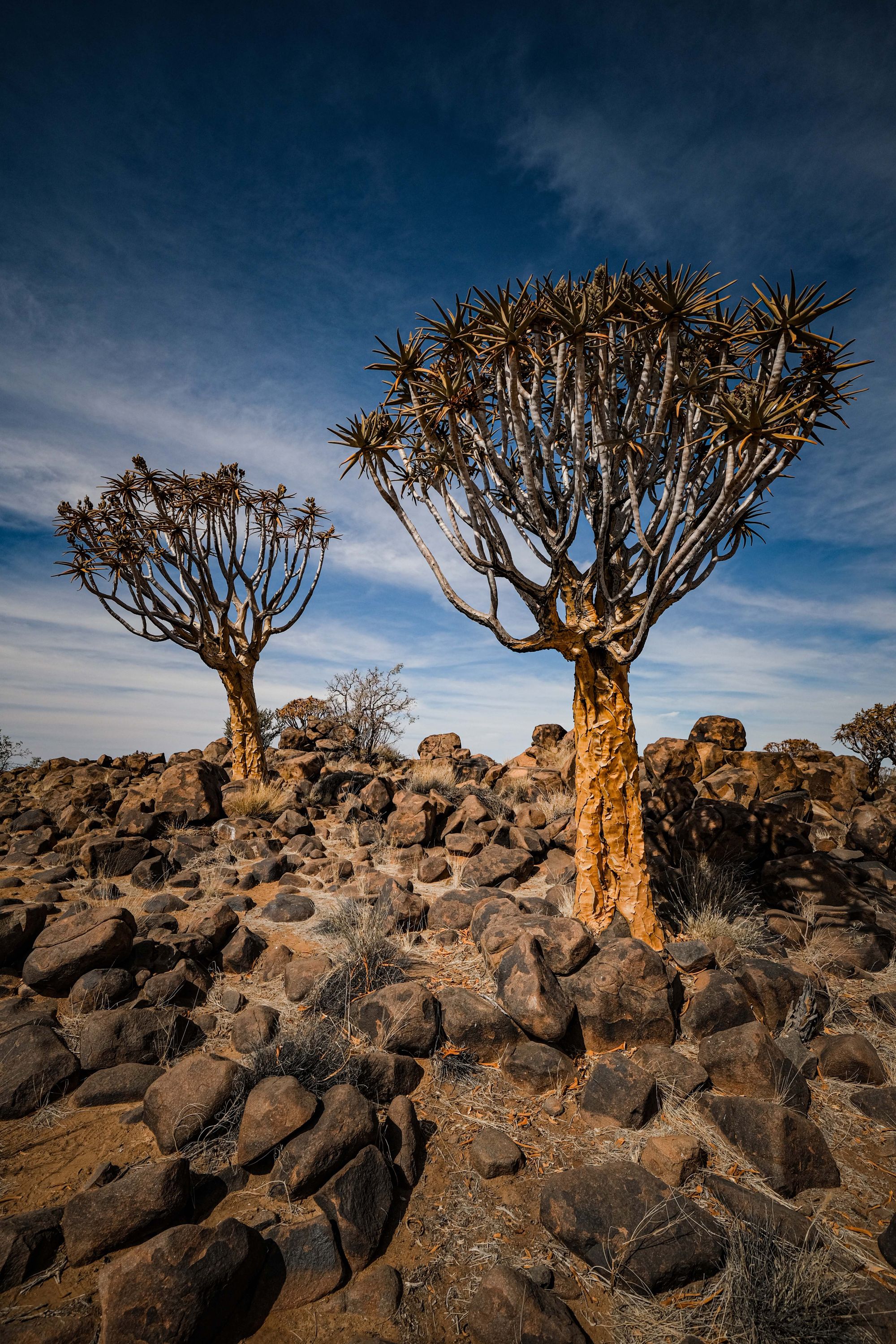
Before sunset, give yourself an hour among about 250 quiver trees, giant forked aloes rather than true trees, growing close together on a farm about 13 km from Keetmanshoop.
Each quiver tree is a giant aloe, a succulent rather than a true tree. Its stems split into two as it grows, then split again, and that repeated forking gives the species its Latin name, dichotomum. The common name is older: the San traditionally used the branches to make quivers.
Elsewhere in Namibia these aloes grow in ones and twos. Here they stand close together across the farm, and the grouping is the reason to make the detour, because it fills a photograph with trees from edge to edge.
The Giant's Playground, on the same farm, is a field of enormous dolerite boulders shaped by natural weathering. The rocks lie across the ground as if a giant had been playing with them.
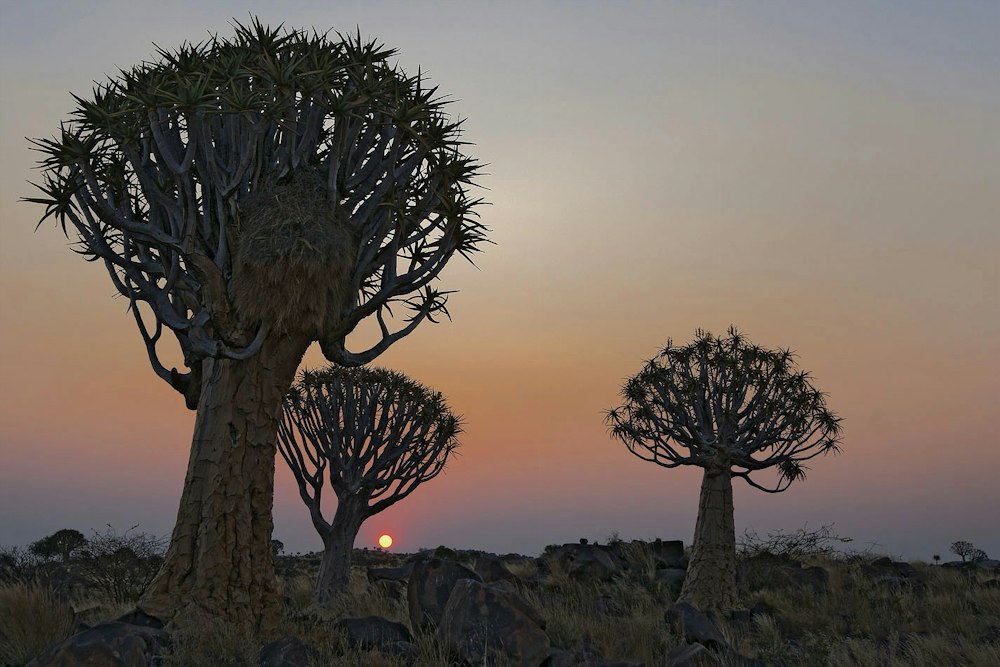
The species grows mainly in the Northern Cape of South Africa and parts of southern Namibia, and it is in decline across much of that range. After dark, the farm's low light pollution leaves a clear view of the southern sky, and photographers use the trees as the foreground for the Milky Way.
Check in at the rest camp first and pay the day entry in cash. Use the toilets there before you set off, because there are none among the trees.
A short walking trail leads to the Giant's Playground. Walk it while the day is not too hot, and turn back whenever you like.
Save the forest itself for the last hour of daylight. There is no set route, so wander between the trees and pick your angles as the light drops.
If the farm's rescued cheetahs are being fed during your visit, you can watch. Day visitors leave at sunset.
Bring your own food and drinks, since the camp restaurant serves only guests staying in its lodges. Wear sneakers, a hat and sunscreen, and carry a refillable water bottle for the walk among the trees.
Leave the drone in the car, as drones are not allowed in the forest. A handheld camera does the job, because the trees stand close enough together to fill the frame from the ground.
Keetmanshoop, and further afield
Where the B1 meets the road west to Lüderitz, this is the natural night stop on the drive south to the Fish River Canyon. A stone Rhenish…
A campsite, a park office and a gravel road to the rim make up everything here, and the reason to come is ten kilometres further on. The…
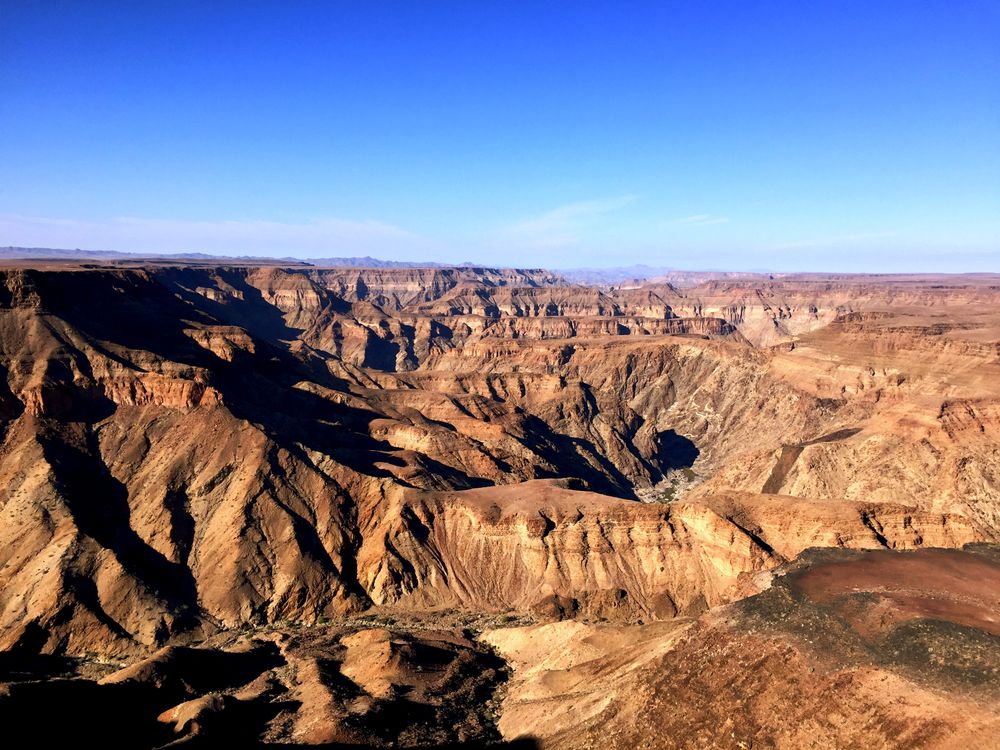
The river has cut a gorge roughly 160 kilometres long and about 550 metres deep, wound into tight meanders that the viewpoints on the…