Ninety seconds on Swakopmund Jetty
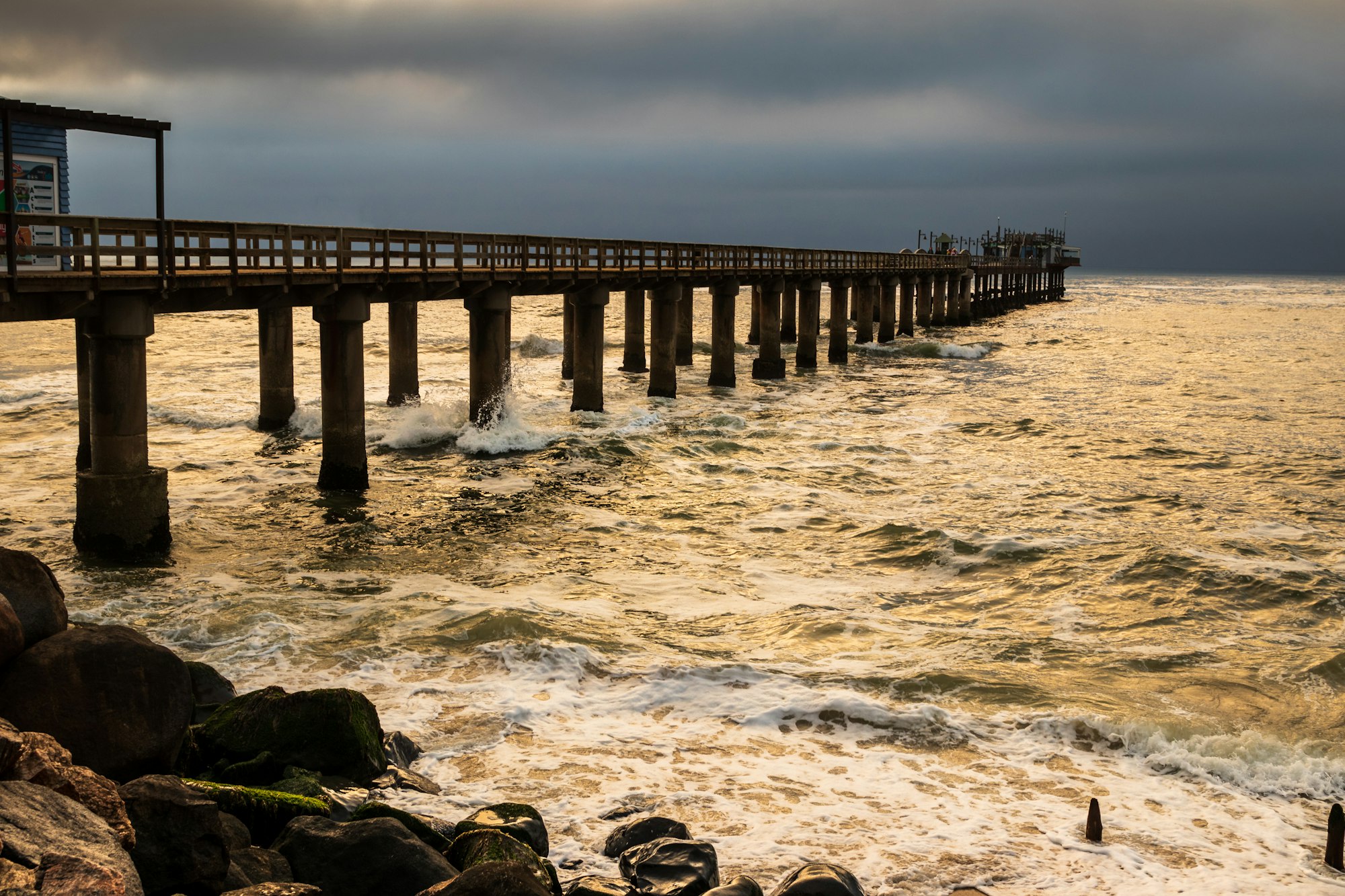
262 metres of iron and concrete carry you out past the breakers off Swakopmund, and from the end you watch the sun drop into the Atlantic with the town and the desert behind you.
The jetty you walk today dates from 1912, when iron and concrete replaced the first wooden pier of 1905. Each pylon is an iron core inside a concrete casing, which is what keeps it standing in the surf. It was built long enough to clear the line where the heavy breakers form.
The deck is split down its length: a promenade on one side, and the other side kept for fishing. On the platform at the seaward end sits the restaurant Jetty 1905, with the widest views of the Atlantic anywhere on the pier.
Looking back from the end, you see Swakopmund's seafront from the water, with the desert beyond the town. It is one of the best places in town to watch the sun go down into the ocean, and the end of the jetty gets busy as the light turns golden.
Swakopmund's seafront promenade brings you to the landward end of the jetty, and the walk out is flat and free. Keep to the promenade side of the deck, since the other side is left to anglers.
Walk all the way to the end, stop at the rail for the view back over the town and the desert, then walk back. If you want to stay longer, sit down at Jetty 1905 on the platform and eat with the ocean on three sides.
For sunset, arrive well before the sun drops, because the end fills up as the light turns golden.
Bring a warm layer. The Atlantic wind on the jetty is cold, and it sharpens as the sun goes down; nights can drop sharply, especially in winter.
Waves often reach the planks and throw salt spray across the deck, so keep a camera or phone that is not splash-proof covered. If you plan to eat at the restaurant at the end, book a table ahead.
Explore the rest of Swakopmund
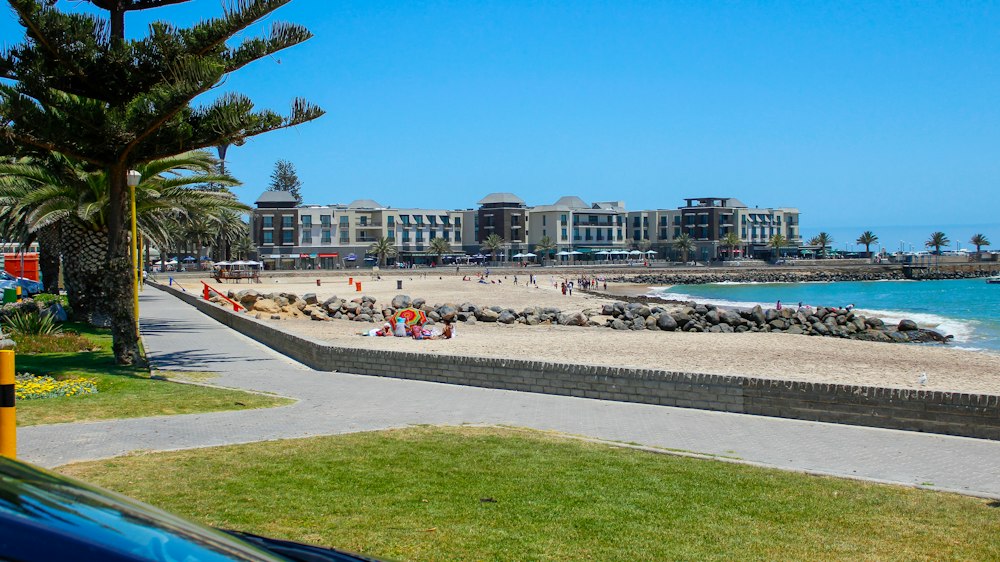
Housed in the old customs building at the Mole, Namibia's largest private museum covers the country's plants, animals and minerals, its…
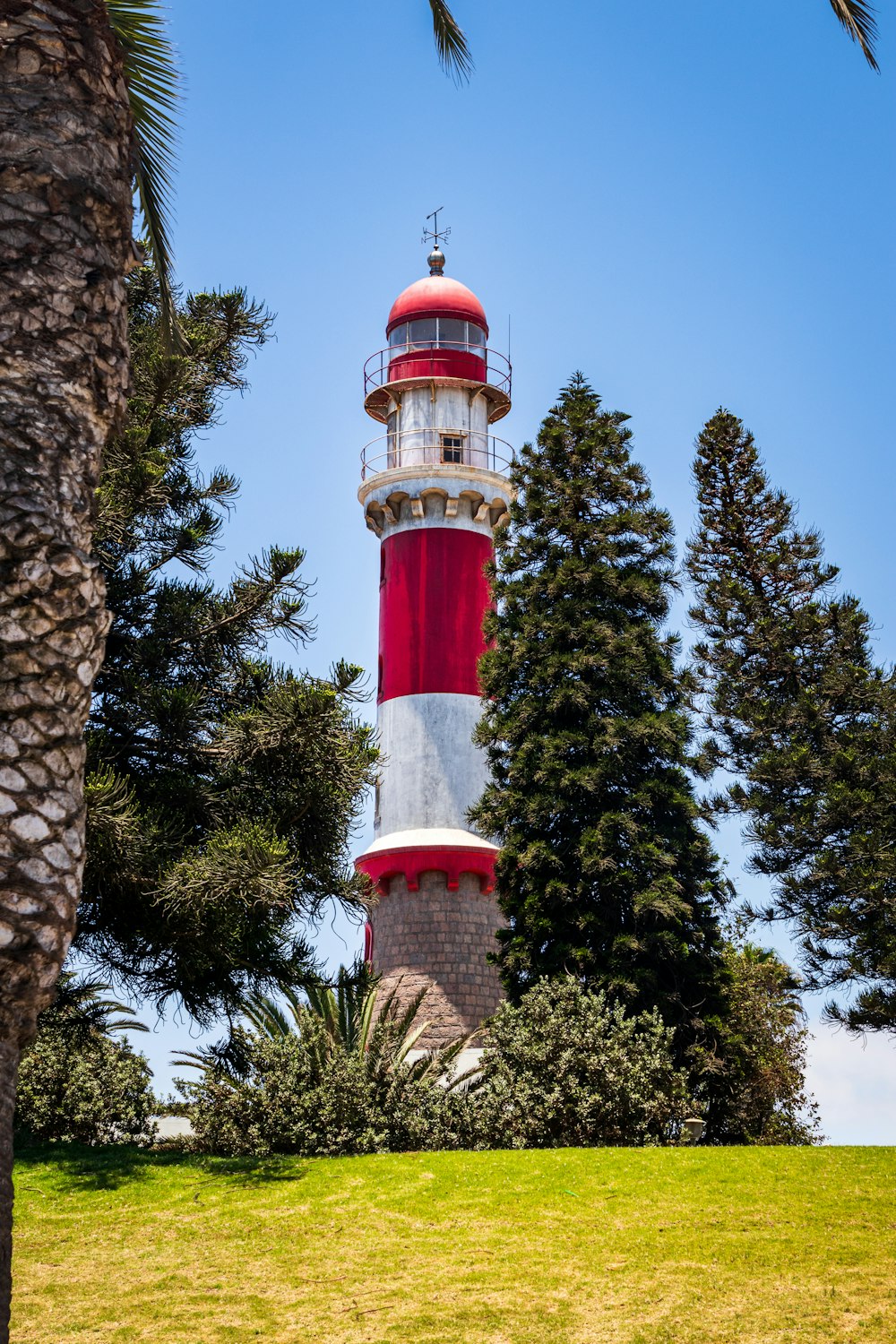
Red and white bands and a red lantern make this conical tower the landmark of the Swakopmund seafront, seen above the low roofs from most…
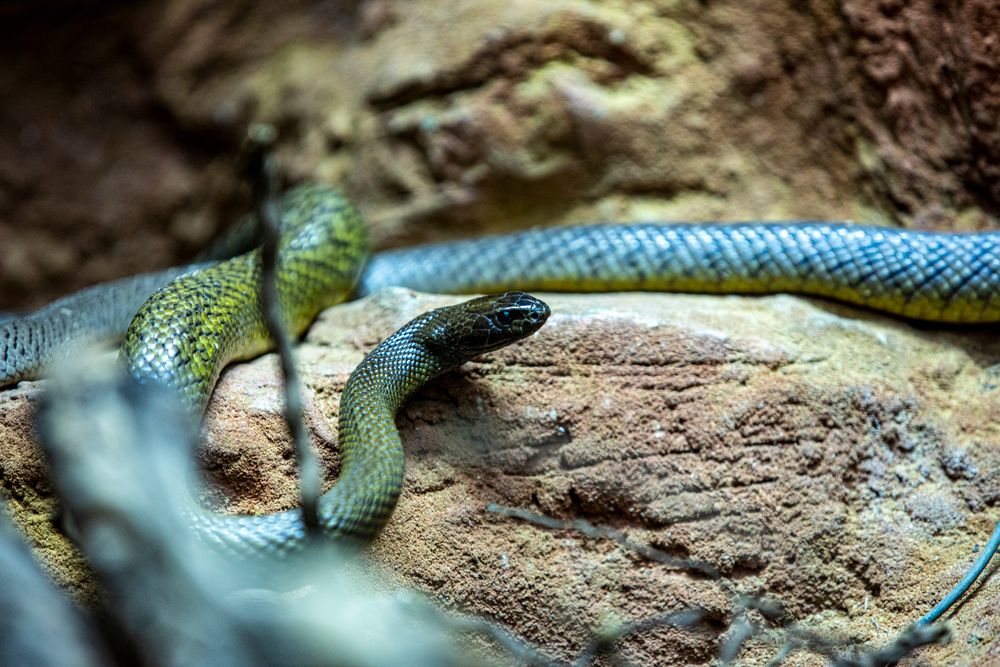
A small reptile centre in Swakopmund, running for three decades, with dozens of snakes behind glass, among them the black mamba, Cape cobra…