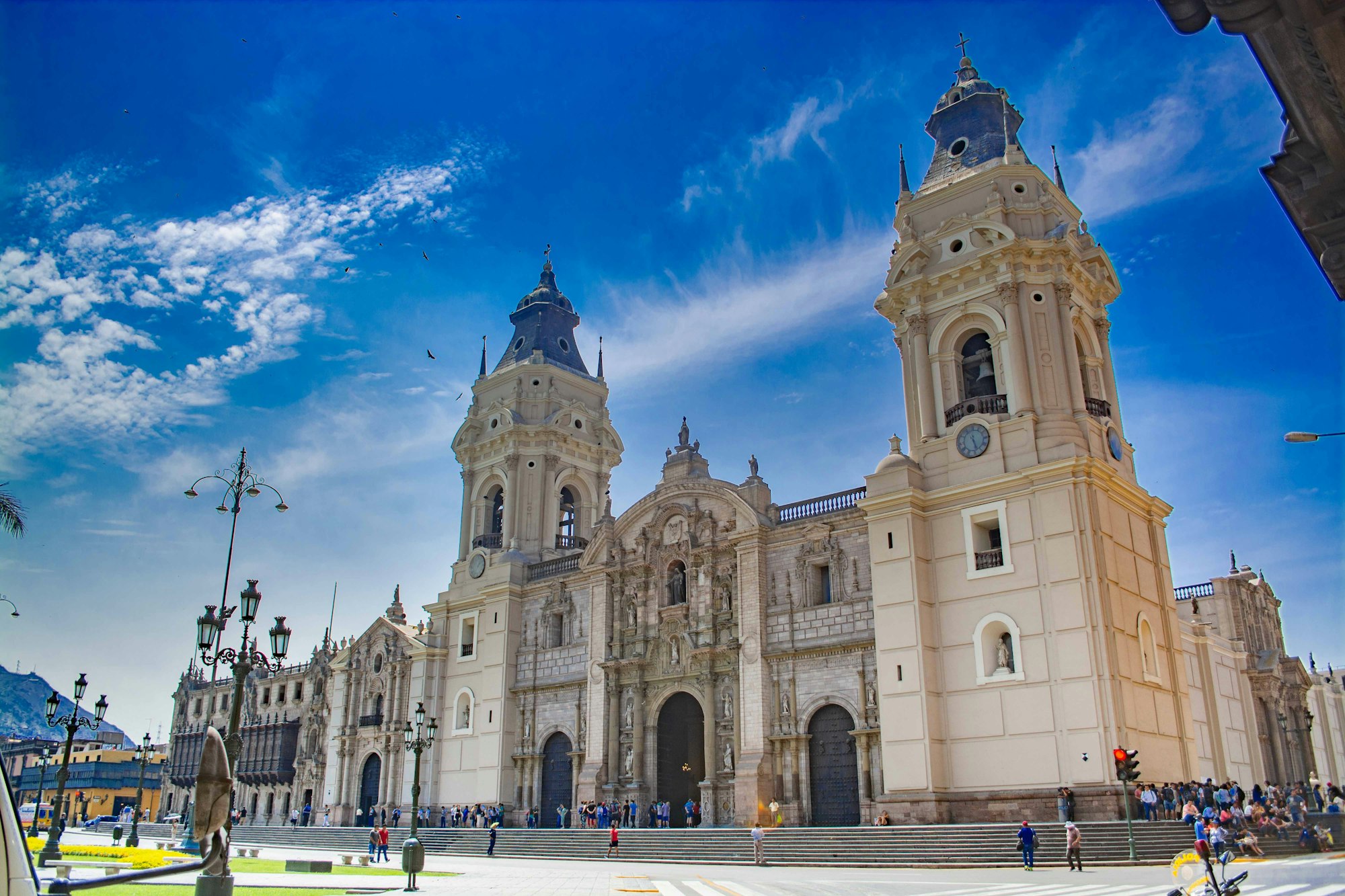
Ninety seconds on Lima Cathedral
Two things are worth an hour inside Lima's cathedral from the Plaza Mayor: Pizarro's tiled burial chapel and the carved choir stalls that flank the high altar.
The crypt's walls are covered completely in mosaic scenes of the Conquest. Look closely and you will see they are not painted but set in small tiles. The bones on show are Pizarro's own, found in 1977.
Under the presbytery lies a second crypt, kept for the city's archbishops. Walk up to the high altar for the choir stalls on either side of it, designed by the Spaniard Martín Alonso de Mesa.
Along the side naves hang large paintings of the Via Crucis. The chapels and the sacristy hold work by the best-known sculptors of colonial Peru.
Outside, the facade is crowded with statues. The building mixes late Gothic, Renaissance and Baroque because the 1746 earthquake left it close to ruin and it was rebuilt in stages.
Lima's cathedral and its religious art museum make one visit, and the museum is reached from inside the church. Buy your ticket at the entrance on the Plaza Mayor, and ask whether Pizarro's crypt is on the ticket you buy.
On your own, the first chapel to the right of the entry doors is Pizarro's. Guided visits usually begin at the presbytery around the high altar instead, so the crypt comes later.
From there, walk the side naves past the chapels and the Via Crucis paintings, then stop at the choir stalls. The museum rooms hold colonial paintings, fine furniture and life-size religious figures.
The Archbishop's Palace keeps a collection of Cusco school paintings on its first floor. Leave time for it if the museum leaves you wanting more colonial art.
Ask at the ticket desk for a guide, who walks you through the chapels, the crypts and the paintings as you go. Check there whether the guide is included and which languages are offered.
If you mainly want Pizarro's chapel and the high altar, you can see both on your own at your own pace.
Plan your visit for a weekday, when the doors stay open longest. The cathedral is a working church, so check at the door whether sightseeing is open on Sundays and holy days.
Give the crypt mosaics a few minutes up close before you move on. From a step back they read as a painted wall, and the tiles only show when you are near them.
Explore the rest of Lima
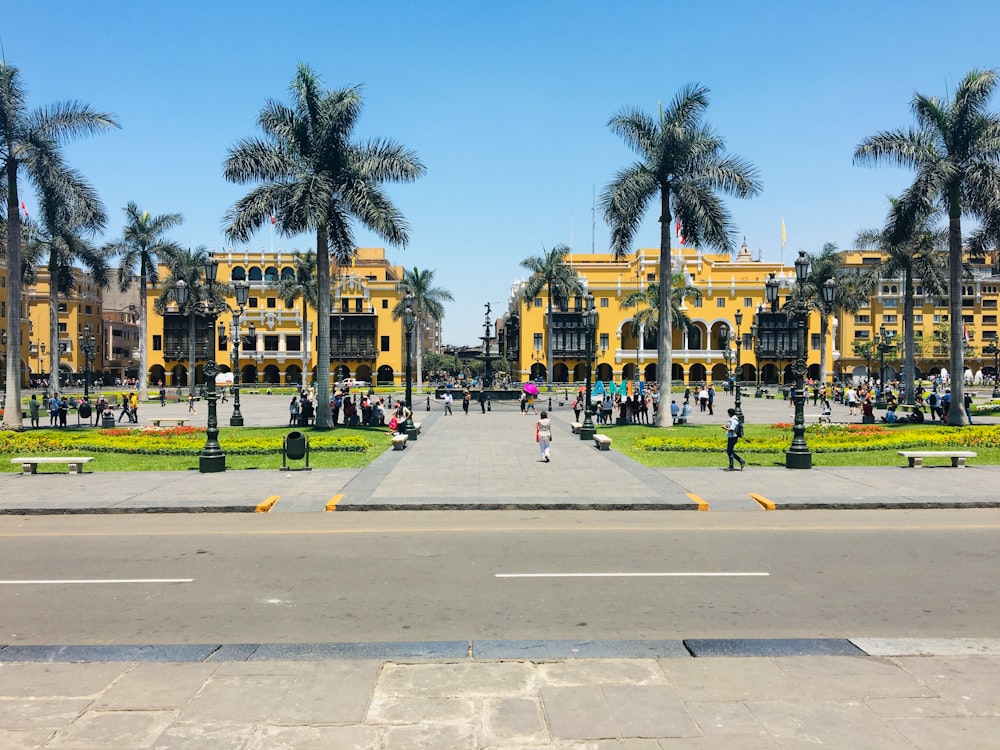
The ceremonial heart of Lima's historic centre, founded in 1535 by Francisco Pizarro. Surrounded by the Cathedral, Government Palace, and…
Underground ossuaries beneath the Convent of San Francisco in Lima's historic centre, used as the city's burial ground until the early…
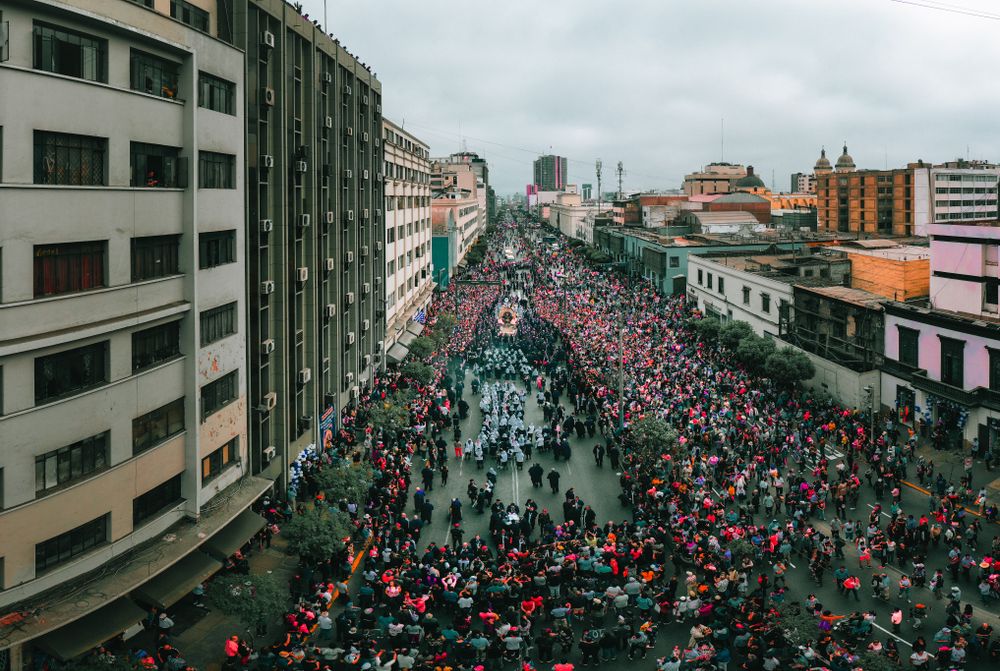
In October the historic centre turns purple. A copy of the colonial mural of Christ kept at Las Nazarenas is carried through the streets on…