 Submit a photo
Ninety seconds on Lake Titicaca
Most travellers arrive from Cusco or Arequipa, and buses from either city take six to seven hours. The nearest airport is Juliaca's Inca Manco Capac Airport, an hour from Puno by bus or taxi.
A full day is the usual length. The Uros can be visited in a couple of hours, but the round-trip boat journey to Taquile takes around six hours in total.
The first boat for Taquile and Amantaní usually leaves Puno around 7 or 8am. Boats head back from the islands in the afternoon, around 3 or 4pm, and the slow crossing to Puno takes two hours or more.
The dry season on the lake runs from April to September, with the most visitors between June and August. Rain increases sharply from October, and fog then often hides the water.
Tours are sold by the many operators in Puno and usually include hotel pickup, a guide on the boat and lunch on Taquile. The guide pays the Uros entry fee for the group, the reed-boat ride costs extra, and Taquile charges visitors a fee of its own.
Spending a day on the water from Puno takes you to two very different islands: the Uros, built of reed that gives as you step on it, and Taquile, a terraced island whose men knit.
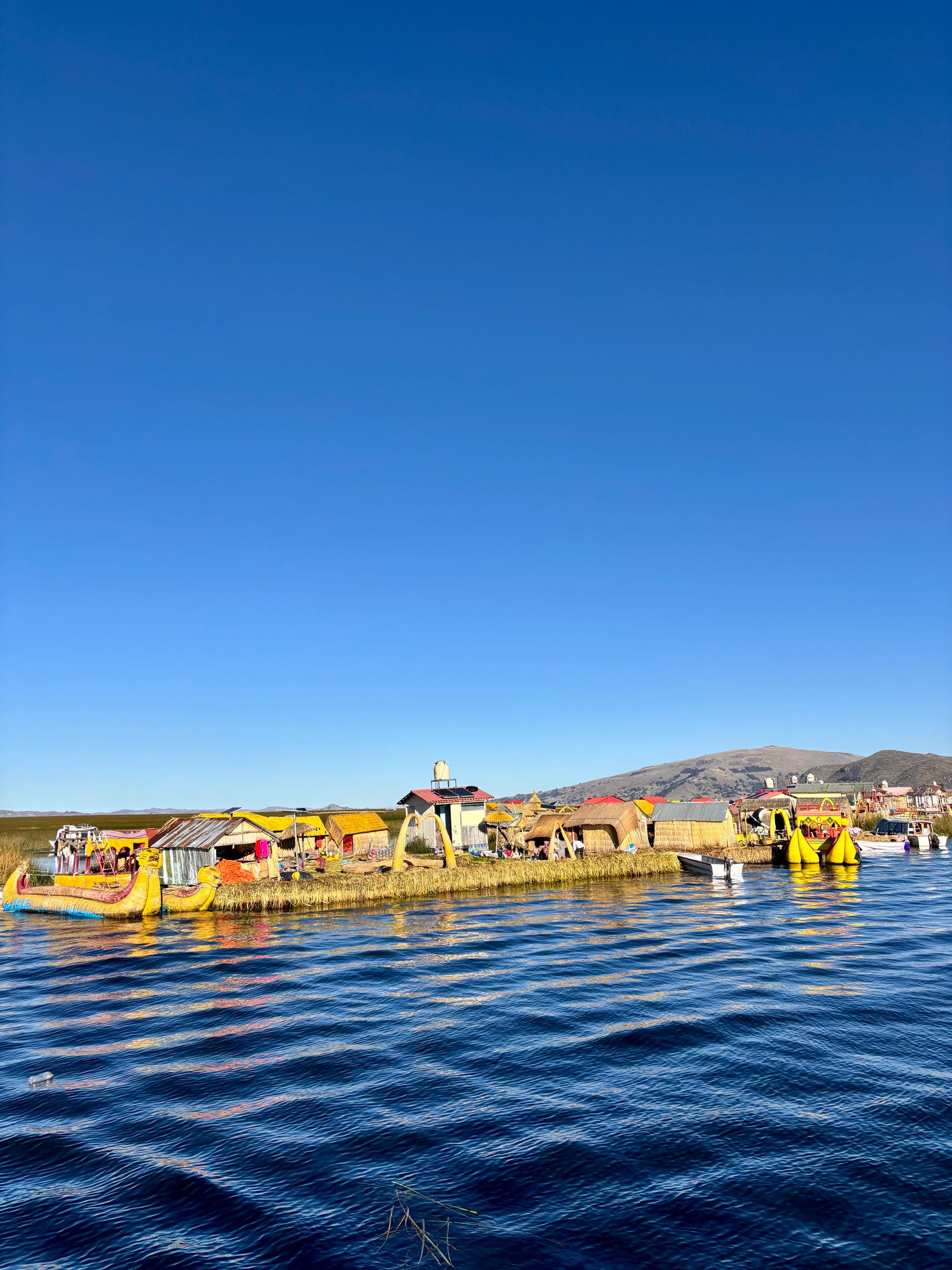
The Uros islands are mats of totora reed floating on the lake. Each base is a block of tangled totora root with layers of dried reed stacked on top in alternating directions, three to four metres thick and mostly under water. The bottom layer rots, so families keep laying fresh reed on top through the year, which is why the ground feels like a mattress underfoot.
The reeds underfoot are only the start. Walls, roofs and much of the furniture are reed mats too, and the long reed boats moored alongside last six to twelve months before they rot and have to be built again. Tourism is now the main income for the Uru families, which is why the visit runs on a set routine.
Taquile is famous for its cloth, and UNESCO proclaimed its textile art a Masterpiece of the Oral and Intangible Heritage of Humanity in 2005. Here the men knit, starting as boys, while the women weave and spin. Watch the men's chullo caps: the colour and pattern show whether the wearer is single or married.
The women also weave the chumpi, the wide patterned belt worn by every islander, and the designs in each piece are read as a record of the person who made it. The island runs its own tourism through a communal council with rotating leadership. Its shops, restaurants and homestays are controlled by the villagers, and the income is shared equally between families.
Puno's lake port is where the day begins, and the Uros come first, half an hour out. An office at the entrance to the island group sends each tour boat to one island in turn, and you can expect more than thirty boats moored across the group at once.
A family greets your boat with a rehearsed song in Aymara, Spanish and English. The island's chief then explains how the islands are built, and your guide translates. Bring some cash for the reed-boat ride and the crafts, since the ride usually costs extra.
Then comes the long crossing to Taquile, where you climb the stair or take the gentler path from the far port. Lunch is in a family's yard: lake trout or an omelette, quinoa soup and muña tea. The boat often moves to the other dock while you eat, so you walk across the island and down to it.
Give Puno a slow first afternoon, because the town sits higher than Cusco: drink water and keep the islands for the next morning. Keep sunglasses and a windproof layer to hand for the ride back, because the afternoon crossing brings chop and harsher light.
Buy textiles on Taquile without haggling, which islanders discourage out of respect for the knitters and weavers. Ask before you photograph anyone. If you have breath left after lunch, the walk up Cerro de la Cruz gives the widest view over the lake.
Puno, and further afield
The Peruvian port on Lake Titicaca, at 3,827 metres on a bay closed off by reed beds, and the place boats leave for the Uros, Taquile and…
A Quechua speaking island about three hours out from Puno, farmed in terraces and run by its own communal system rather than by the…
The larger of the two farmed islands out from Puno, north of Taquile and reached in about three and a half hours. There is no hotel and no…
Last updated