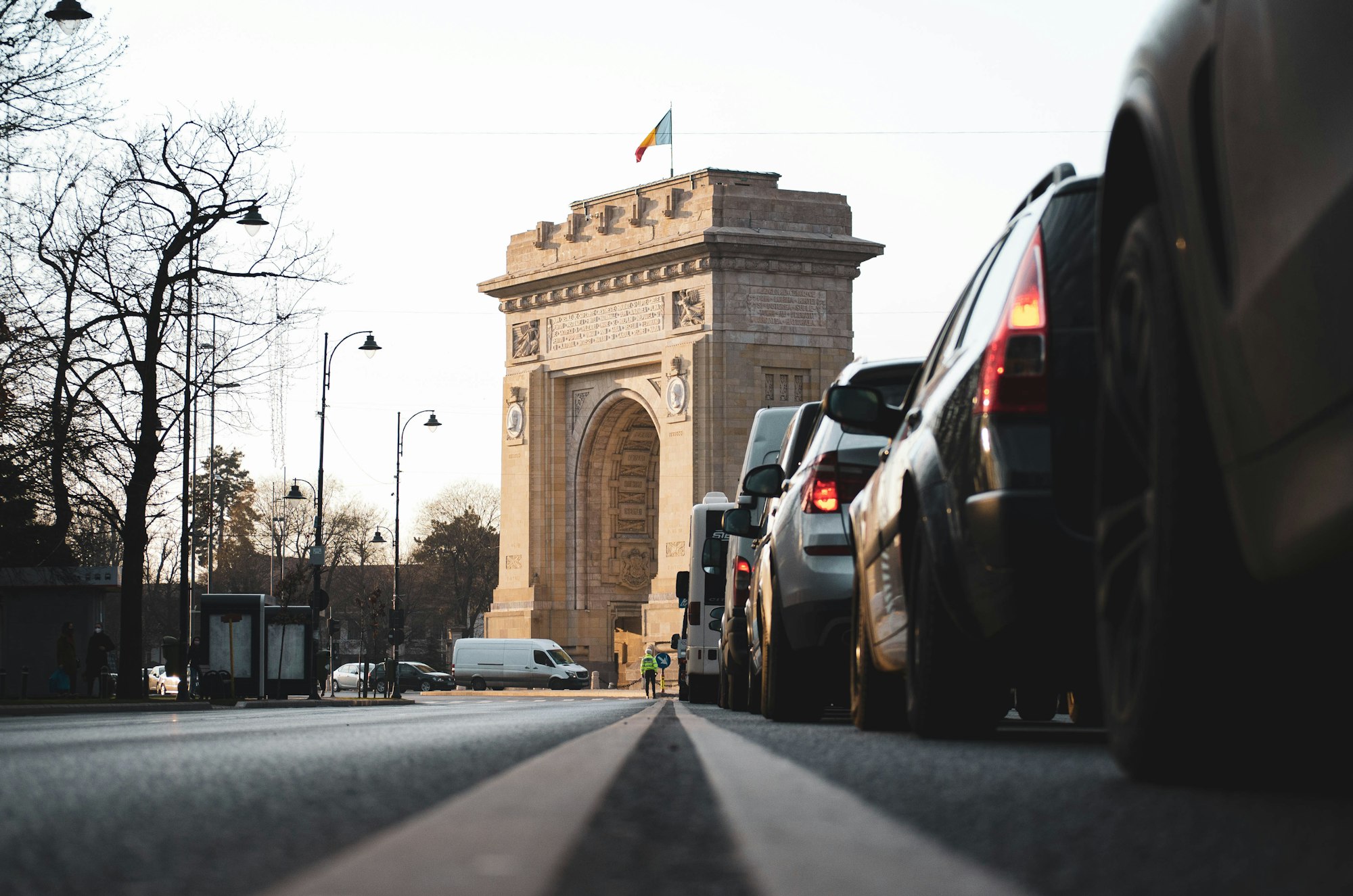
Ninety seconds on the Arch of Triumph
Worth climbing: from the terrace on top you see Bucharest all the way round, with Kiseleff Road running straight back toward the centre.
The arch is about 27 metres of Deva granite, raised to mark Romania's entry into the First World War and the coronation at Alba Iulia in 1922. The central inscription on each of its four faces refers to that coronation.
Its statues and reliefs are the work of the leading sculptors of the day, among them Ion Jalea, Constantin Medrea and Constantin Baraschi. The carving is too fine to make out from a passing car, so walk round it on the pavement.
In the passage underneath, look for the Royal Coat of Arms of Romania, carved in two matching reliefs, one on each side. The inside of the arch also carries a list of the places where Romania fought in the First World War. The bronze portraits of the king and queen were covered with large floral reliefs under communism and went back up after 1989.
Crossing to the arch is the first job, because it stands on a busy roundabout with no underpass, so use the marked crossings and wait for the lights. Walk round all four faces first, then go in if you want to climb: you need a ticket only for the inside.
The stair climbs through the arch past a small museum laid out over six levels, so there are places to stop and catch your breath. It ends on the open platform at the top, with the city spread out on every side. Climb in the late afternoon, shortly before the doors close, for the widest view.
Herăstrău Park, the Village Museum and the Casin Monastery are a short walk away, so the arch fits easily into the same morning or afternoon.
Wear comfortable shoes and carry water on a hot day, because there is no lift and the way up is all stairs. You can walk round the outside at any hour.
On 1 December, Romania's National Day, a military parade is held at the arch and the roads around it close, so plan your climb for another day.
Explore the rest of București
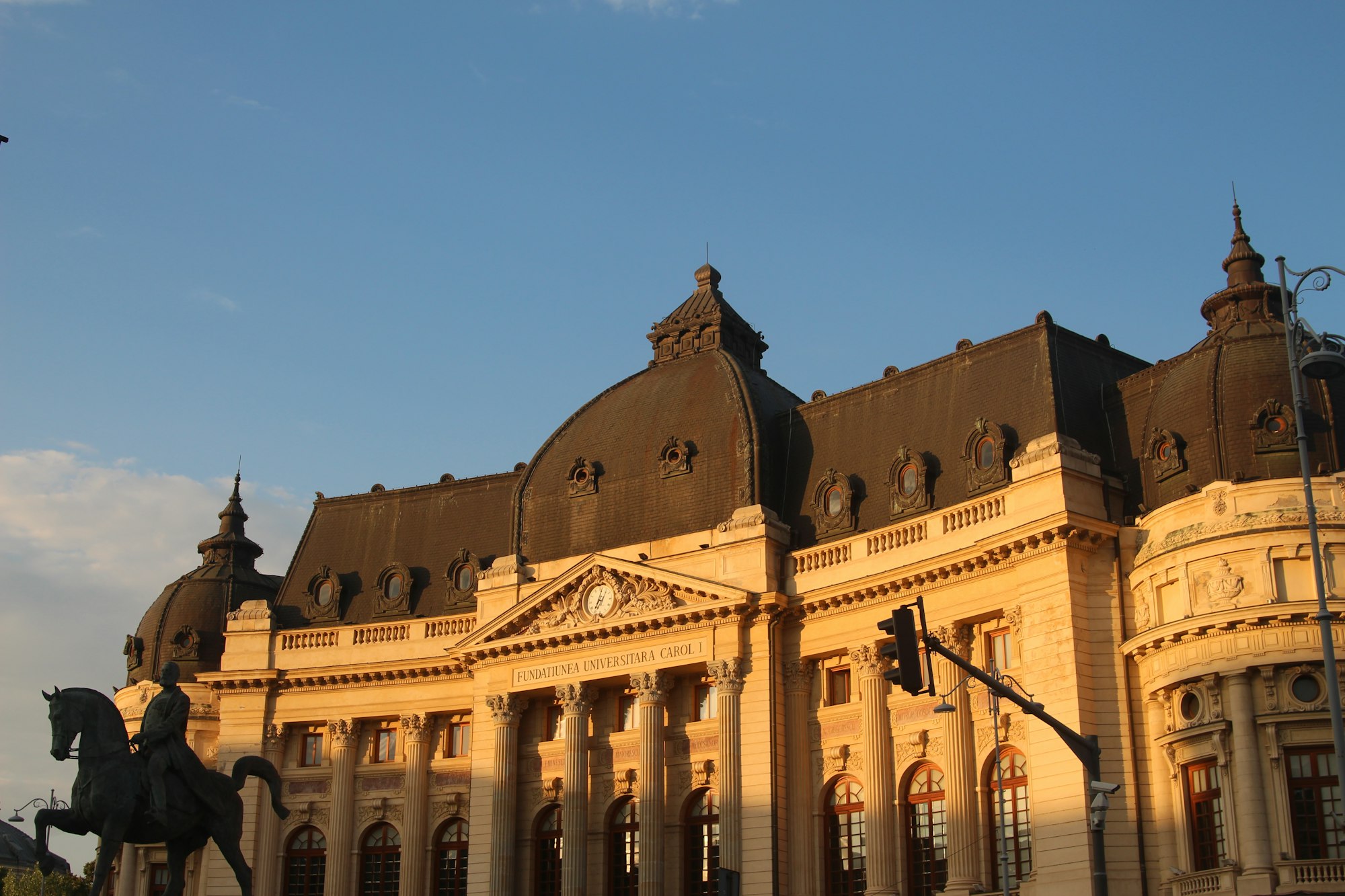
The former royal palace on Revolution Square, holding the national collection of Romanian medieval and modern art and a European gallery.…
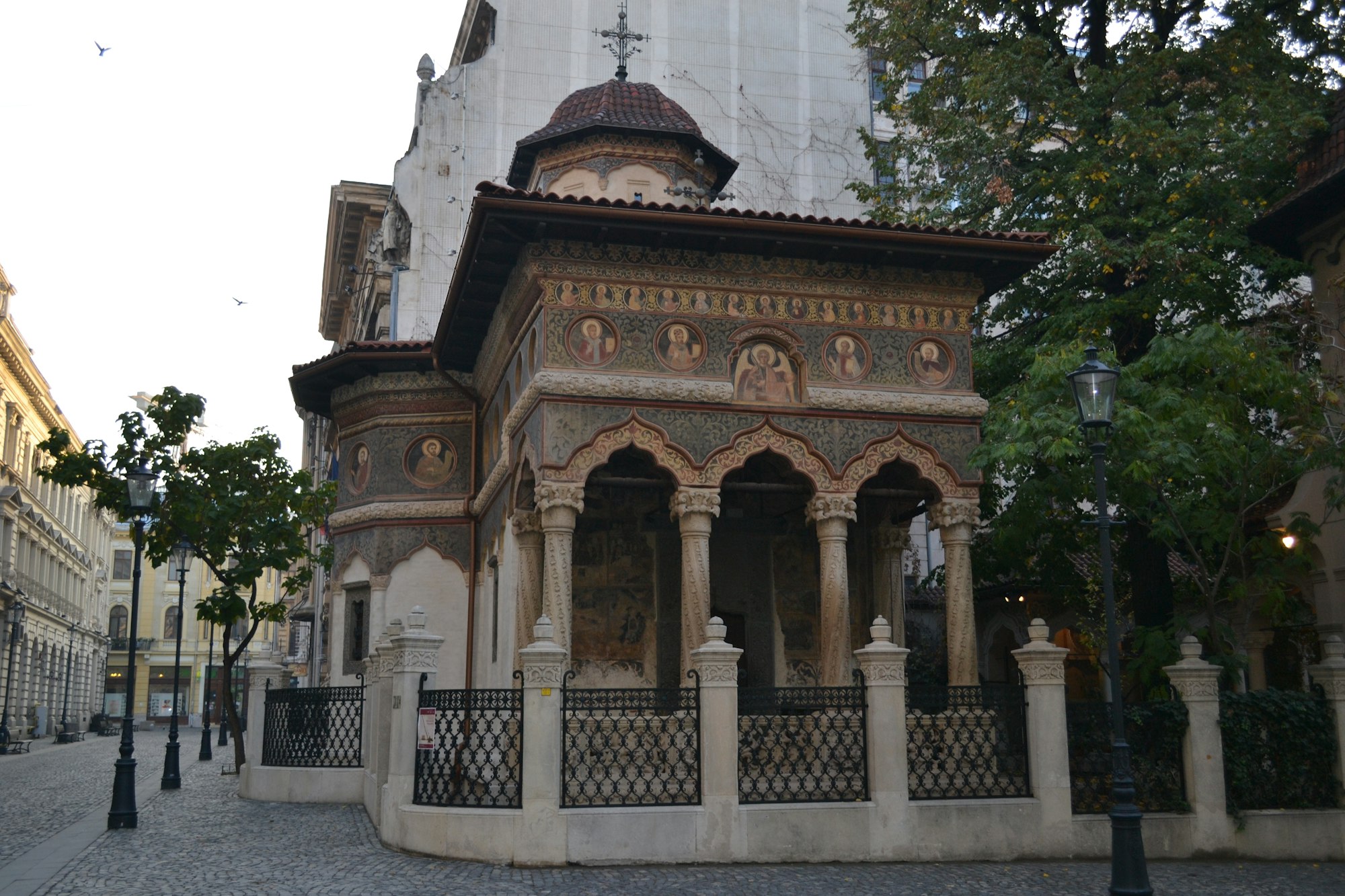
A small church of 1724 in a courtyard off the old commercial quarter, in the Brâncovenesc style, with carved stone and wood doors and a…
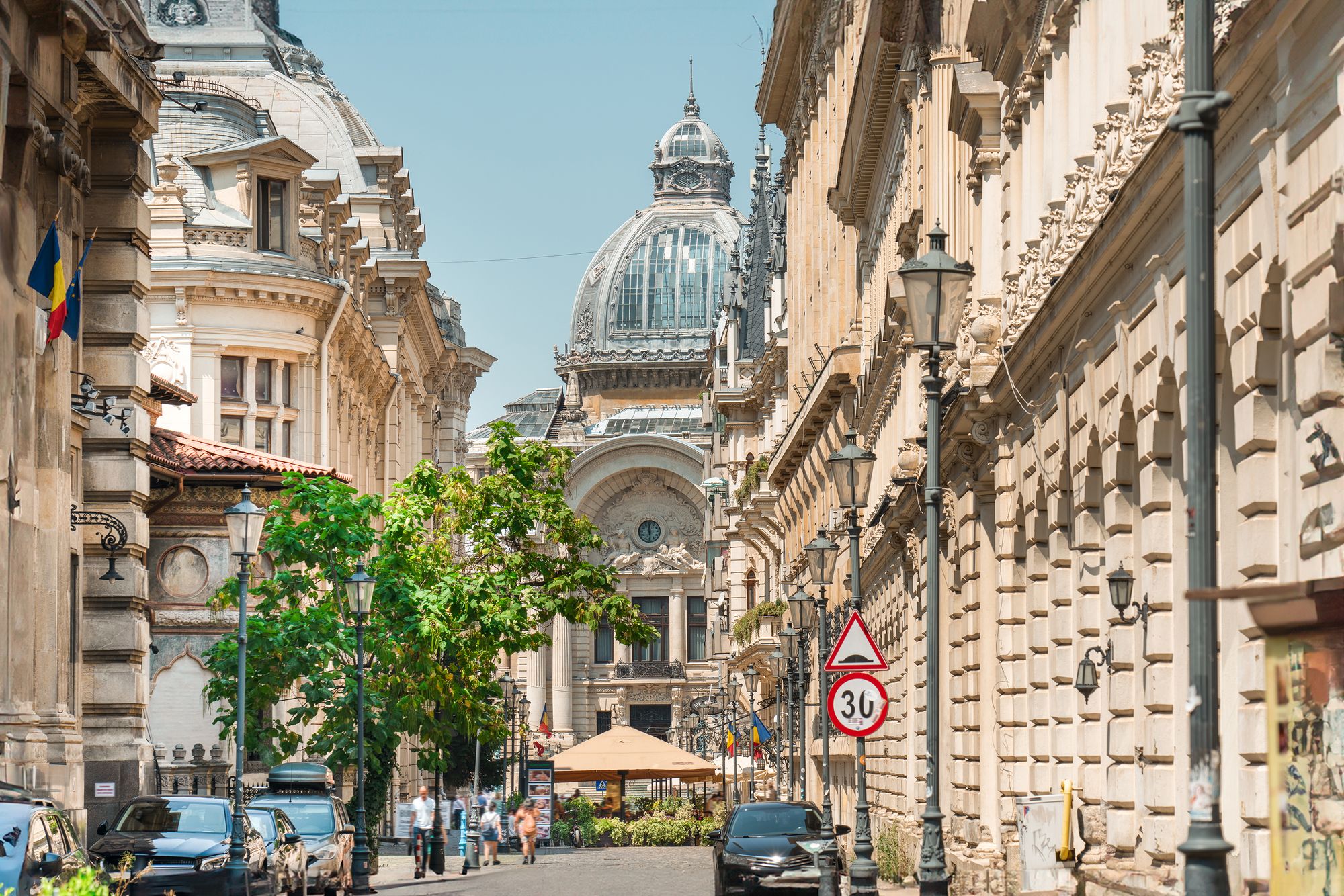
The Lipscani quarter, the surviving commercial core of the pre-war city, with an inn courtyard of 1808, a bookshop in a former bank, and…