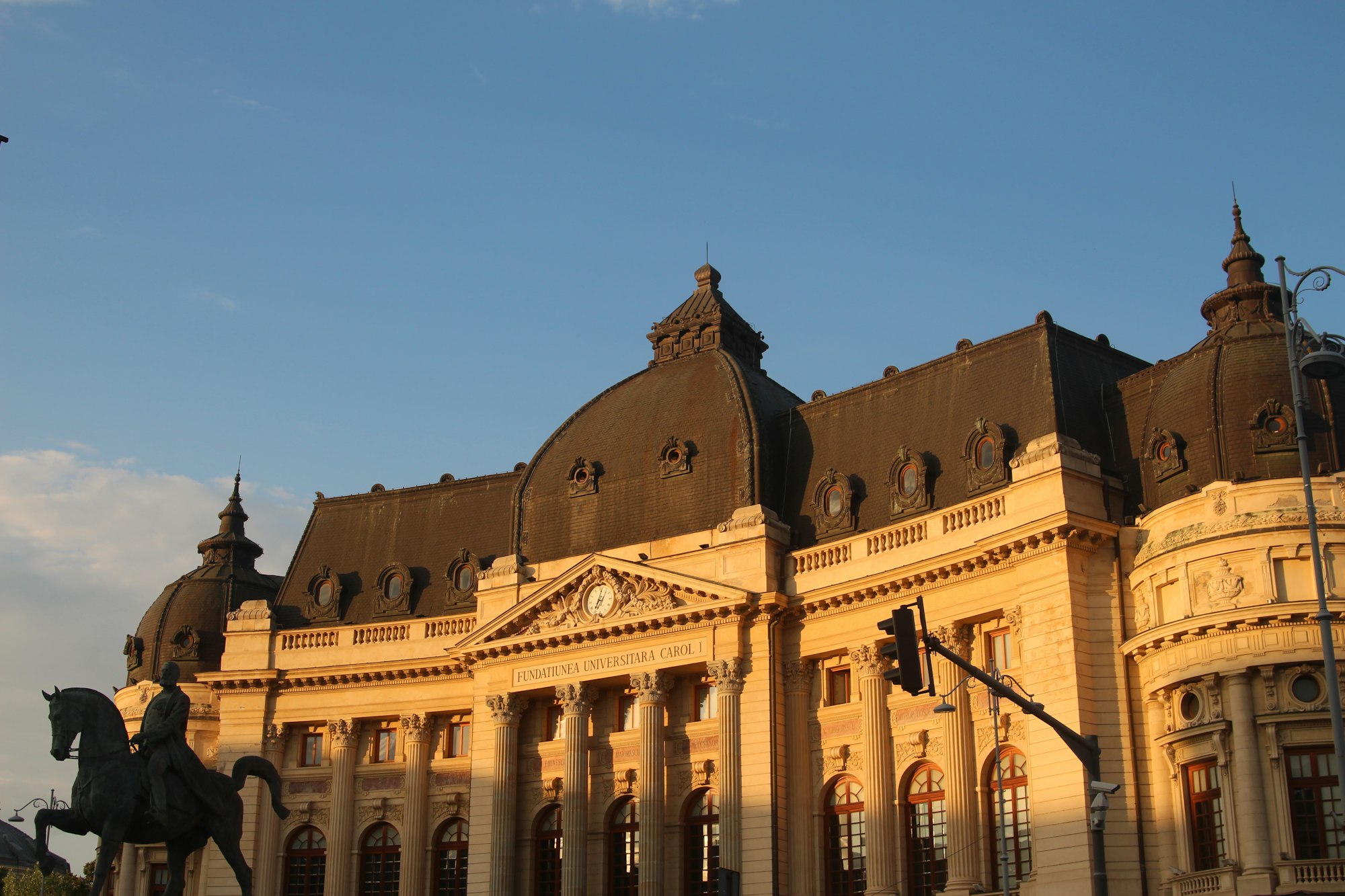
Ninety seconds on the National Museum of Art of Romania
Plan on two museums under one roof here: the royal palace's state rooms, led by the Throne Hall, and the country's main art collection, from medieval icons to Brâncuși.
At the top of the Voivods' Stairs, look up: Arthur Verona's ceiling fresco The Apotheosis shows the union of Transylvania with Romania, above Cornel Medrea's frieze of voivods and kings.
In the Throne Hall itself, Cecilia Cuţescu-Storck's ceiling, commissioned by Carol II, shows the Arts on a feast day under the Romanian sky. Opposite the throne apse hangs the royal crest, with Aurel Bordenache's 1934 portraits of the first King Carol and of Ferdinand on either side.
The Royal Dining Room has a coffered ceiling in the style of the English architect Robert Adam, French and Belgian marble floors and fireplaces in Romanian Ruşchiţa marble. Its large canvases by Iosif Iser and Rudolf Schweitzer-Cumpăna were painted as part of the room and still hang there. All three spaces reopened in 2013 after a long restoration.
The Romanian Medieval Art Gallery holds more than 900 icons, wall paintings, embroideries, manuscripts, silver and carvings. The Romanian Modern Art Gallery shows Nicolae Grigorescu and Ion Andreescu, and a hall of Brâncuși's early sculpture.
The European Art Gallery runs from the 14th to the 20th century in painting, sculpture and decorative art. El Greco, Rubens and Rembrandt are among its painters.
The ticket office in the European Art Gallery sells entry to the galleries and to the royal rooms. You need no reservation unless you want a guide.
Start with the Throne Hall and the Royal Dining Room, before your legs tire in the galleries. Then work through the two permanent galleries, which fill three floors of the main building, with temporary exhibitions alongside.
The route through each floor is hard to follow, so ask the attendants, who will point you on to the next room. Allow about two hours for the collection at a steady pace.
Guided tours of the historic rooms last an hour and must be booked at least seven days ahead, and an English-language tour can be arranged on the same notice. Book one if you want the stories behind the frescoes and the royal portraits. On your own, the rooms need no booking, which suits a shorter visit.
Come on a Thursday if you can, when the galleries can be close to empty. If you are in Bucharest on a Monday or Tuesday, when the palace is shut, go to the Art Collections Museum instead: it belongs to the same national museum and opens Monday, Tuesday and Friday from ten until six.
Explore the rest of București
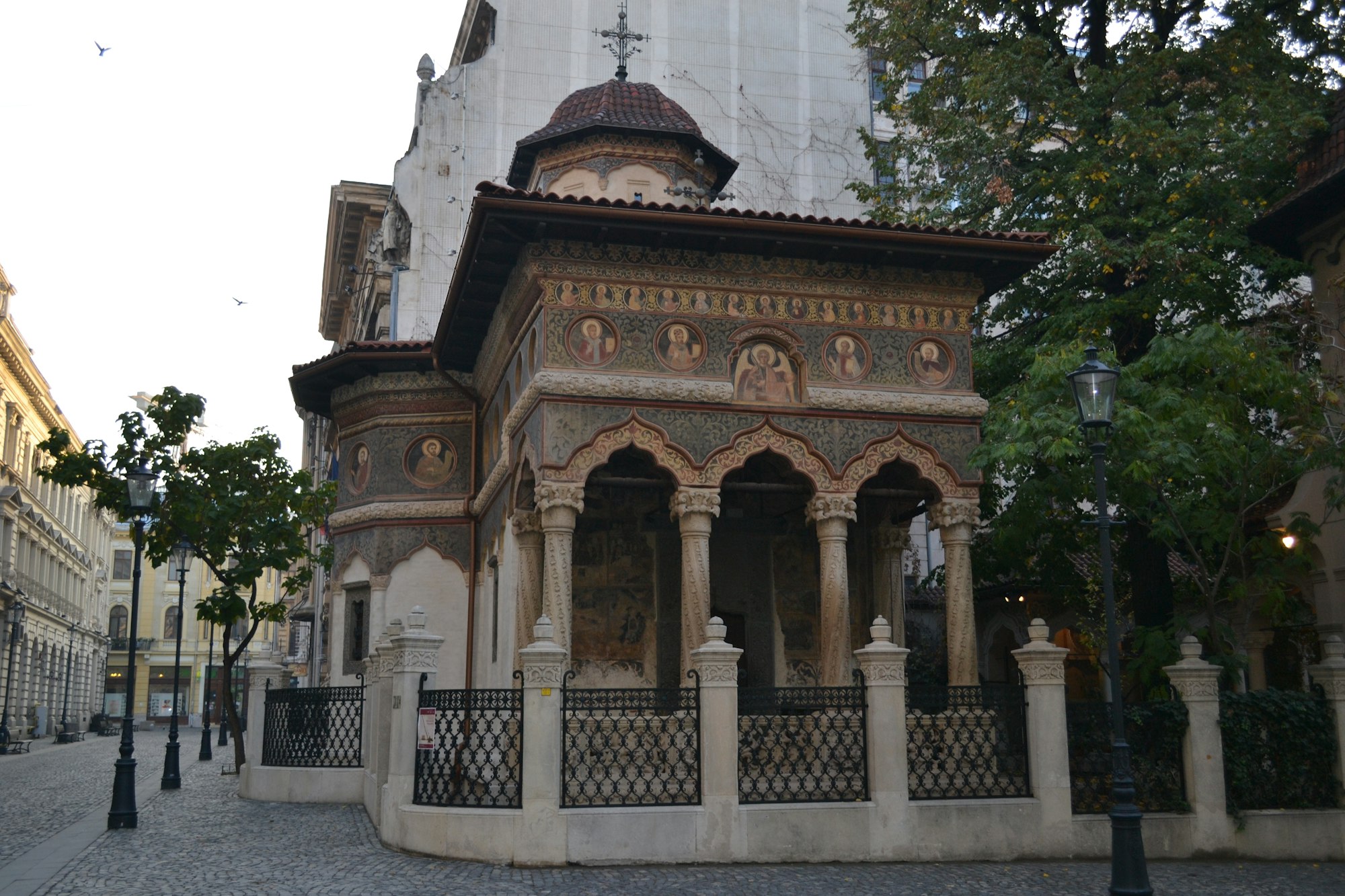
A small church of 1724 in a courtyard off the old commercial quarter, in the Brâncovenesc style, with a carved stone porch and a cloister…
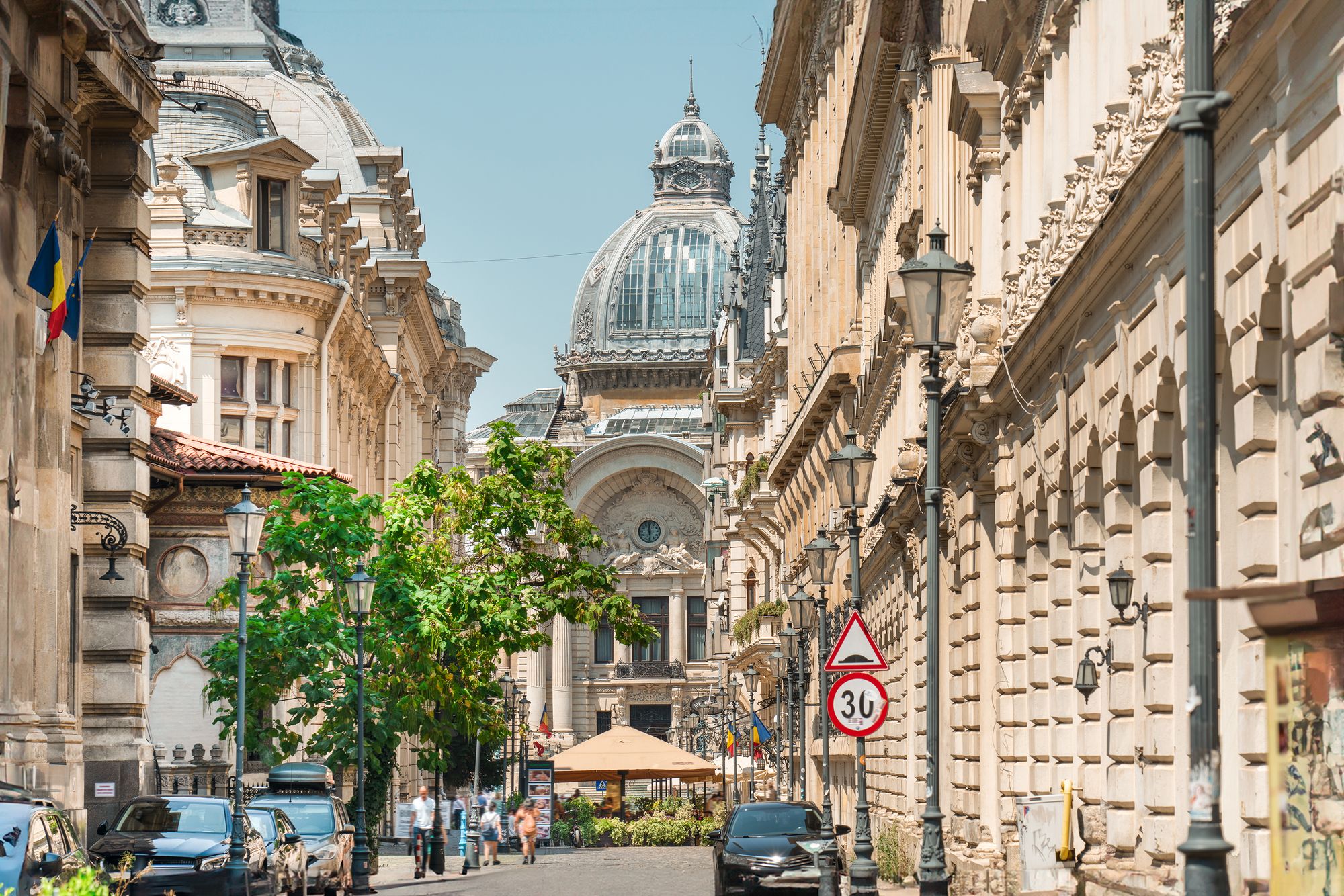
The Lipscani quarter, the surviving commercial core of the pre-war city, with an inn courtyard of 1808, a bookshop in a former bank, and…
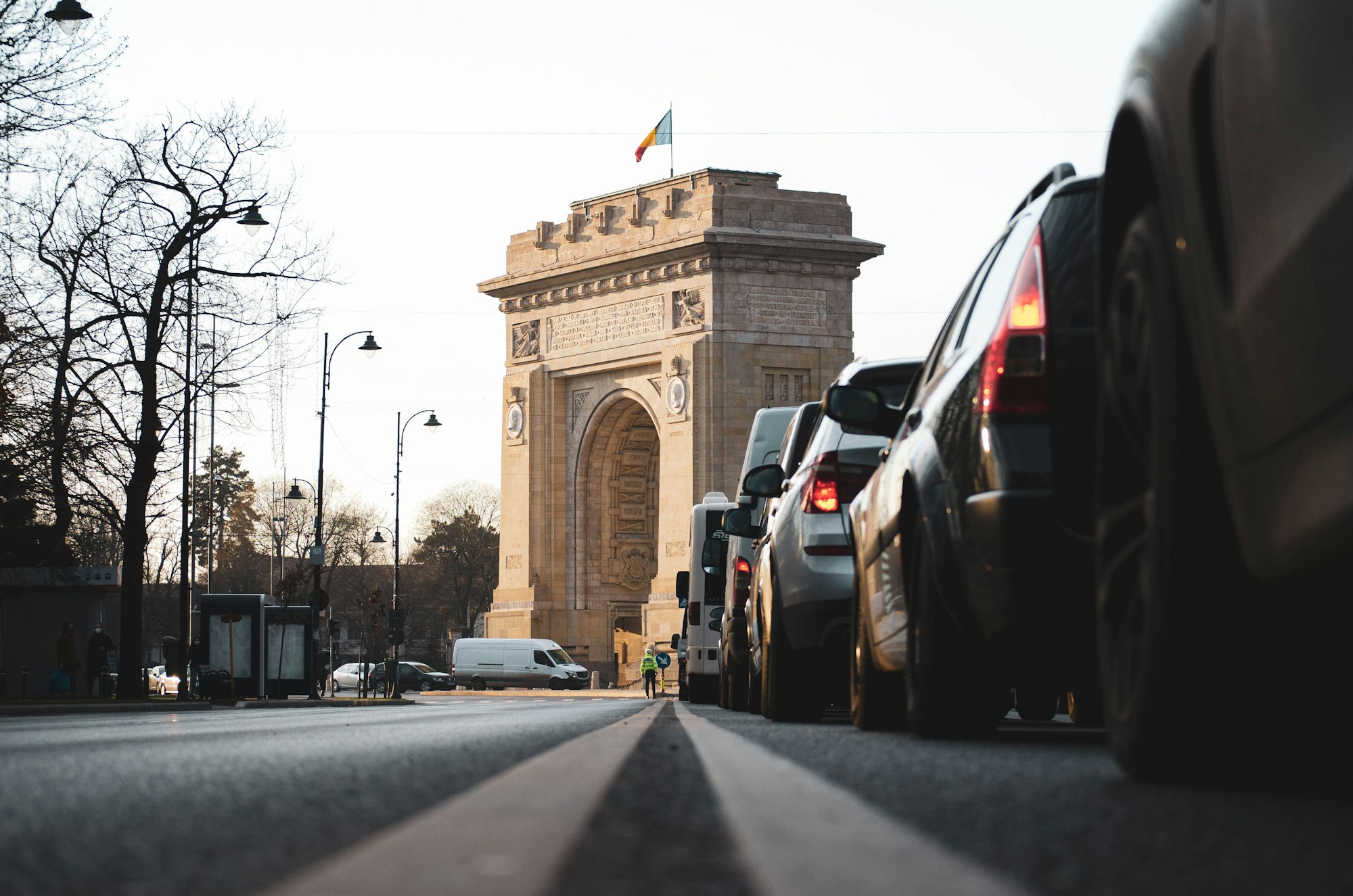
A triumphal arch of 1936 at the head of Kiseleff Road, carrying reliefs of Romania's military history. A stair inside climbs through a…