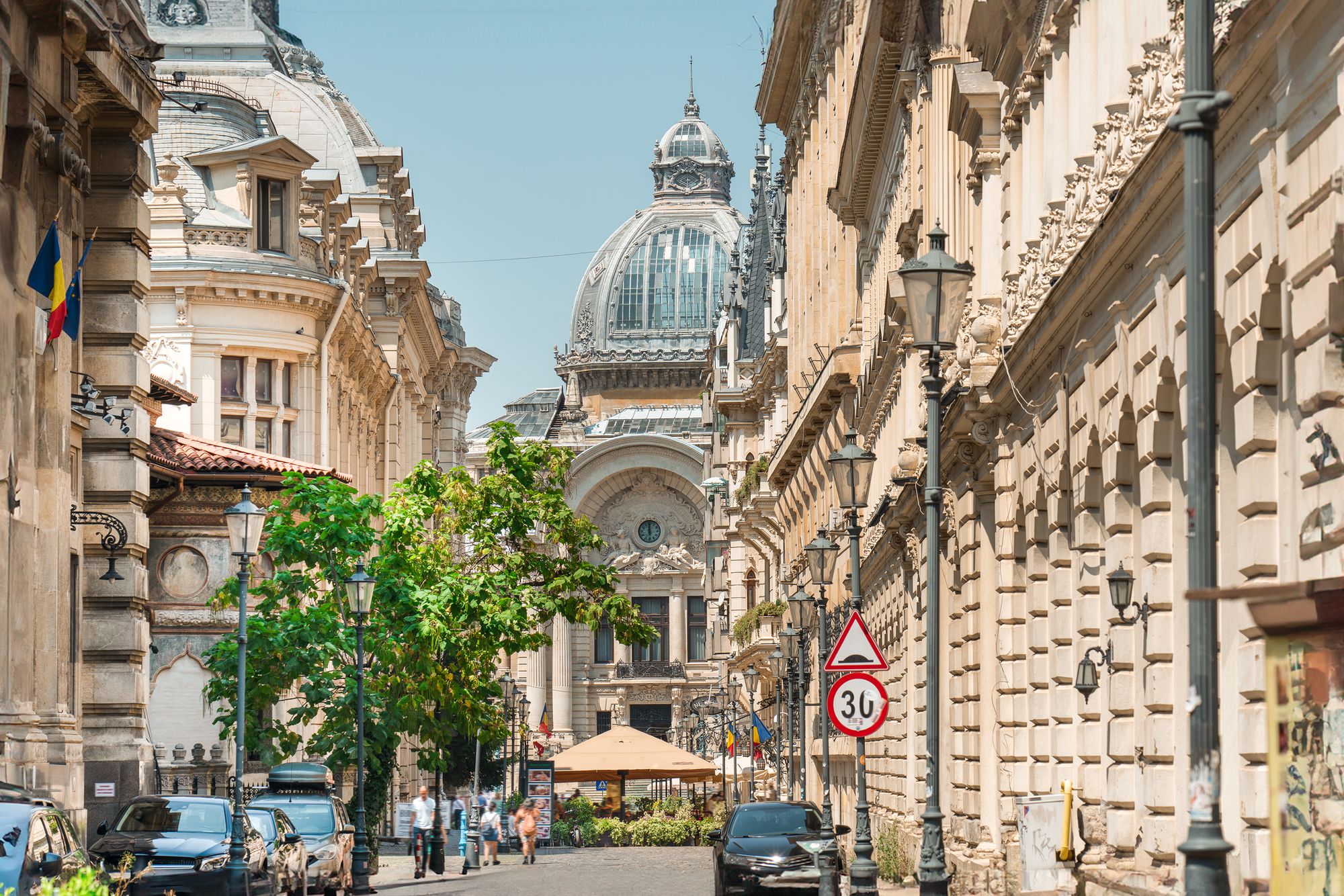
Ninety seconds on Bucharest Old Town
Few corners of Bucharest pack this much into a short walk: you can eat in the courtyard of an old merchants' inn, browse a bookshop in a house built for bankers, and step into a quiet church between the bars.
The quarter is a small grid of narrow lanes closed to traffic, lined with old facades. Under some of its shopfronts the old cellars survive as the dining rooms of bars and restaurants.
Hanul lui Manuc is one of Europe's last surviving caravanserais, a three-level inn ringed with balconies round a large courtyard. It now runs as a Romanian restaurant and hotel, so you see the courtyard by sitting down in it.
Stavropoleos is a small church in the Brâncovenesc style, with a courtyard of columns, candles and old gravestones enclosed by covered walkways on three sides. Cărturești Carusel is the opposite in scale: a bookshop in an early twentieth-century house, its six levels of curved balconies rising round an atrium.
The Old Princely Court, where Wallachia's rulers lived, is the quarter's oldest monument. Only its foundations and the lower walls of its cellars survive, with a bust of Vlad III Dracula standing over the ruins and the court's Brâncovenesc church beside them.
Start at Cărturești Carusel on Strada Lipscani and climb to the tea room on the top floor, which looks down over the atrium. More than 10,000 books fill the shelves, and reading nooks between them give you somewhere to sit for a few minutes.
Then walk the side streets, looking up at the old facades above the shopfronts. Make time for the Macca-Villacrosse Passage, a horseshoe-shaped arcade with a coloured glass roof over its central circle.
Stavropoleos is the quiet stop. Go during a service if you can: Byzantine music is one of the monastery's constant interests. Finish at Hanul lui Manuc for a meal or a drink in the courtyard; it opens at eight in the morning and stays open until midnight, or two in the morning on Fridays and Saturdays.
Keep your phone and wallet zipped away in the crowds. Pickpocketing and bag snatching happen in Bucharest, and organised groups of thieves work the metro and the stations you pass through on the way in.
Violent crime is rare. Late at night, take a taxi or a ride-hailing car back rather than walking alone through the streets around the quarter.
Explore the rest of București
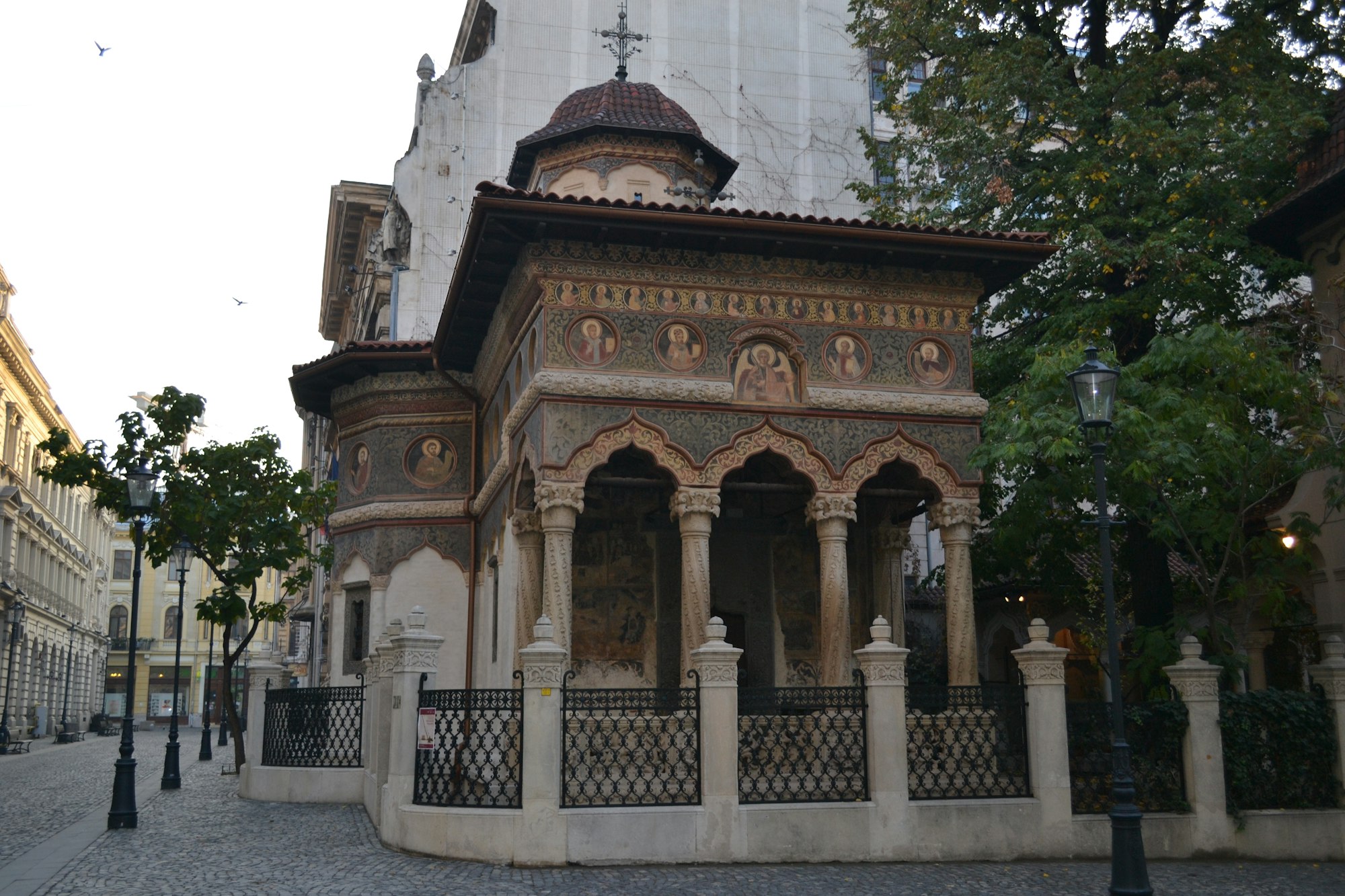
A small church of 1724 in a courtyard off the old commercial quarter, in the Brâncovenesc style, with a carved stone porch and a cloister…
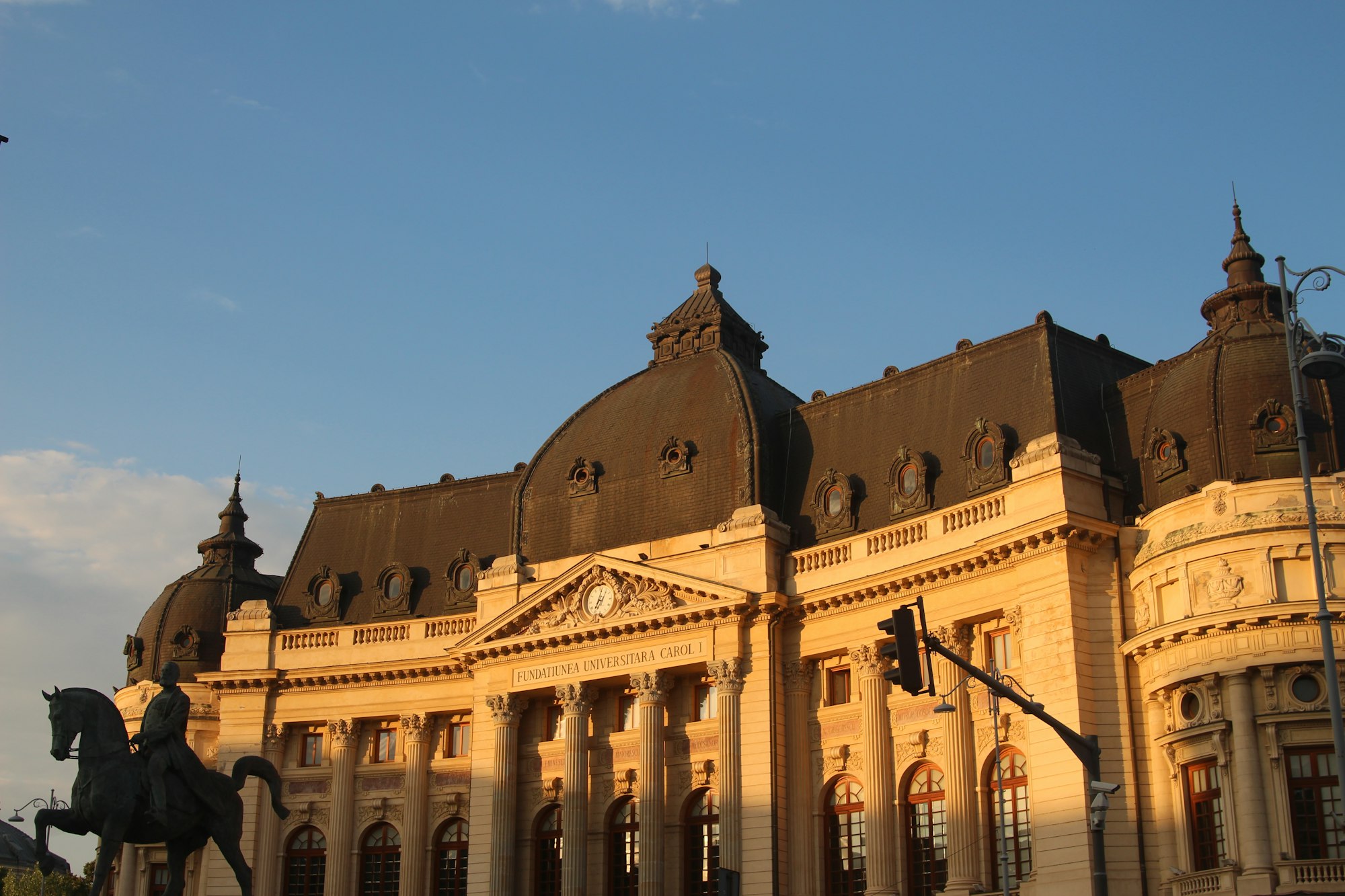
The former royal palace on Revolution Square, holding the national collection of Romanian medieval and modern art and a European gallery.…
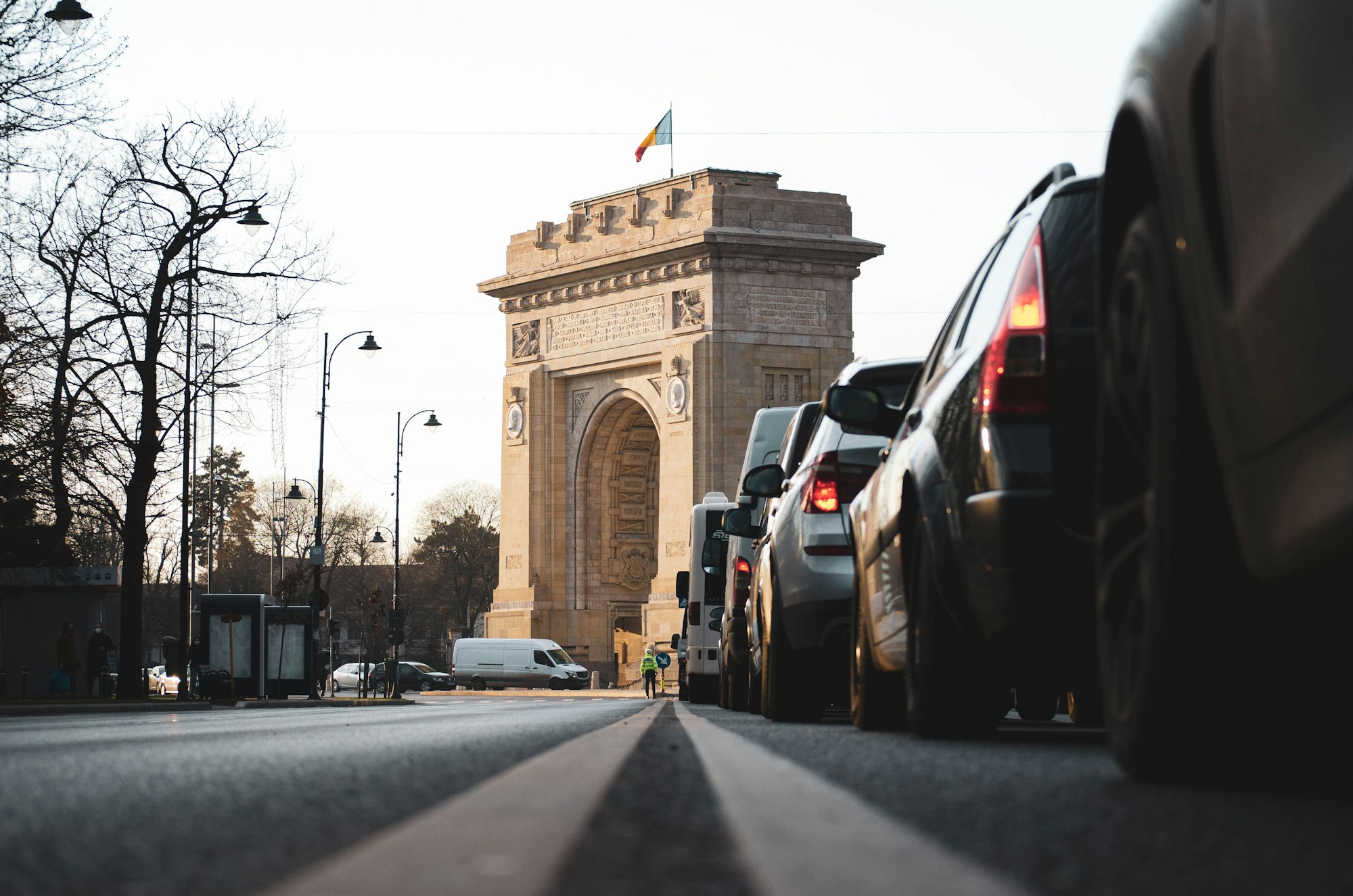
A triumphal arch of 1936 at the head of Kiseleff Road, carrying reliefs of Romania's military history. A stair inside climbs through a…