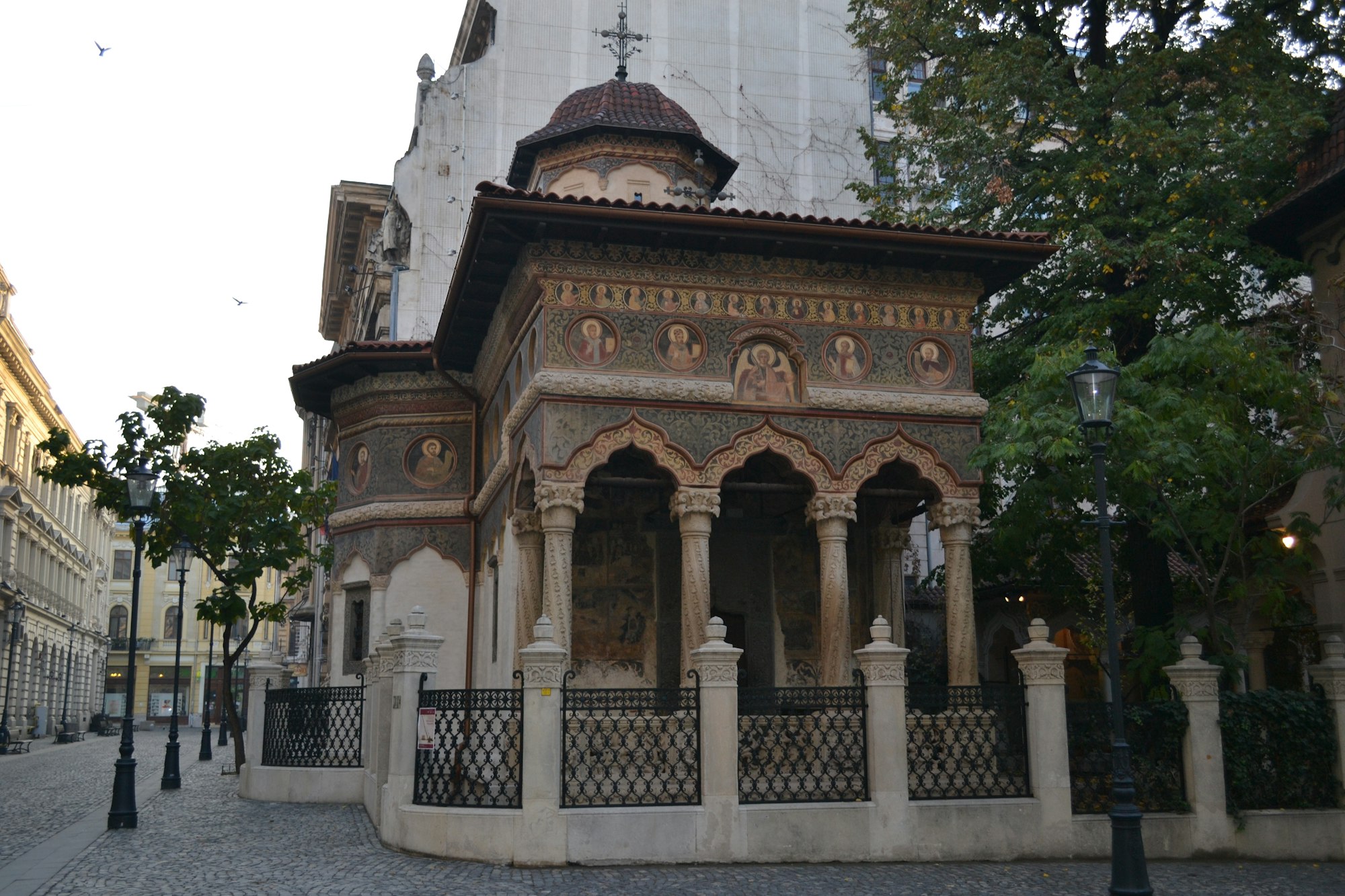
Ninety seconds on Stavropoleos Monastery
Hearing the resident choir sing Byzantine chant inside a small, richly carved church is the reason you come to Stavropoleos, and the services where it sings run every day.
Most of what you look at here is carving. The church is built in the Romanian Brâncovenesc style and covered in stone and wood carving, with the finest of it on the main doors, so stop at them before you go in. Inside, look up at the dome: its paintings were restored in the early twentieth century after earthquakes brought it down.
Around the church, open galleries on columns close the courtyard on its east, west and south sides. Crosses and plaques taken from old graves are set along them, and craftsmen are restoring some of the eighteenth-century tombstones, so you may find work in progress. The architect Ion Mincu gave the courtyard this form in 1899.
Music is the monastery's other work. Its library holds the largest collection of Byzantine music books in Romania.
Stavropoleos Monastery's street gate leads straight into the courtyard, and entry is free. Cover your shoulders and knees before you go further, and take your hat off at the church door.
Start with the carved doors, then go into the church. If a service is on and the door is open, stay quiet and listen to the choir.
Afterwards walk the open galleries around the courtyard. You can photograph freely outside, but ask before you take pictures in the church, and put the camera away during a service.
Come on a weekday morning if you want the courtyard at its quietest. If the singing is what you came for, plan around a service instead, and allow time to come back if the church is shut when you arrive.
Carry a scarf or a light layer in summer, because the dress rule applies at the church door whatever the heat.
Explore the rest of București
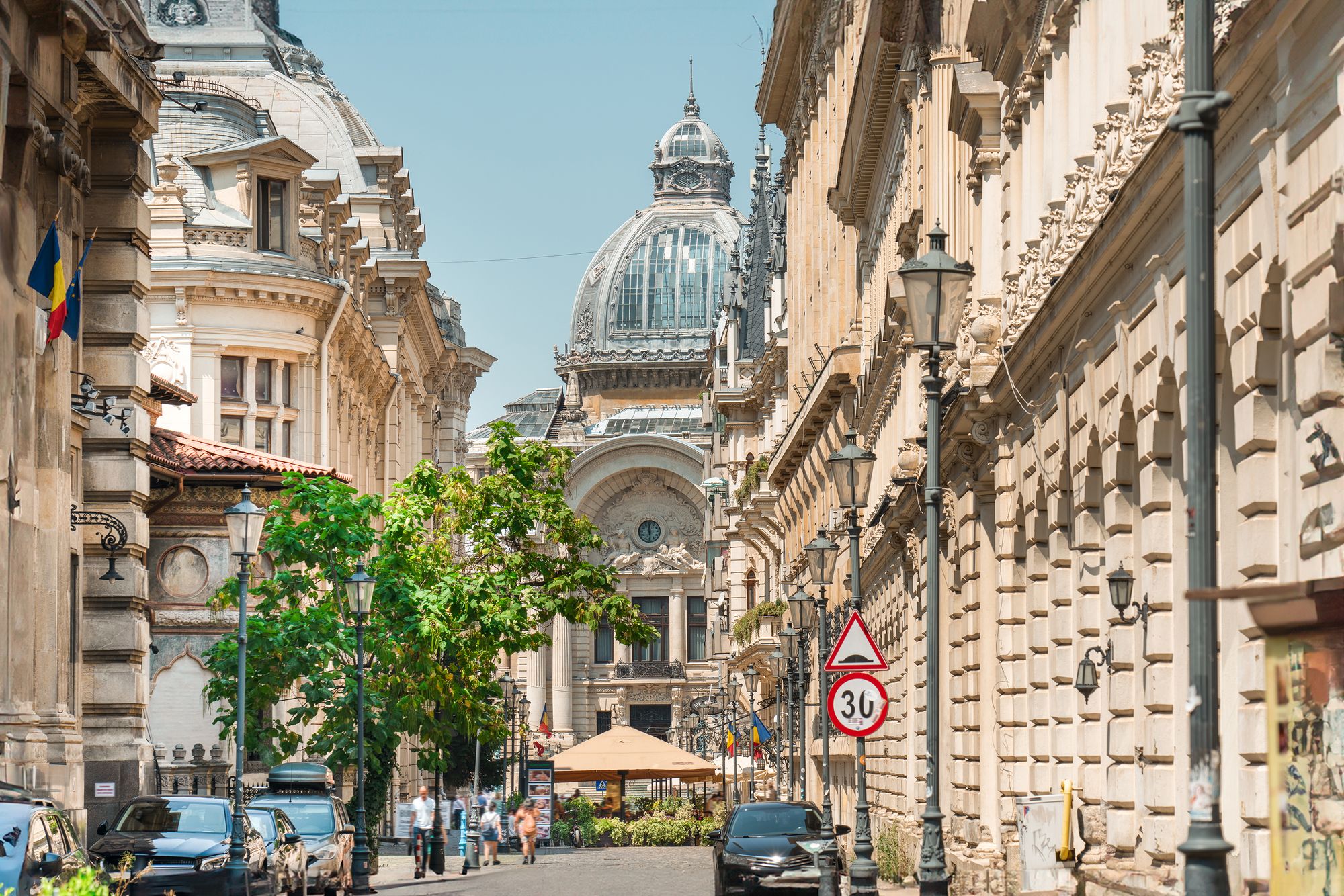
The Lipscani quarter, the surviving commercial core of the pre-war city, with an inn courtyard of 1808, a bookshop in a former bank, and…
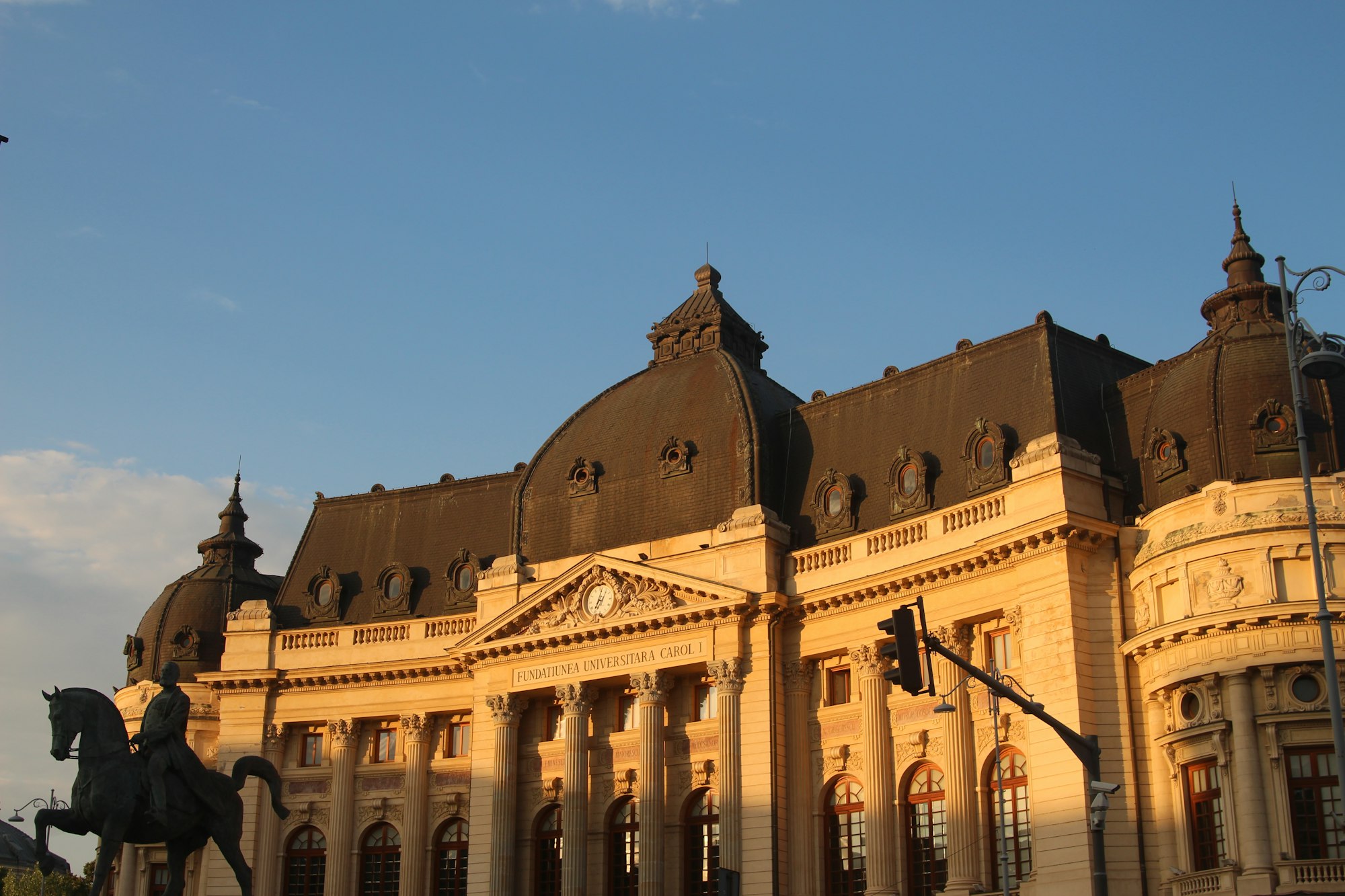
The former royal palace on Revolution Square, holding the national collection of Romanian medieval and modern art and a European gallery.…

A triumphal arch of 1936 at the head of Kiseleff Road, carrying reliefs of Romania's military history. A stair inside climbs through a…