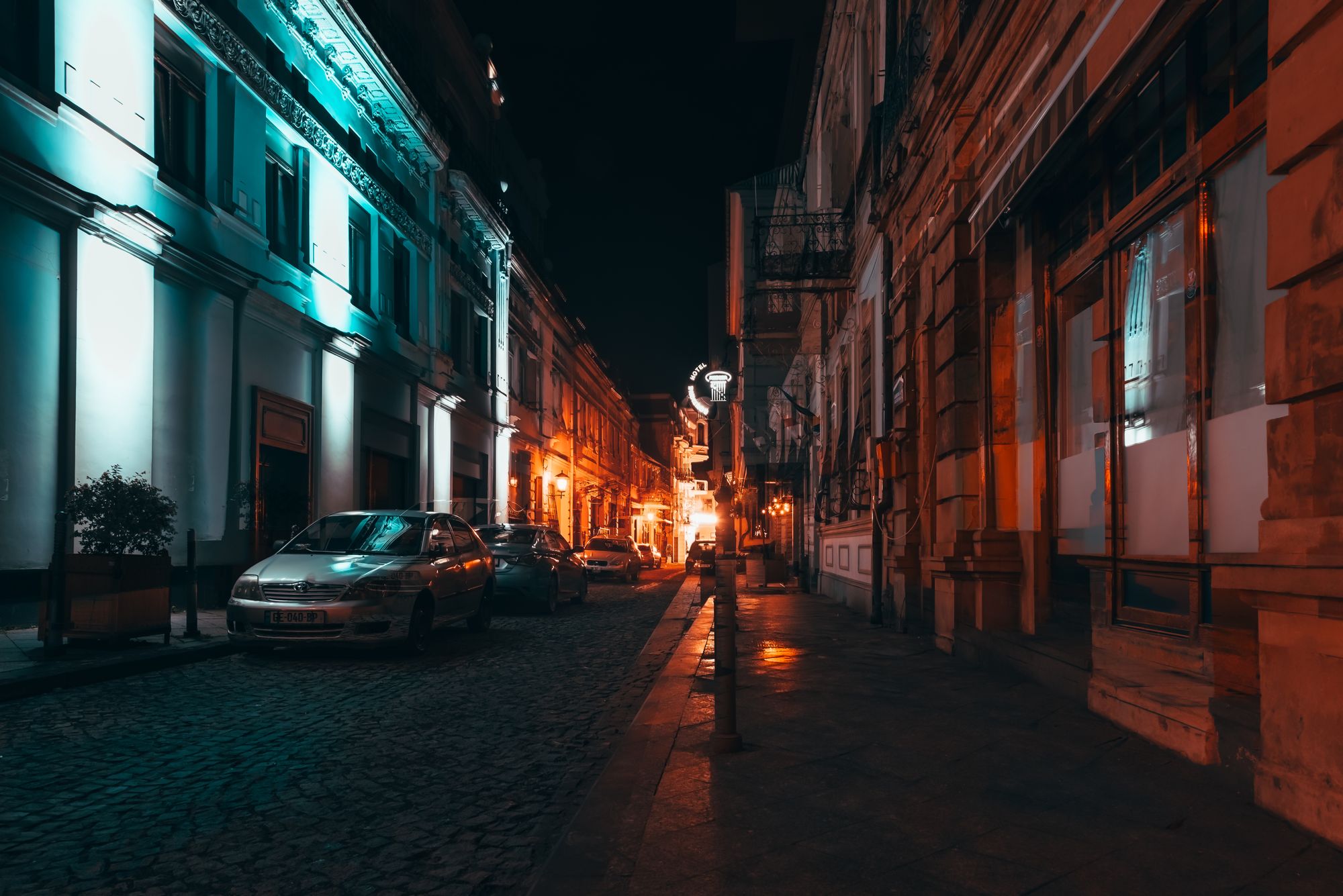
Lipscani
The old commercial quarter, named for the merchants who traded with Leipzig, and the densest surviving piece of the pre-war city. It is the drinking district after dark and a quarter of small churches and inn courtyards before it.
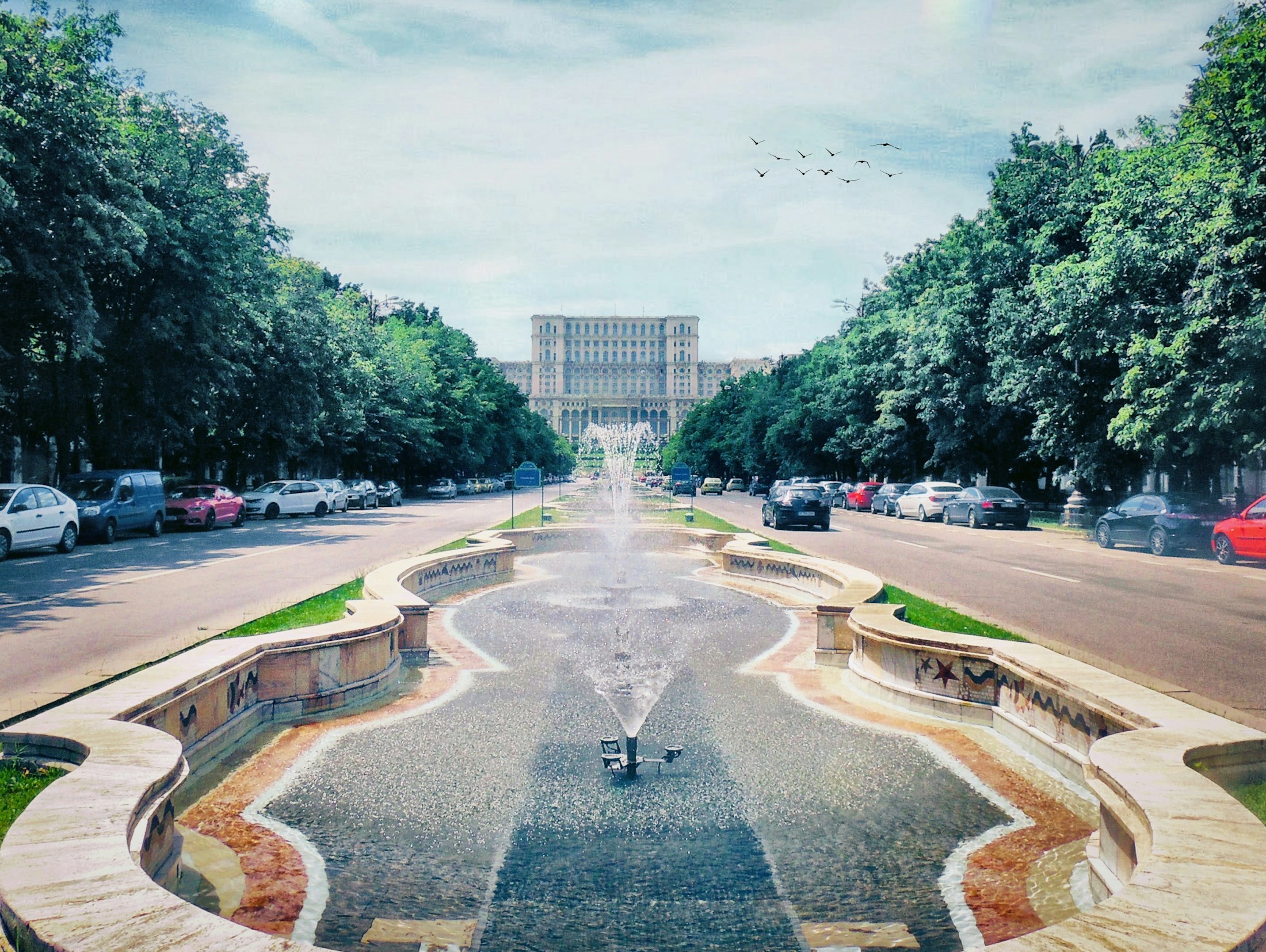
Come to hunt for the old city: the churches that survived the 1980s clearances now stand behind housing blocks.
View on globeNinety seconds on București
Three. One covers the civic axis, the Palace of the Parliament and the old commercial quarter, which sit within a walk of each other. A second takes the art museum, the peasant museum and the village museum on Herăstrău lake, which are spread along the northern boulevards. A third goes to the outlying palaces: Mogoșoaia is fourteen kilometres out and Cotroceni is booked in advance with identity checked at the door.
On the metro and on foot. Four lines run, and the M2 crosses the centre north to south, which is the direction most visitors travel; a single ticket covers any journey and the trains are the one part of the transport system that keeps time. Surface traffic is heavy enough that a bus across the middle of the day is slower than walking. The quarters worth staying in are not walking distance from each other, which is what the metro is for.
May, June and September. The city sits on a plain with no water and no hills to move the air, so July and August run into the mid thirties and a large part of the population leaves for the coast or the mountains. Winter is cold and grey and the parks are the only reason to be outside. The George Enescu festival fills the concert halls every other September and books out months ahead.
Romanian, which is a Romance language and closer to Italian than to any of the Slavic languages around it. English is common in the centre among anyone under forty and in every museum and hotel.
No. The currency is the Romanian leu and Romania has not set a date to adopt the euro. Cards are taken almost everywhere in the city, including on public transport, and cash is worth carrying only for the markets and the smaller churches. Museums are inexpensive by western European standards and several of the largest are free on the first Wednesday of the month.
Henri Coandă at Otopeni, seventeen kilometres north, which handled about 17 million passengers in 2025 and takes almost every scheduled international flight. A train runs to Gara de Nord and the 783 express bus runs to the centre through the night. Băneasa, five kilometres closer in, has taken scheduled low-cost flights again since 2025.
Some churches in the way of the 1980s civic axis were put on rails and rolled behind housing blocks, where they still stand: the Mihai Vodă church went 289 metres and now faces a wall. Look for them as you walk the centre.
The rest of the centre falls into three parts. The old commercial quarter is a dense grid of inn courtyards and small churches, the belle époque boulevards run north through banks and villas, and the concrete blocks of the 1980s sit between them. No single walk joins them up.
Almost everything is free or close to it, the parks are large, and the museums are among the best in the region. Give it at least three days, for the axis, the old quarter and the village museum on the lake.
The old commercial quarter, named for the merchants who traded with Leipzig, and the densest surviving piece of the pre-war city. It is the drinking district after dark and a quarter of small churches and inn courtyards before it.
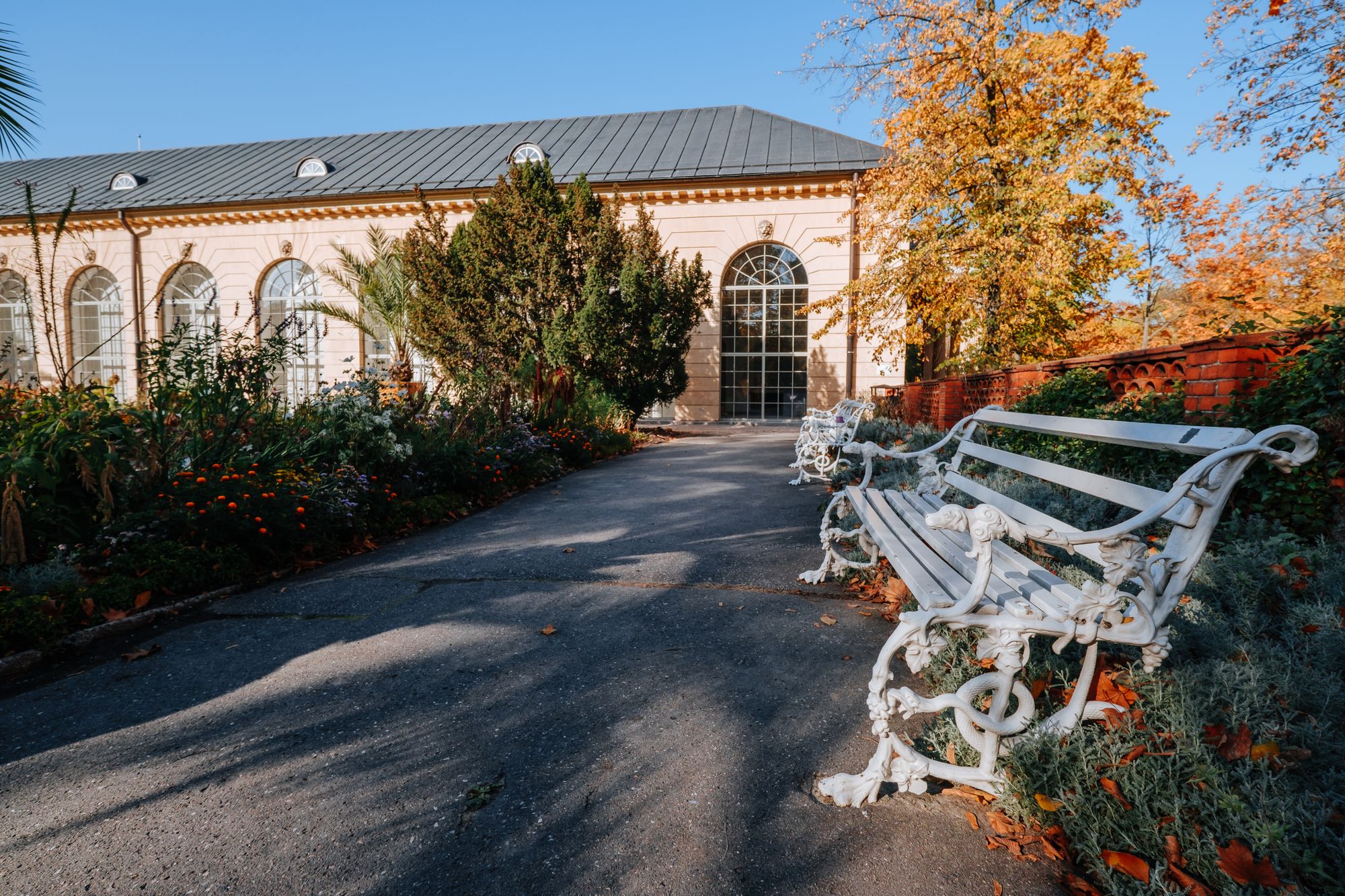
A quarter of 1900s villas and plane trees around the presidential palace and the botanical garden, laid out as a garden suburb and almost untouched by the demolitions. It is the quiet base.
The moneyed quarter north of the centre, embassies and interwar apartment blocks, closest to the parks and the village museum and furthest from the old town's noise.
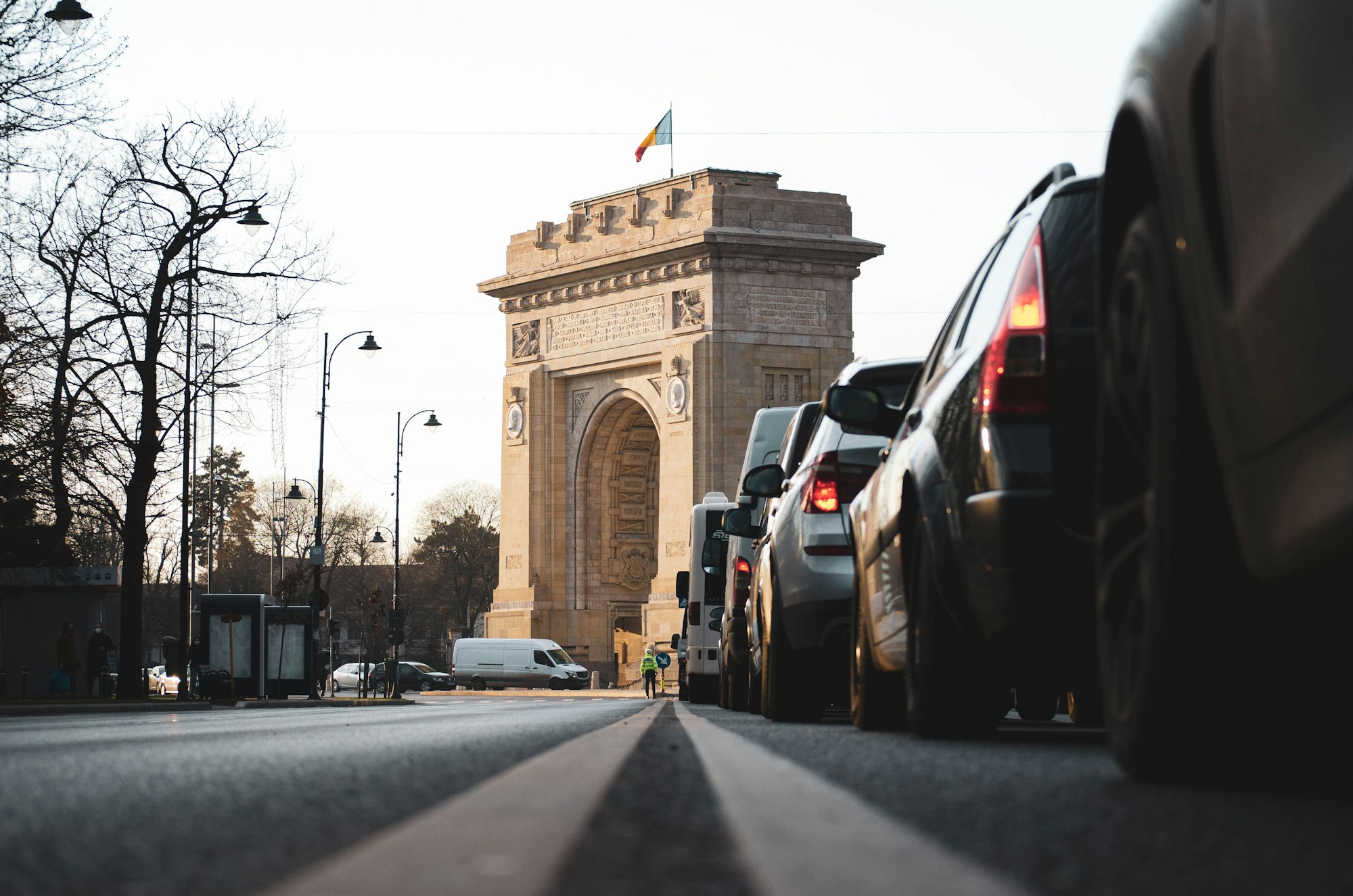
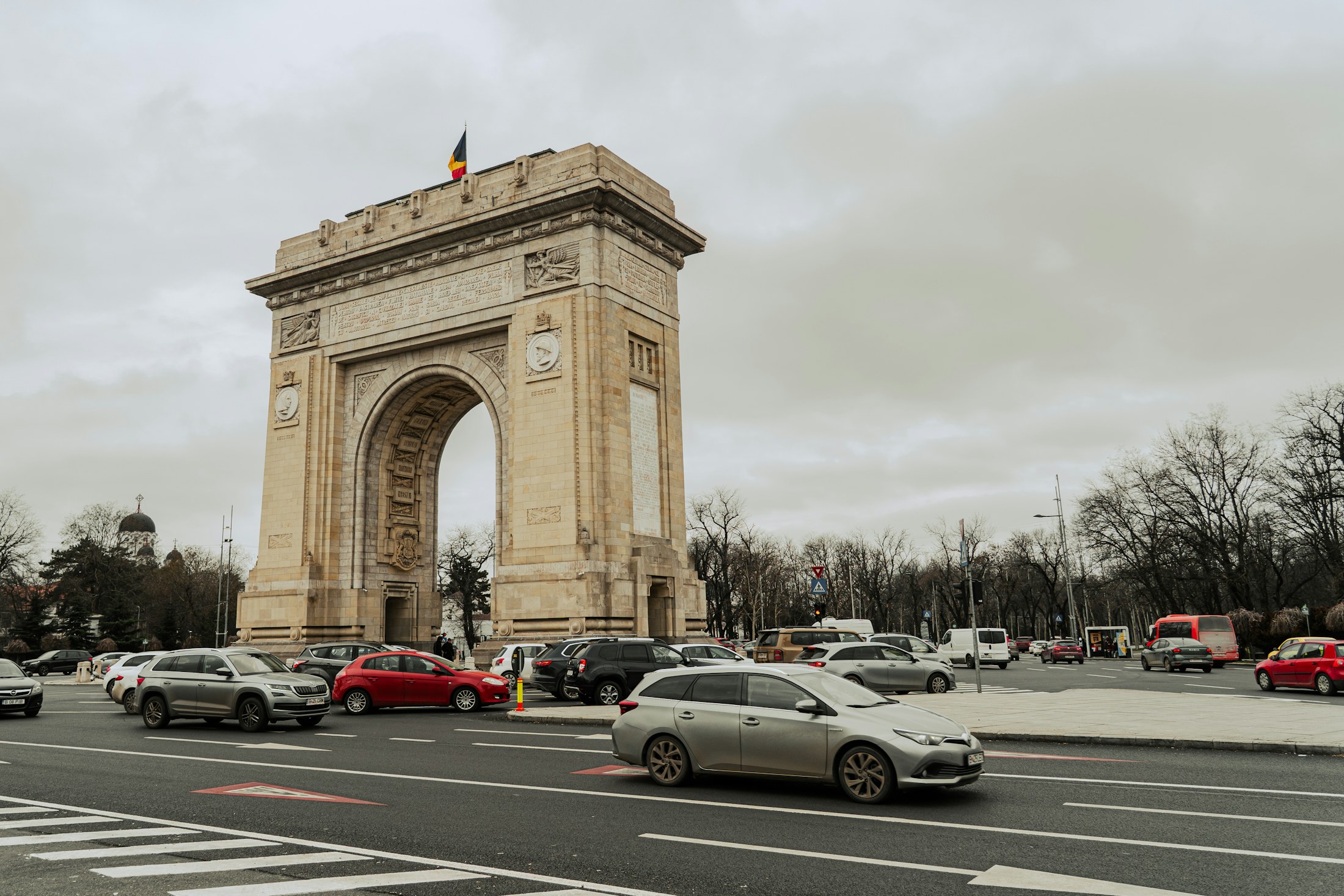
From the pavement the arch is only a photograph. The reason to come is the terrace on top, looking down Kiseleff Road toward the centre, so pick a clear day.
View more →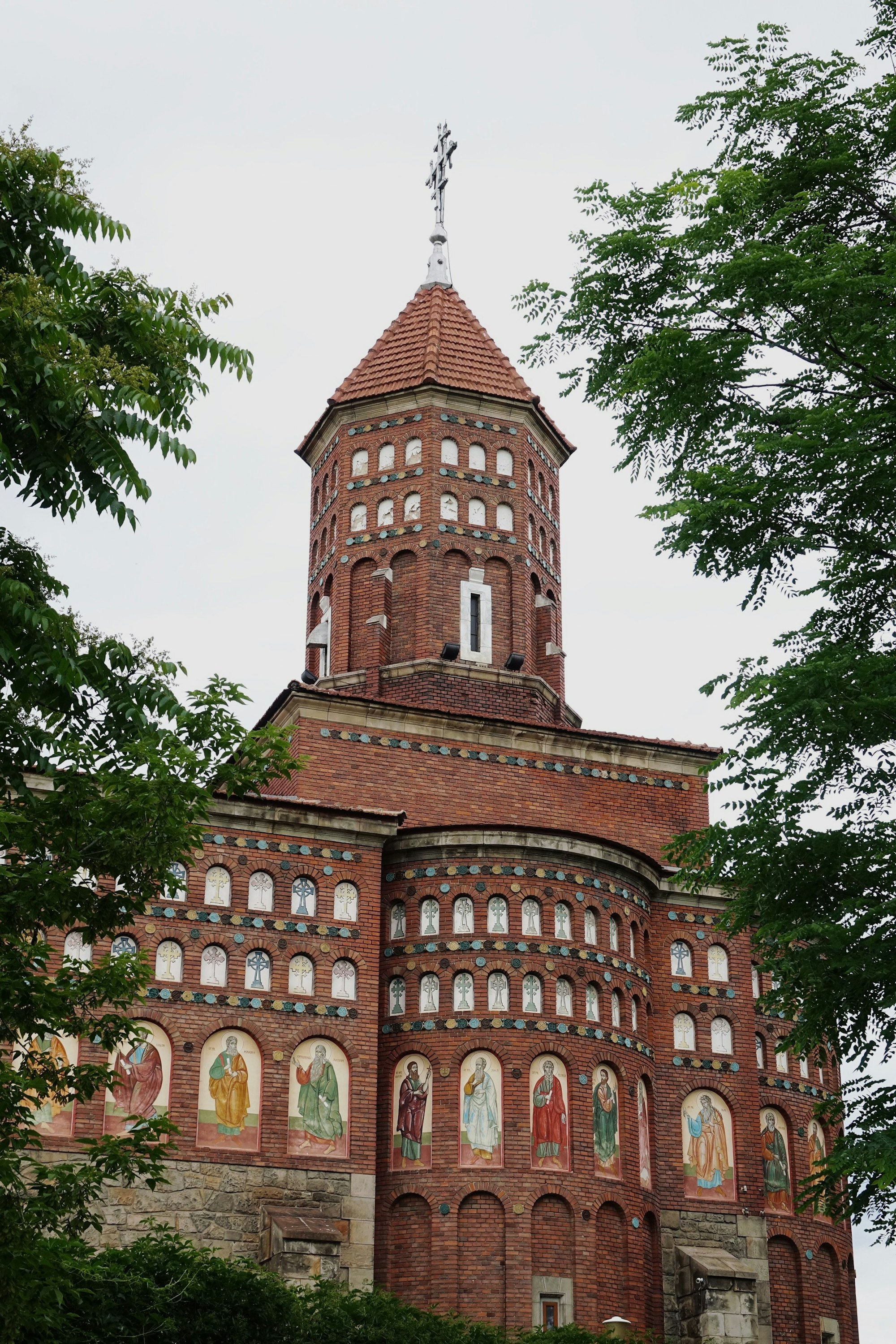
Completed in 1915 on the site of older chapels, the Armenian church serves a community trading in the city since the seventeenth century and gives its name to the quarter around it. The design echoes Echmiadzin in Armenia, with a conical drum over the crossing and carved khachkars set into the walls. A small museum and archive sit alongside, open irregularly.
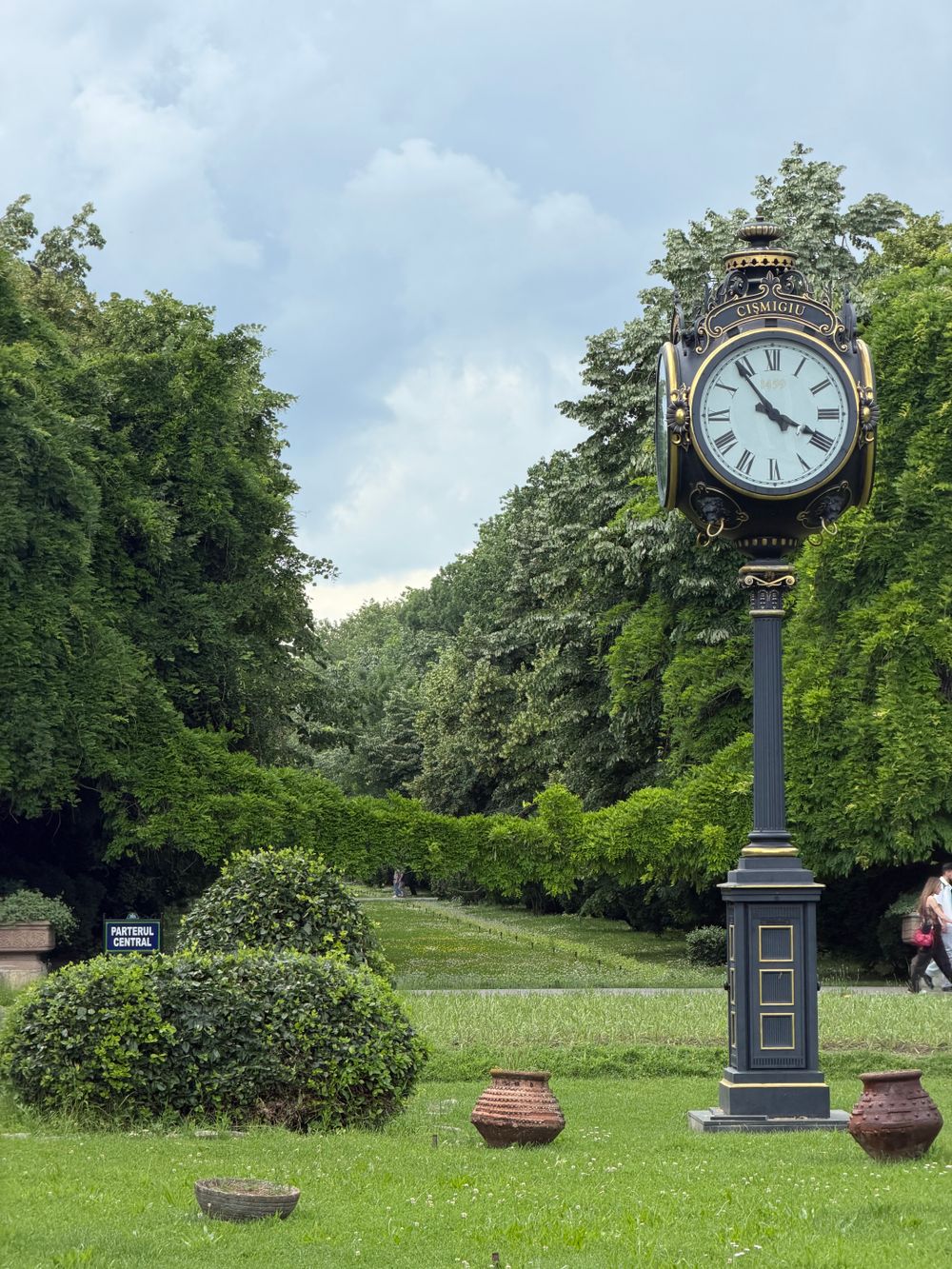
A garden of 1860 in Cotroceni, seventeen hectares with an 1891 glasshouse, and the quietest large green space in the city.
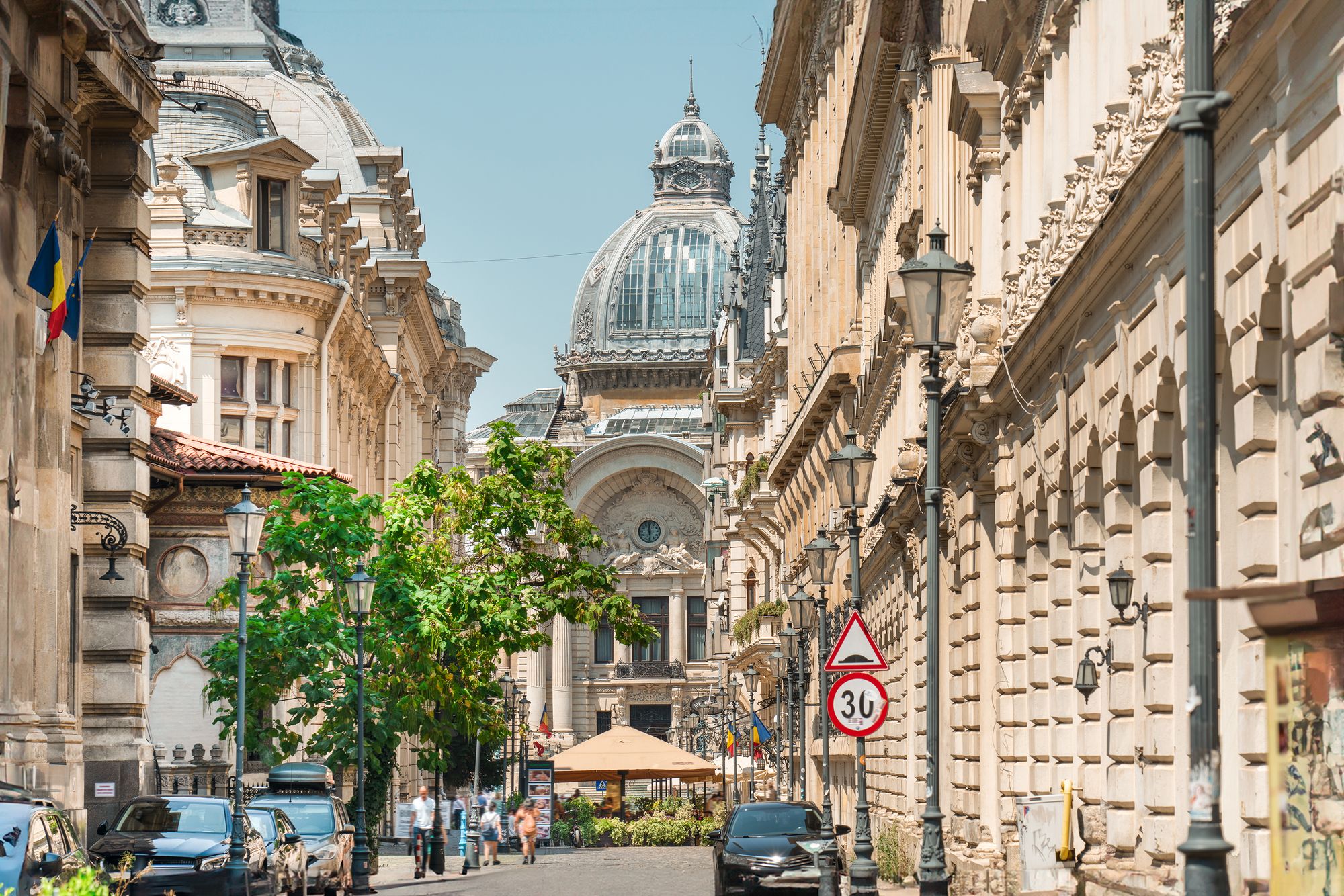
Come for the streets, not for a sight. The princely court at the heart of the quarter is closed for restoration, so Stavropoleos, a couple of streets away and free, is the one interior to plan on.
View more →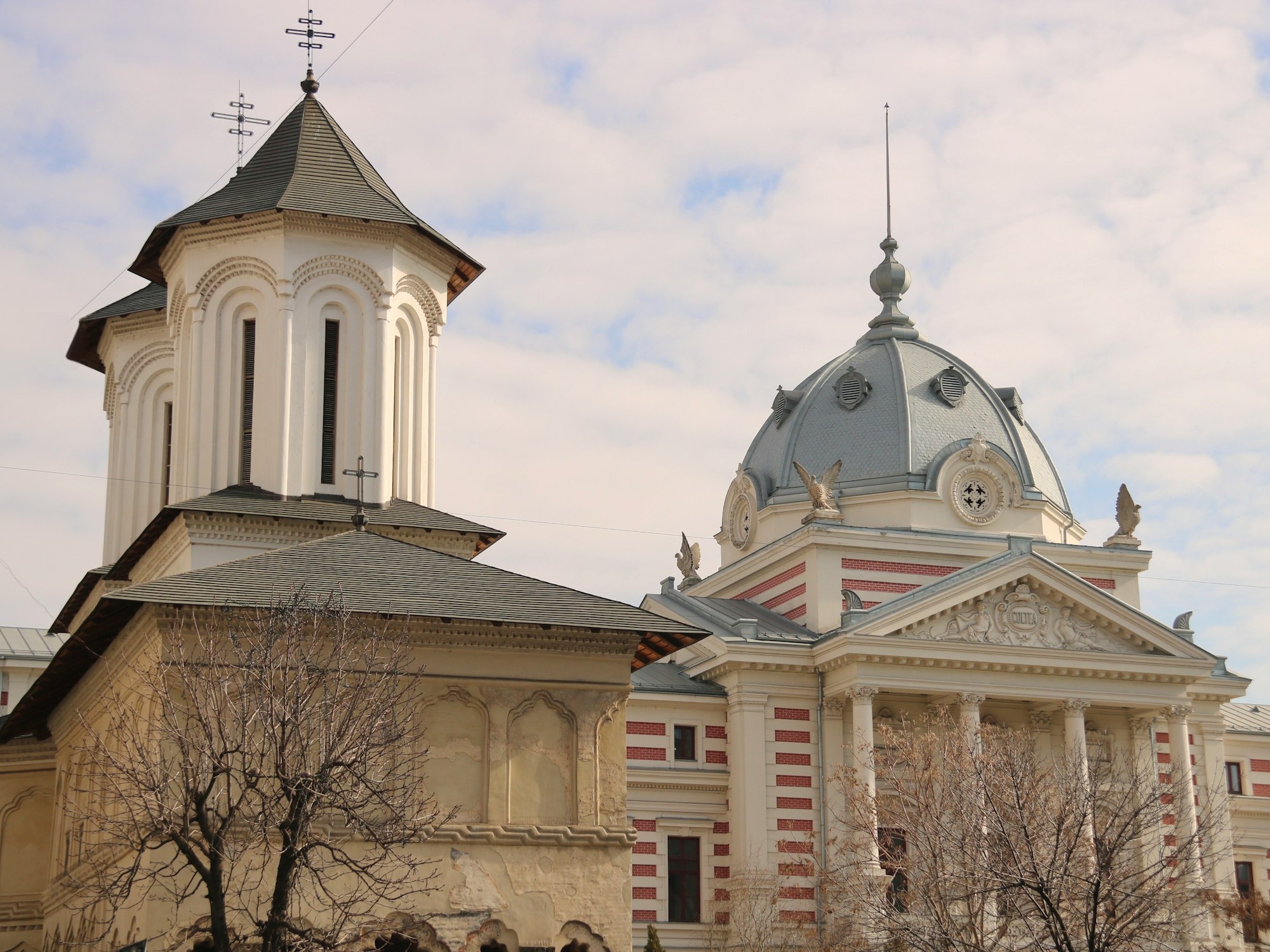
A small church of 1909 with seven gilded onion domes, built for the Russian legation and paid for by the Tsar, beside the university.
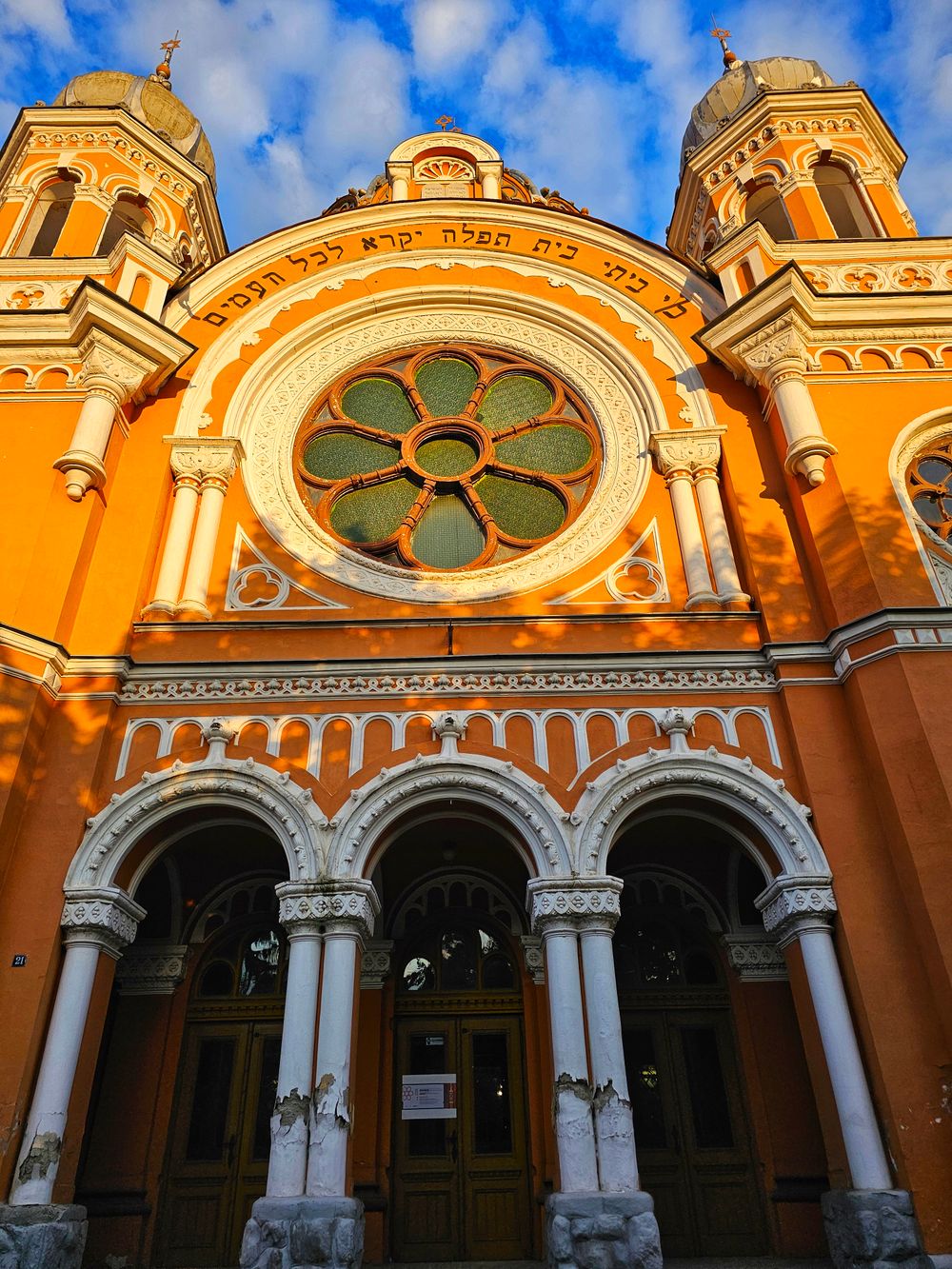
An 1845 synagogue in the old Jewish quarter, hidden behind housing blocks, holding a permanent exhibition on the Romanian Holocaust.
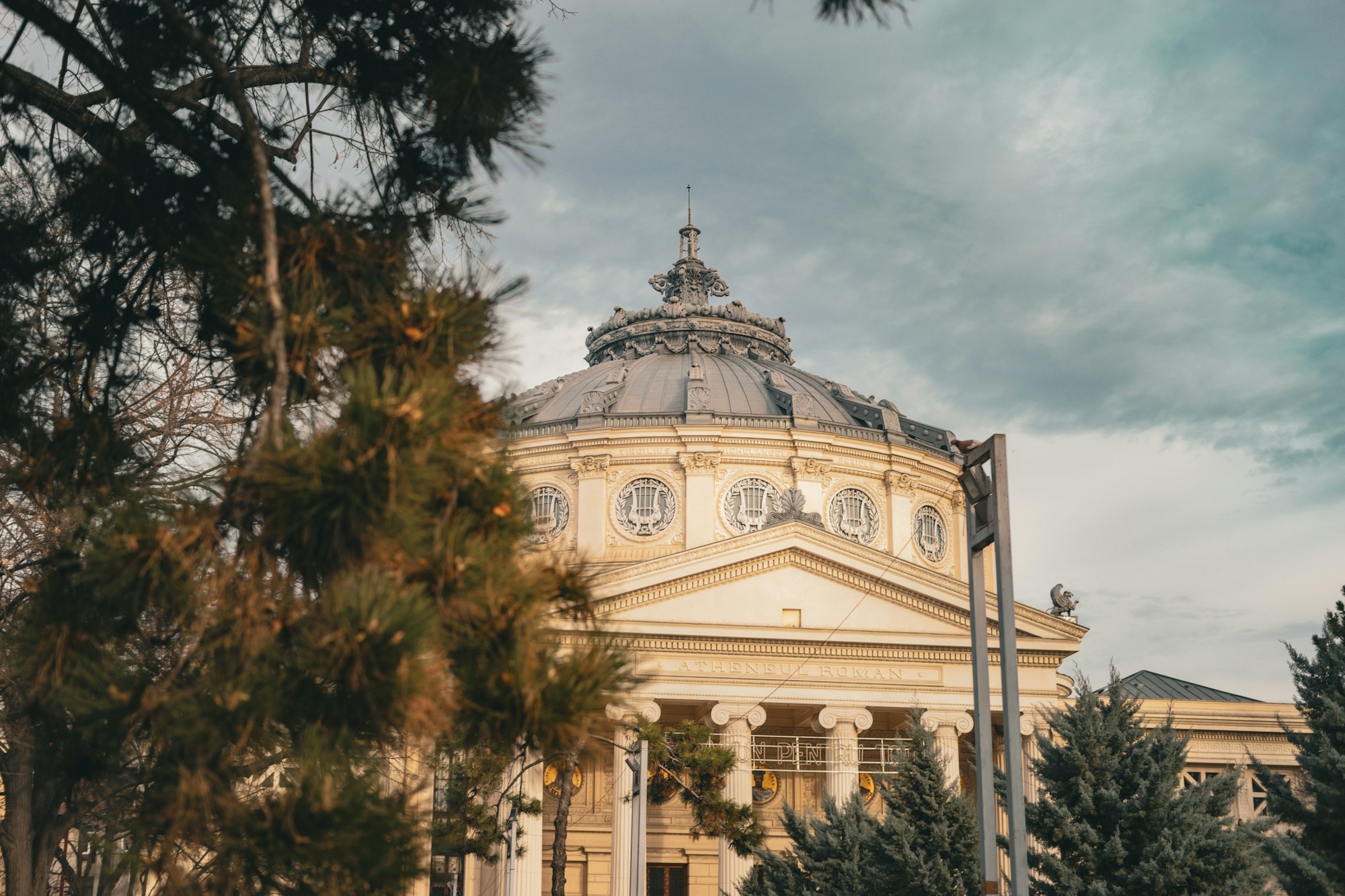
Banded brick and stone in a Lombard Romanesque manner set this church apart on Calea Victoriei, built during the First World War for the Italian masons and stonecutters who carved much of the ornament on the boulevards around it. Services are still held in Italian. The interior is narrow and dim, and the marble work repays a look once the eyes adjust.
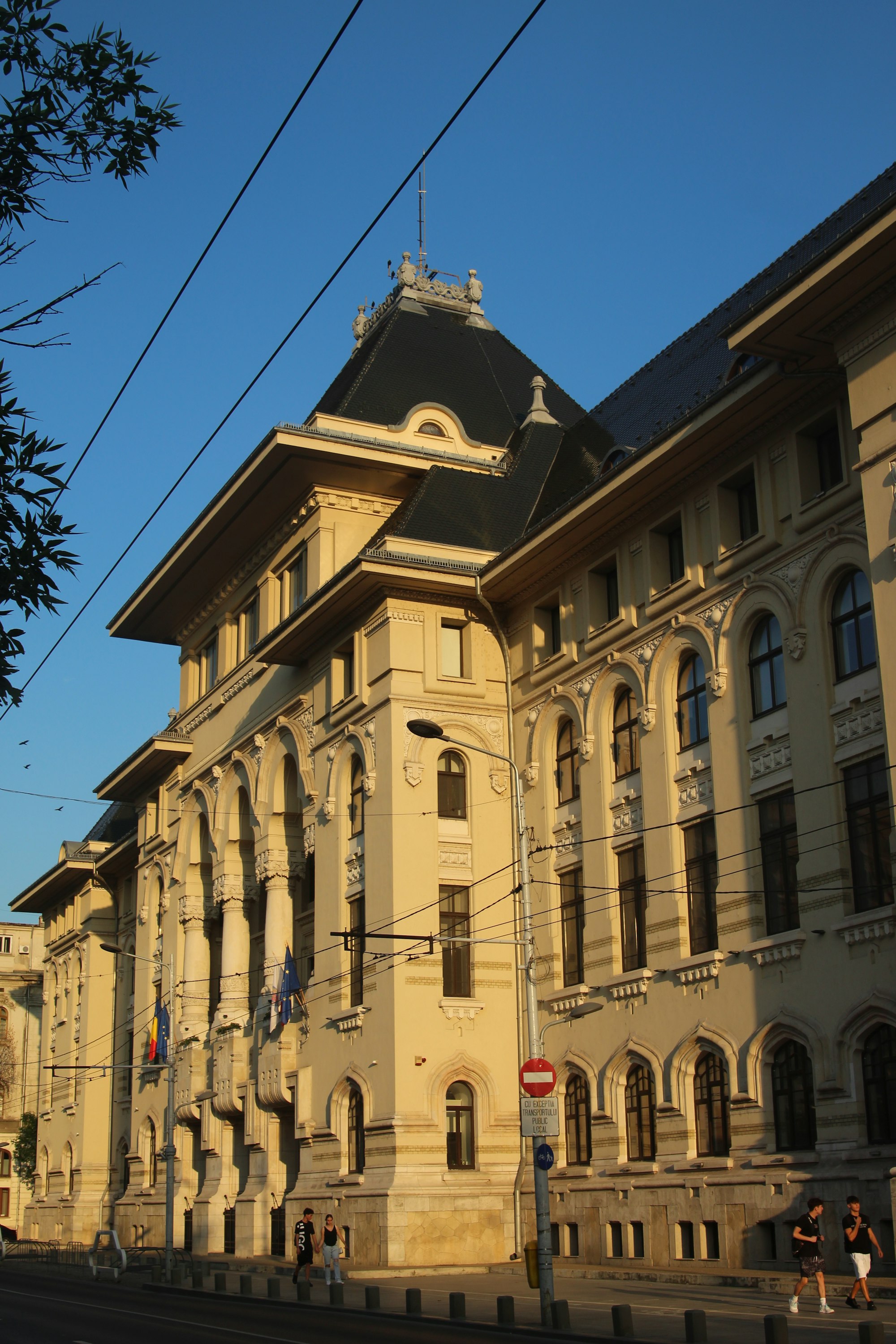
The museum of Romanian Jewish history in the 1850 Holy Union temple, which is one of two synagogues left standing from a quarter that had dozens.
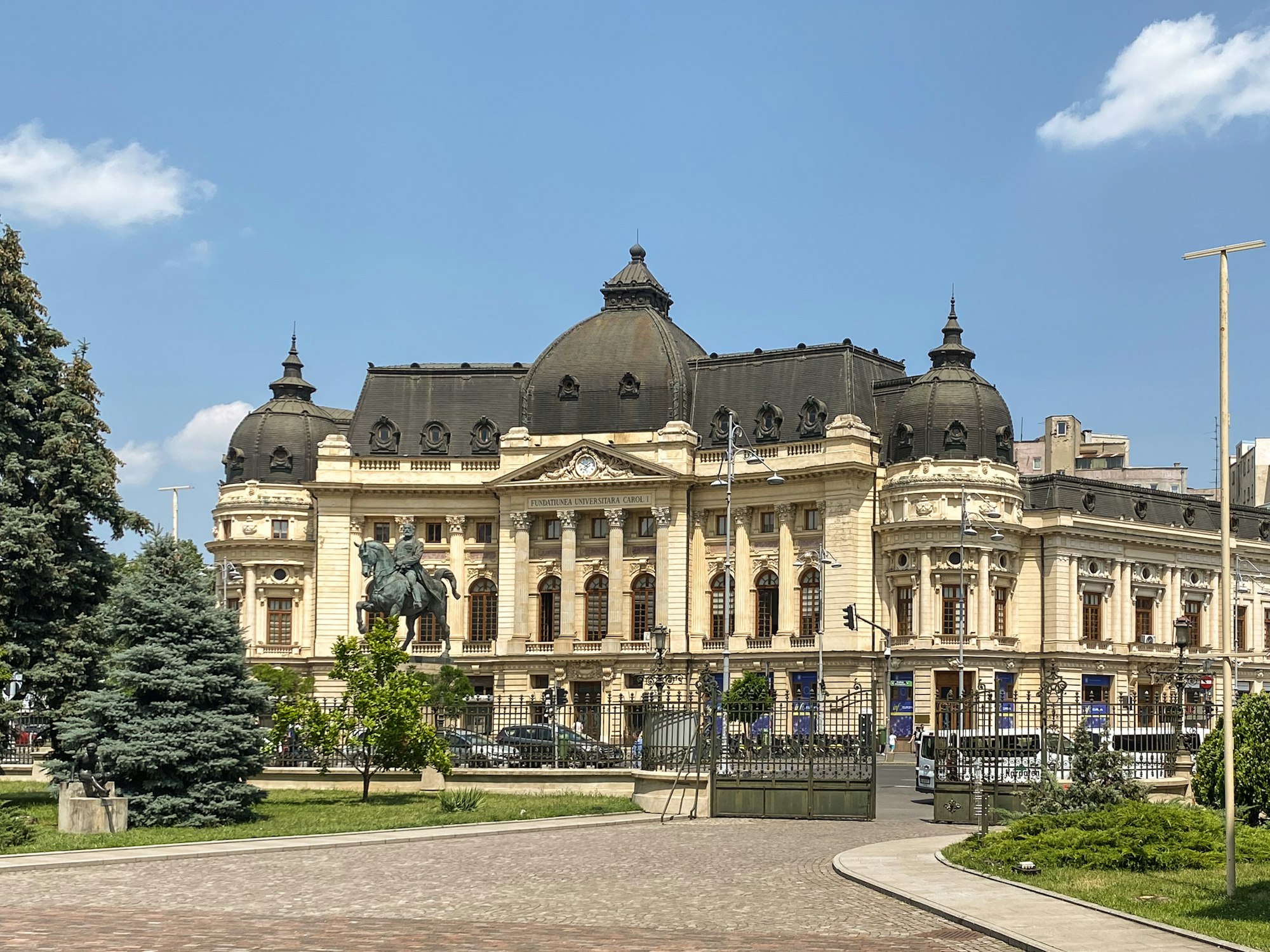
The national collection in the 1900 post office palace on Victoriei, holding the Pietroasele gold hoard and a full-size plaster cast of Trajan's Column, cut into sections so it can be read.
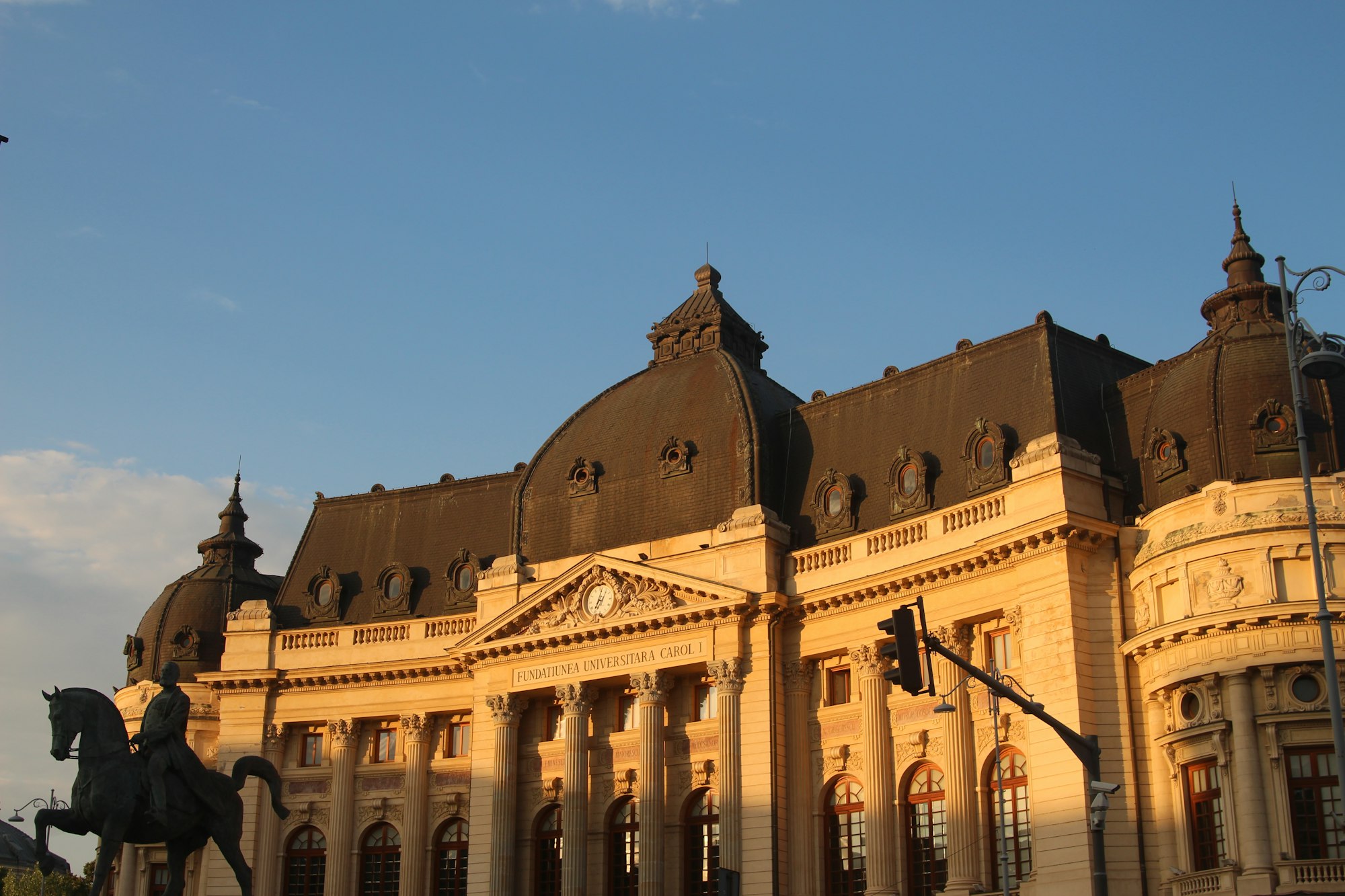
The former Throne Hall, up the marble Voivods' Stairs, is now open in the museum's regular hours. You get the royal palace rooms and the national collection in one visit.
View more →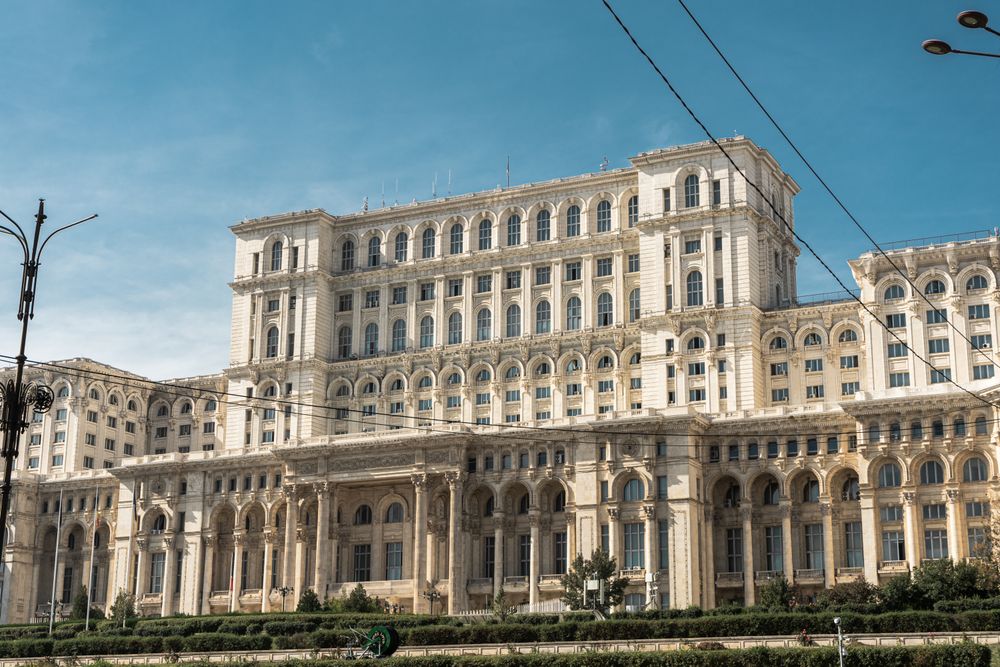
The heaviest building in the world and the second largest administrative building after the Pentagon, begun in 1984 and never finished, containing about a thousand rooms. Building it took a fifth of the historic city, twenty churches and around forty thousand homes.
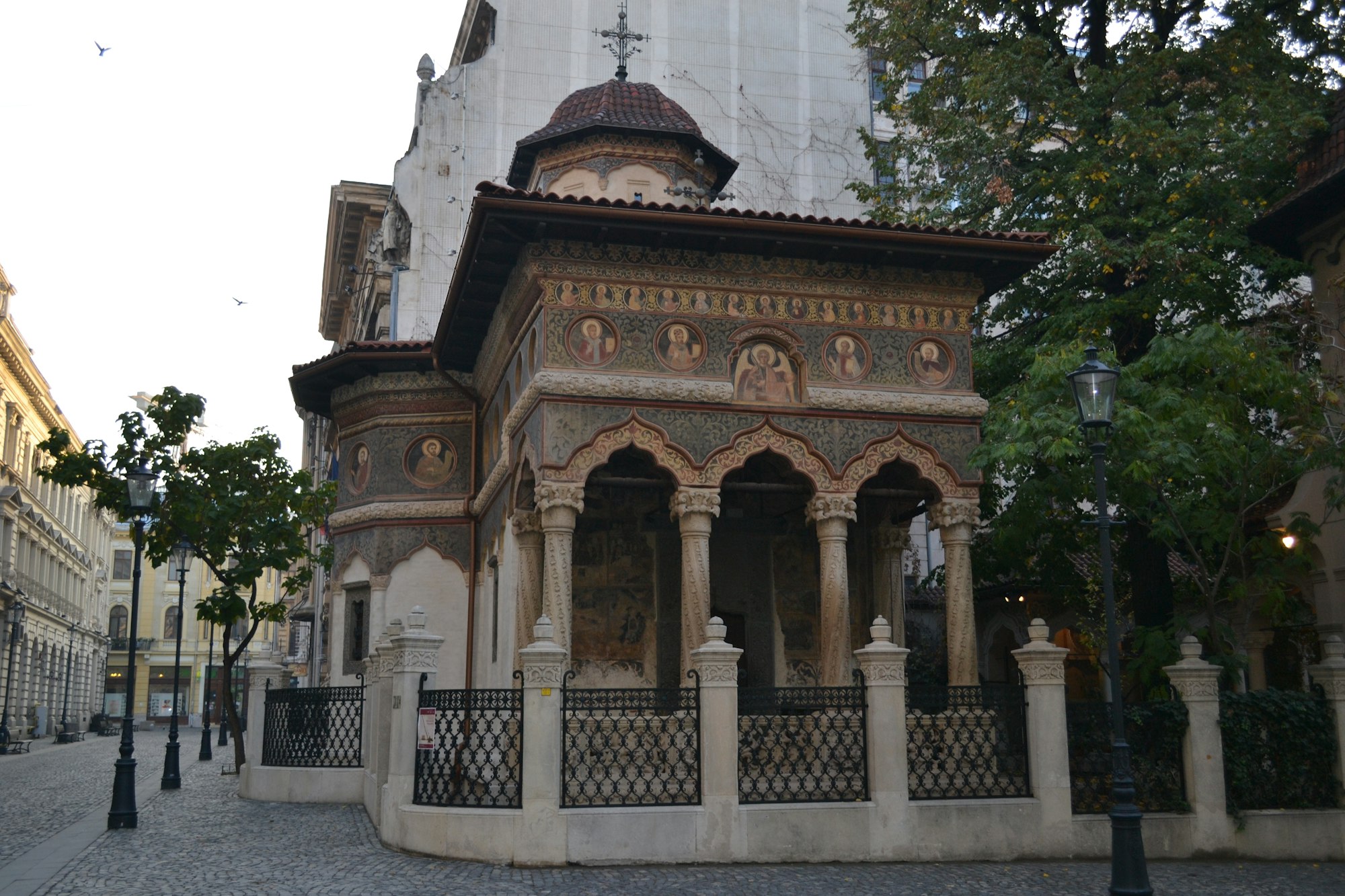
The choir is the reason to time your visit. Stavropoleos is a working monastery with a resident choir, and if you arrive during a service you can stand at the back and listen.
View more →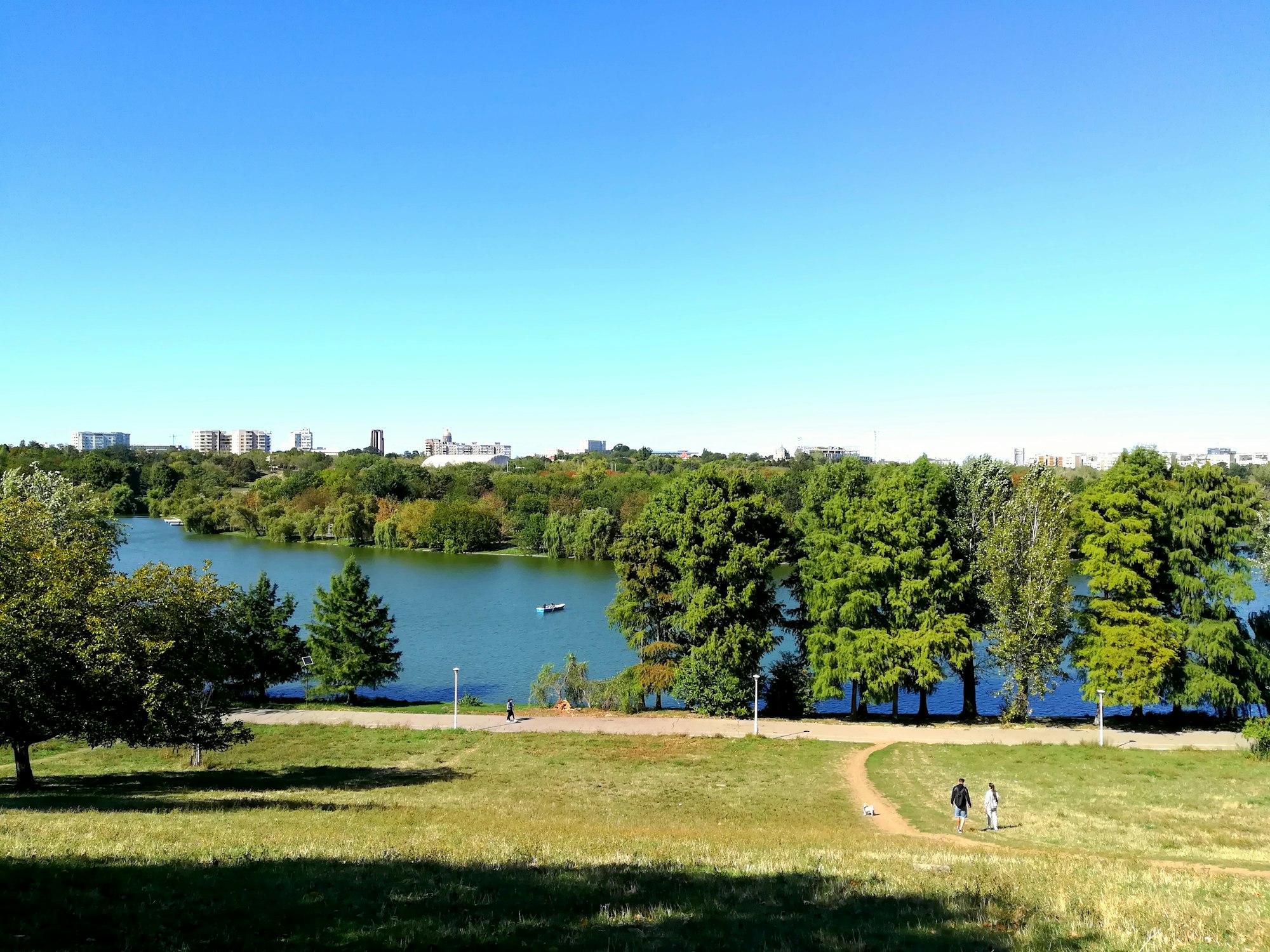
A large park of the 1960s in the south, built over a former rubbish tip and marsh, and the one the city actually uses on a weekday.
A monastery of 1715 built by a Georgian-born metropolitan who carved its doors himself, and another building moved on rails in the 1980s to get it out of sight.
A 1900 palace on Victoriei behind a shell-shaped porte-cochere, now the George Enescu museum, and the best surviving interior of the belle epoque city.
A park of 1906 laid out for the jubilee exhibition, with the mausoleum, the giant's arena and the oldest surviving exhibition buildings in the city.
The 1900 savings bank on Victoriei, with a glass and steel dome over its banking hall, and the most photographed facade in the city after the parliament.
A synagogue of 1866 modelled on the Leopoldstadt temple in Vienna, restored after the Legionary pogrom of 1941, and the main surviving building of a community that numbered about a hundred and fifty thousand before the war. It stands behind the Unirii boulevard, and the courtyard carries a memorial to the deported.
The oldest public garden in the city, laid out from 1847 by a German landscape gardener around a lake, with a rotunda of writers' busts and rowing boats in summer and skating in winter. It lies a short walk from the university, and the chestnut avenues are the coolest ground in the city in August.
A 1700s church beside the oldest hospital in the city, with a carved stone porch and a tower that was rebuilt after an earthquake.
What is left of a 1714 tower that was the tallest building in the city until an earthquake and a road widening took it down; the rebuilt stump stands in a small park.
The presidential residence in the west of the city, with a museum in the older wings covering the royal apartments and the seventeenth century monastery church rebuilt in 2009 after Ceaușescu demolished it. Visits are booked in advance and identity is checked.
The princely court of the fourteenth century, of which a cellar, some arches and a column survive under a shelter in the old town. Vlad the Impaler issued the first document naming Bucharest from here in 1459.
The court church of 1559, the oldest building in the city still standing and in use, where the princes of Wallachia were crowned.
An open air museum on Herăstrău lake opened in 1936, holding about 340 buildings brought from villages across the country, including houses dug into the ground and windmills from the Dobrogea. It is among the oldest museums of its kind in Europe.
An open air and indoor technical collection in Carol Park, including a 1900s Romanian aircraft engine and the machinery of early Romanian industry.
A neo-Romanian church of 1885 on the boulevard, the fourth on its site, built by a daughter of Constantin Brancoveanu's line.
A residential quarter further north around its own lake, part of the chain of lakes on the Colentina that gives the north of the city its water.
The natural history museum, founded in 1834, which pioneered the habitat diorama under the director whose name it carries. Its Dobrogea and Danube delta halls are the best introduction to the delta before going there. It sits beside the Victoriei square metro, and the dioramas are the part children remember.
The large park around Herăstrău lake in the north of the city, holding the village museum, a Japanese garden and about seven kilometres of shoreline path. It is the city's main lung. Boats go out on the lake in summer, and the village museum holds houses moved from across the country.
A brick Brancovenesc church of 1722 on Revolution Square, left standing when the block behind it went, with its porch frescoes restored.
Built in 1902 for a boyar family on the western edge of the Cișmigiu gardens, this palace works in a French Renaissance manner, with a heavy cornice, dormers and a loggia facing the park. A UNESCO institute has occupied it for decades, so the interior opens rarely. Many take the building from the garden path instead, which shows the facade whole.
A church of 1591 that was put on rails in 1985 and moved 289 metres to hide it behind a housing block rather than demolish it, which is the most literal record of what the demolitions did.
A palace of 1702 on a lake fourteen kilometres north west, the defining building of the Brâncovenesc style, with a loggia over the water and a park that the city uses at weekends. Brâncoveanu built it for his son and the Ottomans executed them both a decade later, which the rooms inside explain.
A palace holding what private Romanian collectors assembled and the state took, hung as collections rather than by period.
A collection of rural material culture in a neo-Romanian building, which won the European Museum of the Year award in 1996 for the way it displays what it holds. The basement keeps a room on collectivisation, and the shop at the back sells textiles from the villages the collection came from.
The contemporary art museum, installed in a wing of the Palace of the Parliament with its own glass lifts on the outside, which is the most pointed use anyone has found for the building.
Manuscripts, first editions, letters and the reconstructed studies of Romanian writers fill a townhouse near Cișmigiu, where the collection settled after years without a permanent home. Eminescu, Caragiale and the interwar generation carry much of the display. Labelling is largely in Romanian and the rooms are quiet, which suits a reader with some of the language and leaves others wanting a guide.
The church of 1707 holding the tomb of Constantin Brancoveanu, the prince the architectural style is named for, who was executed with his four sons in Constantinople in 1714.
On the Dâmbovița embankment in Lipscani, a long French Renaissance front with steep roofs and allegorical statues holds the Bucharest Court of Appeal, finished in the 1890s and working as a courthouse ever since. Security controls the entrance, so the building is met from outside. The quay in front makes the best vantage, particularly when the facade is floodlit after dark.
Officers of the Romanian army commissioned this block at the corner of Calea Victoriei, finished after the First World War in a French neoclassical manner with a colonnaded front and a grand stair. Part of it still works as a military club. A restaurant and terrace on the ground floor stay open to visitors, which is the usual way of getting inside.
The parade ground in front of the Palace of the Parliament, built to the scale of the building rather than the city, and used for concerts.
The square at the head of the civic axis, laid out over the demolished quarter, with the fountains that run the length of the boulevard to the parliament.
A sixteenth century monastery on the hill above the Dambovita, rebuilt after an earthquake and a fire, with a garden that looks back over the city.
The square where Ceaușescu gave his last speech from the Central Committee balcony on 21 December 1989 and was heckled. The royal palace, the athenaeum and a memorial of 2005 that the city has never agreed about all stand on it. The balcony is still there, and the university library opposite burned in the fighting.
The concert hall of 1888, paid for partly by public subscription under the slogan asking for one leu for the Athenaeum, with a domed hall and a circular fresco of 25 metres telling the national history. It is the home of the George Enescu festival.
The opera house of 1953 on the Dambovita, home of the company George Enescu conducted, with a season that runs from autumn to summer.
The seat of the Romanian Orthodox church, built in 1658 on the hill above the old town, with the patriarchal palace and the former parliament beside it.
The Roman Catholic cathedral of 1884, now standing in the shadow of a tower block built against it in a dispute that reached the courts.
Behind the former royal palace stands a low modernist hall of 1960, put up for party congresses and fitted with a fan of seating under a folded concrete roof. Concerts fill it now, including much of the George Enescu Festival, and the foyer glazing looks out over the square. The acoustics divide opinion, so seat choice is worth some thought.
An 1830s neo-gothic palace holding the municipal museum, which is the one collection that tells the city's own story rather than the country's.
The house and studio of a nineteenth century painter, kept as he left it, and one of the few interiors of its date open in the city.
A collection of a modernist painter's work in the Melik house, which is the oldest surviving dwelling in the city, built about 1760.
The square where the 1989 dead are marked and where the 1990 protests were broken up, with the university, the national theatre and four statues on one side.
Two hundred hectares of wetland in the south of the city, an unfinished 1980s reservoir that flooded and was colonised, now a protected urban delta with about a hundred bird species.
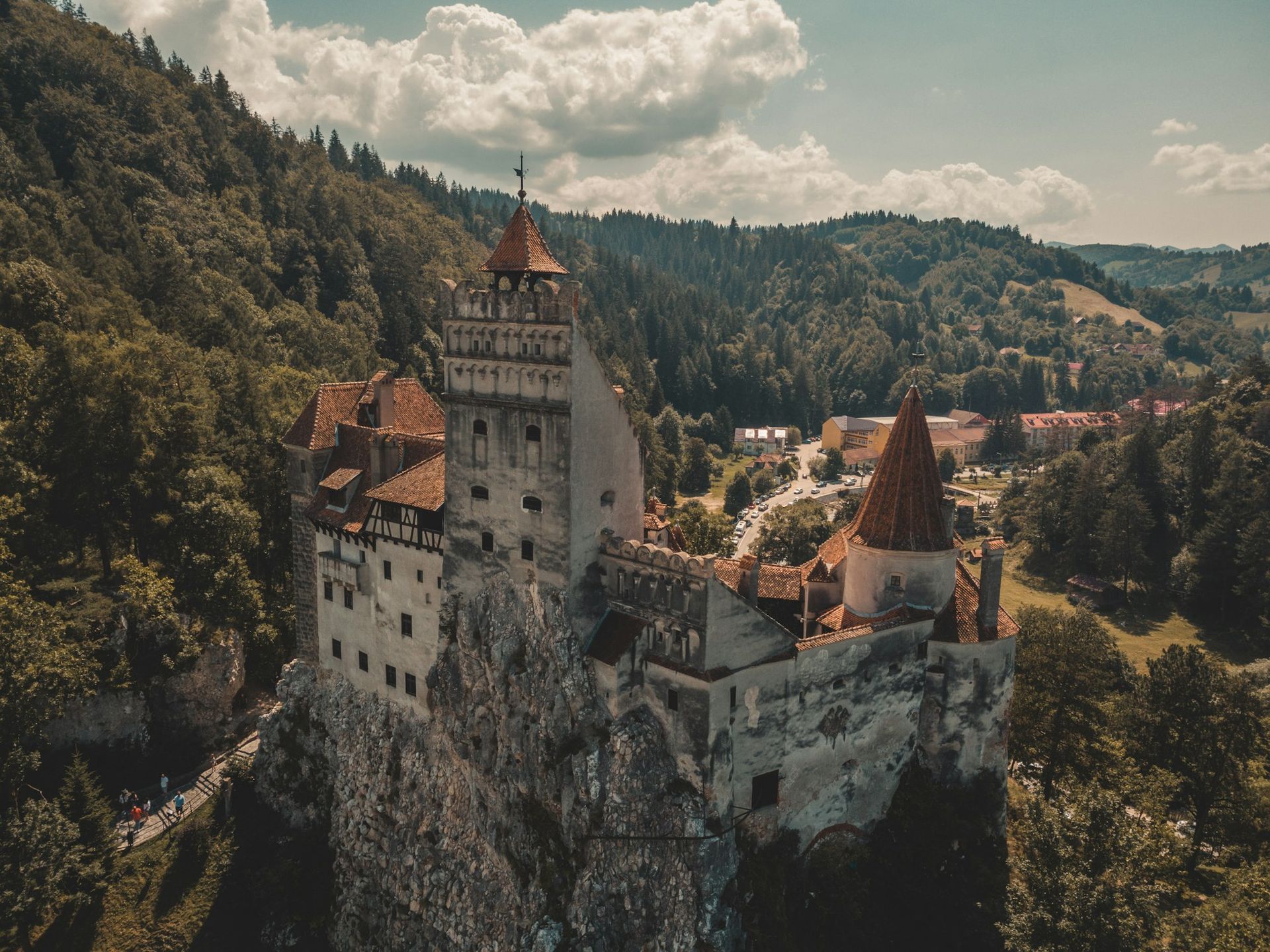
Every Romania town, place and dispatch, on one map.

A mountain resort in the Prahova valley that grew around a monastery and then around a king.
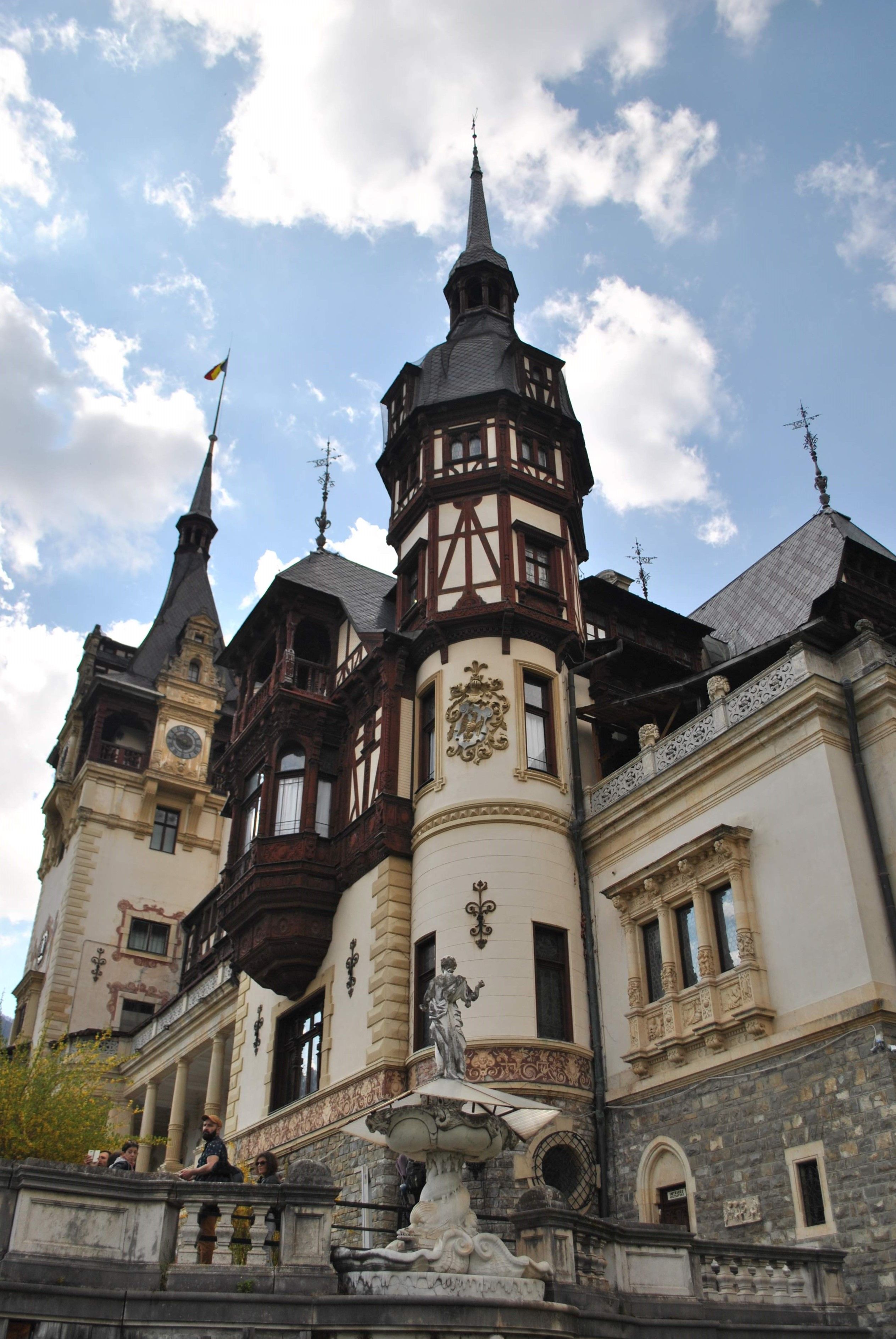
Book a timed slot, and do not plan on a Monday or Tuesday.
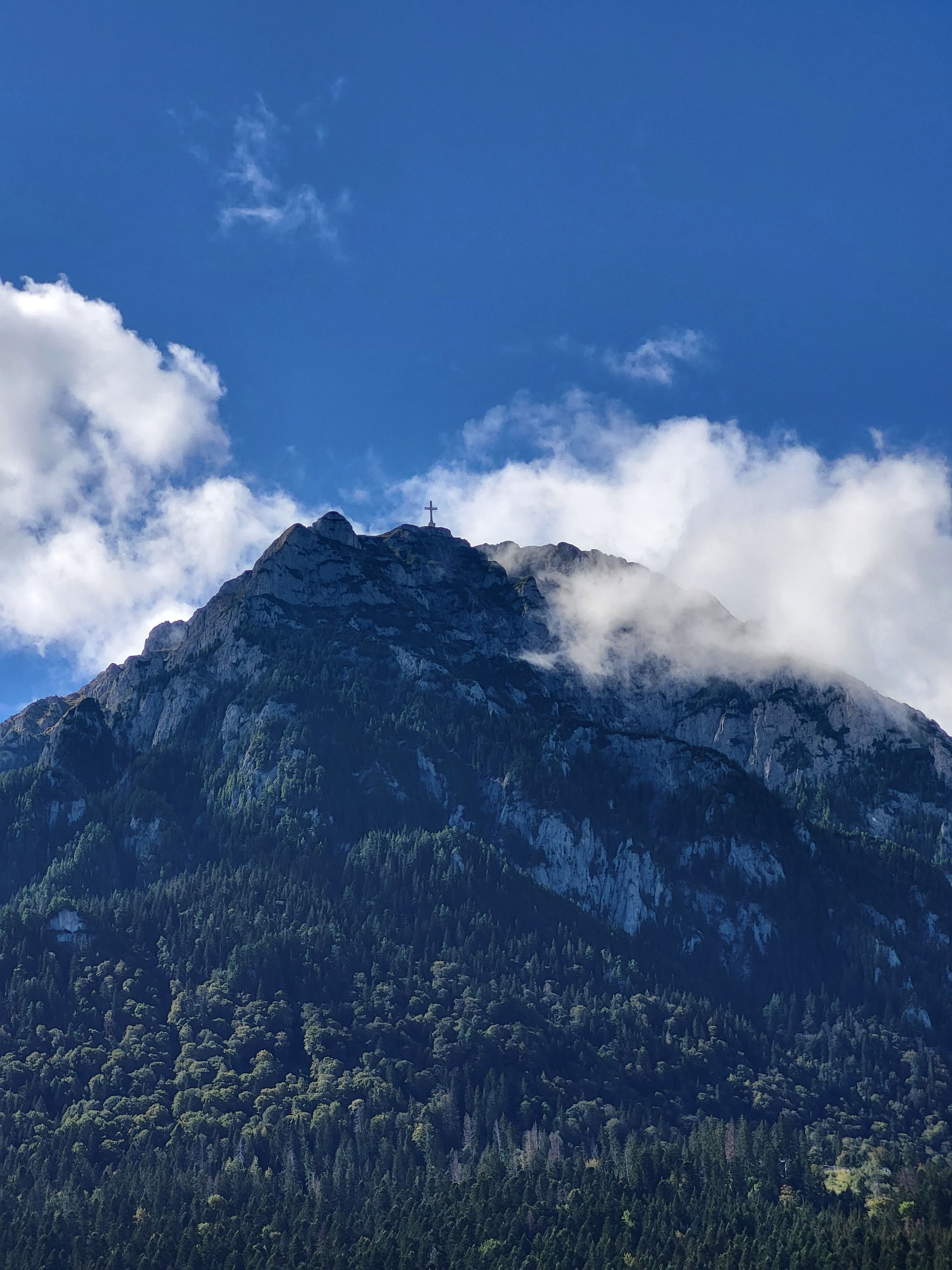
A climbing and walking town under the east face of the Bucegi, where the mountain wall rises about 1,500 metres straight out of the valley.
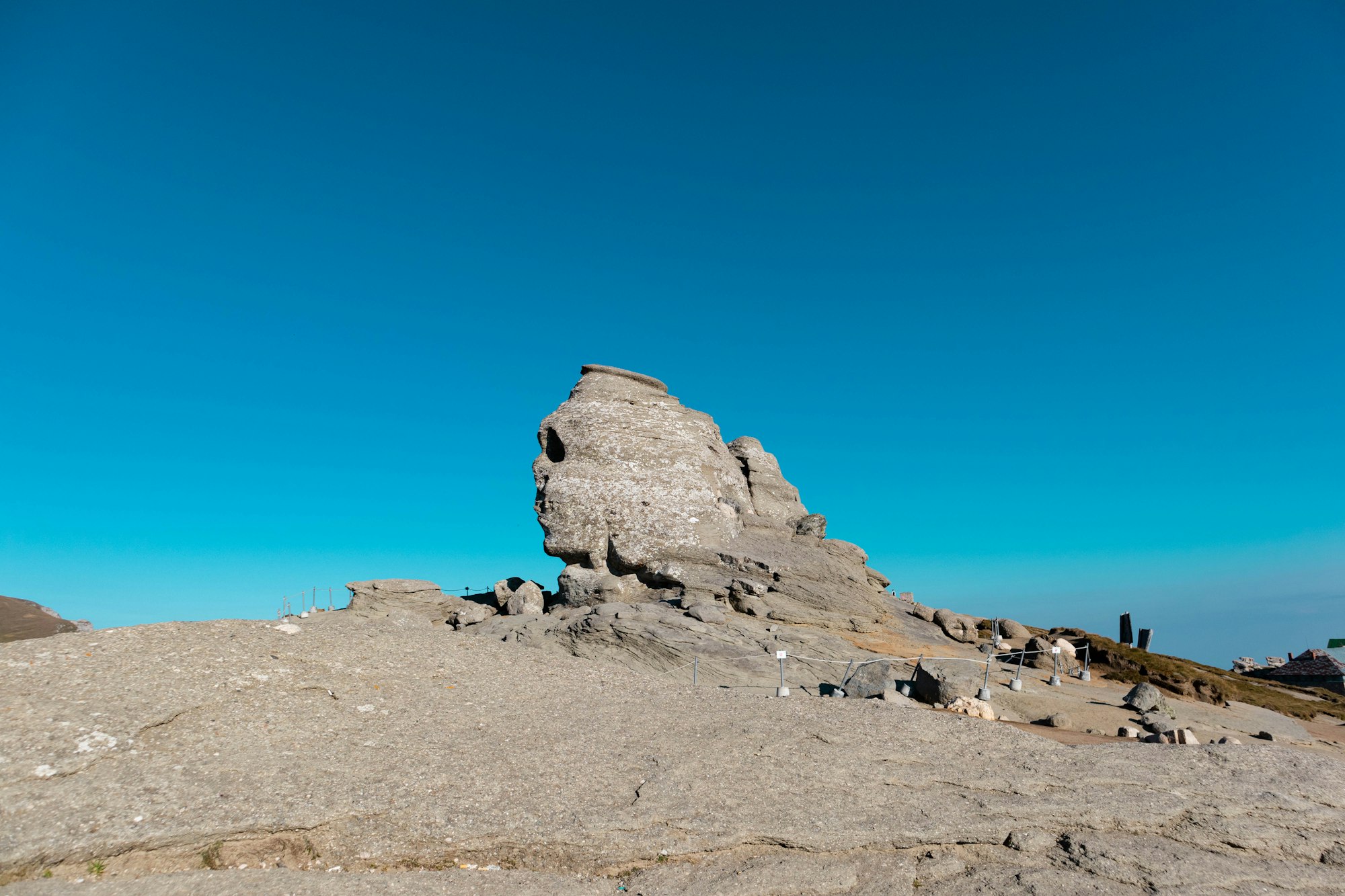
The cable car does not run in strong wind, so have a fallback plan.
Last updated
Every other travel app asks you to start logging. Meridian Dispatch opens with years of your travel already written, from the photographs you already took.