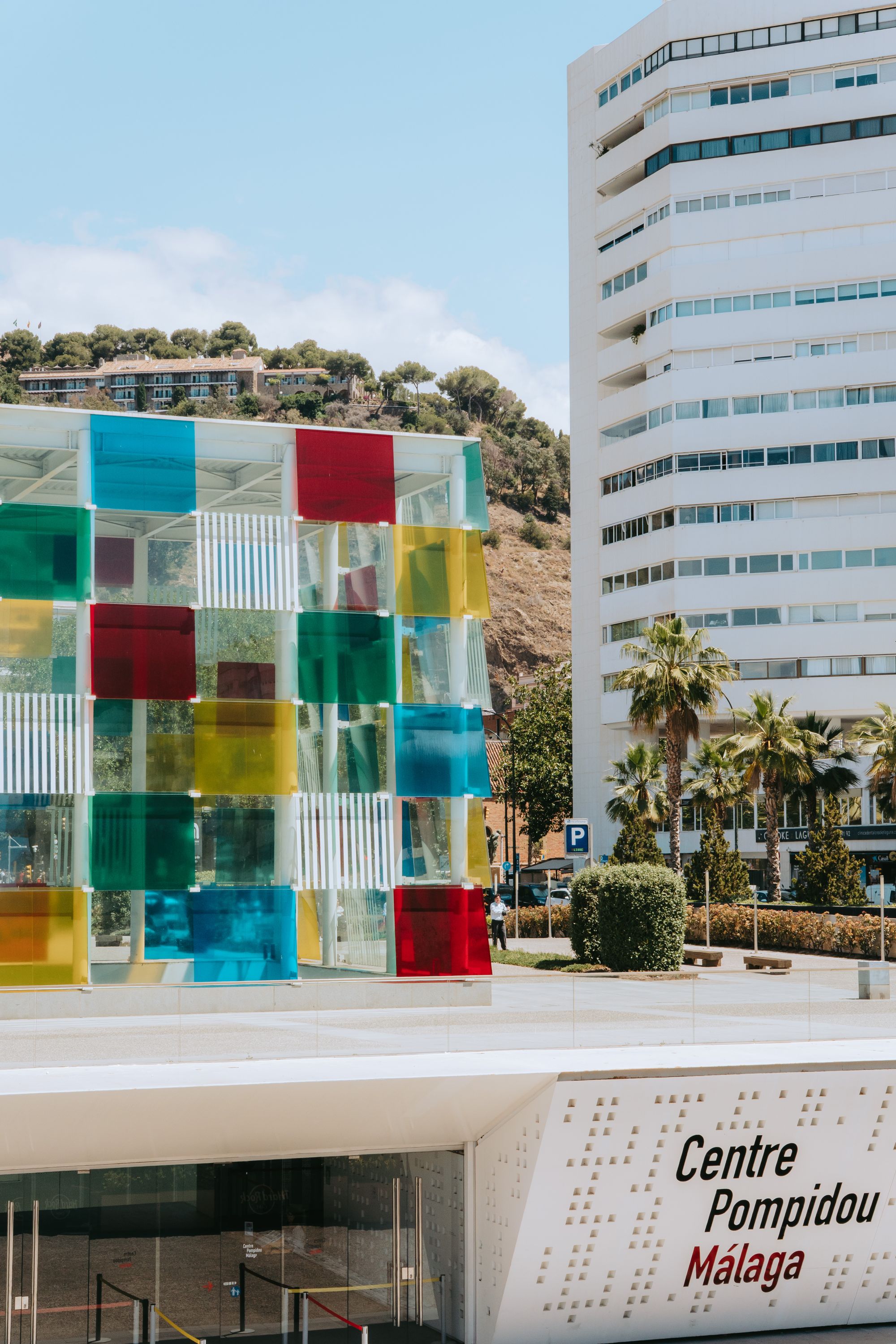
Ninety seconds on Centre Pompidou Málaga
For a break from Málaga's more traditional museums, try the modern and often quirky art here, hung by theme rather than by date, so each section of the galleries follows one idea.
From the quay the cube is all you see. It is the skylight for the galleries beneath it: stand under it in the main exhibition, look up, and you see the sky through its coloured glass. The light from above is good enough that you would not know the rooms are below ground.
The current display is To Open Eyes. An Artist's Gaze, set out in themed sections. One section hangs Josef Albers beside Marcel Duchamp and Vera Molnár, and another shows Marina Abramovic.
If modern art is not usually your thing, the scale is the easiest way in. The largest room holds giant pieces by Donald Judd, Louise Bourgeois and Haegue Yang.
You can buy a ticket for the semi-permanent display, for the temporary show, or a combined ticket for both, so decide at the desk how much time you have. Pick up the free audio guide, which comes in English, Spanish, French, German, Italian and Russian.
Give To Open Eyes at least an hour, following its sections in order so the largest room comes last. A temporary exhibition takes another 45 to 60 minutes.
There is no café inside, only a rest area with vending machines for a coffee, so eat on Muelle Uno afterwards. The shop is on the ground floor.
Leave coats and bags at the cloakroom and lockers on the ground floor before you start. Photography without flash is allowed, so take a picture of any work you want to look up later.
With older children, begin at the young people's space on the ground floor, where children and adults build with construction toys. If you are also seeing the Picasso museum, do that one in the old town first, then walk down to the port for the modern work here.
Explore the rest of Málaga
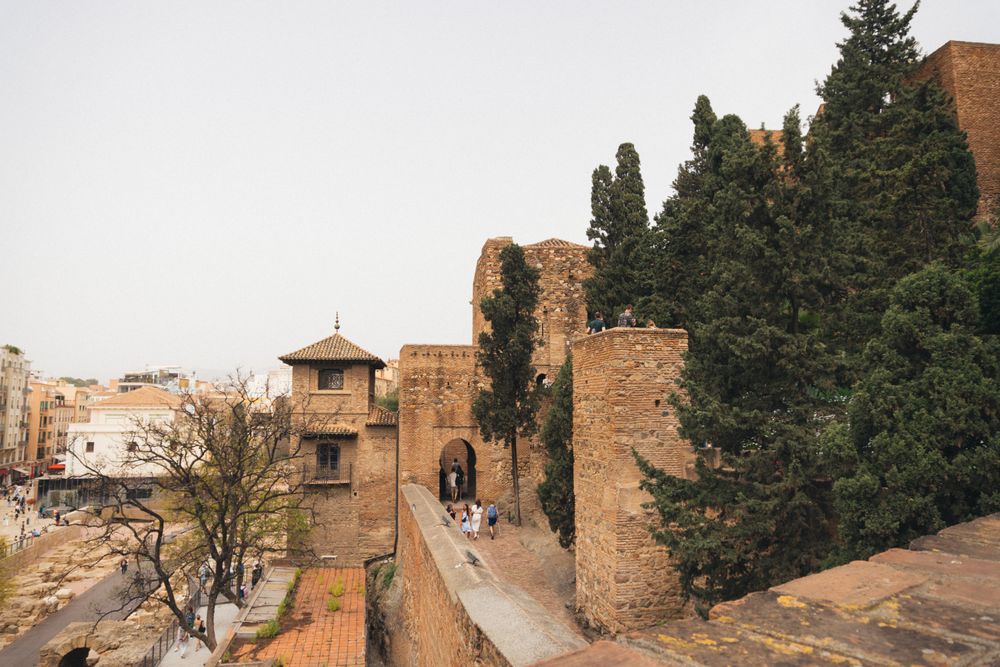
A Moorish palace-fortress climbing the hill above the port in rings of walls, with gateways set at angles to slow attackers. Higher up come…
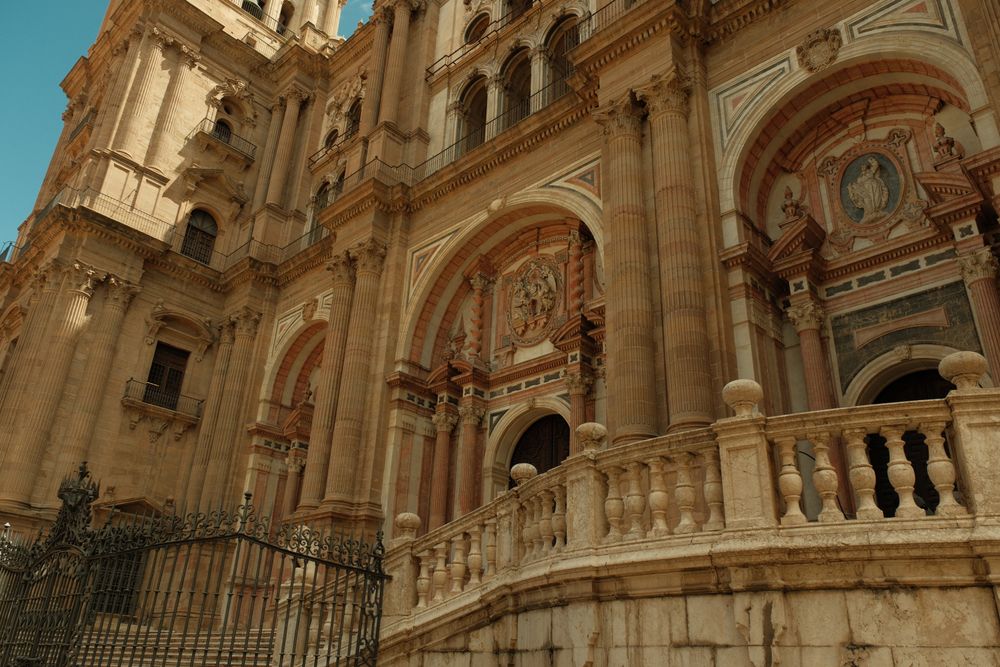
The Museo de Málaga fills the Palacio de la Aduana, the city's old customs house. Fine art is on the first floor and archaeology on the…
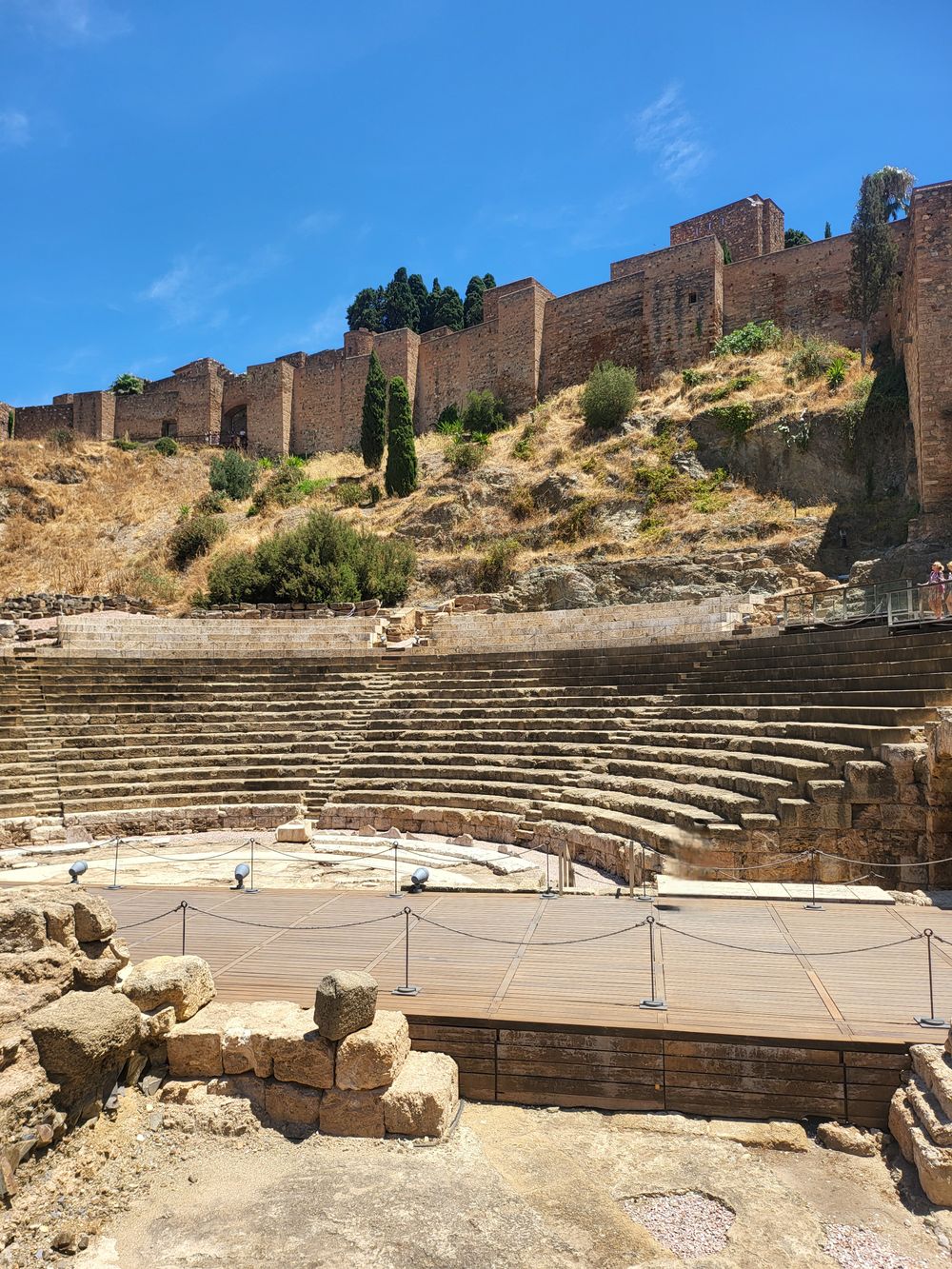
Stone seating cut into the foot of the Alcazaba hill, uncovered in 1951 and cleared once a cultural centre built over it was pulled down. A…