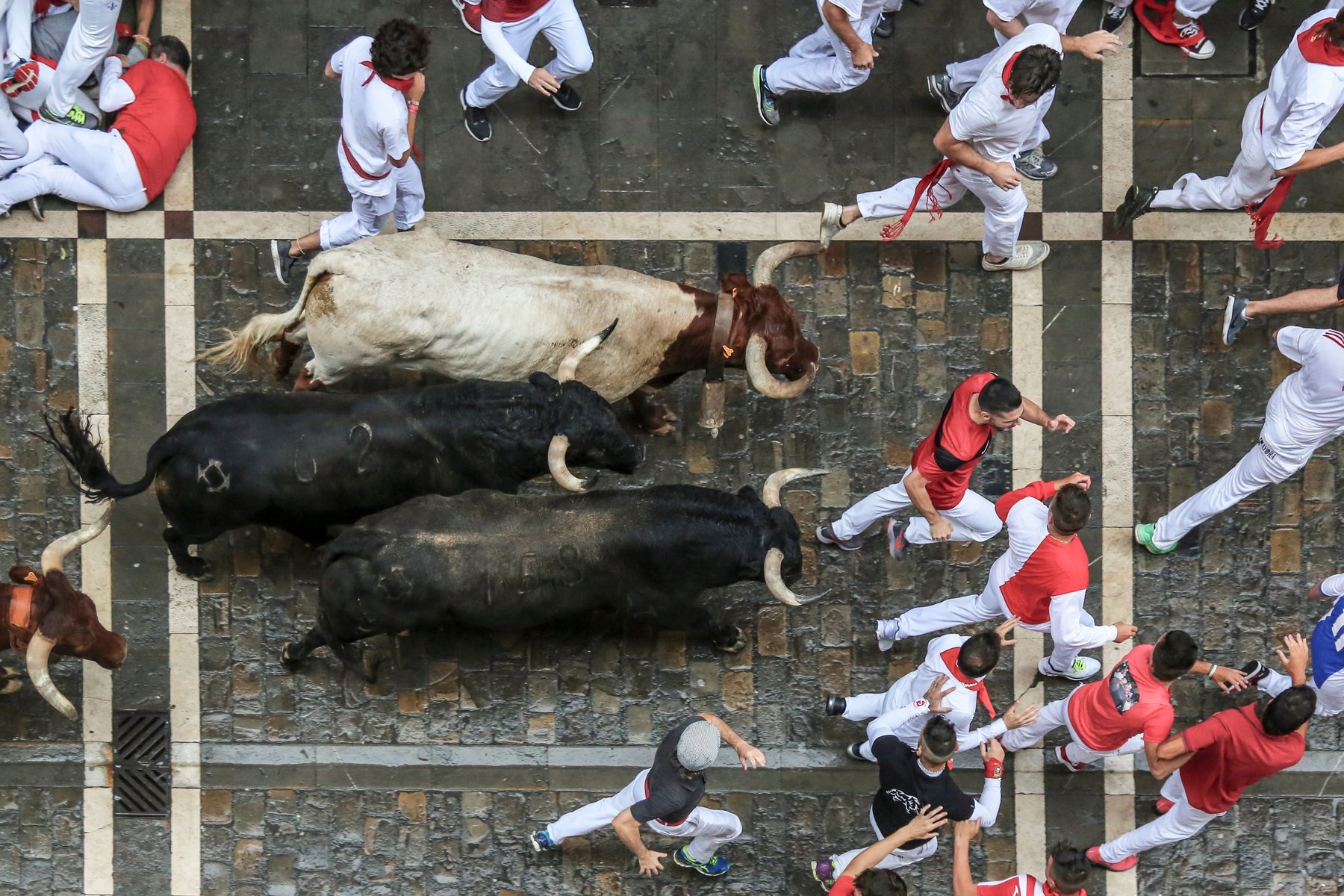
The fixed points do not move: the rocket at noon on 6 July, a run at eight every morning from the 7th, and Pobre de mí at midnight on the 14th.
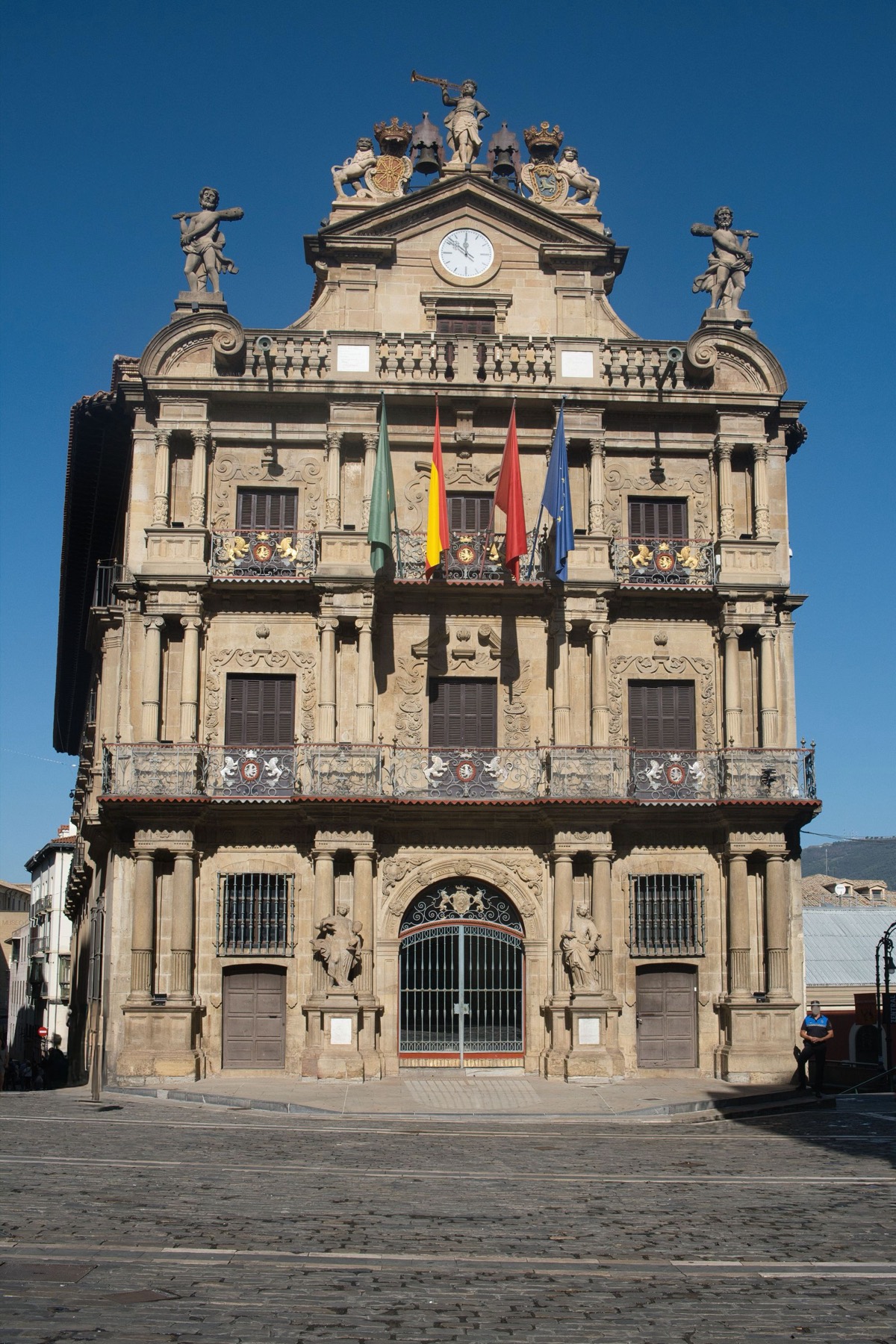
San Fermín 2027 starts on Tuesday 6 July at noon and closes at midnight on Wednesday 14 July. It opens with the chupinazo, a rocket fired from the City Hall balcony, and the first bull run follows at eight the next morning, with one every day until the 14th. The dates are the same every year, so only the weekdays move.
Every run starts at 8am, each morning between 7 and 14 July. The run lasts only minutes: in 2026 the runs took about two and a half. Six bulls leave the corral on Santo Domingo, cross the town hall square, run along Mercaderes and down Estafeta, and finish in the bullring.
Behind the double wooden fence, from a booked balcony on the route, or from a seat inside the bullring at the finish. The fence fills between six and half past six, and after that there is nothing left to see from it. Only staff authorised by the council stand between the two fences. In the bullring, the stands are full and singing by seven.
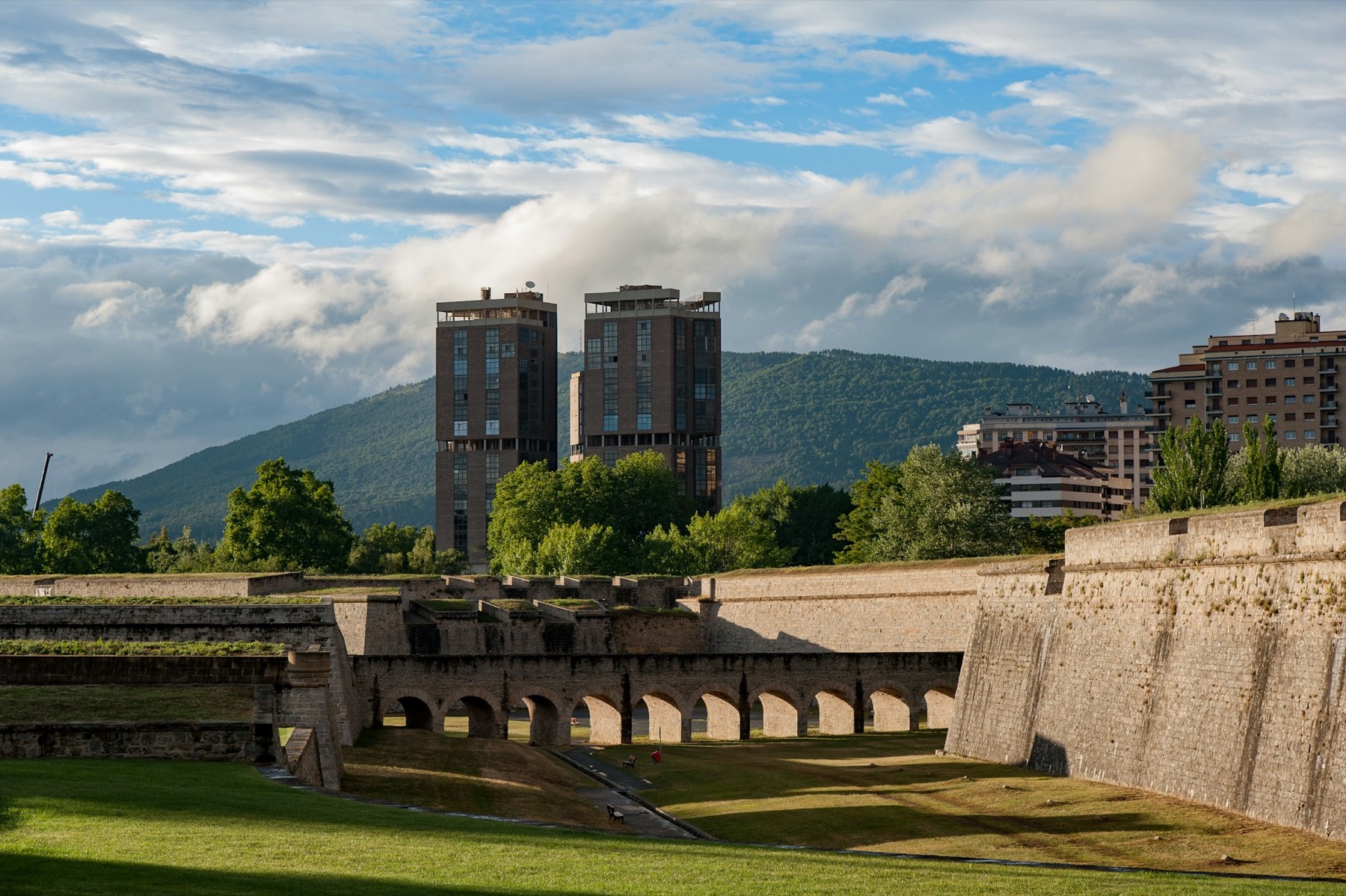
On the lawns of the Vuelta del Castillo, the park around the Citadel, which is where Pamplona itself goes to watch. The display goes up at eleven every night of the fiesta. On the 2026 programme each night's show was an entry in an international fireworks competition.
Watching from the street needs no ticket. Tickets are for the bullring: a seat for the end of the morning run, or for an evening bullfight. Bacantix is the only official online seller, and in 2026 seats for the run went on sale there on 1 June. Every tendido seat for the bullfights is sold as a season ticket, and the bullring box office does not hold seats.
A white shirt, white trousers or a skirt, a red sash and a red neckerchief, the dress of a local pamplonica. The whites can come from home, and the red items are sold at almost any street stall in the city. By tradition the neckerchief goes on only once the chupinazo has opened the fiesta.
The 2026 programme kept the same shape every day. The La Pamplonesa brass band and gaita players play the dianas, the morning reveille, through the old town at 6.45, before the run. At 9.30 the giants and big-heads set off from the Ezpeleta Palace. On the last night, 14 July, the fiesta closes at midnight in the town hall square with the song Pobre de mí.
A weekday in the second half, which in 2027 means Monday 12 or Tuesday 13 July. Crowds are smaller during the week, and beds are always to be found later in the fiesta away from the weekend. Book a room as early as possible; hotels, country houses and campsites in the surrounding area fill more slowly than the city.
By car, bus, train or plane. Pamplona, the capital of Navarre, is about 450 kilometres from Madrid, with trains from Madrid and Zaragoza and a small airport at Noáin. The old town, where the fiesta happens, is mostly pedestrianised, so it is done on foot. From 6 to 14 July the bus station runs a cloakroom from 6am to 11pm.
No one under 18 may run, and no one may enter the course after 7.15am. The council bans running drunk, on drugs or not fully fit, in heels, flip-flops or sandals, and with bags, bottles or cameras. Touching the bulls or calling their attention in any way is also forbidden, and police take offenders off the course.
Yes, for runners. Fifteen people have been killed in the Pamplona run since records began in 1910. The uphill start on Santo Domingo is the most dangerous stretch, because the bulls charge out of their pen at speed, while the 100 metres from the town hall square to the end of Mercaderes carry the least risk. Navarre's tourism board advises running only in good shape.
It is the fiesta of Saint Fermín, co-patron of Navarre since 1657. In 1591 the city moved his celebrations to 7 July to escape the autumn weather, and the red scarves worn all week recall his martyrdom.
Be at a fence in Pamplona's old town by half past six, and at eight o'clock six fighting bulls go past you in a few seconds. Come for the last three nights, wear white with a red scarf, and book your room the day you know your dates.
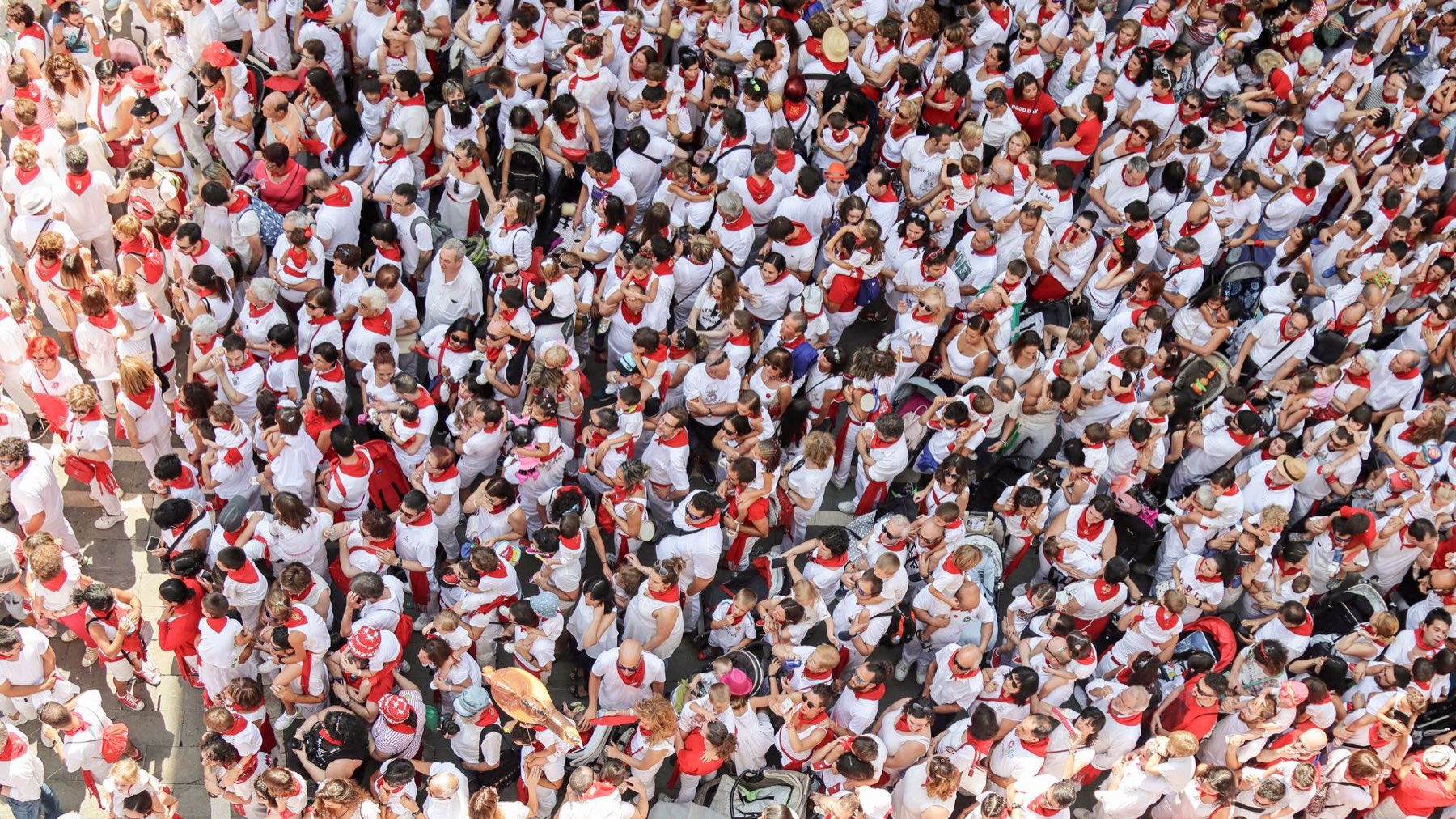
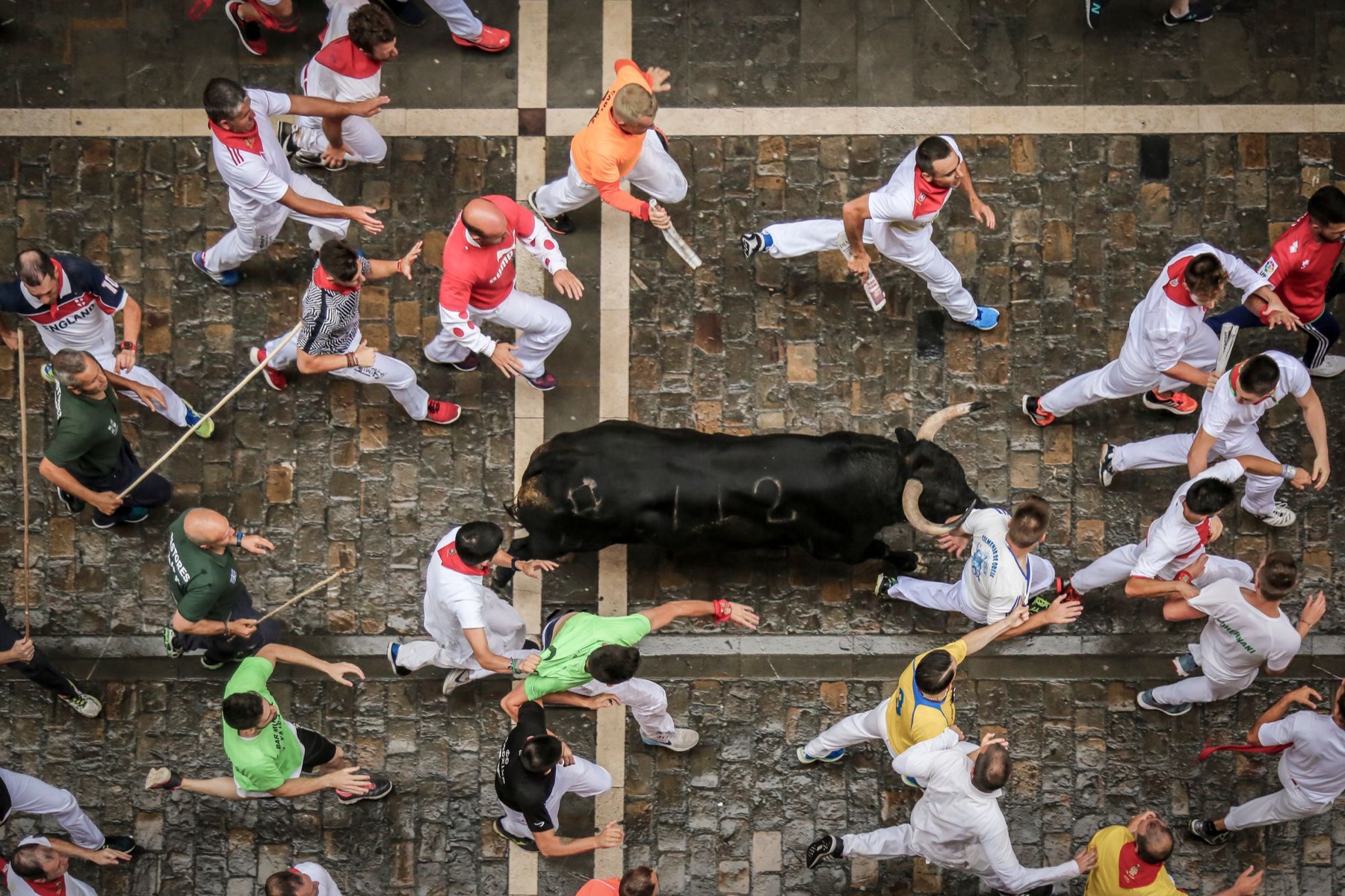
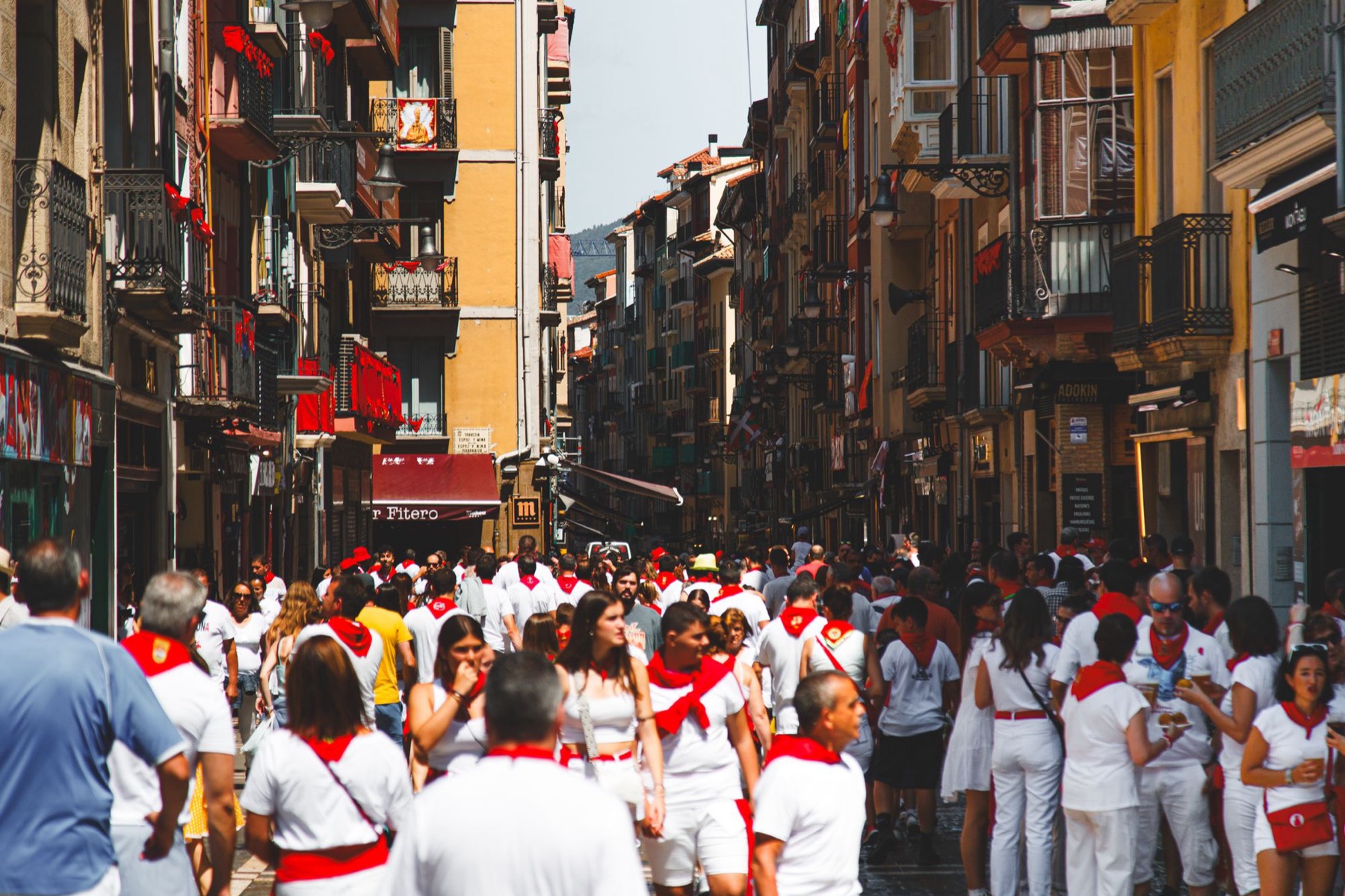
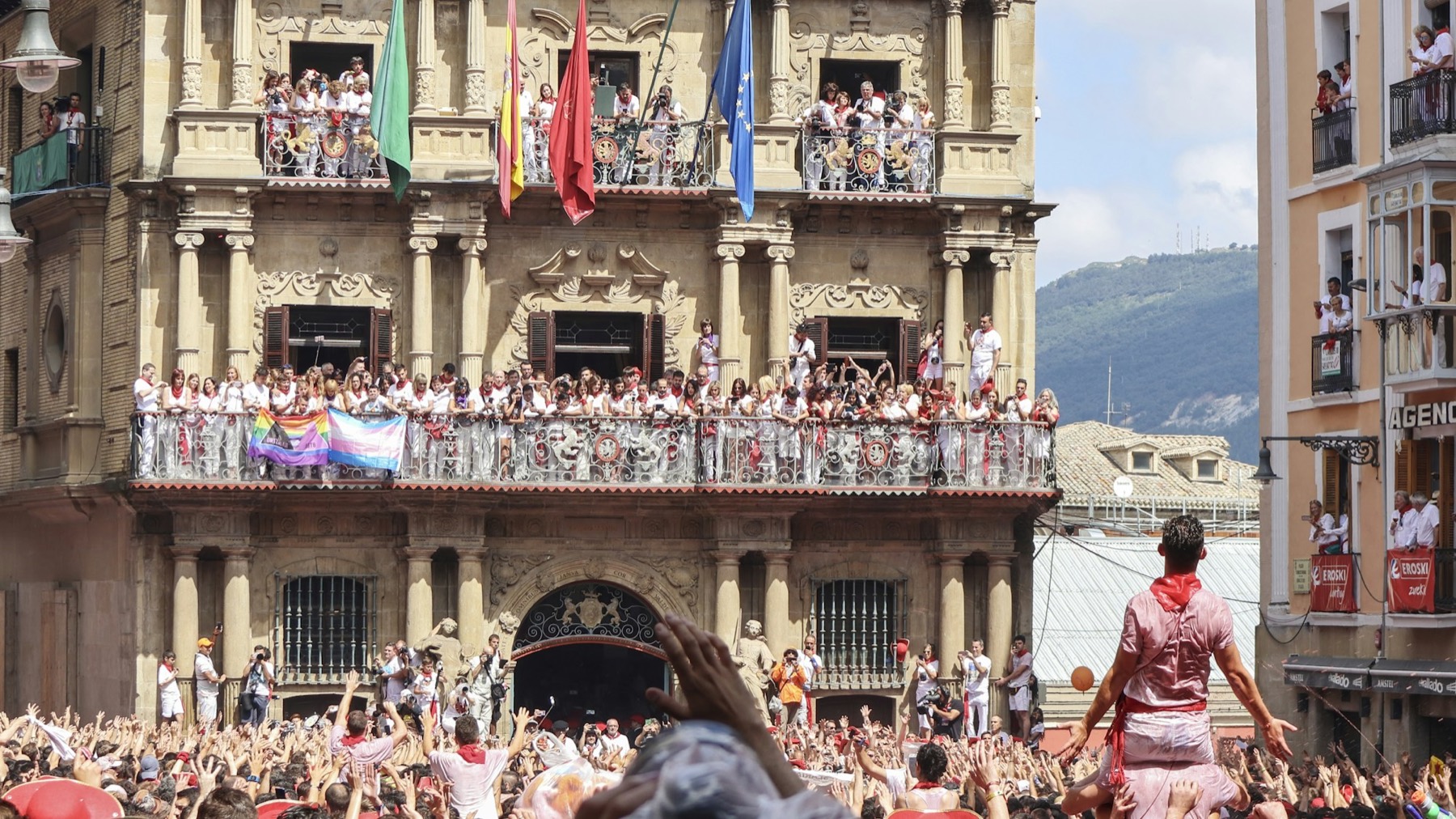
The fiesta opens with the chupinazo, a rocket fired from the City Hall balcony at twelve. The square below is packed: get in an hour early and you will not be able to move. Expect champagne sprayed over the crowd and buckets of water from the balconies.
Keep your red scarf loose until the rocket goes up, then tie it. For a calmer view, Plaza del Castillo and Avenida Carlos III show the moment on giant screens.
Rooms for the first nights go first. If you want the rocket, book for the night of 5 July as soon as you decide.
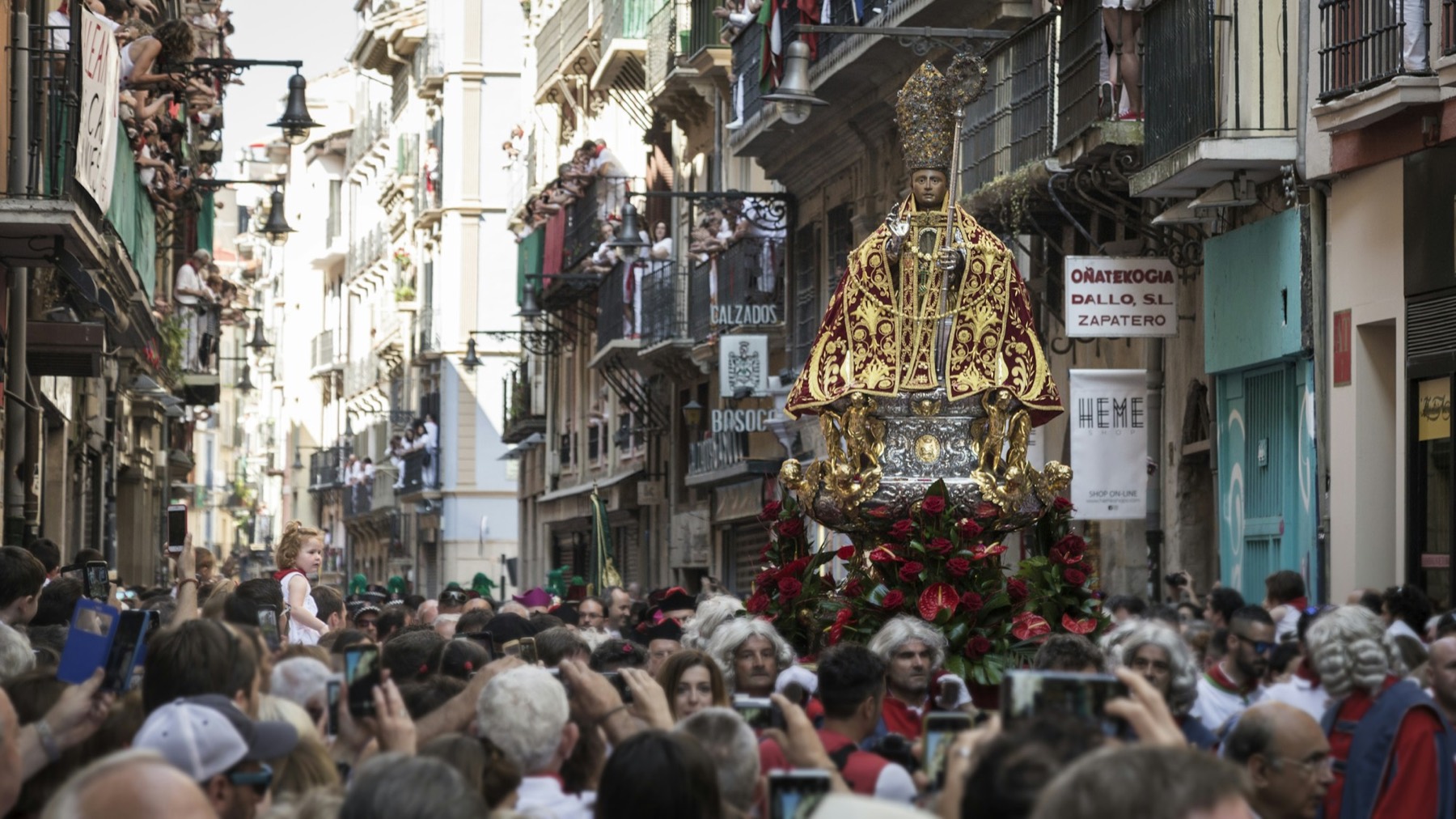
San Fermín's own day starts with the first bull run at eight. Later in the morning the statue of the saint is carried out of the church of San Lorenzo and through the old town for about two hours, with the giants, the town council and the brass band. Watch it from the street; you do not need a balcony for this one.
Tap a stretch. Each one is a different run to watch, and each has its own place to stand.
The run starts at the corral at the foot of the Cuesta de Santo Domingo and climbs to the town hall square. The bulls come out fresh and fast, and this is the most dangerous stretch, with no fence at its top end. Just before eight the runners sing to a small statue of the saint in a niche in the wall, at five, three and one minute to go.
Where to standThe small sloping square by the Museum of Navarre looks down on the start with no fence in the way. It fills first.
Count the rockets. The first goes up as the corral gate opens, the second when all six bulls are out, the third when they are in the pens at the bullring and the fourth when the streets reopen.
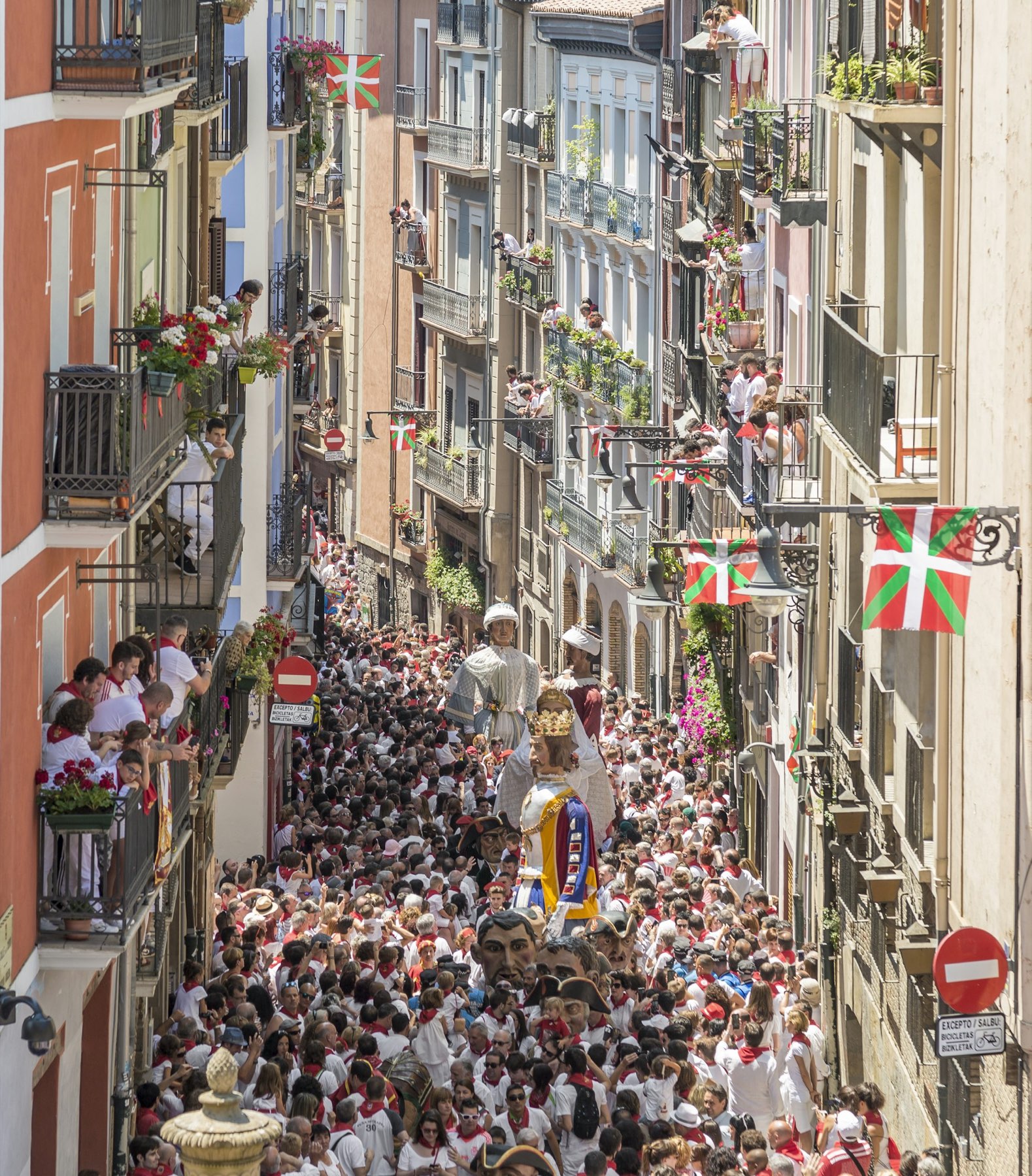
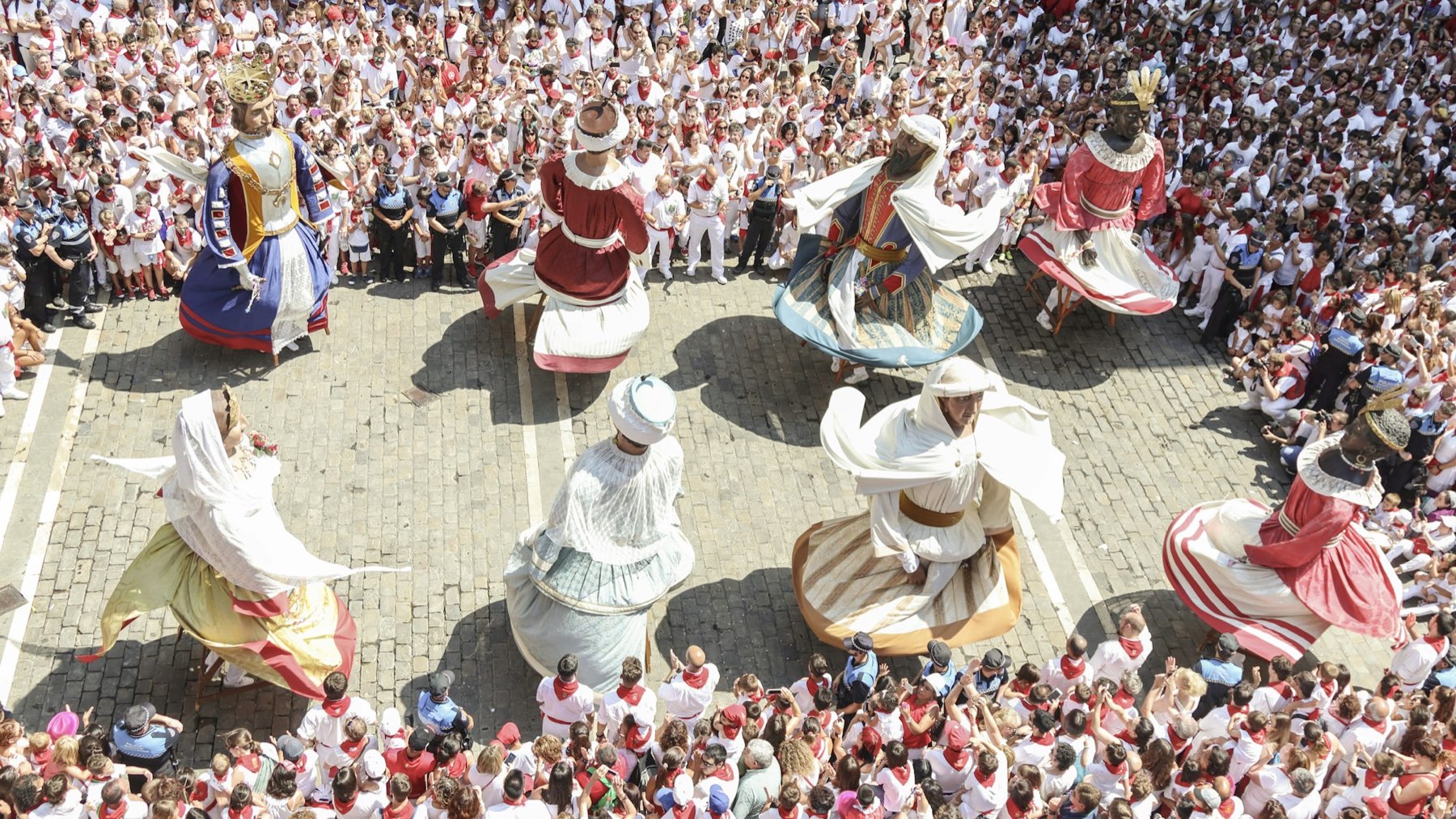
At half past nine each morning the comparsa sets out: eight giants about four metres tall, kings and queens of Europe, Africa, Asia and America, with the big-headed cabezudos and the kilikis, who chase small children with soft rods. The route changes every day, and the city's official San Fermín app follows the comparsa live.
The peñas, the fiesta clubs with their own brass bands, have their premises along Calle Jarauta, and for the nine days their bars are open to anyone. That is the difference from Seville's Feria de Abril, where most casetas are private.
Saturday 10 and Sunday 11 are the most crowded days: visitor numbers more than double at the weekend. If these are your dates, watch the Thursday or Friday run.
After the fourth rocket each morning the fences open and the course is an ordinary street again. Walk it in the afternoon, up the Cuesta de Santo Domingo, across the town hall square, along Mercaderes and down Estafeta to the bullring, and choose where you will stand. The fences go back up in the early hours.
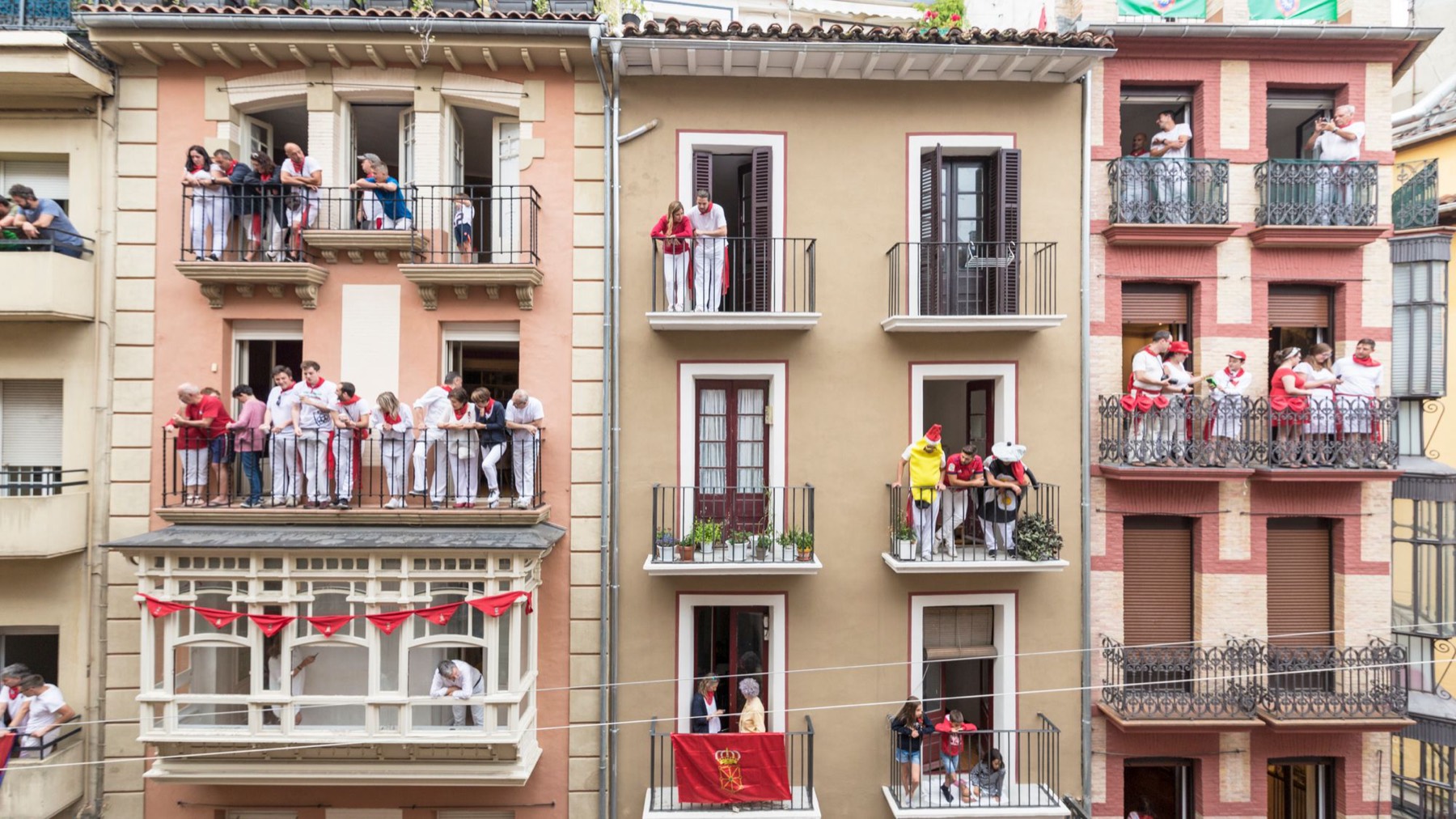
For a bullring seat, buy online or at the box office from six on the day. For a balcony, book as early as you can: the streets on the route close to walkers 90 minutes before the run.
Be at the fence by half past six, behind the second line: the first is kept clear for runners, medics and press. The fence in front blocks part of the view, so watch for the herd's backs and the runners' faces, and expect it to be over in a couple of minutes.
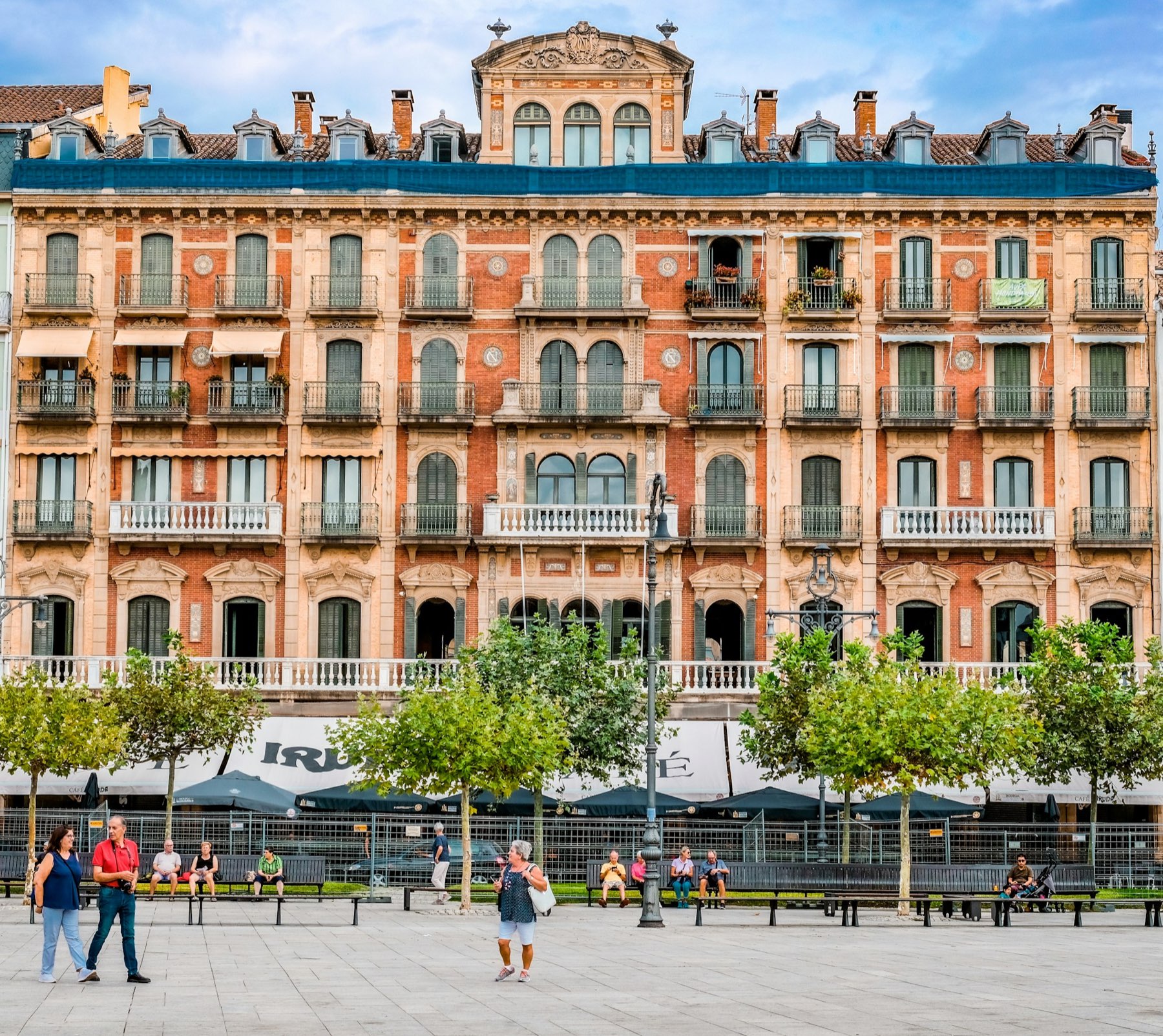
The Nuevo Casino above Café Iruña fills with churros and chocolate straight after the run. Dancing in the square from nine at night.
In the Pamplona guideEvery night at eleven, fireworks go up from the park around the Citadel. Sit on the grass of the Vuelta del Castillo park, where there is room for a crowd, or on the esplanade over the bus station, and get there in good time.
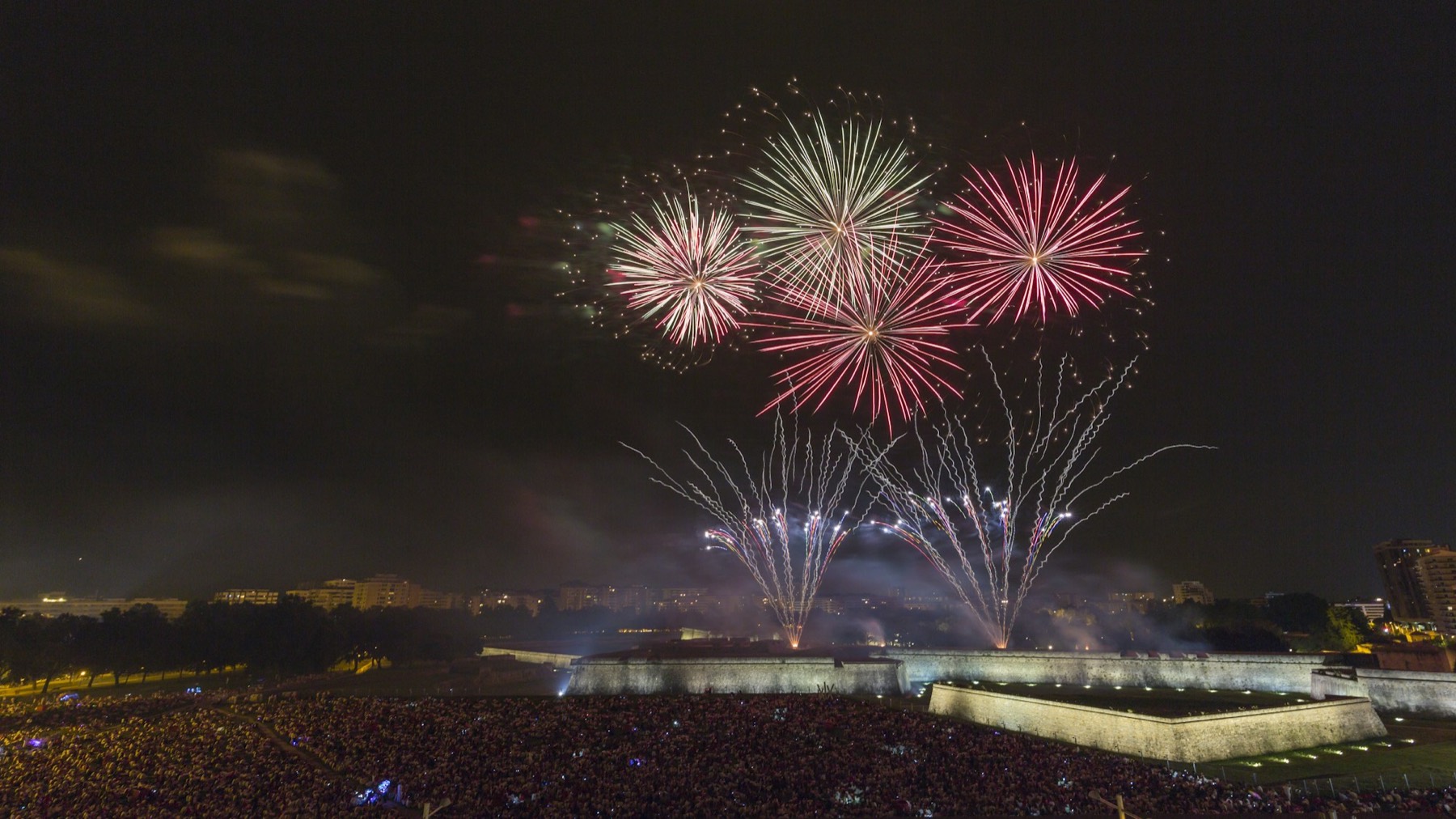
Eat during the display or straight after: in Pamplona it is the evening's pause for dinner.
The last run is at eight, the giants dance their farewell in the morning and the peñas say goodbye in the bullring in the evening. At midnight the crowd gathers in front of City Hall, where the rocket went up eight and a half days earlier, and sings Pobre de mí: poor me, the fiesta is over.
Bring a candle and carry it in a plastic cup. As the song ends, the red scarves are held up overhead and slowly lowered. It is far less of a crush than the opening, and children can come.
Watch at least one run before you think about running one. If you do run, be sober, be eighteen or over, and never touch a bull.
Stand behind the second fence and carry nothing you need: anyone on the course with a backpack or a camera is taken off it. Photographs from the course and the fences are banned.
If you run, learn the route first and choose a stretch, because the bulls overtake every runner. If you fall, stay down and do not move until the herd has passed.
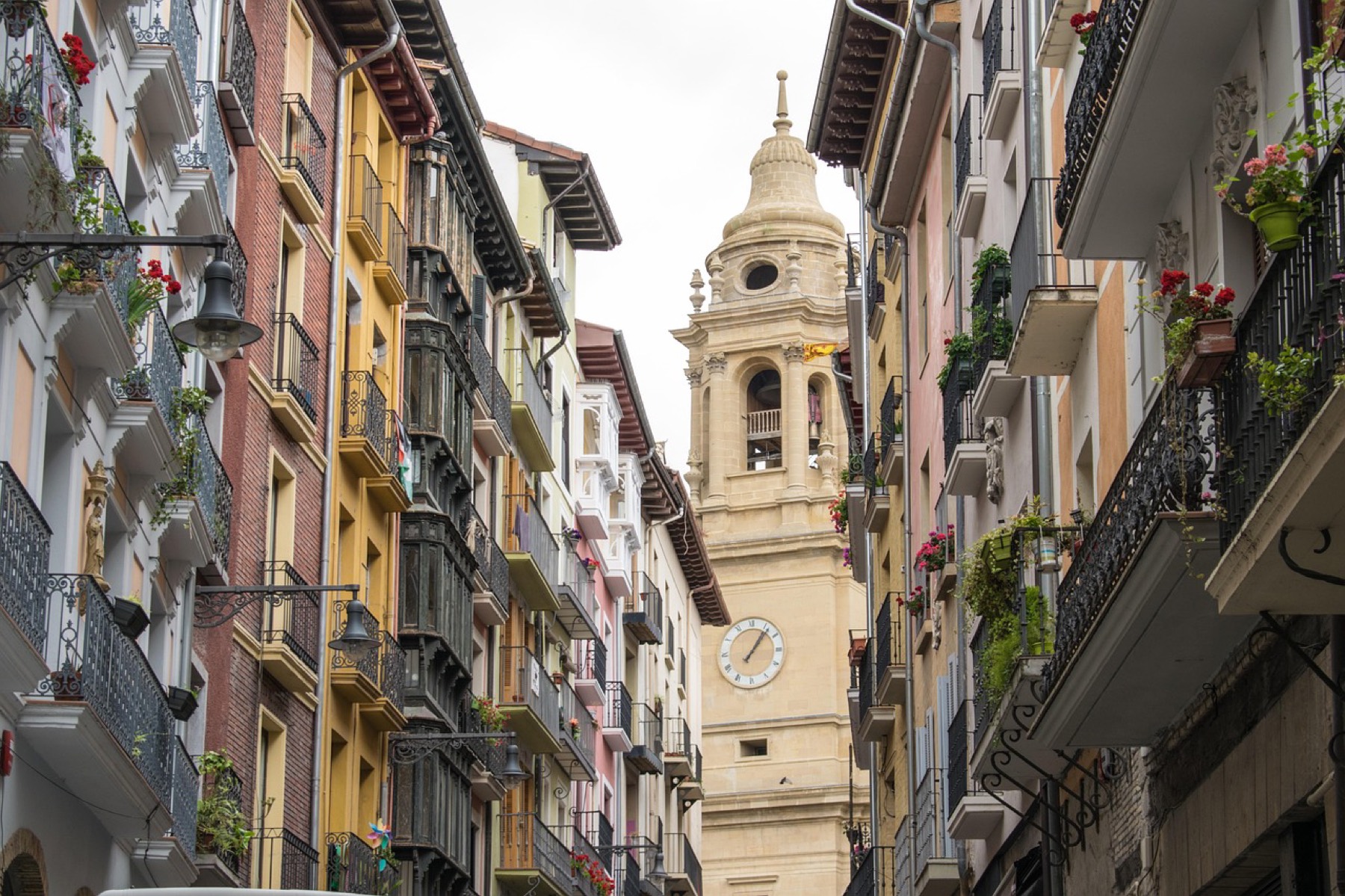
Stay in the old town, a short walk from the fence, and book the day you have dates. The last nights are easier to find than the first, and the towns around Pamplona have rooms when the city is full.
Open the town guideThe old town between the runs.
The official pages this guide was checked against.
Last updated