Globe Countries Cities Itineraries World's Best Hotels Events Login
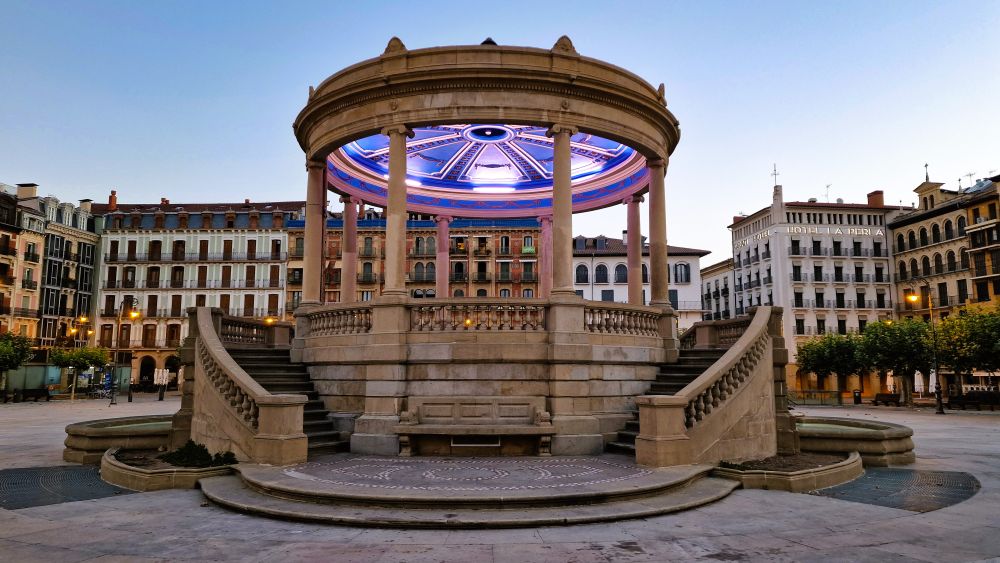
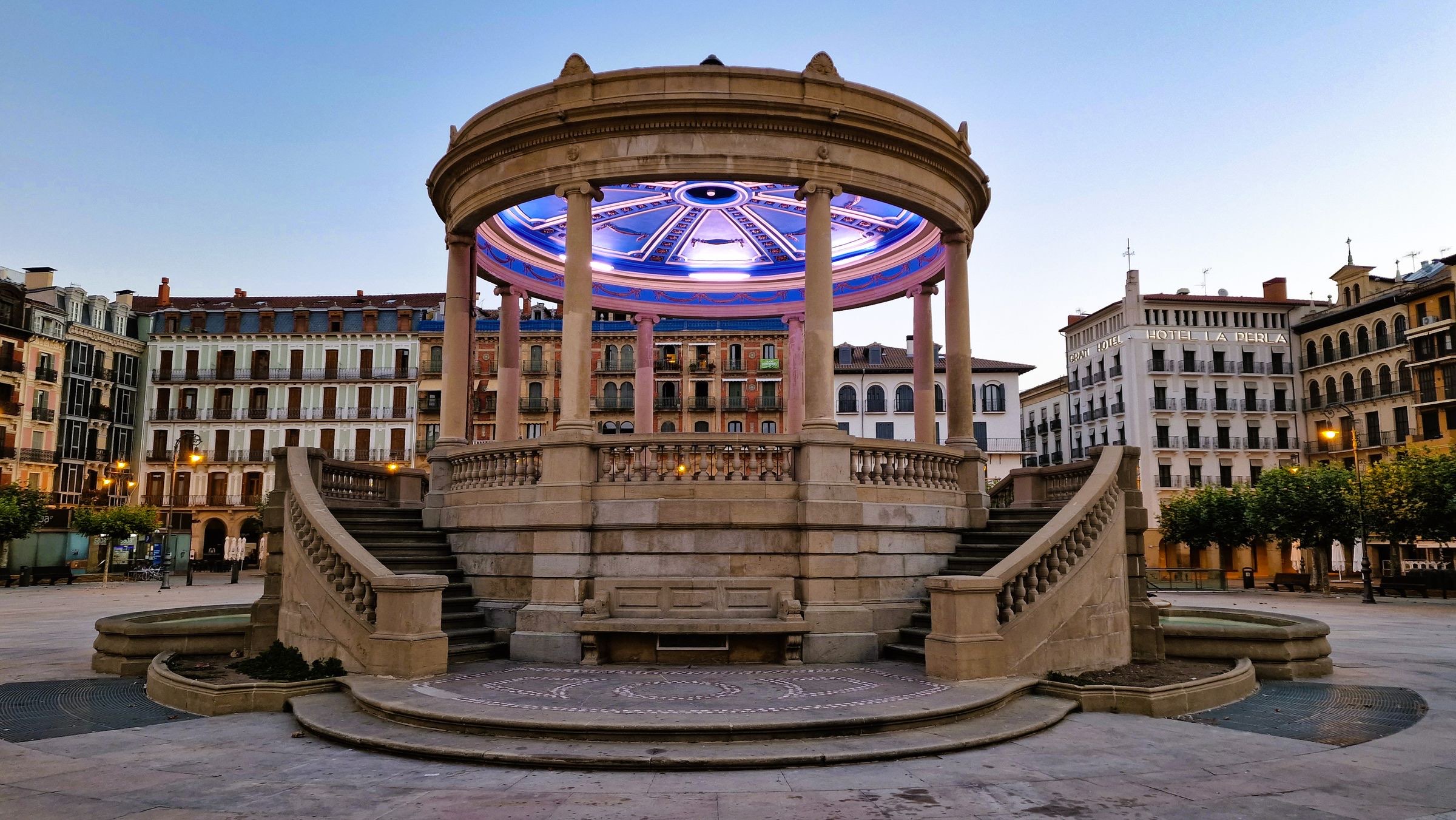
The stone bandstand in Plaza del Castillo at dusk, its painted ceiling lit and the arcaded houses of the square behind
Plaza del Castillo at dusk · the bandstand sits at the centre of the old town
Town brief · 42.8169°N 1.6440°W

Pamplona

Walk in through the Portal de Francia, the gate Camino pilgrims use, and one day covers the bull-run streets, the ramparts and the citadel park, with the evening left for the pintxo bars.

View on globe

Why you should go

Ninety seconds on Pamplona

How long
Two nightsone day for the old town and walls, one for museums and parks
Getting around
On footthe old town is pedestrian; city buses reach the train station
When
May, June, Septemberthe fiesta takes over early July; winters are cold and wet
Language
Spanish, with BasqueIruña, the Basque name, appears on signs beside Pamplona
Money
The eurocards are taken in most bars and shops
Airports
Pamplona PNA6 km south, with flights from Madrid and the Canaries
How long

How many days do you need in Pamplona?

Two nights suit most visitors, and Camino de Santiago walkers often take a rest day here. A third night, with a hired car, reaches the palace at Olite or the beech woods of Irati.

Getting around

How do you get around Pamplona?

On foot. The old town is largely pedestrian and compact, and the walls, the citadel and the Taconera park sit on its edges. City buses, known locally as villavesas, serve the outer districts; lines 9, 10 and 16 link the train station with the centre in about ten minutes.

When

When is the best time to visit Pamplona?

May, June and September, when the weather is mild and the city keeps its normal pace. San Fermín runs from 6 to 14 July and fills the streets day and night, with rooms booked months ahead. Spring is often wet and winters are cold.

Language

What language is spoken in Pamplona?

Spanish is spoken everywhere. Basque has official standing in Pamplona alongside Spanish, and the city's Basque name, Iruña, appears beside Pamplona on many signs. English is common in hotels and at the main sights.

Money

What currency does Pamplona use?

The euro. Cards are taken in most bars, restaurants and shops. Tipping is modest: rounding up or leaving a few coins is normal.

Airports

Which airport do you fly into for Pamplona?

Pamplona PNA, 6 km south of the centre, has flights from Madrid and the Canary Islands, with Barcelona added from late October 2026. Bilbao BIO has far more routes; from there an airport bus reaches Bilbao's bus station and coaches take about two hours to Pamplona.

Give Pamplona two days on foot. Spend the first on the cathedral, the walls and the bull-run streets from the Santo Domingo slope down to the bullring. Keep the second for the Museum of Navarre, the citadel park and the riverside path below the ramparts.

Eat standing at the counters of Calle Estafeta and Calle San Nicolás from about eight in the evening. Order one or two pintxos and a drink, then move on to the next bar. Thursday is the busiest night in the old town, with a young crowd out late, so counter space is scarce.

Stay inside the old town or on its southern edge near Plaza del Castillo, and everything is a short walk. Rooms above the bar streets are loud late on Thursday to Saturday nights, so ask for one at the back. For the Royal Palace of Olite or the Irati beech forest, hire a car for a day.

Trains from Madrid take about three and a half hours and stop across the Arga, a 20 to 25 minute walk or a short city bus ride from the centre. Buses from San Sebastián and Bilbao arrive at the underground station beside the citadel. No bus serves the airport: take a taxi, or phone ahead for the hourly shared airport taxi from the bus station.

If you come for San Fermín, book first and expect little sleep: the streets are loud all night. The rest of the year, keep Monday for the walls and the parks, because the Museum of Navarre is closed. Spring brings frequent rain, so pack a layer.

Things to do

17
  1. Pamplona City Hall

    Pamplona City Hall

    Landmark · 30 min

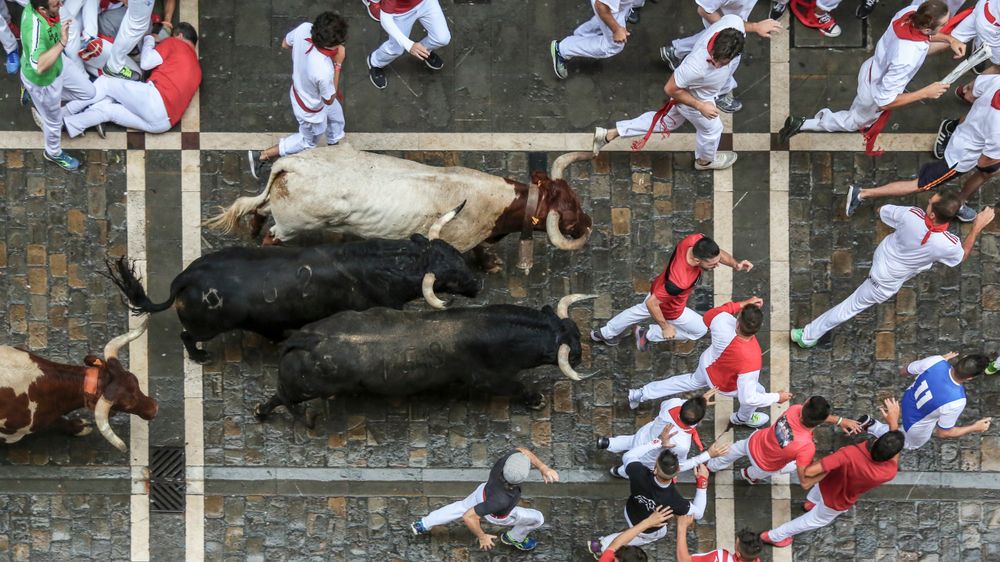
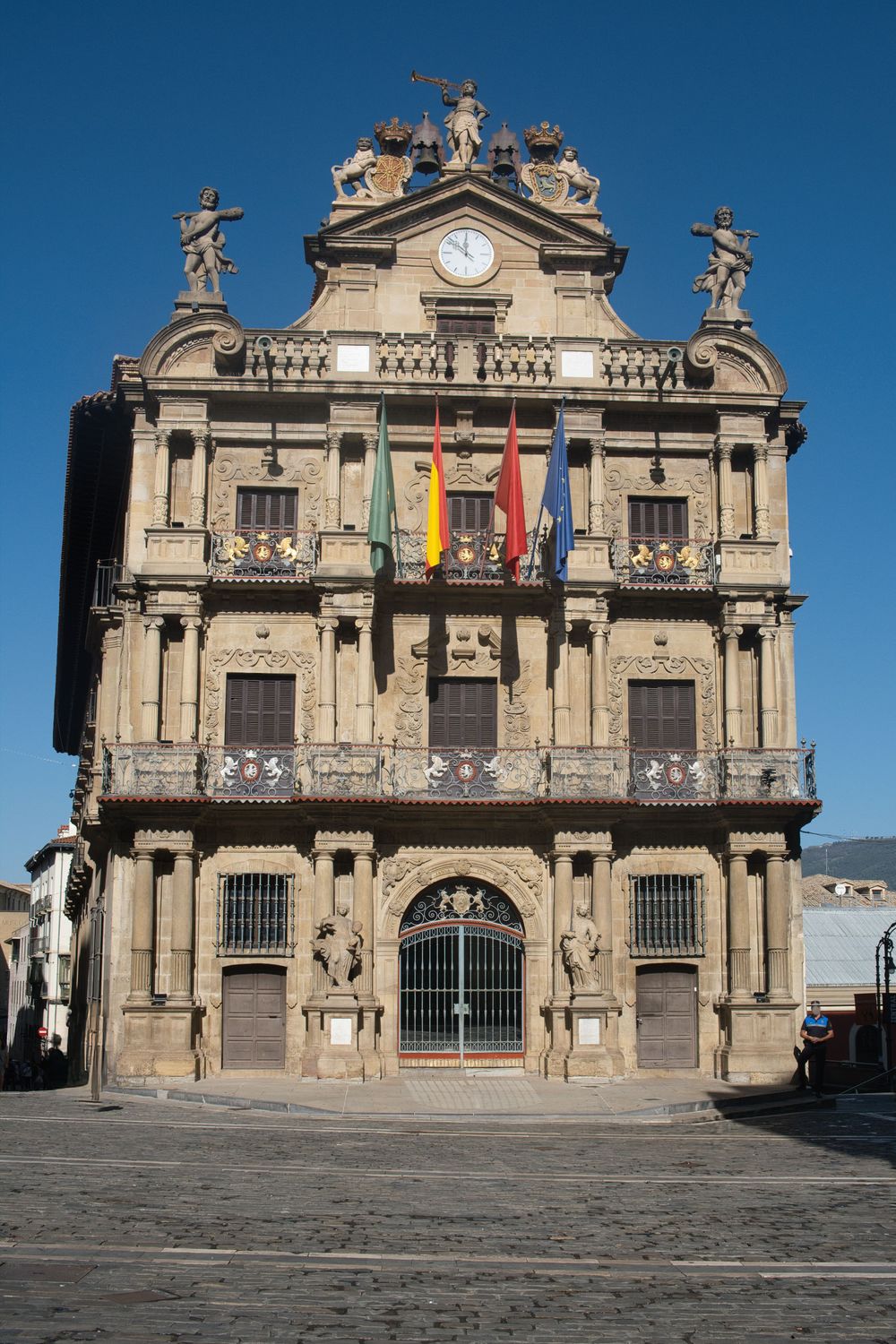
    A baroque front of columns, balconies and statues on a small square at the top of the old town. The rocket that opens San Fermín is fired from its balcony at noon on 6 July, and the bull run passes beneath it every morning of the fiesta. On other days, stand in the square for the facade and walk on down Calle Mercaderes.

  2. Plaza del Castillo

    Plaza del Castillo

    Landmark · 30 min

    A large arcaded square of café terraces at the centre of the old town, with a bandstand in the middle and the main old-town streets leading off it. During San Fermín it is packed from morning to night.

  3. San Fermín

    San Fermín

    Event · 5 hr

    The run starts at eight in the morning, and the bulls and runners are past you in seconds, and the whole run is over in a few minutes.

    View more →
  4. Calle Estafeta

    Landmark · 30 min

    Narrow and slightly curved, this street carries the longest stretch of the bull run, and for the rest of the year it is lined with bars and small shops. Come from about eight in the evening, when the counters fill with pintxos, small snacks served on bread.

  5. Church of San Lorenzo

    Church · 30 min

    This church at the edge of the Taconera park holds the chapel of San Fermín, with the saint's statue. On 7 July the statue is carried through the old town in the fiesta's procession, and the chapel is packed. On other days, step in quietly between services to see it.

  6. Church of San Saturnino

    Church · 30 min

    A Gothic church in the heart of the old town, known locally as San Cernin, with two tall brick towers that once served as defensive lookouts. Under the porch, look for the carved figure of Saint James dressed as a pilgrim. The large side chapel is dedicated to the Virgen del Camino, the city's patron.

  7. Citadel of Pamplona

    Fortress · 1 hr

    Five bastions in a star shape enclose a walled park of lawns and trees southwest of the old town. Walk the grass of the dry moats and along the ramparts; the old stone buildings inside now hold exhibitions. Entry is free, and on San Fermín nights the fireworks go up from the park around it.

  8. Fortín de San Bartolomé

    Museum · 30 min

    A restored bastion on the city walls, open at Easter and in summer as the visitor centre for Pamplona's fortifications. Displays inside explain how the walls and the star-shaped citadel were built to hold the frontier with France. In season it is the place to start, before a walk on the ramparts with the plan of the defences fresh in mind.

  9. Mercado de Santo Domingo

    Market · 30 min

    The old town's covered market, beside the City Hall, with stalls of Navarre cheese, cured ham, piquillo peppers and vegetables from the Ebro valley. The bull run starts just below it, at the Santo Domingo slope. Come in the morning, when the stalls are full, and note that it is closed on Sundays.

  10. Museo Universidad de Navarra

    Museum · 1.5 hr

    A modern art museum on the university campus, in a low building by the architect Rafael Moneo. The collection holds works by Picasso, Kandinsky, Rothko and Tàpies and one of Spain's largest photography collections, shown in rotating exhibitions. It is a half-hour walk from the old town through the Vuelta del Castillo park, or a short bus ride.

  11. Museum of Navarre

    Museum · 1.5 hr

    Four floors of the region's art, from Roman mosaics to a Goya portrait, fill a former hospital near the walls. Ask for the ivory casket of Leyre, carved in Muslim Córdoba and the star of the collection. Entry is ticketed.

  12. Pamplona Cathedral

    Cathedral · 1.5 hr

    Behind a plain classical front stands a Gothic interior and one of the finest cloisters in Spain. In the nave, look for the alabaster tomb of Charles III of Navarre and his queen. Entry is ticketed, and the visit takes in the cloister.

  13. Parque de la Taconera

    Park · 30 min

    The city's oldest park, with fountains, statues and old trees, on the western edge of the old town. In the dry moat below, deer, peacocks and ducks live in a small open enclosure, a good stop with children. It is free.

  14. Parque de Yamaguchi

    Park · 30 min

    A Japanese garden in the western district of Ermitagaña, named for Pamplona's twin city in Japan. Paths wind round a pond among Japanese trees and plantings, and it is at its best in spring blossom and autumn colour. The city planetarium stands beside it, a good pairing on a wet day.

  15. Plaza de Toros

    Landmark · 30 min

    The bullring at the end of the bull run, on the eastern edge of the old town. During San Fermín the runners and the bulls pour through its gate each morning, and the bullfights fill it in the evening. Outside the fiesta, walk round to the bronze bust of Hemingway by the main entrance and on to the ramparts behind it.

  16. Puente de la Magdalena

    Bridge · 30 min

    A medieval stone bridge over the Arga below the northern walls, where Camino de Santiago pilgrims cross into the city. A stone cross stands at one end. From here the riverside path runs in both directions, so walk it east under the ramparts and climb back to the old town through the Portal de Francia.

  17. Walls of Pamplona

    Fortress · 1.5 hr

    Most of the old walls and bastions still ring the old town, and a marked path follows them. Start at the Portal de Francia, the gate that still has its drawbridge, where Camino de Santiago pilgrims enter the city, then walk the ramparts above the Arga river. The path is free to walk.
Basemap Meridian · data © OpenStreetMap
Explore

More of Spain

Spain
Country

Spain

Every Spain town, place and dispatch, on one map.

San Sebastián
Town

San Sebastián

A scallop of pale sand curves between two green hills, with an island in the mouth of the bay and an old town of pintxo bars at one end.

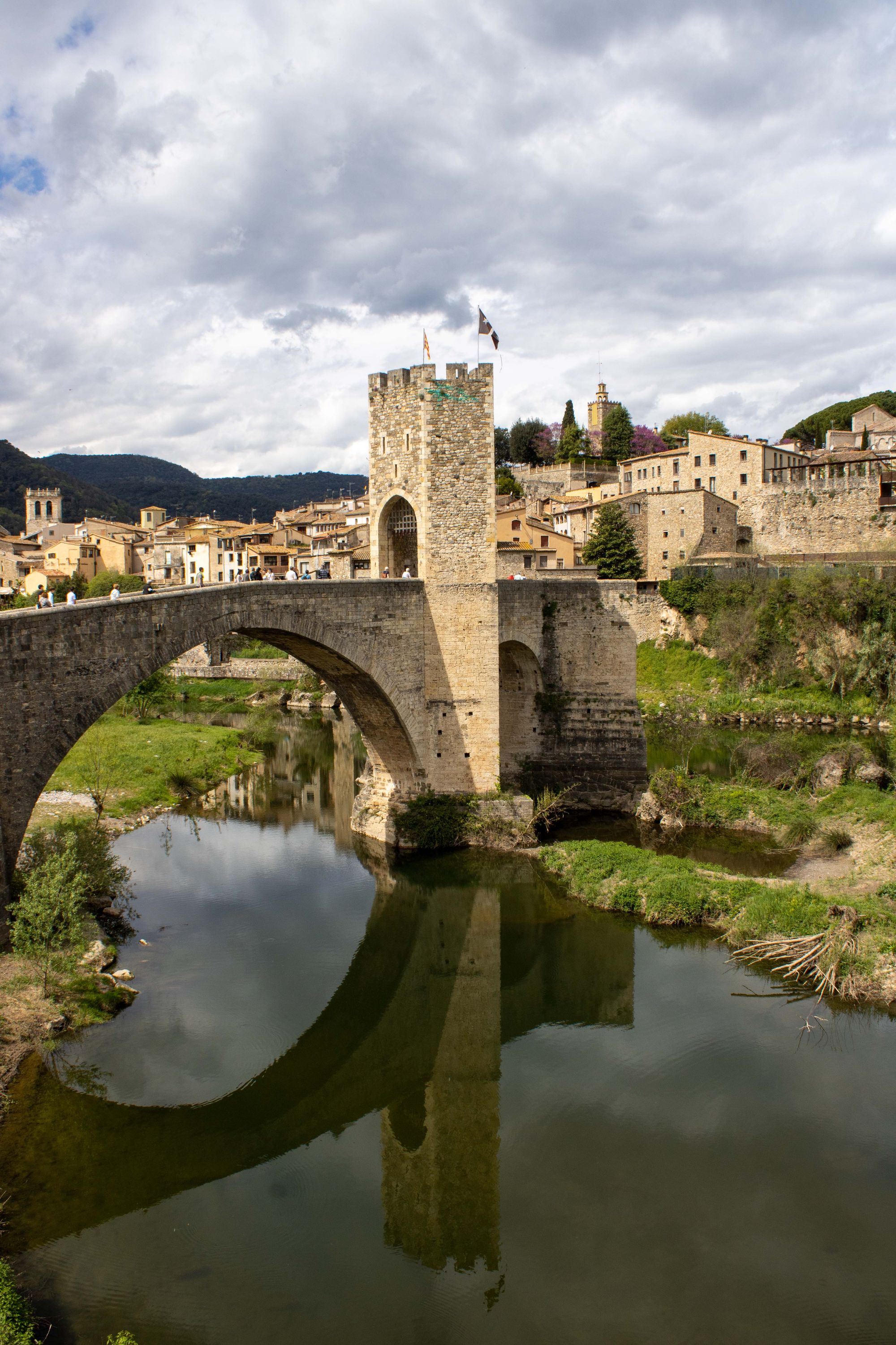
Besalú
Village · Girona

Besalú

Bilbao
Town

Bilbao

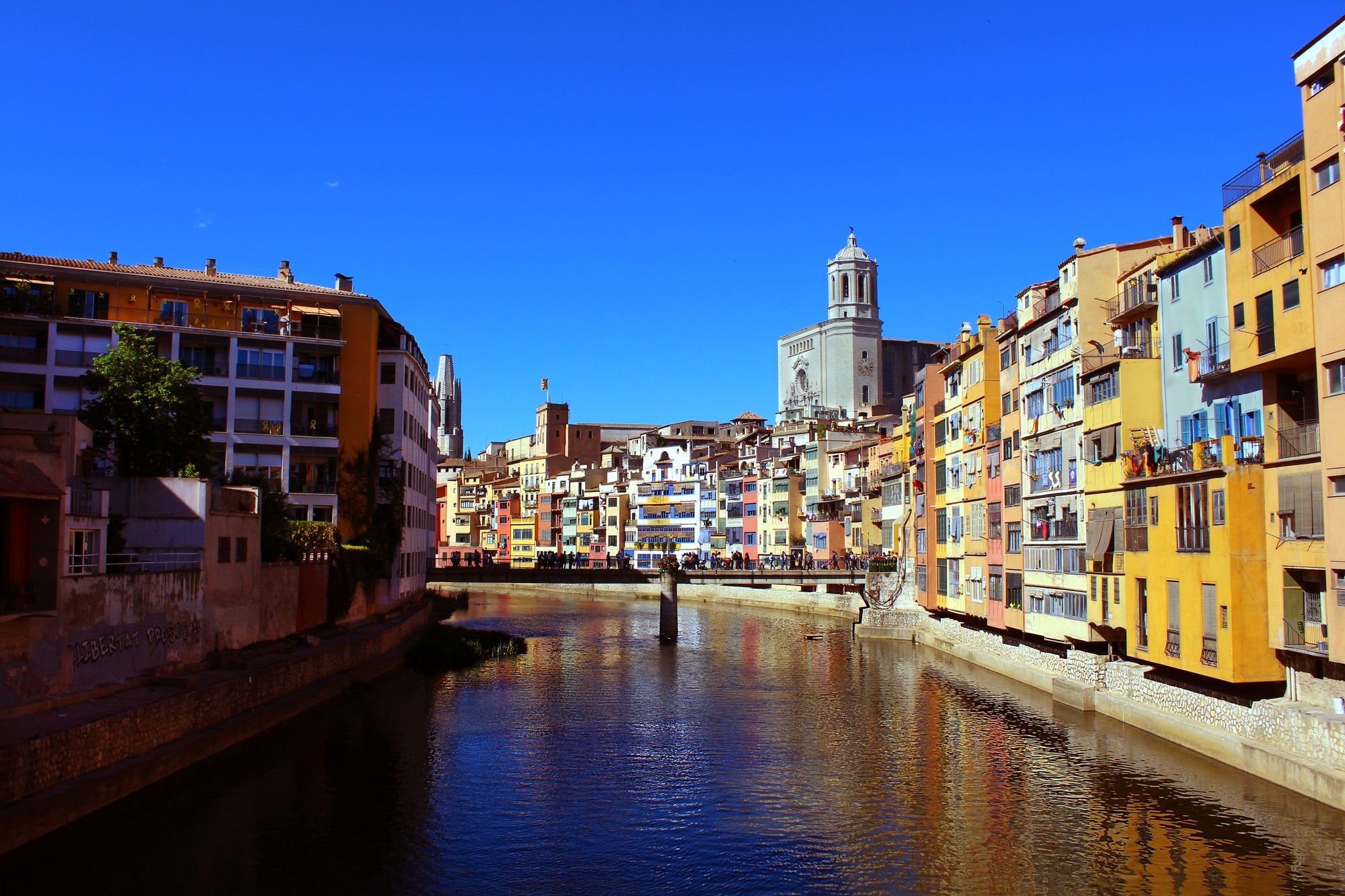
Cases de l'Onyar
Landmark · Girona

Cases de l'Onyar

Sources 1

The official pages this guide was checked against.

Last updated