Ninety seconds on Hadrian's Gate
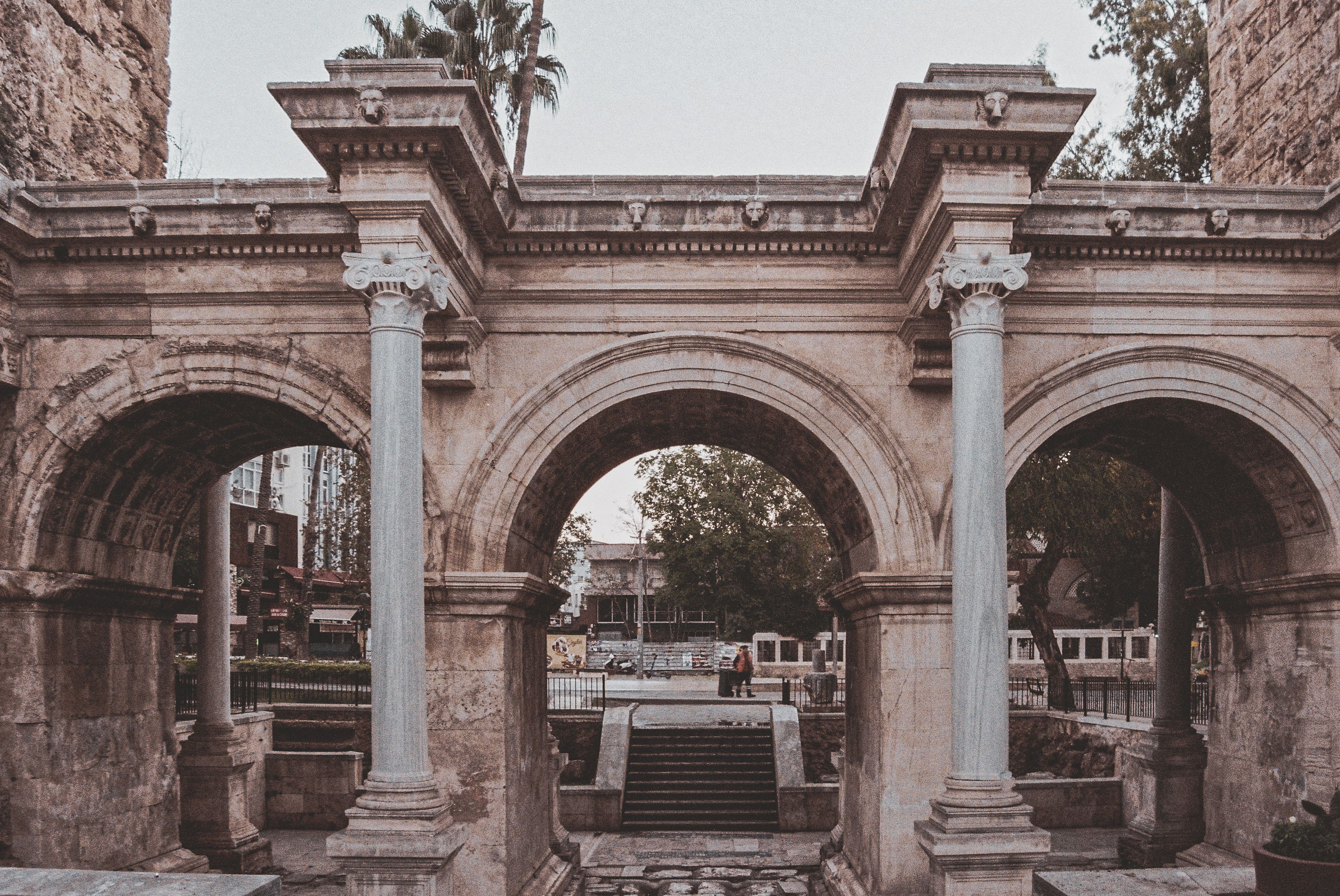
A Roman road, its paving grooved deep by carts, runs under the middle arch, and you cross it on your way into Kaleiçi through one of Antalya's best-preserved historic structures.
The gate is three arches of white marble; only the column shafts are a different stone. Each face carries four columns, and the carving above them runs to floral ornament and stylised lion heads. The original had a second storey, which has not survived.
The vault over each passage is divided into a grid of shallow square recesses, carved with daisy-like flowers, fruit and leaves. The carving survived well, helped by centuries hidden inside the city walls.
The two towers either side do not match. The southern one, on your left as you face the gate from the boulevard, is Roman and is called the Tower of Julia Sancta, after a Roman inscription set into its wall. The northern one has Roman lower courses under an upper section of Seljuk work.
The gate was raised to mark the emperor Hadrian's visit to the city. The letters of its Latin dedication are now gone from the stone.
There are two stone staircases down from Atatürk Caddesi, because the gate stands at the level of the Roman road, below the modern boulevard. Walk through the middle arch from the boulevard side and look up at the carved vault.
On the far side, turn round and step back to see the full width of the arches and the two towers together. The site has no English signs, so the background on this page is your guide.
Beyond the gate, Kaleiçi's lanes are cobbled and uneven, so wear flat shoes. They lead on to the Yivli Minaret and Hıdırlık Tower, both within easy walking distance.
Come early if you want the arches with nobody in them. From late morning to mid-afternoon, tour groups gather at the gate, and you may wait 20 minutes for an empty arch.
For the classic picture, stand on the boulevard side and frame the old town through the middle arch.
Explore the rest of Antalya
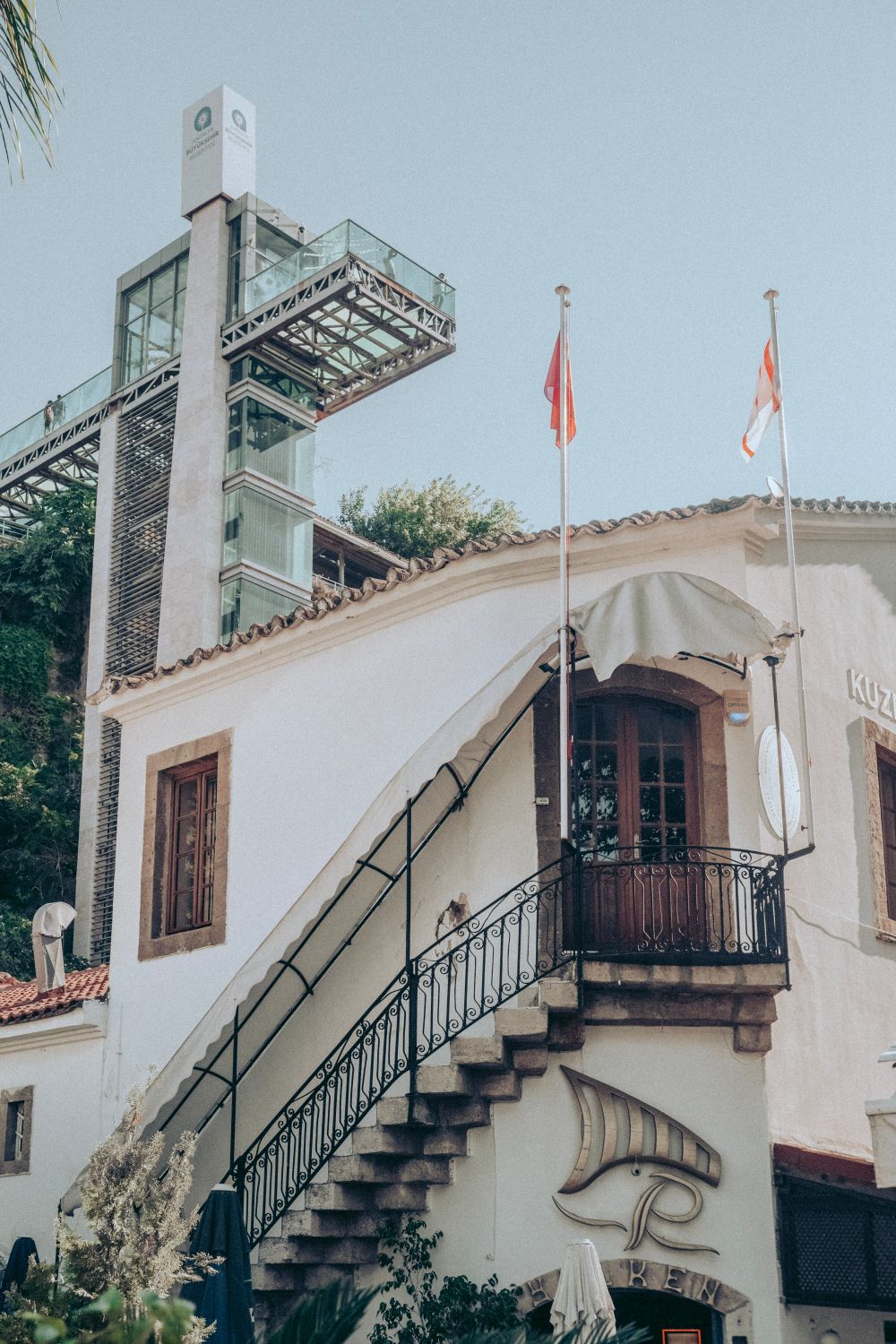
A restored 19th-century Antalya house inside the walls of Kaleiçi, staged with life-size figures of old household customs, and in its…
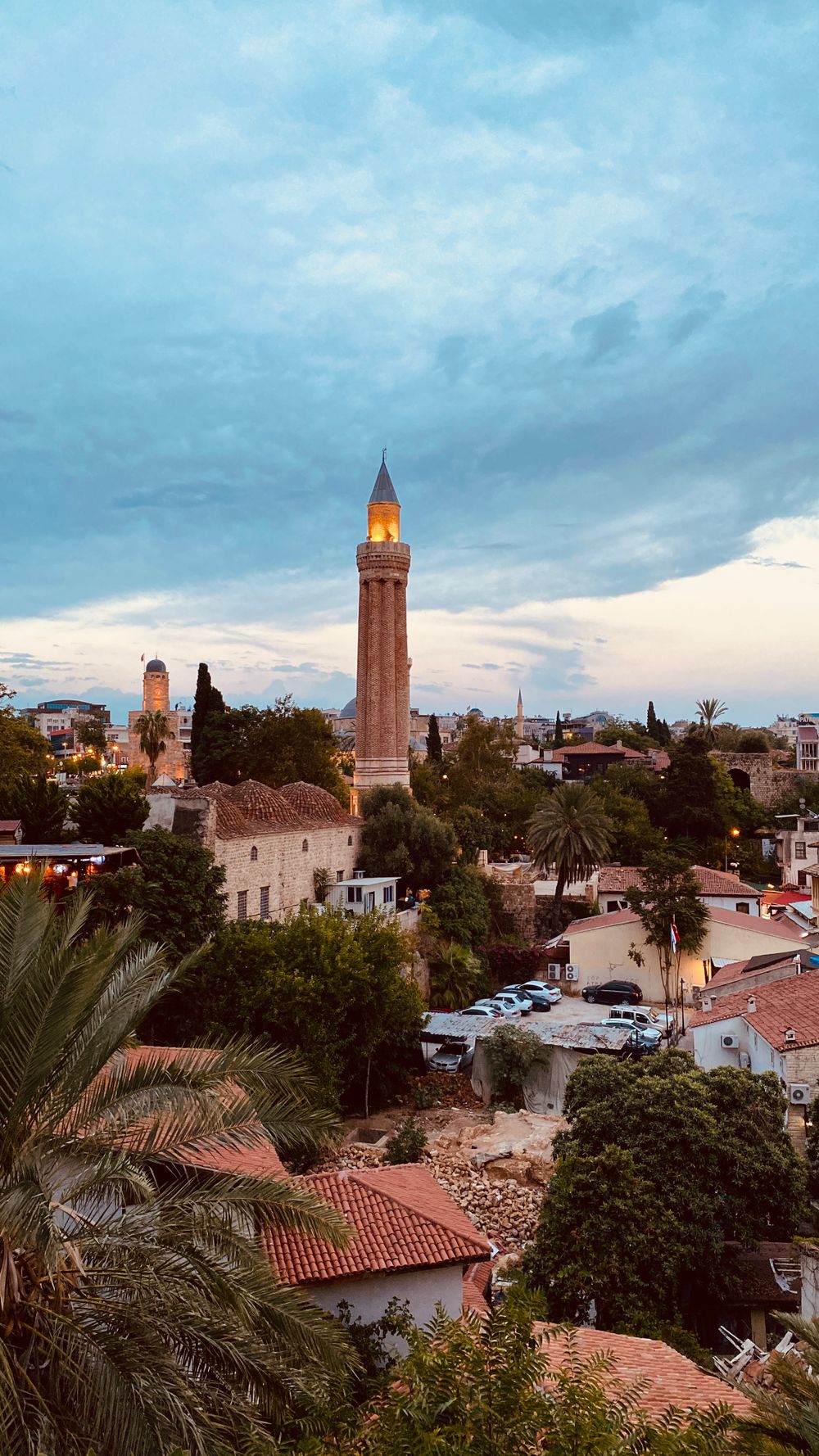
Known as the cut minaret, it stands over a building that has served as a Roman temple, a Byzantine church and a mosque in turn, and that a…
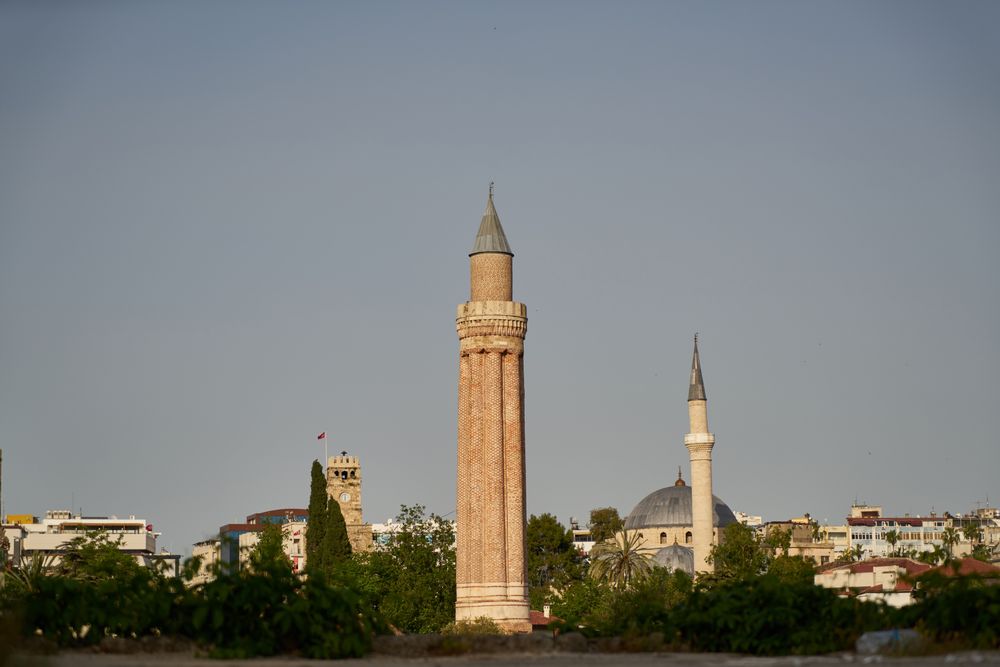
A fluted red-brick minaret, traced with turquoise and dark blue tile and raised under the Seljuk sultan Alaaddin Keykubat, that serves as…