Things to do
18-
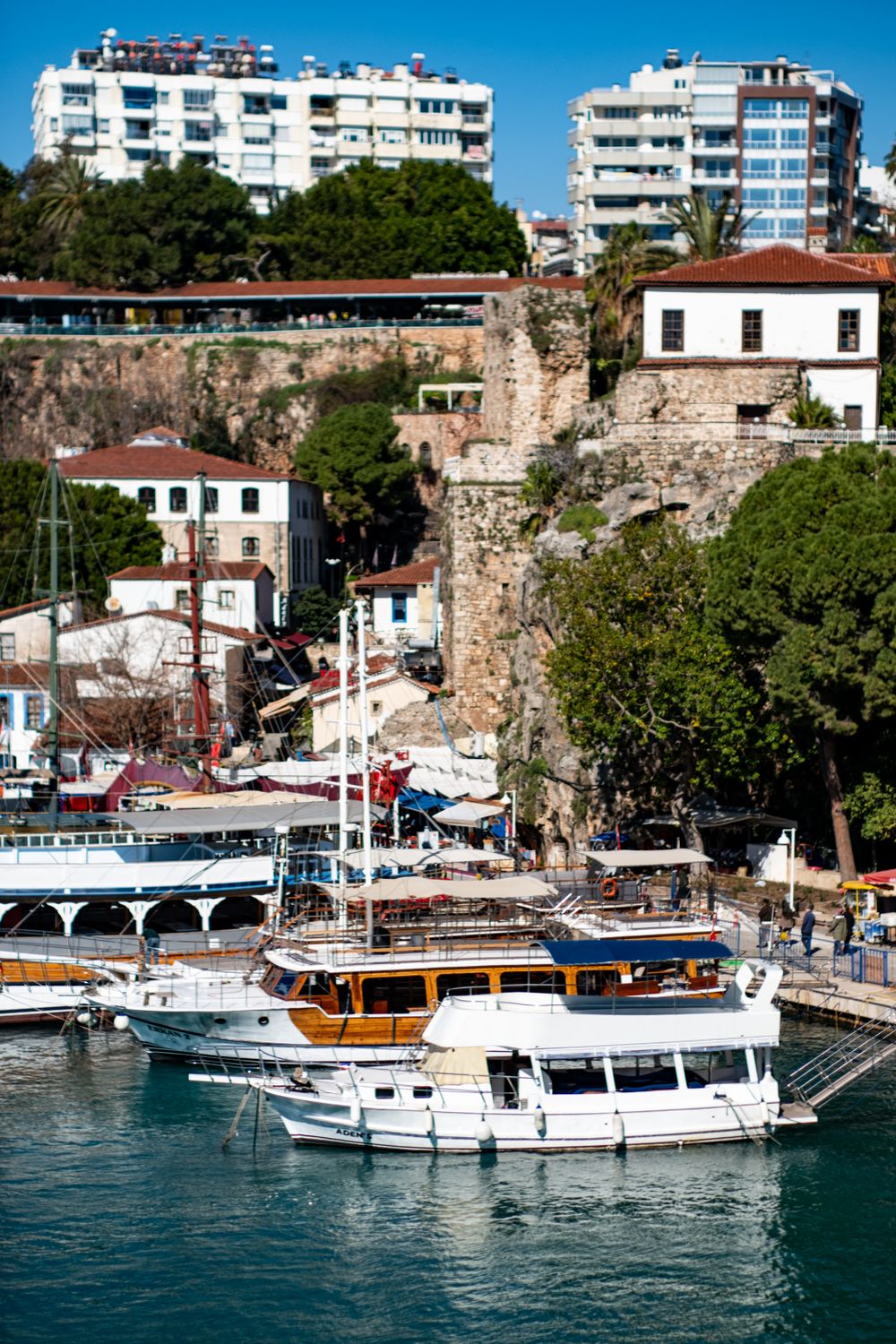
Antalya Old Harbour
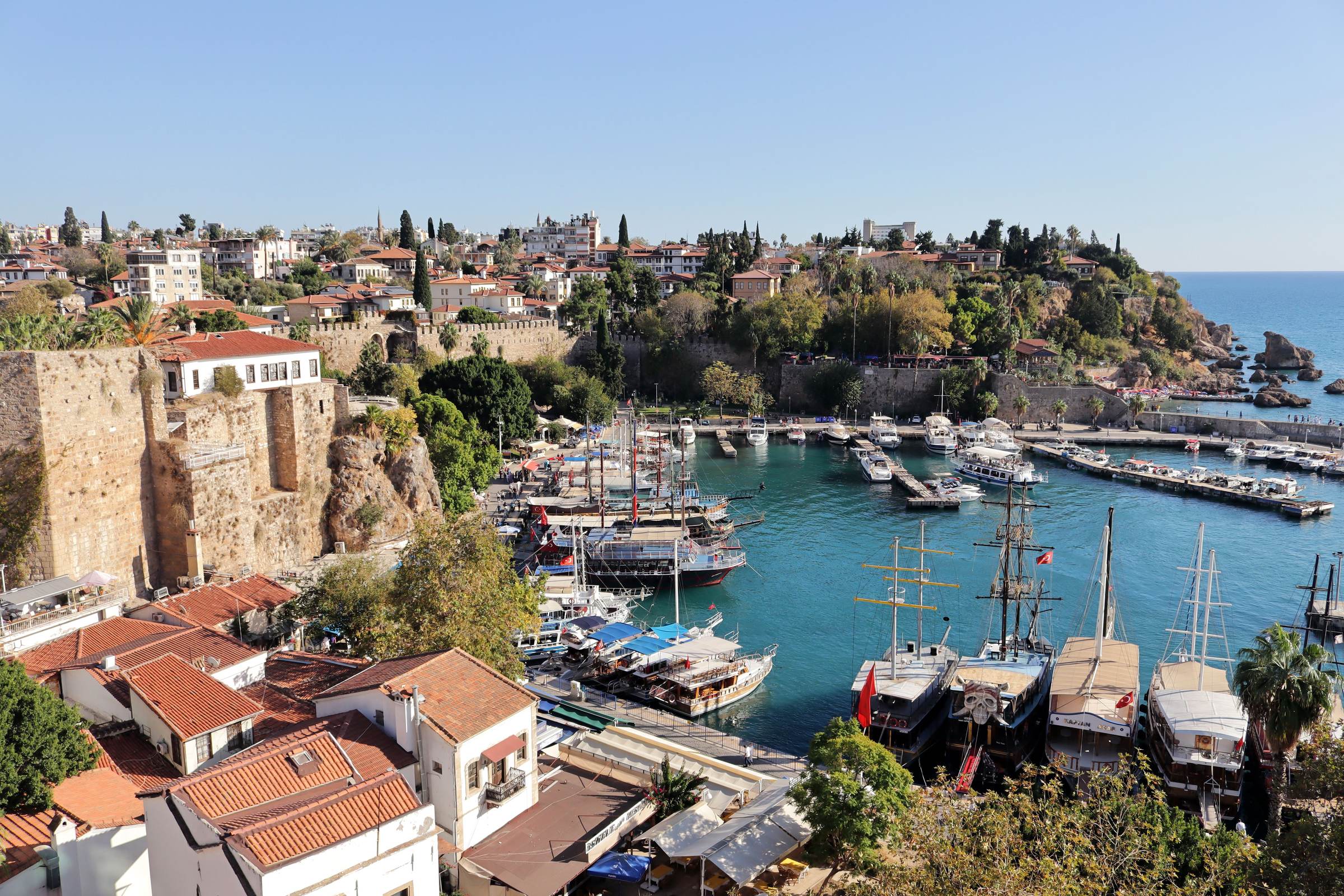
Enclosed by the old sea walls at the foot of Kaleiçi, the small Roman harbour is moored end to end with gulets and excursion boats. The boats out to the lower Düden fall leave from its quay, which is also where the town gathers at sunset. The way down from the old town is steep and stepped, and a glass lift in the cliff saves the climb back.
-
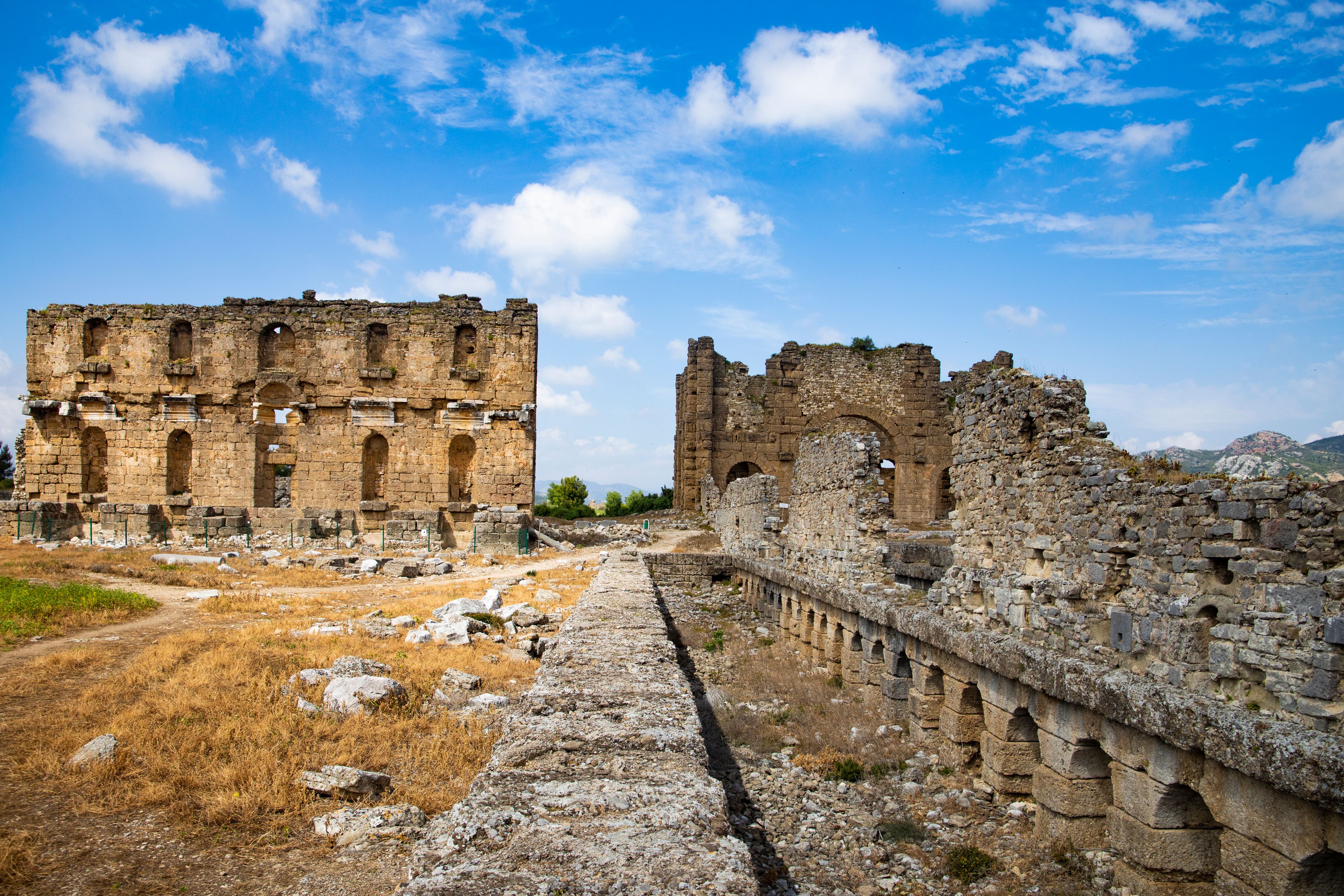
Aspendos
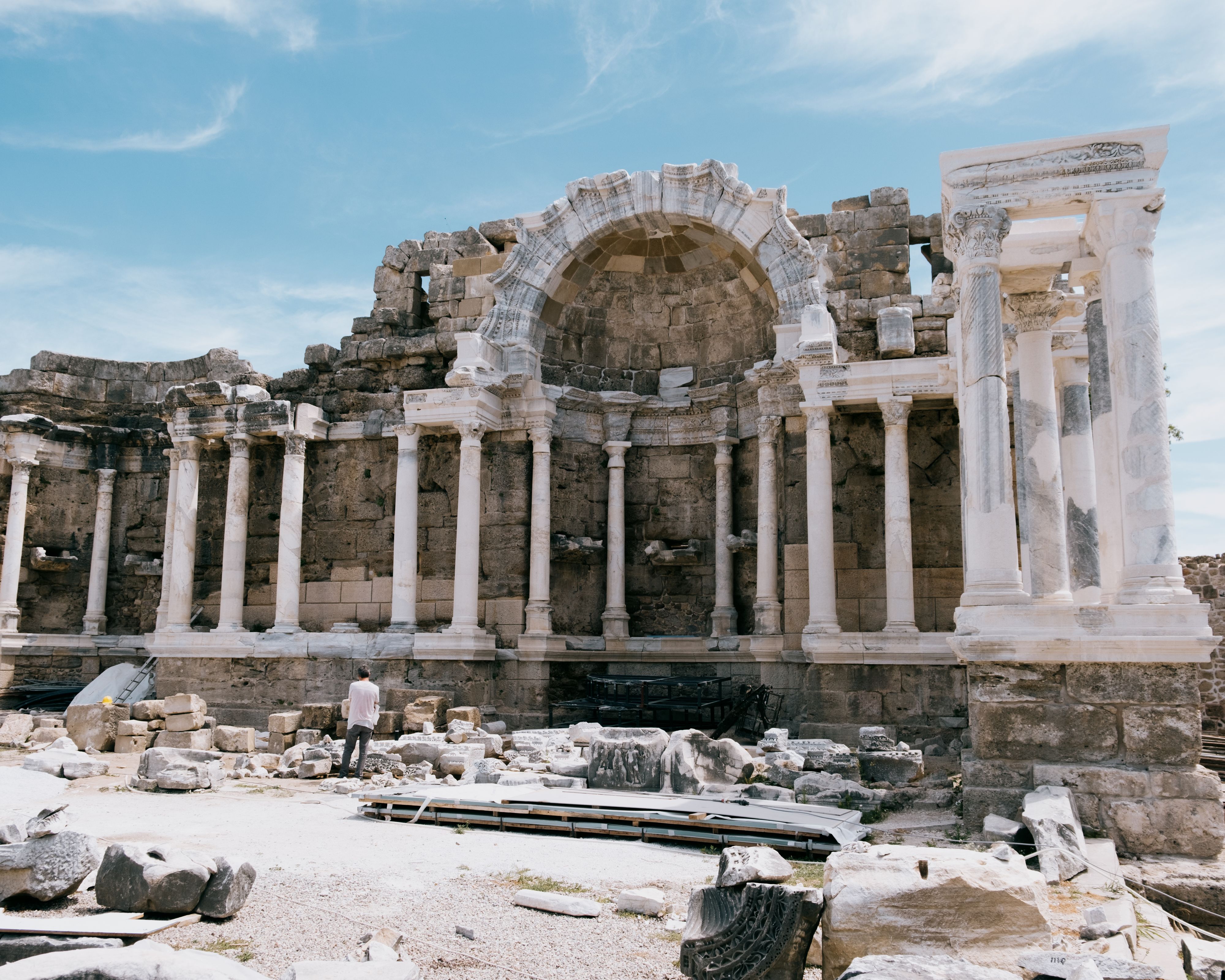
The Roman theatre of about 160 AD, complete to its stage wall and upper gallery, and the best preserved in the Mediterranean because the Seljuks reused it as a caravanserai. The aqueduct in the fields behind it is worth the extra walk.
-
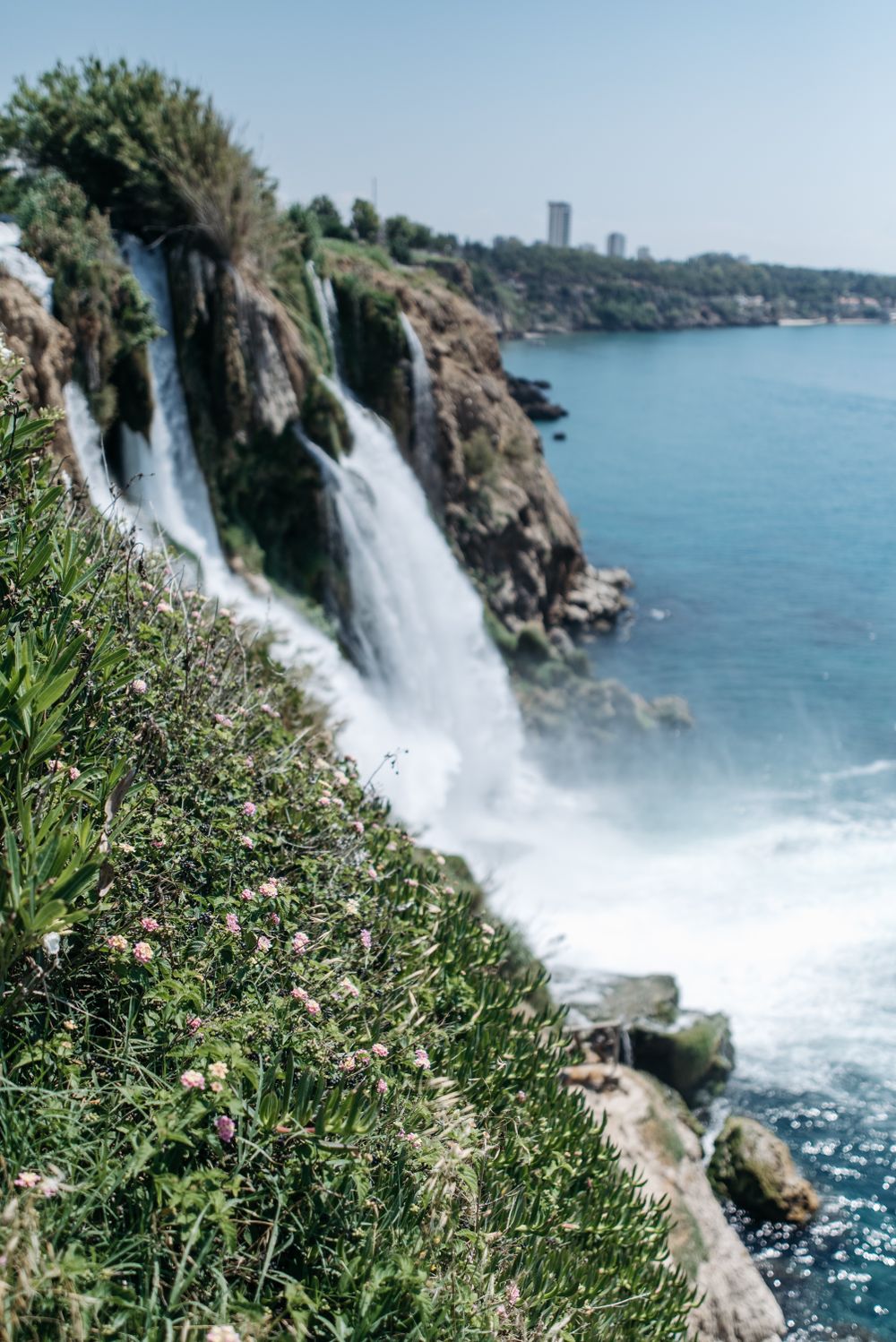
Düden Waterfalls
Two falls on the same river. At the upper one, inside a fenced park that opens at eight, the Düden resurfaces from a karst spring and the path runs behind the curtain of water. The lower one drops forty metres off the cliff into the sea within Düden Park, which is free and open around the clock. The full height of the lower fall shows only from a boat offshore.
-
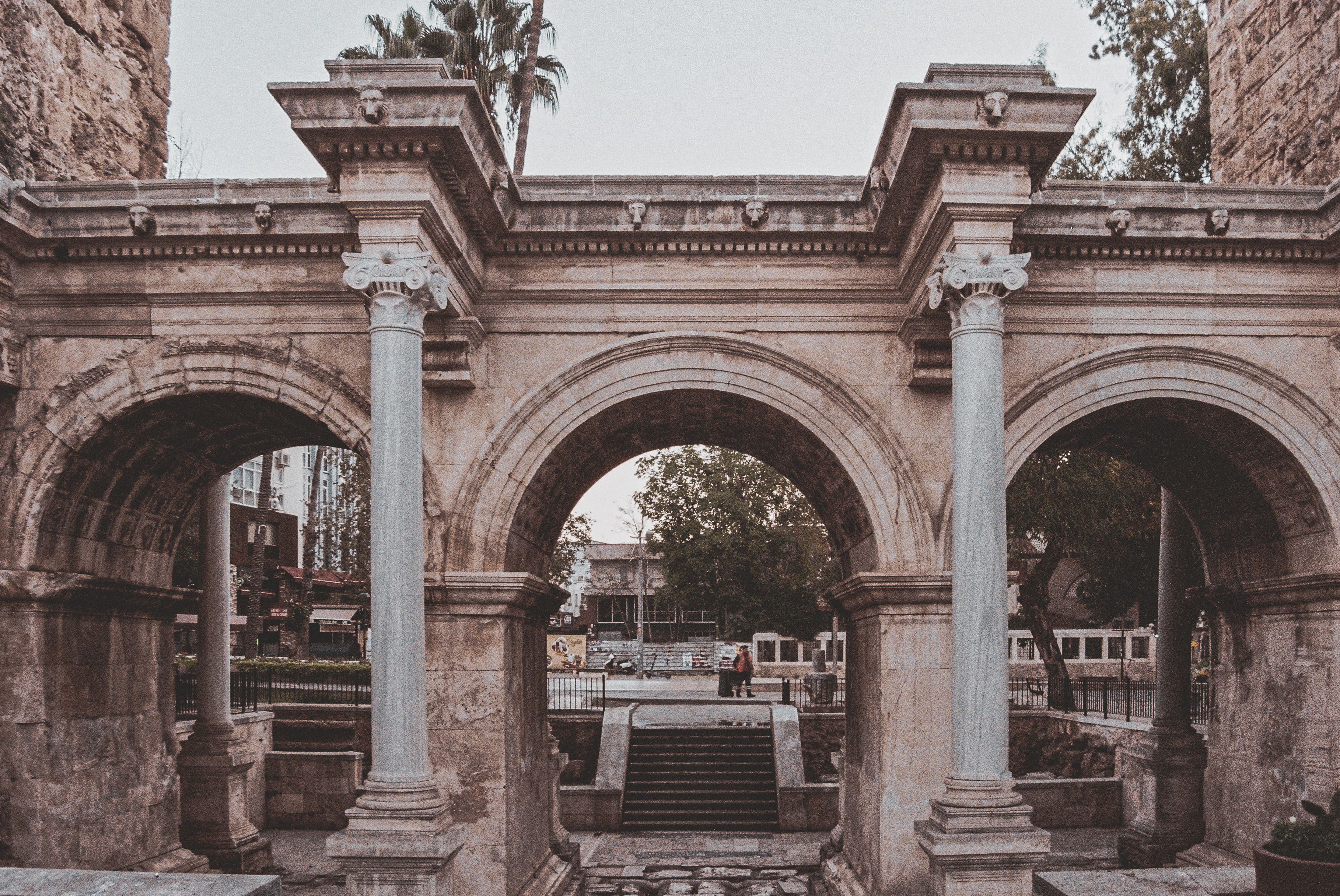
Hadrian's Gate
A triple marble arch raised for the emperor Hadrian's visit in 130 and later built into the city walls, of which it is the only entrance gate left. Rosettes and floral reliefs cover the three passages, granite pillars carry the upper storey, and the original Roman road surface with its cart ruts is exposed beneath. It is the main way into Kaleiçi on foot.
-
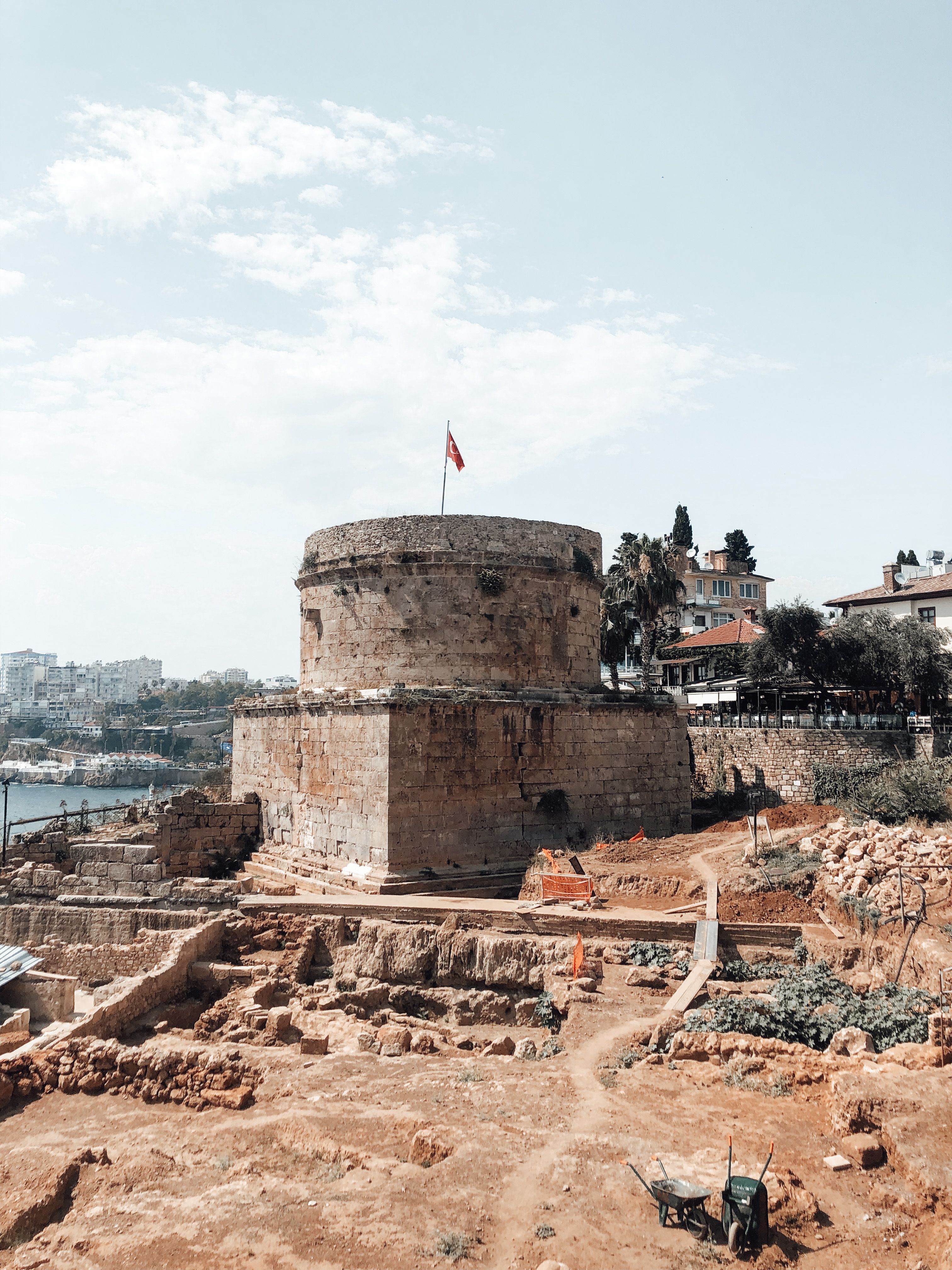
Hıdırlık Tower
A tower of tawny stone fourteen metres high at the corner where the land walls meet the sea walls, a round drum on a square base, built by the Romans in the second century. It served the Byzantines as a military post and later stood as a fort or a lighthouse, and it now marks the edge of Karaalioğlu Park. It is the sunset spot in Kaleiçi.
-
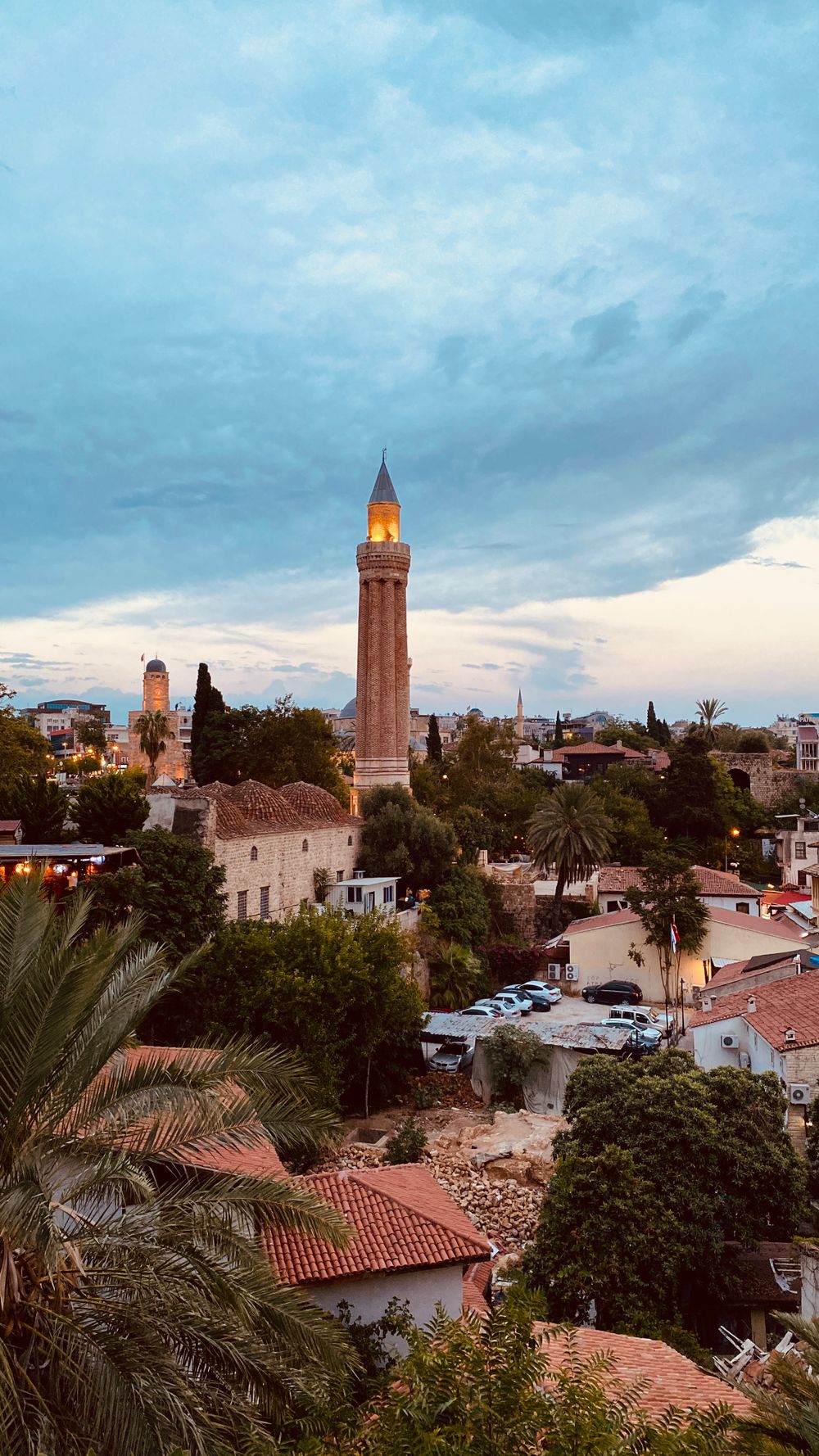
Kesik Minare
Known as the broken minaret, it stands over a building that has served as a Roman temple, a Byzantine church and a mosque in turn, and whose roof burned in 1896. Restored with a new roof and a new cone on the minaret, it reopened for prayer in March 2021. It sits on Hesapçı Street in the middle of Kaleiçi, and visits keep clear of prayer times.
-
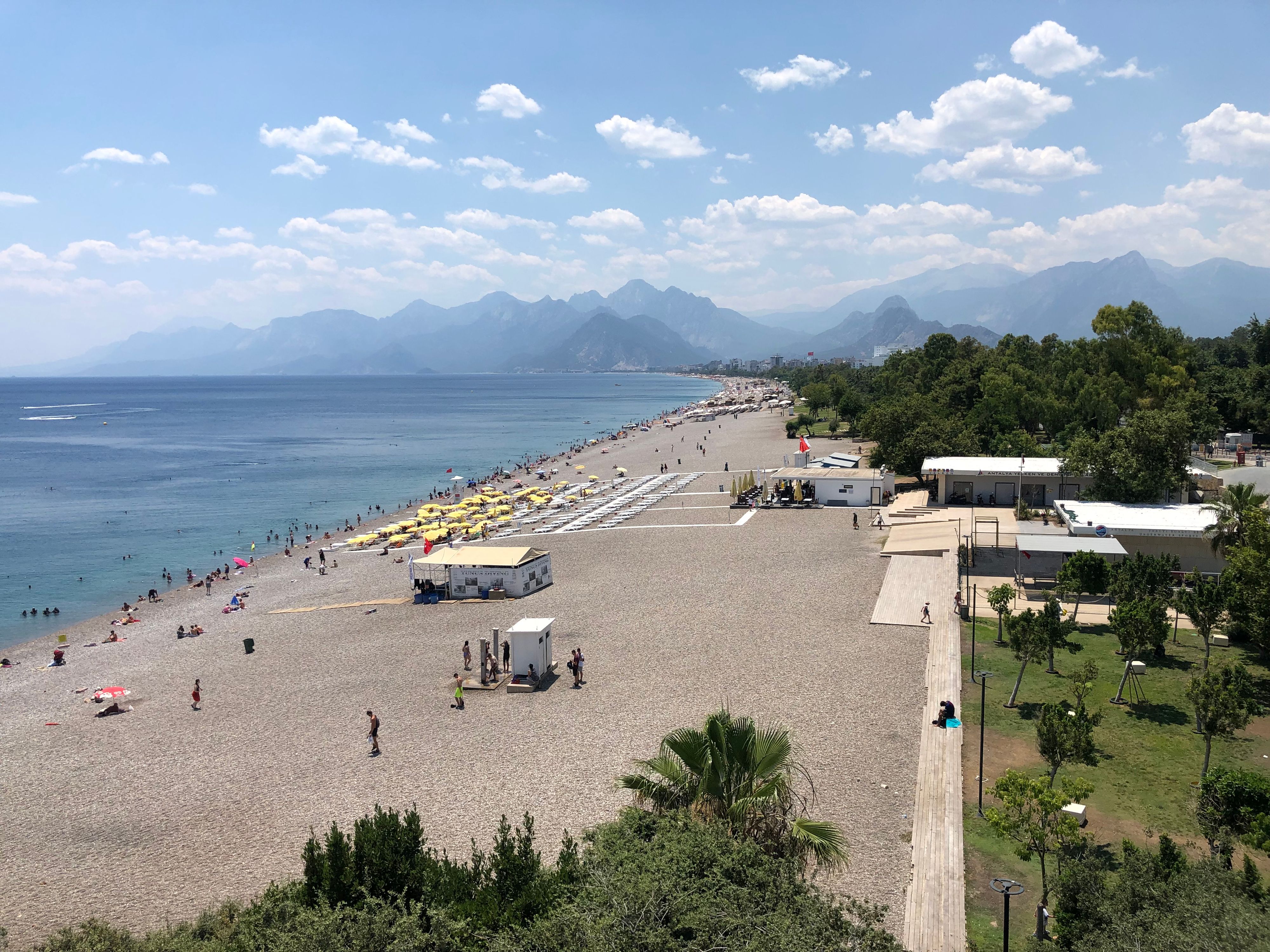
Konyaaltı Beach
A long shingle beach west of the centre with the Beydağları rising straight out of the sea at the end of it. It is the city's own beach, a short bus ride from the old town, with the Taurus behind it doing the work of the view, and the obvious place for a swim between a morning in Kaleiçi and an afternoon at the ruins.
-
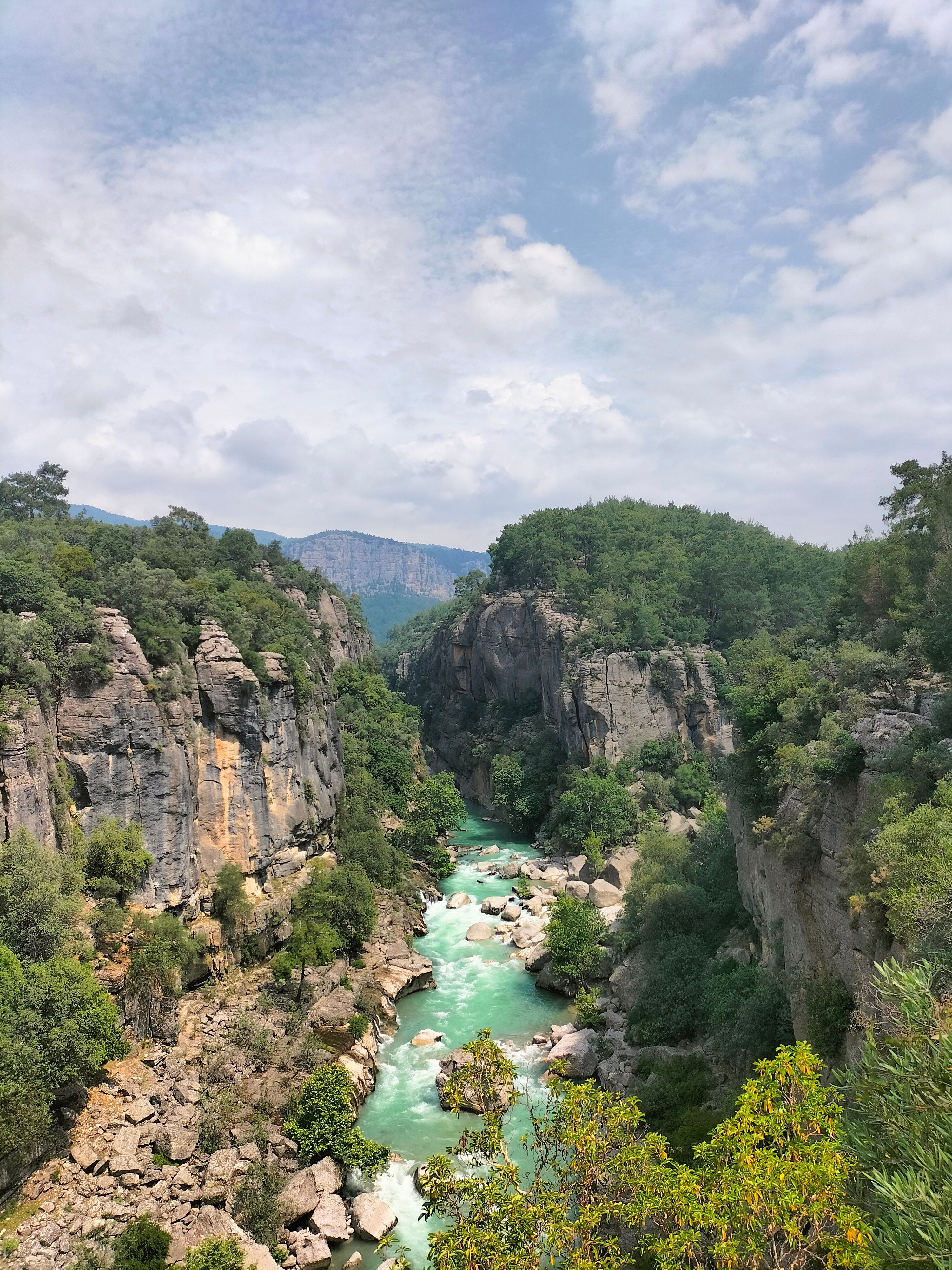
Köprülü Canyon National Park
A limestone gorge on the Köprü River, 92 kilometres northeast of Antalya, with walls up to a hundred metres high running for fourteen kilometres. The Roman Eurymedon Bridge still carries a road across it, the ruins of Selge lie inside the park, and the river is the busiest whitewater rafting run in the country, with a season from April to October.
-
Kurşunlu Waterfall
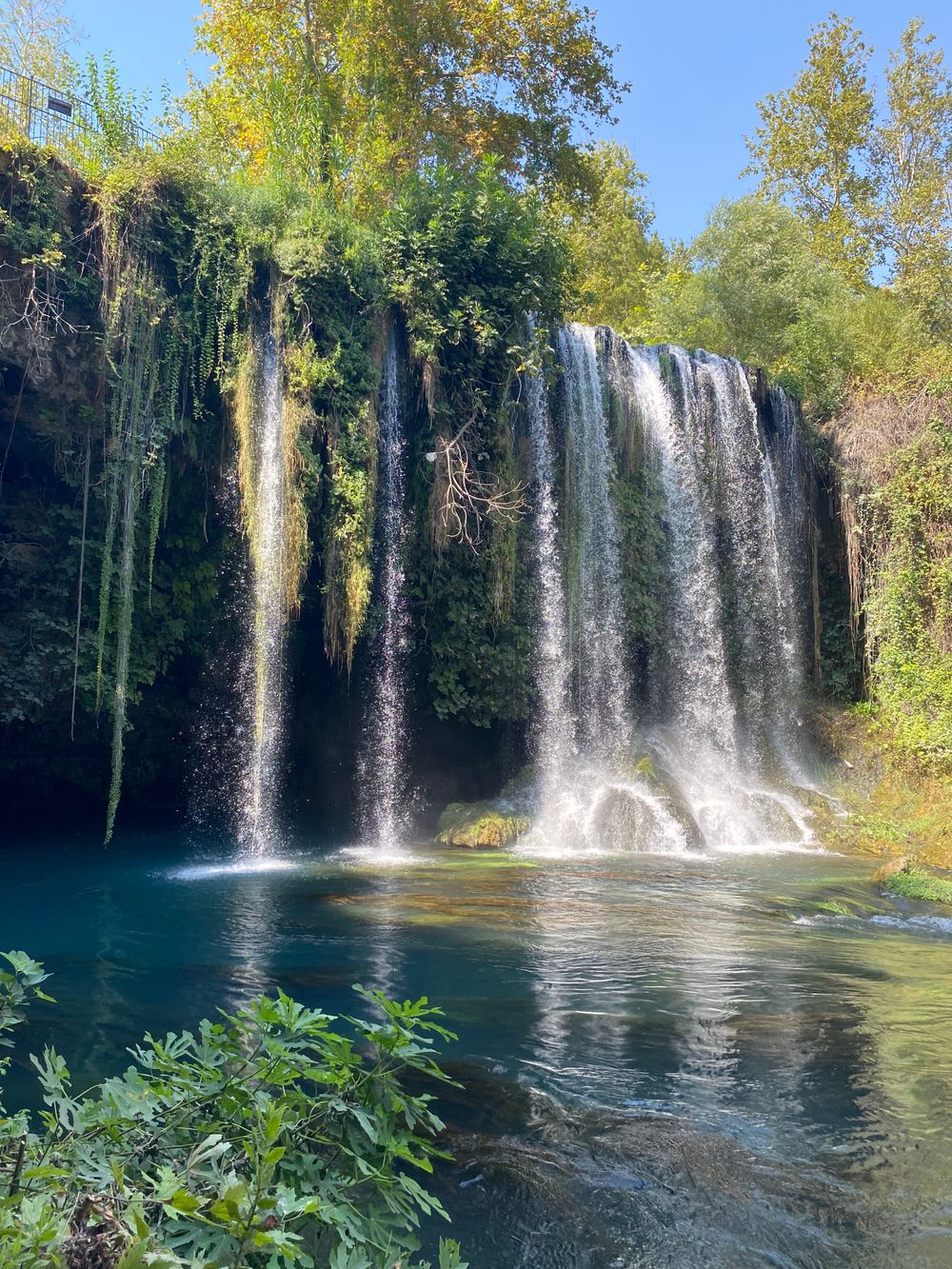
On a tributary of the Aksu, about nineteen kilometres east of the city, the fall sits in a pine-wooded nature park with a path looping down past its pools. It is a picnic ground for Antalya as much as a sight, and in high summer the flow can drop to a trickle. Winter and spring show it at its best, and it needs a car or a tour.
-
Lara Beach
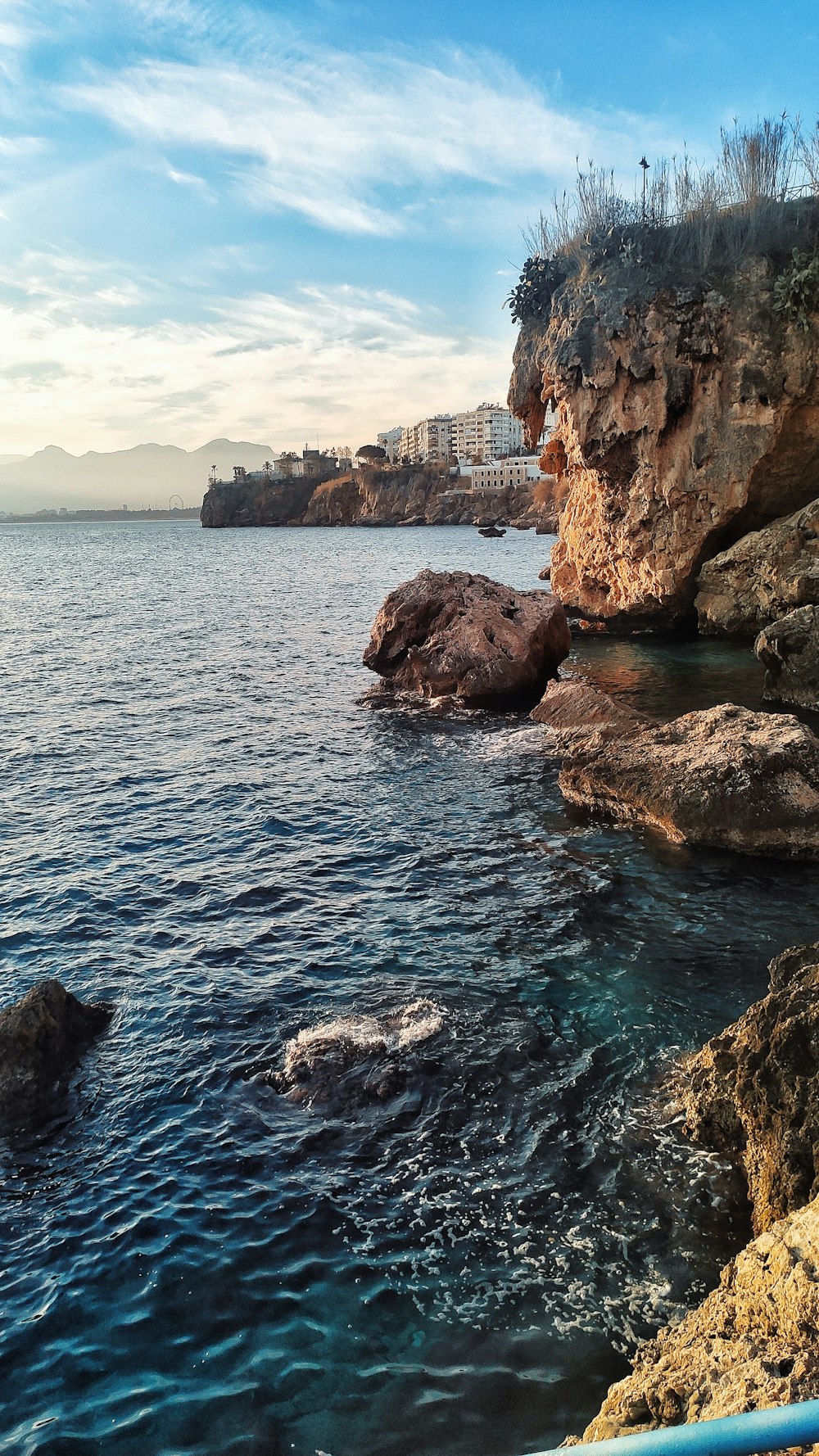
Where Konyaaltı is pebble, this long stretch east of the city is sand, darker and finer, and the water shelves gently enough for small children. The resort hotels begin here and carry on for kilometres toward Kundu, with public stretches in between. City buses run out from the centre in about forty minutes, and it lies on the airport side of the city.
-
Perge
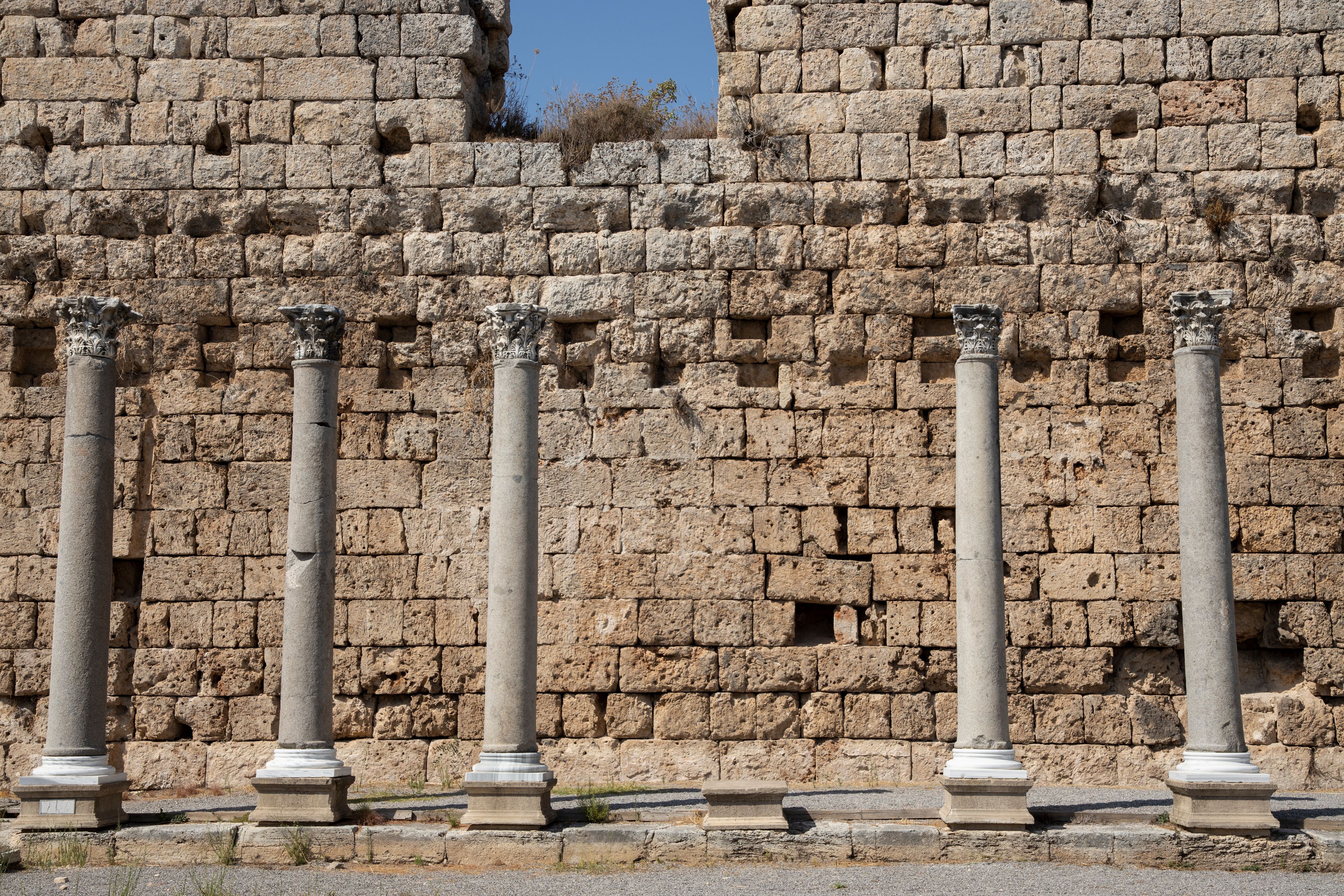
A Roman city fifteen kilometres east, once capital of the province of Pamphylia Secunda and birthplace of the mathematician Apollonius. Its main street carried a water channel of cascading pools down the middle, and excavations since 1946 have opened a theatre, a stadium, a temple of Artemis and baths. Saint Paul preached here on his way back from Pisidia.
-
Suna and İnan Kıraç Kaleiçi Museum
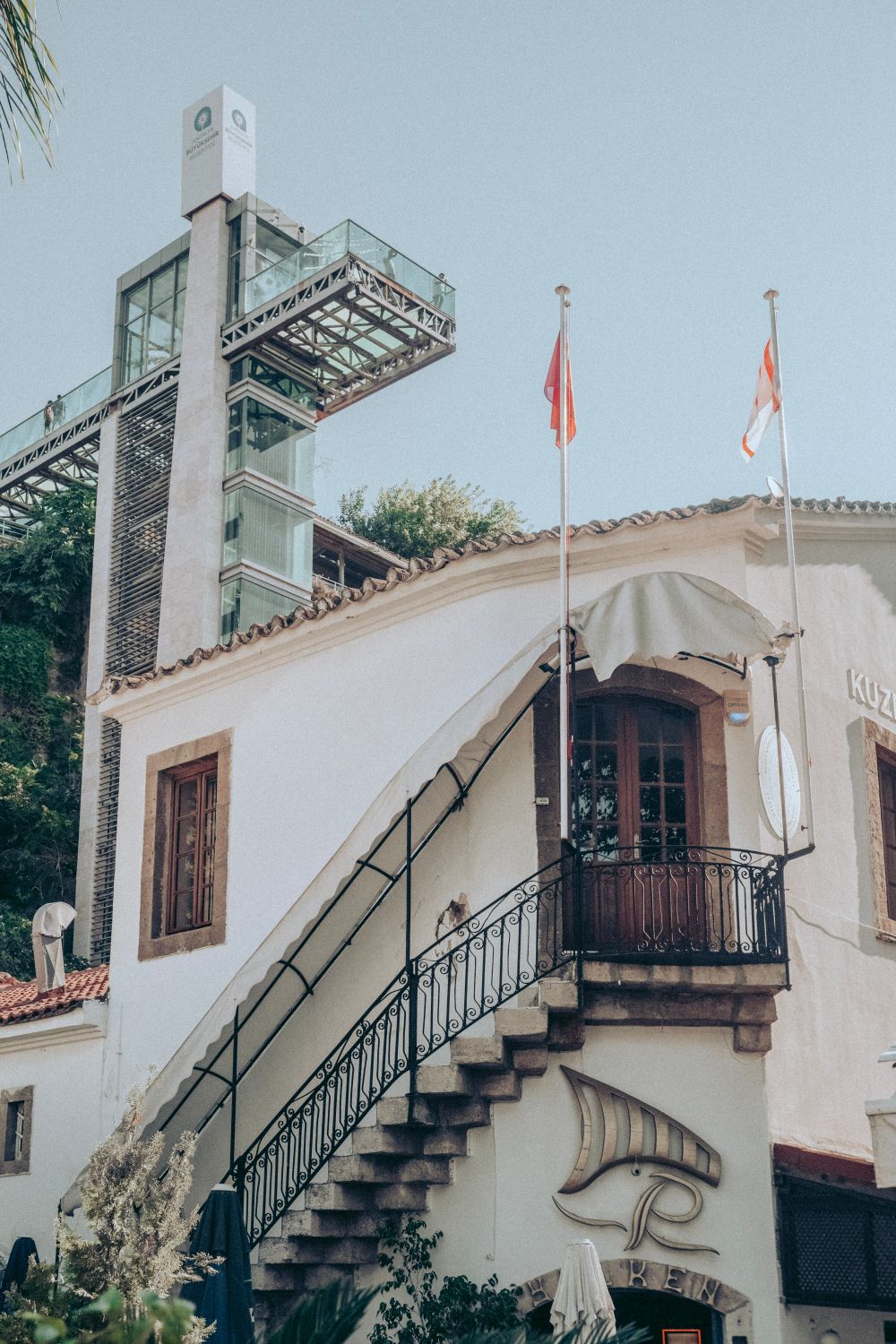
Two buildings a few steps apart inside the walls: a restored nineteenth-century Antalya house, and the former Greek church of Aya Yorgi beside it, which now holds a collection of Çanakkale ceramics. With the Antalya Museum closed for rebuilding, it is the museum the old town has. Opening days change with the season, so check them before walking over.
-
Termessos
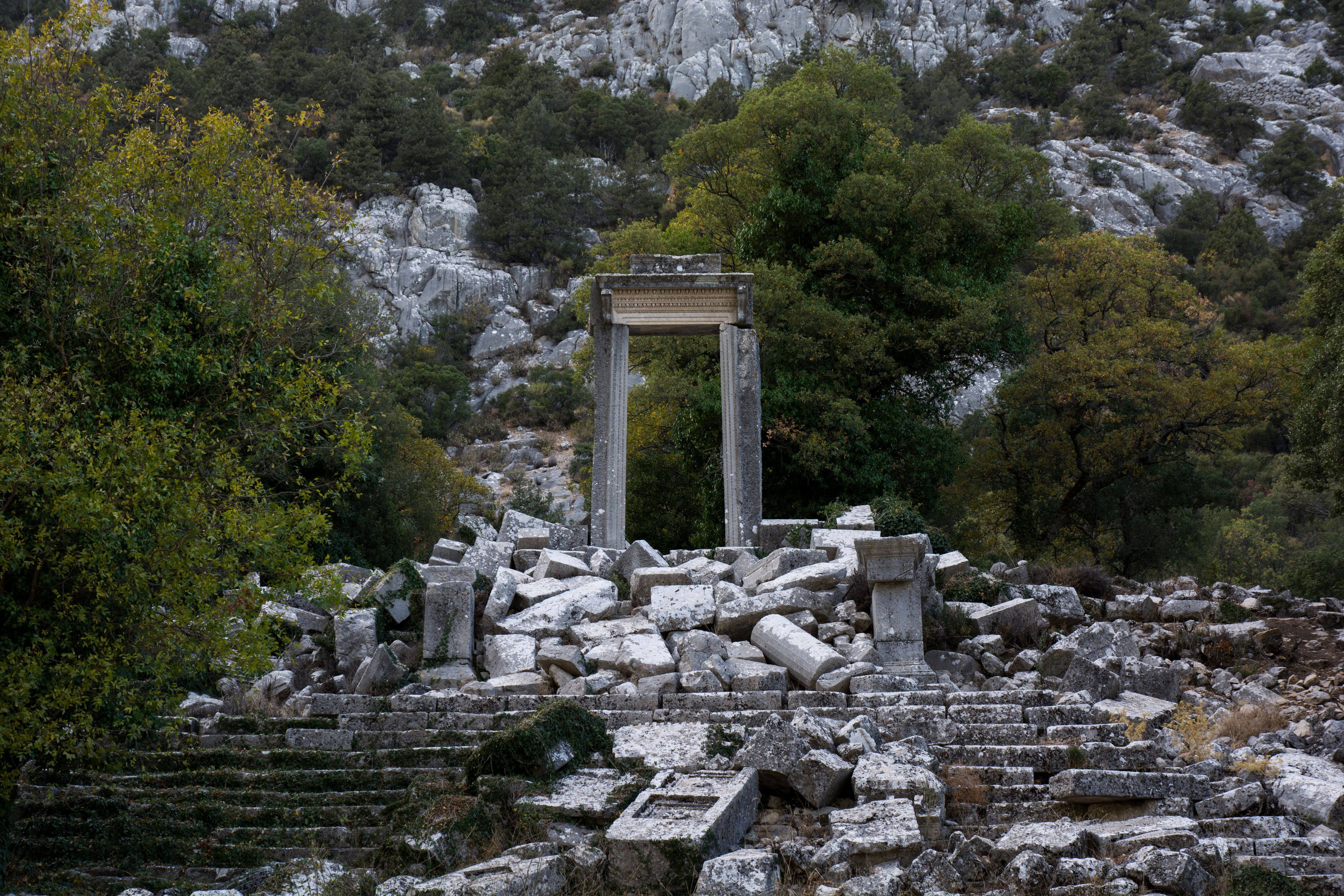
A Pisidian city on a mountain saddle at a thousand metres that Alexander declined to besiege, left unexcavated among the pines with its theatre on a cliff edge. The climb from the car park is steep and takes about half an hour.
-
Yivli Minaret Mosque
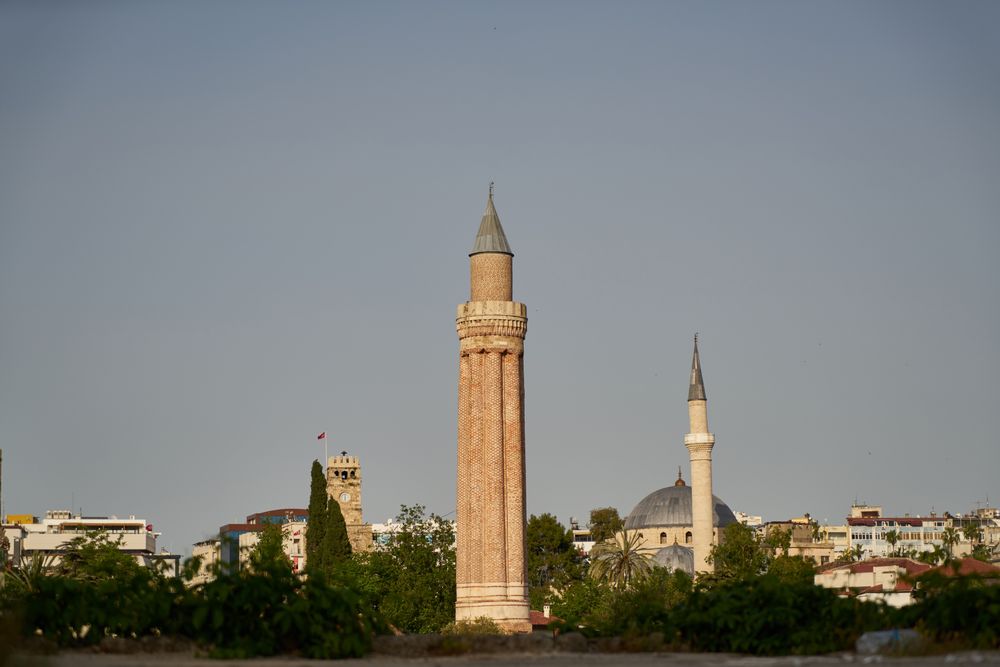
A fluted red-brick minaret thirty-eight metres high, traced with blue tile and raised under the Seljuk sultan Alaaddin Keykubad the First, that serves as the emblem of the city. The mosque below it was first built around 1230 on a ruined Byzantine church and rebuilt in 1373 with six domes on reused ancient columns. It stands near Kalekapısı Square.
-
Kaleiçi
The walled quarter above the old harbour, a grid of Ottoman timber houses, Roman and Seljuk walls and stepped lanes now largely given over to hotels and workshops. Hadrian's Gate is the main way in on foot, the fluted Yivli Minaret rises near Kalekapısı Square, and Hıdırlık Tower holds the seaward corner by Karaalioğlu Park. It is at its best early, before the coaches arrive.
-
Karaalioğlu Park
Laid out along the clifftop just south of the old town, with Hıdırlık Tower at its entrance and the city theatre among its lawns. The terraces look straight across the gulf to the Beydağları, which is why the benches fill in the hour before sunset. It is flat and free, and the easiest walk in the centre in the evening.
-
Karain Cave
High on a limestone slope twenty-seven kilometres north-west of the city, the cave was lived in from the Stone Age and has been excavated on and off since 1946. A path climbs to three chambers joined by narrow passages among the formations, and a small museum beside the entrance holds some of the finds. It combines with Termessos in a day by car.
-
Tuvana Hotel
Six restored Ottoman houses joined around courtyards and a pool in the middle of Kaleiçi, a few minutes' walk from Hadrian's Gate, with the painted ceilings kept in the rooms. It puts a stay inside the walled quarter itself, close enough to walk down to the old harbour in the morning and out to Hıdırlık Tower for the sunset.