 Submit a photo
Ninety seconds on Mustafapaşa
One of the most striking church portals in Cappadocia stands at the centre of Mustafapaşa, and the old stone houses on the lanes around it have carved doorways, windows and balconies.
Doorframes, lintels, balconies and window surrounds on the old houses carry floral and geometric carving. Most of the mansions are two-storey stone blocks with barrel roofs, mixing Ottoman and Greek features. Many of the town's residents were merchants who grew rich shipping goods between Istanbul, Russia and Europe.
On the Church of Saints Constantine and Helena, look first at the entrance portal, ringed with plant and grape motifs in yellow and dark blue. An eight-line Greek inscription sits over the door, and a six-winged seraph stands beside the central window.
The vaulted hall inside is not in good condition, though it was once brilliantly decorated. Some columns keep traces of blue and red paint, and an icon of the Holy Trinity hangs in the apse.
The Old Greek House is a mansion whose ground floor is now a restaurant. Its balcony rests on eight columns under a colourfully painted ceiling, and its central hall, the finest room in the house, has an 1887 wall painting of a man and woman on a swing.
Look for two gates as well. The Seraphim Mansion gate has yellow lion and star reliefs and a Greek inscription on a marble slab above the arch. The Mehmet Şakir Paşa Medresesi, now a Cappadocia University building, is the grandest Ottoman building in the village, and local stone carvers made its crown gate.
The Greek families left in the 1924 population exchange, and the church now functions as a museum.
Start at the church in the centre of the village. Ten minutes or so is enough inside, including the stairs up to the loft above the entrance.
From the church, walk out into the side lanes and look up at the doorways and balconies as you go. Make for the Old Greek House, with the Seraphim Mansion gate right next to it.
A path near the Old Greek House climbs a hill above the village, with views over the roofs and the countryside beyond.
Monastery Valley is a separate stop. Drive or take a taxi along the road running south of the village to reach St Nicholas Monastery, with three churches and a group of fairy chimneys around it.
Wear shoes with grip. Admire the carved houses from the public streets unless you are clearly invited in.
If you add the Gomeda-Üzengi Valley, which runs beside the village, treat it as a separate hike rather than part of the stroll through the lanes. Carry water and download an offline map before you set off.
Around Ürgüp
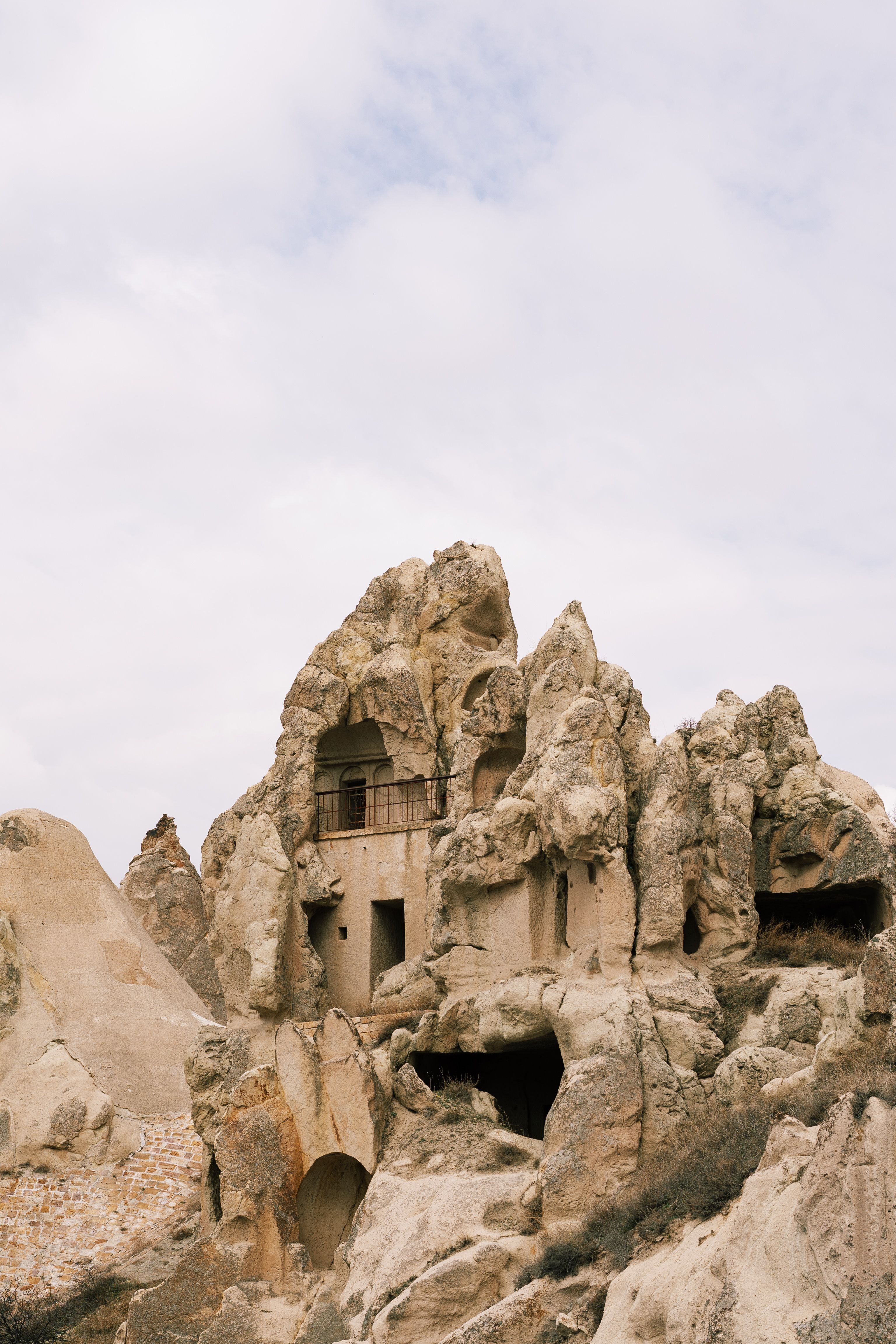
A cluster of rock-cut monastery churches whose Bible scenes, painted between the tenth and twelfth centuries, are still bright. The Dark…
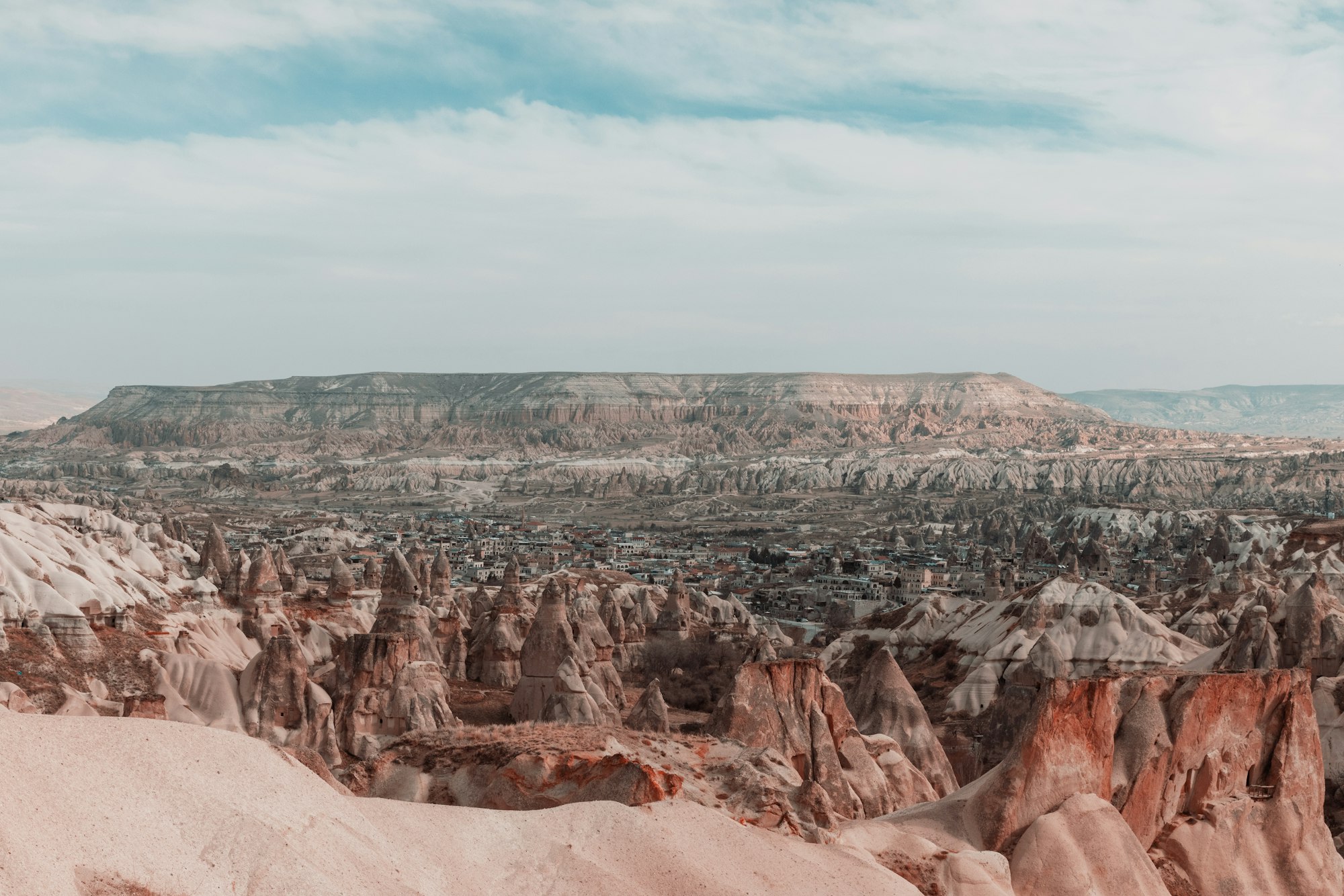
Tuff cones and pillars around Göreme, cut with painted Byzantine rock churches and inscribed as a World Heritage Site in 1985. The valleys…
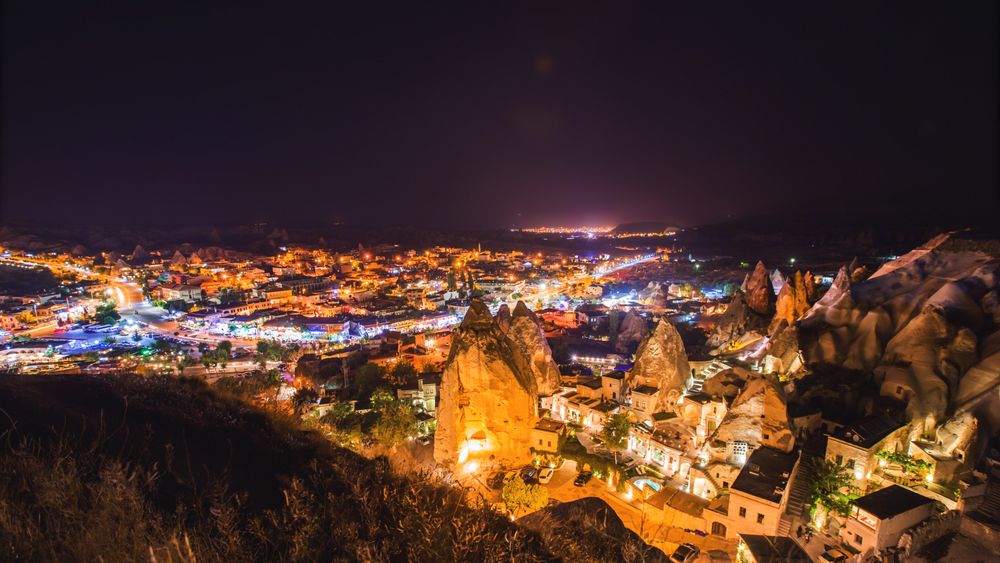
Balloons launch at dawn from the fields on the edge of this village at the centre of Cappadocia, and most of the region's cave hotels are…
Last updated