Things to do
13-
Museum der Moderne
A white block on top of the Mönchsberg, reached by the rock lift, showing twentieth-century and contemporary work in changing exhibitions with strong photography holdings. The building drew objections for years and the terrace café won the argument. A second site sits in the Rupertinum down in the old town on one ticket.
-
Salzburg Museum
The town's own history, in the Neue Residenz on Mozartplatz: Celtic and Roman finds from the salt trade, the archbishops' cabinet of curiosities and a floor on how the place invented itself as a destination in the nineteenth century. The last of those is the most useful thing here for understanding what is outside.
-
Festung Hohensalzburg
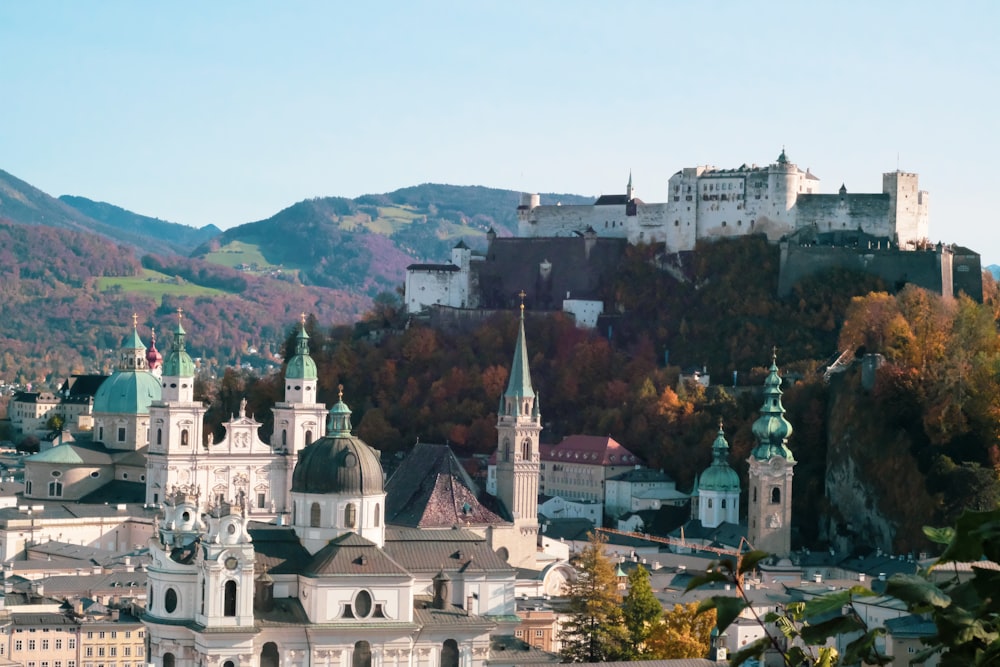
Begun in 1077 and enlarged for six centuries into one of the largest intact castles in Europe, never taken by force in all that time. A funicular climbs from the cathedral quarter in about a minute; the footpath takes twenty. Inside are the archbishop's gilded state rooms, a marionette collection and the terrace that carries the whole valley.
-
Getreidegasse
A narrow shopping street of tall guild houses, each hung with a wrought-iron sign because most customers could not read when the custom began, and the chains still do it, McDonald's included. Covered passages run through to the parallel street. It is the busiest thoroughfare in the old town and empties by early evening.
-
Hagenauerhaus
The yellow house on the Getreidegasse where Mozart was born in 1756 and where the family rented the third floor for twenty-six years. His childhood violin, the clavichord and the family letters are here. A second museum in the family's later apartment across the river covers the adult years, and the two are ticketed together.
-
Kapuzinerberg
The wooded hill on the right bank, steeper and far quieter than the Mönchsberg opposite, climbed by a stepped lane past stations of the cross to a Capuchin friary at the top. Stefan Zweig lived on its slope until 1934. Chamois are kept in an enclosure near the summit and the town view is the better of the two.
-
Mönchsberg
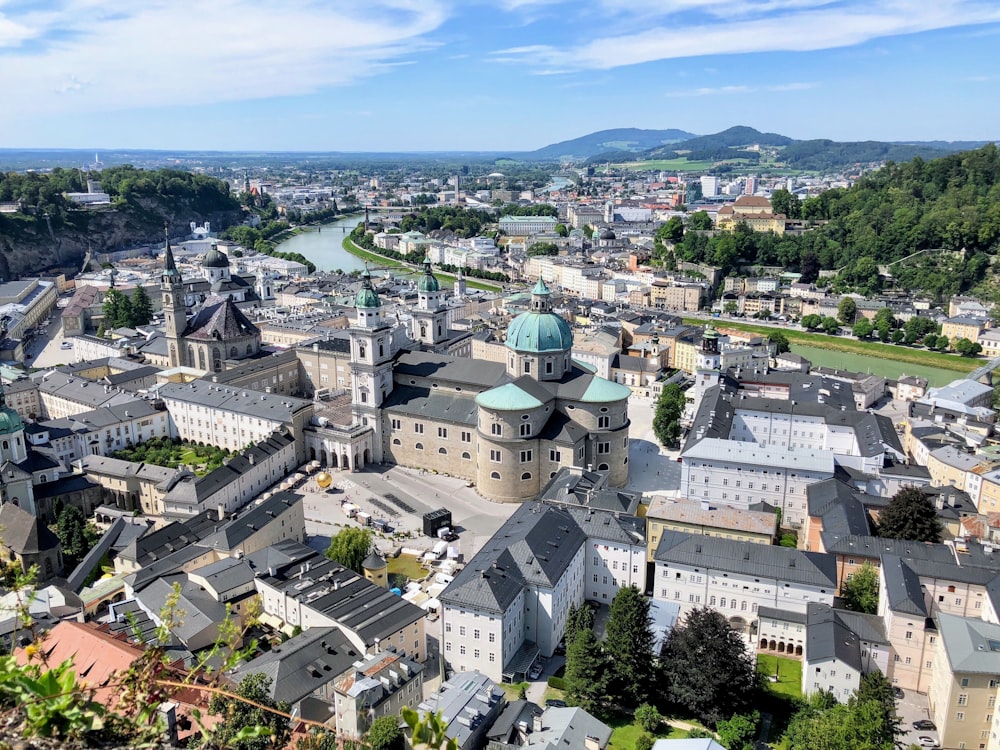
The wooded cliff along the western edge of the old town, walkable end to end in about forty minutes on a path that runs past the fortress and out to a former quarry. A lift inside the rock climbs from the Gstättengasse. Benches on the eastern lip look straight down onto the cathedral domes.
-
Salzbergwerk Hallein
The mine that paid for the city, worked from the Iron Age and now visited on a train into the mountain, two wooden slides between levels and a raft across an underground lake. Overalls are handed out at the entrance. Twenty minutes south by local train to Hallein, then a funicular up to the portal.
-
Salzburger Dom
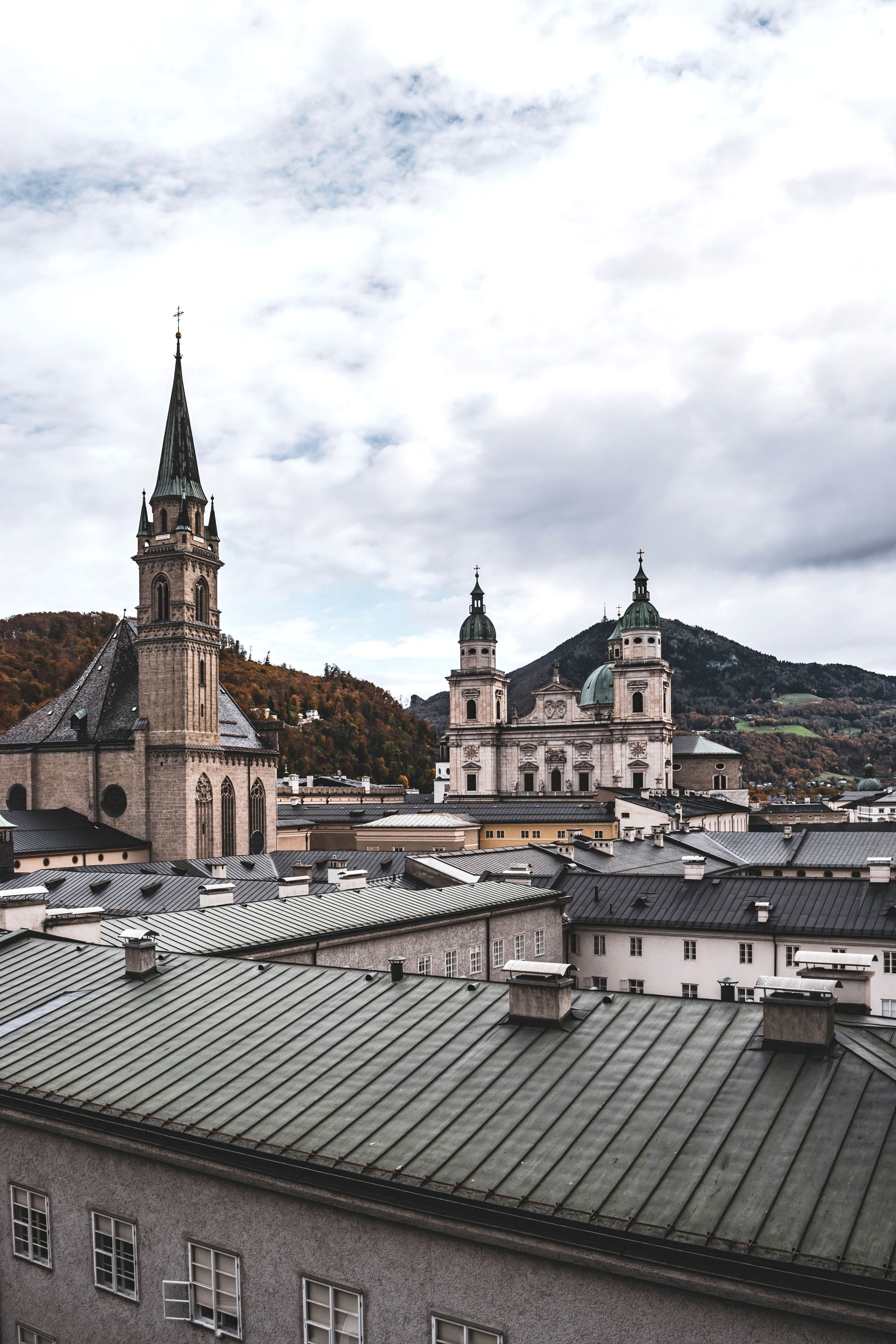
Early Italian baroque on a scale meant to answer Rome, consecrated in 1628 and holed by a bomb in 1944 that brought the dome down. Mozart was baptised at the font, which survives from the Romanesque church, and later worked here as organist. Three squares open off it, which is unusual and deliberate.
-
Salzburger Residenz
The archbishops' town palace on the main square, its state rooms hung with tapestries and painted ceilings and its top floor holding a gallery of Dutch and Austrian painting. A glockenspiel across the square plays three times a day. The audio guide takes the rooms in the order a petitioner would have crossed them.
-
Schloss Hellbrunn
A summer villa of 1615 with trick fountains built into the garden furniture, so the stone dining table soaks whoever sits at it and the guide operates the valves on purpose. Nothing about it has changed in four hundred years. Open spring to autumn only, because the pipes would freeze, and worth going wet.
-
Schloss Mirabell
An archbishop built this in 1606 for the woman he lived with and their fifteen children, which the church of the day preferred not to discuss. The marble hall is now the town's wedding room and a concert venue. Its formal garden, with the pegasus fountain and the dwarf statues, is free and open from dawn.
-
Stift Sankt Peter
Benedictines have held this ground since about 696, which makes it the oldest monastery in continuous use in the German-speaking world. Its cemetery runs up against the cliff with catacombs cut into the rock above it. The restaurant in the courtyard claims a foundation date of 803 and takes bookings like any other.