Things to do
19-
Doppelwendeltreppe Graz
Two stone spirals of 1499 that separate at each landing and rejoin at the next, cut so that two climbers on separate flights can see each other through the openings. In Graz it goes by the nickname Busserlstiege. It is inside the Burg and free, behind a door with no sign on it.
-
Schloss Eggenberg
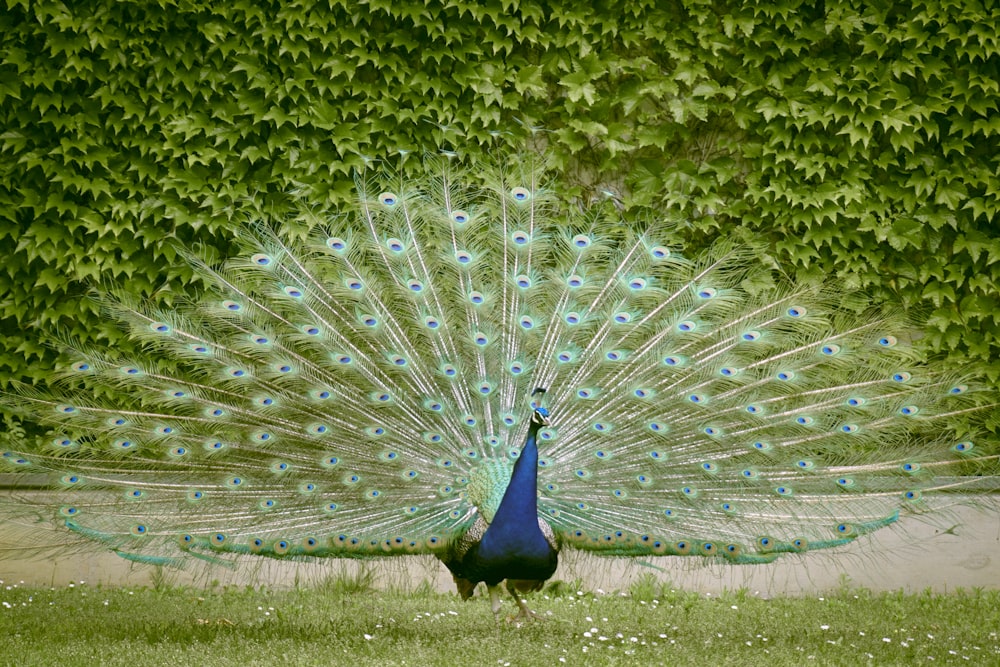
Built from 1625 as a calendar in stone, with three hundred and sixty-five windows and twenty-four state rooms on the top floor. The Planetary Room carries the whole scheme in paint. Peacocks roam the park outside, and a coin cabinet and an archaeological museum share the grounds.
-
Bärenschützklamm
Ladders carry the path up through this gorge in the Almenland Nature Park, above the village of Mixnitz. Take a regional train from Graz to Mixnitz, then allow about an hour and a half of walking. Wear shoes with a firm grip for the ladder sections.
-
Bauernmarkt Kaiser-Josef-Platz
Styrian farmers sell produce, bread and their own pumpkin seed oil from the stalls on Kaiser-Josef-Platz, at the edge of the Old Town, Monday to Saturday from 6 am to 1 pm. The market is closed on Sundays and public holidays. Not every stall takes cards, so bring cash.
-
Bauernmarkt Lendplatz
Across the river from the Old Town, Lendplatz holds the other of the city's two best-known farmers' markets, Monday to Saturday mornings until 1 pm. On Thursday afternoons, from 2 pm to 6 pm, the square turns to organic produce. The farmers' market is closed on Sundays and public holidays.
-
Glockenspielplatz
Time a stop here for 11 am, 3 pm or 6 pm, when the Glockenspiel in this small Old Town square gives its performance. It plays every day, and the square is a few minutes' walk from the Hauptplatz, so it slips easily into a morning on foot.
-
Grazer Burg
What survives of the imperial residence, now provincial government offices, entered freely through an archway off the cathedral square. Most of the complex is nineteenth-century rebuilding around two courtyards. Walk to the far corner for the Double Spiral Staircase, behind an unmarked door.
-
Grazer Dom
Late Gothic, built for Frederick III in the 1440s, its south wall carrying a faded fresco of 1480 that shows the three scourges of its day: plague, war and locusts. Two Italian ivory chests flank the choir. The mausoleum next door is entered separately.
-
Grazer Landhaus
A Lombard architect gave the province its parliament house in the 1550s, and the arcaded courtyard behind the plain street front is the finest Renaissance interior north of Italy. Concerts are held in it in summer. A bronze well cover of 1590 stands in the middle and the arms depot adjoins it.
-
Grazer Murinsel
Vito Acconci moored a steel half-shell in the middle of the river in 2003 for the city's year as European capital of culture, holding a café, a small amphitheatre and a children's slide, joined to both banks by footbridges. It was meant to be temporary. The current runs visibly under the glass.
-
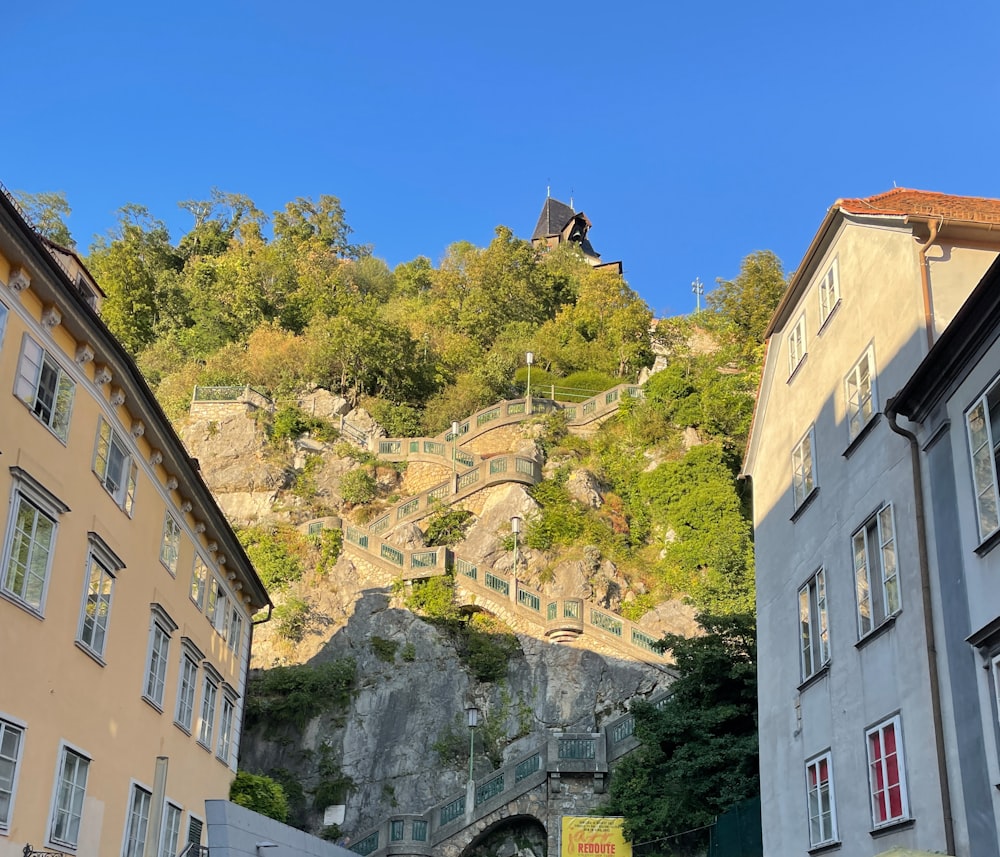
Grazer Schloßberg
A wooded dolomite hill in the middle of the city, fortified for six centuries and then largely demolished, leaving a park of bastion walls, a cistern and an open-air stage. Tunnels cut as wartime shelters run through the base, and one of them now carries the lift.
-
Grazer Uhrturm
The clock tower on the Schlossberg, kept when Napoleon's troops demolished the rest of the fortress in 1809 because the townspeople bought it back. Its hands are reversed, the long one telling hours, because that was all a distant eye could read. Reached by a lift inside the rock, a funicular or two hundred and sixty steps.
-
Hauptplatz
The market square since the twelfth century, triangular because three roads met here, with a painted seventeenth-century house on the north side and a fountain to Archduke Johann in the middle. Trams cross it constantly. Sausage stands at the foot of the Sporgasse are an institution and the queue moves fast.
-
Kunsthaus Graz
A bulbous blue skin of acrylic panels grafted onto a cast-iron warehouse in 2003, nicknamed the friendly alien, with lamps behind the surface that turn the whole thing into a low-resolution screen at night. There is no permanent collection; it takes contemporary exhibitions. Daylight comes in only through the nozzle-shaped skylights on the roof.
-
Landeszeughaus
Four floors of an arsenal left as it was stocked in the seventeenth century: about thirty-two thousand helmets, breastplates, muskets and halberds on wooden racks, enough to equip an army of five thousand. Nothing is behind glass. It opens Tuesday to Sunday from April to October; from November to early January, entry is mostly by guided tour, with weekend opening from 11 am to 3 pm.
-
Lipizzanergestüt Piber
Lipizzaner horses are bred at this stud in the village of Piber, in West Styria. Regional trains run from Graz towards Köflach, and the stud pairs well with Köflach and Bärnbach, which lie close enough to walk between on the same day out.
-
Mausoleum Kaiser Ferdinands II.
Ferdinand II began his own tomb in 1614 and died before it was finished; Fischer von Erlach completed the interior as his first commission, in white and pink stucco under an oval dome. It opens from April to October, Tuesday to Sunday, and in winter tours are by arrangement with the Diocesan Museum.
-
Riegersburg
This castle stands on a volcanic rock in south-east Styria, with a Witches' Museum inside and bird of prey shows in the warmer months. Reach it from Graz by car, or by regional train and bus with the timetable checked first. Walk up for the views or ride the lift, and wear good shoes, as the grounds are uneven.
-
Schöckl
The 1,445 metre peak above Graz is the city's own mountain, and a bus from the centre reaches its base in about 30 minutes. In summer, hike to the top and ride the cable car back down, which leaves the afternoon free for the Old Town.