Things to do
17-
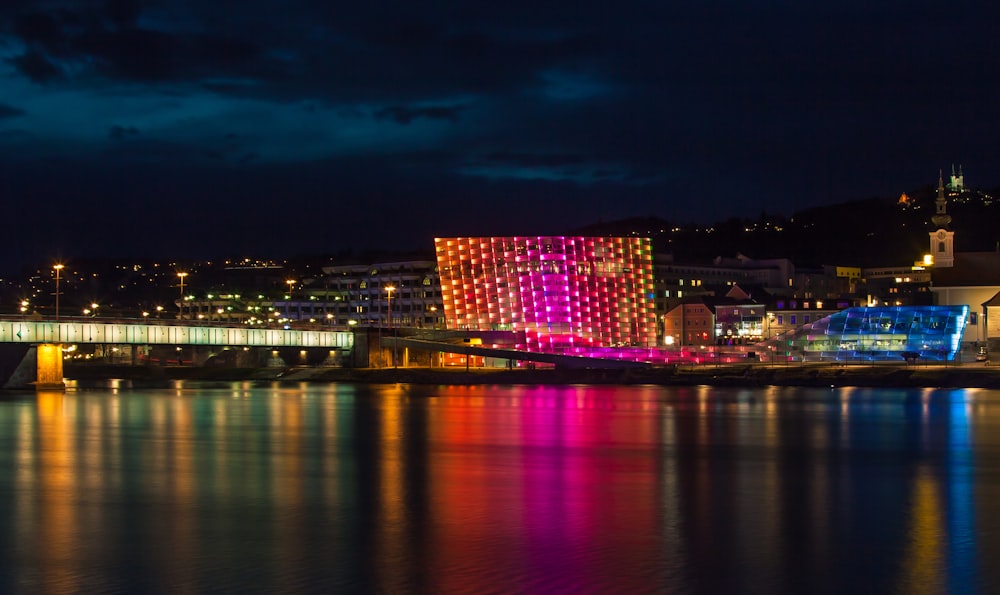
Ars Electronica Center
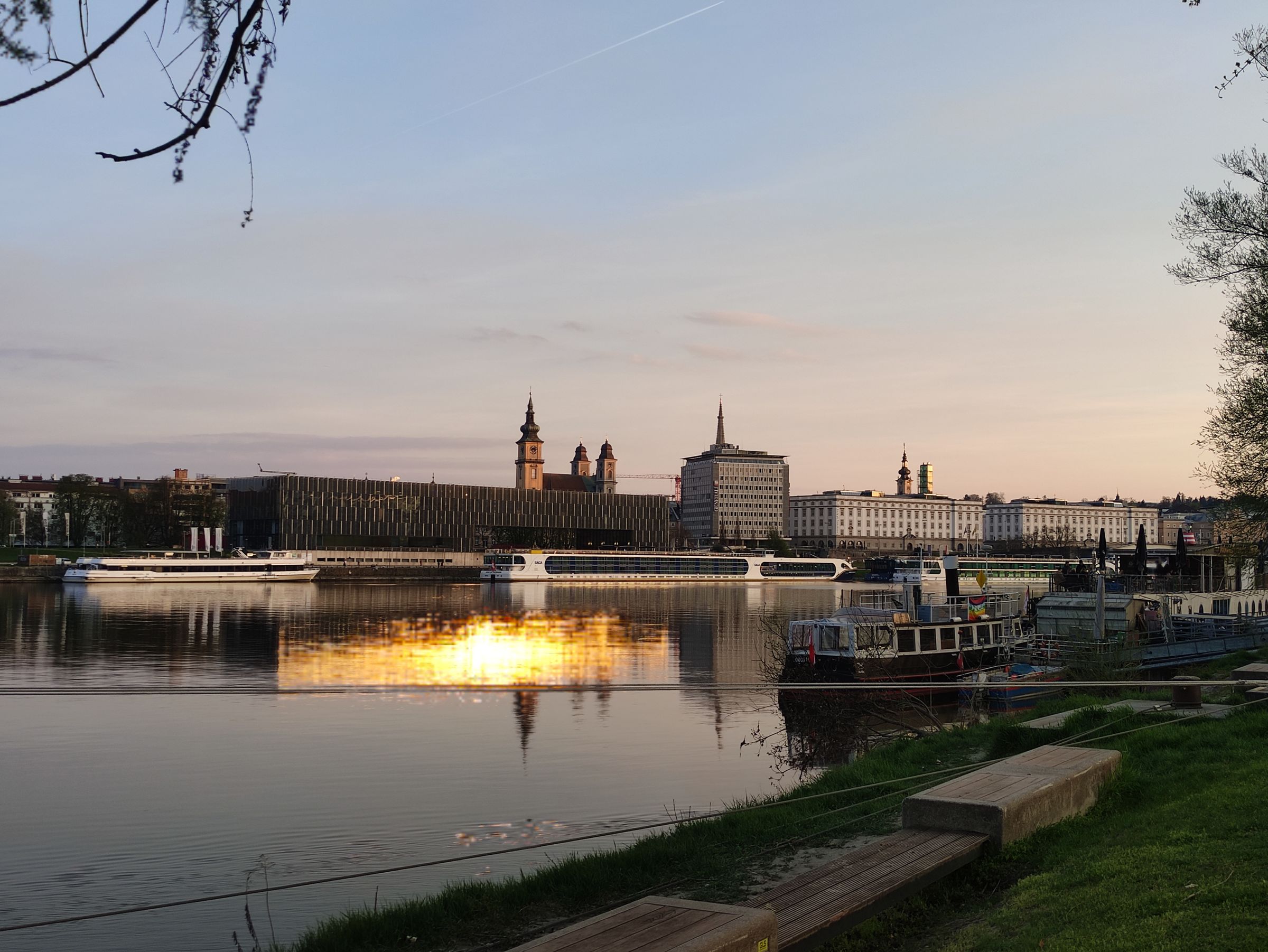
A glass block on the north bank whose skin changes colour through the evening, given over to what technology is doing next: robotics, genetics, machine learning and a room that projects data at wall scale in three dimensions. Most of it is handled and not merely looked at. The roof terrace faces the old town.
-
Lentos Kunstmuseum
Austrian and international modernism from Klimt and Schiele forward, on the south bank behind a skin that is lit blue and pink after dark. Part of the collection was assembled in the 1950s to replace what the Nazis had removed from public galleries, and the museum says so on the wall. The riverside café is open late.
-
Alter Dom
A Jesuit church of 1678, plain outside and dense with pink and grey stucco within, which served as the cathedral from 1785 to 1909. Anton Bruckner was organist here for twelve years, and the instrument he played still stands. Free, dark, and a minute from the main square.
-
Donaulände
Along the south bank of the Danube, between the Lentos and the Brucknerhaus, a strip of lawns and promenade runs beside the water, with deck chairs set out in summer. Sculptures stand along the path as an open-air trail. Come in the evening, when the Ars Electronica Center across the river is lit up.
-
Hauptplatz
Thirteenth-century in plan and among the largest enclosed squares in Europe, at thirteen thousand square metres, with pastel baroque fronts on all four sides and a white marble plague column of 1723 in the middle. Trams run across the corner. The old town lanes behind the western side are where the bars are.
-
KZ-Gedenkstätte Mauthausen
The memorial at the former Mauthausen concentration camp is a serious, difficult visit that fills most of a day. Year round, trains run to Mauthausen station, about four kilometres away, with a local bus on. From March to late October a seasonal direct bus, the 362, also leaves the Linz Hauptbahnhof bus terminal; in winter the memorial closes on Mondays.
-
Linzer Grottenbahn
Inside a fortress tower at the top of the Pöstlingberg, a small train shaped like a dragon runs through tunnels of fairy-tale tableaux. The ride opened in 1906, and the dwarf scenes were added later; it is unabashedly of its period and aimed at young children. It opens from 1 March to 1 November, and again on Advent Sundays.
-
Linzer Landhaus
In the old town, the Linzer Landhaus has a Renaissance arcaded courtyard with a planet fountain at its centre, a calm stop of a few minutes just off the busy shopping streets. Walk through it between Promenade and Klostergasse on a loop of the old town lanes.
-
Linzer Schloss
Frederick III's castle on the bluff over the river, rebuilt in 1600 and given a sheer south wing of glass and steel in 2009 after a fire left a gap. The provincial collections inside run from Bronze Age finds to Biedermeier furniture and weapons. The terrace gives the best line on the old roofs.
-
Mariä-Empfängnis-Dom
Stained glass windows showing scenes from the history of Linz light the largest church in Austria by capacity, which seats twenty thousand. It is neo-Gothic, finished in 1924 after sixty-two years of building. The crypt opens only in the late afternoon, so a morning visit misses it.
-
Mural Harbor
Graffiti and murals cover the walls of the Linz harbour, which is private land, so the only way in is a guided tour. There are two, a walk and a boat tour, and both end with a short graffiti crash course. Tours run only on listed dates, so book on the Mural Harbor website first.
-
Pöstlingberg
The wooded hill north of the Danube is reached by the Pöstlingbergbahn from Hauptplatz, and the climb on foot is steep. A terrace near the summit looks down the river and across to the Alps in clear weather. Restaurants sit beside the tram terminus, and the walk down through the woods takes about an hour.
-
Pöstlingbergbahn
An adhesion railway of 1898 climbing the hill on a gradient of one in ten without a rack, which was the steepest of its kind in the world when it opened and still ranks near the top. It was rebuilt in 2009 to run through from the main square. The ride takes about twenty minutes.
-
Stift St. Florian
The abbey at St. Florian, south of Linz, has three rooms to see: the Marmorsaal, the abbey library and the Altdorfer Gallery. Plan it as a day trip from the city, and give each of the three rooms its own time, with the library last.
-
Stift Wilhering
About ten minutes by car from downtown Linz, Stift Wilhering is an abbey whose church has a pink and white interior, with a self-service café on site. Weddings can close the church to visitors, so check before driving out on a weekend.
-
Tabakfabrik Linz
Shops, cafés and co-working spaces now fill the former tobacco factory of Linz, a large industrial complex turned over to new tenants. Give it an hour between sights: a coffee in one of the cafés, then a look round the shops and the converted factory buildings.
-
Wallfahrtsbasilika Pöstlingberg
The twin-towered pilgrimage church on the Pöstlingberg summit, dedicated to the Seven Sorrows of Mary, dates from 1748 and is the emblem on postcards of Linz. It is a working church, so step inside between services and keep to the back if a Mass is under way.