Globe Countries Cities Itineraries World's Best Hotels Events Login
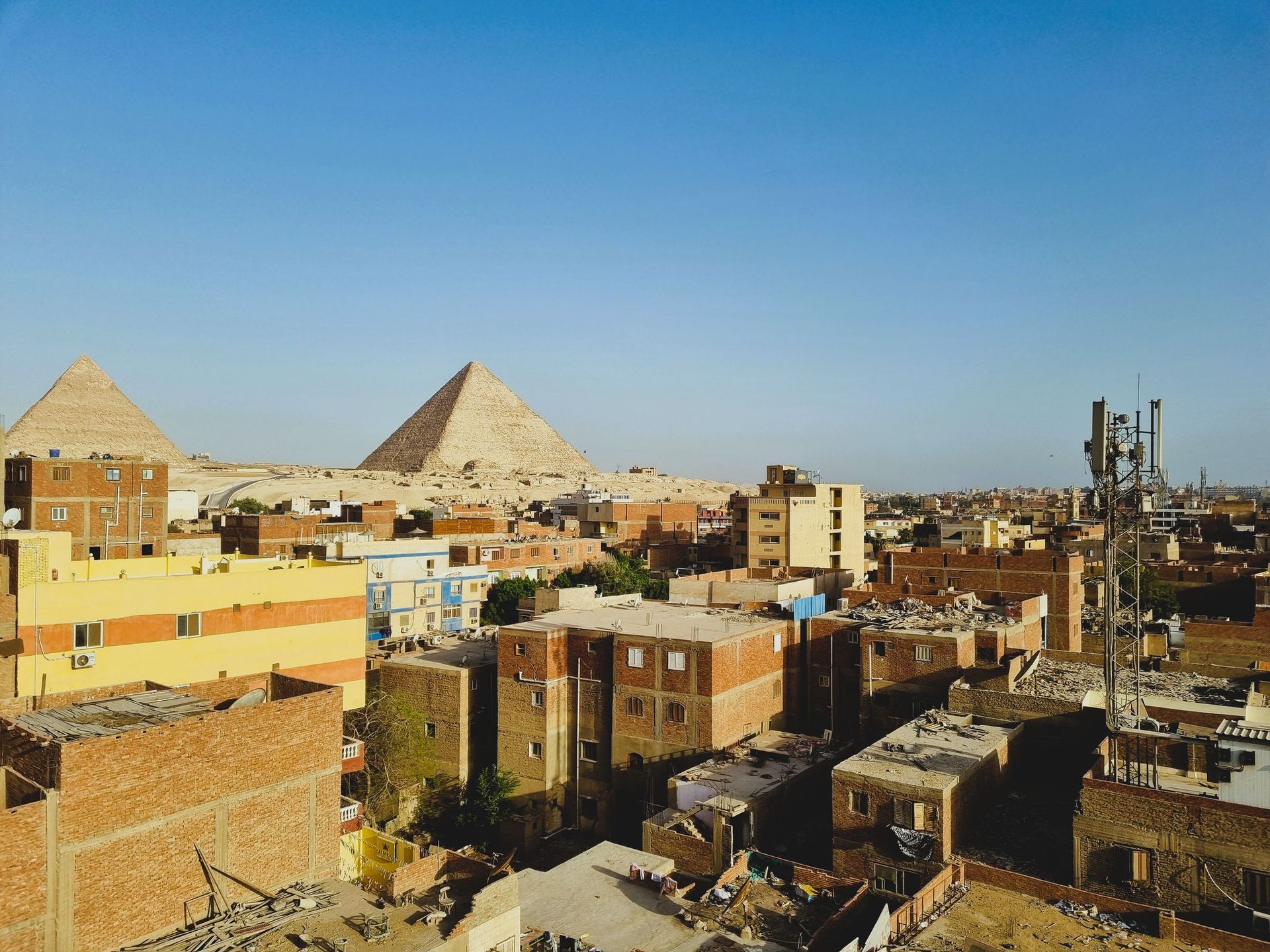
The Pyramids of Giza rising directly behind the dense rooftops of the city of Giza on the edge of Cairo
Egypt  ·  29.98°N 31.13°E

The City Runs Right Up to the Pyramids of Giza

Written by Meridian Dispatch  ·  3 July 2026  ·  Updated

Everyone pictures them alone in an ocean of sand. In truth the suburbs of Cairo come right up to the fence, and the last surviving Wonder of the ancient world rises at the end of an ordinary street, over the rooftops.


Everyone knows what the pyramids look like, and almost everyone is wrong about where they are. The popular image sets them alone in an ocean of sand, waiting at the far side of a crossing. The reality is a drive out through the suburbs of Giza, past traffic and apartment blocks and a fried-chicken franchise, and then the greatest structures of the ancient world rising at the end of an ordinary street, over the satellite dishes, a short walk from a bus stop. The famous desert edge in every photograph has, on the other side of the frame, a chain-link fence and a city pressed against it.

None of which makes them any smaller. The Great Pyramid of Giza is four and a half thousand years old, the only one of the Seven Wonders of the ancient world still standing, built of more than two million blocks, and for nearly four thousand years the tallest thing human beings had ever made. Photographs flatten it into a neat triangle and can do nothing with the size. Up at the base the blocks come up past head height, one after another after another, and the monument stops being something to look at and becomes a mountain someone built on purpose, with the visitor for an ant at the foot of it.
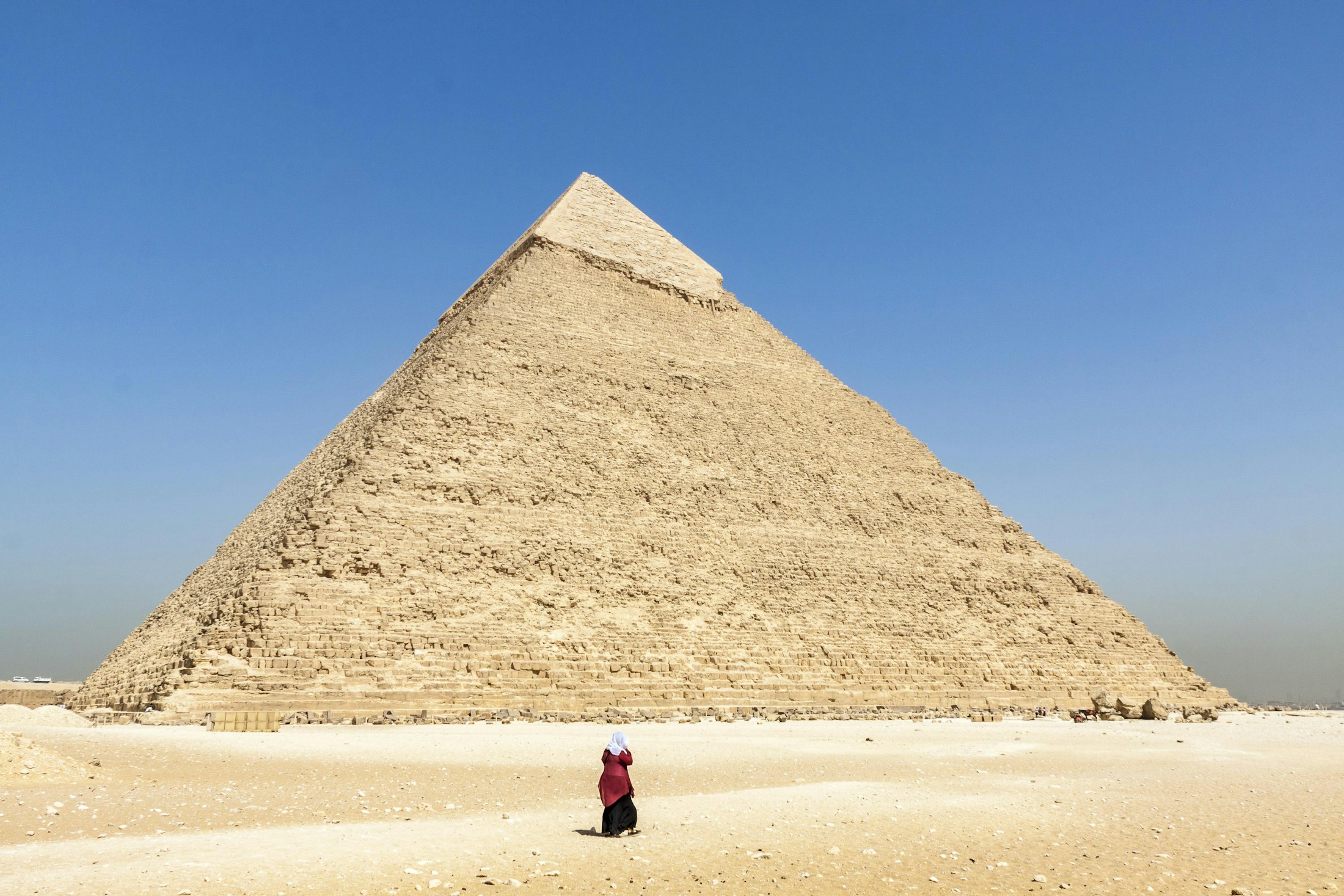
A single tiny figure standing at the base of the vast Pyramid of Khafre at Giza, giving a sense of its scale
A person at the base, for scalePhotograph by Jorge Segovia

There are three of them on the plateau, raised for three pharaohs of the Old Kingdom: Khufu’s, the Great one; Khafre’s, a little smaller but built higher up the slope and still wearing a cap of the smooth white casing that once sheathed them all; and Menkaure’s, the runt of the family. Out past the fence, far enough onto the sand, the three line up and the empty-desert photograph is there to be taken after all. It is real. It is just not the whole truth.
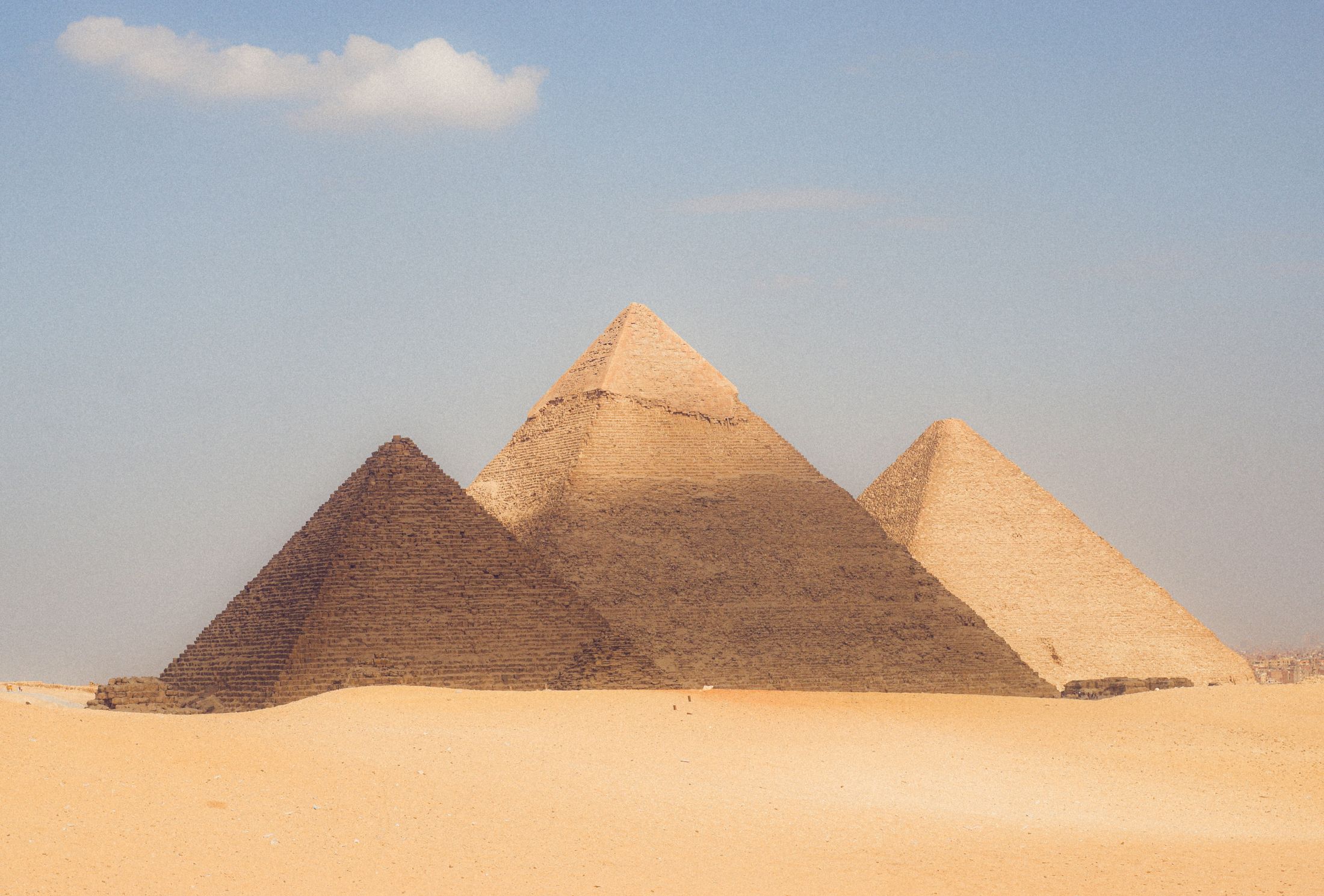
The three Pyramids of Giza lined up in golden desert sand under a clear sky
The postcard: the three of them, from out on the sandPhotograph by Hossam Ashoor

The visit itself is a contact sport. From the gate on there are men with camels and horses and a hundred ways to part a visitor from their money, the classic being the free ride that turns out not to be free once the rider is up and would like to come down. Tickets are worth buying only at the official gate. As of last year the plateau works differently: private cars are kept out, and electric shuttles run between the pyramids and the Sphinx, a small mercy. Opening time, at seven, comes before the heat and the crowds and the worst of the sellers. Going inside the Great Pyramid means one of only a hundred and fifty tickets sold a day, for a cramped climb and little else at the top of it.
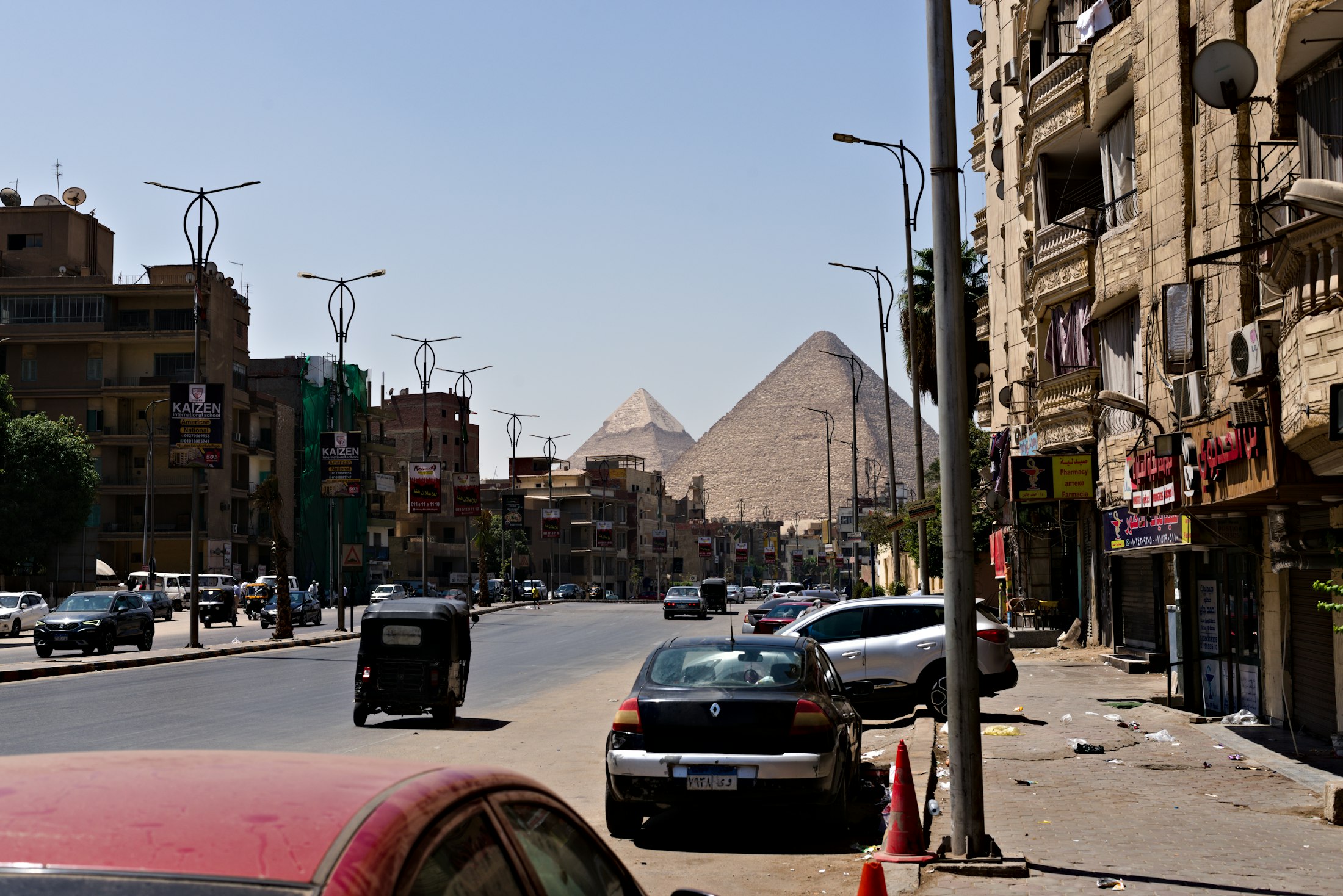
An ordinary Cairo street with cars and shops, the Pyramids of Giza visible over the rooftops at the end of it
The wonder at the end of an ordinary streetPhotograph by Kai Muro

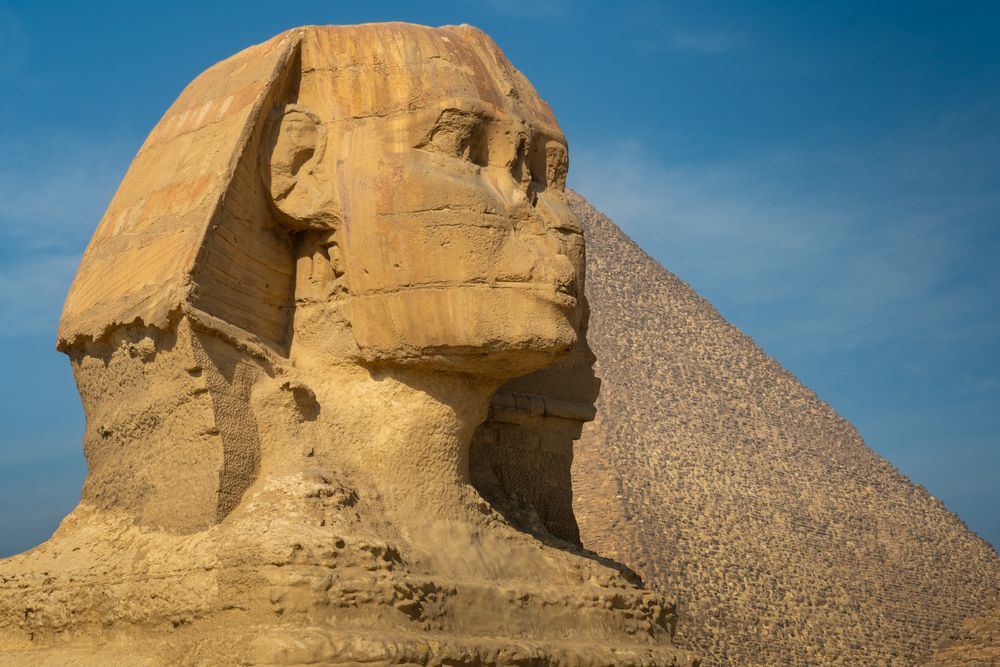
The Great Sphinx of Giza sits below the pyramids, smaller than the pictures suggest, its nose long gone and its face worn soft by four and a half thousand years of wind. Body of a lion, head of a king, an expression that has outlasted empires. It faces east into the sunrise, and these days more or less straight at a Pizza Hut. Both things are true at once, and holding them together in one frame is a large part of the visit.
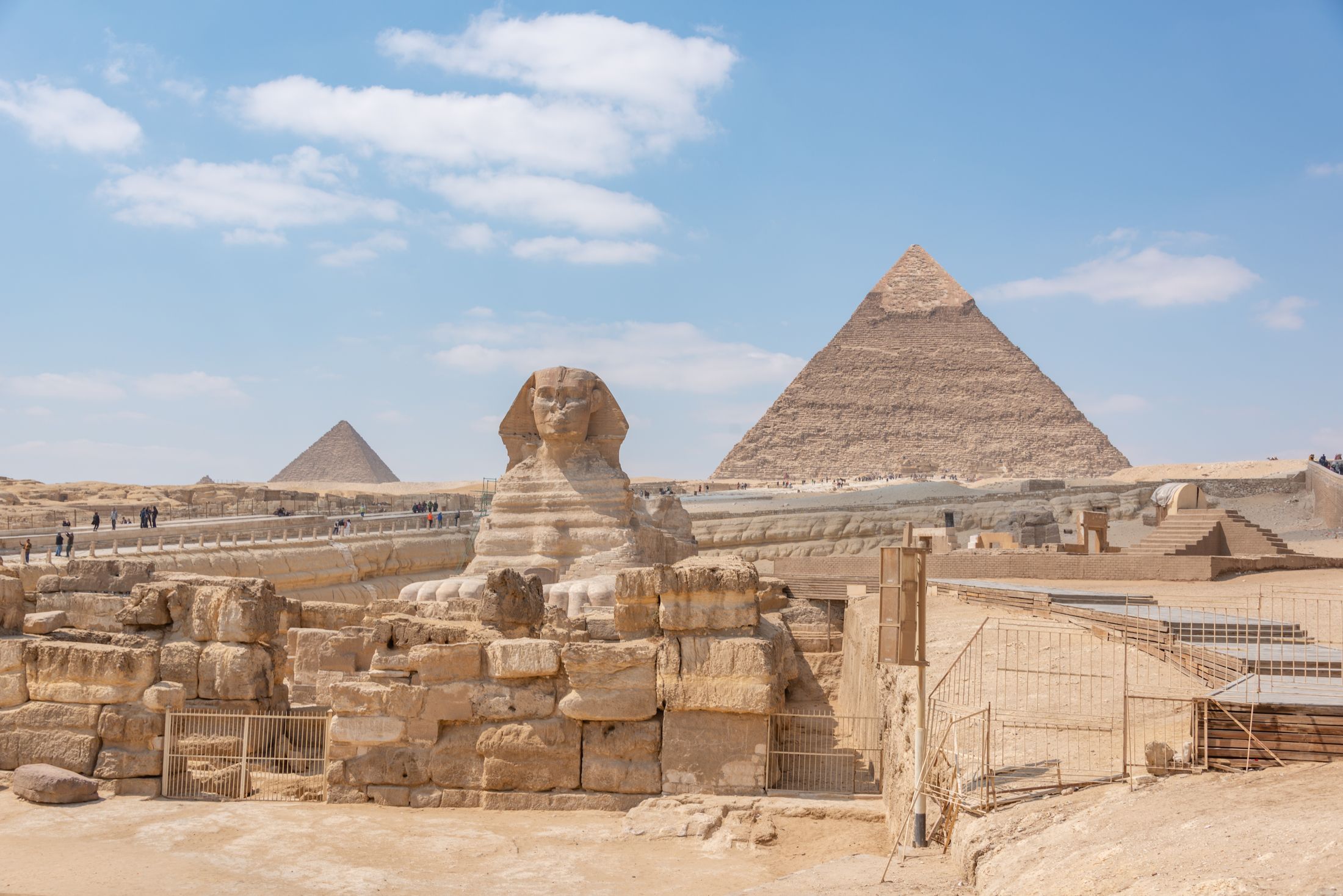
The Great Sphinx of Giza in profile with the Pyramid of Khafre rising behind it
The Sphinx, noseless, staring eastPhotograph by Diego F. Parra

It stares east into the sunrise, and, these days, more or less straight at a Pizza Hut.

The city does not shrink the pyramids. If anything it makes them stranger: a Wonder of the ancient world hemmed in by traffic and phone masts and families who have grown up with it at the end of their street, still standing, still the largest thing for miles, entirely unbothered. Come at dawn, or stay for the sound-and-light show after dark, take the hustle in stride, and walk right up to the base for the full measure of the scale. The pyramids never needed the desert. They have outlasted everything else, including the idea that they were ever alone.
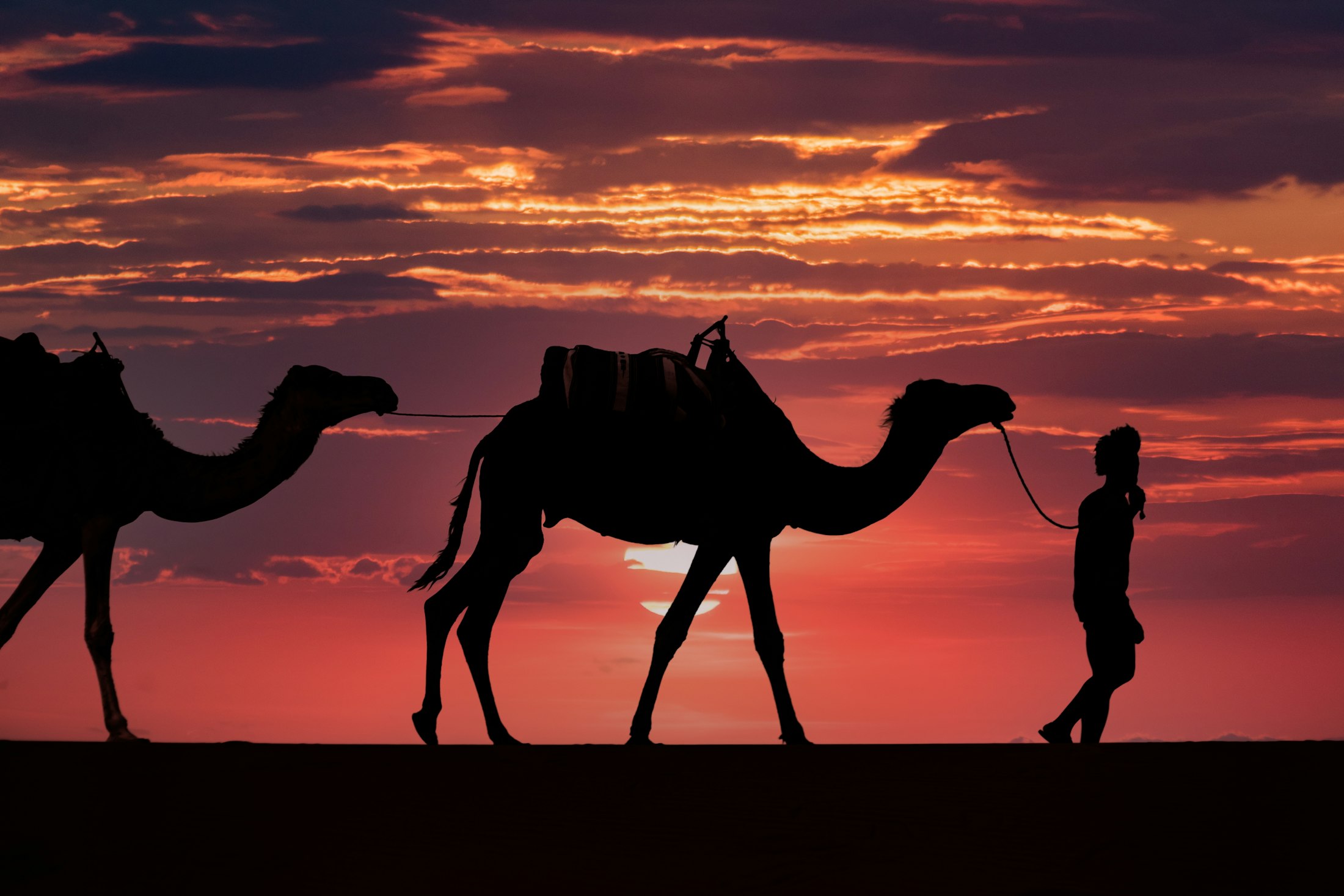
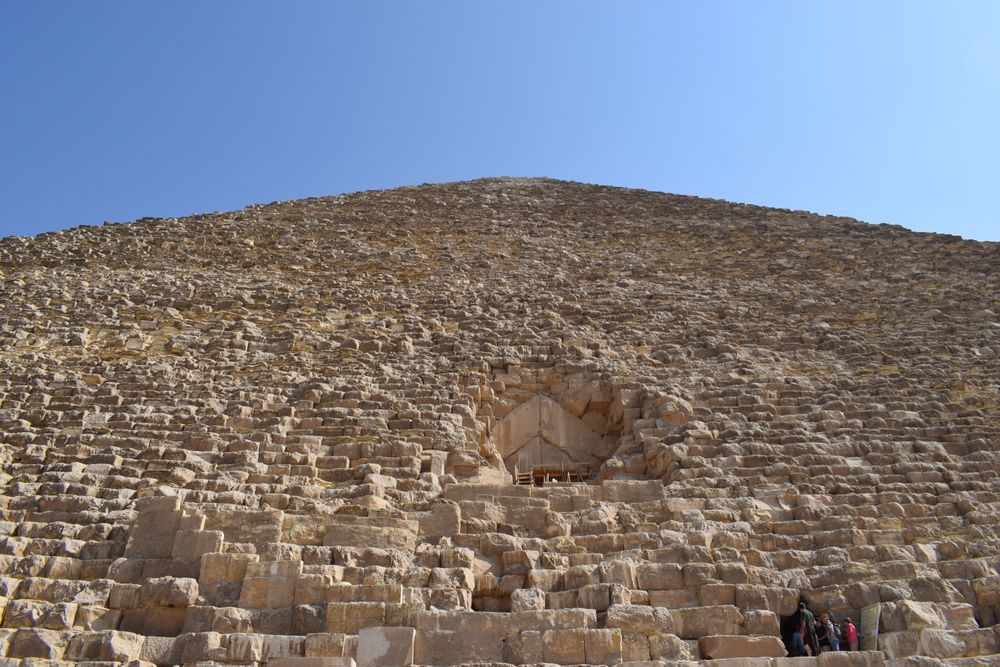
Camels and a handler in silhouette against a fiery orange sunset at the Pyramids of Giza
Dusk on the plateau, the camels heading homePhotograph by Mehdi El marouazi
← All dispatches
Places on record

Every place in this dispatch

  1. Archaeological Site
    Great Pyramid of Giza
    Archaeological Site · Giza

    Great Pyramid of Giza

    Three pyramids stand on the Giza plateau, and Khufu's, the biggest and oldest, is the one to touch at the base and climb inside. A steep passage takes you up through the stone to the king's burial chamber.

  2. Monument
    Great Sphinx of Giza
    Monument · Giza

    Great Sphinx of Giza

    Cut out of the plateau's own bedrock, the Sphinx's lion body and king's head are one piece of the hill, shaped where it stands. You reach it on foot through Khafre's Valley Temple and see it from a platform at its side.

  3. Landmark
    Al-Muizz Street
    Landmark · Cairo

    Al-Muizz Street

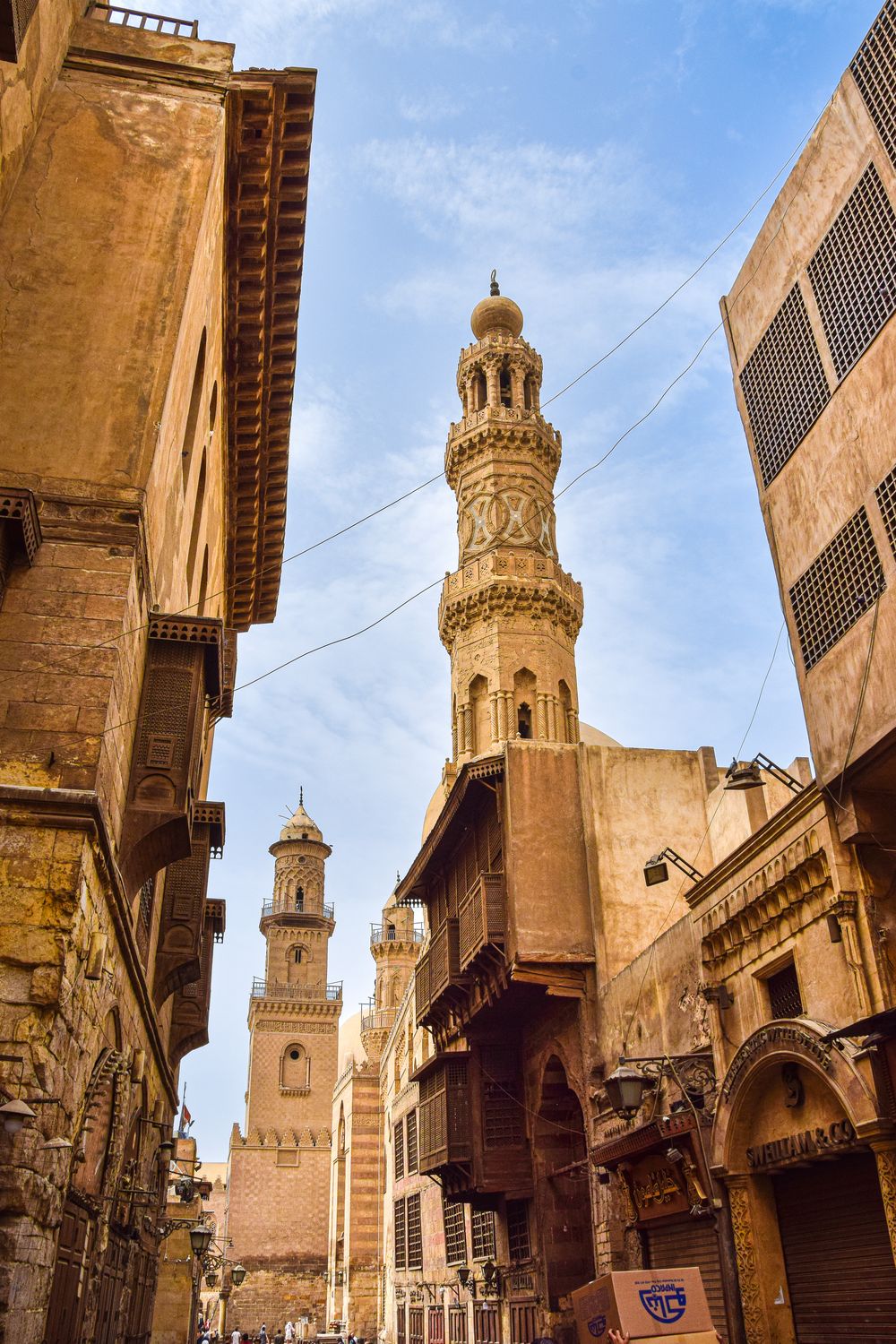
    The spine of the Fatimid city, running a kilometre from the northern gate of Bab al-Futuh to Bab Zuweila in the south, with the densest run of medieval Islamic buildings anywhere. The Qalawun complex, a hospital, school and tomb of 1285, is the essential stop. The northern half is closed to cars during the day. After dark the facades are floodlit and the street fills with families.

  4. Archaeological Site
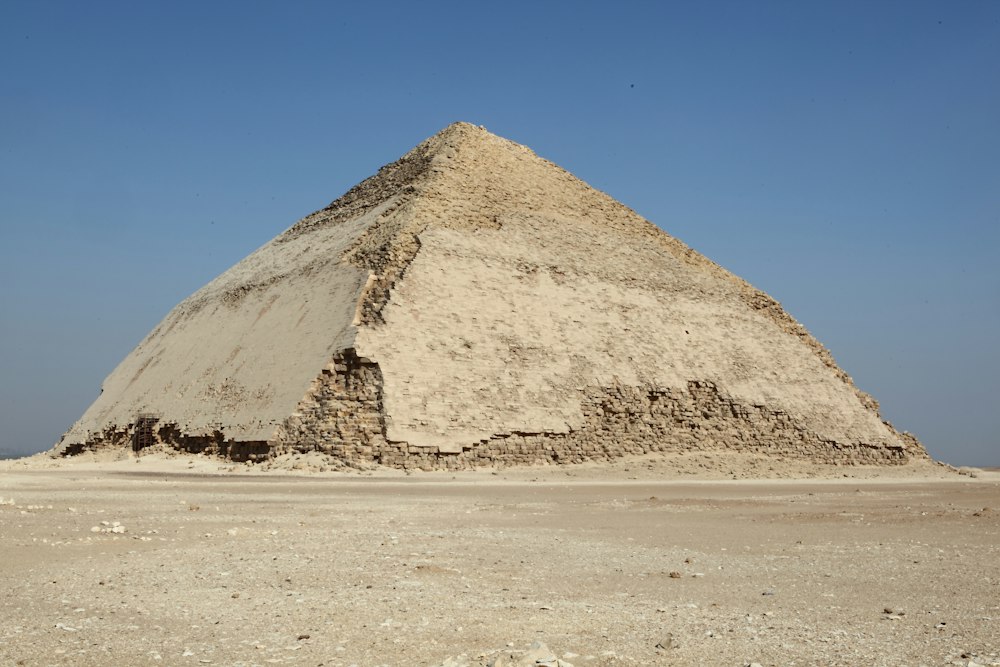
    Bent Pyramid
    Archaeological Site · Giza

    Bent Pyramid

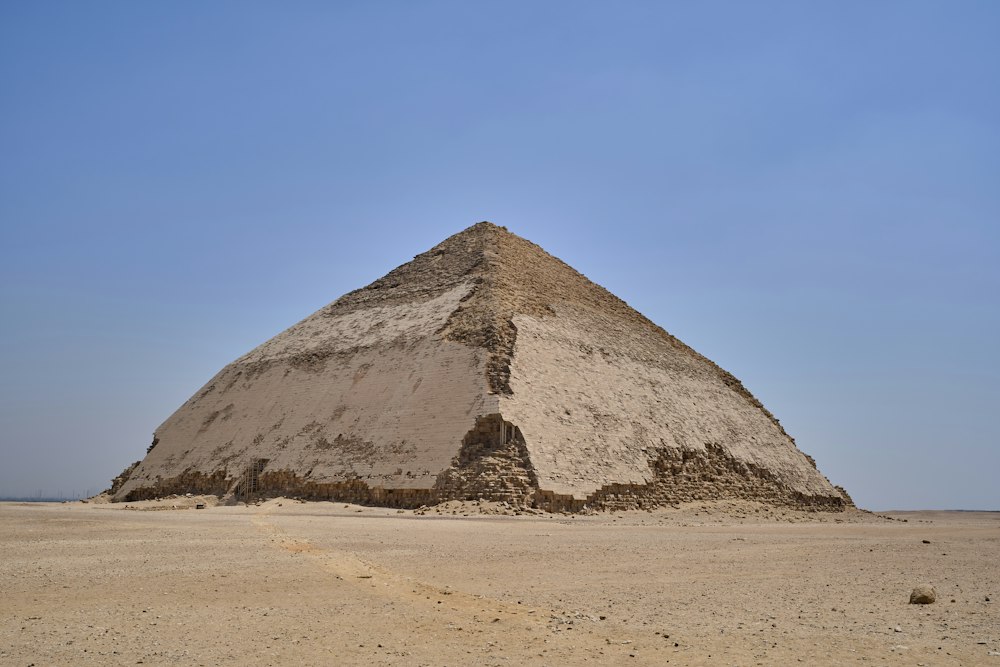
    Its polished limestone skin survives better than on any other pyramid in Egypt. Inside, you crouch down a long passage and climb wooden stairs into chambers roofed in stone that steps inward as it rises.

  5. Fortress
    Cairo Citadel
    Fortress · Cairo

    Cairo Citadel

    Saladin began these walls in 1176 on a spur of the Muqattam hills, and Egypt was ruled from inside them for nearly seven hundred years. The enclosure holds three mosques, a military museum and a terrace looking west over the whole city. On a clear winter day the Giza pyramids show on the horizon. Morning light is best, before haze builds over the river.

  6. Archaeological Site
    Dahshur
    Archaeological Site · Giza

    Dahshur

    Look at the Bent Pyramid from any side and its slope breaks sharply partway up, the angle eased in the middle of the build. Beside it the Red Pyramid stands finished, and you can climb down inside.

  7. Museum
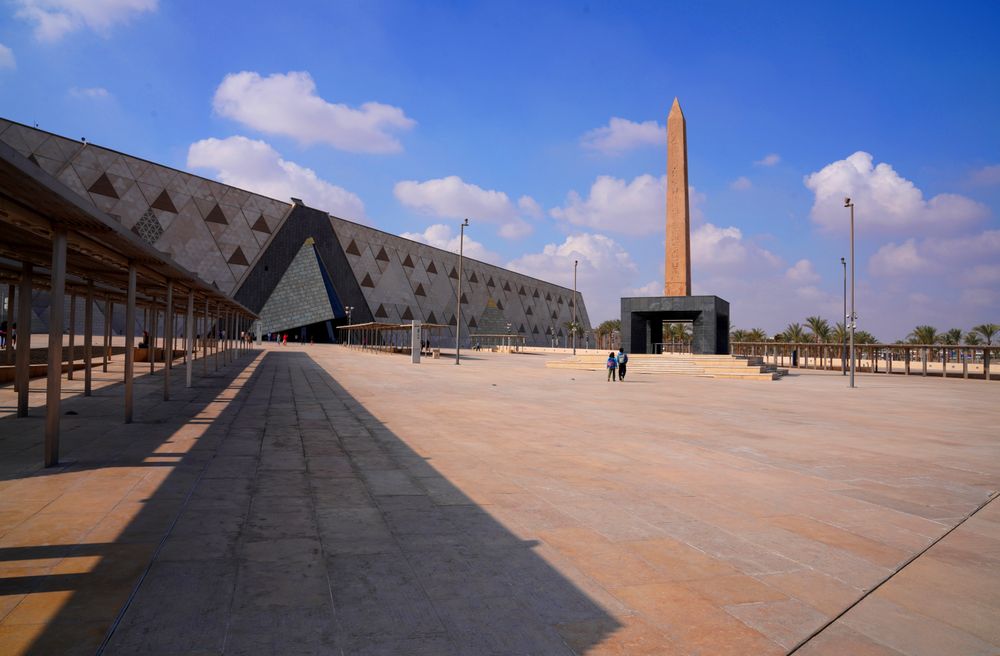
    Grand Egyptian Museum
    Museum · Giza

    Grand Egyptian Museum

    Every object from Tutankhamun's tomb is on show together here for the first time since its discovery, so come with hours to spare rather than squeezing it in.

  8. Church
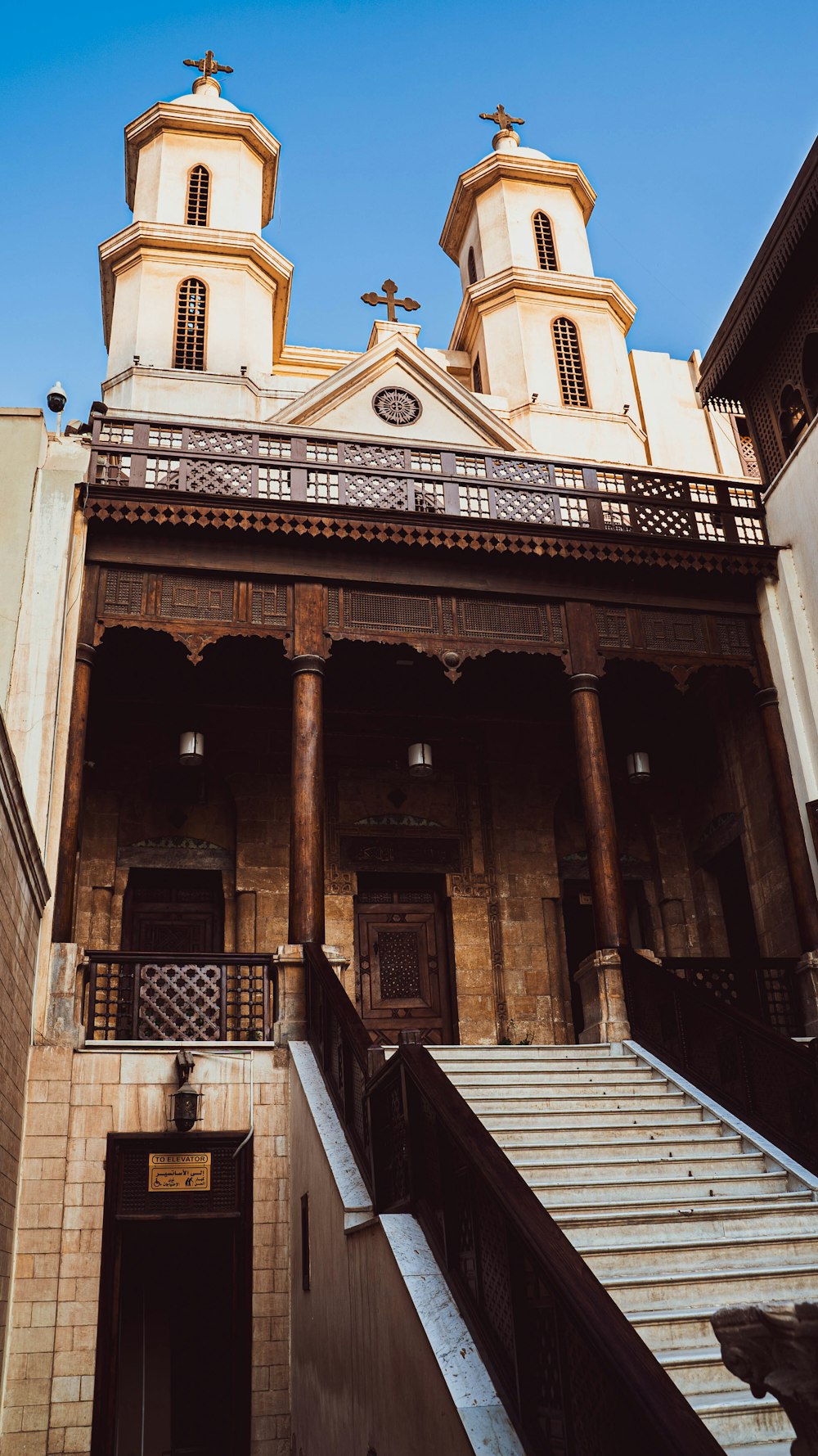
    Hanging Church
    Church · Cairo

    Hanging Church

    Named because its nave was built across the top of a Roman gatehouse, with palm logs and stone spanning the passage below; a glass panel in the floor shows the drop. A stair of twenty-nine steps climbs to the door. Inside are a marble pulpit on thirteen slender columns, cedar screens inlaid with ivory and more than a hundred icons. Services are still sung in Coptic.

  9. Market
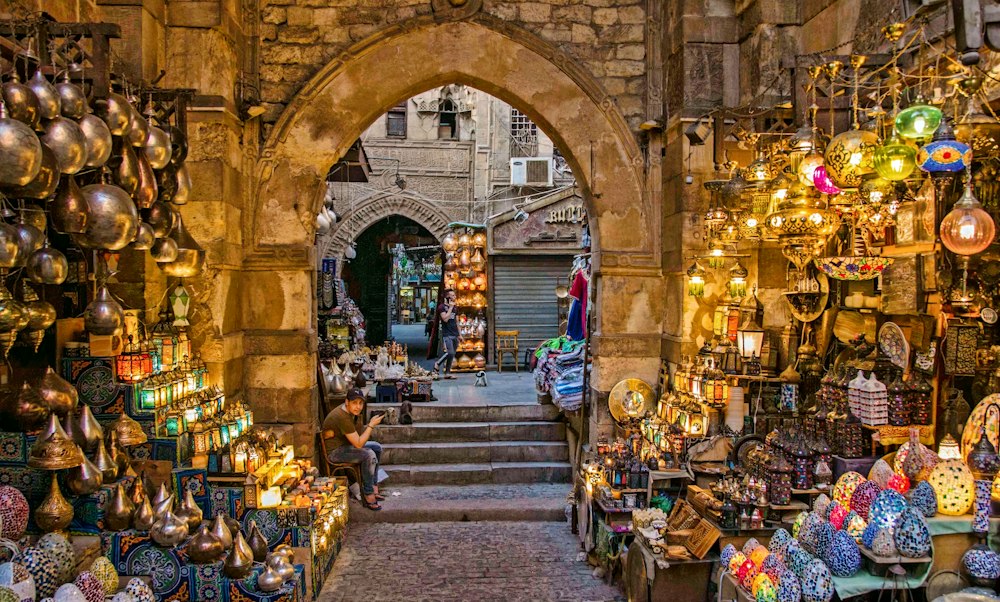
    Khan el-Khalili
    Market · Cairo

    Khan el-Khalili

    A trading quarter since a Mamluk emir built a caravanserai here in 1382. The lanes nearest the Hussein mosque sell souvenirs; a few turns deeper, coppersmiths, spice merchants, perfumers and gold dealers still serve Cairenes. Bargaining is expected and good-humoured. El Fishawy, a mirrored coffeehouse in one of the alleys, has served mint tea and water pipes day and night for two centuries.

  10. Archaeological Site
    Mastaba of Kagemni
    Archaeological Site · Giza

    Mastaba of Kagemni

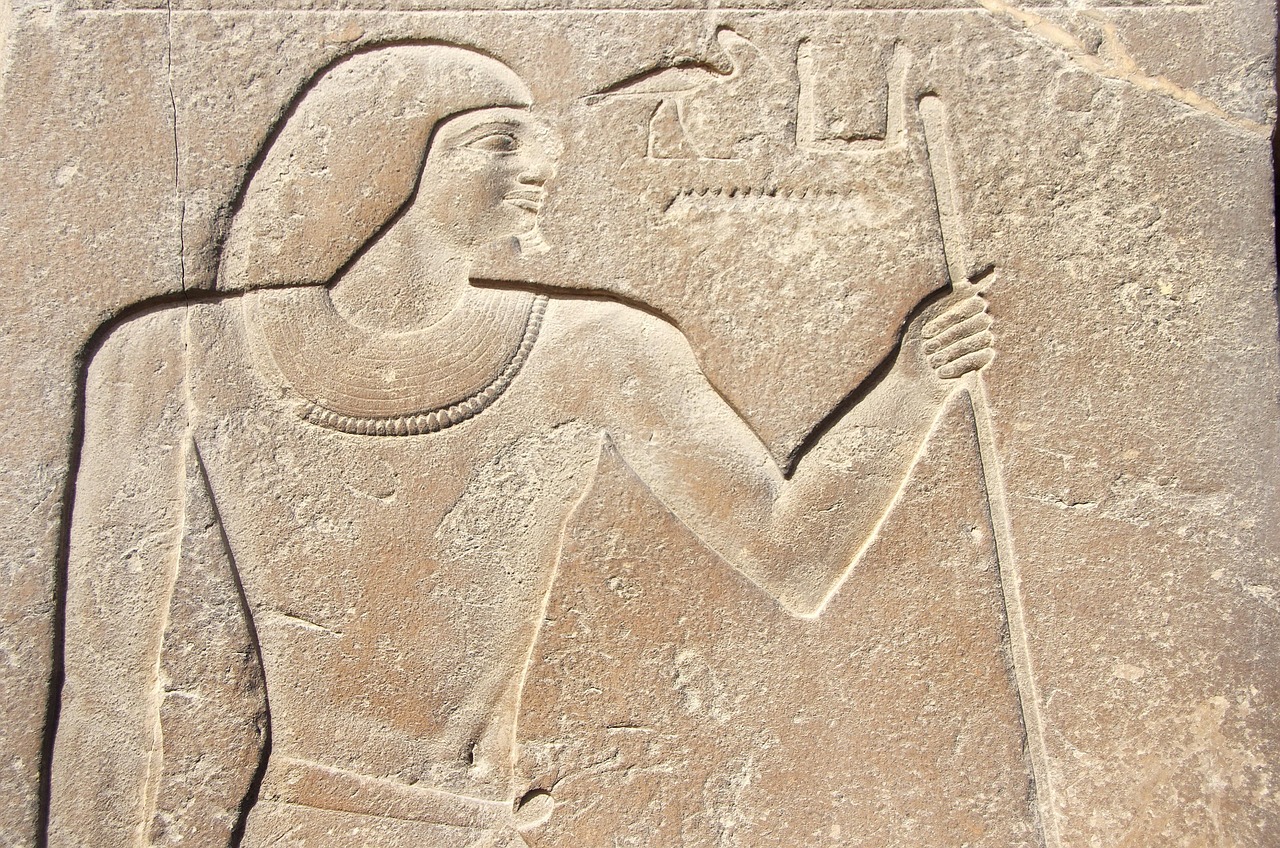
    Come to see one of the grandest and most beautifully decorated tombs of the Old Kingdom, where the carved walls still carry their original paint, much of it red and blue.

  11. Museum
    Memphis Open-Air Museum
    Museum · Giza

    Memphis Open-Air Museum

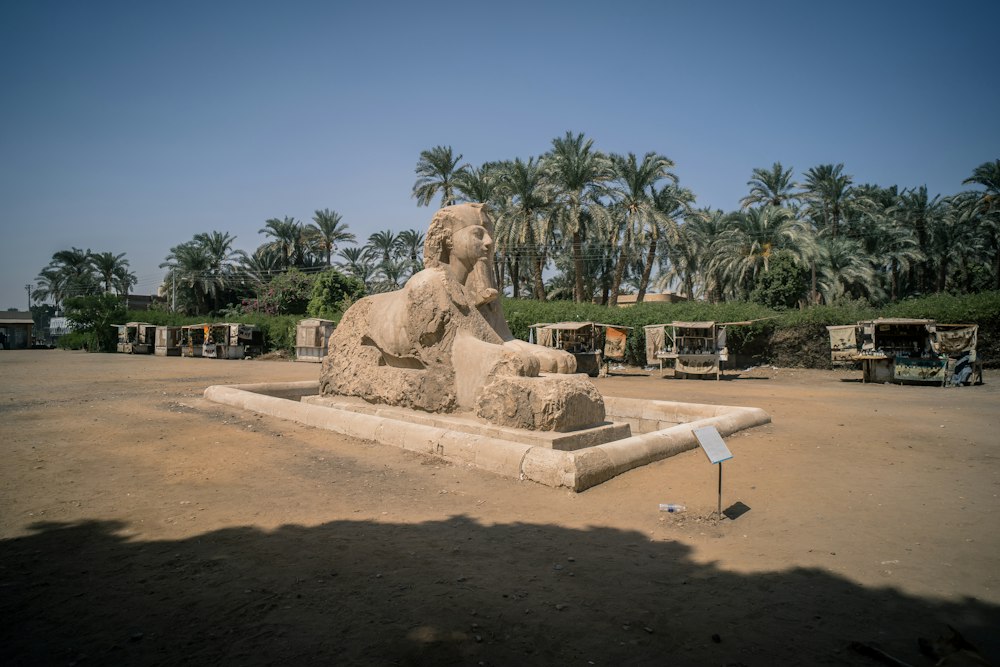
    Ramesses II's colossus lies on its back under skylights at Mit Rahina, and you walk its full length at floor level. Outside, an alabaster sphinx stands among what is left of ancient Memphis.

  12. Landmark
    Mosque of Muhammad Ali
    Landmark · Cairo

    Mosque of Muhammad Ali

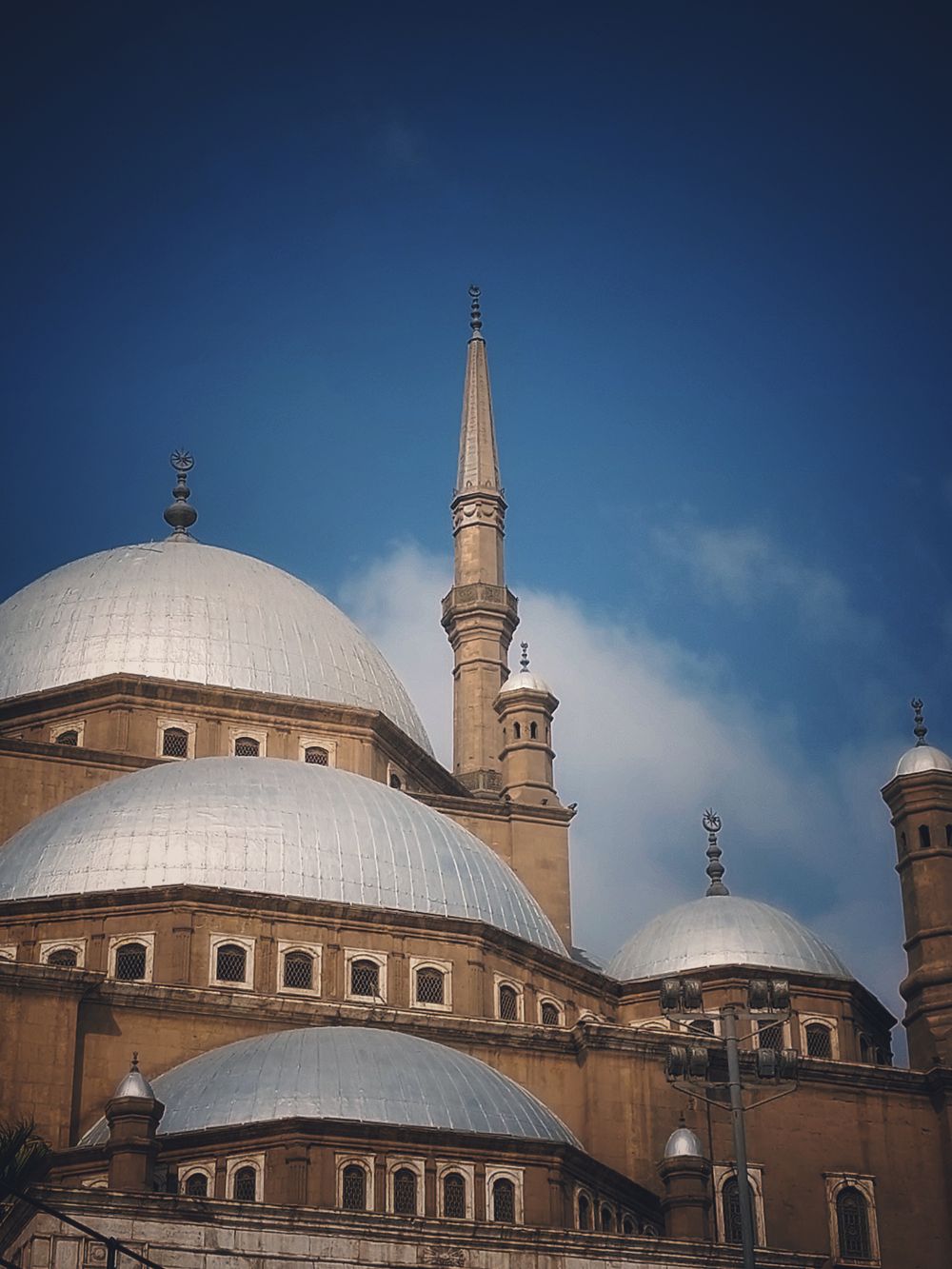
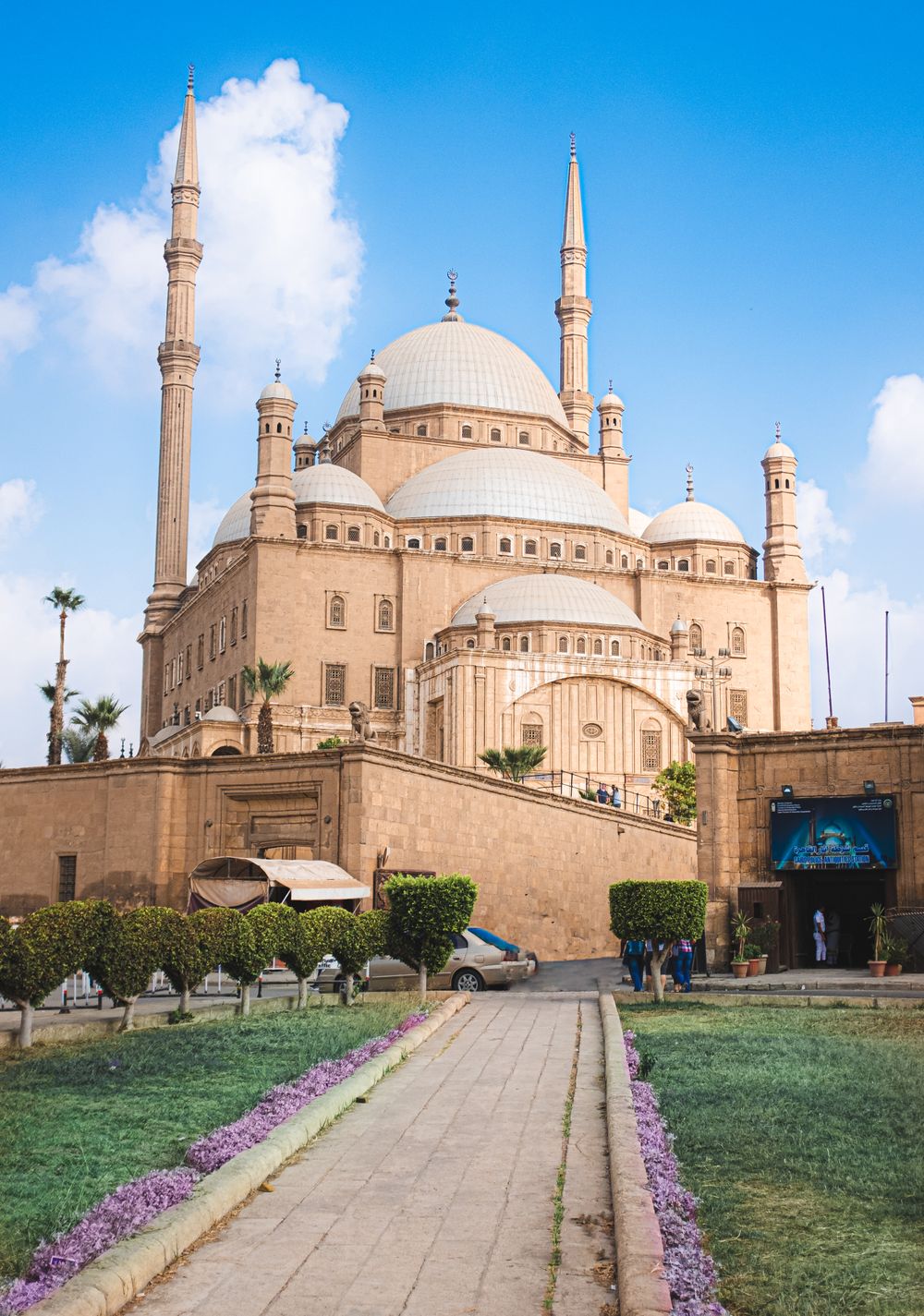
    The Ottoman silhouette on top of the Citadel, domes and two pencil minarets, was finished in 1848 for the Albanian-born governor who founded modern Egypt and is buried inside. Alabaster sheathes the lower walls. The ornate clock in the courtyard came from the king of France in exchange for the obelisk now in Paris, and has rarely kept time. Shoes off; scarves are lent at the door.

Explore

More of Egypt

Town guide

Giza

The Great Pyramid, the Sphinx, Khafre's pyramid and Dahshur to the south.

Dispatch

Cruising the Nile

Luxor to Aswan: a floating hotel in the convoy, or a sailing dahabiya.

Meridian Dispatch for iPhone

Plan the trip.
Keep the story.

Every other travel app asks you to start logging. Meridian Dispatch opens with years of your travel already written, from the photographs you already took.