
You follow a trail through open desert past the skeletons of early whales, some lying half-uncovered where they were found. It is the most important site in the world for seeing whales in the last stages of losing their hind legs.
Archaeological Site, Fayoum. Meridian Dispatch.
The hours are 07:00 to 17:30 in summer and 07:00 to 16:30 in winter, for the valley and its museum alike. Confirm the day's closing time with the driver before setting out.
Yes, and foreign adults pay a higher rate than Egyptians. Pay at the gate on arrival, unless a tour already includes it. The charge has two parts: the Wadi El Rayan protectorate, and the valley with its museum. Ask the driver what the trip covers.
By hired car and driver, as no public transport reaches the valley. From Fayoum city the journey takes about an hour and a half. The trip can also be booked as a tour from Cairo.
Yes, go in a 4x4 with a driver used to sand. The last stretch is desert track where an ordinary car is likely to get stuck, so do not attempt it in a standard rental.
Allow two hours for a brisk visit and up to four to see everything slowly, museum included. With the drive and other desert stops, the trip usually takes most of a day.
Yes. A basic camp beside the visitor centre has simple tents, shared facilities and campfire dinners under a dark sky. Overnight stays are limited to 200 campers, so reserve ahead.
The fossils lie in the open, in a valley of sand and wind-carved rock. Walkways join the main ones, with small shelters along the way.
Two kinds of whale make up most of what you see. Basilosaurus was the giant, and the longest skeleton found here reached 21 metres. Dorudon was smaller, closer to a dolphin in build.
Look for how unlike a modern whale they are. They had front flippers with five fingers, and back limbs that ended in toes.
Whales lived here because this desert was under the sea around 40 million years ago. Some 1,500 skeletons of marine vertebrates come from a relatively small area, and the easiest to spot are whales and sea cows.
At the centre of the Fossils and Climate Change Museum, behind glass, are two skeletons. The larger is a complete Basilosaurus, dug up in 2015 with the remains of other sea creatures still in its stomach.
Ask your hotel in Fayoum or Tunis village to arrange a 4x4, a local driver and the trip itself before you go. The route runs through the Wadi El Rayan protected area.
Your driver takes you to the visitor area, and the rest is on foot or by camel. Begin in the round museum, where a short film explains the fossils.
Then walk the trail, stopping at the numbered sites. It doubles back on itself in a few places, so you can shorten the route if you are tired. The cafeteria is the place for a juice or a Turkish coffee before the drive back.
Carry at least two litres of water each, because the cafeteria is nearly the only place to buy anything. Sturdy shoes are best in the desert. Bring Egyptian pounds too, since phone signal is patchy and card payment may fail.
Give the desert a full day. Ask your driver to add the waterfalls between the two lakes, sandboarding on the dunes or Magic Lake, whose water changes colour through the day.
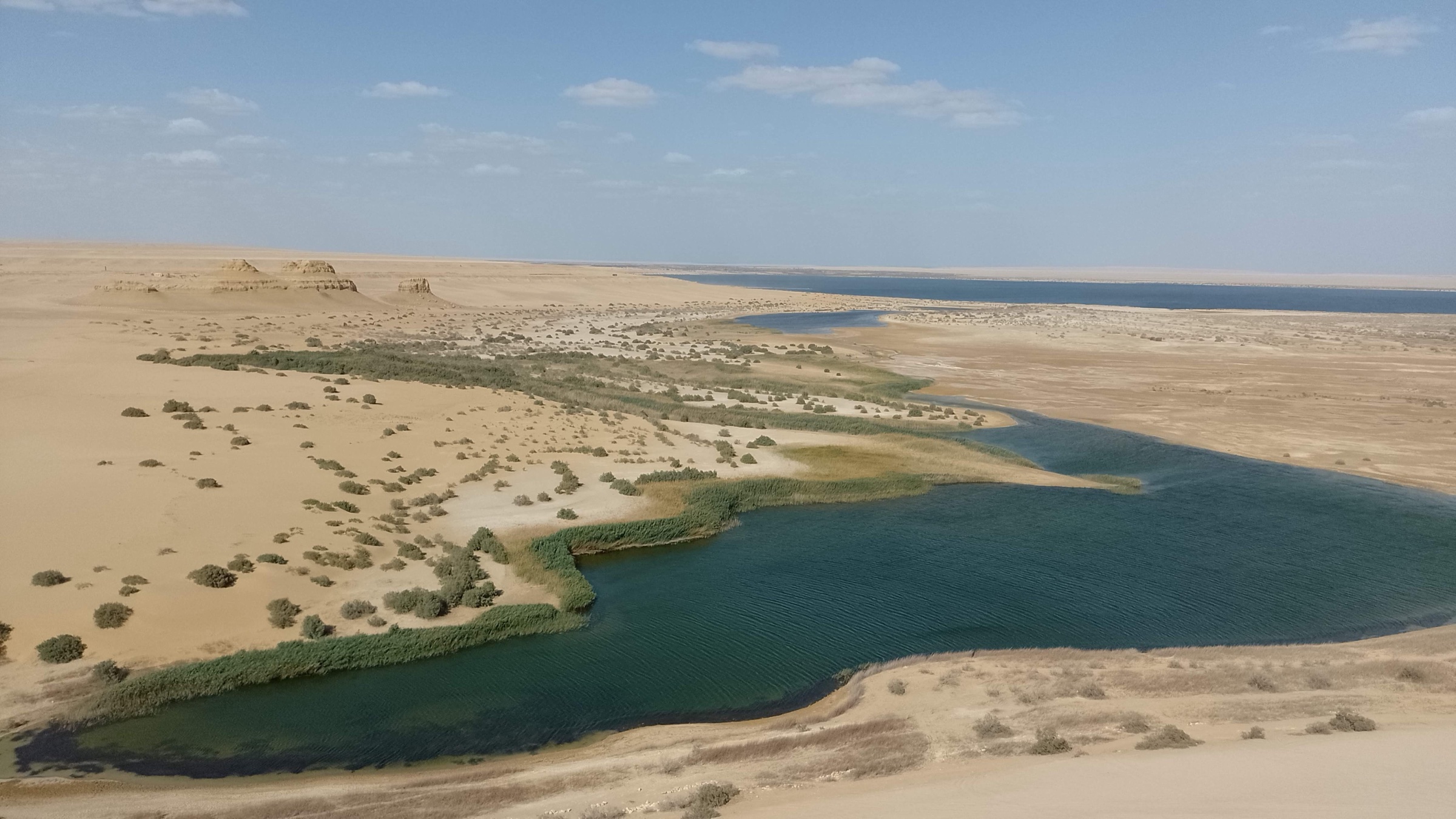
Stay in Tunis Village, above Lake Qarun, and you have pottery workshops and the shore within a walk. The desert beyond has waterfalls, dunes and fossil whales lying in the sand.
Read the Fayoum guideExplore the rest of Fayoum
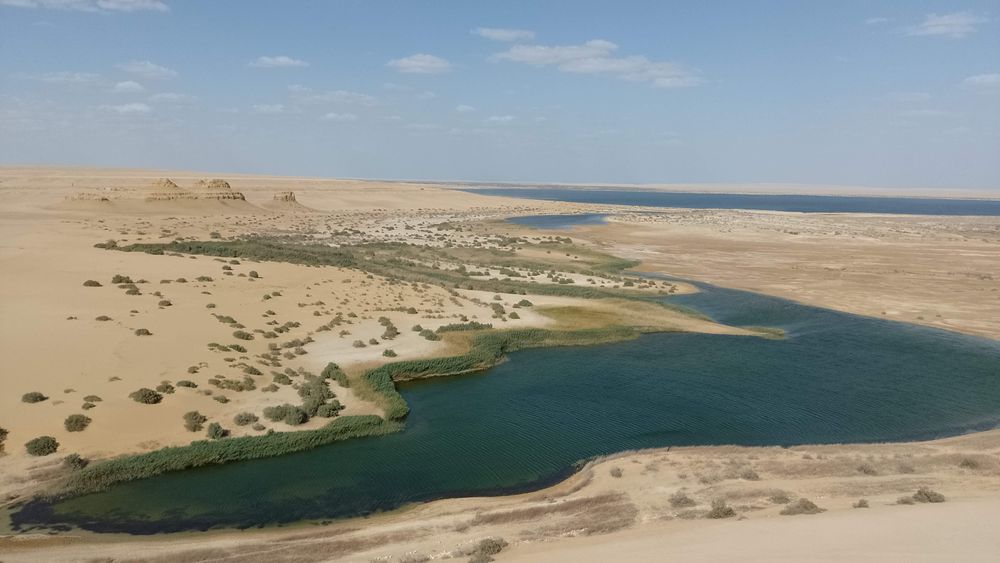
A broad green basin in the Western Desert, watered by a Nile canal and edged by a salt lake that lies 43 metres below sea level, with…
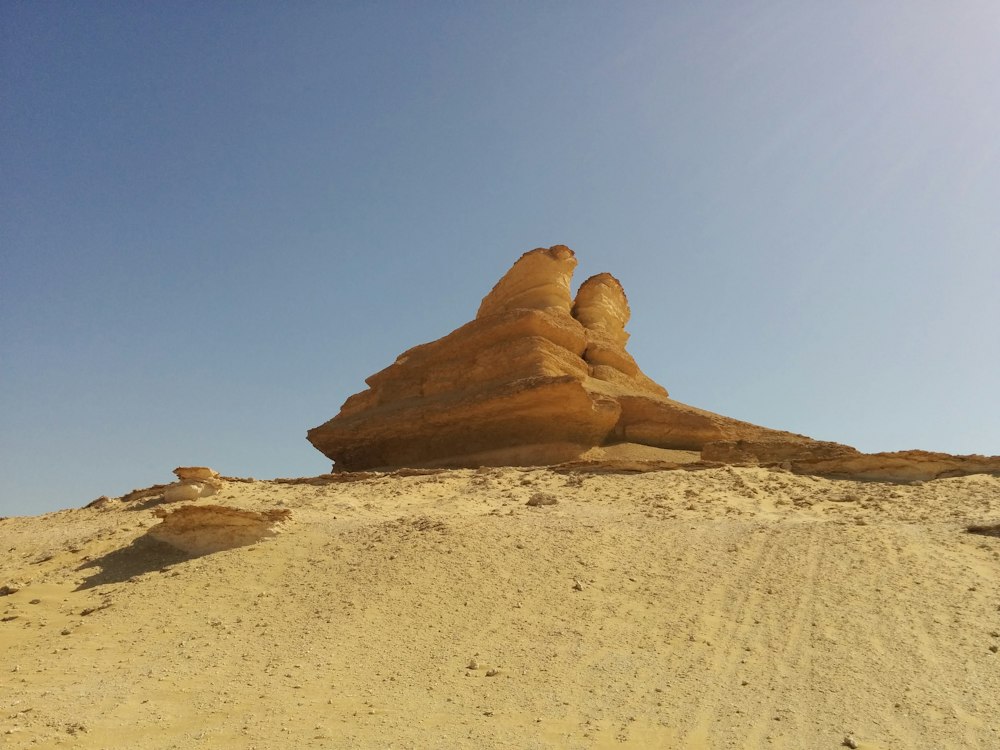
A protected desert valley about 65 kilometres southwest of Fayoum city holds two lakes joined by a short run of waterfalls, a rare sight in…
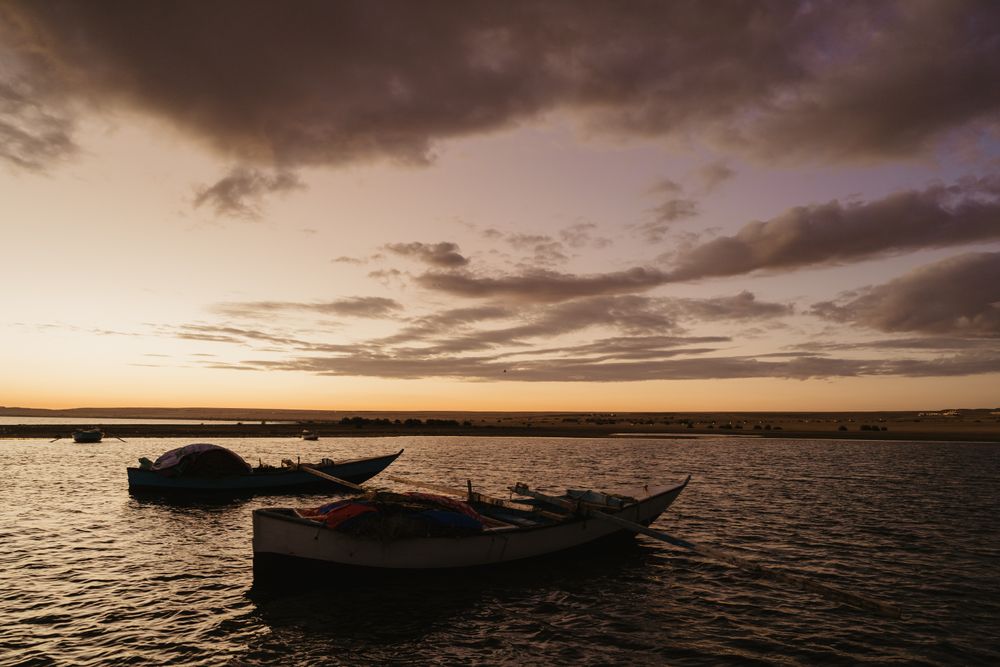
What remains of ancient Lake Moeris is a salty lake of about 200 square kilometres in the Fayoum oasis. It is a protected wetland, and…
Ringed by tall yellow dunes in the Wadi El Rayan protected area, this small lake takes its name from water that shifts from turquoise to…
At the western tip of Lake Qarun, inside the ruins of the Ptolemaic frontier town of Dionysias, stands a well-preserved stone temple to the…
Lazib Inn has 21 suites in Tunis Village, the pottery village on the slopes above Lake Qarun in Fayoum, about two hours' drive southwest of…
Founded under Ptolemy II in the third century BC, this farming town on the northeastern edge of the oasis spread over some 60 hectares of…




Save Wadi Al-Hitan to your Egypt trip in the Meridian Dispatch app and build the day around it, with the best of Fayoum pinned on one map.
Download on the App StoreThe official pages this guide was checked against.
Last updated