Exploring Qasr Qarun means climbing through dark stone chambers to a rooftop carving of a crocodile god. Inside, corridors and staircases link rooms on many levels.
Temple, Fayoum. Meridian Dispatch.
The Ministry of Tourism and Antiquities lists opening hours of 08:00 to 17:00. The site can keep shorter hours, 09:00 to 16:00, so check with a local driver or hotel before making the long trip out.
By car, allow 2 to 3 hours from Cairo. From Fayoum, drive to Ibshaway, then 5 km to El Shawashna and about 15 km more to the site. Without a car, take a shared service taxi to Ibshaway and a second one to Qarun village.
Yes, for the dark passages to explore inside a largely complete ancient building and the view from the top. The ruins of a whole town spread around it, over an area of about 500 m by 500 m.
On 21 December, shortly before 07:00, sunlight reaches the innermost room. A sun festival is held at the site on that date each year, so ask in Fayoum about access before setting out in the dark.
Yes, it is ticketed. The ministry's list sets separate rates for Egyptians and foreign visitors, and each group has a lower student rate. Carry a student card to claim the reduction.
Yes. Two square spiral staircases climb to the top, and the one on the left leads to the chapel. Parts of the interior have been reinforced, and the outside has been partly restored.
The temple at Qasr Qarun is built of yellow limestone blocks and is largely complete. Four half columns decorate the front, and a winged sun is carved over the entrance.
Inside, a maze of passages surrounds the main line of rooms. Two large halls lead to a sanctuary in three parts, whose longer middle room may have been meant to hold a live crocodile.
The walls carry no inscriptions and little decoration, so look up at the lintels for winged suns and rows of cobras. The one carved scene, up in the roof chapel, shows a king making an offering to Sobek, the crocodile god.
The ruins around it are Dionysias, a town begun in the third century BC and abandoned in the fourth century AD. What remains of it is mostly mud brick, and more worn than at the other ancient towns around Fayoum.
Start outside, where the remains of a gateway and some brick columns stand in front of the entrance. Go through the two halls to the three rooms at the back, and look into the side passages and cellars.
Take the stairs on the left up to the roof. From up there you can see the whole ancient town, with desert to the south and west and farmland to the north and east.
Back on the ground, walk 300 m northwest to the foundations of a Roman fort, 90 m wide, with square corner towers. Inside it are the remains of a Christian basilica: look for its entrance, column bases and a staircase.
Bring a torch for the inner rooms. Sunlight does not reach them on an ordinary day.
The frescoed baths named in some guides can no longer be seen, as their paintings have worn away.
With a car, you can combine the stop with Karanis or Madinet Madi.
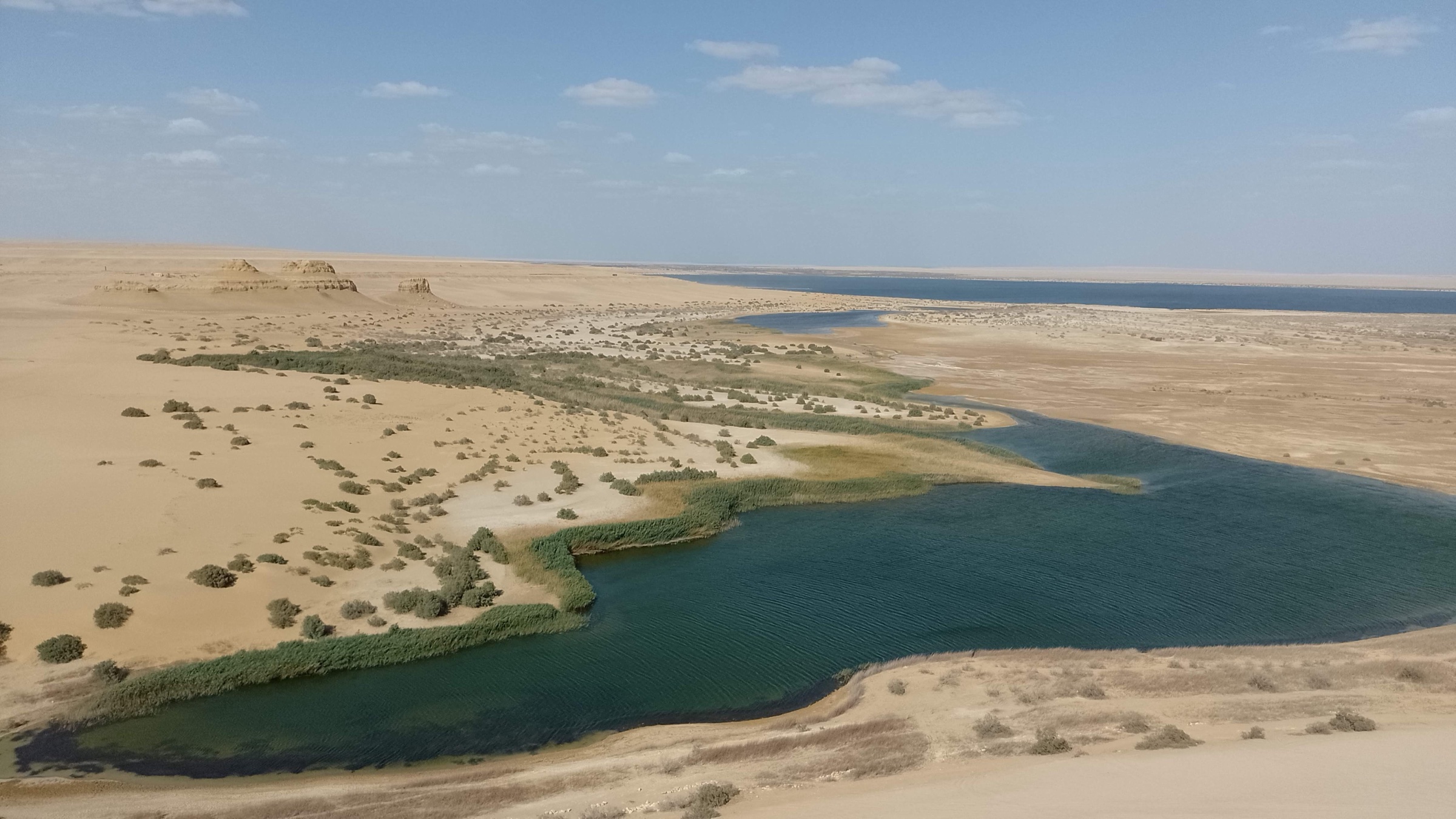
Stay in Tunis Village, above Lake Qarun, and you have pottery workshops and the shore within a walk. The desert beyond has waterfalls, dunes and fossil whales lying in the sand.
Read the Fayoum guideExplore the rest of Fayoum
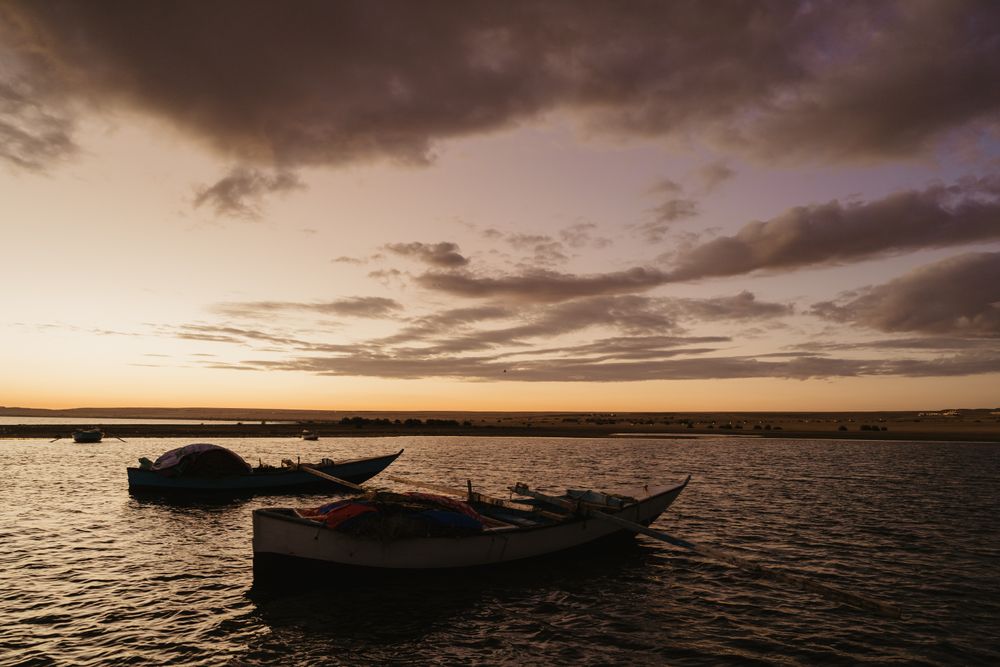
What remains of ancient Lake Moeris is a salty lake of about 200 square kilometres in the Fayoum oasis. It is a protected wetland, and…
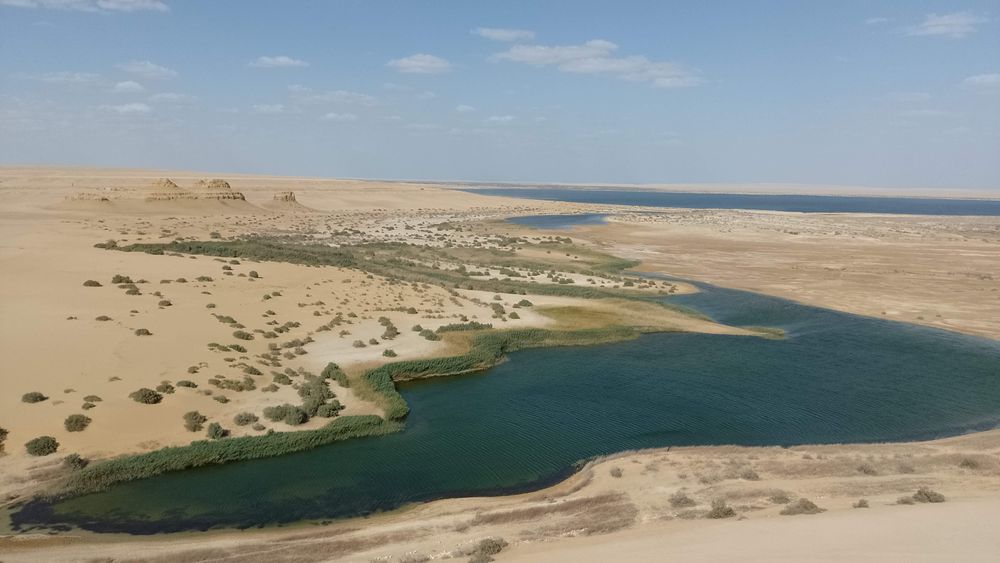
A broad green basin in the Western Desert, watered by a Nile canal and edged by a salt lake that lies 43 metres below sea level, with…
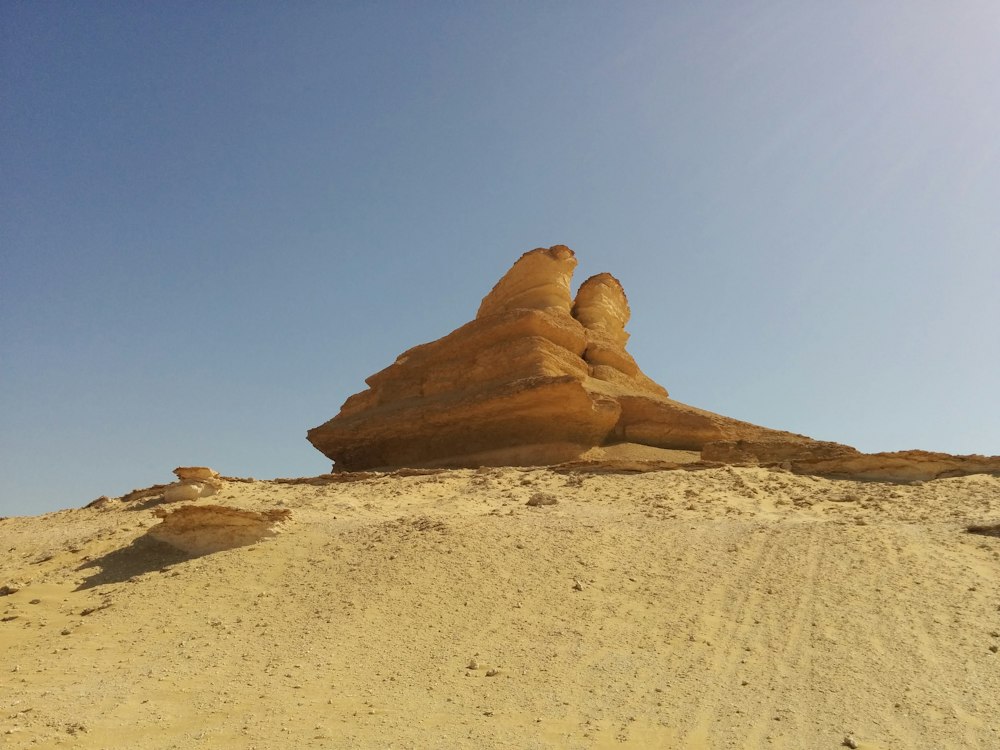
A protected desert valley about 65 kilometres southwest of Fayoum city holds two lakes joined by a short run of waterfalls, a rare sight in…
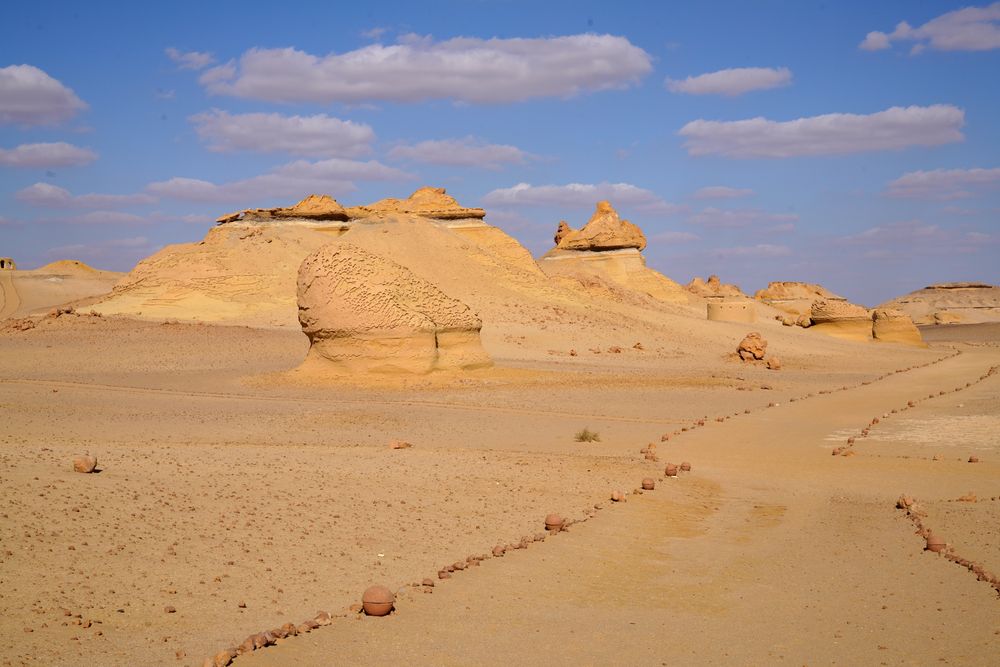
Around 40 million years ago this valley lay under a shallow sea, and its sandstone now holds hundreds of whale and sea cow skeletons, among…
Lazib Inn has 21 suites in Tunis Village, the pottery village on the slopes above Lake Qarun in Fayoum, about two hours' drive southwest of…
Ringed by tall yellow dunes in the Wadi El Rayan protected area, this small lake takes its name from water that shifts from turquoise to…
Founded under Ptolemy II in the third century BC, this farming town on the northeastern edge of the oasis spread over some 60 hectares of…
Rising from the desert edge some 70 kilometres south of Cairo, this pyramid lost its outer casing in antiquity and now stands as a steep…




Save Qasr Qarun to your Egypt trip in the Meridian Dispatch app and build the day around it, with the best of Fayoum pinned on one map.
Download on the App StoreLast updated